
Pet Food Ingredient Market
Report ID: SQMIG30I2577
Report ID: SQMIG30I2577
[email protected]
USA +1 351-333-4748
Report ID:
SQMIG30I2577 |
Region:
Global |
Published Date: August, 2025
Pages:
185
|Tables:
117
|Figures:
69


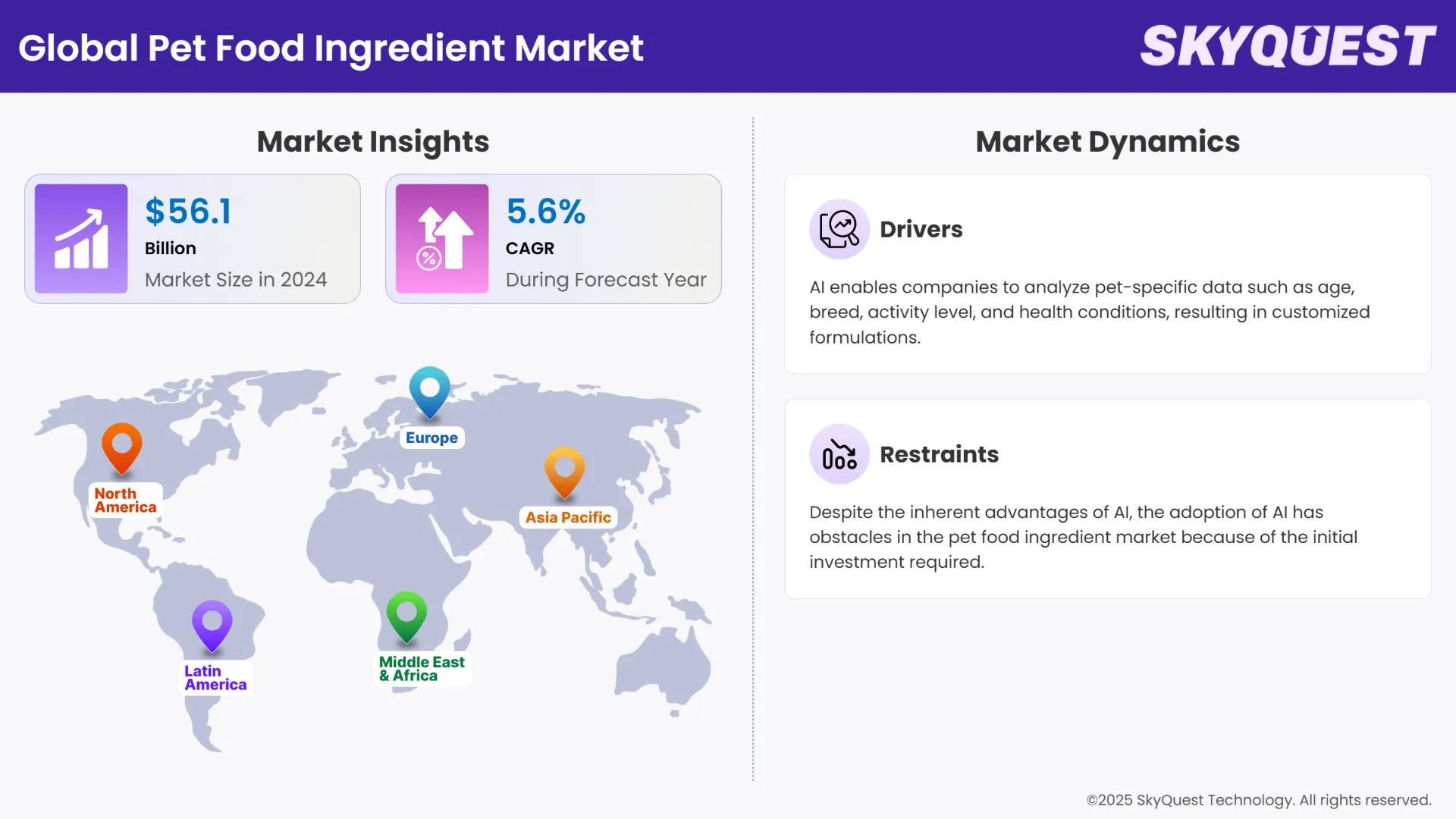
Global Pet Food Ingredient Market size was valued at USD 56.18 Billion in 2024 and is poised to grow from USD 59.33 Billion in 2025 to USD 91.74 Billion by 2033, growing at a CAGR of 5.6% in the forecast period (2026–2033).
The premiumization and humanization of pets have impacted the sector, creating a trend where formulators look for ingredients that reflect human grade nutrition and contain high-quality proteins and a clean-label type additive. Pet owners are inspecting labels and looking for recognizable minimally processed ingredients, health-and wellbeing positionings on weight, joint, skin/coat, gut, and life stages continues to expand the use of functional ingredients, such as omega-rich oils, postbiotics, botanicals, and novel proteins. Affecting formulation on the supply side, the cost and availability of animal-based and plant-based proteins impacts formulators in relation to the ingredients they take into consideration which often leads to blend strategies and diversification in alternative sources like insects, algae, and single cell proteins.
The pet food ingredient industry is using artificial intelligence to its fullest potential for personalization, safety, operational efficiencies, and consumer engagement. Companies are also using AI-influenced formulation tools like BESTMIX® to understand the tradeoffs between nutrition, cost, and constraints in supply chain with accuracy and speed.
In terms of safety, AI quality control systems have reduced the time to identify a contaminant by over 30%, and have driven the decrease of recalls, and the FDA’s AI assistant “Elsa” is improving food safety oversight by scanning products for labeling and contamination risk more rapidly than human review. In operational efficiency, AI is decreasing production time and energy usage while supporting waste reduction, thus beneficial in addressing worker shortages. Examples are NorthWind and Northslope's AI platform that captures institutional specific plant knowledge and provides/explains procedures for new workers in real-time, thus benefiting newer workers. In marketing, Mars Petcare has prioritized new and innovative AI backed campaigns including, “Dog Interpreter” tool, and Vizit commodity packaging optimization. AI can not only enable increased ideas for various campaigns but can also improve the engagement and conversion of consumers at various touch points.
To get more insights on this market click here to Request a Free Sample Report
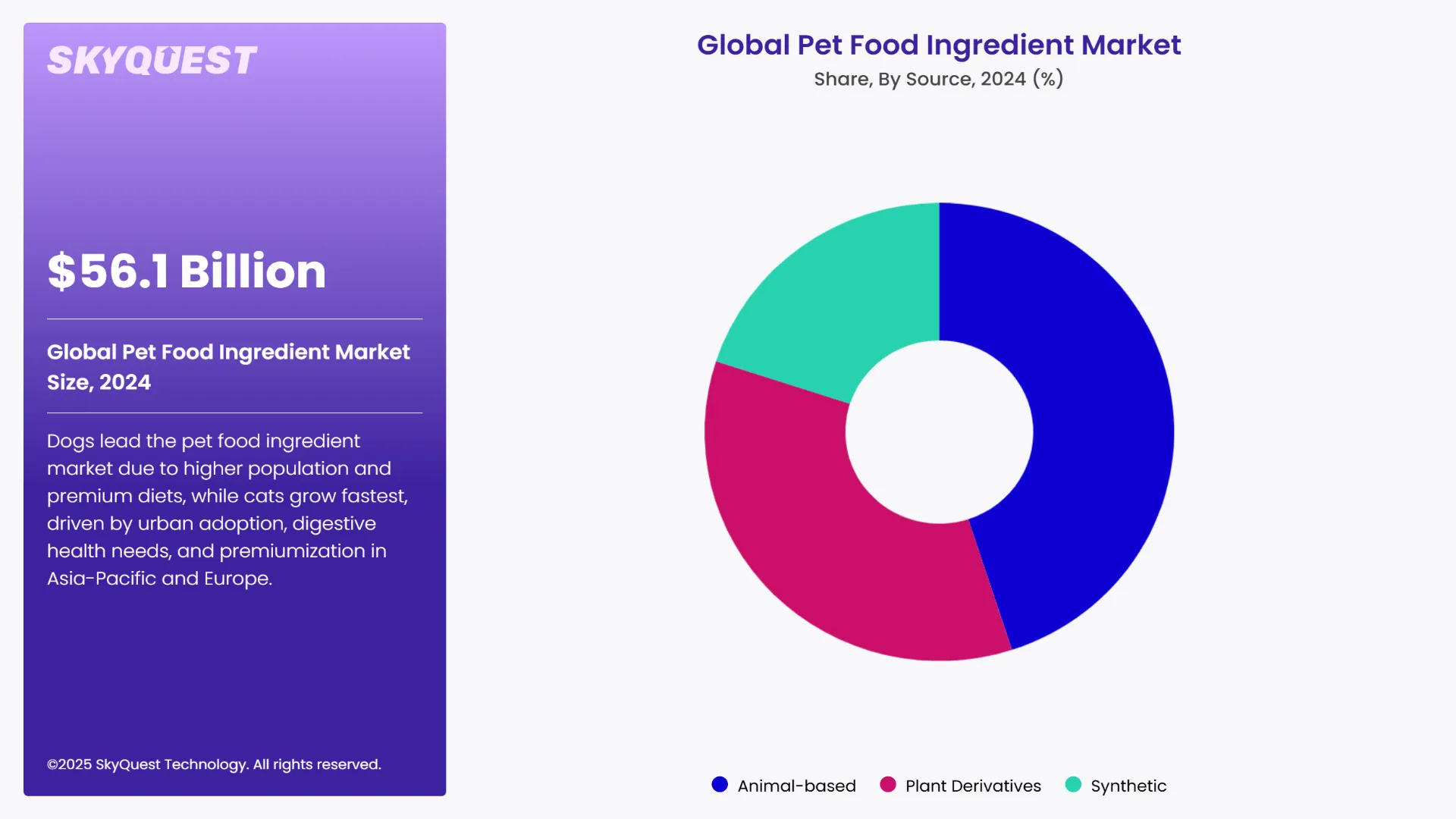
The global pet food ingredient market is segmented into pets' type, source, ingredient, form and region. Based on pets type, the market is segmented into dogs, cats, fish and other pets. Based on source, the market is segmented into animal-based, plant derivatives and synthetic. Based on ingredients, the market is segmented into meat & meat products, cereals, vegetables & fruits, fats and additives. Based on form, the market is segmented into dry and wet. Region-wise, the market is segmented into North America, Europe, Asia-Pacific, Middle East and Africa, and Latin America.
The dogs segment holds the largest pet food ingredient market share. This dominance is driven by the higher global dog population compared to other pets, larger food intake per animal, and strong consumer preference for premium, functional, and breed-specific dog foods. Dog owners are also more likely to invest in health-focused formulations (grain-free, high-protein, joint health, etc.), which boosts demand for specialized ingredients such as probiotics, omega-3 fatty acids, and plant-based proteins.
As per global pet food ingredient market analysis, the cats segment is growing the fastest, especially in urban markets. Cats can be more easily adopted when living in a city or apartment compared to dogs, a main reason for the increase in cat ownership. The other driver of growth in this segment is a rising demand for specialized cat food that may be associated with negative health considerations related to cats' digestive health and urinary tract health. These unique needs drive innovation in new products. Premiumization trends, especially in Asia-Pacific and Europe, are pushing manufacturers to create high-quality and functional cat food ingredients.
As per the global pet food ingredient market outlook, meat and meat products remain the dominant ingredient segment in the market. This dominance is due to the fact that dogs and cats are primarily carnivores and consumers see meat as the most natural and healthy protein source. Premium and super-premium pet foods are offering pet foods that emphasize high meat content including chicken, beef, lamb and fish proteins. The increased demand for human-grade pet food and fresh meat has further bolstered their continued dominance.
According to the global pet food ingredient market forecast, the additives segment is the fastest growing segment of pet food ingredients. The additives segment is being driven by the demand for functional and fortified pet food formulations as consumers increasingly demand products that target specific health benefits such as immunity, digestion, coat health and joint health. The trend toward customization and preventive pet healthcare is pushing manufacturers to innovate with advanced additive blends.
To get detailed segments analysis, Request a Free Sample Report
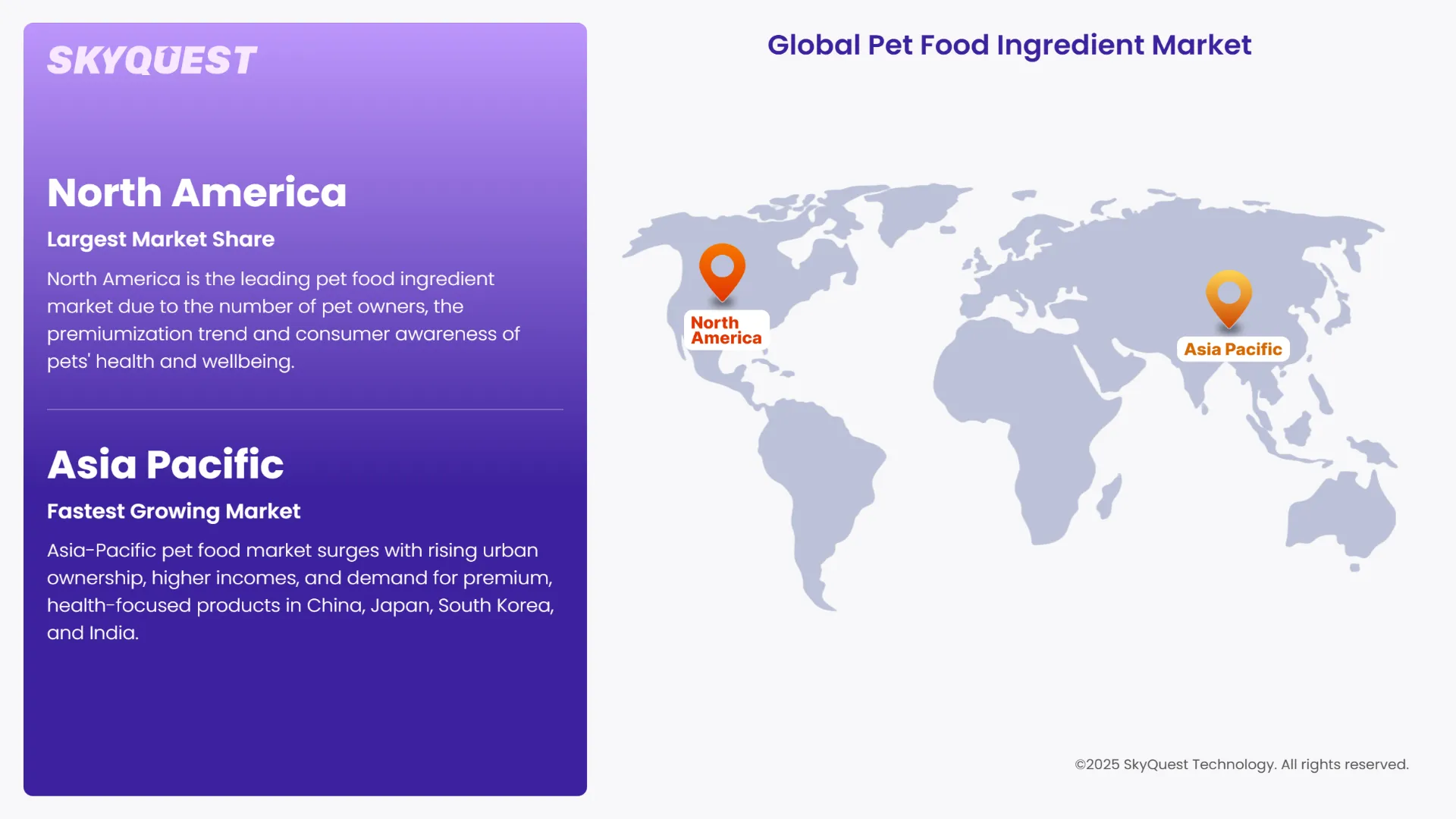
According to regional forecast, North America is the leading pet food ingredient market due to the number of pet owners, the premiumization trend and consumer awareness of pets' health and wellbeing. The region has a strong number of large pet food manufacturers and ingredient suppliers, as well as a sophisticated manufacturing infrastructure and ongoing investments in R&D. Some additional trends taking place are increased demand for functional ingredients, sustainable proteins, and personalized pet nutrition. Also, the regulatory regimes with FDA and AAFCO provide an additional assurance of safety and quality.
Pet Food Ingredient Market in the U.S.
The North America market is dominated by the U.S. due to one of the highest rates of pet ownership in the world along with a strong consumer willingness to pay for premium and natural products. Functional ingredients such as probiotics, omega fatty acids and plant-based proteins are coalescing their demand rapidly as pet owners look for ways to improve longevity and wellness through the diet of their pets.
Pet Food Ingredient Market in Canada
Similarly to the U.S., the Canada market is being fueled by premiumization, increased companion animal adoption, purchasing behavior for organic and sustainable ingredients. Canadian consumers are particularly interested in "green" and locally processed products, and therefore are supporting demand for alternative proteins, including insect-based and plant-based ingredients. Collaborations of ingredient suppliers and research institutes in Canada are even driving additional challenges in developing functional and non-conventional pet food ingredients that will meet nutritional and environmental needs.
The pet food ingredient market in the Asia-Pacific region is growing quickly, fueled by pet ownership in urban areas, growing disposable income, and the westernization of pet care. Markets such as China, Japan, South Korea, and India are becoming increasingly influential, as consumers prefer premium, imported, and health-conscious pet foods. Many local ingredient suppliers are increasing production, and governments across the region are creating food safety regulations designed to improve product safety. There is increased interest in new proteins, functional additives, and novel food sources, as pet populations continue to grow in the region.
Pet Food Ingredient Market in Japan
Japan’s market expansion is focused on its growing aging pet population and developing highly health-specific diets. Japan has a particularly, strong demand for specialized ingredients, joint health supplements, probiotics, and antioxidants. Japanese pet owners are brand loyal and gravitate towards premium products, which accompany ingredient manufacturers that are focused on developing high quality and functional ingredients.
Pet Food Ingredient Market in South Korea
According to regional analysis, South Korea is steadily developing into a market leader in the Asia-Pacific region with rapid growth of premium and human-grade pet foods. As a result, South Korea is establishing important advances in food processing and innovation regarding the ingredients and their sourcing and processing, given South Korea’s high-tech manufacturing industry is advanced.
As per regional outlook, Europe is a key market for pet food ingredients, which are subject to high quality regulations, sustainability standards agreed with stakeholders, and a robust pet care industry. European consumers have a preference for natural, organic and non-GMO ingredients and are very much leading the way in exploring eco-friendly and transparent sourced raw materials.
Pet Food Ingredient Market in Germany
Germany's market has a strong pet population, developed manufacturing technologies, and high demand for premium and functional pet foods. There are now eco-friendlier and consumer sustainable ingredient solutions being embraced. The focus is also on insect proteins and organic inputs. An number of pet food ingredient suppliers have leading-edge facilities, applying leading-edge research and innovation. Germany's, products for pet food, enforce its competitive positioning in Europe.
Pet Food Ingredient Market in the U.K.
The U.K. market is driven by high pet ownership levels, increasing demand for premium and human-grade pet foods, and a preference for health-focused formulations. Pet owners in the U.K. show strong levels of engagement with respect to sustainability, animal welfare and transparency, which has influenced heightened demand for local sourcing of ingredients and plant-based ingredients.
Pet Food Ingredient Market in Italy
Italy's pet food ingredient market growth has been boosted by rising adoption rates of companion animals, increasing demand for functional and natural ingredients, and a culture that places great emphasis on quality food. Growing numbers of Italian pet owners are moving toward organic, grain-free, nutritionally balanced options, and suppliers of ingredients are therefore starting to innovate!
To know more about the market opportunities by region and country, click here to
Buy The Complete Report
Growing Demand for Personalized Pet Nutrition
Advancements in AI-Powered Quality and Safety Systems
High Costs of Entry and Technology Barriers
Consumer Skepticism for Multibillion-Dollar Solutions
Request Free Customization of this report to help us to meet your business objectives.
The pet food ingredient industry is highly competitive and includes a mix of global ingredient suppliers, pet food manufacturers, and the establishment of newer tech-driven startups that are indulging in AI-based methods to gain share in the industry. Although major players like Mars Petcare, Nestlé Purina, and Hill’s Pet Nutrition hold a substantial market share with robust brand portfolios and substantial investments in AI-based product personalization, safety, and marketing, companies in the pet food ingredient market adopted multiple strategies that strengthened their position in the market and aligned them with shifting consumer attitudes in 2024.
Startups in the pet food ingredient space are emerging as innovative challengers of established competitors, bringing agility, new ideas, and sustainability-centric innovations to the market. Companies like PawCo are developing AI-driven, plant-based products like "GreenMeat" to create new formulations that improve nutritional quality and tasting experience while supporting lower impact behaviors.
Recent Developments in Pet Food Ingredient Market
SkyQuest’s ABIRAW (Advanced Business Intelligence, Research & Analysis Wing) is our Business Information Services team that Collects, Collates, Correlates, and Analyses the Data collected by means of Primary Exploratory Research backed by robust Secondary Desk research.
According to SkyQuest analysis, the pet food ingredient market is rapidly changing as artificial intelligence becomes an important innovator. AI is growing the market by enabling personalized nutrition solutions that allow brands to create formulations meet the pet’s health needs, by improving safety through automated quality control that minimizes recalls and enhances regulatory compliance. However, high implementation costs and skepticism from consumers regarding overly “engineered” products are key restraints for smaller players and clean label-oriented buyers from widespread adoption. However, high cost of implementation, consumer skepticism with options being too "engineered," have undercut continued widespread options responsible for creating a barrier to entry for smaller pet food players and clean-label focused consumers for comments related to overall claims.
| Report Metric | Details |
|---|---|
| Market size value in 2024 | USD 56.18 Billion |
| Market size value in 2033 | USD 91.74 Billion |
| Growth Rate | 5.6% |
| Base year | 2024 |
| Forecast period | 2026–2033 |
| Forecast Unit (Value) | USD Billion |
| Segments covered |
|
| Regions covered | North America (US, Canada), Europe (Germany, France, United Kingdom, Italy, Spain, Rest of Europe), Asia Pacific (China, India, Japan, Rest of Asia-Pacific), Latin America (Brazil, Rest of Latin America), Middle East & Africa (South Africa, GCC Countries, Rest of MEA) |
| Companies covered |
|
| Customization scope | Free report customization with purchase. Customization includes:-
|
To get a free trial access to our platform which is a one stop solution for all your data requirements for quicker decision making. This platform allows you to compare markets, competitors who are prominent in the market, and mega trends that are influencing the dynamics in the market. Also, get access to detailed SkyQuest exclusive matrix.
Table Of Content
Executive Summary
Market overview
Parent Market Analysis
Market overview
Market size
KEY MARKET INSIGHTS
COVID IMPACT
MARKET DYNAMICS & OUTLOOK
Market Size by Region
KEY COMPANY PROFILES
Methodology
For the Pet Food Ingredient Market, our research methodology involved a mixture of primary and secondary data sources. Key steps involved in the research process are listed below:
1. Information Procurement: This stage involved the procurement of Market data or related information via primary and secondary sources. The various secondary sources used included various company websites, annual reports, trade databases, and paid databases such as Hoover's, Bloomberg Business, Factiva, and Avention. Our team did 45 primary interactions Globally which included several stakeholders such as manufacturers, customers, key opinion leaders, etc. Overall, information procurement was one of the most extensive stages in our research process.
2. Information Analysis: This step involved triangulation of data through bottom-up and top-down approaches to estimate and validate the total size and future estimate of the Pet Food Ingredient Market.
3. Report Formulation: The final step entailed the placement of data points in appropriate Market spaces in an attempt to deduce viable conclusions.
4. Validation & Publishing: Validation is the most important step in the process. Validation & re-validation via an intricately designed process helped us finalize data points to be used for final calculations. The final Market estimates and forecasts were then aligned and sent to our panel of industry experts for validation of data. Once the validation was done the report was sent to our Quality Assurance team to ensure adherence to style guides, consistency & design.
Analyst Support
Customization Options
With the given market data, our dedicated team of analysts can offer you the following customization options are available for the Pet Food Ingredient Market:
Product Analysis: Product matrix, which offers a detailed comparison of the product portfolio of companies.
Regional Analysis: Further analysis of the Pet Food Ingredient Market for additional countries.
Competitive Analysis: Detailed analysis and profiling of additional Market players & comparative analysis of competitive products.
Go to Market Strategy: Find the high-growth channels to invest your marketing efforts and increase your customer base.
Innovation Mapping: Identify racial solutions and innovation, connected to deep ecosystems of innovators, start-ups, academics, and strategic partners.
Category Intelligence: Customized intelligence that is relevant to their supply Markets will enable them to make smarter sourcing decisions and improve their category management.
Public Company Transcript Analysis: To improve the investment performance by generating new alpha and making better-informed decisions.
Social Media Listening: To analyze the conversations and trends happening not just around your brand, but around your industry as a whole, and use those insights to make better Marketing decisions.
REQUEST FOR SAMPLE
 REQUEST FREE CUSTOMIZATION
Global Pet Food Ingredient Market size was valued at USD 56.18 Billion in 2024 and is poised to grow from USD 59.33 Billion in 2025 to USD 91.74 Billion by 2033, growing at a CAGR of 5.6% in the forecast period (2026–2033).
The pet food ingredient industry is highly competitive and includes a mix of global ingredient suppliers, pet food manufacturers, and the establishment of newer tech-driven startups that are indulging in AI-based methods to gain share in the industry. Although major players like Mars Petcare, Nestlé Purina, and Hill’s Pet Nutrition hold a substantial market share with robust brand portfolios and substantial investments in AI-based product personalization, safety, and marketing, companies in the pet food ingredient market adopted multiple strategies that strengthened their position in the market and aligned them with shifting consumer attitudes in 2024. 'VAFO Group', 'Inspired Pet Nutrition (IPN)', 'Mars Petcare', 'Nestlé Purina PetCare', 'Hill’s Pet Nutrition', 'Archer Daniels Midland (ADM)', 'Cargill, Incorporated', 'DSM-Firmenich', 'BASF SE', 'Kerry Group', 'Symrise AG', 'PawCo'
Pet owners are increasingly treating pets as family members, which drives demand for personalized, health-focused diets. AI enables companies to analyze pet-specific data such as age, breed, activity level, and health conditions, resulting in customized formulations. This pet food ingredient market trend is reinforced by rising awareness of preventive healthcare and the role of tailored diets in improving pet longevity and quality of life.
One of the most striking features in the growth trends observed in the global pet food ingredient market is the shift to alternative proteins, most notably those derived from bioengineering. With growing awareness for the need to provide ethical and healthy food for pets, there are extreme disruptions being made, like cultured meat and synthetic protein.
According to regional forecast, North America is the leading pet food ingredient market due to the number of pet owners, the premiumization trend and consumer awareness of pets' health and wellbeing. The region has a strong number of large pet food manufacturers and ingredient suppliers, as well as a sophisticated manufacturing infrastructure and ongoing investments in R&D. Some additional trends taking place are increased demand for functional ingredients, sustainable proteins, and personalized pet nutrition. Also, the regulatory regimes with FDA and AAFCO provide an additional assurance of safety and quality.


Want to customize this report? This report can be personalized according to your needs. Our analysts and industry experts will work directly with you to understand your requirements and provide you with customized data in a short amount of time. We offer $1000 worth of FREE customization at the time of purchase.
Feedback From Our Clients


 USA (+1) 351-333-4748

