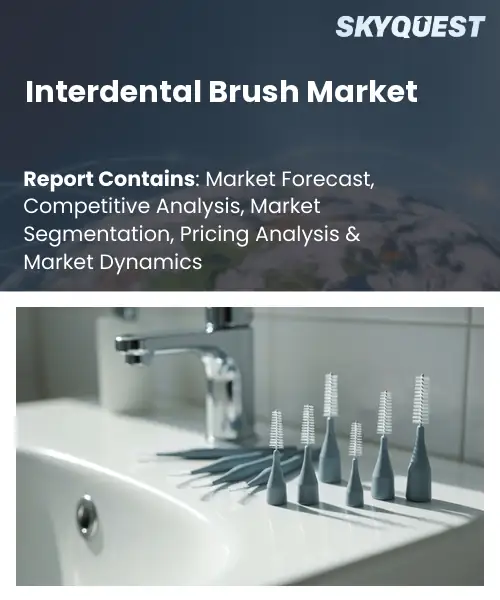
Interdental Brush Market
Report ID: SQMIG30L2441
Report ID: SQMIG30L2441
[email protected]
USA +1 351-333-4748
Report ID:
SQMIG30L2441 |
Region:
Global |
Published Date: July, 2026
Pages:
157
|Tables:
117
|Figures:
77


Global Interdental Brush Market size was valued at USD 1.52 Billion in 2024 and is poised to grow from USD 1.61 Billion in 2025 to USD 2.52 Billion by 2033, growing at a CAGR of 5.81% during the forecast period (2026-2033).
Rising awareness of oral hygiene, increasing prevalence of periodontal diseases, rising aging population, growing emphasis on preventive dental care, and expanding availability of oral care products are driving sales of interdental brushes.
Increased awareness regarding preventive oral healthcare and increasing incidence of gum diseases are expected to primarily drive interdental brush market growth. The increased use of interdental brushes for personal oral hygiene, as well as removal of plaques and dental implant maintenance, is contributing to the expansion of the market. Other factors such as investments in the development of new oral care products, biodegradable brushes, ergonomic design, and educational campaigns targeted at customers are also driving the market growth. There is constant innovation in the design, material used in production, and availability of brushes of various sizes, which make them comfortable and effective to use. Moreover, the rising need for at-home dental care products is creating new opportunities for the market globally.
Contrastingly, limited consumer awareness in developing regions, availability of alternative oral care products such as dental floss and water flossers, relatively high prices of premium products, and inconsistent consumer usage are slated to impede interdental brush market penetration across the study period and beyond.
How is AI-driven Personalization Influencing Global Interdental Brush Demand Outlook?
AI is improving the interdental brush market by helping consumers choose the right brush for their oral care needs. AI analyzes data from smart toothbrushes, dental scans, and user preferences to recommend the most suitable brush size, bristle type, and material for everyone. Many brands are integrating these recommendations into mobile apps, allowing consumers to receive personalized product suggestions before making a purchase. This reduces guesswork, improves user confidence, and enhances the overall oral care experience. AI also helps manufacturers better understand consumer preferences and optimize their product portfolios.
Market snapshot - (2026-2033)
Global Market Size
USD 1.52 Billion
Largest Segment
Extra Small (0.6-0.8mm)
Fastest Growth
Extra Small (0.6-0.8mm)
Growth Rate
5.81% CAGR
To get more insights on this market click here to Request a Free Sample Report
Global interdental brush market is segmented by size, material, distribution channel, end-user, and region. Based on size, the market is segmented into extra small (0.6-0.8mm), small (1.0-1.2mm), medium (1.5-2.0mm), and large (2.5mm+). Based on material, the market is segmented into nylon bristles and latex-free. Based on distribution channel, the market is segmented into pharmacies, online retail, and dental clinics. Based on end-user, the market is segmented into general consumers, orthodontic patients, and periodontal patients. Based on region, the market is segmented into North America, Europe, Asia Pacific, Latin America, and Middle East & Africa.
The medium size segment is slated to account for the highest global interdental brush market share in the future. It conforms to the anatomical gap size that most people have, hence being the standard type for flossing daily. The size is quite versatile in terms of being able to maneuver easily while giving enough cleaning coverage; therefore, it encourages repurchasing. Most dentists advise using this particular size because it works best for many different types of teeth, hence promoting brand loyalty.
Meanwhile, extra small size emerges as the most rapidly expanding subsegment as per this interdental brush industry analysis, because an enhanced consciousness of periodontal care at the initial stages makes patients gravitate towards more gentle interdental devices. This gentle nature allows for its usage in narrow interproximal areas without creating any harm to the teeth, thus making more people prefer it.
The pharmacies segment is predicted to lead the global interdental brush market revenue generation across the study period. They ensure that consumers have instant access to oral care products on their shopping excursions and increase their trust in the quality of the products being offered. Their availability and visibility on shelves increase the likelihood of customers purchasing on impulse, while the staff in these pharmacies can assist the customer with basic advice in making a purchase, leading to a continuous process of sales and maintaining visibility for brands in the market.
Conversely, online retail emerges as the fastest growing channel because these mediums facilitate easy identification of goods as well as provide extensive education through video tutorials and reviews. Customers value the convenience of doorstep delivery along with greater options available for comparison, which contributes towards the quick adoption by consumers and forces companies to adopt e-commerce.
To get detailed segments analysis, Request a Free Sample Report
Mature consumer awareness, strong dental care infrastructure, and widespread adoption of preventive oral hygiene practices are predicted to lead the global interdental brush market revenue generation over the coming years. With efficient distribution channels and large manufacturers operating in the market, there is assured product availability through all types of distribution channels. With high levels of disposable income and the focus on health, purchase frequency is also high among consumers, along with the recommendation by dentists who regard interdental brushes as a must-have complement to brushing. Brush design innovation and high-quality materials used for their production contribute to this confidence. The regulatory conditions supporting safety and labeling also enhance this confidence. Digital marketing further strengthens the awareness and popularity of interdental brush brands. Furthermore, the inclusion of interdental brushes in insurance-covered prevention care plans adds value to the region’s dominance in the market.
Interdental brush demand dynamics in the United States reflect a highly competitive landscape where leading brands invest heavily in consumer education and product differentiation. Dental practitioners can make an important contribution through the integration of brushes in their preventive treatment plans, while retail outlets will be helped by effective product visibility on the shelves. The development of innovative designs for the handle and bristle arrangement takes into account different user requirements.
Interdental brush sales in Canada are shaped by a strong public health emphasis on preventive dentistry and widespread endorsement by professional associations. Consumers have access to convenience via pharmacies and websites, whereas manufacturers emphasize sustainable packaging to meet the environmental demands. Partnership programs between dental institutions and manufacturers facilitate ongoing innovation, which keeps the market relevant in line with changing oral health standards in the country from here on.
High consumer awareness of oral health benefits, strong support from dental professionals, and progressive regulatory frameworks that encourage product innovation create new opportunities in the region. Strict requirements for dental hygiene throughout the continent encourage the regular use of interdental cleaning instruments, along with highly developed distribution systems to guarantee wide availability. Stress on preventive care in the healthcare policies of respective countries is the reason behind the inclusion of these brushes in the insurance plans, ensuring accessibility. Moreover, joint research projects of universities and companies contribute to constant development of the brushes in terms of ergonomic design and environmentally sustainable materials, making Europe a center of innovation in oral care items. Preference for natural and biodegradable ingredients matches the demands of consumers for environmentally friendly products, motivating manufacturers to offer environmentally friendly lines of products.
Interdental brush market conditions in Germany benefit from a rigorous healthcare system that emphasizes preventive dentistry and strong reimbursements for oral care products. German consumers appreciate high‑quality engineering, leading manufacturers to focus on precision design and durable materials. Close collaboration between dental research institutes and industry drives continuous product refinement, while extensive retail coverage ensures easy consumer access across both metropolitan and regional markets through well‑established distribution networks and strong.
Interdental brush market momentum in the United Kingdom is propelled by heightened public campaigns that link oral hygiene to overall wellbeing. Dental practitioners increasingly integrate brushes into routine check‑ups, while e‑commerce platforms expand product visibility among tech‑savvy consumers. Manufacturers respond with sleek, compact designs tailored to lifestyle preferences, and sustainability claims resonate strongly with environmentally conscious shoppers. These factors combine to accelerate rapid market uptake throughout the country today onward.
Interdental brush demand in France is emerging as dental professionals place greater emphasis on interdental cleaning as part of comprehensive care. Consumers are taking up interdental brushes owing to increasing awareness campaigns and suggestions offered during routine dental check-ups. Local producers are concentrating on cost-effective yet efficient products, and the importers are increasing their array of high-quality choices. The retail drugstores and online stores form new sources for consumers.
Rising oral health consciousness, expanding middle-class consumer bases, and rapid adoption of modern dental care practices are estimated to boost interdental brush demand in the region. There is heavy investment being made by countries in the region into infrastructure and education about dentistry, thereby raising the need for additional hygiene products. These local companies are utilizing the latest technology in materials to create brushes with softer and flexible bristles, meeting the needs of people from different cultures. Collaboration with multinational companies increases the scope of the market, while online sales help reach out to the technologically-savvy population. The environmental concern in turn makes companies consider biodegradable handles, helping meet the increasing requirements of sustainability in the region. The retail expansion in tier-2 and tier-3 cities increases the diversity of markets, thereby ensuring that even remote customers can access good interdental products.
Interdental brush market trends in Japan are characterized by meticulous consumer expectations for precision engineering and gentle oral care. Dental professionals promote brushes as essential for plaque control, especially among aging populations with interdental spacing challenges. Manufacturers respond with ultra‑fine bristle arrays and ergonomic handles designed for delicate gum tissue. Distribution through pharmacy chains, specialized clinics, and e‑commerce platforms ensures comprehensive market coverage across densely populated urban centers in Japan.
Interdental brush market activity in South Korea benefits from a high adoption rate of preventative dental routines and strong influence of beauty‑oriented health culture. Innovative products which blend beauty with performance are appreciated by consumers, thus companies must incorporate attractive designs and color-coded bristles in their products. The online sales network and quick shipping services help deliver the products while the dental clinics promote brushes as a means of proper dental hygiene.
To know more about the market opportunities by region and country, click here to
Buy The Complete Report
Rising Oral Health Awareness
Technological Advancements In Brush Design
Limited Consumer Awareness In Emerging Markets
High Price Sensitivity Among Users
Request Free Customization of this report to help us to meet your business objectives.
The competitive landscape is shaped by intense rivalry among established oral‑care giants and emerging niche players, driving product differentiation and channel expansion. Recent M&A activity, such as a leading consumer‑goods group acquiring a specialty interdental brush brand, and partnerships between manufacturers and dental‑practice networks are accelerating distribution reach, while tech‑enabled brush designs are raising performance standards.
SkyQuest’s ABIRAW (Advanced Business Intelligence, Research & Analysis Wing) is our Business Information Services team that Collects, Collates, Correlates, and Analyses the Data collected by means of Primary Exploratory Research backed by robust Secondary Desk research.
As per SkyQuest analysis, surge in prevalence of periodontal diseases, rising aging population, and growing emphasis on preventive dental care are anticipated to drive the demand for interdental brushes going forward. However, availability of alternative oral care products and limited consumer awareness in developing regions are slated to slow down the adoption of interdental brushes in the future. North America is slated to spearhead the demand for interdental brushes owing to high oral healthcare awareness, strong dental care infrastructure, widespread adoption of preventive dental practices, and the presence of leading oral care product manufacturers. AI-powered personalized oral care recommendations and development of sustainable interdental brush products are anticipated to be key trends driving the interdental brush market over the coming years.
| Report Metric | Details |
|---|---|
| Market size value in 2024 | USD 1.52 Billion |
| Market size value in 2033 | USD 2.52 Billion |
| Growth Rate | 5.81% |
| Base year | 2024 |
| Forecast period | (2026-2033) |
| Forecast Unit (Value) | USD Billion |
| Segments covered |
|
| Regions covered | North America (US, Canada), Europe (Germany, France, United Kingdom, Italy, Spain, Rest of Europe), Asia Pacific (China, India, Japan, Rest of Asia-Pacific), Latin America (Brazil, Rest of Latin America), Middle East & Africa (South Africa, GCC Countries, Rest of MEA) |
| Companies covered |
|
| Customization scope | Free report customization with purchase. Customization includes:-
|
To get a free trial access to our platform which is a one stop solution for all your data requirements for quicker decision making. This platform allows you to compare markets, competitors who are prominent in the market, and mega trends that are influencing the dynamics in the market. Also, get access to detailed SkyQuest exclusive matrix.
Table Of Content
Executive Summary
Market overview
Parent Market Analysis
Market overview
Market size
KEY MARKET INSIGHTS
COVID IMPACT
MARKET DYNAMICS & OUTLOOK
Market Size by Region
KEY COMPANY PROFILES
Methodology
For the Interdental Brush Market, our research methodology involved a mixture of primary and secondary data sources. Key steps involved in the research process are listed below:
1. Information Procurement: This stage involved the procurement of Market data or related information via primary and secondary sources. The various secondary sources used included various company websites, annual reports, trade databases, and paid databases such as Hoover's, Bloomberg Business, Factiva, and Avention. Our team did 45 primary interactions Globally which included several stakeholders such as manufacturers, customers, key opinion leaders, etc. Overall, information procurement was one of the most extensive stages in our research process.
2. Information Analysis: This step involved triangulation of data through bottom-up and top-down approaches to estimate and validate the total size and future estimate of the Interdental Brush Market.
3. Report Formulation: The final step entailed the placement of data points in appropriate Market spaces in an attempt to deduce viable conclusions.
4. Validation & Publishing: Validation is the most important step in the process. Validation & re-validation via an intricately designed process helped us finalize data points to be used for final calculations. The final Market estimates and forecasts were then aligned and sent to our panel of industry experts for validation of data. Once the validation was done the report was sent to our Quality Assurance team to ensure adherence to style guides, consistency & design.
Analyst Support
Customization Options
With the given market data, our dedicated team of analysts can offer you the following customization options are available for the Interdental Brush Market:
Product Analysis: Product matrix, which offers a detailed comparison of the product portfolio of companies.
Regional Analysis: Further analysis of the Interdental Brush Market for additional countries.
Competitive Analysis: Detailed analysis and profiling of additional Market players & comparative analysis of competitive products.
Go to Market Strategy: Find the high-growth channels to invest your marketing efforts and increase your customer base.
Innovation Mapping: Identify racial solutions and innovation, connected to deep ecosystems of innovators, start-ups, academics, and strategic partners.
Category Intelligence: Customized intelligence that is relevant to their supply Markets will enable them to make smarter sourcing decisions and improve their category management.
Public Company Transcript Analysis: To improve the investment performance by generating new alpha and making better-informed decisions.
Social Media Listening: To analyze the conversations and trends happening not just around your brand, but around your industry as a whole, and use those insights to make better Marketing decisions.
REQUEST FOR SAMPLE
 REQUEST FREE CUSTOMIZATION
Global Interdental Brush Market size was valued at USD 1.52 Billion in 2024 and is poised to grow from USD 1.61 Billion in 2025 to USD 2.52 Billion by 2033, growing at a CAGR of 5.81% during the forecast period (2026-2033).
The competitive landscape is shaped by intense rivalry among established oral‑care giants and emerging niche players, driving product differentiation and channel expansion. Recent M&A activity, such as a leading consumer‑goods group acquiring a specialty interdental brush brand, and partnerships between manufacturers and dental‑practice networks are accelerating distribution reach, while tech‑enabled brush designs are raising performance standards. 'GUM (Sunstar Group)', 'TEPE Oral Health Care', 'Oral-B (Procter & Gamble)', 'Colgate-Palmolive', 'DenTek Oral Care', 'Piksters', 'Plackers (Prestige Consumer)', 'Flossaid Corporation', 'Radius Natural', 'Dr. Collins', 'Professional Dental Manufacturing', 'TePe Munhygienprodukter', 'Curaprox (Curaden)', 'Tandex A/S', 'Lactona BV', 'Stomalys', 'Lion Corporation', 'Kao Corporation', 'Ebisu Co. Ltd.', 'Wisdom Toothbrushes'
Consumers are becoming more knowledgeable about the role of interdental cleaning in preventing gum disease, and dental practitioners are actively recommending interdental brushes as a complement to regular toothbrushing. This heightened awareness drives greater adoption of oral hygiene routines that incorporate specialized tools, encouraging retailers to expand product assortments and manufacturers to innovate designs that enhance comfort and efficacy. Consequently, the market experiences sustained growth as a broader patient base seeks to maintain oral health through consistent use of interdental brushes.
Sustainability‑Driven Material Innovation: Manufacturers are increasingly reformulating brush handles and bristle assemblies using biodegradable polymers and recycled plastics, responding to consumer demand for eco‑friendly oral care solutions. This shift not only reduces the environmental footprint of products but also opens new branding opportunities centered on sustainability. Companies are leveraging these materials to differentiate product lines, targeting health‑conscious buyers who prioritize green credentials, while aligning with retailer sustainability pledges and regulatory trends that favor reduced plastic waste across personal care categories in the market.
Why does North America Dominate the Global Interdental Brush Market? |@12


Want to customize this report? This report can be personalized according to your needs. Our analysts and industry experts will work directly with you to understand your requirements and provide you with customized data in a short amount of time. We offer $1000 worth of FREE customization at the time of purchase.
Feedback From Our Clients


 USA (+1) 351-333-4748

