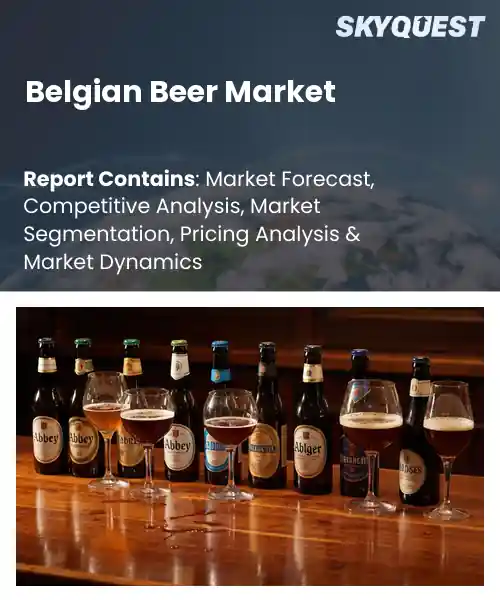
Belgian Beer Market
Report ID: SQMIG30E2105
Report ID: SQMIG30E2105
[email protected]
USA +1 351-333-4748
Report ID:
SQMIG30E2105 |
Region:
Global |
Published Date: July, 2026
Pages:
157
|Tables:
118
|Figures:
77


Global Belgian Beer Market size was valued at USD 8.52 Billion in 2024 and is poised to grow from USD 8.99 Billion in 2025 to USD 13.85 Billion by 2033, growing at a CAGR of 5.52% during the forecast period (2026-2033).
The Belgian beer market has a rich cultural background and a worldwide reputation for diversity as driving forces behind its demand and value, both. The Belgian beer market is characterized by its artisanal nature and consumer's trust in the artisan industry, and it is apparent in both the artisan industry's use of protected designations (e.g., Trappist and lambic styles) and its willingness to charge consumers a premium for artisan/handcrafted products. The evolution of the Belgian beer market over several decades has resulted in a composite ecosystem made up of small family and monastic brewers, a layered beer market composed of international brands, craft brewers and specialty microbreweries, and many other types of companies.
There are several examples of hybrid brewers with a combination of historical evidence and innovation that have contributed to establishing long-term domestic demand and niche worldwide appeal; Chimay, Cantillon, and Westvleteren are examples of hybrid brewers creating both authenticity in their products and innovation in the way those products are presented to the market. One key market driver affecting international demand for Belgian beers is the premiumization of craft products and their storytelling which directly leads to geographical growth opportunities (e.g., expanded customer base), increased profit margins and increased distribution. The international markets for Belgian beers have driven premium prices for both Belgian beers and craft beers outside of Belgium through the use of historical narratives and protected labels; as a result, the breweries are able to fund capital upgrades, develop taproom experiences and expand into digital commerce.
Visitors to Belgian breweries often will purchase packaged beer from those breweries after they have experienced a brewery; those purchases are reflective of the visitor's association of the brewery's products with the brewery's reputation (i.e., "brand recognition") and constitute a reliable source of continuing orders from food and beverage outlets and specialty retailers. Consequently strategic partnerships, limited-edition collaborations, and sustainability-labeled ranges emerge as concrete opportunities that convert authenticity into scalable revenue.
How is AI Improving Production Efficiency For Craft Breweries In The Belgian Beer Market?
Belgian artisan breweries are able to improve their production efficiency with the assistance of AI in multiple ways including predictive maintenance, smarter scheduling, consistent recipe management and automated quality inspection. Some of the key areas where breweries are currently using AI are machine learning models that predict when equipment may have problems; process control systems to stabilise fermentation processes; and computer vision systems used to identify early off flavours. The current economic climate for breweries has forced them to adopt data driven technologies to link brewing parameters with demand forecasts and inventory due to cost pressures and market competition.
Some examples of the real-world application of AI to help provide reliable small batch production by linking brewing parameters to customer demand forecasts are digital twin technology platforms; AI driven planning tools; and AI technology focused on food safety. A specific case is Duvel Moortgat May 2026, which implemented OMP Unison Express to align demand, scheduling and capacity between Duvel's Belgian breweries by using AI-based demand forecasting and optimization to minimise production changeover times and optimize supply chain flow. The result of this initiative is the ability to generate consistent production, improve alignment of inventory, and create more effective business growth for craft-focused producers.
Market snapshot - (2026-2033)
Global Market Size
USD 8.52 Billion
Largest Segment
Trappist/Abbey Ales
Fastest Growth
Saison & Farmhouse Ales
Growth Rate
5.52% CAGR
To get more insights on this market click here to Request a Free Sample Report
Global belgian beer market is segmented by beer style, distribution, price segment, end-user and region. Based on beer style, the market is segmented into Trappist/Abbey Ales, Saison & Farmhouse Ales, Belgian Witbier, Lambic & Gueuze and Belgian Strong Ales. Based on distribution, the market is segmented into On-Trade (Bars, Restaurants), Off-Trade (Retail) and Export. Based on price segment, the market is segmented into Premium and Standard. Based on end-user, the market is segmented into Domestic Consumers and International Consumers. Based on region, the market is segmented into North America, Europe, Asia Pacific, Latin America and Middle East & Africa.
The Trappist/Abbey Ales segment is the largest segment of the Belgian beer market due to its historical roots in monastic brewing, as well as the cultural significance of the product. The resulting reputation provides a premium position for products, along with continuing strong demand from connoisseurs, encouraging breweries to preserve their traditional brewing methods and promote their unique geographical origins. Consequently, the distribution channels and trade partners will prefer to carry these offerings and will leverage their leadership position by emphasizing storytelling, quality and their influence in the industry.
The most rapidly growing segment of the Belgian beer market is Belgian Witbier. The growth of this category is being driven by consumers' increasing interest in lighter, spiced flavor profiles and the types of occasions when beer is consumed. As a result, breweries are experimenting with modern yeast strains for Belgian Witbier and developing recipes that feature citrus and hops. These changes will enhance the visibility of Belgian Witbier in taprooms and on retail shelves, creating additional opportunities for consumers to try the product, while also inviting younger drinkers to engage with the product, thereby creating momentum for continued growth of the overall category and innovation.
International demand for Belgian beer shapes brewery investments/products via distributor partnerships and encourages capacity planning and supply chain resilience (via access to foreign markets) through increased focus on packaging, shelf-life, and quality/influence to innovate by developing some broadly appealing styles. These can direct professionalization of brewers/hospitality operators and impact the decision-making when developing a domestic portfolio.
Meanwhile, on-trade (bars, restaurants) is growing fastest due in part to experiential consumption, which leads to more programming/events at tap rooms and curated draft offerings. Closer collaboration between brewers/hospitality operators results in increased quantity/variety of seasonal/limited releases; increased trial of consumers and premiumization of beer; creation of additional revenue streams for brewers/hospitality operators via activation in markets beyond traditional retail.
To get detailed segments analysis, Request a Free Sample Report
Belgium's beer exports enjoy a booming market in Europe as a result of the harmonious mix of cultural compatibility, geographical accessibility to their neighboring countries and advanced distribution channels. There has been a long tradition of appreciation for artisanal & specialty beers throughout the continent which creates considerable demand for Belgian style beers. In addition, Europe's common regulatory standards and advanced transportation systems make distribution simple. Well-established on-premise accounts and unique/experiential drinking behaviours also contribute to the prominence of premium Belgian beer brands. In addition to the physical attributes associated with the appeal of Belgian beers, there exists a sizeable community of importers, distributors and beer sommeliers in many of the prominent European markets — all of whom create additional visibility for the Belgian brewery brands/labels. Furthermore, the strong affinity of many people in Europe towards beer & all of the accompanying traditions of beer tasting creates an enhanced level of credibility in the minds of consumers for Belgian beer brands/labels; thus allowing Belgian breweries to penetrate the wine market with the greatest ease possible.
In Germany, the Belgian Beer Market thrives due to a long-standing beer culture and consumers who appreciate the variety of options available from outside of Germany. Both German on-premise venues and craft beer retailers work to curate the best of Belgian products. This creates the opportunity for premium positioning for these Belgian beers. Additionally, strong beer education and active Belgian beer festival circuits create an appreciation for the complexities of Belgian brewing techniques. Finally, distribution partners who specialize in the logistics of distributing craft beer continue to support the broad distribution of Belgian beers throughout both urban and regional channels reinforcing the visibility of Belgian beers next to the traditional German beers.
The Belgian Beer market in the UK is supported through the pub culture that exists throughout the country, as well as the interest in craft and imported beers. The UK distributors and importers continue to promote Belgian beers through curated product assortments and notable examples of how to enjoy Belgian beers with food. There are multiple enthusiastic beer communities supporting Belgian brands, as well as regular tasting events, prominently displayed on-premise by knowledgeable bartenders. Additionally, retail outlets that focus on premium beer (such as specialty beer shops) also provide access to Belgian beer. Media coverage also plays a large role in promoting the heritage of beer in general and assists Belgian beer brands to increase exposure and encourage consumers to try Belgian products.
Belgian Beer Market in France leverages geographic proximity and a shared appreciation for gastronomic pairing, positioning Belgian beers as complements to regional cuisine. French consumers with an affinity for artisanal food and drink are receptive to Belgian brewing traditions, while bistros and specialty wine and beer shops integrate Belgian options into curated selections. Local distributors experienced in premium imports facilitate access to urban gastronomic centers, and a cultural emphasis on taste and provenance enhances Belgian beer appeal among discerning French buyers.
The expansion of Belgian beer in North America is driven by shifting consumer tastes toward authenticity, diversity, and artisanal provenance, combined with an expanding network of craft-focused importers and specialty retailers. North American on-trade venues increasingly seek differentiated offerings to attract experiential consumers, elevating interest in Belgian styles known for unique yeast profiles and brewing techniques. Education through beer festivals, curated tap takeovers, and media coverage amplifies consumer awareness, while distribution partnerships tailored to craft imports facilitate broader geographic reach. Enthusiasm among homebrewers, sommeliers, and hospitality professionals for Belgian brewing lore supports premium placement and cross-channel visibility, creating fertile ground for Belgian breweries to deepen market engagement.
Belgian Beer Market in United States benefits from a dynamic craft beer scene that prizes innovation and heritage styles, making Belgian beers attractive to adventurous consumers. Specialized importers and regional distributors enable placement in influential urban markets, while bars, taprooms, and festival circuits provide platforms for consumer education and sampling. Enthusiastic beer media and trade communities further drive interest by highlighting traditional Belgian techniques and pairing potential, supporting premium positioning and steady expansion across diverse on-trade and retail channels.
Belgian Beer Market in Canada is supported by a strong culture of craft beer appreciation and government retail systems that often emphasize curated selections. Importers that specialize in artisanal beverages foster relationships with independent retailers and hospitality outlets to introduce Belgian varieties. Canadian consumers interested in gastronomic experiences respond well to Belgian flavor complexity, and regional beer festivals and specialty tastings create valuable touchpoints for education and brand discovery. These channels help sustain demand for Belgian styles within competitive craft portfolios.
Asia Pacific is strengthening its role in the Belgian beer market through evolving consumer preferences, expanding premium hospitality sectors, and growing appreciation for international beer craftsmanship. Upscale bars, hotels, and specialty retailers in metropolitan centers increasingly feature Belgian offerings as part of curated menus, while local sommeliers and beer educators advocate for varied styles and pairing applications. Cultural curiosity about brewing traditions, supported by tasting events and collaborative promotions with Belgian brewers, enhances brand familiarity. Improvements in cold chain logistics and targeted distribution partnerships enable reliable supply, and rising experiential consumption patterns among urban professionals create sustainable demand for authentic Belgian beer experiences.
Belgian Beer Market in Japan aligns with a refined drinking culture that values craftsmanship and seasonal variation, making Belgian styles appealing to discerning consumers. Specialty importers and high-end bars position Belgian beers alongside premium food experiences, promoting pairing and tasting rituals. Educational initiatives and curated events led by beverage professionals raise consumer awareness, while careful attention to presentation and provenance resonates with Japanese market expectations, supporting steady interest in a variety of Belgian offerings.
Belgian Beer Market in South Korea is gaining traction as urban consumers seek novel and premium beverage experiences, with craft-friendly bars and gastro pubs showcasing imported Belgian styles. Importers focused on craft and premium segments cultivate relationships with trendy hospitality venues to introduce Belgian brands. Tasting events and social media discourse by beverage influencers contribute to consumer education and trial, and emphasis on quality and authenticity aligns well with South Korean preferences for curated international drink options.
To know more about the market opportunities by region and country, click here to
Buy The Complete Report
Rising Global Tourism Interest
Premiumization Of Beer Offerings
Regulatory and Tax Complexity
Supply Chain Constraints
Request Free Customization of this report to help us to meet your business objectives.
The Belgian beer competitive landscape is shaped by consolidation among legacy brewers, an active craft revival and sustainability driven differentiation that alter channel access and brand positioning. Consolidators pursue targeted M&A and equity stakes while independents forge partnerships and product and tech innovation to defend niches, for example AB InBev’s global scale, Duvel Moortgat’s strategic acquisitions and craft innovators experimenting with zero waste brewing.
SkyQuest’s ABIRAW (Advanced Business Intelligence, Research & Analysis Wing) is our Business Information Services team that Collects, Collates, Correlates, and Analyses the Data collected by means of Primary Exploratory Research backed by robust Secondary Desk research.
As per SkyQuest analysis, one key driver is the strong cultural heritage and premiumization of Belgian styles, which supports higher margins, investment in taproom experiences and sustainability initiatives, and broad export appeal. One restraint is regulatory and tax complexity combined with recurring supply chain constraints that raise compliance and procurement costs and slow scaling. Dominating region is Europe where proximity, cultural affinity and mature distribution networks concentrate demand and on-trade activation. Dominating segment is Trappist/Abbey Ales, which anchor premium positioning through protected provenance. Second driver is expanding export and tourism-fuelled demand that converts visitor interest into sustained international sales and distribution partnerships.
| Report Metric | Details |
|---|---|
| Market size value in 2024 | USD 8.52 Billion |
| Market size value in 2033 | USD 13.85 Billion |
| Growth Rate | 5.52% |
| Base year | 2024 |
| Forecast period | (2026-2033) |
| Forecast Unit (Value) | USD Billion |
| Segments covered |
|
| Regions covered | North America (US, Canada), Europe (Germany, France, United Kingdom, Italy, Spain, Rest of Europe), Asia Pacific (China, India, Japan, Rest of Asia-Pacific), Latin America (Brazil, Rest of Latin America), Middle East & Africa (South Africa, GCC Countries, Rest of MEA) |
| Companies covered |
|
| Customization scope | Free report customization with purchase. Customization includes:-
|
To get a free trial access to our platform which is a one stop solution for all your data requirements for quicker decision making. This platform allows you to compare markets, competitors who are prominent in the market, and mega trends that are influencing the dynamics in the market. Also, get access to detailed SkyQuest exclusive matrix.
Table Of Content
Executive Summary
Market overview
Parent Market Analysis
Market overview
Market size
KEY MARKET INSIGHTS
COVID IMPACT
MARKET DYNAMICS & OUTLOOK
Market Size by Region
KEY COMPANY PROFILES
Methodology
For the Belgian Beer Market, our research methodology involved a mixture of primary and secondary data sources. Key steps involved in the research process are listed below:
1. Information Procurement: This stage involved the procurement of Market data or related information via primary and secondary sources. The various secondary sources used included various company websites, annual reports, trade databases, and paid databases such as Hoover's, Bloomberg Business, Factiva, and Avention. Our team did 45 primary interactions Globally which included several stakeholders such as manufacturers, customers, key opinion leaders, etc. Overall, information procurement was one of the most extensive stages in our research process.
2. Information Analysis: This step involved triangulation of data through bottom-up and top-down approaches to estimate and validate the total size and future estimate of the Belgian Beer Market.
3. Report Formulation: The final step entailed the placement of data points in appropriate Market spaces in an attempt to deduce viable conclusions.
4. Validation & Publishing: Validation is the most important step in the process. Validation & re-validation via an intricately designed process helped us finalize data points to be used for final calculations. The final Market estimates and forecasts were then aligned and sent to our panel of industry experts for validation of data. Once the validation was done the report was sent to our Quality Assurance team to ensure adherence to style guides, consistency & design.
Analyst Support
Customization Options
With the given market data, our dedicated team of analysts can offer you the following customization options are available for the Belgian Beer Market:
Product Analysis: Product matrix, which offers a detailed comparison of the product portfolio of companies.
Regional Analysis: Further analysis of the Belgian Beer Market for additional countries.
Competitive Analysis: Detailed analysis and profiling of additional Market players & comparative analysis of competitive products.
Go to Market Strategy: Find the high-growth channels to invest your marketing efforts and increase your customer base.
Innovation Mapping: Identify racial solutions and innovation, connected to deep ecosystems of innovators, start-ups, academics, and strategic partners.
Category Intelligence: Customized intelligence that is relevant to their supply Markets will enable them to make smarter sourcing decisions and improve their category management.
Public Company Transcript Analysis: To improve the investment performance by generating new alpha and making better-informed decisions.
Social Media Listening: To analyze the conversations and trends happening not just around your brand, but around your industry as a whole, and use those insights to make better Marketing decisions.
REQUEST FOR SAMPLE
 REQUEST FREE CUSTOMIZATION
Global Belgian Beer Market size was valued at USD 8.52 Billion in 2024 and is poised to grow from USD 8.99 Billion in 2025 to USD 13.85 Billion by 2033, growing at a CAGR of 5.52% during the forecast period (2026-2033).
The Belgian beer competitive landscape is shaped by consolidation among legacy brewers, an active craft revival and sustainability driven differentiation that alter channel access and brand positioning. Consolidators pursue targeted M&A and equity stakes while independents forge partnerships and product and tech innovation to defend niches, for example AB InBev’s global scale, Duvel Moortgat’s strategic acquisitions and craft innovators experimenting with zero waste brewing. 'AB InBev (Stella Artois, Leffe, Hoegaarden)', 'AB InBev Belgium', 'Alken-Maes (Heineken)', 'Palm Breweries (Rodenbach/Swinkels)', 'Duvel Moortgat', 'St. Bernardus Brewery', 'Brouwerij Huyghe (Delirium Tremens)', 'Brasserie d'Achouffe (Duvel Moortgat)', 'Brouwerij De Molen', 'Brouwerij Westmalle (Trappist)', 'Brasserie Orval (Trappist)', 'Brouwerij Westvleteren (Trappist)', 'Brasserie de Rochefort (Trappist)', 'Chimay Breweries (Trappist)', 'Brouwerij der Trappisten van Westmalle', 'Cantillon Brewery (Lambic)', '3 Fonteinen (Lambic)', 'Lindemans Brewery', 'Brasserie Dupont (Saison)', 'Ardenne Brasserie'
Belgian beer's visibility among international visitors and export markets stimulates demand by exposing diverse consumers to traditional brewing methods and unique flavor profiles, encouraging trial and repeat purchases abroad and at home. This wider recognition supports brand reputation and prompts distributors and restaurateurs to expand offerings, enabling breweries to justify broader production and innovation. Enhanced export presence also attracts partnerships and licensing opportunities, which in turn foster market development, market access, and sustained interest in Belgian beer culture across multiple consumer segments.
Premiumization And Craft Revival: Belgian beer producers are shifting focus toward premium, small-batch offerings and artisanal reinterpretations of traditional styles. Distinctive flavor profiles, limited releases, and storytelling about provenance create stronger emotional connections with discerning consumers. Trade partners and hospitality clients are receptive to curated portfolios that differentiate from mass-market options. Investment in experiential marketing, taproom experiences, and collaboration brews enhances brand equity. This movement supports better margins and fuels experimentation while preserving heritage and renewing interest in historically rooted recipes in international markets.
Why does Europe Dominate the Global Belgian Beer Market? |@12


Want to customize this report? This report can be personalized according to your needs. Our analysts and industry experts will work directly with you to understand your requirements and provide you with customized data in a short amount of time. We offer $1000 worth of FREE customization at the time of purchase.
Feedback From Our Clients


 USA (+1) 351-333-4748

