Anesthesia Video Laryngoscope Market
Report ID: SQMIG35A4172
Report ID: SQMIG35A4172
[email protected]
USA +1 351-333-4748
Report ID:
SQMIG35A4172 |
Region:
Global |
Published Date: July, 2026
Pages:
157
|Tables:
140
|Figures:
78


Global Anesthesia Video Laryngoscope Market size was valued at USD 560.0 Million in 2024 and is poised to grow from USD 650.72 Million in 2025 to USD 2162.93 Million by 2033, growing at a CAGR of 16.2% during the forecast period (2026-2033).
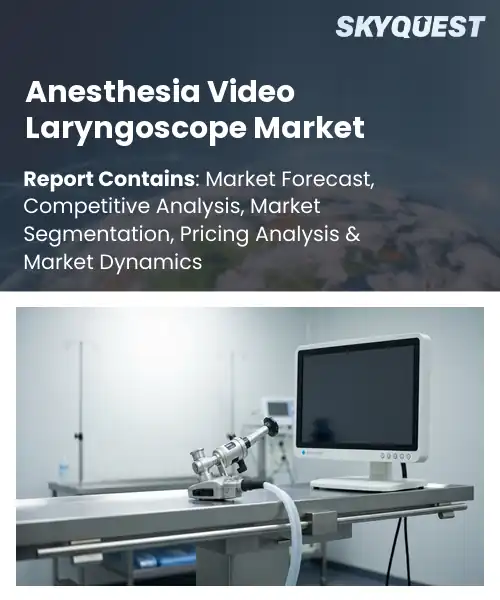
The global anesthesia video laryngoscope market encompasses devices that combine a camera with a laryngoscope blade, enabling clinicians to visualize the airway on a monitor during intubation. This capability reduces failed intubations and improves patient safety, which explains why hospitals and ambulatory surgery centers increasingly adopt the technology. Historically, the market was dominated by conventional laryngoscopes, but the introduction of video‑assisted models in the early 2010s sparked rapid growth, especially after the 2014 American Society of Anesthesiologists guideline endorsed video laryngoscopy for anticipated difficult airways. As a result, manufacturers expanded product lines and distributors entered economies, creating a supply chain.
The key trend driving the global anesthesia video laryngoscope sector is the escalating demand for minimally invasive surgical procedures, which require precise airway management to reduce peri‑operative complications. As surgeons shift toward laparoscopy and robotic platforms, anesthesiologists rely on video laryngoscopy to achieve faster, more reliable intubations, thereby shortening anesthesia time and improving turnover. This operational efficiency attracts hospital administrators seeking cost savings, prompting procurement of advanced laryngoscopes equipped with recording and connectivity features. Consequently, firms that integrate artificial‑intelligence analytics into their devices gain a competitive edge, opening revenue streams through software licensing and tele‑training programs that expand market penetration.
How is AI-Driven Imaging Enhancing the Anesthesia Video Laryngoscope Market?
AI‑driven imaging is reshaping anesthesia video laryngoscopes by embedding real‑time depth perception, automatic anatomical landmark detection and predictive airway difficulty scoring. These capabilities reduce reliance on operator experience, accelerate intubation and lower complication risk. Integrated AI also streamlines data capture for post‑procedure analysis, supporting training and quality improvement. As hospitals adopt digital operating rooms, the technology aligns with broader moves toward precision medicine and workflow automation, making video laryngoscopes more attractive to clinicians and procurement teams alike.
In September 2025, Ambu highlighted the integration of artificial intelligence into its digital airway management ecosystem following the expansion of its SureSight™ Connect platform. AI-assisted image analysis and workflow capabilities are being developed to support improved airway visualization, clinician decision-making, training, and procedural efficiency during video laryngoscopy and anesthesia practice.
Market snapshot - (2026-2033)
Global Market Size
USD 560.0 Million
Largest Segment
Rigid Video Laryngoscopes
Fastest Growth
Flexible Video Laryngoscopes
Growth Rate
16.2% CAGR
To get more insights on this market click here to Request a Free Sample Report
Global anesthesia video laryngoscope market is segmented by product type, channel configuration, usage type, end-user, distribution channel and region. Based on product type, the market is segmented into rigid video laryngoscopes and flexible video laryngoscopes. Based on channel configuration, the market is segmented into channeled video laryngoscopes and non-channeled video laryngoscopes. Based on usage type, the market is segmented into reusable video laryngoscopes and disposable video laryngoscopes. Based on end-user, the market is segmented into hospitals & clinics, ambulatory surgical centers and pre-hospital emergency settings. Based on distribution channel, the market is segmented into direct and indirect. Based on region, the market is segmented into North America, Europe, Asia Pacific, Latin America and Middle East & Africa.
Based on the global anesthesia video laryngoscope market growth, rigid video laryngoscopes segment dominates because clinicians value consistent imaging quality and robust mechanical design that reduce equipment failure during airway management. The fixed optical pathway delivers reliable visualization even in challenging anatomical scenarios, fostering confidence among anesthesiologists. Hospitals prioritize these devices for routine surgeries, and durability aligns with cost‑containment strategies, reinforcing widespread adoption across operative settings. Their compatibility with existing video platforms simplifies staff training and reduces downtime, further solidifying their lead.
Meanwhile, flexible video laryngoscopes segment is witnessing the strongest growth momentum because its adaptable shaft enables easier navigation of complex airway anatomies, particularly in pediatric and emergency contexts. Ongoing research on ergonomic designs and integration with wireless display systems drives adoption, expanding market reach and creating new opportunities for innovative airway management solutions.
Reusable video laryngoscopes segment dominates because healthcare providers value the long‑term cost efficiency achieved through multiple uses of a single device, offsetting higher upfront investment. These instruments are designed for thorough sterilization cycles, aligning with stringent infection‑control protocols while preserving high‑resolution imaging. Their established reliability and compatibility with existing hospital procurement frameworks reinforce preference across surgical specialties, cementing their leading position in the anesthesia video laryngoscope market.
On the other hand, disposable video laryngoscopes segment is experiencing rapid expansion because single‑use designs eliminate cross‑contamination risk and streamline workflow in high‑turnover environments. Emerging regulatory emphasis on patient safety and the push for cost‑effective consumables accelerate adoption, opening avenues for manufacturers to innovate with biodegradable materials and integrated imaging enhancements, thus propelling market growth.
To get detailed segments analysis, Request a Free Sample Report
As per the global anesthesia video laryngoscope market share, North America leads the industry through a combination of advanced clinical adoption, robust health‑care infrastructure, and strong emphasis on patient safety. Healthcare providers in the region have embraced video laryngoscopy for its enhanced visualization and reduced complication risk, supported by extensive training programs and institutional guidelines. Device manufacturers benefit from close collaboration with leading academic centers and a regulatory environment that encourages innovative product development. Reimbursement frameworks that recognize the value of precision airway management further reinforce widespread usage. The integration of digital health technologies and data‑driven decision making also accelerates product refinement, positioning the region as a benchmark for clinical excellence and operational efficiency in airway management.
Anesthesia video laryngoscope market in the United States is propelled by a deep network of teaching hospitals that prioritize cutting‑edge airway solutions. Strong research collaborations and substantial investment in clinical trials drive continual refinement of device ergonomics and imaging quality. Preference for minimally invasive techniques aligns with broader surgical trends, reinforcing demand across diverse surgical specialties. The presence of multiple leading manufacturers fosters competitive innovation, while robust payer support for advanced airway devices sustains adoption in both academic and community settings.
Anesthesia video laryngoscope market in Canada reflects a health‑care system focused on evidence‑based practice and equitable access to advanced technologies. Provincial health authorities endorse video laryngoscopy as a standard of care, encouraging uniform implementation across tertiary and regional hospitals. Collaborative training initiatives, often led by national professional societies, ensure consistent skill development among anesthesiologists. The market benefits from a balanced supply chain that includes both domestic distributors and international manufacturers, fostering competitive pricing and consistent product availability throughout the country.
Based on global anesthesia video laryngoscope regional forecast, Europe’s rapid expansion is fueled by strong regulatory harmonization, widespread clinical guidelines, and a cultural emphasis on patient‑centred care. National health systems across the continent are integrating video laryngoscopy into airway management protocols to reduce procedural risk, which drives institutional procurement. Academic medical centers serve as early adopters, generating robust clinical evidence that influences broader practice patterns. Collaborative research networks and cross‑border initiatives accelerate technology transfer, while reimbursement models that recognize procedural benefits support sustained market growth. The region’s commitment to training and competency assurance further entrenches video laryngoscopy as a pivotal tool in modern anesthetic practice.
Anesthesia video laryngoscope market in Germany is anchored by a strong engineering tradition that yields high‑quality medical devices. Leading university hospitals champion early adoption, setting performance benchmarks that influence national procurement policies. Reimbursement structures that reward improved patient outcomes encourage widespread integration across surgical specialties. Ongoing clinical education programs, often coordinated by professional societies, ensure continuous skill enhancement among anesthesiology practitioners, reinforcing the market’s dominant position.
Anesthesia video laryngoscope market in the United Kingdom is accelerating through strategic national health service initiatives that prioritize airway safety. Policy directives encouraging the replacement of conventional laryngoscopes with video‑assisted alternatives drive rapid uptake in both NHS and private facilities. Intensive training curricula embedded in postgraduate programs create a pipeline of proficient users. Collaborative research projects that demonstrate clinical benefits further amplify adoption, positioning the United Kingdom as a leading growth engine within the European landscape.
Anesthesia video laryngoscope market in France is emerging as health authorities endorse modern airway management solutions to enhance patient safety. Regional hospitals are increasingly incorporating video laryngoscopy into routine practice, supported by national guidelines that emphasize evidence‑based technology. Professional societies play a pivotal role in disseminating best‑practice recommendations and facilitating hands‑on workshops. This supportive ecosystem nurtures market expansion, positioning France as an emerging contributor to the European market dynamics.
As per global anesthesia video laryngoscope regional outlook, Asia Pacific is strengthening its position by leveraging rapid modernization of health‑care facilities and a growing emphasis on surgical safety. Governments across the region are investing in infrastructure upgrades that include advanced airway devices, while medical curricula increasingly integrate video laryngoscopy training. Local manufacturers are entering the market with cost‑effective solutions tailored to regional needs, fostering competitive diversity. Cross‑border collaborations and participation in international clinical studies enhance product credibility, encouraging broader clinical acceptance. Together, these factors create a fertile environment for sustained market advancement throughout the Asia Pacific landscape.
Anesthesia video laryngoscope market in Japan benefits from a long‑standing commitment to precision medicine and high standards of clinical care. Leading academic hospitals adopt video laryngoscopy as part of comprehensive airway management protocols, driving demand for sophisticated imaging capabilities. Government‑supported initiatives promote the diffusion of advanced medical technologies, while continuous professional development programs ensure practitioner proficiency. This confluence of high‑quality demand and supportive policy underpins Japan’s strong market presence.
Anesthesia video laryngoscope market in South Korea is propelled by aggressive adoption of digital health solutions and a proactive regulatory framework that expedites innovative device approval. Major health institutions integrate video laryngoscopy into routine anesthetic practice, supported by extensive training modules developed in partnership with device manufacturers. Competitive domestic production offers cost‑effective alternatives without compromising performance, fostering broader accessibility across both urban and regional hospitals. This dynamic ecosystem reinforces South Korea’s growing influence in the regional market.
To know more about the market opportunities by region and country, click here to
Buy The Complete Report
Increasing Demand for Minimally Invasive Surgery
Advancements In Imaging Sensor Technology
High Initial Capital Expenditure
Complex Training Requirements
Request Free Customization of this report to help us to meet your business objectives.
The global anesthesia video laryngoscope market outlook is highly competitive, with key international companies including Ambu A/S, Verathon Inc., Medtronic plc, KARL STORZ SE & Co. KG, Teleflex Incorporated, Flexicare Medical, and Zhejiang UE Medical Corp. Ambu focuses on expanding integrated single-use video laryngoscopy solutions, while Verathon emphasizes continuous product innovation. KARL STORZ strengthens its portfolio with advanced imaging technologies, and Teleflex expands adoption through clinician training and global distribution initiatives.
Top Player’s Company Profile
Recent Developments
SkyQuest’s ABIRAW (Advanced Business Intelligence, Research & Analysis Wing) is our Business Information Services team that Collects, Collates, Correlates, and Analyses the Data collected by means of Primary Exploratory Research backed by robust Secondary Desk research.
According to SkyQuest analysis, the global anesthesia video laryngoscope industry is expanding rapidly, driven primarily by the rising demand for minimally invasive surgery which pushes hospitals to adopt devices that speed intubation and improve patient safety. A second driver is the continual advancement in imaging sensor technology that delivers higher‑definition video and facilitates AI‑assisted airway assessment. The market is led by North America where strong clinical guidelines and robust reimbursement support widespread uptake. Rigid video laryngoscopes remain the dominant segment because of their reliable image quality and durability, while the high initial capital expenditure required for these systems acts as a notable restraint on faster adoption.
| Report Metric | Details |
|---|---|
| Market size value in 2024 | USD 560.0 Million |
| Market size value in 2033 | USD 2162.93 Million |
| Growth Rate | 16.2% |
| Base year | 2024 |
| Forecast period | (2026-2033) |
| Forecast Unit (Value) | USD Million |
| Segments covered |
|
| Regions covered | North America (US, Canada), Europe (Germany, France, United Kingdom, Italy, Spain, Rest of Europe), Asia Pacific (China, India, Japan, Rest of Asia-Pacific), Latin America (Brazil, Rest of Latin America), Middle East & Africa (South Africa, GCC Countries, Rest of MEA) |
| Companies covered |
|
| Customization scope | Free report customization with purchase. Customization includes:-
|
To get a free trial access to our platform which is a one stop solution for all your data requirements for quicker decision making. This platform allows you to compare markets, competitors who are prominent in the market, and mega trends that are influencing the dynamics in the market. Also, get access to detailed SkyQuest exclusive matrix.
Table Of Content
Executive Summary
Market overview
Parent Market Analysis
Market overview
Market size
KEY MARKET INSIGHTS
COVID IMPACT
MARKET DYNAMICS & OUTLOOK
Market Size by Region
KEY COMPANY PROFILES
Methodology
For the Anesthesia Video Laryngoscope Market, our research methodology involved a mixture of primary and secondary data sources. Key steps involved in the research process are listed below:
1. Information Procurement: This stage involved the procurement of Market data or related information via primary and secondary sources. The various secondary sources used included various company websites, annual reports, trade databases, and paid databases such as Hoover's, Bloomberg Business, Factiva, and Avention. Our team did 45 primary interactions Globally which included several stakeholders such as manufacturers, customers, key opinion leaders, etc. Overall, information procurement was one of the most extensive stages in our research process.
2. Information Analysis: This step involved triangulation of data through bottom-up and top-down approaches to estimate and validate the total size and future estimate of the Anesthesia Video Laryngoscope Market.
3. Report Formulation: The final step entailed the placement of data points in appropriate Market spaces in an attempt to deduce viable conclusions.
4. Validation & Publishing: Validation is the most important step in the process. Validation & re-validation via an intricately designed process helped us finalize data points to be used for final calculations. The final Market estimates and forecasts were then aligned and sent to our panel of industry experts for validation of data. Once the validation was done the report was sent to our Quality Assurance team to ensure adherence to style guides, consistency & design.
Analyst Support
Customization Options
With the given market data, our dedicated team of analysts can offer you the following customization options are available for the Anesthesia Video Laryngoscope Market:
Product Analysis: Product matrix, which offers a detailed comparison of the product portfolio of companies.
Regional Analysis: Further analysis of the Anesthesia Video Laryngoscope Market for additional countries.
Competitive Analysis: Detailed analysis and profiling of additional Market players & comparative analysis of competitive products.
Go to Market Strategy: Find the high-growth channels to invest your marketing efforts and increase your customer base.
Innovation Mapping: Identify racial solutions and innovation, connected to deep ecosystems of innovators, start-ups, academics, and strategic partners.
Category Intelligence: Customized intelligence that is relevant to their supply Markets will enable them to make smarter sourcing decisions and improve their category management.
Public Company Transcript Analysis: To improve the investment performance by generating new alpha and making better-informed decisions.
Social Media Listening: To analyze the conversations and trends happening not just around your brand, but around your industry as a whole, and use those insights to make better Marketing decisions.
REQUEST FOR SAMPLE
 REQUEST FREE CUSTOMIZATION
Global Anesthesia Video Laryngoscope Market size was valued at USD 560.0 Million in 2024 and is poised to grow from USD 650.72 Million in 2025 to USD 2162.93 Million by 2033, growing at a CAGR of 16.2% during the forecast period (2026-2033).
The competitive landscape is shaped by major OEMs expanding product portfolios through strategic acquisitions and collaborations, such as Olympus’ purchase of a portable video laryngoscopy line and Medtronic’s partnership with a leading AI firm to embed real‑time image analysis in its devices, driving differentiation and accelerating adoption in operating rooms worldwide. 'Medtronic', 'Verathon', 'Stryker Corporation', 'Karl Storz SE', 'Olympus Corporation', 'Ambu A/S', 'Teleflex', 'Smiths Group', 'Richard Wolf GmbH', 'Nihon Kohden Corporation', 'Salter Labs', 'Heal Force', 'Prodol Meditec', 'Vyaire Medical', 'SunMed', 'Intersurgical', 'Armstrong Medical', 'VBM Medizintechnik', 'Flexicare Medical Limited', 'Timesco Healthcare'
The shift toward minimally invasive procedures is prompting anesthesiologists to prefer video laryngoscopes because these devices provide enhanced glottic visualization, reducing airway trauma and speeding intubation, which aligns with surgical efficiency goals and improves patient recovery timelines, thereby encouraging hospitals to allocate resources toward modern airway management equipment and prompting manufacturers to expand product lines that meet these clinical expectations. The improved ergonomics and reduced learning curve associated with high definition optics also facilitate adoption across varied clinical settings, reinforcing the overall market momentum.
Advanced Imaging Integration: The convergence of high‑definition video laryngoscopes with real‑time imaging modalities, such as ultrasound and augmented reality overlays, is reshaping airway management protocols. Clinicians increasingly rely on synchronized visual cues to enhance anatomical orientation, reduce intubation attempts, and improve patient safety. Manufacturers are embedding AI‑driven image enhancement and contextual guidance directly into device software, enabling seamless transition between diagnostic and therapeutic functions. This trend expands the value proposition of video laryngoscopes beyond traditional visualization, positioning them as multifunctional platforms within modern operating theatres.
Why does North America Dominate the Global Anesthesia Video Laryngoscope Market? |@12


Want to customize this report? This report can be personalized according to your needs. Our analysts and industry experts will work directly with you to understand your requirements and provide you with customized data in a short amount of time. We offer $1000 worth of FREE customization at the time of purchase.
Feedback From Our Clients


 USA (+1) 351-333-4748

