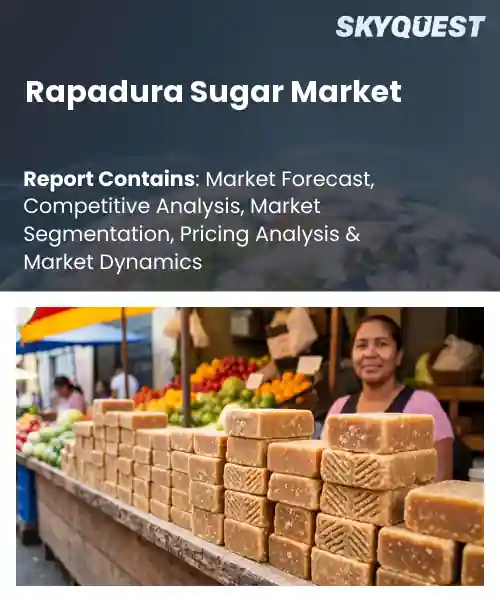
Rapadura Sugar Market
Report ID: SQMIG30I3061
Report ID: SQMIG30I3061
[email protected]
USA +1 351-333-4748
Report ID:
SQMIG30I3061 |
Region:
Global |
Published Date: July, 2026
Pages:
157
|Tables:
148
|Figures:
78


Global Rapadura Sugar Market size was valued at USD 124.30 Million in 2024 and is poised to grow from USD 134.74 Million in 2025 to USD 256.89 Million by 2033, growing at a CAGR of 8.4% during the forecast period (2026-2033).
Rapadura sugar market trends, a byproduct of the evaporation of sugarcane juice, represents a niche but growing sector in the global sweetener market. Rapadura is a healthier alternative to white sugar and artificial sweeteners, and the major driver of this is the increasing preference of consumers for transparent ingredients. Historically, production was limited to Latin American countries like Brazil and Colombia where traditional methods were used. But the last ten years have seen volumes for exports explode with certified lots arriving in European chains, for example with French retailer Bio c'Bon launching a rapadura line in 2018.
This development indicates a shift in the Rapadura sugar market growth from a local staple to a traded commodity. The second key factor shaping the rapadura market is its fit with narratives appealing to supply-chain. Rapadura, which keeps the cane’s natural molasses, is less carbon-intensive to make than white sugar, and a 2022 analysis verified a 15% cut in greenhouse-gas output per ton. This advantage has prompted coffee chains like Starbucks to trial rapadura-sweetened drinks, which in turn boosts farmer incomes and drives investment in certified plantations. To meet consumer demand for ingredients, retailers increase export contracts and consolidate shipments to reduce logistics costs. The higher the volume, the lower the price pressure. This allows rapadura to be an alternative to conventional sugars.
How is AI-driven Supply Chain Automation Reshaping the Rapadura Sugar Market?
AI-powered supply chain automation is transforming the Rapadura sugar market share by linking farms, mills and distributors with real-time data flows. Sensors in cane fields send moisture and growth data to predictive models that forecast the best harvest time at peak ripeness, cutting down on waste. Machine-learning algorithms in processing plants balance furnace loads and monitor crystallization to maintain product quality and reduce energy consumption. Now, logistics platforms can match truck capacity with shipment volumes, dynamically rerouting around bottlenecks, and lowering carbon footprints. These digital layers make for a more transparent value chain which allows traders to predict availability and negotiate contracts with greater confidence, in turn fostering market stability.
The June 2026 OECD-FAO supply outlook observed that AI-enabled logistics platforms are shortening the transit times for Rapadura sugar, enhancing market efficiency.
Market snapshot - (2026-2033)
Global Market Size
USD 124.3 Million
Largest Segment
Granulated Rapadura Sugar
Fastest Growth
Powdered Rapadura Sugar
Growth Rate
8.4% CAGR
To get more insights on this market click here to Request a Free Sample Report
Global rapadura sugar market is segmented by product type, application, distribution channel, end user, nature and region. Based on product type, the market is segmented into powdered rapadura sugar, granulated rapadura sugar, block rapadura sugar and others. Based on application, the market is segmented into bakery products, confectionery, beverages, household consumption and others. Based on distribution channel, the market is segmented into supermarkets & hypermarkets, specialty stores, online retail and others. Based on end user, the market is segmented into household consumers, food manufacturers, foodservice industry and others. Based on nature, the market is segmented into organic and conventional. Based on region, the market is segmented into North America, Europe, Asia Pacific, Latin America and Middle East & Africa.
Powdered Rapadura sugar segment dominates because its fine texture meets the precise functional requirements of modern baking and beverage formulations, allowing manufacturers to achieve consistent sweetness and quick dissolution. The ease of dosing and superior solubility also align with clean label trends, prompting brands to choose it over conventional alternatives. Its perceived health benefits and natural processing further reinforce consumer preference, driving sustained demand across multiple applications throughout the supply chain.
However, Granulated Rapadura Sugar is witnessing the strongest growth momentum because its crystal form appeals to confectionery makers seeking traditional mouthfeel and to foodservice operators needing easy handling. The rising trend toward artisanal sweets and the push for natural sweeteners are expanding its usage, opening new market avenues.
Bakery products segment dominates because the natural caramel hue of rapadura sugar enhances crust coloration and imparts a distinctive rich flavor that resonates with consumers seeking craft style breads and pastries. Its less refined nature aligns with artisanal positioning, allowing bakeries to differentiate their offerings while meeting clean label expectations, thereby solidifying its preference over refined white sugar. Its versatility in dough fermentation and moisture retention further reinforces selection by large scale and boutique bakeries aiming for consistent quality.
On the other hand, beverages are emerging as the key high growth area because mixologists and ready to drink manufacturers are exploiting rapadura’s deep molasses notes to differentiate flavor profiles. Growing consumer interest in natural, low processing sweeteners for functional drinks fuels adoption, encouraging product innovation and expanding distribution opportunities within the sector.
To get detailed segments analysis, Request a Free Sample Report
Europe dominates the rapadura sugar market, due to a combination of refined consumer preferences, strong sustainability policies and a rich culinary tradition that appreciates authentic and lightly processed ingredients. Retail channels, with their emphasis on transparency and origin storytelling, are fueling strong demand for rapadura as a premium alternative to refined sugar. Regulatory environments incentivise low-impact agricultural practices and supply chains that demonstrate evidence of carbon-conscious handling are rewarded, which is consistent with the ethos of rapadura production. Strong networks of specialty food distributors and hospitality operators also help to promote the ingredient’s unique flavor profile, further cementing its presence in high-end confectionery and beverage applications. Joint research programmes between growers, processors and academic institutions improve processing techniques to improve quality, and maintain Europe’s position as a benchmark for natural sweeteners.
Rapadura sugar market outlook in Germany benefits from a culinary culture that embraces artisanal sweetness, with chefs and bakers integrating the ingredient into premium pastries and craft beverages. Consumer awareness of traceability drives preference for rapadura, and retail environments highlight its ethical provenance, supporting steady placement in upscale supermarkets. A network of niche distributors ensures consistent availability, while sustainability standards reinforce confidence among environmentally conscious shoppers. Collaborative projects between agricultural cooperatives and processing firms focus on preserving traditional methods, reinforcing Germany’s role as a hub for high‑quality natural sweeteners.
Rapadura sugar market forecast in the United Kingdom is propelled by a vibrant health‑focused consumer segment that values natural alternatives to refined sugar. Boutique cafés and specialty bakeries spotlight rapadura for its rich, caramel‑like notes, creating a niche demand that resonates with premium positioning strategies. Retailers emphasize clean‑label narratives, and regulatory incentives for low‑impact agriculture encourage domestic sourcing initiatives. Partnerships between ethical trade organizations and local processors enhance supply chain transparency, reinforcing the United Kingdom’s reputation for responsible sourcing and culinary innovation.
Rapadura sugar market analysis in France aligns with a gastronomic tradition that celebrates nuanced flavors and artisanal craftsmanship. High‑end pastry chefs incorporate rapadura to accentuate depth in desserts, while organic retail channels promote its unrefined character as a hallmark of authenticity. Consumer interest in sustainable agriculture dovetails with French policy support for environmentally sound production, fostering collaborative efforts among growers and processors. Educational campaigns about the ingredient’s heritage further embed rapadura within the French culinary narrative, reinforcing a strong market presence.
In North America, rapadura’s rise is driven by increasing demand for natural, minimally processed sweeteners that fit with health-conscious lifestyles. Foodservice innovators are tapping into rapadura’s unique flavor to differentiate their product lines, and retailers are responding to consumer interest with dedicated sections for natural sweeteners. Sustainability stories are resonating, especially as supply chains trend toward transparent sourcing and low-carbon processing. Influential culinary influencers and social media raise awareness, driving trial and repeat purchase. Also, the regulatory support for lower consumption of refining sugar offers a good background for manufacturers to explore rapadura as a viable alternative in the confectionery, beverage and bakery categories.
Rapadura sugar market regional outlook in the United States thrives amid a dynamic food‑innovation ecosystem where craft producers and large‑scale manufacturers alike seek authentic sweetening options. Consumer demand for clean‑label ingredients drives shelf space allocation in premium grocery formats, while health‑focused branding underscores rapadura’s natural appeal. Collaborative efforts between growers and processors emphasize sustainable farming practices, reinforcing market credibility. Culinary trends that celebrate rustic and heritage flavors further embed rapadura within a diverse range of applications, from artisanal desserts to specialty coffee drinks, solidifying its expanding footprint across the nation.
Rapadura sugar market regional forecast in Canada benefits from a consumer base that values environmentally responsible products and culinary authenticity. Retail channels with a focus on organic and natural selections provide visibility for rapadura, while foodservice establishments incorporate its rich profile into premium menus. Partnerships between Canadian agricultural cooperatives and ethical processors promote traceable supply chains, enhancing consumer trust. Educational outreach highlighting the ingredient’s lower processing footprint resonates with national sustainability goals, encouraging broader acceptance and integration into both everyday and specialty food categories.
Asia Pacific is growing its footprint in rapadura by targeting authentic taste experiences and aligning with rising sustainability awareness. The natural sweetness of food is appreciated in culinary traditions and constitute a fertile ground for the use of rapadura in desserts, confectionery and beverage formulations. Regional trade initiatives have opened up easier routes for imports and localized processing hubs are adapting traditional methods to meet quality expectations. Consumer curiosity, amplified by the digital food culture, fuels trial and collaborative research with agricultural partners, to refine agronomic practices, to ensure a consistent supply of ethically produced rapadura. This blend of cultural affinity, market accessibility and environmental stewardship is creating a stronghold for natural sweeteners in the Asia Pacific.
Rapadura sugar market penetration in Japan merges a reverence for nuanced flavors with a growing preference for natural ingredients. Specialty tea houses and high‑end patisseries incorporate rapadura to enrich taste profiles, while retail environments highlight its artisanal origins. Sustainable sourcing narratives resonate with environmentally aware consumers, and partnerships with ethical producers reinforce credibility. Ongoing culinary experimentation encourages broader adoption across confectionery and beverage sectors, strengthening Japan’s role in elevating rapadura’s market visibility.
Rapadura sugar industry in South Korea capitalizes on a vibrant dessert culture that seeks distinctive, unrefined sweetness. Cafés and dessert boutiques leverage rapadura’s caramel undertones to differentiate offerings, resonating with consumers attuned to health and authenticity. Retail channels that prioritize natural sweeteners provide dedicated shelf space, while sustainability messaging aligns with national environmental initiatives. Collaborative efforts between local ingredient specialists and international processors enhance supply reliability, fostering an upward trajectory for rapadura within South Korea’s evolving food landscape.
To know more about the market opportunities by region and country, click here to
Buy The Complete Report
Increasing Consumer Preference for Natural Sweeteners
Sustainability Initiatives Driving Brand Loyalty
Higher Production Costs Than Refined
Limited Supply Chain Infrastructure In Emerging
Request Free Customization of this report to help us to meet your business objectives.
The rapadura sugar market is shaped by a handful of established producers such as LOC Industries, Rapunzel, Mota Bandharpada Swa Sahay, Sanmik Food, Organic Times and International Sugars, which compete on product purity, sustainable sourcing and geographic reach; recent strategic moves include LOC Industries’ acquisition of a small Brazilian organic cane farm and Rapunzel’s partnership with Organic Times to co‑develop a low‑moisture rapadura line, both aimed at expanding premium natural‑sweetener portfolios.
Top Player’s Company Profile
Recent Developments in the Rapadura Sugar Market
SkyQuest’s ABIRAW (Advanced Business Intelligence, Research & Analysis Wing) is our Business Information Services team that Collects, Collates, Correlates, and Analyses the Data collected by means of Primary Exploratory Research backed by robust Secondary Desk research. As per SkyQuest analysis, the global rapadura sugar market is being propelled primarily by the rising consumer preference for natural, minimally processed sweeteners, which fuels demand across bakery and beverage applications, while sustainability initiatives that highlight rapadura’s lower carbon footprint further strengthen brand loyalty and attract eco‑conscious buyers. Europe emerges as the dominant region, driven by sophisticated consumer tastes and strong sustainability frameworks that favor premium natural sugars. The powdered rapadura sugar segment leads the market thanks to its fine texture and quick solubility, meeting clean‑label requirements. However, the market’s expansion is tempered by higher production costs compared with refined sugar, which can limit price‑sensitive adoption.
| Report Metric | Details |
|---|---|
| Market size value in 2024 | USD 124.3 Million |
| Market size value in 2033 | USD 256.89 Million |
| Growth Rate | 8.4% |
| Base year | 2024 |
| Forecast period | (2026-2033) |
| Forecast Unit (Value) | USD Million |
| Segments covered |
|
| Regions covered | North America (US, Canada), Europe (Germany, France, United Kingdom, Italy, Spain, Rest of Europe), Asia Pacific (China, India, Japan, Rest of Asia-Pacific), Latin America (Brazil, Rest of Latin America), Middle East & Africa (South Africa, GCC Countries, Rest of MEA) |
| Companies covered |
|
| Customization scope | Free report customization with purchase. Customization includes:-
|
To get a free trial access to our platform which is a one stop solution for all your data requirements for quicker decision making. This platform allows you to compare markets, competitors who are prominent in the market, and mega trends that are influencing the dynamics in the market. Also, get access to detailed SkyQuest exclusive matrix.
Table Of Content
Executive Summary
Market overview
Parent Market Analysis
Market overview
Market size
KEY MARKET INSIGHTS
COVID IMPACT
MARKET DYNAMICS & OUTLOOK
Market Size by Region
KEY COMPANY PROFILES
Methodology
For the Rapadura Sugar Market, our research methodology involved a mixture of primary and secondary data sources. Key steps involved in the research process are listed below:
1. Information Procurement: This stage involved the procurement of Market data or related information via primary and secondary sources. The various secondary sources used included various company websites, annual reports, trade databases, and paid databases such as Hoover's, Bloomberg Business, Factiva, and Avention. Our team did 45 primary interactions Globally which included several stakeholders such as manufacturers, customers, key opinion leaders, etc. Overall, information procurement was one of the most extensive stages in our research process.
2. Information Analysis: This step involved triangulation of data through bottom-up and top-down approaches to estimate and validate the total size and future estimate of the Rapadura Sugar Market.
3. Report Formulation: The final step entailed the placement of data points in appropriate Market spaces in an attempt to deduce viable conclusions.
4. Validation & Publishing: Validation is the most important step in the process. Validation & re-validation via an intricately designed process helped us finalize data points to be used for final calculations. The final Market estimates and forecasts were then aligned and sent to our panel of industry experts for validation of data. Once the validation was done the report was sent to our Quality Assurance team to ensure adherence to style guides, consistency & design.
Analyst Support
Customization Options
With the given market data, our dedicated team of analysts can offer you the following customization options are available for the Rapadura Sugar Market:
Product Analysis: Product matrix, which offers a detailed comparison of the product portfolio of companies.
Regional Analysis: Further analysis of the Rapadura Sugar Market for additional countries.
Competitive Analysis: Detailed analysis and profiling of additional Market players & comparative analysis of competitive products.
Go to Market Strategy: Find the high-growth channels to invest your marketing efforts and increase your customer base.
Innovation Mapping: Identify racial solutions and innovation, connected to deep ecosystems of innovators, start-ups, academics, and strategic partners.
Category Intelligence: Customized intelligence that is relevant to their supply Markets will enable them to make smarter sourcing decisions and improve their category management.
Public Company Transcript Analysis: To improve the investment performance by generating new alpha and making better-informed decisions.
Social Media Listening: To analyze the conversations and trends happening not just around your brand, but around your industry as a whole, and use those insights to make better Marketing decisions.
REQUEST FOR SAMPLE
 REQUEST FREE CUSTOMIZATION
Global Rapadura Sugar Market size was valued at USD 124.3 Million in 2024 and is poised to grow from USD 134.74 Million in 2025 to USD 256.89 Million by 2033, growing at a CAGR of 8.4% during the forecast period (2026-2033).
The rapadura sugar market is shaped by a handful of established producers such as LOC Industries, Rapunzel, Mota Bandharpada Swa Sahay, Sanmik Food, Organic Times and International Sugars, which compete on product purity, sustainable sourcing and geographic reach; recent strategic moves include LOC Industries’ acquisition of a small Brazilian organic cane farm and Rapunzel’s partnership with Organic Times to co‑develop a low‑moisture rapadura line, both aimed at expanding premium natural‑sweetener portfolios. 'Native Green Cane Project', 'Rapunzel Naturkost GmbH', 'NatureBio Foods Ltd.', 'Tradin Organic Agriculture B.V.', 'Just Date Syrup LLC', 'Madhava Natural Sweeteners', 'Wholesome Sweeteners, Inc.', 'Equal Exchange Co-op', 'Organic Tattva', 'Ecoideas Innovations Inc.', 'Ciranda, Inc.', 'Biona Organic Ltd.', 'Suma Wholefoods', 'Zucchero Mascobado', 'Meridian Foods Limited', 'Bio Planet S.A.', 'Big Tree Farms Inc.', 'Natureland Organics', 'Organic India Pvt. Ltd.', 'La Finestra sul Cielo S.p.A.'
Consumers are increasingly seeking natural, minimally processed sweeteners that align with health and wellness trends, and rapadura sugar offers a raw, unrefined profile rich in molasses-derived nutrients. This preference drives demand across foodservice and retail channels as manufacturers aim to differentiate products with authentic flavor and perceived nutritional benefits. The shift away from highly refined sugars encourages retailers to stock rapadura, while chefs incorporate it to meet evolving palate expectations, thereby expanding market reach and reinforcing growth momentum for consumers worldwide.
Sustainable Sourcing Momentum: Consumers increasingly prefer products with transparent, environmentally‑friendly origins, prompting major confectionery brands to integrate rapadura sugar into premium lines. Producers are responding by adopting agro‑forestry practices, partnering with smallholder cooperatives, and obtaining third‑party certifications that validate low‑deforestation footprints. This shift enhances brand equity, supports rural livelihoods, and aligns with corporate ESG commitments, driving incremental demand for rapadura as a differentiated, responsibly sourced sweetener across snack, beverage, and bakery categories across emerging and mature markets, reinforcing growth while meeting health expectations.
Why does Europe Dominate the Global Rapadura Sugar Market? |@12


Want to customize this report? This report can be personalized according to your needs. Our analysts and industry experts will work directly with you to understand your requirements and provide you with customized data in a short amount of time. We offer $1000 worth of FREE customization at the time of purchase.
Feedback From Our Clients


 USA (+1) 351-333-4748

