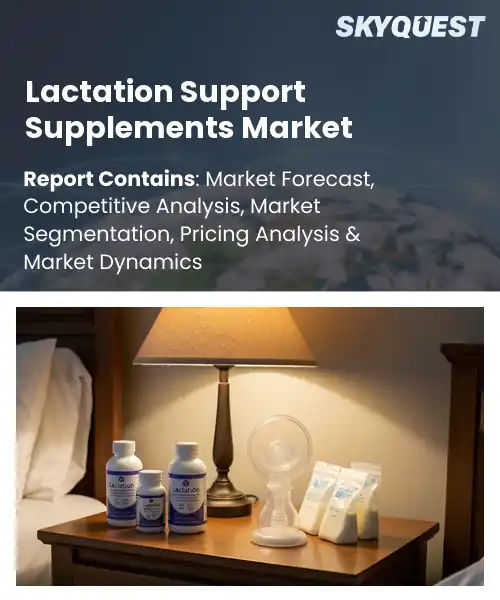
Lactation Support Supplements Market
Report ID: SQMIG35I3020
Report ID: SQMIG35I3020
[email protected]
USA +1 351-333-4748
Report ID:
SQMIG35I3020 |
Region:
Global |
Published Date: July, 2026
Pages:
157
|Tables:
117
|Figures:
77


Global Lactation Support Supplements Market size was valued at USD 880 Million in 2024 and is poised to grow from USD 960 Million in 2025 to USD 1,850 Million by 2033, growing at a CAGR of 8.62% during the forecast period (2026-2033).
The primary driver for the lactation support supplements market growth is the rising awareness that maternal nutrition plus day-to-day help shape breastfeeding outcomes and, in turn, affect infant wellbeing and downstream healthcare demand. The market is a mixed bag of herbal galactagogues, micronutrient blends, functional food and drink items aimed at mothers, clinicians, and program managers, and it matters because stronger lactation support helps infant immunity and can lower infant medical interventions.
Moreover, a major factor enhancing the lactation support supplements market penetration is increasing maternal workforce participation and limited maternity leave, because when time gets tight demand drops for direct nursing routines, and mothers lean more on pumps and supplements to keep supply up. Once moms go back sooner, feeding schedules get interrupted, so manufacturers respond by making concentrated mixes, single-serve options, and subscription style models that feel convenient. At the same time employers adopt lactation benefits to keep people from leaving early. So, as a result hospitals, lactation consultants, and corporate benefits platforms are more often recommending targeted supplements timed around pumping sessions, and that opens measurable chances in institutional purchasing, cross border online sales , and localized product tailoring for fast growth regions, plus more expanded clinical partnerships.
AI is reshaping product development by speeding up ingredient discovery, improving formulation optimization, and enabling consumer personalization. A few core pieces include predictive models that estimate bioactive interactions, natural language systems that sort through both clinical findings and traditional knowledge, and digital phenotyping tools that take user-reported symptoms and turn them into tailored suggestions. Right now, the setup is basically lab analytics blended with consumer apps, so brands can move quicker from concept to shelf and also react to feedback from lactation consultants. In day-to-day terms, this looks like AI-assisted screening of galactagogue botanicals, simulation of manufacturing stability, and adaptive consumer guidance that builds trust plus encourages repeat buying.
Market snapshot - (2026-2033)
Global Market Size
USD 0.88 Billion
Largest Segment
Lactation Teas
Fastest Growth
Powders & Drinks
Growth Rate
8.62% CAGR
To get more insights on this market click here to Request a Free Sample Report
The global lactation support supplements market is segmented by form, key ingredient, distribution, end-user and region. Based on form, the market is segmented into Lactation Teas, Lactation Capsules & Tablets, Lactation Bars & Cookies and Powders & Drinks. Based on key ingredient, the market is segmented into Fenugreek, Blessed Thistle, Moringa and Oat-Based. Based on distribution, the market is segmented into Online Retail, Pharmacies and Specialty Maternity Stores. Based on end-user, the market is segmented into Nursing/Breastfeeding Mothers. Based on region, the market is segmented into North America, Europe, Asia Pacific, Latin America and Middle East & Africa.
As per the lactation support supplements market analysis, the Lactation capsules & tablets segment dominates because these dosage forms deliver more precise, standardized dosing that builds trust with healthcare professionals and consumers, and it also enables longer shelf life, plus simplified supply chain handling, which is a big deal. They slip into existing pharmaceutical channels smoothly, and they match regulatory labeling requirements, so retail acceptance feels easier. That naturally pushes formulation investment and routine use inside postpartum care routines. Manufacturers also favor tablets for scalable production and for predictable margins, which makes the whole thing feel safer.
At the same time, lactation teas are showing up as the most rapidly expanding area due to strong consumer demand for natural, comforting remedies, plus artisanal flavor innovations that sound nicer in ads, and they’re easy to prepare at home, so people can actually do it without thinking too much. This lifestyle appeal helps them land well in direct-to-consumer channels, while also supporting product diversification, creating room for niche brands and more personalized formulations.
According to the lactation support supplements market forecast, the fenugreek segment dominates because it has a long-standing reputation as a galactagogue, so the products get a clear benefit statement that resonates with both mothers and clinicians. This clarity just simplifies marketing and trust building. Plus, its distinctive sensory profile helps, and it’s relatively easy to standardize the active compounds, so formulation across multiple delivery forms becomes less complicated. That leads to widespread inclusion in blends and standalone offerings, and then it reinforces consumer recognition, along with supplier commitment to fenugreek-based product lines. Supply chain familiarity also lowers the market cost and speeds up innovation.
However, the moringa category is predicted to have the largest lactation support supplements market share owing to its superfood positioning, broad nutrient profile, and strong appeal among health-conscious consumers who want multi-benefit solutions. It’s versatile across powders, drinks, and even fortified snacks, so it supports cross-form innovation and helps brands move into premium positioning. That, in turn, unlocks new categories and channels for lactation-focused brands.
To get detailed segments analysis, Request a Free Sample Report
As per the lactation support supplements market regional forecast, North America dominates the market, mostly because of advanced healthcare infrastructure, high consumer awareness about maternal nutrition, and well developed supply chains that make products show up fast everywhere. There is also solid investment in research and development and a long going tradition of clinical validation, so companies can actually show benefits and also win healthcare professional endorsement. Retail is diverse too, with specialty stores, mainstream pharmacies, and big e-commerce platforms make it easier for consumers to get what they want without much fuss. Clear regulatory frameworks that support consistent labeling and quality standards, they boost consumer confidence, and yea that matters. Then strategic marketing around maternal wellness, plus partnerships with hospitals and lactation consultants, and the fact that several major players are headquartered in the region, all of that together consolidates leadership by pushing innovation, trust, and broad market reach, at the same time.
United States Lactation Support Supplements Market
The Lactation Support Supplements market outlook in the United States is shaped by how manufacturers work with healthcare professionals, plus wide availability through pharmacies and online platforms, which makes the whole thing feel more accessible. Consumer demand grows because people increasingly care about evidence-based formulations and maternal wellness, and they want validated products that feel credible. Marketing often targets hospital networks and lactation consultants to build credibility, while product portfolios lean into convenience, clean label positioning, and tailored formulations to match diverse postpartum nutritional preferences, in a direct way.
Canada Lactation Support Supplements Market
The Lactation Support Supplements sector in Canada benefits a lot from public health engagement, informed consumer choices, and a noticeable emphasis on natural ingredient sourcing. There are products that are found across pharmacies, health stores, and online channels, so accessibility stays strong. At the same time, manufacturers push for compliant labeling and reliable product quality, meeting regulatory expectations without drifting too far. Collaboration with healthcare providers and lactation consultants also reinforces credibility. Marketing messages usually focus on safety transparency and clean label positioning, with formulations adjusted for different dietary preferences and maternal wellness priorities, as demand shifts.
The rapid expansion across Asia Pacific is pushed by more consumer awareness around maternal nutrition, more healthcare engagement, and a growing acceptance of both modern nutraceuticals and traditional botanical solutions. Urbanization and rising discretionary spending help broaden uptake, especially when products get sold through pharmacy and e-commerce channels. Digital marketing, plus influencer ecosystems , speed up education and trial, and that seems to work well. Manufacturers tweak their offerings to fit local taste preferences and regulatory environments, often mixing science backed ingredients with culturally familiar botanicals, for better resonance. Strategic alliances between international brands and regional partners also help with entry and distribution. On top of that, expanding networks of healthcare professionals and lactation consultants build trust, and trust turns into recommendations, so adoption rises. Overall its like a blend of cultural relevance, market access innovation, and shifting consumer priorities, and that blend drives notable growth and diversification across the regional lactation support supplements market.
Japan Lactation Support Supplements Market
In Japan, the Lactation Support Supplements Market is influenced by strong consumer trust in scientifically validated nutraceuticals and by a solid research ecosystem. Retail channels include pharmacies, specialty stores, and digital platforms that tend to cater to health-conscious mothers. Manufacturers typically emphasize quality, safety, and precise formulations that match local dietary habits. Collaboration with healthcare professionals, plus integrating traditional functional ingredients with modern research, helps strengthen acceptance and encourages differentiation between products that otherwise look similar.
South Korea Lactation Support Supplements Market
The Lactation Support Supplements industry in South Korea is characterized by a strong consumer interest in scientifically validated nutraceuticals and robust online retail channels. Local manufacturers highlight formulation quality, using traditional botanicals along with fermented extracts. Active social media and influencer advocacy help accelerate discovery and improve trust among mothers. Collaboration with healthcare providers and postpartum care networks adds credibility too. Convenient packaging and clean label claims also fit modern maternal wellness preferences, so products feel more aligned with what consumers expect.
Europe is strengthening its role by putting extra weight on tight quality rules, more clinical research, and a sharper product differentiation plan, that seems to answer what discerning consumers actually want. Manufacturers tend to stress transparency, sustainable sourcing and clean label compositions , so they can meet the noticeable appetite for natural and safer maternal nutrition solutions. There is also this ongoing collaboration between the industry and healthcare professionals, like lactation consultants and hospital networks, that helps support evidence-based positioning and gives professional endorsements. Cross border distribution routes plus well known pharmacy networks let brands reach wider, while regional regulatory alignment helps keep labeling and quality expectations more or less consistent. Meanwhile, national market leaders push further into research and premiumization, and their marketing, even when it’s subtle, usually points to safety , provenance and formulation science, together reinforcing that Europe has become a credible, innovation driven area for lactation support supplements.
Germany Lactation Support Supplements Market
The Lactation Support Supplements Market in Germany is shaped by very strict quality and production expectations, a strong pharmacy route, and consumer preference for evidence-backed natural formulations. Local manufacturers often focus on clinical validation, ingredient traceability, and overall production quality to satisfy those exacting expectations. Partnerships with healthcare professionals, plus relevant associations, are used to build trust and recommendation. Packaging and sustainability matter too, and the product portfolios usually highlight purity, formulation specificity, and fit with maternal health practices.
United Kingdom Lactation Support Supplements Market
The Lactation Support Supplements Market in the United Kingdom is supported by established pharmacy networks, healthcare professional endorsement, and steady consumer demand for transparent, premium formulations. Brands often lean on clinical backing and partnerships with midwives and lactation consultants to build recommendation momentum. E-commerce along with specialist retailers, also supports traditional channels, which makes products easier to find and feel reliable. Sustainability and ethical sourcing show up a lot in brand messaging, and manufacturers develop more tailored formulations that reflect local dietary habits and maternal wellness priorities.
France Lactation Support Supplements Market
The Lactation Support Supplements Market in France mirrors consumer curiosity around natural ingredients, plus established routes like pharmacy and parapharmacy. Local companies emphasize traceability, safety, and transparent labeling, in a way that aims at those discerning expectations. Product development quite often blends traditional botanicals with modern formulation science, and this is frequently supported through collaboration with healthcare professionals. Marketing tends to stress provenance and clean label narratives, while cross-channel retail strategies balance specialty outlets with digital platforms to reach a wider set of maternal wellness consumers.
To know more about the market opportunities by region and country, click here to
Buy The Complete Report
Rising Awareness Of Breastfeeding Benefits
Innovation In Natural Ingredient Formulations
Regulatory Uncertainty And Safety Concerns
Limited Clinical Evidence And Trust
Request Free Customization of this report to help us to meet your business objectives.
The competitive landscape is getting shaped by fast format and channel innovation, strategic manufacturing scale ups, and that clinical and tech differentiation which steers how a buyer chooses in the first place. Brands keep moving into co packing and retail partnerships to widen distribution, like Lacsnac launched a single serve lactation coffee through a co packer. Smart for Life scaled Milk Dust for international expansion. At the same time Lactation Lab pushed forward with point of care milk testing, so they can enable more personalized nutrition.
Top Player’s Company Profile
Recent Developments in the Lactation Support Supplements Market
SkyQuest’s ABIRAW (Advanced Business Intelligence, Research & Analysis Wing) is our Business Information Services team that Collects, Collates, Correlates, and Analyses the Data collected by means of Primary Exploratory Research backed by robust Secondary Desk research.
As per SkyQuest analysis, the lactation support supplements market is growing because more people understand that maternal nutrition, combined with practical support, can improve breastfeeding outcomes. There’s another major driver too, which is rising participation in the maternal workforce plus constrained maternity leave, and that tends to increase demand for convenient, pump compatible options. On the downside, regulatory uncertainty and safety concerns are acting as a restraint, slowing down product claims, complicating cross-border distribution and limiting clinical adoption. North America still leads overall, mainly due to advanced healthcare infrastructure and stronger clinical validation. In terms of product type, lactation capsules and tablets are the dominating segment, largely because they allow precise dosing, keep stability on shelves, and are accepted by healthcare professionals. Companies that prioritize evidence, along with transparent sourcing, appear best set up for growth.
| Report Metric | Details |
|---|---|
| Market size value in 2024 | USD 0.88 Billion |
| Market size value in 2033 | USD 1.85 Billion |
| Growth Rate | 8.62% |
| Base year | 2024 |
| Forecast period | (2026-2033) |
| Forecast Unit (Value) | USD Billion |
| Segments covered |
|
| Regions covered | North America (US, Canada), Europe (Germany, France, United Kingdom, Italy, Spain, Rest of Europe), Asia Pacific (China, India, Japan, Rest of Asia-Pacific), Latin America (Brazil, Rest of Latin America), Middle East & Africa (South Africa, GCC Countries, Rest of MEA) |
| Companies covered |
|
| Customization scope | Free report customization with purchase. Customization includes:-
|
To get a free trial access to our platform which is a one stop solution for all your data requirements for quicker decision making. This platform allows you to compare markets, competitors who are prominent in the market, and mega trends that are influencing the dynamics in the market. Also, get access to detailed SkyQuest exclusive matrix.
Table Of Content
Executive Summary
Market overview
Parent Market Analysis
Market overview
Market size
KEY MARKET INSIGHTS
COVID IMPACT
MARKET DYNAMICS & OUTLOOK
Market Size by Region
KEY COMPANY PROFILES
Methodology
For the Lactation Support Supplements Market, our research methodology involved a mixture of primary and secondary data sources. Key steps involved in the research process are listed below:
1. Information Procurement: This stage involved the procurement of Market data or related information via primary and secondary sources. The various secondary sources used included various company websites, annual reports, trade databases, and paid databases such as Hoover's, Bloomberg Business, Factiva, and Avention. Our team did 45 primary interactions Globally which included several stakeholders such as manufacturers, customers, key opinion leaders, etc. Overall, information procurement was one of the most extensive stages in our research process.
2. Information Analysis: This step involved triangulation of data through bottom-up and top-down approaches to estimate and validate the total size and future estimate of the Lactation Support Supplements Market.
3. Report Formulation: The final step entailed the placement of data points in appropriate Market spaces in an attempt to deduce viable conclusions.
4. Validation & Publishing: Validation is the most important step in the process. Validation & re-validation via an intricately designed process helped us finalize data points to be used for final calculations. The final Market estimates and forecasts were then aligned and sent to our panel of industry experts for validation of data. Once the validation was done the report was sent to our Quality Assurance team to ensure adherence to style guides, consistency & design.
Analyst Support
Customization Options
With the given market data, our dedicated team of analysts can offer you the following customization options are available for the Lactation Support Supplements Market:
Product Analysis: Product matrix, which offers a detailed comparison of the product portfolio of companies.
Regional Analysis: Further analysis of the Lactation Support Supplements Market for additional countries.
Competitive Analysis: Detailed analysis and profiling of additional Market players & comparative analysis of competitive products.
Go to Market Strategy: Find the high-growth channels to invest your marketing efforts and increase your customer base.
Innovation Mapping: Identify racial solutions and innovation, connected to deep ecosystems of innovators, start-ups, academics, and strategic partners.
Category Intelligence: Customized intelligence that is relevant to their supply Markets will enable them to make smarter sourcing decisions and improve their category management.
Public Company Transcript Analysis: To improve the investment performance by generating new alpha and making better-informed decisions.
Social Media Listening: To analyze the conversations and trends happening not just around your brand, but around your industry as a whole, and use those insights to make better Marketing decisions.
REQUEST FOR SAMPLE
 REQUEST FREE CUSTOMIZATION
Global Lactation Support Supplements Market size was valued at USD 0.88 Billion in 2024 and is poised to grow from USD 0.96 Billion in 2025 to USD 1.85 Billion by 2033, growing at a CAGR of 8.62% during the forecast period (2026-2033).
The competitive landscape is marked by rapid format and channel innovation, strategic manufacturing scale ups, and clinical and tech differentiation that reshape buyer choice. Brands pursue co packing and retail partnerships to broaden distribution, as Lacsnac launched single serve lactation coffee via a co packer. Smart for Life scaled Milk Dust production for international expansion. Meanwhile Lactation Lab advanced point of care milk testing to enable personalized nutrition. 'Motherlove Herbal Company', 'Pink Stork', 'Milkmakers (Milkmakers LLC)', 'Legend's Creek Farm', 'Legendairy Milk', 'Mommy Knows Best', 'Natures Way (Fenugreek)', 'Traditional Medicinals', 'Earth Mama Organics', 'Healthy Nursing Tea', 'Nursing Tea (Herb Lore)', 'Bamboobies', 'Fenugreek World', 'Nature's Plus', 'Garden of Life (Prenatal)', 'New Chapter Inc.', 'Gaia Herbs', 'UpSpring (Natracare)', 'Fairhaven Health', 'Boiron USA'
Increased public and professional awareness of breastfeeding advantages encourages more mothers to seek supportive products and guidance, leading to greater adoption of lactation supplements by positioning them as complementary to breastfeeding. Education from healthcare providers and community campaigns enhances understanding of nutritional support needs, prompting informed purchasing decisions. As acceptance grows, retailers and manufacturers respond by expanding product availability and formulation options, which further normalizes supplements use and stimulates sustained market demand through better visibility, perceived legitimacy, and integration into postpartum care routines.
Holistic Maternal Wellness: Manufacturers and healthcare providers are expanding product positioning from single-ingredient galactagogues to comprehensive maternal wellness solutions that address nutrition, lactation, postpartum recovery and mental wellbeing. This shift prioritizes synergistic formulations, transparent ingredient sourcing and partnerships with lactation consultants to enhance perceived value and adherence. Retailers and specialty channels are responding with curated assortments and educational initiatives, moving consumer decision-making toward holistic benefit narratives and long-term maternal health rather than one-off lactation fixes. It supports sustained brand loyalty, trust and credibility.
Why does North America Dominate the Global Lactation Support Supplements Market? |@12


Want to customize this report? This report can be personalized according to your needs. Our analysts and industry experts will work directly with you to understand your requirements and provide you with customized data in a short amount of time. We offer $1000 worth of FREE customization at the time of purchase.
Feedback From Our Clients


 USA (+1) 351-333-4748

