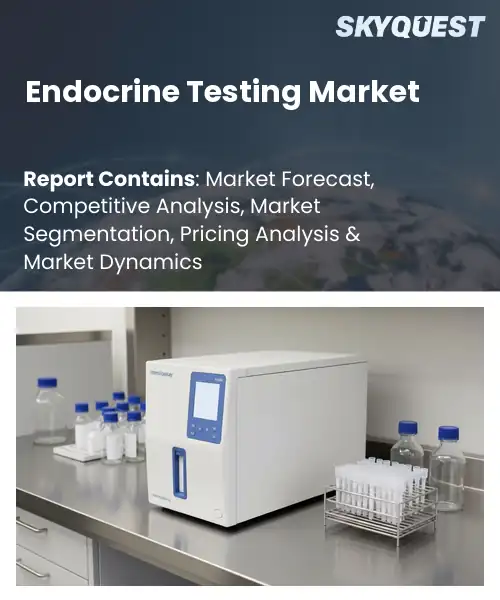
Endocrine Testing Market
Report ID: SQMIG35D2430
Report ID: SQMIG35D2430
[email protected]
USA +1 351-333-4748
Report ID:
SQMIG35D2430 |
Region:
Global |
Published Date: May, 2026
Pages:
157
|Tables:
153
|Figures:
78


Global Endocrine Testing Market size was valued at USD 13.8 Billion in 2024 and is poised to grow from USD 14.99 Billion in 2025 to USD 29.0 Billion by 2033, growing at a CAGR of 8.6% during the forecast period (2026-2033).
The primary driver of the endocrine testing industry is the escalating burden of hormone-related disorders, which has pushed diagnostics from niche research into routine clinical practice. Endocrine testing encompasses assays and platforms that measure hormone levels, autoantibodies and metabolites to diagnose conditions such as diabetes, thyroid disease, adrenal insufficiency and reproductive disorders. This market is significant because timely and accurate testing directly influences treatment decisions, chronic disease management and health outcomes. Historically, testing evolved from rudimentary bioassays to automated immunoassays and mass spectrometry, and regulatory approvals plus screening programs have accelerated access, for example in diabetes monitoring and newborn thyroid screening.
The enhanced sensitivity of assays and their multiplex capacity have facilitated testing and monitoring sooner, which supports individualised treatment regimens and fewer hospitalisations; for instance, HbA1c testing at point-of-care can allow for the initiation of therapy at the primary care level, while AMH testing can be used to select appropriate fertility treatment options. Clarity in regulatory matters and growing reimbursement for chronic disease management are motivations for further investments in these technologies, and as telemedicine and home sampling continue to lower the cost of access to healthcare, emerging economies will provide additional opportunities for expansion into these markets.
How is AI improving diagnostic accuracy in the endocrine testing market?
AI is enhancing the accuracy of diagnosing conditions through the use of machine learning, automated laboratory processes and clinical decision support (CDS) systems in the endocrine testing market. This includes model development to detect subtle biomarkers, tools that help reduce variability in results, and systems that integrate prior test results and patient history to inform assessment of the current findings. Reference laboratories and hospital systems are continuing to adopt these new technologies as physicians look for improvements in turnaround times and consistency of test results. For example, AI is helping identify atypical hormone profiles, suggest confirmatory testing, and provide standardized reporting across multiple platforms all of which decrease uncertainty in diagnosis for thyroid dysfunction and androgen-related disorders.
In May 2026, Revvity received FDA clearance for a total testosterone assay that combines testosterone testing into one automated solution which strengthens the market by making endocrine results from AI-enabled laboratory systems more reproducible by improving standardization and processing efficiencies.
Market snapshot - (2026-2033)
Global Market Size
USD 13.8 Billion
Largest Segment
Immunoassay
Fastest Growth
Mass Spectrometry
Growth Rate
8.6% CAGR
To get more insights on this market click here to Request a Free Sample Report
Global endocrine testing market is segmented by technology, sample type, application, end user, distribution channel and region. Based on technology, the market is segmented into Immunoassay, Mass Spectrometry, Molecular Diagnostics, Clinical Chemistry and Others. Based on sample type, the market is segmented into Blood, Urine, Saliva and Others. Based on application, the market is segmented into Endocrine Disorder Diagnosis, Fertility Testing, Diabetes Management, Oncology Testing, Preventive Health Screening and Others. Based on end user, the market is segmented into Hospitals, Diagnostic Laboratories, Specialty Clinics, Academic & Research Institutes and Others. Based on distribution channel, the market is segmented into Direct Sales, Distributors, Online Platforms and Others. Based on region, the market is segmented into North America, Europe, Asia Pacific, Latin America and Middle East & Africa.
Immunoassay segment dominates because its well established assay formats and comprehensive hormone panels have become core to endocrine diagnostics, enabling routine testing across a wide range of analytes with predictable workflows. Strong clinic familiarity, extensive reagent ecosystems and regulatory acceptance reduce implementation friction, which in turn sustains procurement and platform investments that shape laboratory operations and clinician reliance on immunoassay outputs.
However, mass spectrometry segment is emerging as the most rapidly expanding area because its superior analytical specificity and multiplexing capability resolve complex steroid and peptide profiles beyond traditional assays. Improved automation and streamlined workflows are easing clinical integration, enabling the novel biomarker panels and tailored diagnostic applications that expand testing utility and open new revenue opportunities within endocrine testing.
As per endocrine testing market outlook, fertility testing segment dominates because reproductive hormone assays are central to patient pathways in assisted reproduction and infertility care, driving concentrated demand for specialized test menus and interpretive services. Close collaboration between clinics and laboratories has led to protocol alignment, specialized reporting and recurring referral volumes, which encourage targeted investments in assays and platforms optimized for reproductive endocrinology diagnostics.
As per endocrine testing market forecast, diabetes management segment is the fastest growing area as demand for integrated glycemic biomarkers and companion endocrine assays increases alongside chronic care models. Innovations in point of care testing and digital monitoring are expanding routine endocrine panels and enabling continuous management workflows, which create new clinical use cases and long term market potential for testing providers and technology developers.
To get detailed segments analysis, Request a Free Sample Report
North America outperforms all other regions in the global endocrine testing sector as a result of several factors including sophisticated clinical infrastructures, extensive laboratory networks to support diagnostics, as well as innovative testing technology that has achieved a high level of acceptance from the healthcare community. Solid reimbursement mechanisms along with significant public and private investments in endocrine diagnostics help verify the adequacy of screening and treatment for all different types of patients. The presence of a well regulated environment for the manufacture of products that allow for new endocrine testing opportunities has created an area where significant amounts of research are being conducted to further develop and improve both clinical diagnostic tools and patient care. The collaborative approach between clinical laboratories, endocrine specialty centers and biotechnology companies has facilitated the validation of existing and new endocrine diagnostic products, as well as the market acceptance of these products. The interest from patients along with the interest from healthcare professionals has created an ongoing demand for endocrine diagnostic products and has led to the establishment of a wide variety of different types of endocrine diagnostic products on the market including products that involve both highly complex and lower complexity testing and products with continuously developing levels of sensitivity and specificity.
United States provides several advantages for companies and organizations that conduct endocrine testing. They are provided resources with leading-edge diagnostic technology, extensive clinical research networks and well-established laboratory infrastructure, there is collaboration between domestic companies and academic institutions to improve assay innovation and clinical validation, health care providers (HCPs) are concerned about incorporating diagnostics into patient care and clinical training improves clinician comfort with hormonal testing and partnerships with global diagnostic companies allow for the translation of newly developed assays into clinical application, thereby enhancing both the sophistication of the market and the technological leadership of the companies and organizations in that market.
Canada market comprises an effective system of public laboratory networks, provincial programs, and dedicated personnel to provide a full range of endocrinology diagnostics. Reference laboratories and hospital systems provide centralized testing services for complex hormonal assays, while academic institutions conduct translational research and clinical validation. Equitable access is an important consideration when developing deployment strategies, and partnerships between diagnostic suppliers and health care providers increase the availability of endocrine testing. Clinical familiarity and practitioner competency are two key factors facilitating the integration of advanced testing services into patient care across all venues.
The endocrine testing market in Europe is rapidly growing, as a result of creating harmonized clinical guidelines, having laboratories at a high level of capacity in member countries, and developing a robust ecosystem for diagnostic innovation. Both clinicians are becoming more aware of endocrine disorders and public health initiatives are increasingly coordinated to promote a more thorough use of screening and diagnostic pathways related to endocrine disorders. Centralized reference laboratories, as well as collaboration between laboratories in different countries, enable the validation and implementation of complex hormone assays much more easily. Germany offers a large volume of opportunity due to its advanced infrastructure, while other regions also have begun to rapidly increase their use of novel tests and point-of-care solutions. Academic institutions, diagnostic manufacturers, and specialty societies are creating partnerships that help facilitate the sharing of knowledge related to harmonizing testing standards, which will lead to continued growth and diversification of the types of endocrine diagnostic tests available. Supportive regulatory structures are progressively evolving and many reimbursement pathways are evolving as well to provide a greater incentive for developing new commercial products and integrating them into clinical practice. Patient education campaigns are creating a higher demand for earlier use of testing and for ongoing management of chronic disease.
The comprehensive clinical laboratory networks and high levels of investment in diagnostic research found in Germany are complemented by a concentration of specialized endocrine centers and an established regulatory and reimbursement framework supporting the introduction and clinical validation of advanced hormone assays. Significant clinical collaborations between academic medical centers and industry have created an environment where translational research can be conducted more expeditiously, while centralized reference laboratories provide the infrastructure for conducting complex tests. The presence of clinical guidelines and the familiarity of clinicians with new diagnostic technologies are important drivers of the adoption of advanced endocrine diagnostics in all areas of the healthcare continuum.
As per endocrine testing market regional forecast, UK market is benefiting from accelerated adoption due to the increasing use of innovative diagnostic assays, the growing availability of point-of-care testing solutions, and cooperation with the private sector. National programs and increased clinician awareness will support the development of broader screening and early diagnosis pathways. Collaborations between biotech companies and clinical research centers will facilitate the evaluation and adoption of new assays. The focus on service models which increase patient access and integrate with primary care will allow the diversification of testing sites and provide additional flexibility to the market.
As per endocrine testing market regional outlook, France is being developed through targeted investments in diagnostic capabilities, increased clinical awareness and development of laboratory capacity at testing centers. Academic medical centers and specialty clinics are working collaboratively on assay validation and adoption, as well as fostering local innovation. Diagnostic companies and health service providers are establishing partnerships to improve access to specialized testing, thus facilitating a move toward expanded testing options.
As per endocrine testing industry analysis, Asia Pacific is very actively developing by a concerted effort in the areas of laboratory modernization through targeted partnership arrangements for clinical research, increased production locally of diagnostic reagents. With the increasing clinical recognition of endocrine disorders, as well as growing efforts to expand specialist training and increase capacity of reference laboratories, the use of diagnostics for these conditions will continue to increase. Pilot programs and formal partnerships between governments and private healthcare systems are validating and scaling innovative assays throughout the region. Japan has a wealth of technological experience and the largest network of clinical research studies, South Korea has a rapid transition from research to clinical practice and both countries are exchanging knowledge across borders and working to harmonize regulatory requirements in efforts to develop strategic partnerships with global diagnostic companies that will accelerate the introduction of advanced hormonal assays into the market while contributing significantly to the region's development of innovative tests.
Japan market is made strong by their use of advanced and cutting-edge technology in diagnostics, an extensive clinical research ecosystem, as well as well-developed lab infrastructure. In cooperation with both domestically operated companies and academic centres, Japan has produced high-quality standards by creating innovative assays and conducting clinical validation. In addition, healthcare providers focus on integrating diagnostic tests into patient care plans and also improve clinicians knowledge of hormone assays through specialist training. Additionally, the presence of global companies that create diagnostic tests for endocrine disorders enhances Japan marketing savvy and technological leadership.
South Korea market is strengthened by their ability to combine biotechnology with quickened regulatory pathways and robust clinical translation capabilities. Domestic diagnostic assays are developed by local developers working closely with hospitals and laboratories to validate and implement these drugs. Focus on fast commercialisation and integration into specialty care drives the fast adoption of new testing protocols. Collaborations between research institutions and private enterprises advance the development of pilot programmes for clinicians and provide training to use the assays more frequently across all healthcare settings.
To know more about the market opportunities by region and country, click here to
Buy The Complete Report
Rising Prevalence Of Endocrine Disorders
Technological Advancements In Diagnostics
High Cost Of Advanced Tests
Regulatory Complexity And Reimbursement
Request Free Customization of this report to help us to meet your business objectives.
Competitive dynamics in the global endocrine testing market center on assay specificity, platform integration, and clinical partnerships, prompting acquisitions, diagnostics collaborations, and AI enabled assay innovation. To secure the clinical lab contracts, established diagnostic vendors are also broadening their assay menus and introducing LC-MS/MS (liquid chromatography-tandem mass spectrometry) services. Some strategic examples include a large pharmaceutical acquiring an endocrine specialist diagnostic company and manufacturing diagnostic vendors are upgrading their automated assay platforms to develop hormone panels with hospitals and reference labs.
SkyQuest’s ABIRAW (Advanced Business Intelligence, Research & Analysis Wing) is our Business Information Services team that Collects, Collates, Correlates, and Analyses the Data collected by means of Primary Exploratory Research backed by robust Secondary Desk research.
As per SkyQuest analysis, the global endocrine testing market growth is driven primarily by the rising prevalence of hormone-related disorders, which has expanded routine diagnostic demand, and further propelled by rapid technological advancements in assay sensitivity, automation and AI-enabled analytics. However high costs for advanced assays and specialized instrumentation constrain adoption in resource-limited settings and slow market penetration. North America remains the dominant region due to mature infrastructure, reimbursement and high clinical uptake, while immunoassay stands as the leading segment given its established workflows and broad hormone panels.
| Report Metric | Details |
|---|---|
| Market size value in 2024 | USD 13.8 Billion |
| Market size value in 2033 | USD 29.0 Billion |
| Growth Rate | 8.6% |
| Base year | 2024 |
| Forecast period | (2026-2033) |
| Forecast Unit (Value) | USD Billion |
| Segments covered |
|
| Regions covered | North America (US, Canada), Europe (Germany, France, United Kingdom, Italy, Spain, Rest of Europe), Asia Pacific (China, India, Japan, Rest of Asia-Pacific), Latin America (Brazil, Rest of Latin America), Middle East & Africa (South Africa, GCC Countries, Rest of MEA) |
| Companies covered |
|
| Customization scope | Free report customization with purchase. Customization includes:-
|
To get a free trial access to our platform which is a one stop solution for all your data requirements for quicker decision making. This platform allows you to compare markets, competitors who are prominent in the market, and mega trends that are influencing the dynamics in the market. Also, get access to detailed SkyQuest exclusive matrix.
Table Of Content
Executive Summary
Market overview
Parent Market Analysis
Market overview
Market size
KEY MARKET INSIGHTS
COVID IMPACT
MARKET DYNAMICS & OUTLOOK
Market Size by Region
KEY COMPANY PROFILES
Methodology
For the Endocrine Testing Market, our research methodology involved a mixture of primary and secondary data sources. Key steps involved in the research process are listed below:
1. Information Procurement: This stage involved the procurement of Market data or related information via primary and secondary sources. The various secondary sources used included various company websites, annual reports, trade databases, and paid databases such as Hoover's, Bloomberg Business, Factiva, and Avention. Our team did 45 primary interactions Globally which included several stakeholders such as manufacturers, customers, key opinion leaders, etc. Overall, information procurement was one of the most extensive stages in our research process.
2. Information Analysis: This step involved triangulation of data through bottom-up and top-down approaches to estimate and validate the total size and future estimate of the Endocrine Testing Market.
3. Report Formulation: The final step entailed the placement of data points in appropriate Market spaces in an attempt to deduce viable conclusions.
4. Validation & Publishing: Validation is the most important step in the process. Validation & re-validation via an intricately designed process helped us finalize data points to be used for final calculations. The final Market estimates and forecasts were then aligned and sent to our panel of industry experts for validation of data. Once the validation was done the report was sent to our Quality Assurance team to ensure adherence to style guides, consistency & design.
Analyst Support
Customization Options
With the given market data, our dedicated team of analysts can offer you the following customization options are available for the Endocrine Testing Market:
Product Analysis: Product matrix, which offers a detailed comparison of the product portfolio of companies.
Regional Analysis: Further analysis of the Endocrine Testing Market for additional countries.
Competitive Analysis: Detailed analysis and profiling of additional Market players & comparative analysis of competitive products.
Go to Market Strategy: Find the high-growth channels to invest your marketing efforts and increase your customer base.
Innovation Mapping: Identify racial solutions and innovation, connected to deep ecosystems of innovators, start-ups, academics, and strategic partners.
Category Intelligence: Customized intelligence that is relevant to their supply Markets will enable them to make smarter sourcing decisions and improve their category management.
Public Company Transcript Analysis: To improve the investment performance by generating new alpha and making better-informed decisions.
Social Media Listening: To analyze the conversations and trends happening not just around your brand, but around your industry as a whole, and use those insights to make better Marketing decisions.
REQUEST FOR SAMPLE
 REQUEST FREE CUSTOMIZATION
Global Endocrine Testing Market size was valued at USD 13.8 Billion in 2024 and is poised to grow from USD 14.99 Billion in 2025 to USD 29.0 Billion by 2033, growing at a CAGR of 8.6% during the forecast period (2026-2033).
Competitive dynamics in the global endocrine testing market center on assay specificity, platform integration, and clinical partnerships, prompting acquisitions, diagnostics collaborations, and AI enabled assay innovation. Incumbent diagnostics vendors are expanding assay menus and adding liquid chromatography tandem mass spectrometry services to win clinical laboratory contracts. Strategic examples include a major pharma acquisition of an endocrine specialist and diagnostics vendors upgrading automated assay platforms and co developing hormone panels to secure hospital and reference lab business. 'F. Hoffmann-La Roche Ltd.', 'Abbott Laboratories', 'Siemens Healthineers AG', 'Danaher Corporation', 'Thermo Fisher Scientific Inc.', 'Quest Diagnostics Incorporated', 'Laboratory Corporation of America Holdings', 'Bio-Rad Laboratories, Inc.', 'Sysmex Corporation', 'DiaSorin S.p.A.', 'bioMérieux SA', 'Randox Laboratories Ltd.', 'Mindray Medical International Limited', 'Becton, Dickinson and Company', 'PerkinElmer, Inc.', 'Agilent Technologies, Inc.', 'Tosoh Corporation', 'Trinity Biotech plc', 'EKF Diagnostics Holdings plc', 'Ortho Clinical Diagnostics Holdings plc'
Rising prevalence of endocrine disorders has expanded clinical demand for diagnostic testing, prompting healthcare providers to prioritize screening and disease management pathways. Increased clinical awareness and routine monitoring requirements drive adoption of comprehensive hormonal panels and specialized assays in hospitals and laboratories. This sustained clinical need encourages investment in testing infrastructure, workflow integration, and training of laboratory personnel, underpinning market expansion. As diagnosis becomes central to patient management, demand for reliable assays and supporting services increases, directly supporting broader uptake and commercialization of endocrine testing solutions.
Personalized Hormone Profiling: Advances in biomarker discovery and multiplex assay design are driving a shift toward individualized endocrine assessment, enabling clinicians to tailor diagnostic panels and follow up strategies to patient specific hormonal patterns and symptoms. Integration of longitudinal sample analysis and patient reported outcomes supports treatment optimization, therapeutic monitoring, and early detection of endocrine dysregulation. This trend emphasizes clinical utility, improved patient engagement, and collaboration between diagnostics developers and specialist clinicians to translate molecular insights into actionable, patient centered care pathways.
Why does North America Dominate the Global Endocrine Testing Market? |@12


Want to customize this report? This report can be personalized according to your needs. Our analysts and industry experts will work directly with you to understand your requirements and provide you with customized data in a short amount of time. We offer $1000 worth of FREE customization at the time of purchase.
Feedback From Our Clients


 USA (+1) 351-333-4748

