Baby Nose Cleaner Market
Report ID: SQMIG35I2580
Report ID: SQMIG35I2580
[email protected]
USA +1 351-333-4748
Report ID:
SQMIG35I2580 |
Region:
Global |
Published Date: March, 2026
Pages:
157
|Tables:
115
|Figures:
77


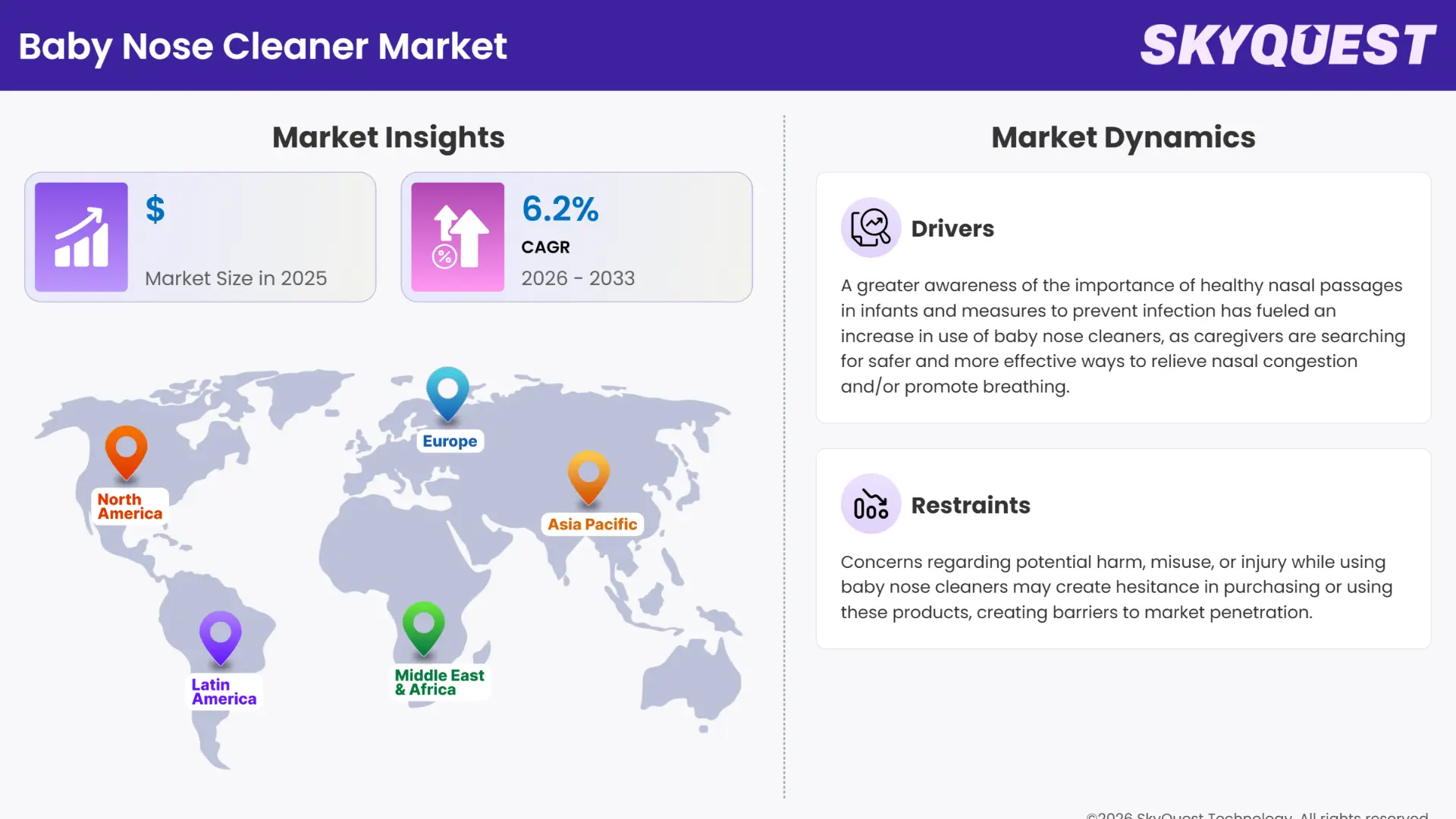
Global Baby Nose Cleaner Market size was valued at USD 1.2 Billion in 2024 and is poised to grow from USD 1.27 Billion in 2025 to USD 2.06 Billion by 2033, growing at a CAGR of 6.2% during the forecast period (2026-2033).
Key Takeaways: Market Trends & Insights
The global baby nose cleaner market is primarily driven by the increasing number of parents who are becoming more focused on their infants’ respiratory health and comfort due to the growing number of pediatric resources available to them. There are many different products available in this space that help parents/caregivers clear their babies’ noses so they can breathe freely and at the same time eat and sleep properly and be happy. The baby nose cleaner market has transitioned from simple rubber bulb syringes to electric aspirators and saline delivery systems driven by safety, as well as user experience, in developing these products. Manufacturers have developed new materials that are traditionally softer, such as silicone, and introduced ergonomic designs along with the introduction of brands like NoseFrida and Philips Avent that have pushed the envelope of innovation.
Another key factor in the baby nose cleaner market is the increasing amount of advocacy and e-commerce. Online platforms provide greater availability and price transparency for baby nose cleaners, allowing manufacturers to scale up their distribution and create more specialized SKUs (stock keeping units) that include disposable tips and filters, allowing for increased repeat revenue and deeper penetration into previously underserved regions. In addition to advocacy and e-commerce, health applications and teleconsultations are also reinforcing this cycle by providing caregivers with directed clinical recommendation for aspirators and allowing caregivers to order directly from manufacturers the specified model of aspirator.
How is IoT Enhancing Safety In The Baby Nose Cleaner Market?
Innovative Technology (IoT) enhances infant nasal extraction devices (baby nose suckers) with added sensors for connectivity which increases safety against misuse and promotes proper hygiene. There are four primary ways in which manufacturers are achieving these goals: utilizing pressure sensors to limit suction pressure, putting timers on devices so as to not exceed desired use, using monitors on filters so that caregivers will know when they need to replace the filter, and providing instructions to users of these devices by providing alerts through an app that properly train them on how to use the device. The baby nasal extraction device market has been shifting from using manual pumps to electronically driven aspirators with connectivity due to parents looking to obtain peace of mind while making baby care easier. Companies are now providing built-in safety shutoffs, soft silicone tips, and remote monitoring for telehealth video consultation. All of these elements help to eliminate injuries to the child and provide consistent treatment with accurate training for the child's caregiver.
GROWNSY in March 2026 launched the SniffEase Spa 3 in 1 Nasal Aspirator which has a built-in auto shutoff and low-battery alert indicating that smart safety technology is becoming incorporated into mainstream products and will continue to pave the way towards connected technology and app-based instructions that will give caregivers confidence and improve overall product quality.
To get more insights on this market click here to Request a Free Sample Report
Global baby nose cleaner market is segmented into product type, age group, distribution channel, price range and region. Based on product type, the market is segmented into manual cleaners and electric Face cleaners. Based on age group, the market is segmented into newborns, infants and toddlers. Based on distribution channel, the market is segmented into online retail and offline retail. Based on price range, the market is segmented into budget, mid-range and premium. Based on region, the market is segmented into North America, Europe, Asia Pacific, Latin America and Middle East & Africa.
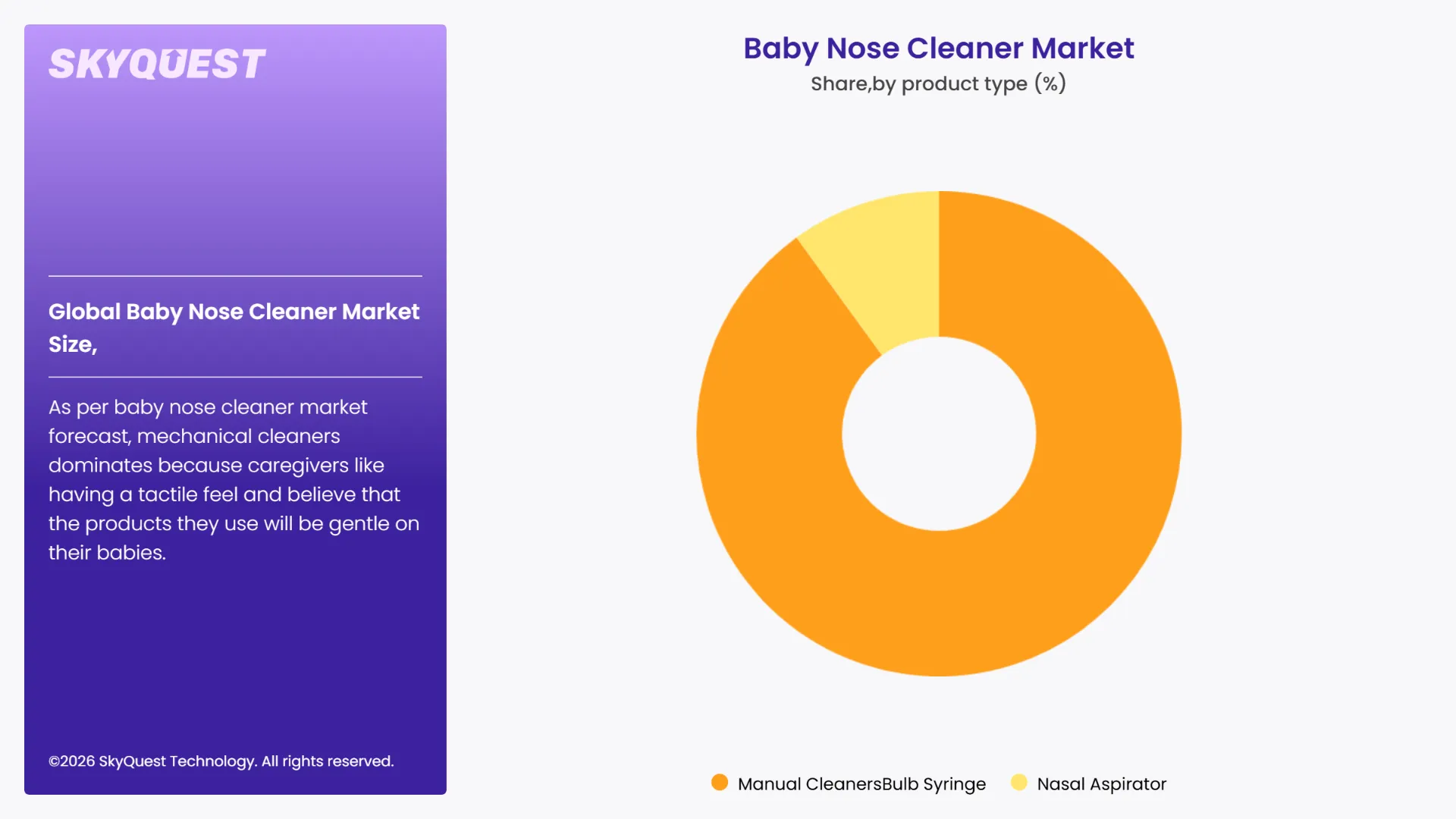
As per baby nose cleaner market forecast, mechanical cleaners dominates because caregivers like having a tactile feel and believe that the products they use will be gentle on their babies. The mechanical simplicity of manual cleaners decreases the likelihood of misuse and creates comfort for parents and pediatric professionals, thereby increasing parents' trust. Because manual cleaners are low-maintenance and compatible with the delicate anatomy of a baby's nose, more parents are choosing them for their babies. Manufactured products from large brands and the availability of these products at the retail level also create dependable supply chains that support ongoing consumer preference and purchase patterns.
As per baby nose cleaner market outlook, electric cleaners are becoming the fastest-growing type of nasal care product because technological improvements (increasing suction control, incorporation of hygienic features, and ergonomic design) have increased their functionality and ease of use. Electric nasal aspirators with rechargeable batteries, quieter motors, and targeted convenience marketing aimed at caregivers will also lead to increased adoption and support manufacturers' investments in research and development, as well as the expansion of channels for selling electric aspirators, thus enabling the introduction of new products and premium options.
As per baby nose cleaner market analysis, the mid-range segment is leading the market due to an attractive combination of features. For price-conscious parents who demand quality products, the mid-range segment has the right level of performance, safety features, and perceived value. Mid-range products feature dependable suction types and materials that have received approvals while not having too many frills, which allows for greater acceptance by caregivers. The support from both retailers and pediatricians further supports the sustained dominance of mid-range products, as they experience steady penetration into store shelves and predictable rates of purchase.
The premium offerings segment is currently experiencing the greatest amount of growth as new innovations being introduced by manufacturers give premium products new smart features, improvements in material quality, and improvements in hygiene. Safety-conscious customers have a greater willingness to pay for premium products because of the increased prestige of the premium brands and the additional services provided. This growth baby nose cleaner market trend in the premium product category also provides additional growth potential through adjacent products (accessories, subscriptions) and integrated childcare solutions.
To get detailed segments analysis, Request a Free Sample Report
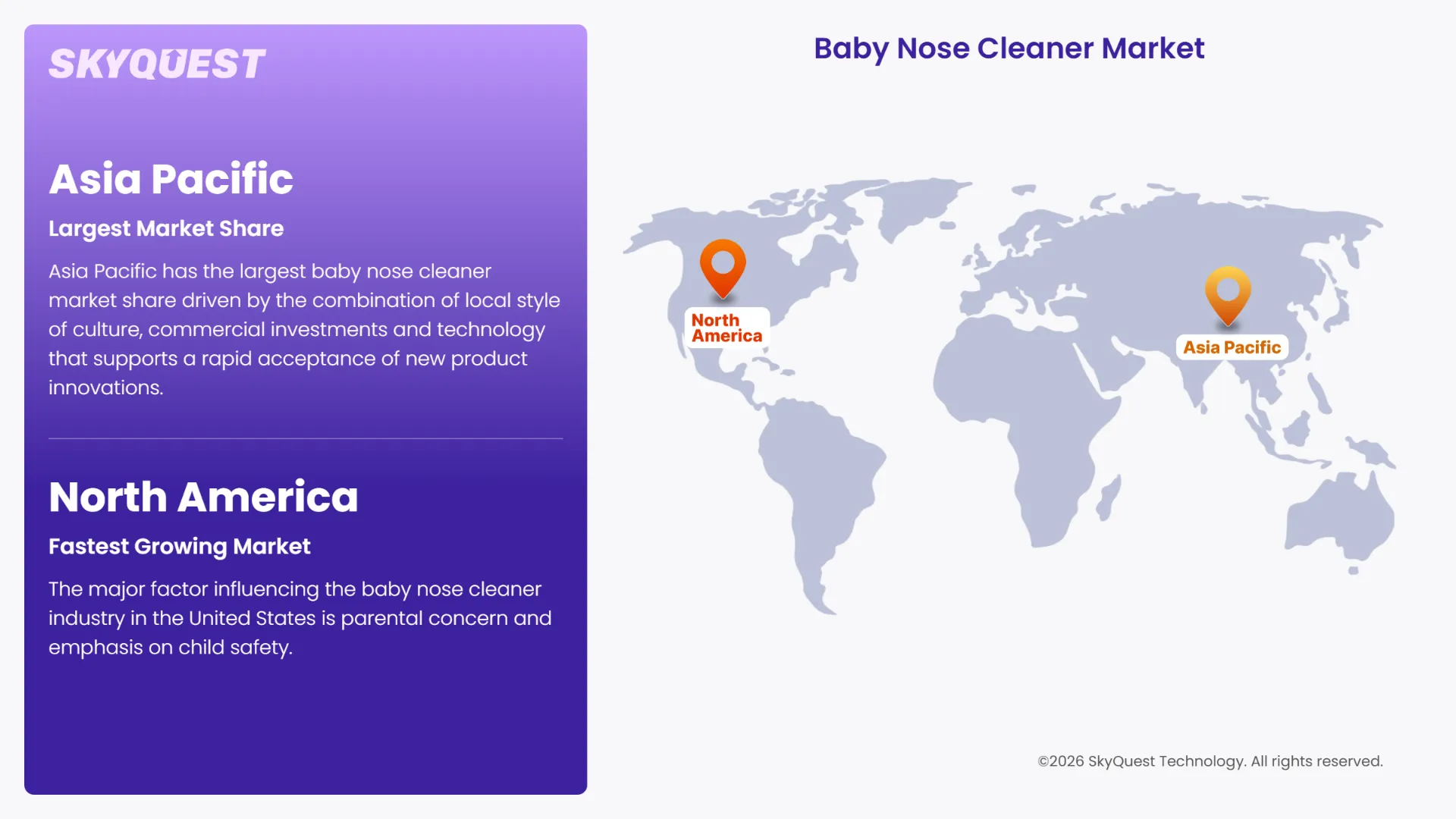
Asia Pacific has the largest baby nose cleaner market share driven by the combination of local style of culture, commercial investments and technology that supports a rapid acceptance of new product innovations. The high level of caregiver attention to infant hygiene and the well-established local manufacturing capabilities create a diverse base of products from inexpensive to premium. The extended access to the product through a well-established eCommerce infrastructure, and the existing relationships with pharmacies and specialty baby retailers, provide broad accessibility for caregivers in urban and peri-urban areas.
As per baby nose cleaner market regional outlook, Japan market benefits from the high and increasing expectation of consumers for product safety and precision design that considers the guidance of pediatricians. Domestic manufacturers focus on ease of use, ease of cleaning, and aesthetically pleasing design to appeal to these demanding caregivers. The established retail networks and advanced online marketing channels provide ease of access. The marketing themes of infant comfort and physician endorsements help to create a high level of trust and drive the adoption of innovative nasal hygiene solutions by caregivers during daily routines with their newborns and infants.
While the South Korean baby nose cleaner market reflects a desire for product innovation that utilizes advanced technology in a very user friendly baby care product that incorporates pediatrician recommendations, the domestic product manufacturers focus on compact size, quiet operation and ease of cleaning as necessary features for urban caregivers. The strong online market presence and established support systems (forums) in the parenting community allow for excellent opportunity for the baby nose cleaner market to facilitate new product discovery and peer endorsement for the products being sold in this developing market segment.
As per baby nose cleaner market regional forecast, the demand for infant health products has resulted in widespread acceptance of new baby nose cleaners because of parents' increased emphasis on ensuring their children's safety and the retailer/ health care system ecosystem that drives the uptake of these products. The prevailing level of pediatric advocacy and endorsement of products has generated a high degree of visibility for products designed specifically for infants. Furthermore, companies are marketing and creating their products with a focus on safety to provide consumers with peace of mind.
The major factor influencing the baby nose cleaner industry in the United States is parental concern and emphasis on child safety. In addition, many brands are developing and marketing their products with a focus on compatibility with clinical recommendations and expectant parents. There is an extensive network of retail establishments offering baby nose cleaners, including specialty baby stores, drugstores, and online retailers, making it easy for customers to find and purchase baby nose cleaners. Companies are using clear and concise promotions of their product line emphasizing safety, as well as product ergonomics and hygienic features, as well as clear communication regarding product efficacy, are vital to establishing consumer credibility in the marketplace and increasing the number of customers who purchase and use baby nose cleaners.
As per baby nose cleaner industry analysis, Canada is an excellent example of a fast-growing market segment for baby nose cleaners due to the continuing demand for safe and easy to use baby nose cleaners by caregivers. As a result of the growing demand, there is an increasing number of retailers throughout the country who will offer baby nose cleaners, as well as many options for shopping via e-commerce. In addition, companies who manufacture baby nose cleaners are providing bilingual labelling on their products to appeal to both English and French speaking caregivers. The companies are also reporting that they are designing their baby nose cleaners for easy maintenance and quiet performance to meet the expectations of caregivers.
The baby nose cleaner division in Europe is cementing its foothold in the industry by creating standards for regulation, consumer confidence in certified products as well as the importance of safety/sustainability for all infant care categories. Clear labeling and harmonized product quality allow cross-border brand extension between countries and increase the willingness of more cautious caregivers to utilize product. Trustworthy claims are provided by well-established clinical professional associations that have provided credibility to the evidence-based claims of the devices, while at the same time, retail channels offer a mix of premium and specialty produce within their communities with manufacturers having a portfolio of both types of retailers as part of their distribution strategy. The development of innovative design and environmentally friendly materials are a reflection of the dynamic and changing tastes of parents today while effective local partnerships, divided marketing initiatives and investments in research collaborations will keep brands on the leading edge of usability and comfort for infants.
Germany baby nose cleaner market is benefiting from high standards of safety associated with the use of baby nose cleaners and a strong clinical influence on the selection of these products by parents. Local brands use stringent quality controls, comprehensive user instructions, and durable materials to ensure they adhere to extremely high-quality standards. There is a strong emphasis on pharmacy and specialist baby retail channels for distribution; however, established e-commerce channels are also available in support of the overall product distribution strategy. Transparency and endorsements from paediatricians provide caregivers with assurance and security when choosing a safe, reliable and effective solution for maintaining nasal hygiene and providing comfort to their infant.
The baby nose cleaner market within the United Kingdom is driven primarily by awareness from caregivers around baby respiratory health along with strong demand for clinically validated products. For example, baby brands that have proven safe and are promoted or endorsed by health care professionals through their labeling are very successful in the market. In addition to these elements, there are various retail channels where baby noses can be purchased. These include pharmacies, baby shops, and online retailers. Ergonomically designed baby nostril cleaners that are convenient to clean and quiet to operate fit within the family lifestyle and offer additional credibility through their partnership with pediatrician clinics, parent organizations, etc., provide added support to the purchasing decision.
The French baby nose cleaner market features a strong emphasis on children's well-being as well as a heavy regulatory influence on consumer purchasing decisions using safe, well-regulated products. Caregivers look for products that have a clearly defined hygiene process; mildness during use; and professional endorsements from healthcare providers. Distribution channels for baby nose cleaners include pharmacies, special baby stores and online forums that provide convenient access for caregivers to conduct research before making purchase decisions. Baby nose cleaners are designed to be user-friendly and easy to clean. Many baby nose cleaner manufacturers have partnered with prenatal healthcare providers to enhance their brand credibility in front of consumers.
To know more about the market opportunities by region and country, click here to
Buy The Complete Report
Increasing Parental Awareness
A greater awareness of the importance of healthy nasal passages in infants and measures to prevent infection has fueled an increase in use of baby nose cleaners, as caregivers are searching for safer and more effective ways to relieve nasal congestion and/or promote breathing. Feedback from healthcare professionals and parenting networks can also contribute to the frequency in which baby nose cleaners are used as they provide caregivers with a greater sense of need and want to be able to care for their child on a regular basis. Caregivers are looking for more options that do not cause further pain or discomfort (i.e., non-invasive) while providing benefits such as reducing the risk of choking/aspiration during feeding and sleeping. The demand for easy and user-friendly products to care for infant nasal passages will continue to expand through the growing preference for gentler nasal cleaning products in conjunction with the increase in the number of new companies launching products targeted specifically at cleaning infant nasal passages.
Increased Product Development
There are ongoing developments in all aspects of baby nose cleaners, including design, materials, and user experience. This enables baby nose cleaners to address caregiver concerns related to safety and ease of use, thereby encouraging caregiver purchases. Created using gentler materials (tips), designed specifically for ergonomics, and developed using single-use inserts provide an overall reduction in the caregiver's perception of risk while simultaneously simplifying maintenance, which makes the baby nose cleaner more suitable to be used on a regular basis for infant care. The introduction of differentiated and improved features in manners that give caregivers a better understanding of how to use baby nose cleaners will help to increase brand loyalty and repeat purchases.
Parental Safety Concerns and Misuse
Concerns regarding potential harm, misuse, or injury while using baby nose cleaners may create hesitance in purchasing or using these products, creating barriers to market penetration. Additionally, reports from parenting communities regarding misuse or negative experiences increase caution in their use as well as the willingness to attempt unfamiliar devices, particularly on newborns. Additionally, strict regulatory scrutiny and conservative clinical recommendations, in response to safety concerns, may inhibit marketing claims and product positioning, leading manufacturers to utilize conservative messaging and delay product rollout. Thus, limiting broader consumer adoption and expanding the category.
Limited Clinical Accreditation and Reimbursement
Limited clinical accreditations and lack of direct reimbursement for uses of baby nose cleaners will inhibit their adoption in healthcare settings as well as slow recommendations from pediatric practitioners, limiting their credibility to the cautious caregiver audience. When practitioners do not consistently recommend specific products or if insurers do not reimburse for clinical-grade devices, it limits the uptake of baby nose cleaners to consumer channels and prevents them from being incorporated into standard practice in infant care settings. The segregation of baby nose cleaners reduces potential for ongoing clinician education support and clinical validation thus building trust and delaying their wider market acceptance, despite product availability.
Request Free Customization of this report to help us to meet your business objectives.
The global baby nose cleaner industry is seeing increased competition between legacy brands and new players as they try to consolidate their positions through forming distributor partnerships and inventing new product types. For instance, private equity & strategic buyers, such as Thyme To Play and The Honest Company, have acquired several baby nasal suction product lines like Boogie Wipes and Dapple. Additionally, some of the original inventors of these devices are now taking their hospital-grade version of a nose sucker called NozeBot into commercial markets. Finally, Playhouse MD, which recently had multiple distributor agreements in place, has combined playful product designs with these agreements to expedite entrance into retail stores.
SkyQuest’s ABIRAW (Advanced Business Intelligence, Research & Analysis Wing) is our Business Information Services team that Collects, Collates, Correlates, and Analyses the Data collected by means of Primary Exploratory Research backed by robust Secondary Desk research.
As per SkyQuest analysis, the global baby nose cleaner market is propelled by heightened parental focus on infant respiratory health and comfort, while rapid expansion of e-commerce and digital advocacy accelerates product discovery and repeat purchases. Manual cleaners remain the dominant segment due to caregiver preference for tactile control, perceived gentleness and simple operation, and Asia Pacific continues to lead regionally due to strong local manufacturing, robust online channels and cultural emphasis on infant hygiene. Baby nose cleaner market growth is tempered by persistent parental safety concerns and reports of misuse that can limit adoption and invite regulatory caution. Manufacturers that combine clear safety messaging with accessible distribution are best positioned to capture rising demand.
| Report Metric | Details | |
|---|---|---|
| Market size value in Nose | USD Growth Rate | 6.2% |
| Base year | 2024 | |
| Forecast period | 2026-2033 | |
| Forecast Unit (Value) | USD Data-ccp-parastyle="heading | |
| Segments covered |
|
|
| Regions covered | North America (US, Canada), Europe (Germany, France, United Kingdom, Italy, Spain, Rest of Europe), Asia Pacific (China, India, Japan, Rest of Asia-Pacific), Latin America (Brazil, Rest of Latin America), Middle East & Africa (South Africa, GCC Countries, Rest of MEA) | |
| Companies covered |
|
|
| Customization scope | Free report customization with purchase. Customization includes:-
|
To get a free trial access to our platform which is a one stop solution for all your data requirements for quicker decision making. This platform allows you to compare markets, competitors who are prominent in the market, and mega trends that are influencing the dynamics in the market. Also, get access to detailed SkyQuest exclusive matrix.
Table Of Content
Executive Summary
Market overview
Parent Market Analysis
Market overview
Market size
KEY MARKET INSIGHTS
COVID IMPACT
MARKET DYNAMICS & OUTLOOK
Market Size by Region
KEY COMPANY PROFILES
Methodology
For the Baby Nose Cleaner Market, our research methodology involved a mixture of primary and secondary data sources. Key steps involved in the research process are listed below:
1. Information Procurement: This stage involved the procurement of Market data or related information via primary and secondary sources. The various secondary sources used included various company websites, annual reports, trade databases, and paid databases such as Hoover's, Bloomberg Business, Factiva, and Avention. Our team did 45 primary interactions Globally which included several stakeholders such as manufacturers, customers, key opinion leaders, etc. Overall, information procurement was one of the most extensive stages in our research process.
2. Information Analysis: This step involved triangulation of data through bottom-up and top-down approaches to estimate and validate the total size and future estimate of the Baby Nose Cleaner Market.
3. Report Formulation: The final step entailed the placement of data points in appropriate Market spaces in an attempt to deduce viable conclusions.
4. Validation & Publishing: Validation is the most important step in the process. Validation & re-validation via an intricately designed process helped us finalize data points to be used for final calculations. The final Market estimates and forecasts were then aligned and sent to our panel of industry experts for validation of data. Once the validation was done the report was sent to our Quality Assurance team to ensure adherence to style guides, consistency & design.
Analyst Support
Customization Options
With the given market data, our dedicated team of analysts can offer you the following customization options are available for the Baby Nose Cleaner Market:
Product Analysis: Product matrix, which offers a detailed comparison of the product portfolio of companies.
Regional Analysis: Further analysis of the Baby Nose Cleaner Market for additional countries.
Competitive Analysis: Detailed analysis and profiling of additional Market players & comparative analysis of competitive products.
Go to Market Strategy: Find the high-growth channels to invest your marketing efforts and increase your customer base.
Innovation Mapping: Identify racial solutions and innovation, connected to deep ecosystems of innovators, start-ups, academics, and strategic partners.
Category Intelligence: Customized intelligence that is relevant to their supply Markets will enable them to make smarter sourcing decisions and improve their category management.
Public Company Transcript Analysis: To improve the investment performance by generating new alpha and making better-informed decisions.
Social Media Listening: To analyze the conversations and trends happening not just around your brand, but around your industry as a whole, and use those insights to make better Marketing decisions.
REQUEST FOR SAMPLE
 REQUEST FREE CUSTOMIZATION
Global Baby Nose Cleaner Market size was valued at USD 0.96 Billion in 2024 and is poised to grow from USD 1.09 Billion in 2025 to USD 3.12 Billion by 2033, growing at a CAGR of 14.0% during the forecast period (2026-2033).
Competition in the global baby nose cleaner market is intensifying as legacy brands and new entrants pursue consolidation, distributor partnerships, and product differentiation. Private equity and strategic acquirers have consolidated niche lines such as Boogie Wipes and Dapple. Clinician founders are commercializing hospital grade suction devices such as NozeBot. Playhouse MD has combined playful design with distributor deals to accelerate retail entry. 'NoseFrida', 'Safety 1st (Dorel Juvenile)', 'Pigeon Corporation', 'Braun (Helen of Troy)', 'Dr. Brown's (Handi-Craft)', 'Graco', 'NeilMed', 'Beaba', 'Nuby', 'Munchkin', 'HydraSense (Bayer)', 'Little Remedies (Prestige)', 'Chicco (Artsana)', 'Olababy', 'BabySmile', 'Ravifun', 'Watolt', 'Bubzi Co', 'Occobaby', 'NUK (Newell Brands)'
Increased understanding among caregivers about infant nasal health and infection prevention drives demand for baby nose cleaners because parents seek safe, effective solutions to relieve congestion and support breathing. Product education from pediatricians and parenting communities encourages early adoption, reinforcing perceived necessity for routine infant care. As caregivers prioritize noninvasive options that reduce discomfort during feeding and sleeping, demand expands for user-friendly devices and wipes designed for delicate nasal passages. Consumer preference for gentler, specialized products directly translates into broader market uptake and category growth.
Natural And Sustainable Positioning: Shifting consumer preference toward eco conscious baby care is increasing demand for nose cleaners that use biodegradable components, natural materials and recyclable packaging. Brands highlight non toxic formulations, transparent sourcing and cruelty free manufacturing to build caregiver trust. Retail assortments showcase sustainable options as premium, health focused choices. Product development prioritizes reduction of single use plastics, improved product longevity and responsible disposal. Marketing ties infant wellbeing to environmental stewardship, encouraging partnerships with ethical suppliers and investments in greener manufacturing practices.
Asia Pacific Dominate the Global Baby Nose Cleaner Market?
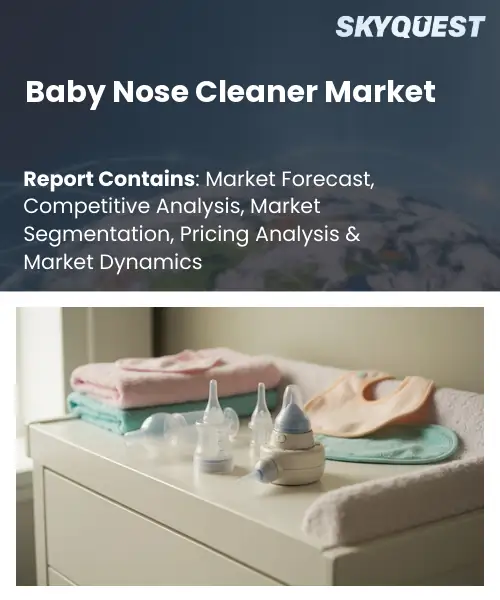
A baby nose cleaner is a device designed to remove nasal congestion in infants and young children, helping improve breathing comfort, feeding, and sleep quality.


Want to customize this report? This report can be personalized according to your needs. Our analysts and industry experts will work directly with you to understand your requirements and provide you with customized data in a short amount of time. We offer $1000 worth of FREE customization at the time of purchase.
Feedback From Our Clients


 USA (+1) 351-333-4748

