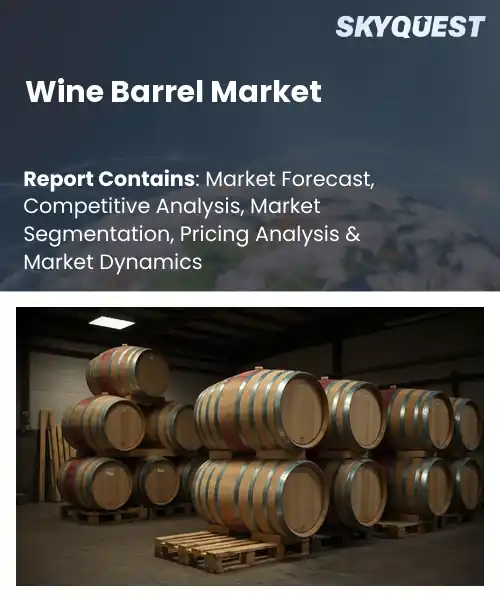
Wine Barrel Market
Report ID: SQMIG15P2050
Report ID: SQMIG15P2050
[email protected]
USA +1 351-333-4748
Report ID:
SQMIG15P2050 |
Region:
Global |
Published Date: July, 2026
Pages:
157
|Tables:
123
|Figures:
77


Global Wine Barrel Market size was valued at USD 1.63 Billion in 2024 and is poised to grow from USD 1.69 Billion in 2025 to USD 2.21 Billion by 2033, growing at a CAGR of 3.5% during the forecast period (2026-2033).
Today, sustainability guides the market as wineries go for barrels which reduce environmental footprint while maintaining their characteristics. Stricter forest certification laws, as well as increased customer preference for environmentally neutral products, encourage producers to opt for oak sourced from tree plantations and even other materials such as chestnut, acacia, and steel staves. The change reduces cost of inventory management and time to market the product, which allows small-scale winemakers to conduct barrel aging without incurring high financial costs. Thus, cooperages that offer certified timber and modular design get increased orders, which opens new export opportunities in rapidly expanding wine-producing areas of Asia and Africa.
How is IoT Improving Traceability in the Wine Barrel Market?
The use of IoT is revolutionizing the process of wine barrel tracking through integration of sensors that gather data related to temperature, humidity, vibrations, and location during the entire aging process. The information gathered is fed into cloud-based dashboards where it is possible for cellar managers to monitor the current situation, generate alarms in case of any deviation, and compare historic profiles between various barrels. Through this technology, it becomes possible to create a digital twin for each barrel, thus making it possible to maintain accurate information about the origin of each barrel that can be provided to distributors and consumers. To differentiate from competitors, wineries need to demonstrate the right aging environment and accurate provenance of their products. IoT minimizes the manual check-ups of inventories and spoilage of barrels and makes it possible for predictive maintenance of rack systems.
Market snapshot - (2026-2033)
Global Market Size
USD 1.63 Billion
Largest Segment
French Oak Barrels
Fastest Growth
Alternative Oak Products
Growth Rate
3.5% CAGR
To get more insights on this market click here to Request a Free Sample Report
Global wine barrel market is segmented by material, capacity, toast level, end user and region. Based on material, the market is segmented into French Oak Barrels, American Oak Barrels, Eastern European Oak Barrels, Acacia Barrels, Chestnut Barrels and Alternative Oak Products. Based on capacity, the market is segmented into Small Barrel (< 100 L), Medium Barrel (100–300 L), Barrique (225 L Standard) and Large Casks (> 300 L). Based on toast level, the market is segmented into Light Toast, Medium Toast, Heavy Toast and Untoasted. Based on end user, the market is segmented into Wineries, Breweries, Distilleries and Spirit Producers. Based on region, the market is segmented into North America, Europe, Asia Pacific, Latin America and Middle East & Africa.
French oak barrels segment leads as they have been used in expressing high-quality wines in the past and provide rich tannins, spicy aroma, and fine texture which winemakers value. The porous nature of their grains allows controlled micro-oxygenation. Producers prefer such barrels as they offer consistency through years and since French oak has an element of prestige, it is more likely that there will be higher investment levels making French oak barrels segment lead in the wine barrels market.
American oak barrels segment proves to be one of the areas which have a rapid growth rate owing to the growing consumer interest in fruit-forward profiles and soft tannin structures.
Barrique dominates due to its ideal size, which is 225 liters and corresponds to the typical capacity of wine-making barrels in France, thus offering the right size for proper extraction and aging. This particular capacity allows for a balanced surface area to volume ratio, which helps in achieving steady micro-oxygenation that facilitates proper stabilization of color and tannins. It gives winemakers the predictability needed to produce on large scales while maintaining high-quality standards, ensuring its popularity in the wine barrels industry.
On the other hand, the small barrel category less than one hundred liters is recording the highest growth momentum since there is increased demand from boutique winemakers seeking flexibility and intense flavor extraction.
To get detailed segments analysis, Request a Free Sample Report
Dominance by Europe is attributed to its rich viticulture background together with specialization in the art of manufacturing barrels. Established traditions facilitate cooperation between wineries and cooperages, resulting in ongoing improvements in oak selection, seasoning, and design of the barrels. Closeness of major wine regions to the source of top-quality oak facilitates logistics and increases efficiency of the process. Robust regulations guarantee consistency of the quality, whereas innovative approach stimulates experiments with new types of oak and barrels. All these circumstances contribute to creating a sustainable environment that maintains Europe’s superiority in manufacturing wine barrels.
The Wine Barrel Market in Germany enjoys the advantages of an excellent domestic wine industry that is highly conscious of accuracy. The domestic cooperages in the country are highly meticulous in the selection of grains and the use of seasoning, in line with the high-quality standards set by the German wine industry. There is also a good level of cooperation between the wineries and the barrel makers, resulting in constant innovation in the use of barrels.
Wine Barrel Markets in the United Kingdom have been defined by an increasing demand for premium and boutique wines. The English cooperages have established themselves for their quality of producing wine barrels that can cater to both domestic and export markets of wine producers. Focus is laid on producing toast levels and hybrid oak barrels which can satisfy the changing tastes of wine producers. There are many connections between the academic sector and the wine industry which lead to studies related to barrel aging.
The Wine Barrel Industry in France is built on expertise that spans centuries and is renowned worldwide for its skills in oak working. The French cooperages provide a large variety of different types of barrels that correspond with terroir, thus contributing to the wide variety of French wine appellations. The tight interaction with famous vineyards makes sure that the barrels meet the stylistic requirements of the winemaker. Tradition combined with innovation guarantees the leading position of French barrels in the market, which ensures the dominance of Europe.
The fast-growing market of North America is driven by the booming craft wine industry and consumers’ preference for high-quality, experience-based products. Wineries throughout the United States and Canada have begun using various oak techniques to create unique offerings, thus driving the need for more types of barrels. Increased spending on local cooperages minimizes dependence on imported barrels and cuts delivery time, whereas cooperation with European specialists improves technical skills. The encouragement from the authorities to conduct sustainable forestry activities corresponds with the customers’ interest in eco-friendly packaging.
Market Development of Wine Barrels in the US is in line with the vastness and diversity of the country’s wine-making regions, including coast valleys as well as mountain terraces. In this regard, domestic cooperages have increased their output to satisfy the requirements of mass wine producers as well as specialty wineries, providing them with different types of oak woods and different levels of toasting. Moreover, the use of innovation in barrels design, which includes new wooden blends and customized barrel sizes, serves the innovative approach of American wine makers.
Activity in the Canadian Wine Barrel Market is influenced by the development of the wine industry, which focuses on wines grown in cooler climates and expressing unique flavor characteristics. In Canada, cooperages specialize in maintaining high quality of the oak and combining it with sustainable forest management certificates. Research projects between the vineyards and barrel makers examine the effects of mild oak on aroma development.
To know more about the market opportunities by region and country, click here to
Buy The Complete Report
Rising Premium Wine Consumption
With an increasing preference by consumers for better quality wine, there is need for the wineries to buy high-quality barrels which improve the wine flavors. This trend has increased the need for better oak, thus increasing the total volume of market as more wineries invest in buying more barrels. Premium positioning ensures that custom-designed barrels are developed hence encouraging suppliers to increase production. The sensory experience of wine that has been aged through oak also increases the number of purchases by collectors.
Shift Toward Sustainable Oak
The winemaking industry is now giving more importance to environmentally friendly processes; thus, there is an increasing trend towards sustainable sourcing of oak barrels. There is a tendency among producers to embrace certification programs that ensure sustainable forest management practices; thus, there will be a need for the manufacturing of barrels from plantations and reconstituted wood. This ethical consideration leads to innovation by barrel manufacturers as they adopt greener processes for manufacturing; thus, leading to increased market opportunities as well as brand recognition for barrels.
High Cost of Quality Oak
Oak’s high price makes the production process of wine barrels costly, thus requiring large amounts of capital on the part of wineries, particularly small and boutique ones. If barrel costs account for a major portion of the total budgeting process involved in winemaking, there could be an occasion where some winery owners limit the number of wine barrels that they buy, going for other types of containers like stainless steel and less expensive wood instead.
Regulatory Restrictions on Forest Harvest
The tough environmental regulations associated with forest harvesting and exportation of timber make it difficult to obtain legitimate oak to produce barrels. Environmental protection measures have been adopted by governments, and consequently, there is an increased need to comply with logging restrictions in areas where oaks abound, and certification of suppliers is required. This creates difficulties for producers, as they will be forced to obtain raw material from other locations due to the difficulty in obtaining quality materials.
Request Free Customization of this report to help us to meet your business objectives.
Through strategic mergers, joint venture relationships to gain access to premium oak wood, as well as the use of moisture sensing devices for improving the quality of barrels used, the industry players have increased competition within the industry. The objective of such actions is to create differences between products offered and increase market coverage.
Sustainable Oak Initiatives: There is a trend of growing demands by consumers for products that are environmentally friendly, which compels barrel makers to go for sustainable harvesting of oak and ensure their compliance with forest management guidelines. Manufacturers are partnering with certified plantations, scheduling their harvesting cycles, and implementing measures that can reduce waste, such as reuse of used staves for furniture and energy. This not only helps build their brands' reputation but also helps them adhere to sustainability requirements of retailers and achieve the goals of a circular economy.
Digital Traceability Solutions: Wine producers are increasingly making use of blockchain and IoT systems to ensure traceability of the barrels' provenance, wood source, and performance throughout the entire aging process. The provision of real-time data ensures accurate monitoring of conditions such as humidity and temperature as well as the performance of the barrels for consistent quality and reduced spoilage. In addition to building consumer confidence and allowing for premium pricing, this ensures that wine producers can optimize the profile of their fermentations.
SkyQuest’s ABIRAW (Advanced Business Intelligence, Research & Analysis Wing) is our Business Information Services team that Collects, Collates, Correlates, and Analyses the Data collected by means of Primary Exploratory Research backed by robust Secondary Desk research.
As per SkyQuest analysis, the growth engine behind the world wine barrel industry is largely attributed to an increasing demand for premium wines that require quality barrels to improve their taste profiles. The other significant growth driver in the market is the trend towards sustainable oak barrels that come from certified forests and alternative wood types. Europe will remain the dominant region due to its long history of winemaking and its proximity to quality oak forests, while the French oak barrels will retain dominance in the product category because of the high taste profile they deliver. The high prices of quality oak have been the primary barrier to growth.
| Report Metric | Details |
|---|---|
| Market size value in 2024 | USD 1.63 Billion |
| Market size value in 2033 | USD 2.21 Billion |
| Growth Rate | 3.5% |
| Base year | 2024 |
| Forecast period | (2026-2033) |
| Forecast Unit (Value) | USD Billion |
| Segments covered |
|
| Regions covered | North America (US, Canada), Europe (Germany, France, United Kingdom, Italy, Spain, Rest of Europe), Asia Pacific (China, India, Japan, Rest of Asia-Pacific), Latin America (Brazil, Rest of Latin America), Middle East & Africa (South Africa, GCC Countries, Rest of MEA) |
| Companies covered |
|
| Customization scope | Free report customization with purchase. Customization includes:-
|
To get a free trial access to our platform which is a one stop solution for all your data requirements for quicker decision making. This platform allows you to compare markets, competitors who are prominent in the market, and mega trends that are influencing the dynamics in the market. Also, get access to detailed SkyQuest exclusive matrix.
Table Of Content
Executive Summary
Market overview
Parent Market Analysis
Market overview
Market size
KEY MARKET INSIGHTS
COVID IMPACT
MARKET DYNAMICS & OUTLOOK
Market Size by Region
KEY COMPANY PROFILES
Methodology
For the Wine Barrel Market, our research methodology involved a mixture of primary and secondary data sources. Key steps involved in the research process are listed below:
1. Information Procurement: This stage involved the procurement of Market data or related information via primary and secondary sources. The various secondary sources used included various company websites, annual reports, trade databases, and paid databases such as Hoover's, Bloomberg Business, Factiva, and Avention. Our team did 45 primary interactions Globally which included several stakeholders such as manufacturers, customers, key opinion leaders, etc. Overall, information procurement was one of the most extensive stages in our research process.
2. Information Analysis: This step involved triangulation of data through bottom-up and top-down approaches to estimate and validate the total size and future estimate of the Wine Barrel Market.
3. Report Formulation: The final step entailed the placement of data points in appropriate Market spaces in an attempt to deduce viable conclusions.
4. Validation & Publishing: Validation is the most important step in the process. Validation & re-validation via an intricately designed process helped us finalize data points to be used for final calculations. The final Market estimates and forecasts were then aligned and sent to our panel of industry experts for validation of data. Once the validation was done the report was sent to our Quality Assurance team to ensure adherence to style guides, consistency & design.
Analyst Support
Customization Options
With the given market data, our dedicated team of analysts can offer you the following customization options are available for the Wine Barrel Market:
Product Analysis: Product matrix, which offers a detailed comparison of the product portfolio of companies.
Regional Analysis: Further analysis of the Wine Barrel Market for additional countries.
Competitive Analysis: Detailed analysis and profiling of additional Market players & comparative analysis of competitive products.
Go to Market Strategy: Find the high-growth channels to invest your marketing efforts and increase your customer base.
Innovation Mapping: Identify racial solutions and innovation, connected to deep ecosystems of innovators, start-ups, academics, and strategic partners.
Category Intelligence: Customized intelligence that is relevant to their supply Markets will enable them to make smarter sourcing decisions and improve their category management.
Public Company Transcript Analysis: To improve the investment performance by generating new alpha and making better-informed decisions.
Social Media Listening: To analyze the conversations and trends happening not just around your brand, but around your industry as a whole, and use those insights to make better Marketing decisions.
REQUEST FOR SAMPLE
 REQUEST FREE CUSTOMIZATION
Global Wine Barrel Market size was valued at USD 1.63 Billion in 2024 and is poised to grow from USD 1.69 Billion in 2025 to USD 2.21 Billion by 2033, growing at a CAGR of 3.5% during the forecast period (2026-2033).
Industry participants have intensified competition through strategic mergers, joint‑venture partnerships to secure premium oak supplies, and the adoption of sensor‑enabled moisture monitoring systems that improve barrel quality and reduce production cycles. These actions aim to differentiate product offerings, expand geographic reach, and meet rising demand for consistent flavor profiles across premium wine producers. 'Seguin Moreau Napa Cooperage', 'Tonnellerie Radoux', 'Nadalié Cooperage Group', 'Tonnellerie François Frères', 'Tonnellerie de Mercurey', 'Stock & Associates Cooperage', 'Independent Stave Company (ISC)', 'Brown-Forman Corporation (Brown Forman Cooperage)', 'Tonnellerie Sylvain', 'American Oak Cooperage', 'Watertight Cooperage', 'Garbellotto S.p.A.', 'Joseph Nadalie SA', 'Kadeau Cooperage', 'Boisé France SAS', 'Tonnellerie Taransaud', 'Tonnellerie Damy', 'Biodynamic Barrels', 'WineWell / TW Rawson', 'World Cooperage'
Consumers are increasingly seeking premium wine experiences, prompting wineries to invest in higher‑quality barrels that enhance flavor complexity and aging potential. This demand drives producers to source superior oak, elevating the overall market volume as new and existing wineries expand barrel inventories. The emphasis on premium positioning also encourages the adoption of customized barrel designs, further stimulating supplier activity and strengthening long‑term growth prospects across the global wine barrel landscape. Moreover, the sensory appeal associated with oak‑aged wines attracts discerning collectors, prompting additional purchases and reinforcing market momentum.
Sustainable Oak Initiatives: Consumers increasingly demand environmentally responsible products, prompting barrel manufacturers to adopt sustainably sourced oak and certify compliance with forest stewardship standards. Producers are collaborating with certified plantations, optimizing harvest cycles, and integrating waste‑reduction practices such as repurposing spent staves into furniture or bio‑energy. These initiatives enhance brand reputation, meet retailer sustainability criteria, and align with broader circular‑economy goals, creating differentiation in a crowded market while reducing ecological footprint and fostering stronger relationships with eco‑conscious distributors worldwide and driving long‑term growth.
Why does Europe Dominate the Global Wine Barrel Market? |@12


Want to customize this report? This report can be personalized according to your needs. Our analysts and industry experts will work directly with you to understand your requirements and provide you with customized data in a short amount of time. We offer $1000 worth of FREE customization at the time of purchase.
Feedback From Our Clients


 USA (+1) 351-333-4748

