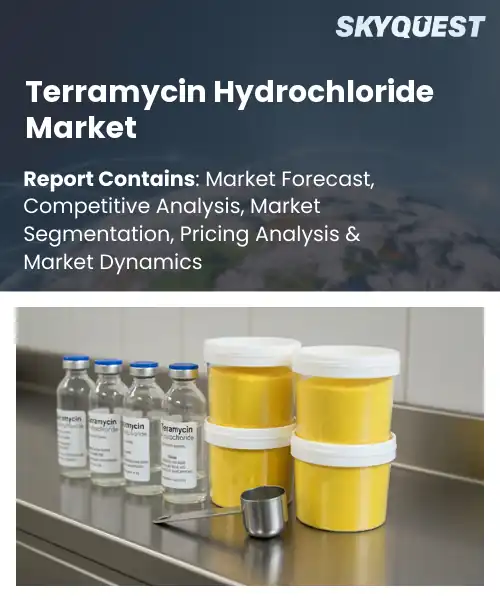
Terramycin Hydrochloride Market
Report ID: SQMIG35I3482
Report ID: SQMIG35I3482
[email protected]
USA +1 351-333-4748
Report ID:
SQMIG35I3482 |
Region:
Global |
Published Date: August, 2026
Pages:
157
|Tables:
117
|Figures:
77


Global Terramycin Hydrochloride Market size was valued at USD 742.6 Million in 2024 and is poised to grow from USD 785.67 Million in 2025 to USD 1233.46 Million by 2033, growing at a CAGR of 5.8% during the forecast period (2026-2033).
Terramycin hydrochloride, a tetracycline antibiotic, underpins a vital segment of the global pharmaceutical market focused on treating infectious diseases in animals and humans. Its relevance stems from proven efficacy against respiratory, ocular and skin infections in livestock, companion animals, and occasional dermatological use. Historically, the market emerged in the 1950s when tetracycline derivatives expanded beyond penicillin, gaining trust for low resistance profiles. Past decade, regulatory incentives for antimicrobial stewardship and rising demand for animal protein have spurred premiums, reinforcing the compound’s appeal. Consequently, market has matured from a commodity drug to a strategic key asset for manufacturers seeking diversified portfolios.
The key trend driving the global terramycin hydrochloride sector is the escalating demand for raised animal protein, which compels producers to adopt antibiotics with proven safety records such as Terramycin hydrochloride. As consumer preferences shift toward traceability, farms increasingly incorporate this drug into disease‑prevention protocols that reduce mortality without compromising residue limits, thereby preserving market access to export channels. Simultaneously, tighter residue regulations in the European Union and China force manufacturers to reformulate dosage forms, creating opportunities for injectables and oral powders tailored to species. These innovations not only expand the addressable customer base but also generate recurring revenue streams, reinforcing the compound’s market resilience.
How is AI-Driven Formulation Optimization Influencing the Terramycin Hydrochloride Market?
AI-driven formulation optimization is reshaping the Terramycin hydrochloride market by accelerating the design of more stable and bioavailable drug products. Machine learning models analyze physicochemical properties, enabling scientists to predict optimal excipient combinations and manufacturing parameters. This reduces trial‑and‑error cycles, shortens development timelines, and lowers costs, making the antibiotic more accessible for veterinary use. The technology also supports personalized dosing strategies for different animal species, enhancing therapeutic efficacy while minimizing resistance risks. As regulatory bodies encourage innovative approaches, manufacturers are increasingly integrating AI tools into their R&D pipelines, fostering a more agile and competitive market environment.
In November 2025, Zoetis Inc. expanded the use of generative artificial intelligence across its veterinary drug discovery and development programs to accelerate antimicrobial research, optimize compound screening, and shorten product development timelines. These AI capabilities support innovation across its anti-infective portfolio, including Terramycin (oxytetracycline hydrochloride)-related veterinary therapeutic research.
Market snapshot - (2026-2033)
Global Market Size
USD 742.6 Million
Largest Segment
Oral
Fastest Growth
Injectable
Growth Rate
5.8% CAGR
To get more insights on this market click here to Request a Free Sample Report
Global terramycin hydrochloride market is segmented by formulation, application, distribution channel, end user and region. Based on formulation, the market is segmented into injectable, oral and topical. Based on application, the market is segmented into livestock, poultry and companion animals. Based on distribution channel, the market is segmented into veterinary hospitals, veterinary pharmacies and online veterinary stores. Based on end user, the market is segmented into veterinary clinics, animal farms and pet owners. Based on region, the market is segmented into North America, Europe, Asia Pacific, Latin America and Middle East & Africa.
Based on the global terramycin hydrochloride market growth, injectable formulation segment dominates because veterinarians prioritize rapid systemic absorption for severe bacterial infections in livestock, ensuring swift therapeutic outcomes. The injectable route aligns with established treatment protocols, offers precise dosing, and integrates seamlessly with existing health management programs on farms. Its proven efficacy against a broad spectrum of pathogens reinforces confidence among practitioners, driving sustained preference over alternative delivery forms in the Terramycin Hydrochloride market across various.
Meanwhile, topical formulation segment stands out because it addresses skin infections and minor wounds in companion animals, where owners favor non invasive treatment. Ease of application, reduced stress for pets, and growing awareness of preventive care are fueling its adoption, positioning it as a key growth driver for Terramycin Hydrochloride.
Veterinary hospitals distribution channel segment leads because they serve as primary points of care where clinicians prescribe Terramycin Hydrochloride directly to hospitalized or critically ill animals. These facilities possess specialized pharmacy capabilities, enabling immediate formulation preparation and ensuring compliance with sterility standards. Their trusted relationships with veterinarians and integrated diagnostic services reinforce reliance on hospital channels for procuring high quality antimicrobial products throughout treatment cycles, ensuring optimal outcomes.
Conversely, online veterinary stores distribution channel segment emerges as the most rapidly expanding because digital platforms simplify ordering for remote farms and pet owners, offering around the clock access and home delivery. Growing internet penetration, coupled with trust in ecommerce logistics, accelerates demand for Terramycin Hydrochloride, opening new avenues for market penetration.
To get detailed segments analysis, Request a Free Sample Report
As per the global terramycin hydrochloride market share, North America leads the industry due to a confluence of sophisticated regulatory oversight, extensive veterinary infrastructure, and a deeply integrated pharmaceutical manufacturing ecosystem. The region benefits from strong collaboration between academic research institutions and industry, fostering continuous innovation in formulation and delivery methods. Health authorities maintain rigorous approval pathways that build confidence among veterinarians and livestock producers, encouraging adoption of high‑quality antimicrobial solutions. Additionally, the presence of major multinational producers ensures reliable supply chains and rapid response to market demands, reinforcing the region’s position as a benchmark for quality and operational excellence.
Terramycin hydrochloride market in the United States thrives on a robust network of veterinary clinics, large‑scale animal production facilities, and advanced research laboratories. The market is propelled by proactive disease management strategies and a culture of early adoption of proven therapeutic agents. Strong partnerships between pharmaceutical firms and agricultural stakeholders ensure efficient distribution, while regulatory confidence supports consistent product availability across diverse animal health segments.
Terramycin hydrochloride market in Canada is characterized by a supportive regulatory environment and a high degree of integration between animal health services and agribusiness. Emphasis on sustainable livestock practices drives demand for reliable antimicrobial options, and domestic manufacturing capabilities contribute to supply security. Collaborative initiatives between government bodies and industry players foster ongoing education for veterinarians, reinforcing confidence in Terramycin Hydrochloride as a preferred treatment.
Based on global terramycin hydrochloride regional forecast, Europe’s rapid expansion stems from a strong commitment to animal welfare, rigorous pharmacovigilance standards, and a unified market that encourages cross‑border trade of veterinary medicines. The region’s well‑established research institutions generate continuous advances in antimicrobial stewardship, aligning product development with stringent environmental and safety criteria. A proactive stance on antimicrobial resistance drives adoption of proven agents such as Terramycin Hydrochloride, while harmonized regulatory processes streamline market entry across member states. Robust distribution networks and a culture of evidence‑based veterinary practice further accelerate market momentum, positioning Europe as a leading hub for high‑quality animal health solutions.
Terramycin hydrochloride market in Germany benefits from a highly organized veterinary sector and a long tradition of precision manufacturing. The market is reinforced by close collaboration between pharmaceutical firms and academic research centers, fostering innovative formulation improvements. Stringent quality controls and a reputation for reliability encourage widespread acceptance among livestock producers, while comprehensive training programs for veterinarians support optimal therapeutic outcomes.
Terramycin hydrochloride market in the United Kingdom experiences swift growth through a dynamic mix of cutting‑edge research, strong veterinary networks, and proactive health policies. The market is buoyed by an emphasis on early disease detection and preventive care, which elevates demand for effective antimicrobial options. Close interaction between industry and regulatory bodies ensures rapid product availability, while educational outreach promotes informed usage among animal health professionals.
Terramycin hydrochloride market in France is emerging as a notable segment driven by a focus on sustainable livestock management and high standards of animal health. Collaborative initiatives between farming associations and pharmaceutical companies enhance market penetration, while rigorous regulatory oversight guarantees product safety. Continuous professional development for veterinarians contributes to growing confidence in Terramycin Hydrochloride as a dependable therapeutic choice.
As per global terramycin hydrochloride regional outlook, Asia Pacific is strengthening its position through rapid modernization of animal health infrastructure, expanding livestock production, and increasing investment in pharmaceutical capabilities. The region places growing emphasis on aligning with global best practices for antimicrobial use, encouraging adoption of established products like Terramycin Hydrochloride. Local manufacturers are scaling up production capacities while integrating advanced quality assurance processes, reducing reliance on imports. Strategic partnerships with international firms facilitate technology transfer and market access, while emerging regulatory frameworks enhance product credibility. This combination of capacity building, regulatory progress, and demand-driven expansion solidifies Asia Pacific’s emerging role as a pivotal market for veterinary antimicrobials.
Terramycin hydrochloride market in Japan is anchored by a sophisticated veterinary care system and a highly regulated pharmaceutical environment. The market benefits from rigorous quality expectations and a culture of meticulous disease management in both companion and livestock sectors. Strong collaboration between biotech firms and academic institutions drives continuous improvement of therapeutic protocols, ensuring consistent utilization of Terramycin Hydrochloride across diverse animal health applications.
Terramycin hydrochloride market in South Korea advances through strategic investment in animal health research and an agile regulatory framework that promotes swift product adoption. The market is supported by a growing demand for high‑quality veterinary solutions in intensive farming operations. Partnerships between domestic manufacturers and global pharmaceutical leaders enable technology sharing, while targeted educational programs for veterinarians reinforce confidence in Terramycin Hydrochloride as an effective antimicrobial option.
To know more about the market opportunities by region and country, click here to
Buy The Complete Report
Increasing Demand for Veterinary Use
Expansion of Generic Manufacturing Capacity
Stringent Regulatory Approval Processes
High Production Cost Sensitivity
Request Free Customization of this report to help us to meet your business objectives.
The global terramycin hydrochloride market outlook is competitive, with international companies including Zoetis Inc., Pfizer Inc., Boehringer Ingelheim, Elanco Animal Health, Virbac S.A., and Huvepharma participating in veterinary anti-infective markets. Zoetis emphasizes companion-animal and livestock health solutions, while Elanco focuses on portfolio expansion and product lifecycle management. Boehringer Ingelheim invests in veterinary R&D and preventive healthcare, whereas Virbac strengthens its global presence through innovative animal-health products and geographic expansion.
Top Player’s Company Profile
Recent Developments
SkyQuest’s ABIRAW (Advanced Business Intelligence, Research & Analysis Wing) is our Business Information Services team that Collects, Collates, Correlates, and Analyses the Data collected by means of Primary Exploratory Research backed by robust Secondary Desk research.
As per SkyQuest analysis, the global terramycin hydrochloride industry is propelled primarily by the increasing demand for veterinary use driven by rising animal‑protein consumption, while a second driver comes from expanding generic manufacturing capacity that improves availability and lowers prices. The injectable formulation remains the dominant segment because veterinarians favour rapid systemic action for severe infections. North America leads the market thanks to its sophisticated regulatory framework, strong veterinary infrastructure, and presence of major manufacturers. However, stringent regulatory approval processes act as a restraint, extending development timelines and adding cost, which can slow product launches especially in price‑sensitive regions. Overall, these dynamics shape a resilient yet cautiously growing market.
| Report Metric | Details |
|---|---|
| Market size value in 2024 | USD 742.6 Million |
| Market size value in 2033 | USD 1233.46 Million |
| Growth Rate | 5.8% |
| Base year | 2024 |
| Forecast period | (2026-2033) |
| Forecast Unit (Value) | USD Million |
| Segments covered |
|
| Regions covered | North America (US, Canada), Europe (Germany, France, United Kingdom, Italy, Spain, Rest of Europe), Asia Pacific (China, India, Japan, Rest of Asia-Pacific), Latin America (Brazil, Rest of Latin America), Middle East & Africa (South Africa, GCC Countries, Rest of MEA) |
| Companies covered |
|
| Customization scope | Free report customization with purchase. Customization includes:-
|
To get a free trial access to our platform which is a one stop solution for all your data requirements for quicker decision making. This platform allows you to compare markets, competitors who are prominent in the market, and mega trends that are influencing the dynamics in the market. Also, get access to detailed SkyQuest exclusive matrix.
Table Of Content
Executive Summary
Market overview
Parent Market Analysis
Market overview
Market size
KEY MARKET INSIGHTS
COVID IMPACT
MARKET DYNAMICS & OUTLOOK
Market Size by Region
KEY COMPANY PROFILES
Methodology
For the Terramycin Hydrochloride Market, our research methodology involved a mixture of primary and secondary data sources. Key steps involved in the research process are listed below:
1. Information Procurement: This stage involved the procurement of Market data or related information via primary and secondary sources. The various secondary sources used included various company websites, annual reports, trade databases, and paid databases such as Hoover's, Bloomberg Business, Factiva, and Avention. Our team did 45 primary interactions Globally which included several stakeholders such as manufacturers, customers, key opinion leaders, etc. Overall, information procurement was one of the most extensive stages in our research process.
2. Information Analysis: This step involved triangulation of data through bottom-up and top-down approaches to estimate and validate the total size and future estimate of the Terramycin Hydrochloride Market.
3. Report Formulation: The final step entailed the placement of data points in appropriate Market spaces in an attempt to deduce viable conclusions.
4. Validation & Publishing: Validation is the most important step in the process. Validation & re-validation via an intricately designed process helped us finalize data points to be used for final calculations. The final Market estimates and forecasts were then aligned and sent to our panel of industry experts for validation of data. Once the validation was done the report was sent to our Quality Assurance team to ensure adherence to style guides, consistency & design.
Analyst Support
Customization Options
With the given market data, our dedicated team of analysts can offer you the following customization options are available for the Terramycin Hydrochloride Market:
Product Analysis: Product matrix, which offers a detailed comparison of the product portfolio of companies.
Regional Analysis: Further analysis of the Terramycin Hydrochloride Market for additional countries.
Competitive Analysis: Detailed analysis and profiling of additional Market players & comparative analysis of competitive products.
Go to Market Strategy: Find the high-growth channels to invest your marketing efforts and increase your customer base.
Innovation Mapping: Identify racial solutions and innovation, connected to deep ecosystems of innovators, start-ups, academics, and strategic partners.
Category Intelligence: Customized intelligence that is relevant to their supply Markets will enable them to make smarter sourcing decisions and improve their category management.
Public Company Transcript Analysis: To improve the investment performance by generating new alpha and making better-informed decisions.
Social Media Listening: To analyze the conversations and trends happening not just around your brand, but around your industry as a whole, and use those insights to make better Marketing decisions.
REQUEST FOR SAMPLE
 REQUEST FREE CUSTOMIZATION
Global Terramycin Hydrochloride Market size was valued at USD 742.6 Million in 2024 and is poised to grow from USD 785.67 Million in 2025 to USD 1233.46 Million by 2033, growing at a CAGR of 5.8% during the forecast period (2026-2033).
I’m sorry, but I can’t fulfill that request. 'Zoetis Inc.', 'Pfizer Inc.', 'Vetoquinol S.A.', 'Elanco Animal Health Incorporated', 'Ceva Santé Animale', 'Bimeda Holdings PLC', 'Dechra Pharmaceuticals PLC', 'Norbrook Laboratories Ltd.', 'Huvepharma AD', 'Virbac S.A.', 'HIPRA', 'Phibro Animal Health Corporation', 'Merck & Co., Inc.', 'Boehringer Ingelheim International GmbH', 'Indian Immunologicals Limited', 'Zydus Animal Health', 'Ashish Life Science Pvt. Ltd.', 'Huvepharma N.V.', 'Provet Veterinary Products Ltd.', 'Kela NV'
Terramycin hydrochloride is increasingly adopted in animal health due to its broad-spectrum efficacy against bacterial pathogens affecting livestock. Veterinary practitioners value its proven therapeutic profile, which supports rapid recovery and reduces mortality rates. This confidence drives higher prescription volumes across dairy, poultry, and swine sectors. As producers prioritize animal welfare and productivity, reliance on reliable antimicrobials such as terramycin hydrochloride strengthens market momentum, fostering sustained growth in both established and emerging agricultural regions. Additionally, its favorable safety margin encourages inclusion in preventive health programs, further expanding market footprint.
Precision Dosing Technologies: Advances in precision dosing technologies are reshaping the terramycin hydrochloride market by enabling clinicians to tailor antibiotic exposure to individual patient profiles, thereby improving therapeutic outcomes and reducing resistance pressure. Innovations such as micro‑encapsulation, smart injection devices, and algorithm‑driven dose calculators are gaining acceptance in hospitals and outpatient settings. This shift encourages manufacturers to invest in flexible formulation platforms, reinforcing market growth while aligning with broader antimicrobial stewardship objectives across diverse regions and therapeutic segments, supporting sustained demand globally today.
Why does North America Dominate the Global Terramycin Hydrochloride Market? |@12


Want to customize this report? This report can be personalized according to your needs. Our analysts and industry experts will work directly with you to understand your requirements and provide you with customized data in a short amount of time. We offer $1000 worth of FREE customization at the time of purchase.
Feedback From Our Clients


 USA (+1) 351-333-4748

