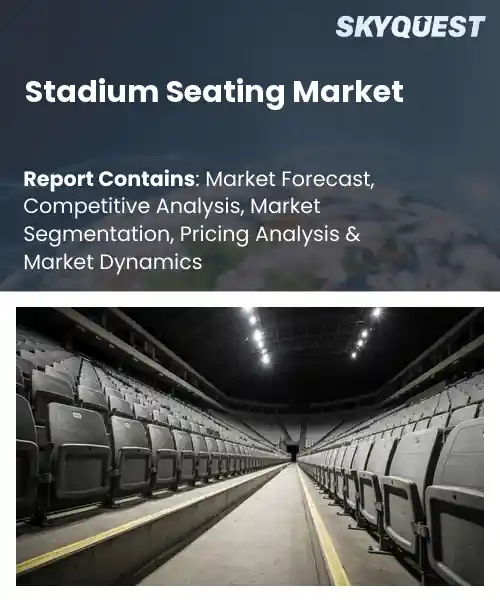
Stadium Seating Market
Report ID: SQMIG25F2123
Report ID: SQMIG25F2123
[email protected]
USA +1 351-333-4748
Report ID:
SQMIG25F2123 |
Region:
Global |
Published Date: June, 2026
Pages:
157
|Tables:
115
|Figures:
77


Global Stadium Seating Market size was valued at USD 1.83 Billion in 2024 and is poised to grow from USD 1.86 Billion in 2025 to USD 2.15 Billion by 2033, growing at a CAGR of 1.81% during the forecast period (2026-2033).
Stadium seating encompasses design, manufacturing, and installation of fixed, retractable, and premium seats for sport arenas, concert halls, and multipurpose venues. This industry is vital in maximizing stadium capacity while ensuring that fans enjoy high levels of comfort, safety, and profitability-generating facilities, including hospitality suites. The industry developed over time from basic steel bleacher stands of the mid-20th century to more sophisticated ergonomic structures, complete with lights, USB chargers, and price displays. An instance of this is the 2017 upgrade of the SoFi Stadium in Los Angeles, wherein modular premium seats increased revenues per event by 22 percent.
The next factor driving growth in the market comes from technological advancements where the seats become rich in data touch points. The sensors can now be used to track occupancy rates, temperature, and stresses in the seat and allow maintenance optimization and personalization of fan experience using apps. It results in a positive feedback effect since analysis drives prices on seats, and that further leads to an increase in revenue per attendee where sensor-based seats have led to increase in percent of concession sales.
How is AI Transforming Stadium Seating Design and Fan Experience?
AI has transformed the process of stadium seating arrangement. Algorithms help identify the best ways to arrange seating to ensure good views and eliminate bottlenecks. Machine learning helps predict demand from certain sections of the venue, thereby making it possible for operators to change prices and allocate resources before the event. Data from sensors helps create a digital twin model, simulating crowd movements and helping the staff coordinate entry and exit of crowds effectively. Personalized recommendations are provided to fans through mobile apps that direct them to seats that suit their needs in terms of views and nearness to amenities or social connections. This has led to greater comfort and satisfaction in the venue. In May 2026, Gensler introduced an AI-based seat mapping system.
Market snapshot - (2026-2033)
Global Market Size
USD 1.83 Billion
Largest Segment
Metal
Fastest Growth
Plastics
Growth Rate
1.81% CAGR
To get more insights on this market click here to Request a Free Sample Report
Global stadium seating market is segmented by material type, design configuration, installation type, application environment and region. Based on material type, the market is segmented into Plastics, Metal and Wood. Based on design configuration, the market is segmented into Foldable Seats and Non-Foldable Seats. Based on installation type, the market is segmented into Fixed Seating, Telescopic Seating and Bleachers and Grandstands. Based on application environment, the market is segmented into Outdoor Stadiums and Indoor Arenas. Based on region, the market is segmented into North America, Europe, Asia Pacific, Latin America and Middle East & Africa.
The reason behind the dominance of the plastics segment is their lightweight characteristic, which helps in reducing the load on structure and makes construction faster and cost-effective for the project of stadiums, along with having low maintenance costs due to the non-corrosive and moisture-resistant characteristic of the materials, making them durable. The versatility of the material allows injection molding, which enables the use of ergonomically designed seating that also incorporates the brand image and provides comfort to the fans.
On the other hand, the metal segment is experiencing the highest growth in momentum due to the need for the safety of stadiums from fire and their structural strength required due to high capacity in the stadiums.
The fixed seating section comes first as it features stable and permanent structures that adhere to safety standards and provide uniform view lines for spectators. The fixed nature makes it easier to audit such structures and ensures that there is minimal disruption during events. Its strength matches the asset management plans of the facility managers.
On the other hand, telescopic seating appears to be growing rapidly due to multipurpose facilities that require quick changes to the layout of seats before an event. Technological advancements in folding have made it possible to change from one arrangement to another quickly, increasing the usage of such venues.
To get detailed segments analysis, Request a Free Sample Report
North America has been holding the lead in the stadium seating market due to several factors such as mature infrastructure, high disposable incomes among fans, and a preference for top-notch live experiences. With extensive networks of venues at both the professional and collegiate levels, there is constant demand for improved seating options that offer comfort and generate profit. North America has been blessed with advanced manufacturing abilities and focus on ensuring high levels of adherence to safety regulations, making modular seating a common feature among stadiums in the region. Through close partnerships among venues owners, architects, and seat manufacturers, products have evolved rapidly and helped reinforce North America’s status as the standard for stadium seating. Additionally, the growing importance of fan experience and involvement through digital and personalized fan services further enhances the need for adaptable seating systems.
Market for Stadium Seating in the United States is an elaborate network where stadium owners emphasize versatility and luxury features to cater to various spectators. Manufacturers emphasize the use of light materials and technological incorporation to improve fan engagement as well as ease of maintenance. Effective partnerships between sports organizations, entertainment agencies, and seating manufacturers lead to constant innovation, along with strict regulations ensuring safety and accessibility standards in old as well as newly built stadiums.
Market for Stadium Seating in Canada Focuses on Sustainability and Comfort in a Climate Where Durable Materials Are Required. The materials used in the construction of stadium seats include weather-resistant fabrics and metal seats resistant to corrosion to ensure that the lifespan of the material is extended without losing its beauty. Collaborations with the provinces' sports associations and event planners promote the use of modular seating for varied occasions, including cultural events.
Europe is witnessing an accelerated growth in the stadium seating market due to a combination of culture’s love for sports, investment into modernizing venues, and a push from regulators toward sustainability and inclusiveness. Countries in this part of the world are looking into updating their existing arenas to be able to meet the increasing demands regarding the fans’ comfort and the optimization of revenues, creating a need for flexible and efficient seating systems. With major design companies and suppliers of innovative materials present, there are efforts being made to use environmentally friendly fabrics and sustainable seating technologies that can increase safety and engagement, thus making Europe the center of next-gen stadium seating development.
Germany Stadium Seating Market demonstrates a high level of engineering tradition focusing on accuracy of manufacturing and high safety standards. German manufacturers utilize state-of-the-art material technology in order to create light and durable seating systems which will be suitable for various event scenarios. Closely working with football teams and concert organizers makes manufacturers use modular constructions allowing quick transformation into different configurations, and paying attention to energy-efficient manufacturing process is important for Germany’s sustainable development policy.
Market of Stadium Seating in the United Kingdom is defined by rapid implementation of the latest seating trends due to a constantly changing entertainment calendar, as well as efforts towards providing top quality for spectators. The manufacturers pay much attention to comfortable and digital solutions that provide information collection at the level of individual seats. Cooperation between traditional stadium owners and high-tech companies helps in making smooth upgrades that do not contradict the historical architectural value of the stadiums.
Market of Stadium Seating in France is developing due to the combination of government’s initiatives aimed at promoting cultural facilities and increasing needs for multi-purpose venues. French companies pay their attention to aesthetics, providing aesthetically flexible seats which can fit diverse architecture requirements and pass all safety tests. Collaboration with regional sports federations and arts organizations promotes the use of multifunctional modules which can be used not only in sport events but also in large-scale shows.
Asia Pacific is becoming more dominant in the market for stadium seats using factors like rapid urbanization, growing preference for entertainment, and increased adaptation of latest designs. Countries in the region are building modern venues that have flexible seating arrangements, proper ergonomics, and smart infrastructures. Manufacturers in the region are using novel technologies, including precision molding and composites in their production processes, which helps them create quality seats that can meet specific performance standards and still be cost-effective. Cooperation between governments, private firms, and technology companies is creating an environment that will encourage continuous improvements and development of interactive seats that will increase engagement of fans. Such progress is being driven even further by the culture of fans in the region who value interactivity, hence motivating venues to create seats that offer fans immersive experience.
Japan Stadium Seating Market is noted for its keen attention to details, high quality of manufacturing, and an emphasis on technology integration. The companies integrate classic precision engineering with innovative smart seats that include sensor systems and individual climate control. Cooperation with baseball and soccer teams results in the creation of seats capable of satisfying different viewing requirements but maintaining perfect aesthetic qualities at the same time.
South Korean Stadium Seating Market is a combination of the quick embracement of technological advancements with increasing interest in international sporting events, leading venues to consider flexible seating options that guarantee performance. The players in this market concentrate on utilizing composite materials and modules that allow easy configuration of seating for concerts, electronic sports games, and conventional sports. Good cooperation between technology conglomerates and stadium owners allows for the use of interactive capabilities such as real-time display boards and biometrics.
To know more about the market opportunities by region and country, click here to
Buy The Complete Report
Increasing Fan Experience Expectations
The owners of sports stadiums are increasingly pouring their money into the creation of premium seating that features ergonomic design and advanced technologies. The need to provide fans with comfortable and immersive seating experience becomes a driving force behind innovations in materials used for seats, seating arrangements, and customization of seating. In the competitive environment where event organizers try to lure more attendees, the need for new seating products becomes an impetus for market growth.
Adoption of Modular Seating Solutions
Modular seating enables the quick rearrangement of interiors depending on the format, size, and other requirements of events taking place in such an area. Through using systems capable of being taken apart and put together again for different purposes, stadium owners minimize time gaps between events and maximize their profit-making potential. This type of seating is also conducive to incorporating new technologies like sensor-equipped seats and other interactive devices, thus helping to engage spectators better. It is for this reason that the rising popularity of flexible seating configurations drives the market forward.
High Capital Investment Requirements
Installation of advanced stadium seating usually demands high initial investments of money in carrying out studies, sourcing materials, and manufacturing the products using specialized procedures. Operators are forced to divert a considerable amount of capital investment into these activities, hence delaying the deployment of these technologies. Lack of adequate money can force an operator to attend to basic maintenance issues first before investing in innovations, hence making it difficult for the market to gain momentum. The high cost of obtaining these seating systems thus acts as a barrier to growth in the market.
Regulatory Safety Compliance Challenges
The seating systems in stadiums need to adhere to strict guidelines regarding structural strength, fire resistance, and the ease with which the structure can be evacuated in the event of an emergency. The process of meeting these requirements involves a lengthy process involving testing and certification. Differences in regulations among various countries add another layer of difficulty, as manufacturers will need to change their designs for each country. These challenges have a direct effect on the pricing of such products and restrict their adoption.
Request Free Customization of this report to help us to meet your business objectives.
The environment is defined by the actions of manufacturers, using M&A strategically to increase the range of products, creating alliances with stadium owners in order to gain contracts for designing, and developing new composite materials making spectator experience more comfortable while speeding up installation times.
Smart Seating Integration: The use of sensor-equipped seats has transformed fan experiences through real-time tracking of occupancy status, customized climatic conditions, and mobile food order services. The collected data is used by the venue operators to optimize entry procedures, improve security measures, and personalize offerings from the concession stand. The digitization process also enables flexible pricing policies according to demand trends, providing additionalincome sources while improving engagement. The focus on creating interrelated systems in the stadium makes smart seating an important aspect of the wider intelligent infrastructure development program.
Sustainable Material Adoption: Environmental awareness is making it necessary for stadium designers to consider switching from the use of traditional plastics and steel seating to using recyclable materials such as composite materials, bamboo fiber, and biopolymer-based materials that have smaller carbon footprints and contribute to green certification initiatives. These have higher sustainability through lifecycle assessments since they last longer and require less maintenance. Modular construction makes it easy to recycle these materials at the end of their life cycle.
SkyQuest’s ABIRAW (Advanced Business Intelligence, Research & Analysis Wing) is our Business Information Services team that Collects, Collates, Correlates, and Analyses the Data collected by means of Primary Exploratory Research backed by robust Secondary Desk research.
As per SkyQuest analysis, the market for global stadium seating is driven mainly by increasing demands of fans that force owners to install seats which are ergonomically designed and feature the latest technologies. Another factor that drives the market is the use of modular seating systems that allow quick rearrangement and high utilization of venues. The plastics material is the most popular type because of its lightweight, corrosion resistance, and flexible design. North America is the leading region as it has well-developed infrastructure, high disposable income levels, and a culture of hosting premium live events. High capital investment in seat systems is a barrier to market penetration.
| Report Metric | Details |
|---|---|
| Market size value in 2024 | USD 1.83 Billion |
| Market size value in 2033 | USD 2.15 Billion |
| Growth Rate | 1.81% |
| Base year | 2024 |
| Forecast period | (2026-2033) |
| Forecast Unit (Value) | USD Billion |
| Segments covered |
|
| Regions covered | North America (US, Canada), Europe (Germany, France, United Kingdom, Italy, Spain, Rest of Europe), Asia Pacific (China, India, Japan, Rest of Asia-Pacific), Latin America (Brazil, Rest of Latin America), Middle East & Africa (South Africa, GCC Countries, Rest of MEA) |
| Companies covered |
|
| Customization scope | Free report customization with purchase. Customization includes:-
|
To get a free trial access to our platform which is a one stop solution for all your data requirements for quicker decision making. This platform allows you to compare markets, competitors who are prominent in the market, and mega trends that are influencing the dynamics in the market. Also, get access to detailed SkyQuest exclusive matrix.
Table Of Content
Executive Summary
Market overview
Parent Market Analysis
Market overview
Market size
KEY MARKET INSIGHTS
COVID IMPACT
MARKET DYNAMICS & OUTLOOK
Market Size by Region
KEY COMPANY PROFILES
Methodology
For the Stadium Seating Market, our research methodology involved a mixture of primary and secondary data sources. Key steps involved in the research process are listed below:
1. Information Procurement: This stage involved the procurement of Market data or related information via primary and secondary sources. The various secondary sources used included various company websites, annual reports, trade databases, and paid databases such as Hoover's, Bloomberg Business, Factiva, and Avention. Our team did 45 primary interactions Globally which included several stakeholders such as manufacturers, customers, key opinion leaders, etc. Overall, information procurement was one of the most extensive stages in our research process.
2. Information Analysis: This step involved triangulation of data through bottom-up and top-down approaches to estimate and validate the total size and future estimate of the Stadium Seating Market.
3. Report Formulation: The final step entailed the placement of data points in appropriate Market spaces in an attempt to deduce viable conclusions.
4. Validation & Publishing: Validation is the most important step in the process. Validation & re-validation via an intricately designed process helped us finalize data points to be used for final calculations. The final Market estimates and forecasts were then aligned and sent to our panel of industry experts for validation of data. Once the validation was done the report was sent to our Quality Assurance team to ensure adherence to style guides, consistency & design.
Analyst Support
Customization Options
With the given market data, our dedicated team of analysts can offer you the following customization options are available for the Stadium Seating Market:
Product Analysis: Product matrix, which offers a detailed comparison of the product portfolio of companies.
Regional Analysis: Further analysis of the Stadium Seating Market for additional countries.
Competitive Analysis: Detailed analysis and profiling of additional Market players & comparative analysis of competitive products.
Go to Market Strategy: Find the high-growth channels to invest your marketing efforts and increase your customer base.
Innovation Mapping: Identify racial solutions and innovation, connected to deep ecosystems of innovators, start-ups, academics, and strategic partners.
Category Intelligence: Customized intelligence that is relevant to their supply Markets will enable them to make smarter sourcing decisions and improve their category management.
Public Company Transcript Analysis: To improve the investment performance by generating new alpha and making better-informed decisions.
Social Media Listening: To analyze the conversations and trends happening not just around your brand, but around your industry as a whole, and use those insights to make better Marketing decisions.
REQUEST FOR SAMPLE
 REQUEST FREE CUSTOMIZATION
Global Stadium Seating Market size was valued at USD 1.83 Billion in 2024 and is poised to grow from USD 1.86 Billion in 2025 to USD 2.15 Billion by 2033, growing at a CAGR of 1.81% during the forecast period (2026-2033).
The competitive landscape is shaped by manufacturers leveraging strategic M&A to broaden product portfolios, forming partnerships with stadium operators to secure design contracts, and investing in lightweight composite technologies that enhance spectator comfort while reducing installation time, driving differentiation in a market where venue upgrades are a primary growth catalyst. 'Zhejiang Dafeng Industrial Co. Ltd.', 'GL events', 'Kotobuki Seating Co. Ltd.', 'Camatic Seating', 'Figueras International Seating', 'Ferco Seating Systems', 'Irwin Seating Company', 'Hussey Seating Company', 'SERIES Seating', 'Daplast', 'Preferred Seating Inc.', 'Avant Seating', 'Interkal', 'Arena Stadia Seating', 'Dant Clayton Corporation', 'Mobiliario', 'Shanghai Haobo Chair Co. Ltd.', 'Olympia Seating Pvt. Ltd.', 'Forum Seating', 'Euro Seating International'
Stadium owners are investing heavily in premium seating designs that incorporate ergonomic features, enhanced visibility, and integrated technology to meet rising fan expectations for comfort and immersion. This focus on elevating the spectator experience drives demand for innovative seating materials, flexible configurations, and customizable options, prompting manufacturers to expand product portfolios and accelerate development cycles. As venues compete to attract larger audiences and premium ticket buyers, the need for advanced seating solutions becomes a catalyst for market growth throughout the event lifecycle.
Smart Seating Integration: The adoption of sensor‑embedded seats is reshaping fan experiences, allowing real‑time occupancy tracking, personalized climate control, and integrated mobile ordering. Venue operators leverage the data to optimize ingress flow, enhance safety protocols, and tailor concession offers. This digital layer also supports dynamic pricing models based on demand patterns, creating new revenue streams while deepening engagement. As stadiums prioritize interconnected ecosystems, smart seating becomes a cornerstone of the broader intelligent infrastructure strategy for future event monetization initiatives globally.
Why does North America Dominate the Global Stadium Seating Market? |@12


Want to customize this report? This report can be personalized according to your needs. Our analysts and industry experts will work directly with you to understand your requirements and provide you with customized data in a short amount of time. We offer $1000 worth of FREE customization at the time of purchase.
Feedback From Our Clients


 USA (+1) 351-333-4748

