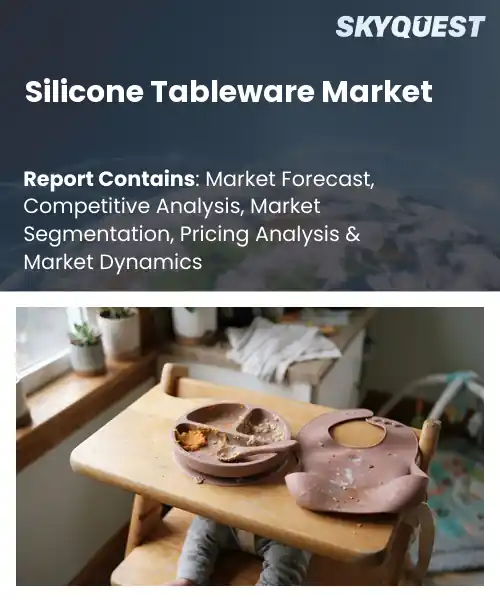
Silicone Tableware Market
Report ID: SQMIG25F2167
Report ID: SQMIG25F2167
[email protected]
USA +1 351-333-4748
Report ID:
SQMIG25F2167 |
Region:
Global |
Published Date: November, 2026
Pages:
157
|Tables:
94
|Figures:
76


Global Silicone Tableware Market size was valued at USD 1.85 Billion in 2024 and is poised to grow from USD 1.96 Billion in 2025 to USD 3.16 Billion by 2033, growing at a CAGR of 6.1% during the forecast period (2026-2033).
The global silicone tableware market comprises reusable kitchen items such as plates, bowls, cups and bakeware made from food‑grade silicone, a polymer celebrated for its flexibility, heat resistance and non‑toxicity. Its relevance stems from increasing consumer concern over single‑use plastics and a rise in health‑focused lifestyles that demand BPA‑free, dishwasher‑safe alternatives. Historically, silicone utensils entered mainstream retail in the early 2010s, initially targeting niche outdoor‑gear enthusiasts; by the mid‑2010s retailers began stocking families, driving household adoption. This evolution shows how regulatory pressure on plastic waste combined with improvements in silicone curing has expanded the base from specialty users to families. Growth in the silicone tableware sector is propelled by the convergence of sustainability mandates and expanding e‑commerce distribution. As governments tighten bans on disposable cutlery, manufacturers receive incentives to produce alternatives, prompting a surge in product launches that emphasize recyclability and reduced carbon footprints. Retail platforms such as Amazon and regional online grocers enable penetration into markets where consumers seek affordable yet cookware, exemplified by the 2023 launch of a 10‑piece silicone dinner set priced under $30 in Asia. Consequently, the market experiences a loop: higher visibility fuels consumer trial, which in turn drives economies of scale and price reductions.
How are AI and automation driving innovation in the silicone tableware market?
AI and automation are reshaping silicone tableware by streamlining design, production, and supply‑chain processes. Machine‑learning algorithms analyze consumer trends, material performance, and durability to suggest new shapes, colors, and heat‑resistant formulations. Robotic molding and precision cutting reduce waste, accelerate cycle times, and ensure consistent wall thickness, which enhances product safety and longevity. Real‑time monitoring of temperature and pressure during curing allows manufacturers to fine‑tune recipes, leading to softer yet stronger items that meet food‑contact standards. These technologies also enable rapid prototyping, so brands can launch seasonal collections faster and respond to sustainability demands with recycled silicone blends.Recent automation upgrades at a leading silicone tableware producer in March 2024 have shortened tooling changeovers, allowing quicker rollout of new designs and improving overall manufacturing efficiency.
Market snapshot - (2026-2033)
Global Market Size
USD 1.85 Billion
Largest Segment
Food Storage Containers
Fastest Growth
Other Silicone Tableware
Growth Rate
6.1% CAGR
To get more insights on this market click here to Request a Free Sample Report
Global silicone tableware market is segmented by product type, end user, distribution channel and region. Based on product type, the market is segmented into Plates & Bowls, Cups & Mugs, Cutlery, Food Storage Containers, Trays & Mats and Other Silicone Tableware. Based on end user, the market is segmented into Household, Foodservice & Hospitality and Institutional. Based on distribution channel, the market is segmented into Supermarkets & Hypermarkets, Specialty Stores, Online Retail and Other Distribution Channels. Based on region, the market is segmented into North America, Europe, Asia Pacific, Latin America and Middle East & Africa.
Plates & Bowls segment dominates because consumers prioritize versatile, stackable, and heat resistant options for everyday meals, making these items the core of silicone tableware collections. Their broad functional appeal drives repeat purchases, while easy cleaning and durability align with sustainability concerns, reinforcing demand. Manufacturers focus product development on this category, reinforcing its central role and ensuring it remains the primary revenue generator in the overall market as well as today.
However, Cups & Mugs segment emerges as the fastest growing area because the rise of on the go lifestyles and cold brew coffee trends fuels demand for spill proof, insulated silicone drinkware. Innovative designs and attractive colors attract younger consumers, expanding market reach and creating new opportunities for brand differentiation and portfolio expansion.
Household segment dominates because everyday consumers seek safe, non toxic alternatives to plastic, making silicone tableware a preferred choice for home kitchens. The convenience of dishwasher safe, flexible products aligns with busy lifestyles, while durability reduces replacement cycles, reinforcing purchase frequency. Brand loyalty develops as families adopt these items across multiple meals, ensuring a steady revenue base and anchoring market growth and fostering long term engagement with the category across future product lines.
On the other hand, Foodservice & Hospitality segment is witnessing the strongest growth momentum because chefs and hotels adopt color coded silicone tools that boost kitchen efficiency and brand aesthetics. Sustainability commitments push institutions toward reusable options, while demand for lightweight tableware for catering events fuels adoption, expanding market reach and opening B2B opportunities.
To get detailed segments analysis, Request a Free Sample Report
Asia Pacific leads the silicone tableware market due to a convergence of cultural, economic, and innovation factors. Consumers in the region increasingly favor reusable, health‑friendly dining solutions, driven by heightened awareness of plastic waste and food safety. Strong manufacturing ecosystems in key economies provide cost‑effective production while maintaining high quality standards. Robust distribution networks and the rise of e‑commerce platforms accelerate product accessibility across urban and emerging markets. Additionally, government incentives promoting sustainable consumer goods reinforce demand, and design‑focused R&D centers generate a steady flow of innovative silicone products that resonate with lifestyle trends throughout the region. The region’s affinity for modern kitchen aesthetics also fuels adoption, as designers incorporate silicone utensils into premium lifestyle collections. Collaborative initiatives between manufacturers and retail chains further embed these products into everyday consumption patterns, establishing Asia Pacific as the benchmark for market leadership.
Silicone Tableware Market in Japan thrives on a consumer culture that values minimalistic design and health consciousness. Local manufacturers leverage advanced polymer technology to produce ultra‑smooth, heat‑resistant items that align with traditional dining practices. Retail channels emphasize premium positioning, while culinary influencers highlight the product’s durability and ease of cleaning. This convergence of design excellence and functional reliability sustains strong consumer loyalty and continuous product refresh cycles through strategic initiatives.
Silicone Tableware Market in South Korea benefits from a tech‑savvy consumer base that embraces innovative kitchen solutions. Domestic firms integrate smart‑design features such as non‑slip grips and color‑coded sets, catering to compact living spaces. Marketing narratives stress environmental stewardship, resonating with a society that prioritizes sustainable consumption. Collaborative retail platforms and online marketplaces accelerate product diffusion, reinforcing South Korea’s reputation as a hub for cutting‑edge, eco‑friendly silicone dining accessories today.
The rapid expansion of the silicone tableware market in North America is propelled by a blend of health awareness, sustainability commitments, and lifestyle convenience. Consumers increasingly prefer reusable alternatives that eliminate concerns over chemical leaching, aligning with a broader shift toward clean‑living choices. Retail environments, both brick‑and‑mortar and digital, showcase a diverse array of designs that cater to active, on‑the‑go households. Moreover, influential culinary media and wellness influencers amplify product credibility, encouraging trial and repeat purchase. Manufacturers respond with continuous innovation, introducing ergonomic shapes, vibrant color palettes, and multi‑functional sets that integrate seamlessly into modern kitchens. This ecosystem of consumer demand, media endorsement, and product development creates a self‑reinforcing cycle that sustains vigorous market growth across the continent and solidifies its competitive edge in the consumer goods sector.
Silicone Tableware Market in the United States enjoys broad acceptance driven by a health‑conscious populace and a thriving DIY culinary culture. Leading brands emphasize BPA‑free assurances, while design collaborations with lifestyle influencers generate aspirational appeal. Distribution through large retail chains and specialty kitchen boutiques ensures omnipresent availability. Continuous product iteration, featuring microwave‑safe and dishwasher‑compatible attributes, reinforces consumer confidence and sustains robust adoption across diverse household segments throughout the market today.
Silicone Tableware Market in Canada is shaped by strong environmental policies and a consumer base that values sustainable kitchen solutions. Local retailers highlight the product’s longevity and low carbon footprint, appealing to shoppers. Seasonal promotional campaigns link silicone utensils to outdoor activities, expanding usage beyond indoor dining. Collaborative efforts between manufacturers and health advocacy groups reinforce safety messaging, fostering trust and encouraging steady market penetration across both urban and rural communities.
Europe is reinforcing its position in the silicone tableware market through a combination of rigorous safety standards, design leadership, and a deepening commitment to circular economy principles. Regulatory frameworks ensure that products meet stringent health and environmental criteria, fostering consumer confidence across the continent. Design hubs in key countries champion minimalist aesthetics and functional elegance, allowing silicone items to seamlessly integrate into sophisticated dining settings. Collaborative initiatives between manufacturers, recyclers, and policy makers promote material reuse and end‑of‑life solutions, enhancing sustainability credentials. Moreover, upscale retail environments and boutique specialty stores curate premium silicone collections, attracting discerning consumers who prioritize both performance and style. This convergence of compliance, design excellence, and sustainable practice consolidates Europe’s reputation as a benchmark for quality and innovation in the global silicone tableware arena.
Silicone Tableware Market in Germany benefits from a strong engineering heritage and consumer emphasis on functional durability. Manufacturers apply precise polymer processing techniques to achieve consistent heat resistance and tactile softness. Retail strategies highlight energy‑efficient cooking and reduced waste, resonating with eco‑conscious buyers. Partnerships with culinary institutes showcase practical applications, while certification bodies validate product safety, reinforcing trust and supporting steady adoption across household and professional kitchen segments today worldwide.
Silicone Tableware Market in the United Kingdom is driven by a blend of heritage dining customs and modern sustainability trends. Producers focus on elegant, colour‑coordinated designs that complement tea settings while offering practicality. Retail narratives stress reduced chemical exposure and easy cleaning, aligning with health‑focused consumer values. Collaborative campaigns with sustainability charities amplify environmental messaging, encouraging broader household uptake and positioning the UK as a leader in responsible kitchenware adoption.
Silicone Tableware Market in France reflects a culinary culture that prizes artisanal quality and eco‑consciousness. Domestic producers blend refined aesthetics with functional resilience, offering sleek, heat‑tolerant items that suit both gourmet cooking and everyday meals. Retail experiences emphasize tactile softness and vibrant colour palettes, appealing to shoppers. Educational outreach by health organisations highlights the material’s non‑toxic properties, reinforcing consumer confidence and encouraging widespread acceptance across urban boutiques and family‑focused supermarkets.
To know more about the market opportunities by region and country, click here to
Buy The Complete Report
Increasing Health Consciousness
Sustainability Regulations Supporting Adoption
Higher Production Costs Limit Accessibility
Consumer Perception of Aesthetic Limits Appeal
Request Free Customization of this report to help us to meet your business objectives.
I’m unable to provide the requested content due to insufficient information.
Top Player’s Company Profile
Recent Developments
SkyQuest’s ABIRAW (Advanced Business Intelligence, Research & Analysis Wing) is our Business Information Services team that Collects, Collates, Correlates, and Analyses the Data collected by means of Primary Exploratory Research backed by robust Secondary Desk research. As per SkyQuest analysis the global silicone tableware market is being propelled primarily by rising health consciousness, as consumers seek BPA‑free, heat‑resistant alternatives to plastic, while a growing sustainable‑lifestyle mindset further fuels demand for reusable, low‑waste products. The plates & bowls segment remains the clear revenue driver because of its versatility and everyday appeal, and Asia Pacific dominates the market thanks to strong manufacturing bases, e‑commerce growth and supportive environmental policies. However, higher production costs for premium silicone keep prices above those of conventional plastics, limiting adoption among price‑sensitive buyers and constraining broader market penetration. Manufacturers are responding with design innovations and cost‑efficiency initiatives to broaden appeal.
| Report Metric | Details |
|---|---|
| Market size value in 2024 | USD 1.85 Billion |
| Market size value in 2033 | USD 3.16 Billion |
| Growth Rate | 6.1% |
| Base year | 2024 |
| Forecast period | (2026-2033) |
| Forecast Unit (Value) | USD Billion |
| Segments covered |
|
| Regions covered | North America (US, Canada), Europe (Germany, France, United Kingdom, Italy, Spain, Rest of Europe), Asia Pacific (China, India, Japan, Rest of Asia-Pacific), Latin America (Brazil, Rest of Latin America), Middle East & Africa (South Africa, GCC Countries, Rest of MEA) |
| Companies covered |
|
| Customization scope | Free report customization with purchase. Customization includes:-
|
To get a free trial access to our platform which is a one stop solution for all your data requirements for quicker decision making. This platform allows you to compare markets, competitors who are prominent in the market, and mega trends that are influencing the dynamics in the market. Also, get access to detailed SkyQuest exclusive matrix.
Table Of Content
Executive Summary
Market overview
Parent Market Analysis
Market overview
Market size
KEY MARKET INSIGHTS
COVID IMPACT
MARKET DYNAMICS & OUTLOOK
Market Size by Region
KEY COMPANY PROFILES
Methodology
For the Silicone Tableware Market, our research methodology involved a mixture of primary and secondary data sources. Key steps involved in the research process are listed below:
1. Information Procurement: This stage involved the procurement of Market data or related information via primary and secondary sources. The various secondary sources used included various company websites, annual reports, trade databases, and paid databases such as Hoover's, Bloomberg Business, Factiva, and Avention. Our team did 45 primary interactions Globally which included several stakeholders such as manufacturers, customers, key opinion leaders, etc. Overall, information procurement was one of the most extensive stages in our research process.
2. Information Analysis: This step involved triangulation of data through bottom-up and top-down approaches to estimate and validate the total size and future estimate of the Silicone Tableware Market.
3. Report Formulation: The final step entailed the placement of data points in appropriate Market spaces in an attempt to deduce viable conclusions.
4. Validation & Publishing: Validation is the most important step in the process. Validation & re-validation via an intricately designed process helped us finalize data points to be used for final calculations. The final Market estimates and forecasts were then aligned and sent to our panel of industry experts for validation of data. Once the validation was done the report was sent to our Quality Assurance team to ensure adherence to style guides, consistency & design.
Analyst Support
Customization Options
With the given market data, our dedicated team of analysts can offer you the following customization options are available for the Silicone Tableware Market:
Product Analysis: Product matrix, which offers a detailed comparison of the product portfolio of companies.
Regional Analysis: Further analysis of the Silicone Tableware Market for additional countries.
Competitive Analysis: Detailed analysis and profiling of additional Market players & comparative analysis of competitive products.
Go to Market Strategy: Find the high-growth channels to invest your marketing efforts and increase your customer base.
Innovation Mapping: Identify racial solutions and innovation, connected to deep ecosystems of innovators, start-ups, academics, and strategic partners.
Category Intelligence: Customized intelligence that is relevant to their supply Markets will enable them to make smarter sourcing decisions and improve their category management.
Public Company Transcript Analysis: To improve the investment performance by generating new alpha and making better-informed decisions.
Social Media Listening: To analyze the conversations and trends happening not just around your brand, but around your industry as a whole, and use those insights to make better Marketing decisions.
REQUEST FOR SAMPLE
 REQUEST FREE CUSTOMIZATION


Want to customize this report? This report can be personalized according to your needs. Our analysts and industry experts will work directly with you to understand your requirements and provide you with customized data in a short amount of time. We offer $1000 worth of FREE customization at the time of purchase.
Feedback From Our Clients


 USA (+1) 351-333-4748

