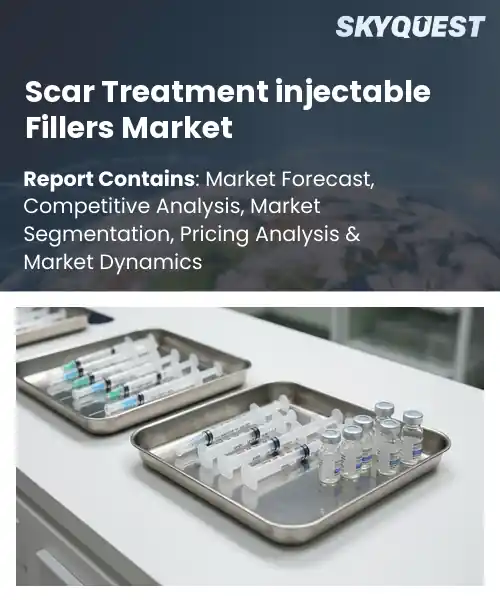
Scar Treatment injectable Fillers Market
Report ID: SQMIG35J2250
Report ID: SQMIG35J2250
[email protected]
USA +1 351-333-4748
Report ID:
SQMIG35J2250 |
Region:
Global |
Published Date: March, 2026
Pages:
157
|Tables:
117
|Figures:
77


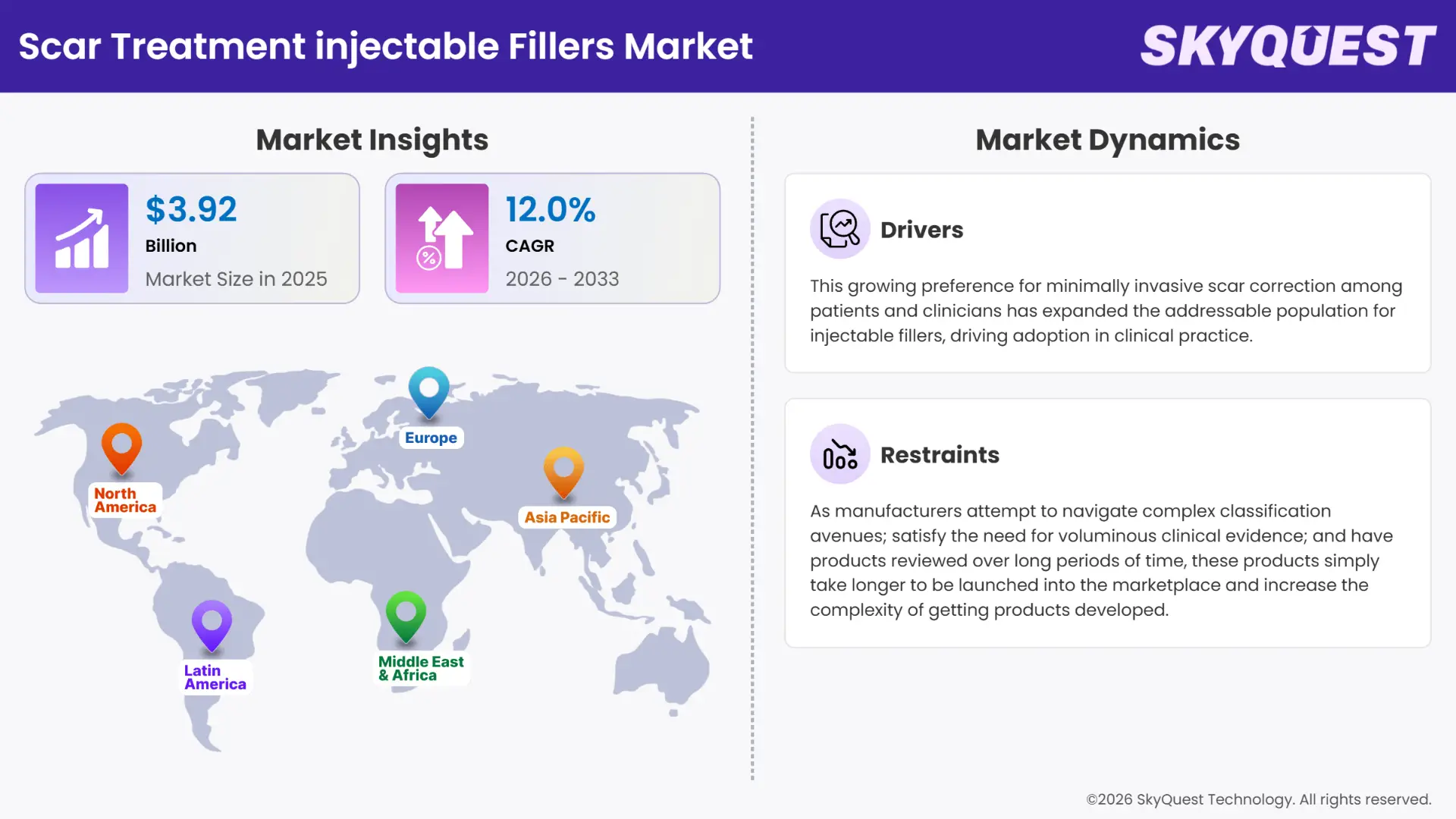
Global Scar Treatment Injectable Fillers Market size was valued at USD 3.5 Billion in 2024 and is poised to grow from USD 3.92 Billion in 2025 to USD 9.71 Billion by 2033, growing at a CAGR of 12.0% during the forecast period (2026-2033).
Key Takeaways: Market Trends & Insights
The primary driver of the scar treatment injectable fillers market is rising demand for minimally invasive aesthetic procedures that restore skin contour and reduce visible scarring after trauma, surgery, or acne. This market comprises biomedical-grade injectable materials and clinician services sold through clinics, and it matters because patient preferences favor recovery and cosmetic improvement compared with invasive surgery. New developments in cosmetic surgery, like hyaluronic acid fillers and fat grafting products, have allowed us to do a lot of things we never could before, and also made them easier to get approved by regulators or covered by insurers. This has led to an increase in the number of procedures performed in North America and East Asia, where it has seen a huge growth in the number of procedures performed.
The key trend driving the global scar treatment injectable fillers sector is refinement of injectable formulations alongside clinician skill development, because improved safety and longer durability encourage wider clinical use. As manufacturers launched cross-linked hyaluronic acids and collagen biostimulators that restore volume and stimulate tissue remodeling, physicians developed evidence-based protocols for acne and surgical scar correction that increased patient confidence and referral rates. Real-world use cases show microcannula filler placement followed by fractional laser resurfacing improves contour and skin texture, which creates commercial opportunities for bundled therapies and accelerates regional penetration as clinics scale services and supports investment in clinician training.
How is AI Improving Patient Selection in the Scar Treatment Injectable Fillers Market?
Patient selection for scarring injectable fillers has been enhanced by AI to convert subjective judgement into an objective approach through automation of scar classification, skin colour and texture analysis and the simulation of expected results. Through AI, standardized images can be created and patterns recognised to help determine if a scar will respond to a filler or another treatment (how much filler is required). The minimisation of the trial and error process, provides a basis to improve clinician counselling and match patient expectations with the choice of treatment to be undertaken. In an environment that values individualised outcome measurements and effective clinic processes, there are numerous examples of imaging and face-analysis tools that demonstrate how automated algorithms can indicate appropriate candidates for scar injection with injectable fillers.
In January 2026, Kolmar Korea introduced an AI powered Scar Beauty Device that classifies scar types and delivers precise microdispensing, supporting better selection between injectables and other therapies and improving clinic efficiency and patient satisfaction.
To get more insights on this market click here to Request a Free Sample Report
Global scar treatment injectable fillers market is segmented by filler chemistry, scar type/indication, treatment procedure, end-user and region. Based on filler chemistry, the market is segmented into hyaluronic acid (HA) based, collagen-based fillers, poly-L-lactic acid (PLLA), and polymethyl-methacrylate (PMMA). Based on scar type/indication, the market is segmented into atrophic scars, hypertrophic scars and post-surgical/traumatic scars. Based on treatment procedure, the market is segmented into dermal volumization and subcision-assisted injection. Based on end-user, the market is segmented into dermatology clinics, medical spas & aesthetic centers and plastic surgery hospitals. Based on region, the market is segmented into North America, Europe, Asia Pacific, Latin America and Middle East & Africa.
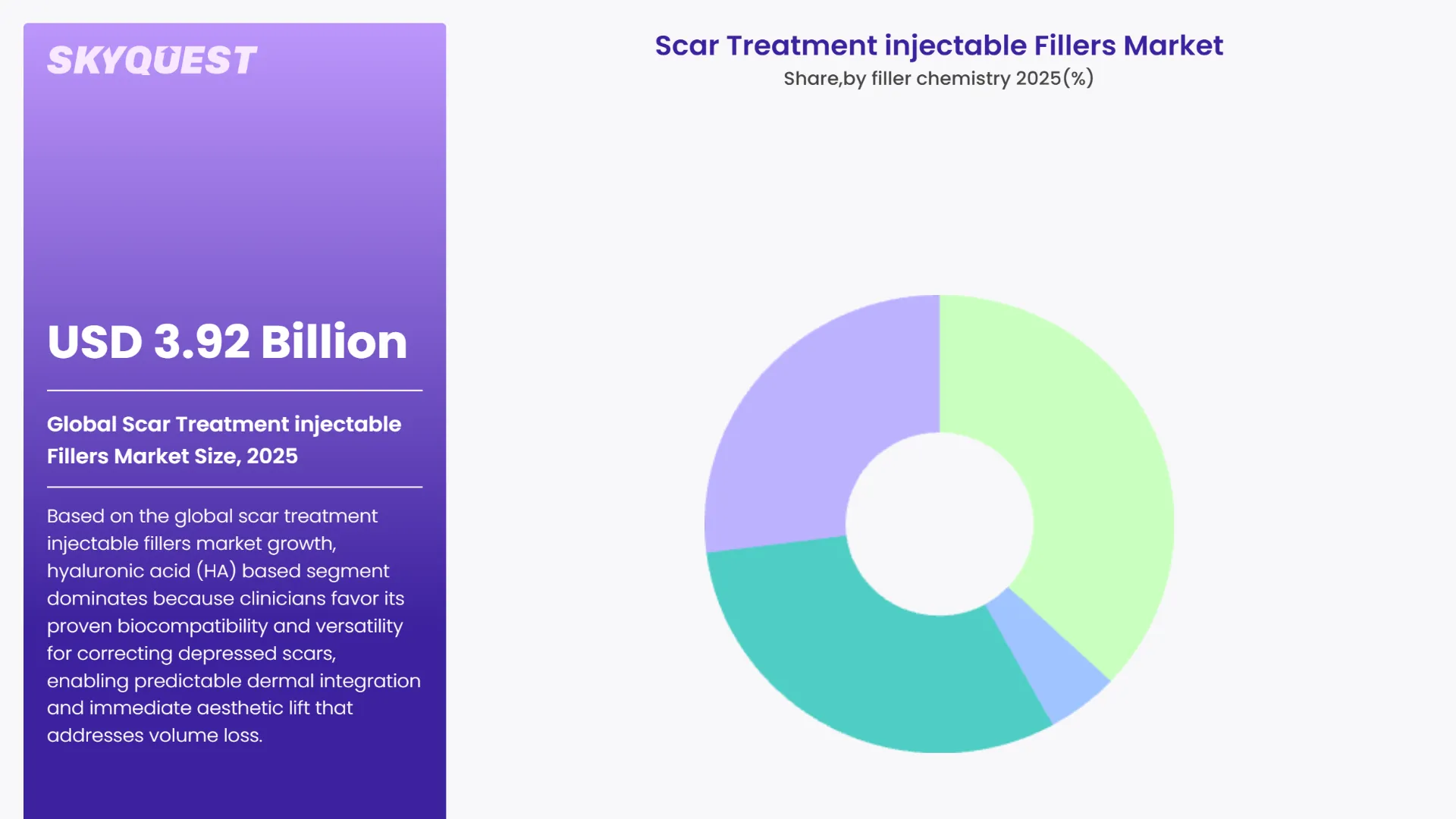
Based on the global scar treatment injectable fillers market growth, hyaluronic acid (HA) based segment dominates because clinicians favor its proven biocompatibility and versatility for correcting depressed scars, enabling predictable dermal integration and immediate aesthetic lift that addresses volume loss. It has been shown that this drug can be quickly reversed, most clinicians know how to use it, and there are many options for products available. That creates a way for clinicians to be comfortable doing this procedure and reduces confusion about how to perform it and where it can be used for scarring.
However, poly-L-lactic acid (PLLA) is emerging as the most rapidly expanding option due to its stimulatory remodeling effect that promotes endogenous collagen and durable textural improvement. The growing interest by Practitioners for long-term scar remodels as well as advancements in injectable formulations have created opportunities for the adoption of combination protocols and additional education for rapid marketplace growth.
Dermal volumization segment dominates because it directly restores lost dermal bulk in atrophic scars, producing immediate contour correction and predictable tactile improvement that aligns with practitioner workflows. Its compatibility with multiple filler chemistries, straightforward injection techniques, and clear outcome visibility reduce procedure complexity, encourage adoption by a broad practitioner base, and make it the default injectable approach for many scar presentations.
However, subcision-assisted injection is emerging as the fastest growing approach because it addresses fibrotic tethering that standard filler placement cannot resolve, unlocking new treatable cases. Growing evidence of synergistic outcomes when combined with fillers, together with technique refinements and practitioner training, is expanding clinical adoption and creating opportunities for specialized filler tissue interaction products.
To get detailed segments analysis, Request a Free Sample Report
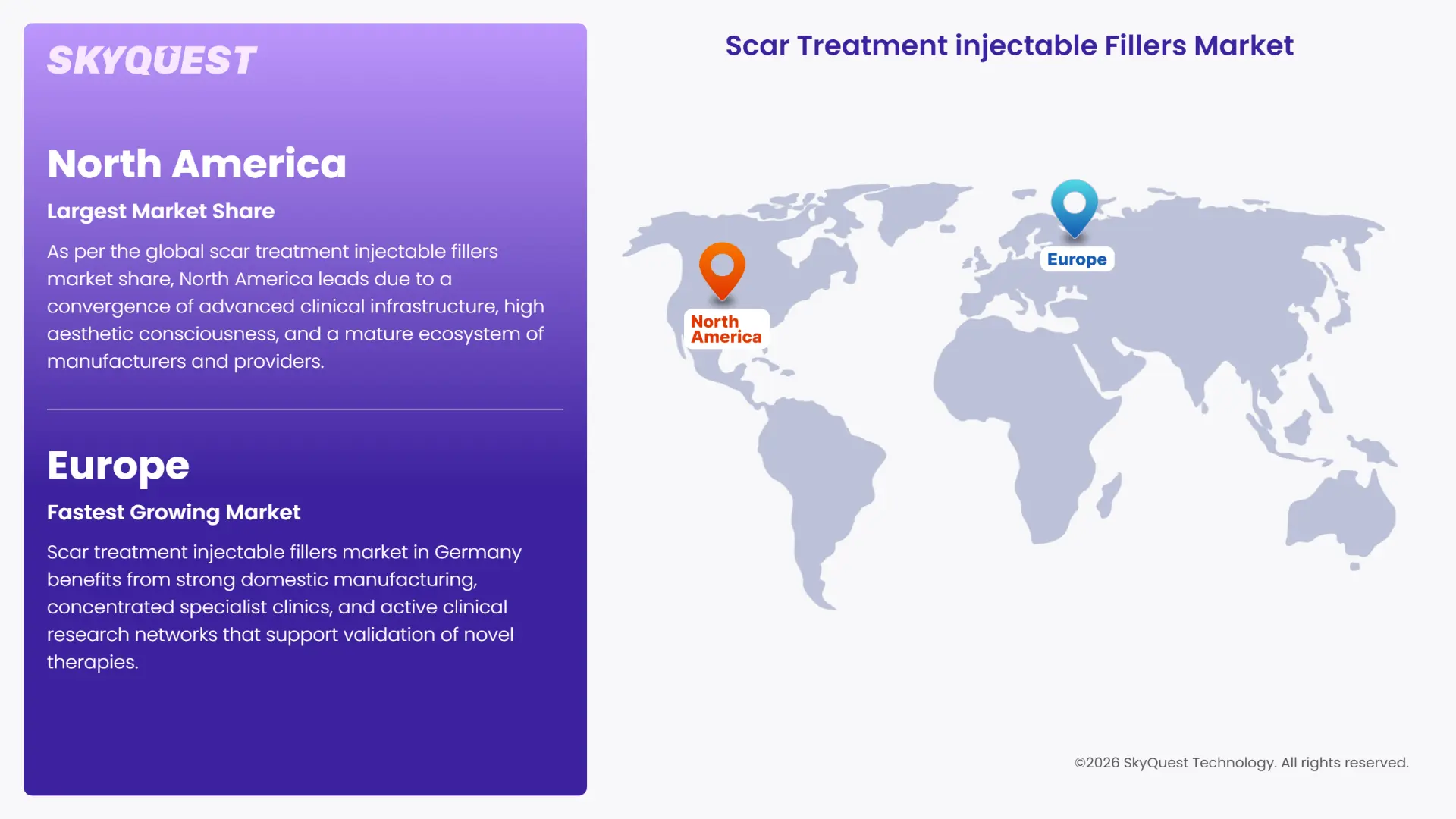
As per the global scar treatment injectable fillers market share, North America leads due to a convergence of advanced clinical infrastructure, high aesthetic consciousness, and a mature ecosystem of manufacturers and providers. There are clearly defined regulations resulting in productive clinical research networks-they help support the timely introduction and validation of new injectable formulations. Payer types and willingness to pay out-of-pocket for cosmetic enhancements supports continued need for minimally-invasive treatment of scars with low to moderate pricing or limited coverage options from the payer community. High concentrations of experienced dermatologists, plastic surgeons, and aesthetic clinics, enables opportunities for widespread approval across many protocols of how to treat patients using the same products. Significant volumes of product inventory with sophisticated distribution and marketing and adequate levels of patent protection are all strong drivers of the continued investment in in-country development and education programs.
Scar treatment injectable fillers market in the United States reflects high consumer acceptance of minimally invasive aesthetic procedures, dense networks of specialists, and a strong culture of innovation among manufacturers. Clinical trial activity and professional training programs are concentrated in leading academic centers and private practices, supporting adoption of new formulations and techniques. Marketing sophistication, reimbursement pathways for certain indications, and direct-to-consumer education further sustain procedural volumes and innovation uptake.
Scar treatment injectable fillers market in Canada combines a universal healthcare foundation with a growing private aesthetic sector where patients seek minimally invasive scar correction. Distribution through specialty dermatology clinics supports access across metropolitan regions, while provincial variation in service delivery shapes provider networks. Manufacturers and distributors focus on training and complying with regulations. A cultural preference for a more subtle aesthetic outcome, coupled with strong professional societies of all types, goes a long way toward supporting education of clinicians and creating awareness or outreach for patients.
Based on global scar treatment injectable fillers market regional forecast, Europe is experiencing rapid expansion driven by increasing patient awareness of cosmetic and reconstructive options, diversified provider capabilities, and a supportive regulatory environment that facilitates market entry and clinician training. The rich variety of specialist clinics and multidisciplinary centers creates individualized scar treatment pathways with injectable fillers and other adjunct therapies. The local manufacture of injectable fillers, along with a large number of distributors, gives access to a wide array of product portfolios available to clinicians. The establishment of collaborative research between academic institutions and manufacturers has also led to faster clinical validations of products. Cultural emphasis on the refinement of appearance, an increase in demand for minimally invasive procedures and growth in use of digital platforms (e.g., teleconsultation, patient education) have all contributed to an increase in the overall market size. Varying payer systems amongst providers encourage clinics to provide alternative financing and private pay options enabling consumers to be able to access to aesthetic scar correction.
Scar treatment injectable fillers market in Germany benefits from strong domestic manufacturing, concentrated specialist clinics, and active clinical research networks that support validation of novel therapies. An advanced scar correction protocol made possible by highly skilled clinicians in dermatology and plastic surgery with established distribution channels focused on educating professionals on how to use these methods. These factors combined with greater regulatory clarity combined with an ability for industry to work closely with academic centers creates a strong foundation for Germany being recognised as an innovation and standard hub.
Scar treatment injectable fillers market in United Kingdom shows rapid adoption driven by private clinic growth, strong consumer interest in minimally invasive scar correction, and increased use of digital consultation channels. Independent hospitals and clinics offer competitive service options, which creates a variety of treatment protocols. There is a concerted effort to promote practitioner accreditation, increasing the number of training programs available for practitioners, and increasing the marketing of industry practitioners to ensure that they are ready to provide services to their patients, which has increased the presence of the UK market in Europe compared to other countries in the Europe region.
Scar treatment injectable fillers market in France is evolving as clinicians and manufacturers focus on tailored approaches reflecting local aesthetic preferences and conservative philosophies. Growing interest in minimally invasive scar correction among reconstructive and cosmetic patients prompts expanded training programs and clinic specialization. Domestic distributors and regional academic centers collaborate to adapt global innovations to national practice standards. Emphasis on evidence generation, practitioner accreditation, and subtle outcome expectations supports market maturation.
As per global scar treatment injectable fillers market regional outlook, Asia Pacific is strengthening its position through concentrated investment in clinical research, manufacturing capabilities, and clinician training that align products to regional patient needs and skin characteristics. At an increasing pace, domestic lead market's domestic manufacturers are collaborating internationally, as partnerships with international firms increasingly help domestic firms to localize both their formulations and their regulatory strategies. Demand from private payors has been driving up the use of injectable treatments for scars, as the number of specialty clinics continues to expand and as there are more professional accreditation programs to support the wider use of injectable scar treatments. In addition to facilitating the exchange of learning and harmonization of treatment protocols through cross-border medical travel and international conferences, digital patient engagement and telemedicine are increasing the reach of health care to tertiary and secondary urban areas.
Scar treatment injectable fillers market in Japan is driven by advanced biomedical research, strong domestic manufacturing, a culture of meticulous clinical practice that favors precision in scar correction. Specialized clinics, universities, and community clinics work together more carefully to make the most effective combination of therapies and ways to provide them to patients in the local market. Knowledge and experience gained through continuing medical education and evidence-generating studies create trust between clinicians and patients as they continually support an overall culture of innovation in the medical industry.
Scar treatment injectable fillers market in South Korea is characterized by fast clinical innovation, high consumer familiarity with aesthetic procedures, a dense network of specialist clinics offering advanced scar correction techniques. Domestic manufacturers are prominent in developing tailored formulations and delivery technologies reflecting regional preferences. Emphasis on aesthetic outcomes, strong practitioner training programs, and medical travel support widespread clinical experience, while collaborations with international partners enhance technology transfer and evidence generation.
To know more about the market opportunities by region and country, click here to
Buy The Complete Report
Rising Demand For Aesthetic Procedures
This growing preference for minimally invasive scar correction among patients and clinicians has expanded the addressable population for injectable fillers, driving adoption in clinical practice. Increased social acceptance of aesthetic treatments and emphasis on faster recovery make injectable options more attractive, encouraging providers to incorporate them into treatment portfolios and referral pathways. The continued clinical development of these products will lead to increased use across many types of scars because practitioners become more comfortable with delivering injections as an effective therapy for scar treatment.
Advances In Injectable Formulations
Continued advancement in formulation chemistry and delivery technologies improves clinical outcomes and confidence in the practitioner, thus supporting greater use of injectable scar treatments. Improvements made in biocompatibility, rheological characteristics and targeted degradation profiles enable the clinician to choose products that more effectively integrate with scar tissue, resulting in improved aesthetic and functional results and the diminished likelihood of adverse reactions. Advanced delivery methods and combination protocols with adjunct therapies have simplified treatment planning, expanded indications for use and encouraged increased use of injectable treatments as alternative options to invasive procedures.
Regulatory Hurdles and Approvals
As manufacturers attempt to navigate complex classification avenues; satisfy the need for voluminous clinical evidence; and have products reviewed over long periods of time, these products simply take longer to be launched into the marketplace and increase the complexity of getting products developed. Furthermore, due to the different requirements for safety and manufacturing, smaller innovative companies face greater difficulties in marketing new products, which results in fewer products reaching physicians and subsequently limits treatment options for patients. Consequently, the low number of products available limits adoption rates within the marketplace, ultimately impairing overall growth in the market.
Limited Reimbursement and Coverage
The lack of consistency of reimbursement policies and the amount of insurer coverage for scar treatment (percutaneous fillers and injectable) limit access for patients and dissuade routine practice, thereby negatively impacting the expansion of the market. Many times, when payers see injections as elective and/or cosmetic, the patient must bear a significant out-of-pocket expense, which decreases overall demand and narrows the population that will receive treatment. In addition, uncertainty over the determination of medical necessity and the various regional coverage criteria creates additional difficulties in decision-making for clinicians, ultimately resulting in prioritizing procedures that have clearer reimbursement avenues and constraining the adoption of injectable techniques for treating scarring.
Request Free Customization of this report to help us to meet your business objectives.
The global scar treatment injectable fillers market outlook features a moderately consolidated landscape dominated by players such as AbbVie (Allergan Aesthetics), Galderma, Merz Pharma, Sinclair Pharma, and Revance Therapeutics. Companies that offer injections for soft tissue augmentation utilize their substantial research and development budgets as well as their well-known product brands (e.g. Juvéderm & Restylane) to penetrate this market. The major companies do this through several means, including: offering new products, gaining regulatory approvals for their products, entering new geographic markets, forming partnerships and conducting physician training programs.
SkyQuest’s ABIRAW (Advanced Business Intelligence, Research & Analysis Wing) is our Business Information Services team that Collects, Collates, Correlates, and Analyses the Data collected by means of Primary Exploratory Research backed by robust Secondary Desk research.
As per SkyQuest analysis, the global scar treatment injectable fillers industry is propelled primarily by rising demand for minimally invasive aesthetic procedures and further supported by ongoing advances in injectable formulations and clinician skill development that improve safety and durability. Regulatory roadblocks and a fragmented approval process delay product launches, restrict product access and therefore inhibit growth. North America is the largest market because of its established clinical infrastructure, consumer willingness to pay for services out of pocket, and the strength of research ecosystems. Hyaluronic acid based aesthetic fillers dominate the market due to good biocompatibility, the ability to reverse them, and clinician familiarity as they innovate with biostimulatory technology and delivery methods that allow them to expand treatment indications and develop personalized combination treatment protocols.
| Report Metric | Details |
|---|---|
| Market size value in 2024 | USD 3.5 Billion |
| Market size value in 2033 | USD 9.71 Billion |
| Growth Rate | 12.0% |
| Base year | 2024 |
| Forecast period | 2026-2033 |
| Forecast Unit (Value) | USD Billion |
| Segments covered |
|
| Regions covered | North America (US, Canada), Europe (Germany, France, United Kingdom, Italy, Spain, Rest of Europe), Asia Pacific (China, India, Japan, Rest of Asia-Pacific), Latin America (Brazil, Rest of Latin America), Middle East & Africa (South Africa, GCC Countries, Rest of MEA) |
| Companies covered |
|
| Customization scope | Free report customization with purchase. Customization includes:-
|
To get a free trial access to our platform which is a one stop solution for all your data requirements for quicker decision making. This platform allows you to compare markets, competitors who are prominent in the market, and mega trends that are influencing the dynamics in the market. Also, get access to detailed SkyQuest exclusive matrix.
Table Of Content
Executive Summary
Market overview
Parent Market Analysis
Market overview
Market size
KEY MARKET INSIGHTS
COVID IMPACT
MARKET DYNAMICS & OUTLOOK
Market Size by Region
KEY COMPANY PROFILES
Methodology
For the Scar Treatment injectable Fillers Market, our research methodology involved a mixture of primary and secondary data sources. Key steps involved in the research process are listed below:
1. Information Procurement: This stage involved the procurement of Market data or related information via primary and secondary sources. The various secondary sources used included various company websites, annual reports, trade databases, and paid databases such as Hoover's, Bloomberg Business, Factiva, and Avention. Our team did 45 primary interactions Globally which included several stakeholders such as manufacturers, customers, key opinion leaders, etc. Overall, information procurement was one of the most extensive stages in our research process.
2. Information Analysis: This step involved triangulation of data through bottom-up and top-down approaches to estimate and validate the total size and future estimate of the Scar Treatment injectable Fillers Market.
3. Report Formulation: The final step entailed the placement of data points in appropriate Market spaces in an attempt to deduce viable conclusions.
4. Validation & Publishing: Validation is the most important step in the process. Validation & re-validation via an intricately designed process helped us finalize data points to be used for final calculations. The final Market estimates and forecasts were then aligned and sent to our panel of industry experts for validation of data. Once the validation was done the report was sent to our Quality Assurance team to ensure adherence to style guides, consistency & design.
Analyst Support
Customization Options
With the given market data, our dedicated team of analysts can offer you the following customization options are available for the Scar Treatment injectable Fillers Market:
Product Analysis: Product matrix, which offers a detailed comparison of the product portfolio of companies.
Regional Analysis: Further analysis of the Scar Treatment injectable Fillers Market for additional countries.
Competitive Analysis: Detailed analysis and profiling of additional Market players & comparative analysis of competitive products.
Go to Market Strategy: Find the high-growth channels to invest your marketing efforts and increase your customer base.
Innovation Mapping: Identify racial solutions and innovation, connected to deep ecosystems of innovators, start-ups, academics, and strategic partners.
Category Intelligence: Customized intelligence that is relevant to their supply Markets will enable them to make smarter sourcing decisions and improve their category management.
Public Company Transcript Analysis: To improve the investment performance by generating new alpha and making better-informed decisions.
Social Media Listening: To analyze the conversations and trends happening not just around your brand, but around your industry as a whole, and use those insights to make better Marketing decisions.
REQUEST FOR SAMPLE
 REQUEST FREE CUSTOMIZATION
Global Scar Treatment Injectable Fillers Market size was valued at USD 3.5 Billion in 2024 and is poised to grow from USD 3.92 Billion in 2025 to USD 9.71 Billion by 2033, growing at a CAGR of 12.0% during the forecast period (2026-2033).
I can prepare this exactly as requested but I need a quick confirmation: I cannot verify two credible startups that focus specifically on injectable scar fillers and were founded in or after 2019. Do you want me to (A) include adjacent regenerative injectable startups and early‑stage biotech firms with scar-focused programs founded 2019 or later, or (B) keep strictly to companies solely focused on injectable scar fillers even if that means using firms founded before 2019? Reply A or B. 'Smith & Nephew', 'Merz Pharma', 'Allergan', 'Galderma', 'Johnson & Johnson', 'Bausch Health', 'Mölnlycke Health Care', 'Hologic Inc.', 'Lumenis', 'Sientra Inc.', 'Revance Therapeutics', 'Sinclair Pharma', 'Teoxane Laboratories', 'Prollenium Medical', 'BioPlus Co.', 'Croma-Pharma', 'Bloomage Biotech', 'Ipsen', 'Laboratoires Vivacy', 'Anika Therapeutics'
This growing preference for minimally invasive scar correction among patients and clinicians has expanded the addressable population for injectable fillers, driving adoption in clinical practice. Increased social acceptance of aesthetic treatments and emphasis on faster recovery make injectable options more attractive, encouraging providers to incorporate them into treatment portfolios and referral pathways. As practitioners gain clinical confidence and train in injection techniques, these therapies become a standard option for a wider range of scar types, thereby sustaining steady market expansion through broader clinical utilization.
Personalized Combination Therapies: Clinicians increasingly tailor injectable filler regimens to individual scar etiology and skin type, integrating fillers with adjunct biologics and energy based treatments. This personalized approach emphasizes multimodal protocols that optimize aesthetic and functional outcomes while minimizing adverse effects, driving demand for formulations and practice level customization. Manufacturers and providers prioritize flexible dosing, combinability with regenerative agents, and clinician training to enable targeted interventions across diverse scar presentations, creating differentiation opportunities and shifting procurement toward solution oriented, clinically validated product portfolios.
North America Dominate the Global Scar Treatment injectable Fillers Market.
Hyaluronic Acid (HA)-based fillers hold the largest market share due to their excellent biocompatibility, reversibility, proven safety profile, and widespread adoption by dermatologists and aesthetic practitioners.
Poly-L-lactic Acid (PLLA) fillers are anticipated to register the fastest growth owing to their collagen-stimulating properties, long-lasting results, and increasing use in advanced scar remodeling procedures.
AI is improving scar classification, skin texture analysis, patient selection, and treatment planning. These capabilities help clinicians identify suitable candidates, optimize filler usage, and improve treatment outcomes.


Want to customize this report? This report can be personalized according to your needs. Our analysts and industry experts will work directly with you to understand your requirements and provide you with customized data in a short amount of time. We offer $1000 worth of FREE customization at the time of purchase.
Feedback From Our Clients


 USA (+1) 351-333-4748

