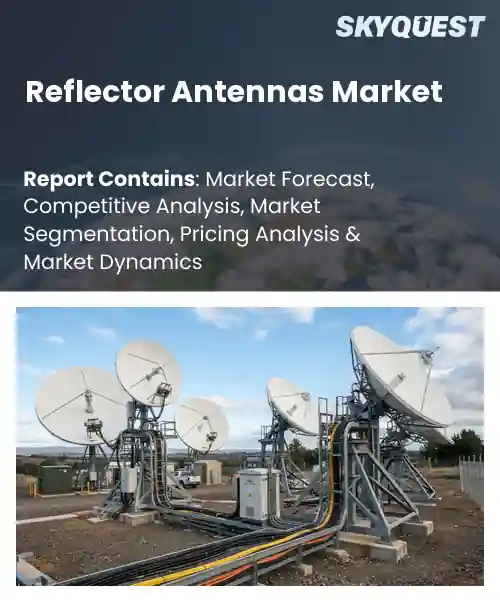
Reflector Antennas Market
Report ID: SQMIG45H2383
Report ID: SQMIG45H2383
[email protected]
USA +1 351-333-4748
Report ID:
SQMIG45H2383 |
Region:
Global |
Published Date: November, 2026
Pages:
157
|Tables:
126
|Figures:
77


Global Reflector Antennas Market size was valued at USD 2.25 Billion in 2024 and is poised to grow from USD 2.38 Billion in 2025 to USD 3.74 Billion by 2033, growing at a CAGR of 5.8% during the forecast period (2026-2033).
The global reflector antenna market comprises high‑gain parabolic and offset dishes used in satellite communications, deep‑space exploration, and terrestrial wireless backhaul. Its significance lies in focusing radio frequency energy into narrow beams, enabling reliable links over vast distances with minimal interference. Historically, the sector expanded during the Cold War as aerospace agencies required precision tracking for telemetry, then accelerated in the 1990s with commercial satellite television and broadband satellite services. Recent examples include Ka‑band satellite deployment for maritime connectivity and compact C‑band reflectors in 5G fixed wireless access, showing the market’s shift from bulky military hardware to versatile commercial solutions.The principal growth catalyst for reflector antennas now originates from the expanding demand for satellite broadband combined with the roll‑out of 5G and 6G networks. As data consumption surges, operators seek cost‑effective backhaul that can deliver gigabit speeds without laying fiber, prompting the adoption of large‑aperture reflectors capable of supporting Ka- and Q-band frequencies. This technical shift creates opportunities for manufacturers to develop lightweight composite dishes and integrated feed‑systems, reducing installation costs for remote villages, offshore platforms, and disaster‑relief hubs. Consequently, investment in R&D accelerates, supply chains diversify, and market revenue is projected to compound at double‑digit rates through 2035.
How is AI influencing the Reflector antennas market?
Artificial intelligence is reshaping the reflector antenna market by automating design, enhancing performance prediction, and streamlining production. Machine‑learning models now generate optimal dish shapes and feed configurations faster than traditional methods. AI‑driven simulations evaluate environmental effects, allowing engineers to fine‑tune gain and sidelobe levels early in the development cycle. Predictive analytics monitor antenna health in the field, flagging degradation before it impacts service. These capabilities reduce time‑to‑market and lower engineering costs, making advanced reflector systems more accessible to telecom operators and satellite providers. As networks evolve toward higher frequencies, the need for precise, adaptable antenna solutions grows, driving broader adoption of AI tools.CommScope July 2023, introduced an AI‑driven reflector antenna design platform that cuts development cycles and improves beamforming accuracy, enabling faster deployment of high‑capacity links and supporting market growth through enhanced efficiency. The system leverages deep‑learning to predict structural deformations and automatically adjusts feed positioning, reducing field adjustments and extending service life.
Market snapshot - (2026-2033)
Global Market Size
USD 2.25 Billion
Largest Segment
Parabolic Reflector Antennas
Fastest Growth
Offset Parabolic Antennas
Growth Rate
5.8% CAGR
To get more insights on this market click here to Request a Free Sample Report
Global reflector antennas market is segmented by antenna type, frequency band, application, end user and region. Based on antenna type, the market is segmented into Parabolic Reflector Antennas, Offset Parabolic Antennas, Cassegrain Antennas, Gregorian Antennas and Other Reflector Antennas. Based on frequency band, the market is segmented into L Band, S Band, C Band, X Band, Ku Band, Ka Band and Other Frequency Bands. Based on application, the market is segmented into Satellite Communications, Radar Systems, Radio Astronomy, Defense & Aerospace and Other Applications. Based on end user, the market is segmented into Telecommunications, Government & Defense, Research Institutions and Commercial Enterprises. Based on region, the market is segmented into North America, Europe, Asia Pacific, Latin America and Middle East & Africa.
Parabolic Reflector Antennas segment dominates because its simple geometry delivers high gain with reliable performance, making it the go‑to choice for many satellite communication and radar installations. The ease of manufacturing and proven track record reduce lifecycle costs, encouraging operators to prefer this architecture. Moreover, its broadband capability aligns well with existing infrastructure, reinforcing its leading position in the reflector antennas market. It remains effective across diverse mission profiles and varying environmental conditions.
However, Offset Parabolic Antennas segment is witnessing the strongest growth momentum because its off axis feed design minimizes blockage, enhancing aperture efficiency for high frequency services. Emerging demand for compact ground stations and Ka band satellite constellations drives manufacturers to adopt this architecture. The performance gains are opening new market opportunities and accelerating adoption across commercial and defense users.
C Band segment dominates because its long wavelength provides robust penetration through atmospheric conditions, making it the preferred choice for traditional broadcast, telecommunication, and weather monitoring satellite services. Operators value its proven reliability and lower susceptibility to rain fade, which reduces operational risk and maintenance costs. The extensive legacy infrastructure and widespread compatibility with ground equipment reinforce its central role in the reflector antennas market.
Meanwhile, Ka Band segment is witnessing rapid expansion because its high frequency supports large data capacities required for emerging broadband satellite constellations and imaging radar. Operators are investing in feed designs and new materials to exploit this spectrum, creating fresh demand for reflector antennas optimized for Ka Band performance. This acceleration is unlocking new revenue streams and stimulating further innovation.
To get detailed segments analysis, Request a Free Sample Report
The Asia Pacific region leverages deep engineering expertise and a robust supply chain that spans design, manufacturing, and integration. Strong government support for advanced communications infrastructure fuels demand for high‑performance reflector antennas in both civilian and defense applications. The presence of world‑class research institutions accelerates innovation in lightweight materials and adaptive array technologies. Additionally, rapid urbanization and the rollout of next‑generation network services create a fertile environment for continued adoption, reinforcing the region’s leadership in the global market.
Reflector Antennas Market in Japan benefits from a long‑standing tradition of precision manufacturing and a collaborative ecosystem of OEMs and research institutes. The focus on high‑frequency satellite communications and emerging 5G deployments drives investment in advanced antenna designs. Strong ties between government programs and industry ensure that cutting‑edge technologies transition quickly to commercial use, sustaining Japan’s role as a key contributor to regional growth.
Reflector Antennas Market in South Korea is propelled by vigorous investment in telecommunications infrastructure and a vibrant technology sector. Leadership in semiconductor and display manufacturing translates into expertise in high‑frequency components essential for reflector antenna performance. Government initiatives emphasizing smart city development and defense modernization create steady demand, while close collaboration between universities and firms fosters rapid innovation and product diversification.
Europe’s growth is anchored by a strong emphasis on sustainability, high‑frequency research, and a sophisticated regulatory framework that encourages the deployment of advanced communication networks. The region’s commitment to green energy and satellite‑based broadband services stimulates demand for efficient reflector antenna solutions. Collaborative research programs across member states accelerate technology transfer, while a mature aerospace and defense sector ensures high‑quality production capabilities. Together, these factors position Europe as a dynamic hub for cutting‑edge antenna technologies and market expansion.
Reflector Antennas Market in Germany is driven by a deep industrial base and a reputation for engineering excellence. The country’s robust aerospace sector, combined with strategic investments in next‑generation wireless infrastructure, fuels demand for high‑precision antenna systems. Close cooperation between research institutions and manufacturers enhances innovation cycles, ensuring that German solutions remain at the forefront of performance and reliability.
Reflector Antennas Market in the United Kingdom experiences rapid growth due to its vibrant tech ecosystem and proactive government policies supporting digital connectivity. Strong focus on satellite communications for both commercial and defense purposes accelerates adoption of advanced reflector designs. Partnerships between leading universities and industry players foster a pipeline of innovative solutions, positioning the United Kingdom as a fast‑moving contributor to the European market.
Reflector Antennas Market in France is emerging through sustained investment in space exploration and telecom infrastructure. Government initiatives encouraging the development of high‑capacity broadband networks stimulate interest in reflector antenna technology. Collaborative efforts between research labs and emerging manufacturers promote the creation of cost‑effective, high‑performance solutions, helping France gain traction within the broader European landscape.
North America reinforces its market position through a combination of cutting‑edge research, extensive deployment of broadband and satellite services, and a dynamic private sector that drives rapid product development. Strong defense spending and advanced aerospace programs create a consistent demand for high‑performance reflector antennas. The region’s focus on integrating artificial intelligence and smart technologies into communication systems further differentiates its offerings. This blend of innovation, robust infrastructure, and strategic investment sustains North America’s competitive edge.
Reflector Antennas Market in the United States benefits from a large, diversified customer base and leading‑edge research institutions. Aggressive rollout of next‑generation wireless networks and a thriving commercial satellite industry generate steady demand for high‑gain antenna solutions. Close collaboration between defense contractors and civilian firms encourages technology transfer, fostering a robust ecosystem that continuously advances reflector antenna capabilities.
Reflector Antennas Market in Canada is shaped by its focus on northern connectivity and expansive satellite communications initiatives. Government programs aimed at bridging remote regions stimulate deployment of reliable antenna systems. Strong academic research in electromagnetic engineering supports innovation, while partnerships with multinational manufacturers enable access to advanced technologies, positioning Canada as a valuable contributor to the North American market.
To know more about the market opportunities by region and country, click here to
Buy The Complete Report
Rising Demand for Satellite Connectivity
Rising demand for satellite connectivity is driven by expanding broadband requirements in remote and underserved regions, supporting increased data consumption for personal and industrial applications. Telecommunications providers are leveraging reflector antennas to enhance signal strength and coverage efficiency, reducing infrastructure footprints. The technology enables cost‑effective scaling of network capacity without extensive ground stations, aligning with consumer expectations for reliable high‑speed internet. Consequently, service providers adopt reflector solutions to meet market expectations, fostering sustained growth in the reflector antenna market across both commercial and governmental sectors.
Adoption of Advanced Phased‑Array Technology
Adoption of advanced phased‑array technology is transforming reflector antenna designs by providing electronic beam steering and multi‑band operation. This capability allows operators to dynamically allocate resources and optimize coverage without mechanical adjustments, enhancing network resilience. Manufacturers are integrating sophisticated materials that improve antenna performance while reducing weight, supporting deployment on diverse platforms such as satellites, unmanned aerial vehicles, and ground stations. As service architectures evolve toward flexible, software‑defined configurations, the industry leverages phased‑array reflectors to meet emerging connectivity standards, thereby accelerating market expansion.
High Manufacturing Cost of Reflectors
High manufacturing cost of reflectors limits market adoption, particularly among cost‑sensitive segments such as small‑scale operators and developing nations. Production involves precision engineering, specialized materials, and rigorous quality control, which collectively drive up unit pricing. When alternative antenna solutions offer comparable performance at lower expense, buyers may opt for those options, slowing demand for reflector products. This cost barrier also hampers rapid scaling of infrastructure projects, as budget constraints prioritize more affordable technologies, thereby constraining overall market growth in the global telecommunications landscape.
Stringent Regulatory Approvals for Deployments
Stringent regulatory approvals for deployments create prolonged entry timelines and increase compliance expenditures for reflector antenna projects. Authorities often require comprehensive environmental impact assessments, frequency allocation clearances, and safety certifications, which involve extensive documentation and testing. These processes can delay installation schedules, reducing the ability of manufacturers to respond swiftly to market demand. Moreover, heightened scrutiny may deter investment, particularly in regions with complex bureaucratic procedures, thereby inhibiting market expansion. Consequently, firms allocate additional resources to navigate regulatory landscapes, which further slows product roll‑out and diminishes competitive advantage.
Request Free Customization of this report to help us to meet your business objectives.
The reflector antennas market is shaped by intense competition among established manufacturers and emerging innovators, with rivalry driving rapid adoption of lightweight composite reflectors and integrated beam‑forming modules. Recent M&A activity, such as the acquisition of a niche millimeter‑wave reflector designer by a major telecom equipment supplier, and strategic partnerships between antenna makers and satellite operators to co‑develop high‑gain earth‑station solutions, illustrate how firms are leveraging consolidation and collaboration to secure technology leadership and expand addressable markets.
Top Player’s Company Profile
Recent Developments
SkyQuest’s ABIRAW (Advanced Business Intelligence, Research & Analysis Wing) is our Business Information Services team that Collects, Collates, Correlates, and Analyses the Data collected by means of Primary Exploratory Research backed by robust Secondary Desk research. As per SkyQuest analysis the global reflector antennas market is projected to grow at a 5.8% CAGR, driven primarily by rising demand for satellite connectivity that pushes operators to adopt high‑gain dishes for broadband and remote services. A second catalyst is the adoption of advanced phased‑array technology which adds electronic beam steering and multi‑band capability, expanding use cases across 5G and aerospace. The market is led by the parabolic reflector antennas segment, whose simple geometry and proven performance keep it the preferred choice. Asia Pacific dominates the landscape thanks to strong supply chains, government support and rapid network roll‑outs, while high manufacturing cost of reflectors remains a notable restraint limiting adoption in cost‑sensitive segments.
| Report Metric | Details |
|---|---|
| Market size value in 2024 | USD 2.25 Billion |
| Market size value in 2033 | USD 3.74 Billion |
| Growth Rate | 5.8% |
| Base year | 2024 |
| Forecast period | (2026-2033) |
| Forecast Unit (Value) | USD Billion |
| Segments covered |
|
| Regions covered | North America (US, Canada), Europe (Germany, France, United Kingdom, Italy, Spain, Rest of Europe), Asia Pacific (China, India, Japan, Rest of Asia-Pacific), Latin America (Brazil, Rest of Latin America), Middle East & Africa (South Africa, GCC Countries, Rest of MEA) |
| Companies covered |
|
| Customization scope | Free report customization with purchase. Customization includes:-
|
To get a free trial access to our platform which is a one stop solution for all your data requirements for quicker decision making. This platform allows you to compare markets, competitors who are prominent in the market, and mega trends that are influencing the dynamics in the market. Also, get access to detailed SkyQuest exclusive matrix.
Table Of Content
Executive Summary
Market overview
Parent Market Analysis
Market overview
Market size
KEY MARKET INSIGHTS
COVID IMPACT
MARKET DYNAMICS & OUTLOOK
Market Size by Region
KEY COMPANY PROFILES
Methodology
For the Reflector Antennas Market, our research methodology involved a mixture of primary and secondary data sources. Key steps involved in the research process are listed below:
1. Information Procurement: This stage involved the procurement of Market data or related information via primary and secondary sources. The various secondary sources used included various company websites, annual reports, trade databases, and paid databases such as Hoover's, Bloomberg Business, Factiva, and Avention. Our team did 45 primary interactions Globally which included several stakeholders such as manufacturers, customers, key opinion leaders, etc. Overall, information procurement was one of the most extensive stages in our research process.
2. Information Analysis: This step involved triangulation of data through bottom-up and top-down approaches to estimate and validate the total size and future estimate of the Reflector Antennas Market.
3. Report Formulation: The final step entailed the placement of data points in appropriate Market spaces in an attempt to deduce viable conclusions.
4. Validation & Publishing: Validation is the most important step in the process. Validation & re-validation via an intricately designed process helped us finalize data points to be used for final calculations. The final Market estimates and forecasts were then aligned and sent to our panel of industry experts for validation of data. Once the validation was done the report was sent to our Quality Assurance team to ensure adherence to style guides, consistency & design.
Analyst Support
Customization Options
With the given market data, our dedicated team of analysts can offer you the following customization options are available for the Reflector Antennas Market:
Product Analysis: Product matrix, which offers a detailed comparison of the product portfolio of companies.
Regional Analysis: Further analysis of the Reflector Antennas Market for additional countries.
Competitive Analysis: Detailed analysis and profiling of additional Market players & comparative analysis of competitive products.
Go to Market Strategy: Find the high-growth channels to invest your marketing efforts and increase your customer base.
Innovation Mapping: Identify racial solutions and innovation, connected to deep ecosystems of innovators, start-ups, academics, and strategic partners.
Category Intelligence: Customized intelligence that is relevant to their supply Markets will enable them to make smarter sourcing decisions and improve their category management.
Public Company Transcript Analysis: To improve the investment performance by generating new alpha and making better-informed decisions.
Social Media Listening: To analyze the conversations and trends happening not just around your brand, but around your industry as a whole, and use those insights to make better Marketing decisions.
REQUEST FOR SAMPLE
 REQUEST FREE CUSTOMIZATION


Want to customize this report? This report can be personalized according to your needs. Our analysts and industry experts will work directly with you to understand your requirements and provide you with customized data in a short amount of time. We offer $1000 worth of FREE customization at the time of purchase.
Feedback From Our Clients


 USA (+1) 351-333-4748

