Raised Access Floor Market
Report ID: SQMIG20C2275
Report ID: SQMIG20C2275
[email protected]
USA +1 351-333-4748
Report ID:
SQMIG20C2275 |
Region:
Global |
Published Date: July, 2026
Pages:
157
|Tables:
117
|Figures:
77


Global Raised Access Floor Market size was valued at USD 1.52 Billion in 2024 and is poised to grow from USD 1.61 Billion in 2025 to USD 2.52 Billion by 2033, growing at a CAGR of 5.81% during the forecast period (2026-2033).
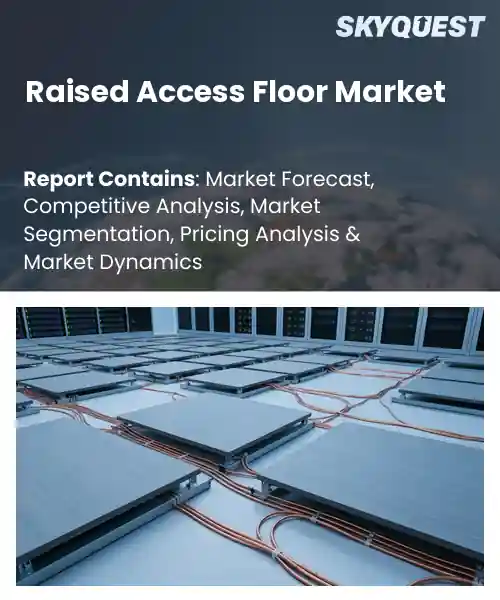
The global market for raised access floors consists of flooring solutions that provide an open space beneath the floor for cable management, HVAC distribution, and quick rearrangements of space. The main impetus driving the market is the continuous growth of data centers that necessitate efficient underfloor air handling and easy power routing. Raised access floors were initially applied only in office settings during the 1970s but later spread to critical buildings due to increasing needs for cooling during the 2000s. Companies like Amazon Web Services and Google have even renovated their data centers using elevated floors.
Another critical element driving growth in the access floor segment is increased government regulations, which force designers to come up with energy-efficient design concepts. Being that underfloor air distribution lowers fan efficiency by 30%, the cost of operations goes down for the facility owner, hence the reason why it is included as part of LEED or BREEAM certification. Increased government regulations also drive innovations in recycling composite materials and antimicrobial finishes, which create new revenue opportunities in health care facilities where infection prevention and control are crucial. With the rise of 5G edge computing nodes in urban centers, cable management is perfectly aligned with access floors.
How is IoT Integration Improving Efficiency in the Raised Access Floor Market?
The integration of IoT technology is transforming the raised access floor through the installation of sensors which measure temperature, humidity, and load in real time. The information is processed via building management systems to enable automatic correction of settings to ensure that the equipment does not overheat or cause wastage of energy. The system will also be able to detect problems immediately, schedule maintenance in advance, and plan for cable layout. In addition, the technology allows for modular upgrading, since smart panels can be installed or modified without requiring any major wiring. Through these innovations, owners are able to increase their uptime and minimize operational expenses while meeting their sustainability targets.In May 2026, Kingspan Access Floors unveiled an IoT-enabled floor monitoring system.
Market snapshot - (2026-2033)
Global Market Size
USD 1.52 Billion
Largest Segment
Steel Encapsulated Panels
Fastest Growth
Concrete-Filled Panels
Growth Rate
5.81% CAGR
To get more insights on this market click here to Request a Free Sample Report
Global raised access floor market is segmented by material, application, loading capacity, end-use and region. Based on material, the market is segmented into Steel Encapsulated Panels, Calcium Sulphate Panels, Aluminum Panels, and Concrete-Filled Panels. Based on application, the market is segmented into Data Centers, Office Buildings, Command & Control Rooms and Healthcare. Based on loading capacity, the market is segmented into Standard Load (< 1000 lbs/sqft) and High Load (> 1000 lbs/sqft). Based on end-use, the market is segmented into IT & Data Centers and Commercial Buildings. Based on region, the market is segmented into North America, Europe, Asia Pacific, Latin America and Middle East & Africa.
Steel-encased panels are most prominent due to their strength combined with water resistance, since these types of floor systems are expected to be highly reliable in mission critical environments. The combination of the capability of supporting heavy equipment and ease of installation meets the needs of contemporary data centers. This material is used by the manufacturers due to its durability and low life cycle costs, which adds to the popularity of the material among the architects and facility managers looking for reliable floors.
Aluminum panels, on the other hand, appear to become the most rapidly growing segment of the material category. The lightness and corrosion resistance of these types of panels make them easier to install, hence gaining popularity among projects oriented towards sustainability and quick implementation.
Data center segment leaders due to their requirements for high-reliability flooring and the capability of supporting heavy loads of server racks and dense cable management. Continuous power supply and cooling needs lead to selection of flooring which provides an integrated solution with good air flow and upgrade capabilities. Raised access floors become a must-have component for increasing uptime and productivity in data centers at all stages of operation around the globe.
On the contrary, office buildings have become the fastest-growing segment in the applications sector. Increasing trends of flex spaces and wellness have become an important factor leading to the development of adaptable floors that provide power pathways.
To get detailed segments analysis, Request a Free Sample Report
Market dominance of Raised Access Floor in North America is facilitated by a well-developed construction infrastructure that adopts innovations and stresses flexibility of interior spaces. North America has a solid concentration on the development of advanced data centers, in which raised flooring plays an important role in cable management and efficient cooling of the system. High levels of commercial office renovation create a need for highly adaptable floor systems, which allow the creation of different workspace arrangements. Stringent legislation facilitates sustainable construction solutions, thus making raised access floors a preferable choice among architects. Besides, highly qualified engineers contribute to constant improvement of the products.
Raised Access Floor Market in the United States operates in an environment where there is a great focus on flexible designs and the development of advanced infrastructures. The drive to develop collaborative offices and robust data centers has been one of the major factors contributing to a steady demand for versatile floors. Good cooperation between manufacturers, architects, and consumers contributes to constant product innovations, while an effective distribution channel facilitates wider market availability.
Market of Raised Access Floors in Canada is driven by the dedication to energy efficiency and contemporary office space planning. The growing importance of green buildings contributes to the increasing popularity of raised floors in order to facilitatebetter heat regulation and reduce expenditures. Cooperation between contractors and technological partners helps in introducing flexible floor systems in accordance with changing customer requirements. Policy factors and labor skills help maintain a strong and growing market.
There is a fast-growing trend of Raised Access Floor Market in Europe based on the combination of ambitious sustainability goals, innovation in office designs, and a rich history of precise engineering. Europe’s focus on green certification motivates construction of floor systems which improve heat insulation and allow to optimize cable management. The rising popularity of flexible workspaces, especially in tech centers, is responsible for using modular raised floors. Joint research programs of producers and design organizations quicken product differentiation, and well-developed regulations ensure wide implementation of best practice standards in member countries.
The Raised Access Floor Market in Germany has a rich tradition of engineering and an active participation in green construction. The focus on efficient energy consumption in buildings is a reason why the use of raised floors becomes necessary for air circulation optimization and decreased need in heating. Active cooperation of key manufacturers and architects is a factor which stimulates constant improvement of system parameters. The use of raised access floor is supported by high standards which provide reliability and durability.
The Raised Access Floors Market in the UK becomes driven by increased momentum since companies opt for adjustable office spaces and robust data center facilities. In this regard, the drive to have collaborative workplaces results in a need for flexible floors, which can be adjusted without any major disturbance. The interaction of innovative manufacturers with design consultants results in quick development of products according to current standards. Moreover, government encouragement of sustainable construction practice promotes the use of raised floors due to their energy-saving qualities.
France Raised Access Floor Market is becoming an important niche in the construction industry due to the growing emphasis on environmental efficiency and contemporary workplace design. The search for energy-efficient methods drives architects to use raised flooring for better temperature control and cable routing. Cooperation between regional companies and design colleges inspires the creation of region-specific products. Favorable regulatory framework acts as an additional incentive for market entry, making France increasingly appealing environment for raised access floors adoption.
The Asia Pacific region is improving its standing in the Raised Access Floor Market due to the combination of rapid urbanization trends, technological infrastructure growth, and increased importance of adaptable interiors. Increasing construction trends, especially in high density commercial areas, are forming a perfect environment for adopting the use of adaptable floors. Increased capacity in data centers and introduction of the concept of smart buildings result in increased demand for raised floors which provide adaptability when it comes to cabling and cooling requirements. Joint efforts of local producers and international technology companies result in better products, and a focus on affordability makes the market accessible in various countries.
Japanese Raised Access Floor Market is impacted by the prevailing culture of precision engineering and dedication to high-performance building. The requirement of efficient space usage in densely populated urban areas promotes the use of modular floor systems to facilitate flexible workspace arrangements. Innovations in data center technology increase the demand for raised floors that offer cable management and temperature control features. Joint initiatives between local manufacturers and research organizations ensure constant development to maintain compatibility with the quality requirements typical of the Japanese construction industry.
Market for Raised Access Floors in South Korea is favored by fast technology adoption and a futuristic outlook towards office spaces. The desire to have flexible and collaborative work environments in today’s commercial districts creates demand for floors that offer flexibility. Energy efficiency and smart buildings are among the main considerations that inspire the choice of raised flooring. Good collaboration between local manufacturers and foreign counterparts helps introduce more advanced systems, turning South Korea into a rising center of raised access floors.
To know more about the market opportunities by region and country, click here to
Buy The Complete Report
Sustainable Building Practices Adoption
With the growing focus on environmental awareness, more attention is being paid to sustainable construction and design and raised access floors have become well known because of their potential for energy-efficient HVAC installation, flexibility in cable management, and reconfiguration, thus meeting the requirements of green building certifications and helping to minimize the waste of materials through the entire life cycle of the building. It also promotes cooperation between designers and manufacturers, bringing about new ideas in floor panels.
Modular Data Center Expansion
The introduction of ideas such as modular data centers has made raised access floor solutions more popular because the platforms offer a way to increase capacity with ease through quick installation, efficient management of cables, and optimal air circulation. This allows companies to easily meet the increasing needs for edge computing facilities. In essence, this trend reflects a desire to cope with competition by making it easier for organizations to grow capacity in their data centers.
High Initial Capital Expenditure
Upfront costs incurred during installation of raised access floors are considerably high compared to regular flooring, hence the need to allocate huge amounts of money to finance such projects, something that will discourage many cost-conscious organizations from implementing such projects immediately since the cost of construction is highly scrutinized in some areas. This implies that organizations will seek alternative methods to finance their projects until such a time when the financial burden eases. It will therefore reduce the market penetration rate.
Complex Installation and Maintenance Requirements
Installation of elevated floors entails coordinated efforts by structural engineers, electricians, and flooring experts, necessitating detailed planning and sometimes long-term construction periods, which may affect operational processes and raise risks involved in the project; in addition, floor maintenance practices like replacing panels and rerouting cables involve unique skills and equipment, which can result in higher overall costs and dependency on scarce specialized labor force, making it less attractive for adopters in favor of simpler flooring systems. Additional training for personnel is required, thus increasing implementation timeframes and costs involved.
Request Free Customization of this report to help us to meet your business objectives.
Market forces are defined by competitive rivalry between existing companies in the flooring industry and innovation among modular floor newcomers, resulting in mergers and alliances for product development purposes. The latest merger activities include an example of a big player in the flooring industry buying out a modular tiles solution in 2024, whereas partnerships include an example of a large manufacturer partnering with a sensor company to build smart sensing capability into raised floors.
Sustainable Design Integration: In recent times, architects and facility managers have been prescribing raised access flooring as an essential part of green building designs due to their potential in facilitating efficient installation of service equipment and improving air quality indoors. This type of flooring makes energy-efficient routing of the HVAC system possible, decreases waste generation during renovation, and complies with green-building standards. Suppliers have reacted to the situation by developing recyclable core materials and modular panels for raised flooring to facilitate the concept of circular economy in commercial construction projects.
Smart Integration Growth: The owners of buildings have started incorporating sensors-enabled raised access flooring systems to gauge the temperature, humidity, and presence of people. These systems send data to the central system, which can then automatically adjust the settings of the HVAC system and lighting system based on the usage pattern. This will make the operation efficient and save on utility bills, as well as increase the life of the equipment used and give the users of the building a healthy environment.
SkyQuest’s ABIRAW (Advanced Business Intelligence, Research & Analysis Wing) is our Business Information Services team that Collects, Collates, Correlates, and Analyses the Data collected by means of Primary Exploratory Research backed by robust Secondary Desk research.
As per SkyQuest analysis, the global raised access floor market will be driven mainly by the increasing preference for sustainability in constructions, which prefers the use of under-floor air distribution systems for higher energy efficiency to achieve the green certification goals. Another driving factor behind the raised access floor market is the fast growth in the number of modular data centers that need flexible flooring that can take heavy loads and enable them to cool faster. North America holds the dominant position in the market because of its well-developed construction ecosystem and the requirement for the infrastructure of data centers.
| Report Metric | Details |
|---|---|
| Market size value in 2024 | USD 1.52 Billion |
| Market size value in 2033 | USD 2.52 Billion |
| Growth Rate | 5.81% |
| Base year | 2024 |
| Forecast period | (2026-2033) |
| Forecast Unit (Value) | USD Billion |
| Segments covered |
|
| Regions covered | North America (US, Canada), Europe (Germany, France, United Kingdom, Italy, Spain, Rest of Europe), Asia Pacific (China, India, Japan, Rest of Asia-Pacific), Latin America (Brazil, Rest of Latin America), Middle East & Africa (South Africa, GCC Countries, Rest of MEA) |
| Companies covered |
|
| Customization scope | Free report customization with purchase. Customization includes:-
|
To get a free trial access to our platform which is a one stop solution for all your data requirements for quicker decision making. This platform allows you to compare markets, competitors who are prominent in the market, and mega trends that are influencing the dynamics in the market. Also, get access to detailed SkyQuest exclusive matrix.
Table Of Content
Executive Summary
Market overview
Parent Market Analysis
Market overview
Market size
KEY MARKET INSIGHTS
COVID IMPACT
MARKET DYNAMICS & OUTLOOK
Market Size by Region
KEY COMPANY PROFILES
Methodology
For the Raised Access Floor Market, our research methodology involved a mixture of primary and secondary data sources. Key steps involved in the research process are listed below:
1. Information Procurement: This stage involved the procurement of Market data or related information via primary and secondary sources. The various secondary sources used included various company websites, annual reports, trade databases, and paid databases such as Hoover's, Bloomberg Business, Factiva, and Avention. Our team did 45 primary interactions Globally which included several stakeholders such as manufacturers, customers, key opinion leaders, etc. Overall, information procurement was one of the most extensive stages in our research process.
2. Information Analysis: This step involved triangulation of data through bottom-up and top-down approaches to estimate and validate the total size and future estimate of the Raised Access Floor Market.
3. Report Formulation: The final step entailed the placement of data points in appropriate Market spaces in an attempt to deduce viable conclusions.
4. Validation & Publishing: Validation is the most important step in the process. Validation & re-validation via an intricately designed process helped us finalize data points to be used for final calculations. The final Market estimates and forecasts were then aligned and sent to our panel of industry experts for validation of data. Once the validation was done the report was sent to our Quality Assurance team to ensure adherence to style guides, consistency & design.
Analyst Support
Customization Options
With the given market data, our dedicated team of analysts can offer you the following customization options are available for the Raised Access Floor Market:
Product Analysis: Product matrix, which offers a detailed comparison of the product portfolio of companies.
Regional Analysis: Further analysis of the Raised Access Floor Market for additional countries.
Competitive Analysis: Detailed analysis and profiling of additional Market players & comparative analysis of competitive products.
Go to Market Strategy: Find the high-growth channels to invest your marketing efforts and increase your customer base.
Innovation Mapping: Identify racial solutions and innovation, connected to deep ecosystems of innovators, start-ups, academics, and strategic partners.
Category Intelligence: Customized intelligence that is relevant to their supply Markets will enable them to make smarter sourcing decisions and improve their category management.
Public Company Transcript Analysis: To improve the investment performance by generating new alpha and making better-informed decisions.
Social Media Listening: To analyze the conversations and trends happening not just around your brand, but around your industry as a whole, and use those insights to make better Marketing decisions.
REQUEST FOR SAMPLE
 REQUEST FREE CUSTOMIZATION
Global Raised Access Floor Market size was valued at USD 1.52 Billion in 2024 and is poised to grow from USD 1.61 Billion in 2025 to USD 2.52 Billion by 2033, growing at a CAGR of 5.81% during the forecast period (2026-2033).
The market is shaped by intense competition among established flooring manufacturers and emerging modular‑floor innovators, driving consolidation and collaborative product development. Recent M&A activity, such as a leading flooring producer’s acquisition of a modular tile platform in 2024, and partnerships like a major manufacturer teaming with a sensor‑technology firm to embed smart monitoring in raised floors, illustrate how firms are leveraging technology and scale to capture market share. 'Tate Access Floors (Interface)', 'ASM Floors (Metalwerks)', 'Haworth Inc.', 'Hewi (Heinrich Wilke GmbH)', 'Porcelain Systems (China)', 'YKK AP (Japan)', 'Kingspan Group (KINGSPAN Raised Floor)', 'Raised Floor Design', 'MAXON Group', 'Veitchi Flooring', 'Raised Floor Solutions', 'Raised Floors Inc.', 'BN Products', 'Husky Injection Molding', 'Knoll Inc.', 'Shaw Contract', 'Hollander Group', 'Lindner Group', 'Mero TSK International', 'Floor Systems Inc.'
The increasing emphasis on environmental responsibility is prompting architects and facility managers to prioritize sustainable building practices, and raised access floor systems are recognized for their ability to support energy‑efficient HVAC distribution, flexible cabling, and easy reconfiguration, which align with green certification criteria and reduce material waste throughout a building’s lifecycle, thereby encouraging broader adoption across commercial and institutional projects worldwide. This trend also fosters collaboration between designers and vendors, leading to innovative floor panel designs that further enhance sustainability outcomes and create additional value for end‑users.
Sustainable Design Integration: Architects and facility managers increasingly specify raised access floors as a cornerstone of sustainable building design, leveraging their capacity to streamline underfloor service distribution and enhance indoor air quality. This configuration supports energy‑efficient HVAC routing, reduces material waste during renovations, and aligns with green certification criteria. Manufacturers respond by introducing recyclable core materials and modular panel dimensions, reinforcing circular‑economy principles across commercial construction. Consequently, developers pursuing environmental targets prefer raised access floor systems to create adaptable, low‑impact work environments today.
Why does North America Dominate the Global Raised Access Floor Market? |@12


Want to customize this report? This report can be personalized according to your needs. Our analysts and industry experts will work directly with you to understand your requirements and provide you with customized data in a short amount of time. We offer $1000 worth of FREE customization at the time of purchase.
Feedback From Our Clients


 USA (+1) 351-333-4748

