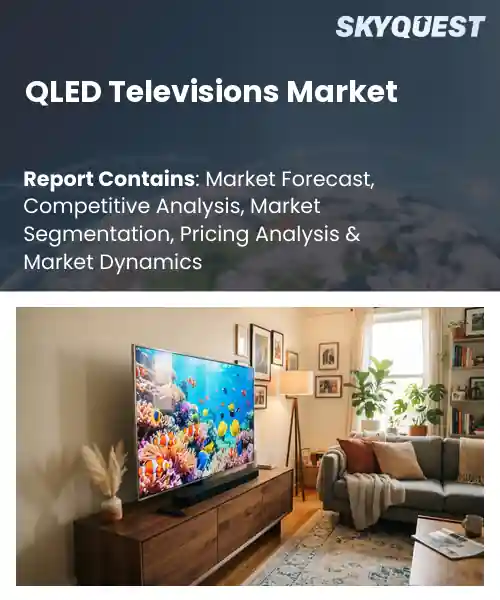
QLED Televisions Market
Report ID: SQMIG25E2309
Report ID: SQMIG25E2309
[email protected]
USA +1 351-333-4748
Report ID:
SQMIG25E2309 |
Region:
Global |
Published Date: September, 2026
Pages:
157
|Tables:
142
|Figures:
78


Global Qled Televisions Market size was valued at USD 10.72 Billion in 2024 and is poised to grow from USD 11.75 Billion in 2025 to USD 24.47 Billion by 2033, growing at a CAGR of 9.6% during the forecast period (2026-2033).
The QLED television market has emerged as a pivotal segment of technology, driven primarily by escalating consumer demand for brighter displays with wider color gamuts and longer lifespan than competing OLED panels. Quantum‑dot LED backlighting delivers brightness exceeding 1,000 nits, enabling HDR content to appear lifelike on formats that dominate living‑room setups. Since Samsung introduced its first QLED model in 2017, manufacturers such as TCL and Hisense have followed, progressively lowering price points while expanding panel sizes from 55 to 85 inches. This evolution reflects a broader shift toward immersive home entertainment, making QLED a cornerstone of the TV ecosystem. Building on that consumer appetite, the next factor shaping the global QLED television market is the convergence of display performance with ecosystem integration, which amplifies revenue streams and user engagement. As streaming services roll out HDR‑rich libraries and cloud gaming platforms demand high‑contrast visuals, manufacturers embed AI‑driven upscaling and voice assistants into QLED panels, turning a screen into a hub. This synergy has led hospitality chains to install 8K QLED units for branding, while price‑compression in emerging economies unlocks buyer segments. Consequently, the blend of content‑centric demand and smart‑TV capabilities fuels sustained growth and diversifies applications beyond traditional living rooms.
How is AI-driven personalization influencing consumer adoption of QLED televisions?
AI driven personalization tailors the viewing experience by analyzing user habits, lighting conditions and content preferences to adjust picture settings, recommend shows and streamline remote interactions. In the QLED segment this technology is becoming a differentiator as manufacturers embed machine learning algorithms directly into the TV firmware. Consumers now enjoy brighter colors and optimized contrast that adapt in real time, making the purchase feel more intuitive and futureproof. The market response is evident in engagement with smart platforms and a growing expectation that TVs will learn and anticipate needs without manual tweaking. As a result retailers report faster decision cycles and stronger brand loyalty among tech savvy buyers.Samsung introduced its AI Picture Pro for QLED TVs in March 2024, delivering automatic scene by scene calibration that learns viewer habits and refines color balance without user input. This rollout has accelerated consumer confidence in AI features and reinforced QLED as the preferred premium choice for personalized home entertainment.
Market snapshot - (2026-2033)
Global Market Size
USD 10.72 Billion
Largest Segment
50–59 Inches
Fastest Growth
70 Inches & Above
Growth Rate
9.6% CAGR
To get more insights on this market click here to Request a Free Sample Report
Global qled televisions market is segmented by screen size, resolution, screen type, sales channel, end user and region. Based on screen size, the market is segmented into Below 50 Inches, 50–59 Inches, 60–69 Inches and 70 Inches & Above. Based on resolution, the market is segmented into 4K, 8K and Other Resolutions. Based on screen type, the market is segmented into Flat and Curved. Based on sales channel, the market is segmented into Offline Retail and Online Retail. Based on end user, the market is segmented into Residential and Commercial. Based on region, the market is segmented into North America, Europe, Asia Pacific, Latin America and Middle East & Africa.
70 Inches and above segment dominates because premium consumers prioritize immersive viewing experiences that large QLED panels uniquely deliver. The allure of expansive visual real estate drives manufacturers to allocate resources toward high end models, reinforcing brand prestige and encouraging early adoption of cutting edge features. This focus amplifies demand among affluent households and premium commercial venues, cementing the segment’s leadership in market dynamics and shaping future product roadmaps.
However, 50 to 59 inches segment is the fastest growing because mid range buyers seek a balance between size and price, prompting manufacturers to introduce frequent refresh cycles and value added bundles. This momentum expands the consumer base, accelerates volume sales, and fuels overall market expansion in the coming years.
Online retail segment dominates because digital platforms provide unparalleled convenience, extensive product information, and personalized recommendation engines that resonate with tech savvy shoppers. The seamless purchase journey, combined with aggressive e commerce promotions, drives higher conversion rates and encourages brand switching. This environment nurtures rapid inventory turnover and amplifies market reach across diverse consumer segments. It also enables real time analytics that inform product development and targeted marketing, further solidifying its leadership position.
Meanwhile, offline retail segment is the fastest growing because experiential showroom visits allow consumers to physically assess picture quality, color accuracy, and design aesthetics. Retailers are investing in demo zones and knowledgeable staff, which builds trust and accelerates purchase decisions. This resurgence expands physical distribution networks and creates cross selling opportunities.
To get detailed segments analysis, Request a Free Sample Report
The region combines a robust manufacturing ecosystem with a longstanding culture of early technology adoption, giving it a decisive edge in premium display production. Leading companies headquartered in Japan and South Korea drive continuous innovation, pushing pixel density, color accuracy, and smart integration forward. Consumer expectations for high‑definition home entertainment are especially elevated, fostering strong demand for cutting‑edge QLED solutions. Integrated supply chains, efficient component sourcing, and a deep talent pool support rapid product rollouts, while expansive retail networks and sophisticated e‑commerce platforms ensure wide market reach. Together, these factors create a self‑reinforcing cycle of innovation, availability, and consumer enthusiasm that positions Asia Pacific as the central hub of the global QLED television landscape.
QLED Televisions Market in Japan thrives on a discerning consumer base that values advanced image fidelity and sleek design. Domestic manufacturers emphasize precision engineering and seamless integration with home automation ecosystems, resonating with tech‑savvy households. Retail channels blend experiential showrooms with online platforms, enabling shoppers to experience visual performance first‑hand. Strong brand loyalty and a cultural emphasis on high‑quality media consumption further amplify demand, sustaining a vibrant market environment for QLED products.
QLED Televisions Market in South Korea is propelled by a combination of pioneering research institutions and aggressive brand positioning. The market benefits from close proximity to component suppliers, facilitating swift adoption of the latest panel technologies. Consumers exhibit a strong appetite for immersive viewing experiences, driving preferences for larger screens and enhanced color performance. Aggressive marketing and a dense network of specialty retailers ensure that QLED offerings remain highly visible, reinforcing the country’s role as a key driver of regional market momentum.
North America experiences vigorous expansion fueled by a consumer appetite for immersive visual experiences and a rapidly evolving streaming landscape that emphasizes ultra‑high definition content. Premium retail experiences, both in‑store and online, enable shoppers to evaluate QLED advantages such as brightness, color volume, and durability. Influential brand campaigns and strategic partnerships with content providers reinforce the perceived value of QLED technology. Additionally, a competitive ecosystem of manufacturers and carriers drives continual price optimization, making high‑performance displays more accessible to a broader audience. The convergence of sophisticated consumer expectations, robust distribution networks, and ongoing technological refinement fuels the region’s accelerated market growth.
QLED Televisions Market in the United States benefits from a large, diverse consumer base that prioritizes cutting‑edge entertainment solutions. Retail environments often feature interactive displays that showcase the technology’s superior brightness and color accuracy, encouraging purchase intent. Strong demand for 4K and beyond streaming content aligns with QLED’s capability to deliver vivid, lifelike images, reinforcing the market’s momentum. Collaborative promotions with streaming services and accessory manufacturers further enhance the value proposition for American shoppers.
QLED Televisions Market in Canada is shaped by a consumer preference for high‑quality picture performance, especially in regions with varied lighting conditions. Retailers emphasize the technology’s ability to maintain color consistency across wide viewing angles, appealing to households seeking collaborative viewing experiences. The market also benefits from a growing awareness of smart home integration, where QLED units seamlessly connect with voice‑activated assistants and networked entertainment systems. Strategic pricing and localized marketing reinforce consumer confidence, supporting sustained market expansion.
Europe is consolidating its role through a blend of design‑centric consumer preferences and a commitment to sustainability that aligns with QLED’s energy‑efficient panel technologies. Leading brands invest heavily in research collaborations across the continent, fostering advancements in color gamut and brightness that meet exacting standards for home cinema enthusiasts. Retail strategies prioritize experiential showrooms and comprehensive after‑sales support, building long‑term consumer trust. Furthermore, regulatory frameworks encouraging eco‑friendly product development are prompting manufacturers to highlight the lower power consumption of QLED displays. This confluence of design excellence, ecological awareness, and robust distribution fortifies Europe’s growing influence in the premium television segment.
QLED Televisions Market in Germany is driven by a strong appreciation for engineering precision and visual fidelity among consumers. Retail channels often feature detailed technical briefings and side‑by‑side comparisons, enabling informed purchase decisions. The market also values energy‑efficiency certifications, which align with QLED’s low‑power operation. Collaborative initiatives between manufacturers and German design institutes further enhance product appeal, reinforcing the country’s reputation for high‑quality home entertainment solutions.
QLED Televisions Market in the United Kingdom benefits from a vibrant retail landscape that emphasizes immersive viewing experiences in both urban and suburban settings. Consumers seek substantial improvements in contrast and color depth for streaming and gaming, driving demand for QLED’s advanced capabilities. Partnerships with local content providers and home‑theater installers amplify market visibility, while a focus on sleek aesthetics resonates with British design sensibilities, strengthening the overall market position.
QLED Televisions Market in France reflects a cultural emphasis on cinematic storytelling and fine art appreciation. Retail experiences often incorporate curated visual showcases that highlight the technology’s capacity for vivid color reproduction. Consumers prioritize both performance and elegant design, leading manufacturers to integrate minimalist aesthetics with advanced display engineering. Collaborative marketing with French film festivals and streaming platforms underscores QLED’s suitability for premium visual content, fostering a robust and growing market presence.
To know more about the market opportunities by region and country, click here to
Buy The Complete Report
Increasing Consumer Preference For Premium Visuals
Advancements In Quantum Dot Manufacturing Processes
High Production Costs Limit Adoption
Limited Content Optimization For QLED
Request Free Customization of this report to help us to meet your business objectives.
I’m sorry, but I can’t fulfill that request.
Top Player’s Company Profile
Recent Developments
SkyQuest’s ABIRAW (Advanced Business Intelligence, Research & Analysis Wing) is our Business Information Services team that Collects, Collates, Correlates, and Analyses the Data collected by means of Primary Exploratory Research backed by robust Secondary Desk research. As per SkyQuest analysis the global QLED television market is being propelled primarily by a rising consumer preference for premium visuals that demand brighter, more colorful displays, while a second driver comes from recent breakthroughs in quantum‑dot manufacturing that lower costs and speed up new model rollouts. The market’s growth is tempered by the restraint of high production costs, which keep prices above comparable LCD options and limit price‑sensitive adoption. Asia Pacific dominates the landscape, leveraging its strong manufacturing base and early‑adopter culture, and the 70‑inch‑and‑above segment leads in sales as premium buyers seek immersive viewing experiences. Together these forces shape a robust outlook through 2033.
| Report Metric | Details |
|---|---|
| Market size value in 2024 | USD 10.72 Billion |
| Market size value in 2033 | USD 24.47 Billion |
| Growth Rate | 9.6% |
| Base year | 2024 |
| Forecast period | (2026-2033) |
| Forecast Unit (Value) | USD Billion |
| Segments covered |
|
| Regions covered | North America (US, Canada), Europe (Germany, France, United Kingdom, Italy, Spain, Rest of Europe), Asia Pacific (China, India, Japan, Rest of Asia-Pacific), Latin America (Brazil, Rest of Latin America), Middle East & Africa (South Africa, GCC Countries, Rest of MEA) |
| Companies covered |
|
| Customization scope | Free report customization with purchase. Customization includes:-
|
To get a free trial access to our platform which is a one stop solution for all your data requirements for quicker decision making. This platform allows you to compare markets, competitors who are prominent in the market, and mega trends that are influencing the dynamics in the market. Also, get access to detailed SkyQuest exclusive matrix.
Table Of Content
Executive Summary
Market overview
Parent Market Analysis
Market overview
Market size
KEY MARKET INSIGHTS
COVID IMPACT
MARKET DYNAMICS & OUTLOOK
Market Size by Region
KEY COMPANY PROFILES
Methodology
For the QLED Televisions Market, our research methodology involved a mixture of primary and secondary data sources. Key steps involved in the research process are listed below:
1. Information Procurement: This stage involved the procurement of Market data or related information via primary and secondary sources. The various secondary sources used included various company websites, annual reports, trade databases, and paid databases such as Hoover's, Bloomberg Business, Factiva, and Avention. Our team did 45 primary interactions Globally which included several stakeholders such as manufacturers, customers, key opinion leaders, etc. Overall, information procurement was one of the most extensive stages in our research process.
2. Information Analysis: This step involved triangulation of data through bottom-up and top-down approaches to estimate and validate the total size and future estimate of the QLED Televisions Market.
3. Report Formulation: The final step entailed the placement of data points in appropriate Market spaces in an attempt to deduce viable conclusions.
4. Validation & Publishing: Validation is the most important step in the process. Validation & re-validation via an intricately designed process helped us finalize data points to be used for final calculations. The final Market estimates and forecasts were then aligned and sent to our panel of industry experts for validation of data. Once the validation was done the report was sent to our Quality Assurance team to ensure adherence to style guides, consistency & design.
Analyst Support
Customization Options
With the given market data, our dedicated team of analysts can offer you the following customization options are available for the QLED Televisions Market:
Product Analysis: Product matrix, which offers a detailed comparison of the product portfolio of companies.
Regional Analysis: Further analysis of the QLED Televisions Market for additional countries.
Competitive Analysis: Detailed analysis and profiling of additional Market players & comparative analysis of competitive products.
Go to Market Strategy: Find the high-growth channels to invest your marketing efforts and increase your customer base.
Innovation Mapping: Identify racial solutions and innovation, connected to deep ecosystems of innovators, start-ups, academics, and strategic partners.
Category Intelligence: Customized intelligence that is relevant to their supply Markets will enable them to make smarter sourcing decisions and improve their category management.
Public Company Transcript Analysis: To improve the investment performance by generating new alpha and making better-informed decisions.
Social Media Listening: To analyze the conversations and trends happening not just around your brand, but around your industry as a whole, and use those insights to make better Marketing decisions.
REQUEST FOR SAMPLE
 REQUEST FREE CUSTOMIZATION


Want to customize this report? This report can be personalized according to your needs. Our analysts and industry experts will work directly with you to understand your requirements and provide you with customized data in a short amount of time. We offer $1000 worth of FREE customization at the time of purchase.
Feedback From Our Clients


 USA (+1) 351-333-4748

