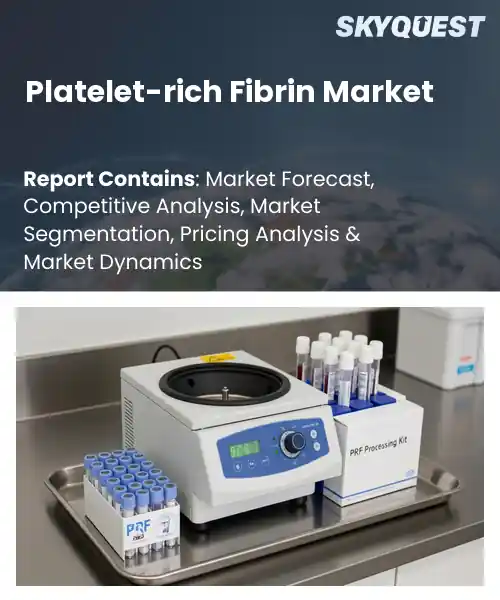
Platelet-rich Fibrin Market
Report ID: SQMIG35A3339
Report ID: SQMIG35A3339
[email protected]
USA +1 351-333-4748
Report ID:
SQMIG35A3339 |
Region:
Global |
Published Date: March, 2026
Pages:
157
|Tables:
119
|Figures:
77


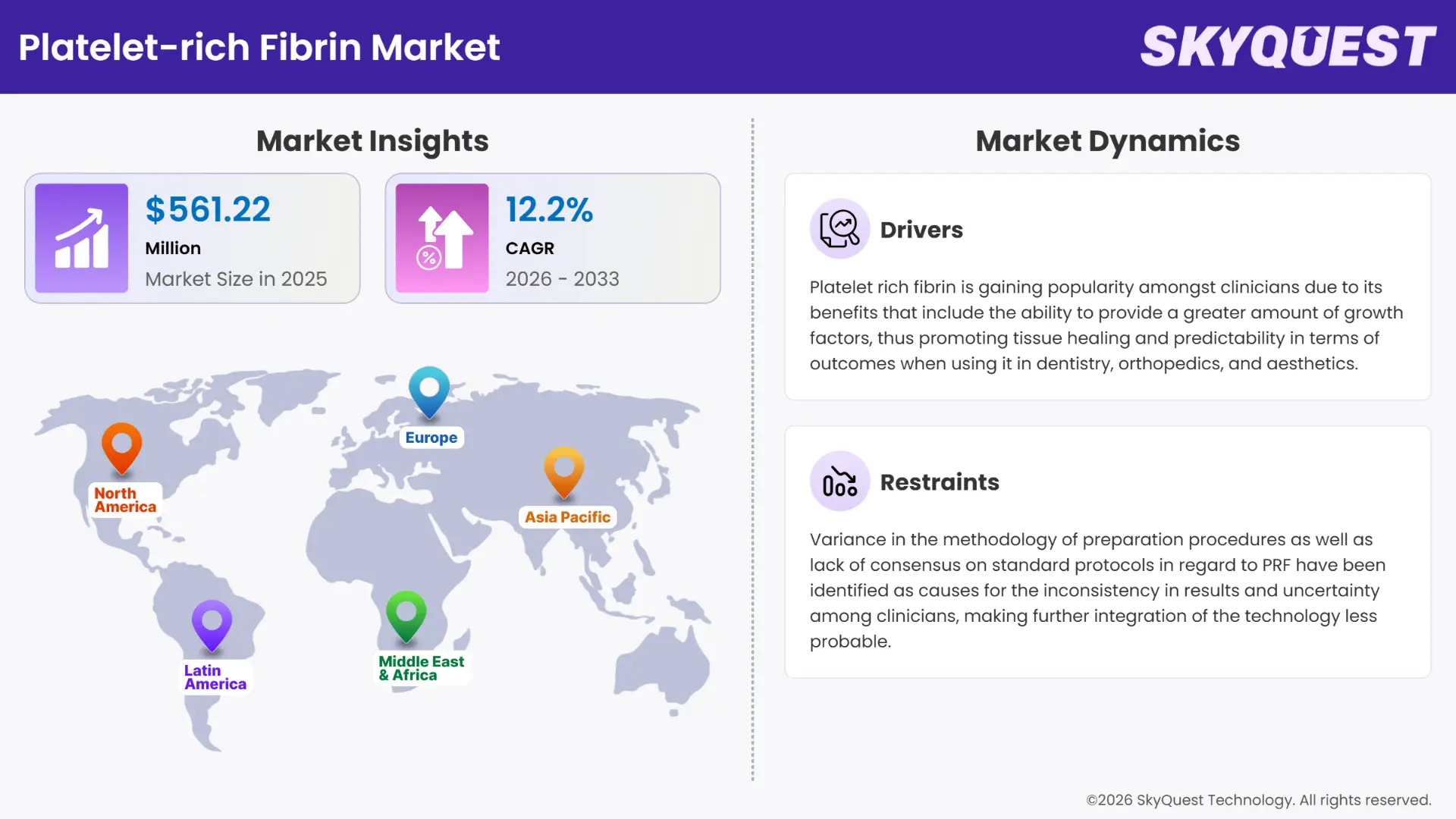
Global Platelet-Rich Fibrin Market size was valued at USD 500.20 Million in 2024 and is poised to grow from USD 561.22 Million in 2025 to USD 1409.55 Million by 2033, growing at a CAGR of 12.2% during the forecast period (2026-2033).
Key Takeaways: Market Trends & Insights
Growing demand for regenerative therapies, increasing adoption of minimally invasive procedures, rising use of autologous biologics, advancements in centrifugation technologies, and expanding applications in dentistry and orthopedics are driving sales of platelet-rich fibrin (PRF) solutions.
The use of platelet-rich fibrin systems allows doctors to utilize biological materials from patients that can promote tissue regeneration, minimize the risk of infections, and increase treatment success rates. The availability of more clinical data on the effectiveness of these products and their cost-efficiency is a crucial determinant of market growth because it will increase the willingness of doctors to use them in their practice. Growing preference for faster healing and reduced complications among patients and clinicians coupled with a shift toward regenerative and point-of-care treatments is expected to primarily drive platelet-rich fibrin market growth.
On the contrary, high costs of specialized equipment, variability in preparation techniques, limited reimbursement in some regions, regulatory challenges, and lack of standardized protocols are slated to impede platelet-rich fibrin market penetration in the long run.
How is AI Enhancing Patient Outcomes in the Platelet-rich Fibrin Market?
AI can improve PRF results through tailored treatment approaches, consistent preparations, and analysis of clinical pictures to monitor wounds and implants accurately. Trends in the industry are shifting towards evidence-based practices, where AI plays a role in predicting outcomes and minimizing differences between professionals. Such developments have helped improve effectiveness, efficiency, and overall success rates. AI can be applied in classifying wounds and predicting outcomes in regenerative medicine.
To get more insights on this market click here to Request a Free Sample Report
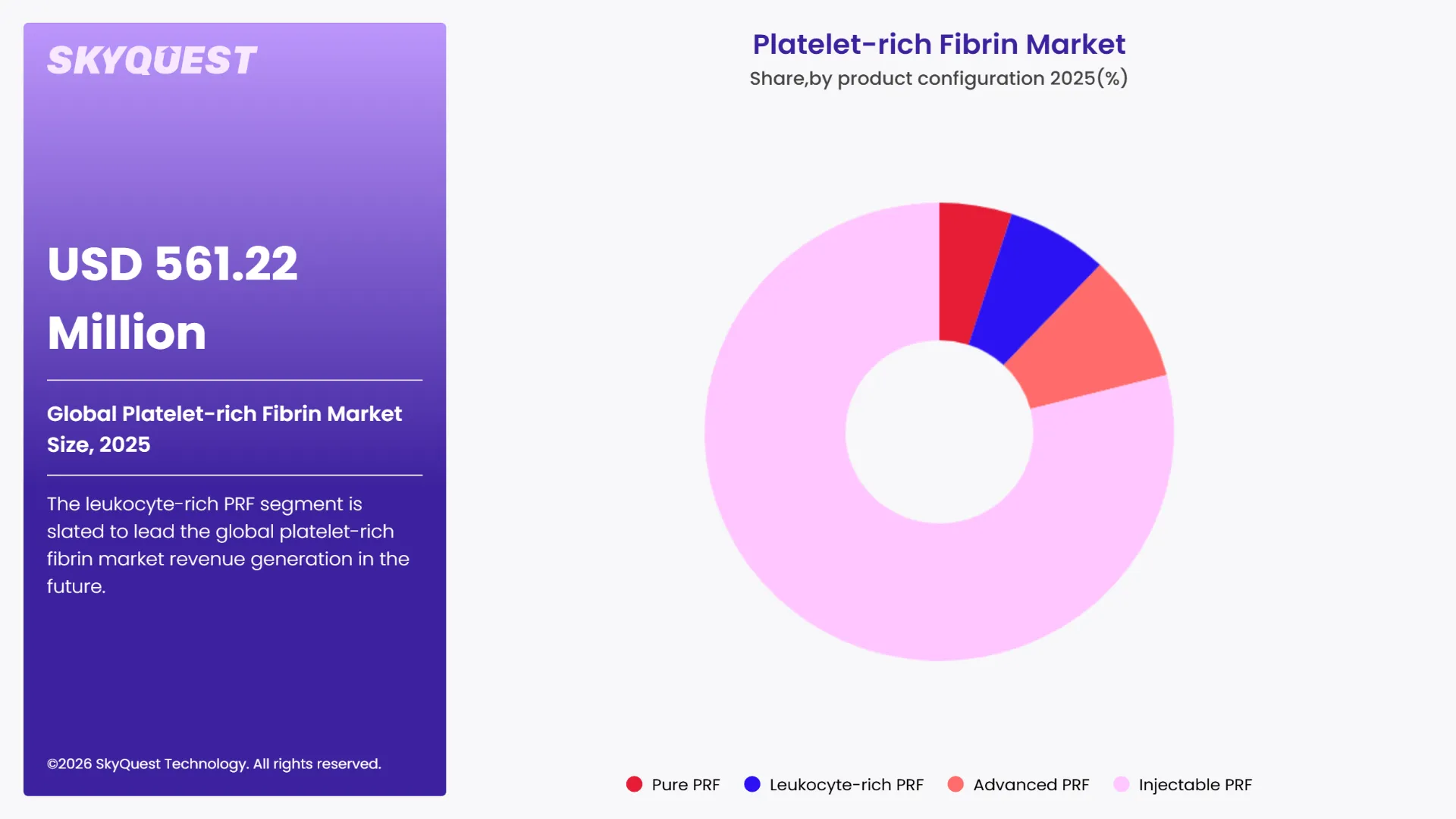
The platelet-rich fibrin market is segmented by product configuration, component type, application vertical, end-user, and region. Based on product configuration, the market is segmented into pure PRF, leukocyte-rich PRF, advanced PRF, and injectable PRF. Based on component type, the market is segmented into centrifuges & processing units, PRF preparation kits, and surgical tools & compression trays. Based on application vertical, the market is segmented into dental & oral surgery, orthopaedic & sports medicine, plastic & reconstructive surgery, and wound management. Based on end-user, the market is segmented into specialized dental clinics, aesthetic & cosmetic centers, and multi-specialty hospitals. Based on region, the market is segmented into North America, Europe, Asia Pacific, Latin America, and Middle East & Africa.
The leukocyte-rich PRF segment is slated to lead the global platelet-rich fibrin market revenue generation in the future. The focus on the immune-modulating and antibacterial capabilities, which provide for more consistent wound healing, is ensuring that the sector remains dominant. The product's formula enables greater cytokine release and cellular recruitment, both of which are thought to promote quicker tissue integration and lower the risk of infection. The proven methods of preparation and the increasing experience in the clinical use of the product ensure that there is steady demand for this leader in the platelet rich fibrin industry.
However, injectable PRF is emerging as the most rapidly expanding segment as per this platelet-rich fibrin industry analysis. Syringeable form enables minimally invasive delivery for regenerative and aesthetic procedures. The ability to be mixed with fillers and improved preparation methods make the product attractive for clinicians and expand treatment possibilities.
The PRF preparation kits segment is projected to account for the highest global platelet-rich fibrin market share going forward. Standardized, ready-to-use kits reduce procedural variability and streamline clinical workflows, which helps this segment hold sway over others. Consistent matrix formation and predictable biologic release are also benefits cementing the dominance of this segment. The use of kits removes the difficulty in implementation for doctors by making handling and training simpler and easier, increasing the number of patients processed per day.
However, centrifuges & processing units are the fastest growing segment because automation and closed-system designs improve consistency and safety, attracting high-volume providers. Device innovations in ergonomics and throughput, together with compatibility for advanced PRF protocols and manufacturer support programs, drive capital investment and enable wider clinical integration and product ecosystem expansion.
To get detailed segments analysis, Request a Free Sample Report
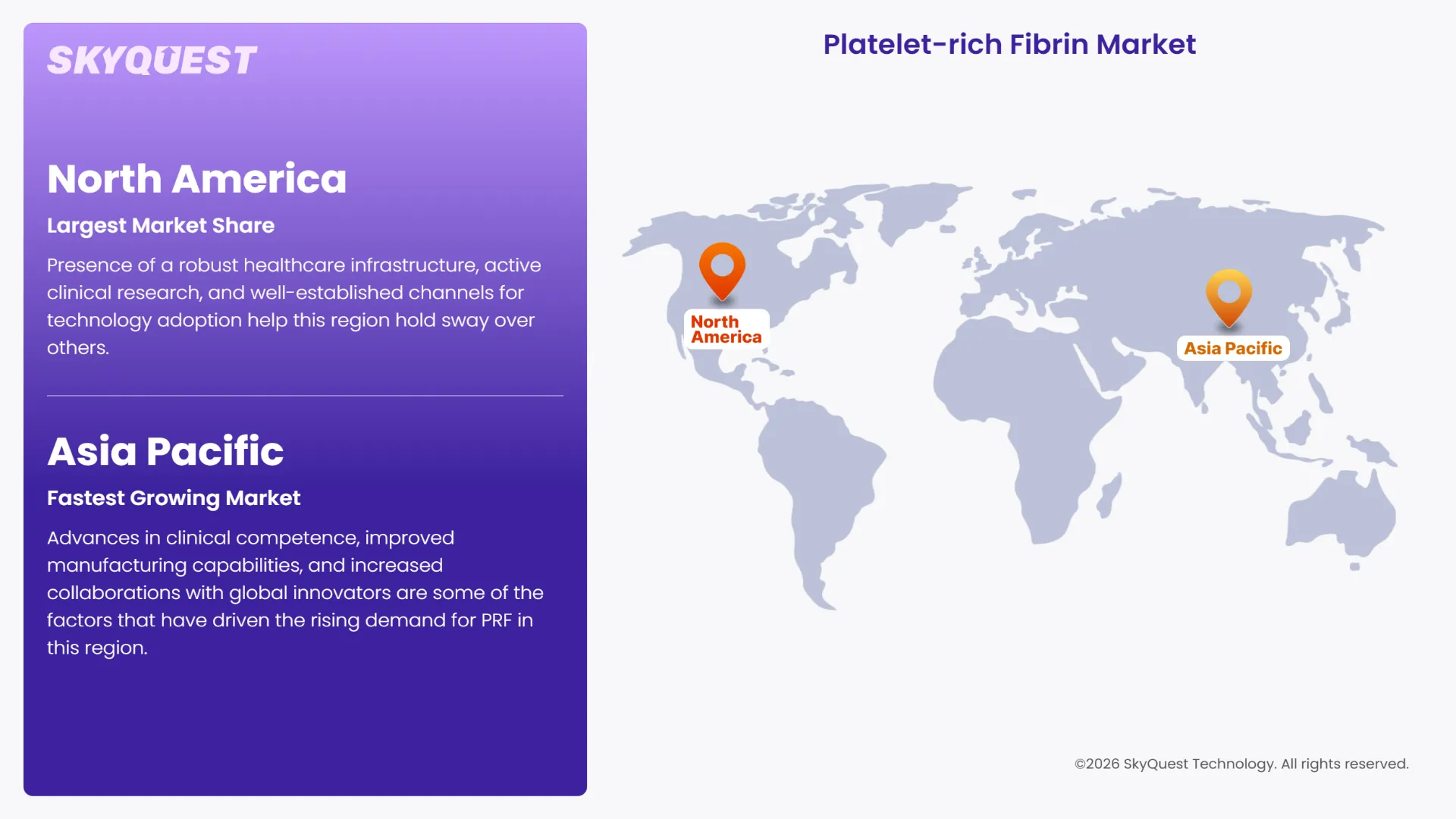
Presence of a robust healthcare infrastructure, active clinical research, and well-established channels for technology adoption help this region hold sway over others. Platelet-rich fibrina high level of awareness among practitioners and fosters collaboration between the industry and clinical institutions; therefore, the uptake of substantive innovation in North America is extensive and continuous. Rising adoption in North America is bolstered by well-established regulatory and reimbursement mechanisms that support commercialization and clinician education.
As a result, the presence of established medical device manufacturers and experienced distributors has aided in the market penetration of new products. This ecosystem creates a high level of awareness among practitioners and fosters collaboration between the industry and clinical institutions; therefore, the uptake of substantive innovation in North America is extensive and continuous. Rising private investment and strategic partnership activity are also expected to bolster the dominance of this region in the future.
Rapid clinical adoption of platelet-rich fibrin across dental, orthopedic, and aesthetic specialties is helping the United States emerge as a dominant country in this region. Robust private healthcare delivery systems and specialty clinics aid in the quick deployment of novel techniques, and partnerships between suppliers and universities hasten innovations. Effective logistics channels and awareness levels on the part of practitioners foster acceptance, along with reimbursement policies and continuing education programs.
Integration of platelet-rich fibrin within public and private practice settings and collaboration with academic hospitals are predicted govern market development in Canada. Product distributors and specialty vendors collaborate with healthcare professionals to customize their products according to the local practices, while focus on research-based results promotes conservative use in clinical applications. The demand among dental and reconstructive surgeons is fueled by specialized training programs and centers of excellence in regions where clinical procedures are tested.
Advances in clinical competence, improved manufacturing capabilities, and increased collaborations with global innovators are some of the factors that have driven the rising demand for PRF in this region. Regulatory frameworks for regenerative medicines keep changing, and prompt approvals and launches become possible through effective market access strategy. Sectors like medical tourism and need for innovative aesthetics procedures play a key role in the adoption of regenerative medicine market.
With developing relationships between regional distributors and global manufacturers through strategic partnerships, there is increased access to products and information transfer; thus, the Asia-Pacific region is becoming more competitive and diversified within the marketplace. Intelligence and investment in clinician education as well as the creation of centres of excellence will assist with the standardisation of protocols and outcome evaluation. Public-private partnerships that support clinical research and enhance supply chain execution instil confidence in both the clinician and patient and thus allow for the greater adoption of regenerative therapies by the healthcare community.
Advanced clinical research institutions and a strong tradition of translational medicine helps boost the demand for platelet-rich fibrin in Japan. Important hospitals and specialty clinics perform meticulous product evaluation, while domestic producers work with clinicians to fine tune their products according to local conditions. Training clinicians has the benefit of helping to standardize procedures in all relevant disciplines such as dentistry, orthopedics, and reconstruction.
Robust aesthetic medicine sector and rapid clinical adoption among dental and cosmetic surgery specialists help govern sales of platelet-rich fibrin in South Korea. Patients’ inclination towards non-invasive regenerative procedures further boosts adoption of platelet-rich fibrin treatments. Innovative hospitals and manufacturers join hands to provide customised solutions in line with preferences of doctors. Adequate training and involvement of professional bodies ensure swift adoption of platelet-rich fibrin by practitioners.
Expanding clinical acceptance, active research networks, and a dense landscape of specialist practitioners are creating new opportunities in the region. Harmonized regulations across Europe have helped to eliminate barriers to market entry.
Professional societies and continuing education programs increase clinician confidence and provide them ways to use these new products properly. The differences between reimbursement models between countries creates an opportunity for target marketing strategies and clinical pathways that will enhance the uptake of these products in adjacent countries. The presence of a strong base of manufacturers and distributors throughout the region provide for local production and customized solutions to meet very different reimbursement structures throughout the region. Demand for less invasive or regenerative healthcare services will continue to drive use in countries with a larger number of private care clinics.
Robust hospital infrastructure and established research institutions that support clinical evaluation and protocol standardization are shaping platelet-rich fibrin adoption in Germany. Reimbursement frameworks and the involvement of specialty associations facilitate the uptake of the technology by dentists, orthopedic and reconstructive surgeons. An established medical device industry allows for localized sourcing and customizations, with the close collaboration between healthcare providers and industry allowing for innovations that cater to the demands of surgery.
Expanding private practice and growing interest from aesthetic and dental specialists are shaping platelet-rich fibrin procurement in the United Kingdom. Training programs and associations offer clinicians guidelines and credentials, whereas cooperation with technology manufacturers ensures that innovation will be available sooner. Clinical demand is further strengthened through specialized centers that deliver cutting-edge regenerative medicine therapies and through a nationwide network of distributors for specialist products.
Specialized research efforts and the increasing importance attached to reconstructive surgery and maxillofacial surgery are expected to drive up the need for platelet-rich fibrin in France. While hospitals and clinics are looking into specific applications, the manufacturers are making alterations to their product offerings so that they can meet the needs of the clinicians. Professional organizations play an important role in ensuring the transfer of knowledge.
To know more about the market opportunities by region and country, click here to
Buy The Complete Report
Rising Adoption In Regenerative Therapies
Technological Advances In PRF Kits
Lack Of Standardized Preparation Protocols
High Cost Of Specialized Consumables
Request Free Customization of this report to help us to meet your business objectives.
Surging investments in the R&D of regenerative medicine and rising emphasis on personalized medical device innovation are shaping the competitive landscape for this platelet-rich fibrin industry. Competition is driven by innovation in preparation protocols, device portability, and integration with digital workflows. Established firms leverage clinical validation and training networks to boost sales as per this platelet-rich fibrin market forecast.
Regenerative Dental Integration
Point of Care Automation
SkyQuest’s ABIRAW (Advanced Business Intelligence, Research & Analysis Wing) is our Business Information Services team that Collects, Collates, Correlates, and Analyses the Data collected by means of Primary Exploratory Research backed by robust Secondary Desk research.
As per SkyQuest analysis, rising demand for regenerative and minimally invasive therapies, increasing adoption of autologous biologics, and growing applications in dentistry, orthopedics, and wound care are anticipated to drive the demand for platelet-rich fibrin going forward. However, high equipment costs, variability in preparation techniques, limited reimbursement, and lack of standardized protocols are slated to slow down the adoption of platelet-rich fibrin in the future. North America is slated to spearhead the demand for platelet-rich fibrin owing to strong presence of advanced healthcare infrastructure, high adoption of regenerative treatments, and increasing clinical research activities. Integration of AI-driven treatment planning, development of standardized preparation systems, and advancements in regenerative medicine applications are anticipated to be key trends driving the platelet-rich fibrin industry going forward.
| Report Metric | Details |
|---|---|
| Market size value in 2024 | USD 500.20 Million |
| Market size value in 2033 | USD 1409.55 Million |
| Growth Rate | 12.2% |
| Base year | 2024 |
| Forecast period | 2026-2033 |
| Forecast Unit (Value) | USD Million |
| Segments covered |
|
| Regions covered | North America (US, Canada), Europe (Germany, France, United Kingdom, Italy, Spain, Rest of Europe), Asia Pacific (China, India, Japan, Rest of Asia-Pacific), Latin America (Brazil, Rest of Latin America), Middle East & Africa (South Africa, GCC Countries, Rest of MEA) |
| Companies covered |
|
| Customization scope | Free report customization with purchase. Customization includes:-
|
To get a free trial access to our platform which is a one stop solution for all your data requirements for quicker decision making. This platform allows you to compare markets, competitors who are prominent in the market, and mega trends that are influencing the dynamics in the market. Also, get access to detailed SkyQuest exclusive matrix.
Table Of Content
Executive Summary
Market overview
Parent Market Analysis
Market overview
Market size
KEY MARKET INSIGHTS
COVID IMPACT
MARKET DYNAMICS & OUTLOOK
Market Size by Region
KEY COMPANY PROFILES
Methodology
For the Platelet-rich Fibrin Market, our research methodology involved a mixture of primary and secondary data sources. Key steps involved in the research process are listed below:
1. Information Procurement: This stage involved the procurement of Market data or related information via primary and secondary sources. The various secondary sources used included various company websites, annual reports, trade databases, and paid databases such as Hoover's, Bloomberg Business, Factiva, and Avention. Our team did 45 primary interactions Globally which included several stakeholders such as manufacturers, customers, key opinion leaders, etc. Overall, information procurement was one of the most extensive stages in our research process.
2. Information Analysis: This step involved triangulation of data through bottom-up and top-down approaches to estimate and validate the total size and future estimate of the Platelet-rich Fibrin Market.
3. Report Formulation: The final step entailed the placement of data points in appropriate Market spaces in an attempt to deduce viable conclusions.
4. Validation & Publishing: Validation is the most important step in the process. Validation & re-validation via an intricately designed process helped us finalize data points to be used for final calculations. The final Market estimates and forecasts were then aligned and sent to our panel of industry experts for validation of data. Once the validation was done the report was sent to our Quality Assurance team to ensure adherence to style guides, consistency & design.
Analyst Support
Customization Options
With the given market data, our dedicated team of analysts can offer you the following customization options are available for the Platelet-rich Fibrin Market:
Product Analysis: Product matrix, which offers a detailed comparison of the product portfolio of companies.
Regional Analysis: Further analysis of the Platelet-rich Fibrin Market for additional countries.
Competitive Analysis: Detailed analysis and profiling of additional Market players & comparative analysis of competitive products.
Go to Market Strategy: Find the high-growth channels to invest your marketing efforts and increase your customer base.
Innovation Mapping: Identify racial solutions and innovation, connected to deep ecosystems of innovators, start-ups, academics, and strategic partners.
Category Intelligence: Customized intelligence that is relevant to their supply Markets will enable them to make smarter sourcing decisions and improve their category management.
Public Company Transcript Analysis: To improve the investment performance by generating new alpha and making better-informed decisions.
Social Media Listening: To analyze the conversations and trends happening not just around your brand, but around your industry as a whole, and use those insights to make better Marketing decisions.
REQUEST FOR SAMPLE
 REQUEST FREE CUSTOMIZATION
Global Platelet-Rich Fibrin Market size was valued at USD 500.2 Million in 2024 and is poised to grow from USD 561.22 Million in 2025 to USD 1409.55 Million by 2033, growing at a CAGR of 12.2% during the forecast period (2026-2033).
Key vendors in the Platelet-rich Fibrin Market include leading medical device and regenerative medicine companies such as Terumo Corporation, Stryker Corporation, Zimmer Biomet, EmCyte Corporation, Arthrex Inc., Vivostat A/S, Nuo Therapeutics, Regen Lab, Harvest Technologies Corp., and Johnson & Johnson.
The key driver of the Platelet-rich Fibrin Market is the increasing demand for regenerative medicine and advanced wound healing solutions. Rising adoption in dental, orthopedic, and cosmetic procedures, along with the effectiveness of platelet-rich fibrin in accelerating tissue repair and healing, is significantly driving market growth.
A key market trend in the Platelet-rich Fibrin Market is the increasing adoption of minimally invasive and autologous treatment procedures, driven by patient preference for natural healing methods. Additionally, advancements in processing technologies and expanding applications in dental, orthopedic, and cosmetic treatments are supporting broader market adoption.
North America accounted for the largest share in the Platelet-rich Fibrin Market, driven by strong adoption of regenerative medicine, advanced healthcare infrastructure, and increasing use of platelet-rich fibrin in dental, orthopedic, and cosmetic procedures.


Want to customize this report? This report can be personalized according to your needs. Our analysts and industry experts will work directly with you to understand your requirements and provide you with customized data in a short amount of time. We offer $1000 worth of FREE customization at the time of purchase.
Feedback From Our Clients


 USA (+1) 351-333-4748

