Pharyngeal Dysphagia Market
Report ID: SQMIG35A3338
Report ID: SQMIG35A3338
[email protected]
USA +1 351-333-4748
Report ID:
SQMIG35A3338 |
Region:
Global |
Published Date: March, 2026
Pages:
157
|Tables:
92
|Figures:
76


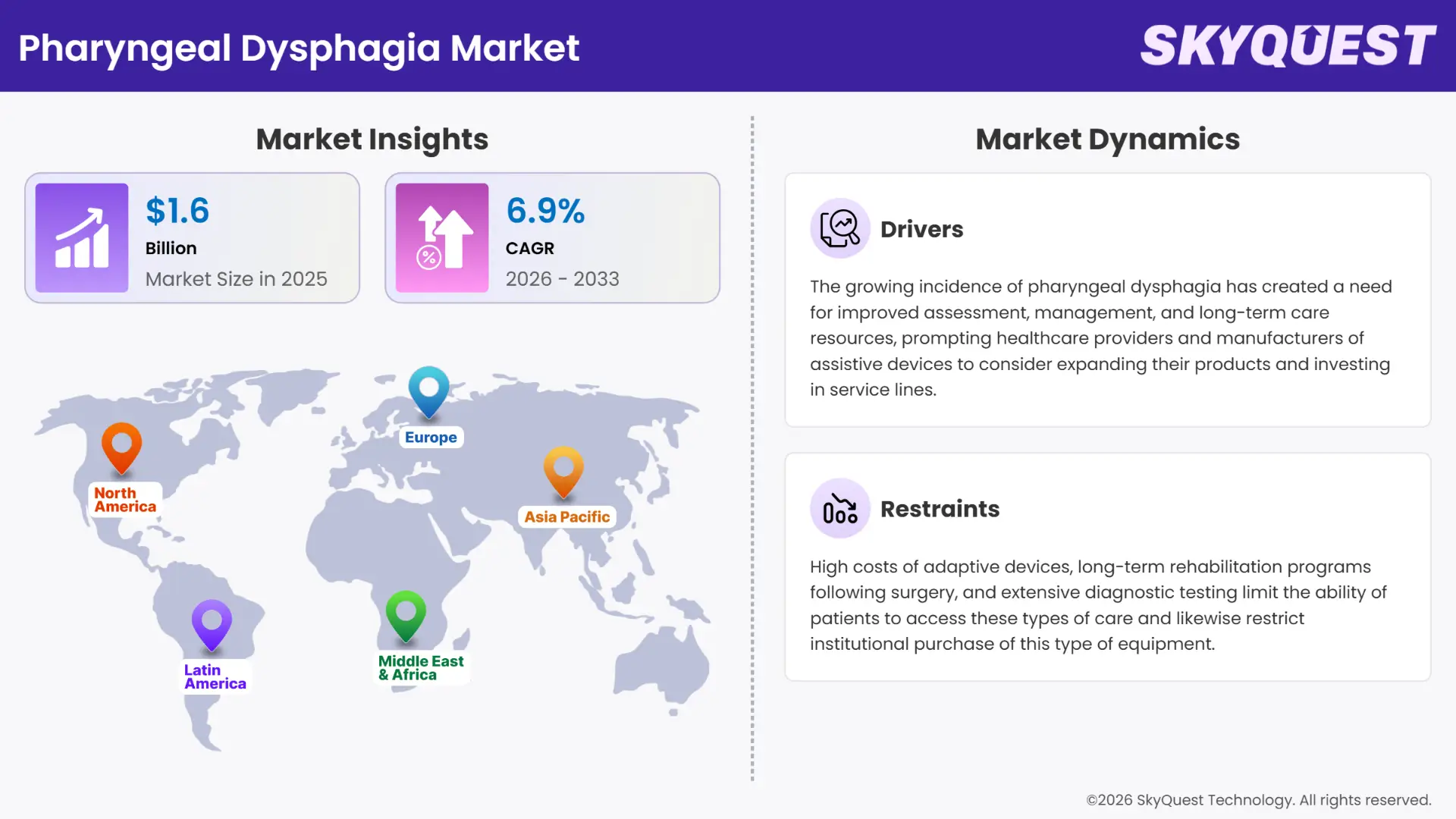
Global Pharyngeal Dysphagia Market size was valued at USD 1.5 Billion in 2024 and is poised to grow from USD 1.6 Billion in 2025 to USD 2.73 Billion by 2033, growing at a CAGR of 6.9% during the forecast period (2026-2033).
Pharyngeal dysphagia is a type of swallowing dysfunction caused by problems with the muscles involved during the act of swallowing after the food is swallowed into the back of the throat. It results in aspiration, malnutrition and higher healthcare utilization due to insufficient management. Therefore, improving pharyngeal dysphagia has the potential to greatly decrease both costs and morbidity associated with untreated pharyngeal dysphagia. In the past decade, the pharyngeal dysphagia market has moved away from primarily using bedside evaluations to diagnosing pharyngeal dysphagia with more sophisticated techniques, such as video fluoroscopic swallow studies, fiberoptic endoscopic evaluations and more recently by utilizing higher resolution manometry.
Another important driver for pharyngeal dysphagia market growth is the advancement of technology in both diagnosis and treatment, which has enabled increased numbers of people to be screened and treated for pharyngeal dysphagia. Therefore, increasing the number of clinicians choosing to provide care for individuals diagnosed with pharyngeal dysphagia due to increased availability of services and cost savings to payers.
An example of this would be use of portable ultrasound and telehealth technology to facilitate swallowing evaluations by stroke teams within hospitals, allowing stroke nurses to make timely decisions regarding the need for interventions that can lead to decreased rates of aspiration pneumonia and shorter lengths of stays for patients. Changes in reimbursement policies, including regulatory clarification for covering rehabilitative devices under bundled payment systems, will further encourage hospitals to invest in new technologies. Therefore, providing even greater opportunities for commercial success to device manufacturers that provide credible documentation of their ability to demonstrate patient care improvement, cost savings, and positive clinical outcomes.
How is AI Improving Diagnosis And Management In The Pharyngeal Dysphagia Market?
By automating or 'scaling-up' core clinical tasks, AI develops tools to improve both the assessment and treatment of those with pharyngeal dysphagia. An important example of this is the automated analysis of video fluoroscopic swallowing studies to identify unsafe swallows; the development of acoustic and wearable sensors to provide non-invasive detection of swallowing events; and the development of machine-learning models which aid in risk stratification and designing therapies.
The current state combines research prototypes and early-stage clinical tools that reduce the burden of specialists on their patients, provide remote monitoring of rehabilitation activities, and yield objective outcome measurements. The current market state is favouring solutions that are either non-invasive or scale up and are complimentary to inpatient/outpatient clinicians and possess significant device/service adoption potential across the multiple types of care settings.
In March 2026, Benitec Biopharma reported interim BB-301 clinical results indicating meaningful improvements in swallowing function in patients with dysphagia. Also, the use of automated swallow analyses, powered by AI, is one way that AI-enabled screening/automated swallow analysis. This will facilitate improved trial and clinical workflow efficiencies while providing both patients and providers with improved access to market services.
To get more insights on this market click here to Request a Free Sample Report
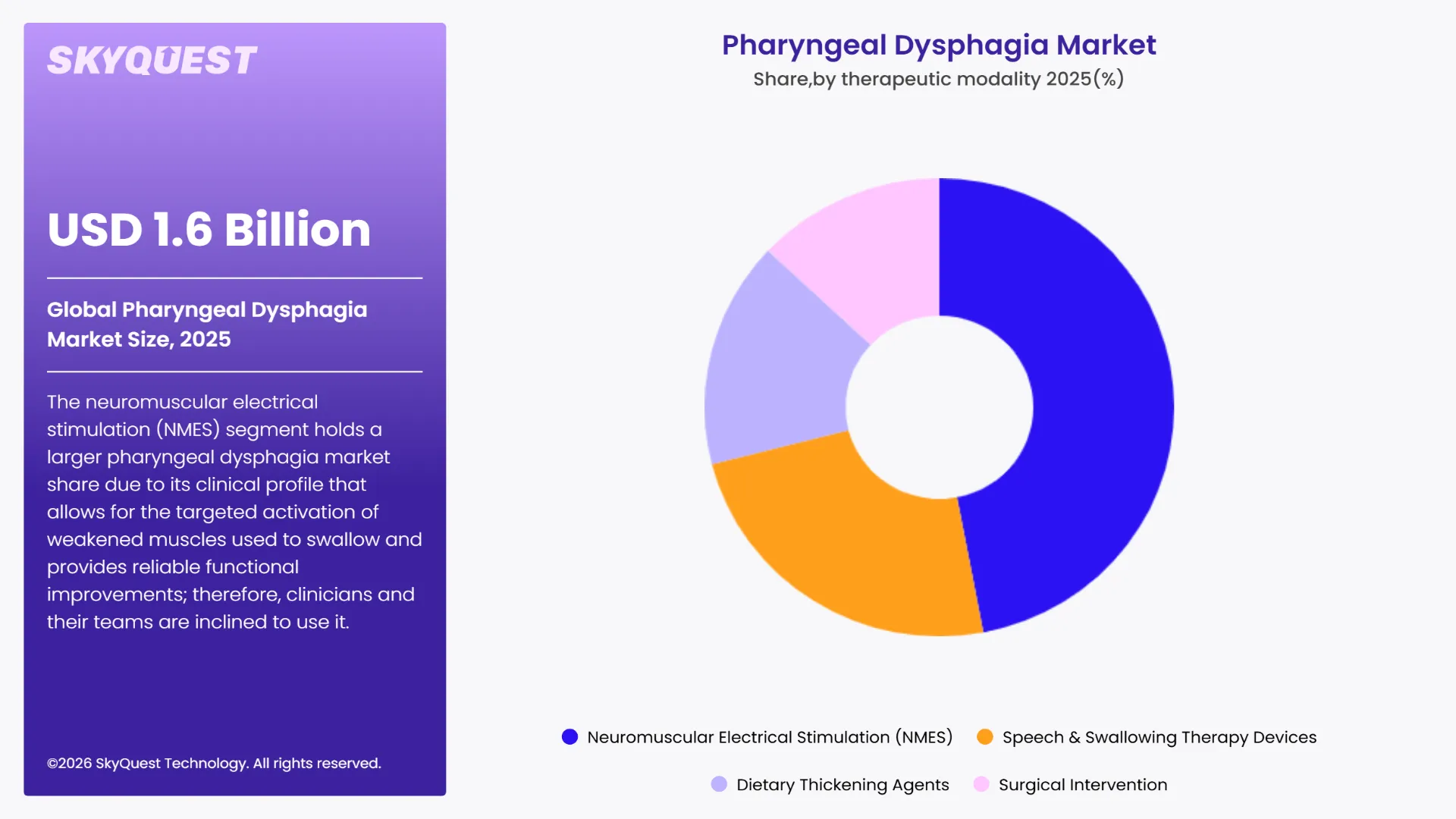
Global pharyngeal dysphagia market is segmented by therapeutic modality, etiology/cause, end-user and region. Based on therapeutic modality, the market is segmented into neuromuscular electrical stimulation (NMES), speech & swallowing therapy devices, dietary thickening agents and surgical intervention. Based on etiology/cause, the market is segmented into neurological, structural and age-related sarcopenia. Based on end-user, the market is segmented into rehabilitation clinics, long-term care facilities, home healthcare settings and acute care hospitals. Based on region, the market is segmented into North America, Europe, Asia Pacific, Latin America and Middle East & Africa.
The neuromuscular electrical stimulation (NMES) segment holds a larger pharyngeal dysphagia market share due to its clinical profile that allows for the targeted activation of weakened muscles used to swallow and provides reliable functional improvements; therefore, clinicians and their teams are inclined to use it. The treatment paths are clear, allowing for a seamless integration with traditional rehabilitation services and will support integration into multidisciplinary programs as a routine practice. The positive perspectives of various providers and the alignment with both payer and institutional protocols for therapy contribute to the continued purchasing and routine usage of NMES in practice settings; moreover, this continues to strengthen NMES's place in the market.
As per pharyngeal dysphagia market outlook, the speech and swallowing therapy device segment is the fastest rate of growth due to innovative portable, sensor-enabled platforms and the introduction of digital therapy programs that provide for remote monitoring and the personalization of exercise programs. There is an increasing adoption of telehealth by clinicians, with expanded applications at home, leading to the development of new commercialization options and service opportunities, thereby enhancing their growth in the industry.
As per pharyngeal dysphagia market analysis, long-term care facilities segment leads because these settings concentrate residents with chronic swallowing impairments and continuous care needs, generating steady, predictable demand for management solutions. Institutions tend to purchase in a standardised fashion based on protocols that favour bundled therapies and reliable dietary programmes; with respect to onsite, multi-disciplinary teams facilitating the implementation and monitoring of these therapies. The frequency of therapy cycles and the need for a consistently applied care pathway develops a long-term partnership between suppliers and customers and ensures that the products continue to be used over time.
As per pharyngeal dysphagia market forecast, home healthcare settings are the most rapidly expanding end user as aging preferences shift care to the home and telehealth enables remote therapy delivery. A growing demand for portable devices, simpler dietary options, and home-based monitoring is driving suppliers to design portable, more user-friendly products and service models that will create greater access to the marketplace and ultimately increased sales revenue.
To get detailed segments analysis, Request a Free Sample Report
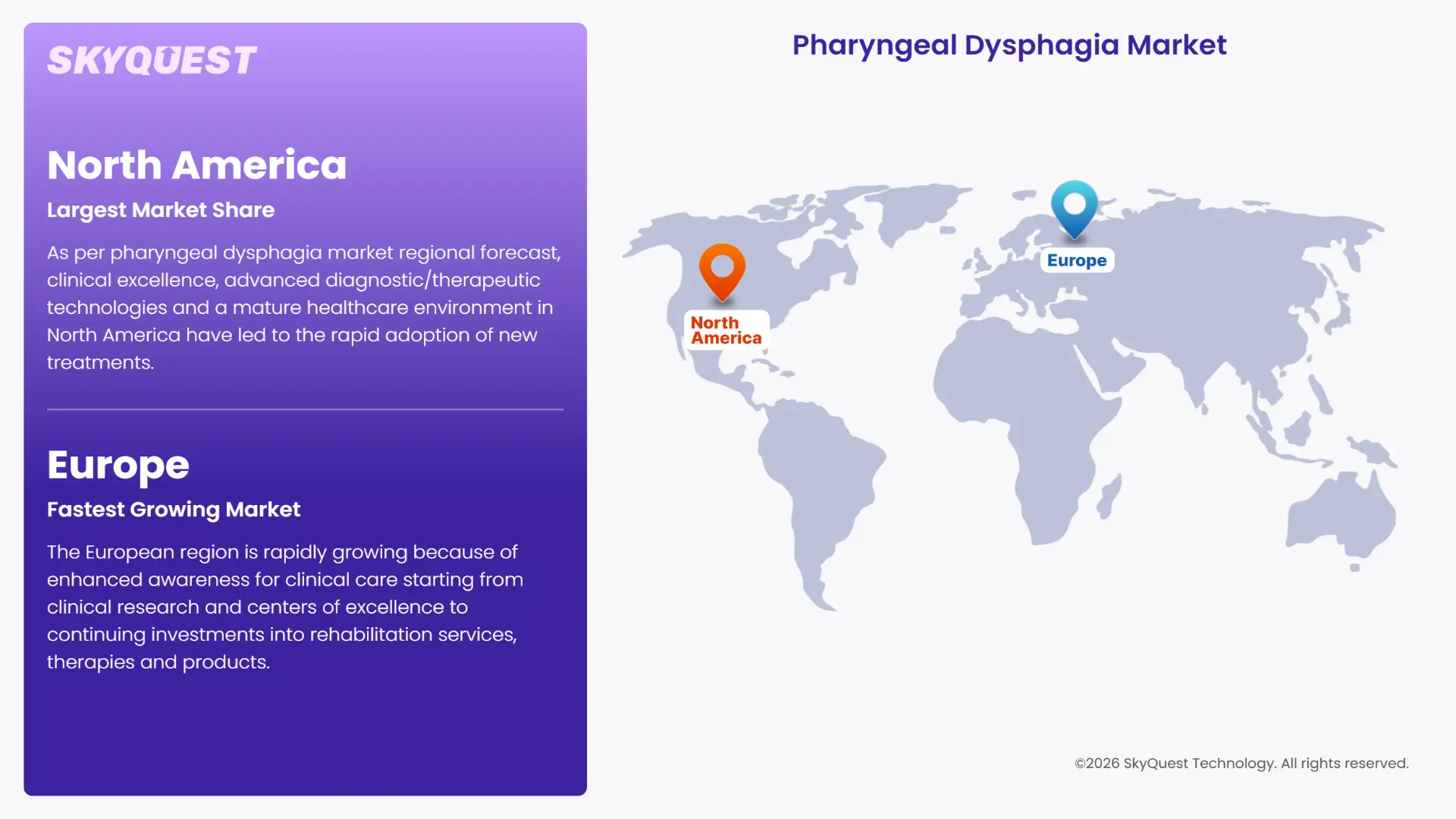
As per pharyngeal dysphagia market regional forecast, clinical excellence, advanced diagnostic/therapeutic technologies and a mature healthcare environment in North America have led to the rapid adoption of new treatments. There exist many highly specialized centres and academic institutions facilitating the generation of evidence through guidelines developed for those living with pharyngeal dysphagia. Existing manufacturers and service providers have established networks allowing for the distribution of products as well as the training of clinicians.
The pharyngeal dysphagia market in the United States has a large clinical infrastructure with many specialists engaged in providing early access to diagnosis through the use of diagnostic technologies as well as early treatment through the use of therapeutic devices. Research hospitals and rehabilitation centres are both creating evidence to support clinical practice as well as providing standards for how clinicians should/work with people living with pharyngeal dysphagia. third-party payers, both public and private, are supporting comprehensive care through the establishment of reimbursement strategies.
The strong presence of companies in the pharyngeal dysphagia market also allows for an abundance of advanced technology and the use of coordinated care models between hospitals and outpatient clinics allow for clients to continuously receive the care.
As per pharyngeal dysphagia market regional outlook, Canada is focused on providing coordinated care to patients living with pharyngeal dysphagia within a publicly funded healthcare system. Provincial programs in Canada and specialty networks allow for equitable access to the assessment and rehabilitation services necessary to support individuals living with pharyngeal dysphagia. The clinical collaboration between speech language pathology, elderly medicine, and neurology teams in Canada is evident within clinical practice while the increasing integration of telehealth into the follow-up procedures of a patient's progress and continued community management also emphasises collaborative practice among these disciplines.
The European region is rapidly growing because of enhanced awareness for clinical care starting from clinical research and centers of excellence to continuing investments into rehabilitation services, therapies and products. In addition, the cross-border partnerships of industry and universities allow for both clinical testing and developing identical protocols or guidelines that support the use of new diagnostics and therapies by healthcare providers who are confident using them.
At present, variability in the reimbursement systems in each country has been moderated by high levels of reimbursement from some countries that allow for the larger use of integrated care pathways across Europe. Furthermore, the discontinuity in the use of multidisciplinary care is being reduced by encouraging the use of outpatient and community service delivery, while encouraging active participation of professional organizations to train and advocate within health systems throughout Europe.
In Germany, the pharyngeal dysphagia market is grounded by established hospital systems and a reputable medical device industry that actively supports the rapid adoption of diagnostics and therapies. Further, both specialized hospital centers, along with academic research institutions, have provided significant evidence and standardized practices, whereas comprehensive rehabilitation programs and an effective process for coordinating patient discharge provide patients with continuous care. Additionally, the presence of manufacturers in Germany and established methods of purchasing medical devices supports the availability of technology at the hospital and rehabilitation facilities throughout Germany.
As per pharyngeal dysphagia industry analysis, the overall pharyngeal dysphagia market is a unique combination of integrated service delivery, significant investment in access to technology, and new innovative models of dysphagia service delivery for the community. In addition to collaborative networks focused on sharing best practice, enhanced focus on patient pathway improvement has led to wider adoption of telehealth and interdisciplinary management of patients with dysphagia by service providers. Collaboration of healthcare and industry provides opportunities for both service improvement and access to current management techniques, while continued professional education provides opportunities for ongoing training and educational updates for clinicians working in the area of dysphagia.
The pharyngeal dysphagia market in France is developing through the continued strengthening of clinical programs and continued investment in rehabilitation infrastructure. Specialized centres are expanding the range of therapy and assessment options available to patients, and collaborative efforts among rehabilitation facilities, hospitals and research institutions have led to the establishment of new models of therapy and assessment. Furthermore, the collective emphasis by clinicians on standardization of patient management pathways and comprehensive training of clinicians has led to greater consistency in the diagnostic evaluation of dysphagia and access to treatment based on scientific evidence, regardless of geographic area.
The Asia Pacific region is making significant advancements by investing strategically in healthcare infrastructure, localizing technology, and expanding specialized rehabilitation services. Regional manufacturers and multinational companies are creating partnerships to adapt devices and models of care to local clinical practices, while academic and clinical collaborations are driving the development of evidence-based practice and training of clinicians. Chronic disease management and geriatric care have become major focus areas for governments and healthcare systems, raising the profile of services for individuals who have swallowing disorders.
Japan pharyngeal dysphagia market reflects the widespread use of advanced diagnostic technology and a mature rehabilitation network with an emphasis on providing care for older people. In Japan, rehabilitation providers and clinical facilities function as an integrated network of research institutions and hospital-based facilities focusing on assessment, therapy, and home-based support. Providers emphasize quality of life and the delivery of coordinated care through multidisciplinary approaches, which encourage the adoption and use of innovative treatments and clinician training programs based on best practices.
The pharyngeal dysphagia market in South Korea is characterized by rapid adoption of new technologies integrated into a sophisticated hospital system and a vibrant medical device sector. Evidence-based practice and industry-based collaborative research are emphasized at clinical centers, while telehealth and outpatient rehabilitation services are used to provide services beyond acute care.
To know more about the market opportunities by region and country, click here to
Buy The Complete Report
Growing Prevalence of Dysphagia
The growing incidence of pharyngeal dysphagia has created a need for improved assessment, management, and long-term care resources, prompting healthcare providers and manufacturers of assistive devices to consider expanding their products and investing in service lines. As more patients require multidisciplinary approaches for treatment, the clinical use of swallow rehabilitation programs as well as imaging technologies and assistive devices are increasing which in turn spurs the development of specialized products and training programs. Payers and policymakers are recognizing this pharyngeal dysphagia market trend and prioritizing care pathways, thus encouraging manufacturers to increase distribution and support for these newly developed services. This ongoing need will continue to drive market expansion as it will provide a reliable opportunity for manufacturers to see consistent demand and support for future innovations in all areas of diagnostic, therapeutic and supportive Technologies.
Advancements In Diagnostic Technologies
The development of better imaging technologies, new bedside assessment tools, and improved methods of sensors that monitor swallowing have all contributed to the ability to accurately identify conditions and receive interventions sooner. In addition to facilitating earlier intervention, these advancements enable clinicians to create personalized treatment plans that better meet each patient's needs while still providing them with the right level of support. These technological advancements also diminish the level of uncertainty that exists in clinical settings due to the considerable rise in confidence of clinicians when recommending appropriate targeted therapies and devices. Thus, stimulating the continued procurement and use of these therapies and devices across multiple care settings.
High Treatment Costs and Reimbursement
High costs of adaptive devices, long-term rehabilitation programs following surgery, and extensive diagnostic testing limit the ability of patients to access these types of care and likewise restrict institutional purchase of this type of equipment. This restricts the pharyngeal dysphagia market growth of the industry. Uncertainty about reimbursement and inconsistency amongst payers results in barriers for clinicians to prescribe higher-end technologies and in hospitals adopting advanced technologies. Therefore, reducing the commercial incentive for companies to grow their offerings. Ultimately, adoption is inconsistent across different types of care providers and geographic locations, causing caregivers to frequently choose a less expensive alternative or conservative management of dysphagia.
Skilled Clinical Workforce Gaps
A shortage of trained clinicians and therapists who provide dysphagia assessment and management limits the ability to effectively diagnose dysphagia and deliver evidence-based interventions, which limit market adoption of adaptive devices and services. When clinical teams lack the necessary skill set to implement these technologies, they often do not use the available technologies at the level of capability that should be used or they employ an all-encompassing methodology to manage a patient’s condition, limiting the demand for niche products and services. The gap in training creates additional expenses for the hospital to provide education and change management in its organization, leading to an increased length of time to make a purchasing decision for innovative solutions that would fill a proven clinical need.
Request Free Customization of this report to help us to meet your business objectives.
The global pharyngeal dysphagia industry is characterized by competitive dynamics based on differentiation in technology and types of partnerships through channels. Existing players are focusing on targeted acquisition as well as partnering with clinical stakeholders to ensure that hospitals adopt their products, such as Phagenesis which received regulatory approval from the US and launched targeted US commercialization being acquired by smaller competing companies.
SkyQuest’s ABIRAW (Advanced Business Intelligence, Research & Analysis Wing) is our Business Information Services team that Collects, Collates, Correlates, and Analyses the Data collected by means of Primary Exploratory Research backed by robust Secondary Desk research.
As per SkyQuest analysis, the global pharyngeal dysphagia market is being propelled primarily by an aging population and rising neurological disorders that increase demand for diagnostic and therapeutic solutions, while rapid technological advances in diagnostics and therapeutics including AI-enabled screening and portable devices further accelerate adoption. Market growth is constrained by high treatment costs and variable reimbursement that limit access and institutional procurement. North America remains the dominant region thanks to clinical expertise, established reimbursement frameworks and strong industry presence, and neuromuscular electrical stimulation leads the therapeutic modality mix due to reproducible functional outcomes and easy integration into rehabilitation programs. Stakeholders should focus on cost-effectiveness and scalable care models.
| Report Metric | Details |
|---|---|
| Market size value in 2024 | USD 1.5 Billion |
| Market size value in 2033 | USD 2.73 Billion |
| Growth Rate | 6.9% |
| Base year | 2024 |
| Forecast period | 2026-2033 |
| Forecast Unit (Value) | USD Billion |
| Segments covered |
|
| Regions covered | North America (US, Canada), Europe (Germany, France, United Kingdom, Italy, Spain, Rest of Europe), Asia Pacific (China, India, Japan, Rest of Asia-Pacific), Latin America (Brazil, Rest of Latin America), Middle East & Africa (South Africa, GCC Countries, Rest of MEA) |
| Companies covered |
|
| Customization scope | Free report customization with purchase. Customization includes:-
|
To get a free trial access to our platform which is a one stop solution for all your data requirements for quicker decision making. This platform allows you to compare markets, competitors who are prominent in the market, and mega trends that are influencing the dynamics in the market. Also, get access to detailed SkyQuest exclusive matrix.
Table Of Content
Executive Summary
Market overview
Parent Market Analysis
Market overview
Market size
KEY MARKET INSIGHTS
COVID IMPACT
MARKET DYNAMICS & OUTLOOK
Market Size by Region
KEY COMPANY PROFILES
Methodology
For the Pharyngeal Dysphagia Market, our research methodology involved a mixture of primary and secondary data sources. Key steps involved in the research process are listed below:
1. Information Procurement: This stage involved the procurement of Market data or related information via primary and secondary sources. The various secondary sources used included various company websites, annual reports, trade databases, and paid databases such as Hoover's, Bloomberg Business, Factiva, and Avention. Our team did 45 primary interactions Globally which included several stakeholders such as manufacturers, customers, key opinion leaders, etc. Overall, information procurement was one of the most extensive stages in our research process.
2. Information Analysis: This step involved triangulation of data through bottom-up and top-down approaches to estimate and validate the total size and future estimate of the Pharyngeal Dysphagia Market.
3. Report Formulation: The final step entailed the placement of data points in appropriate Market spaces in an attempt to deduce viable conclusions.
4. Validation & Publishing: Validation is the most important step in the process. Validation & re-validation via an intricately designed process helped us finalize data points to be used for final calculations. The final Market estimates and forecasts were then aligned and sent to our panel of industry experts for validation of data. Once the validation was done the report was sent to our Quality Assurance team to ensure adherence to style guides, consistency & design.
Analyst Support
Customization Options
With the given market data, our dedicated team of analysts can offer you the following customization options are available for the Pharyngeal Dysphagia Market:
Product Analysis: Product matrix, which offers a detailed comparison of the product portfolio of companies.
Regional Analysis: Further analysis of the Pharyngeal Dysphagia Market for additional countries.
Competitive Analysis: Detailed analysis and profiling of additional Market players & comparative analysis of competitive products.
Go to Market Strategy: Find the high-growth channels to invest your marketing efforts and increase your customer base.
Innovation Mapping: Identify racial solutions and innovation, connected to deep ecosystems of innovators, start-ups, academics, and strategic partners.
Category Intelligence: Customized intelligence that is relevant to their supply Markets will enable them to make smarter sourcing decisions and improve their category management.
Public Company Transcript Analysis: To improve the investment performance by generating new alpha and making better-informed decisions.
Social Media Listening: To analyze the conversations and trends happening not just around your brand, but around your industry as a whole, and use those insights to make better Marketing decisions.
REQUEST FOR SAMPLE
 REQUEST FREE CUSTOMIZATION
Global Pharyngeal Dysphagia Market size was valued at USD 1.5 Billion in 2024 and is poised to grow from USD 1.6 Billion in 2025 to USD 2.73 Billion by 2033, growing at a CAGR of 6.9% during the forecast period (2026-2033).
Competitive dynamics in the global pharyngeal dysphagia market center on technology differentiation and channel partnerships, with incumbents pursuing targeted acquisitions and clinical collaborations to secure hospital adoption; for example Phagenesis obtained US regulatory clearance and launched targeted U.S. commercialization, while smaller players have been acquired to consolidate portfolios, driving rapid product innovation and service bundling. 'Nestlé Health Science', 'Danone', 'Cook Medical', 'Boston Scientific', 'Halyard Health', 'Medtronic', 'Olympus Corporation', 'Smiths Medical', 'C.R. Bard', 'Abbott Laboratories', 'Cardinal Health', 'Fresenius Kabi', 'Kent Precision Foods', 'Flavor Creations', 'Thick-It', 'SimplyThick', 'Phagenesis', 'VitalStim', 'Passy-Muir', 'Bracco Imaging'
Growing prevalence of pharyngeal dysphagia increases demand for assessment, management, and long term care solutions, encouraging healthcare providers and device manufacturers to expand offerings and invest in service lines. As more patients require multidisciplinary interventions, clinical adoption of swallow rehabilitation programs, imaging, and assistive devices rises, stimulating development of specialized products and training services. Payers and policymakers respond by prioritizing care pathways, leading manufacturers to broaden distribution and support. This sustained demand fosters market expansion by creating predictable uptake and encouraging innovation across diagnostics, therapeutics, and supportive technologies.
Tele-Rehabilitation And Remote Care: Adoption of tele-rehabilitation and virtual swallowing therapy is enabling continuity of care outside hospitals, expanding access for patients in decentralized settings. Clinicians use video platforms, remote monitoring, and caregiver-guided protocols to deliver individualized therapy, reduce travel burdens, and sustain therapy intensity. Payers and providers are increasingly recognizing the value of hybrid care models that blend in-person assessment with remote follow-up, driving service innovation, training for allied professionals, and new delivery pathways that improve adherence and patient-centered outcomes and quality metrics.
North America dominates the global pharyngeal dysphagia market primarily due to its advanced healthcare infrastructure, high disease prevalence, and strong adoption of diagnostic and therapeutic technologies.


Want to customize this report? This report can be personalized according to your needs. Our analysts and industry experts will work directly with you to understand your requirements and provide you with customized data in a short amount of time. We offer $1000 worth of FREE customization at the time of purchase.
Feedback From Our Clients


 USA (+1) 351-333-4748

