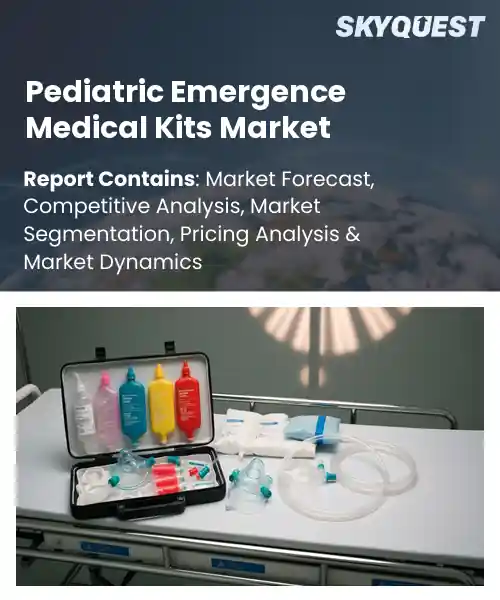
Pediatric Emergence Medical Kits Market
Report ID: SQMIG35A3349
Report ID: SQMIG35A3349
[email protected]
USA +1 351-333-4748
Report ID:
SQMIG35A3349 |
Region:
Global |
Published Date: March, 2026
Pages:
157
|Tables:
117
|Figures:
77


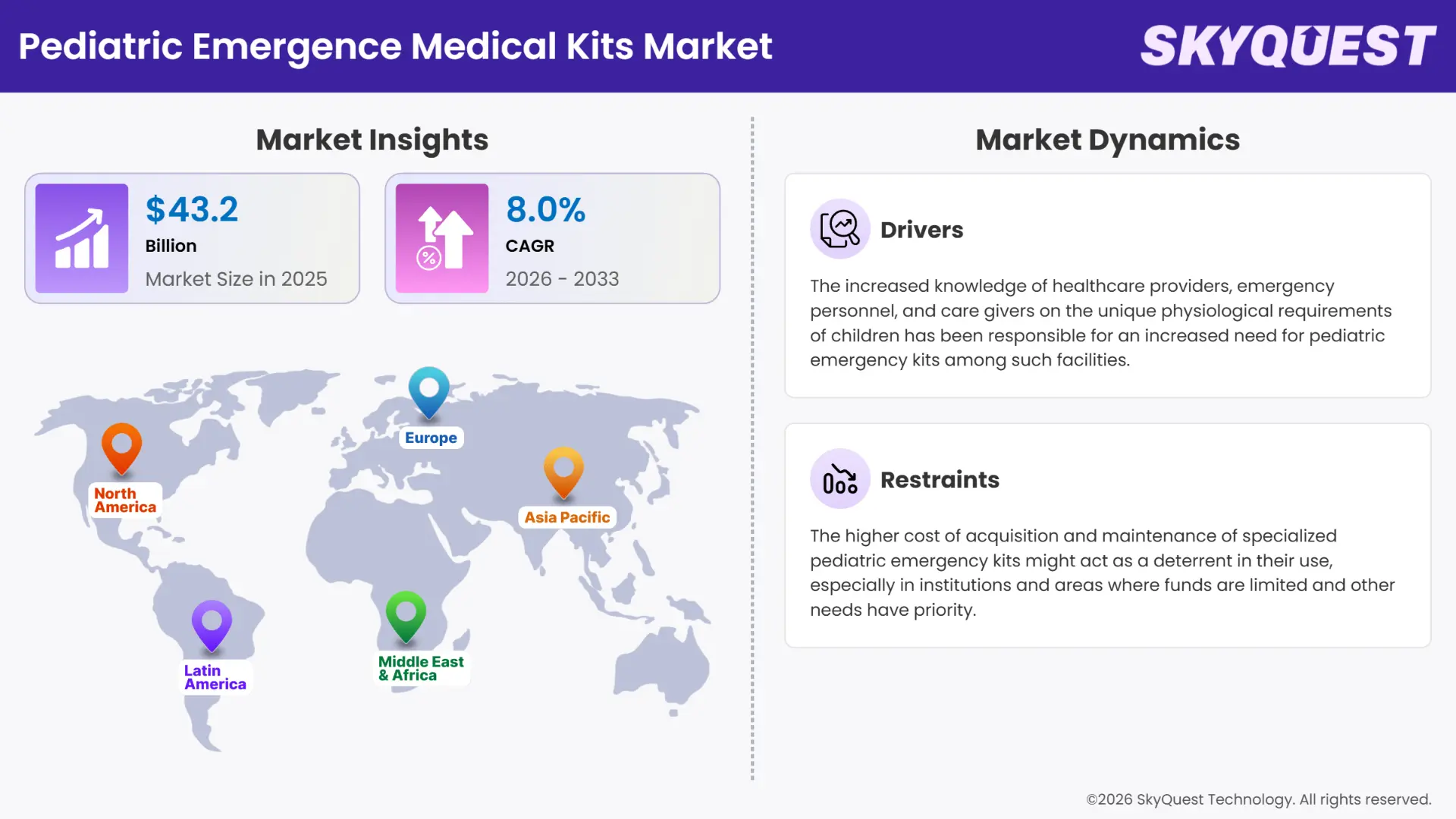
Global Pediatric Emergency Medical Kits Market size was valued at USD 40.0 Billion in 2024 and is poised to grow from USD 43.2 Billion in 2025 to USD 79.96 Billion by 2033, growing at a CAGR of 8.0% during the forecast period (2026-2033).
Key Takeaways: Market Trends & Insights
Growing focus on pediatric healthcare, rising incidence of pediatric emergencies, increasing demand for specialized medical equipment, advancements in emergency care solutions, and emphasis on patient safety are driving sales of pediatric emergency medical kits.
Rising awareness towards the use of standardized guidelines for clinical care along with regulations calling for pediatric-friendly medical devices is likely to increase demand in both hospitals and EMS. In addition, innovations including the use of color-coded kits that are compatible with Broselow and pre-filled pediatric syringes have been increasing usability while decreasing response times during emergencies. Increase in number of pediatric emergency cases and the need for age-appropriate medical tools are creating new business scope for pediatric emergency medical kits vendors. Growing awareness regarding the need for specialized pediatric emergency care among healthcare providers around the world coupled with increasing focus on improving clinical outcomes for children is expected to primarily drive pediatric emergency medical kits market growth.
On the contrary, high costs of advanced pediatric emergency kits, lack of awareness and training in certain regions, regulatory compliance challenges, and supply chain constraints are forecasted to hamper pediatric emergency medical kits market penetration across the study period.
How is AI Enhancing Functionality In The Pediatric Emergency Medical Kits Market?
The application of AI in pediatric emergency medical kits has enhanced their performance through the introduction of decision-making capabilities, automated dosage computation, and intelligent inventory control systems, making the workload of clinicians lighter. Computer vision technology that computes a child's weight and provides accurate dosage calculations, algorithms that suggest necessary medical equipment and drugs according to symptoms, as well as inventory systems that monitor consumption and alert staff to replenish the kit whenever necessary. The early implementation of AI-based weight estimation and decision-making systems has proved very effective.
In January 2026, MedicAI was named a Big Ideas finalist and its AI-based weight estimation tool uses smartphone imaging to provide real-time dosing guidance. This improves treatment speed, reduces dosing errors, and supports wider adoption of smarter pediatric emergency kits.
To get more insights on this market click here to Request a Free Sample Report
Global pediatric emergency medical kits market is segmented by kit configuration, age group, key equipment category, end-user, and region. Based on kit configuration, the market is segmented into Advanced Life Support (PALS) Kits, basic first aid/school emergency kits, and trauma & burn specialized kits. Based on age group, the market is segmented into neonatal/infant, toddler/child, and adolescent. Based on key equipment category, the market is segmented into airway management, vascular access, and monitoring & diagnostic. Based on end-user, the market is segmented into emergency medical services, pediatric emergency departments, and school & community health centers. Based on region, the market is segmented into North America, Europe, Asia Pacific, Latin America, and Middle East & Africa.
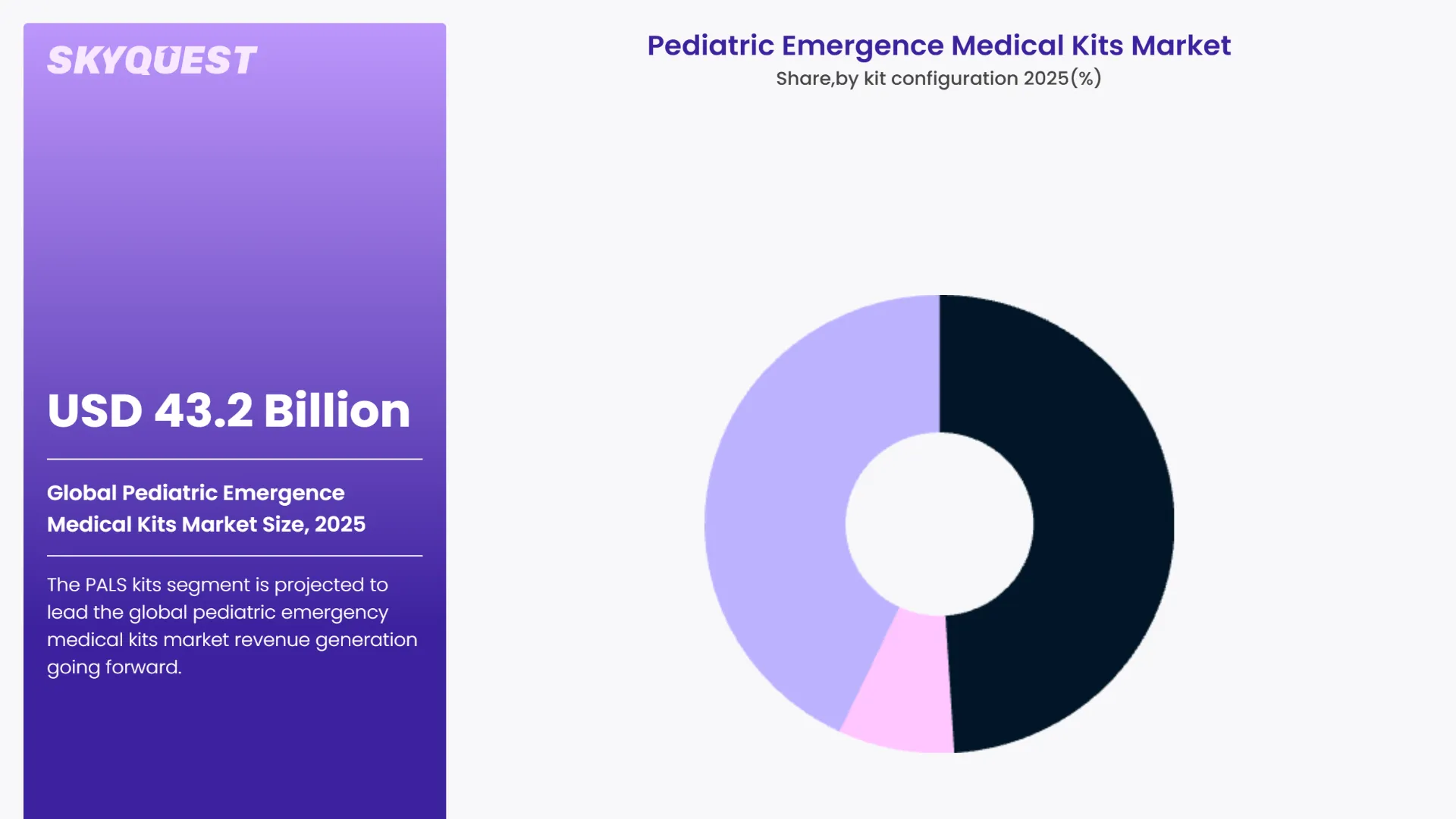
The PALS kits segment is projected to lead the global pediatric emergency medical kits market revenue generation going forward. Configuration of these kits to meet comprehensive pediatric resuscitation protocols, supplying clinicians with the range of airway, vascular and monitoring tools is helping this segment hold sway over others. Their correlation with sophisticated life support training, standard content, and familiarity with clinicians explains their preferred acquisition and readiness for use in emergencies, which makes them the basic component of pediatric emergency medical kits procurement.
However, basic first aid/school emergency kits are the fastest growing segment as per this pediatric emergency medical kits industry analysis. Efforts towards preparedness and the implementation of health education in schools enhance the use of easy-to-carry and handy kits. Ease of use for people who are not medical professionals is what helps promote the procurement process through distribution outlets and innovation among manufacturers.
The airway management segment is slated to account for the highest global pediatric emergency medical kits market share in the future. Airway control is the most critical intervention in pediatric emergencies, requiring specialized pediatric devices and clinicians’ rapid access to size specific equipment, which cements the dominance of this segment. The necessity for reliable and developmentally appropriate apparatus like intubation tubes, laryngoscopes, and other ancillary materials, as well as the emphasis placed on training and regulation concerning airway management, makes it inevitable to include airway alternatives in the kit during resuscitation, hence making airway kit purchase necessary.
Nevertheless, vascular access is the fastest-growing segment due to technological advancements in intraosseous devices and ultrasound-guided devices, which make accessing blood vessels easier in emergency situations involving children. Improvements in device ergonomics and training have facilitated their acceptance among emergency personnel and institutions, prompting vendors to manufacture portable vascular kits.
To get detailed segments analysis, Request a Free Sample Report
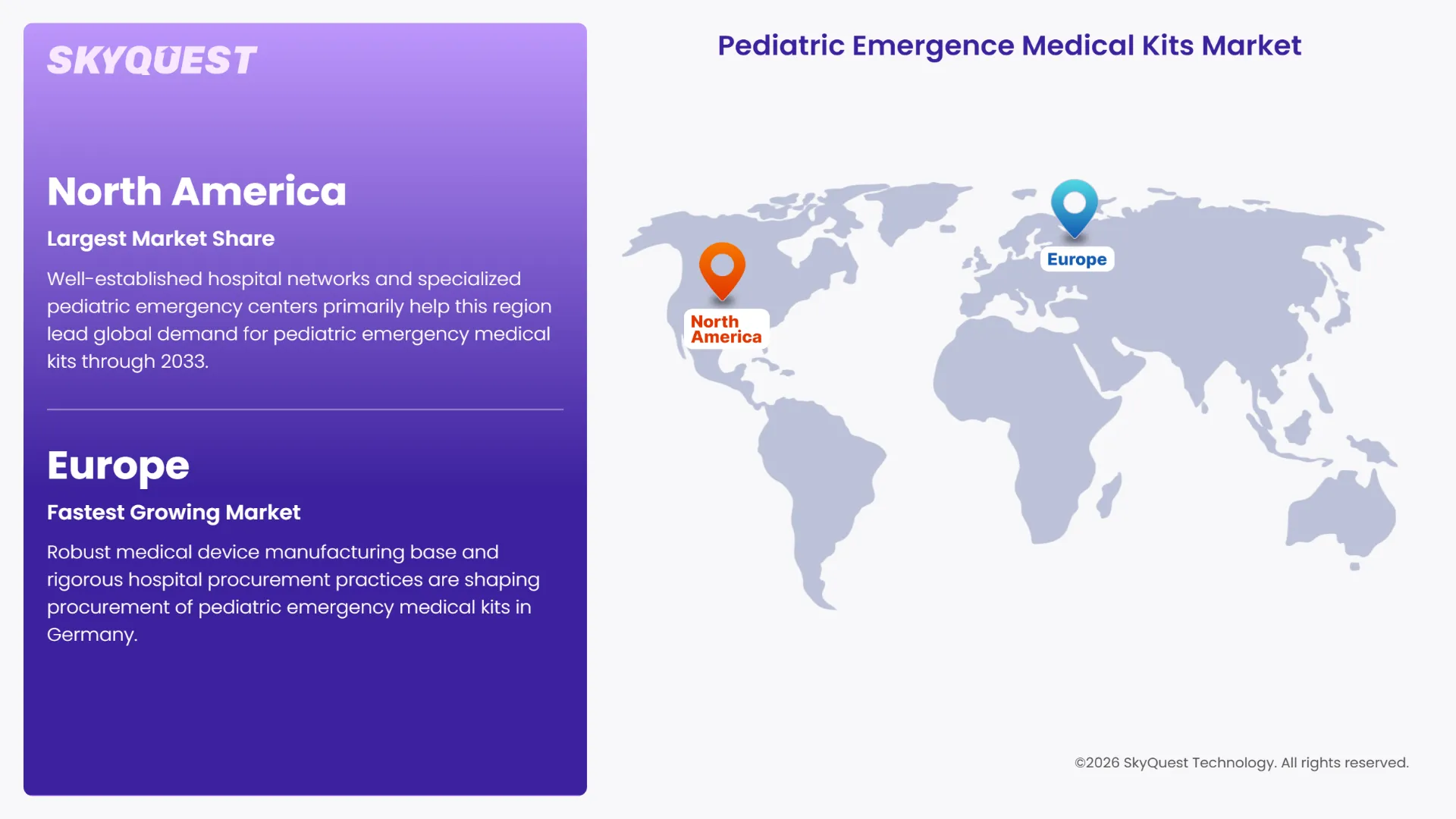
Well-established hospital networks and specialized pediatric emergency centers primarily help this region lead global demand for pediatric emergency medical kits through 2033. Sophisticated procurement processes and active payer engagement enable hospitals to increase their adoption of new products. Regulatory systems and post-market surveillance systems also facilitate iterative improvements to products and help build clinician confidence in their use. Finally, the sufficient distribution and logistics infrastructure across a wide variety of care settings allows for the fast availability of product throughout the healthcare continuum. Collaboration of the medical device industry with academic institutions and professional organizations creates standardization in the contents and protocols of kits, giving hospitals confidence in their use due to the demonstrated clinical benefits and operational integration into existing procedures.
High clinical expectations, centralized procurement in large health systems, and extensive simulation-based training programs shape sales of pediatric emergency medical kits in the United States. Safety features, ability to integrate with clinical workflow processes, and feedback from post-market performance help in gaining acceptance and evolving the design of the kit further. Top clinical companies and specialty organizations have an impact on kit design and adoption, while multiple layers of distribution systems enable easier access to pediatric and general emergency rooms.
Publicly-funded health systems and regional procurement mechanisms are augmenting adoption of pediatric emergency medical kits in Canada. Cooperation between educational institutions and emergency medicine groups can assist with pilot studies and the implementation of guidelines. An emphasis on service delivery in rural or remote settings leads to a focus on portability and completeness of the information provided, whereas the province’s health agencies look at the usefulness of the guidelines and their economic impact.
Emphasis on enhancing pediatric emergency preparedness, combined with a vibrant medtech industry, shapes the demand for pediatric emergency medical kits in Europe. A robust and experienced manufacturing base exists in many of the European countries with developed medical device clusters, ensuring that PEP kits will be produced and available, and introducing new innovations. National health systems and reimbursement frameworks are increasingly recognizing PEP kits as a value-added, readily deployable solution that reduces variability in emergency response. Multicenter clinical evaluations and cross-border collaborations are enabling the development of clinical evidence, while targeted procurement policies, pilot program implementation in tertiary care centers for paediatrics, and training for local markets are all supporting market entry in multi-lingual healthcare systems.
Robust medical device manufacturing base and rigorous hospital procurement practices are shaping procurement of pediatric emergency medical kits in Germany. Regulatory compliance and safety assessment over time ensure clinician trust and institutional acceptance. Specific pediatric hospitals, along with integrated systems that work in conjunction with one another, foster demand for such emergency kits, while strong interaction between industry and clinical research organizations contributes to the verification of products.
Centralized purchasing frameworks and clinical leadership that facilitates rapid piloting and scale up of standardized kits shape market growth in the United Kingdom. High involvement with professional organizations and simulation centers speeds up the acceptance by healthcare professionals, while supply channels ensure proper implementation. National programs promoting better outcomes for children in emergencies promote the adoption of technologies that simplify the process.
Focused investments in specialty pediatric centers and collaborative initiatives with university hospitals are shaping demand for pediatric emergency medical kits in France. Supplier-clinician collaboration at local levels ensures customization for local language and clinical practice patterns, allowing slow growth based on successful pilots. Procurement practices in these regional markets and prioritization of clinical quality ensure that only those EMKs which prove safe and efficient are selectively acquired.
Industrial capability, regulatory modernization, and targeted clinical partnerships are forecasted to shape pediatric emergency medical kits demand in Asia Pacific. Regulatory agencies in the Asia Pacific have developed clear pathways for companies to enter the market and adopt international standards. Rise in healthcare investments for modernizing urban hospitals is contributing to the demand for standardized emergency solutions across health systems. Strategic collaborations between multinational companies and local distributors enhance the process of sharing knowledge, conducting clinical training, and gathering real-world data. Scalable and flexible kits with digital technology and simulation-based training will facilitate fast deployment of emergency solutions. Government initiatives designed to strengthen pediatric emergency services will continue to support the growth of the MedTech market across Asia Pacific in the long run.
The rapid acceptance of advanced clinical technology, high-quality requirements, and a well-connected hospital network have led to the increasing use of emergency medical kits for children in Japan. Training at the institutional level, integration of the kits into the hospital system, and strict regulation have ensured that they are gradually adopted in specialized hospitals. Collaboration between local manufacturers and clinical institutions has made it possible to produce very effective kits.
Agile medtech industry and strong manufacturing ecosystem are shaping sales of pediatric emergency medical kits in South Korea. Hospitals with existing emergency management frameworks incorporate standardized kits, while export-oriented strategies ensure regional dissemination of validated products. Collaboration between the supply chain, clinical trial networks, and government-backed innovation initiatives facilitates the piloting and validation of the products.
To know more about the market opportunities by region and country, click here to
Buy The Complete Report
Growing Pediatric Emergency Awareness
The increased knowledge of healthcare providers, emergency personnel, and care givers on the unique physiological requirements of children has been responsible for an increased need for pediatric emergency kits among such facilities. Educational programs, clinical guidelines, and professional advocacy has stressed the importance of adequate size and dose, which has led many facilities to consider investing in child-specific supplies. This increased emphasis on preparedness will improve the feeling of safety for both the patients and healthcare providers, which is enough motivation for hospitals to invest in standardized pediatric kits.
Technological Advancements In Kits
Technological improvements regarding packaging, materials, and built-in monitoring devices have enhanced the performance and usability of these emergency medical kits designed for children, thus becoming more appealing to buyers. With the help of modular packaging, age-specific products, and clear labels, the preparation process is shortened and mistakes are minimized, while innovations in terms of light and robust materials improve their portability during prehospital settings. Such technology advances have increased the readiness of the health practitioners, resulting in replacing general-purpose supplies with pediatric emergency medical kits.
High Cost Of Specialized Kits
The higher cost of acquisition and maintenance of specialized pediatric emergency kits might act as a deterrent in their use, especially in institutions and areas where funds are limited and other needs have priority. The high initial costs of age-specific supplies, storage, and restocking can prompt decision-makers to lean toward generic inventory that offers some level of flexibility from a financial perspective. Financial constraints that prioritize cost-cutting measures over strategic investments can result in delays in purchasing or establishing standards for pediatric kits.
Regulatory Approval Complexities
Uncertainties generated by complex and diverse regulatory guidelines for pediatric emergency devices have the potential to be a barrier to product development. In addition, companies have different approaches for regulatory compliance and must adhere to unique safety considerations as well as different documentation protocols. As a result, the process becomes lengthy and complicated. Some firms may find it difficult to develop devices specifically designed for children, or consider entering several countries at once because of the diversity of regulations.
Request Free Customization of this report to help us to meet your business objectives.
The competitive landscape is consolidating as device-focused startups, telehealth operators and payors pursue M and A, strategic partnerships and bundled hardware software innovation to control pediatric rescue workflows. Notable moves include SemPresto acquiring a mobile autoinjector platform and telehealth payor deals that distribute at home pediatric diagnostic kits. Competition is driven by integrated product offering and payer enabled distribution channels.
SkyQuest’s ABIRAW (Advanced Business Intelligence, Research & Analysis Wing) is our Business Information Services team that Collects, Collates, Correlates, and Analyses the Data collected by means of Primary Exploratory Research backed by robust Secondary Desk research.
As per SkyQuest analysis, increased emphasis on specialized pediatric emergency care and increasing incidence of pediatric emergencies are anticipated to drive the demand for pediatric emergency medical kits going forward. However, high costs of advanced kits, lack of awareness and training in certain regions, and regulatory compliance challenges are slated to slow down the adoption of pediatric emergency medical kits in the future. North America is slated to spearhead the demand for pediatric emergency medical kits owing to well-established healthcare infrastructure, strong adoption of emergency care protocols, and presence of leading healthcare providers. Advancements in AI-driven decision support, development of smart and sensor-enabled kits, and integration of automated dosing and inventory management systems are anticipated to be key trends driving the pediatric emergency medical kits market through 2033.
| Report Metric | Details |
|---|---|
| Market size value in 2024 | USD 40.0 Billion |
| Market size value in 2033 | USD 79.96 Billion |
| Growth Rate | 8.0% |
| Base year | 2024 |
| Forecast period | 2026-2033 |
| Forecast Unit (Value) | USD Billion |
| Segments covered |
|
| Regions covered | North America (US, Canada), Europe (Germany, France, United Kingdom, Italy, Spain, Rest of Europe), Asia Pacific (China, India, Japan, Rest of Asia-Pacific), Latin America (Brazil, Rest of Latin America), Middle East & Africa (South Africa, GCC Countries, Rest of MEA) |
| Companies covered |
|
| Customization scope | Free report customization with purchase. Customization includes:-
|
To get a free trial access to our platform which is a one stop solution for all your data requirements for quicker decision making. This platform allows you to compare markets, competitors who are prominent in the market, and mega trends that are influencing the dynamics in the market. Also, get access to detailed SkyQuest exclusive matrix.
Table Of Content
Executive Summary
Market overview
Parent Market Analysis
Market overview
Market size
KEY MARKET INSIGHTS
COVID IMPACT
MARKET DYNAMICS & OUTLOOK
Market Size by Region
KEY COMPANY PROFILES
Methodology
For the Pediatric Emergence Medical Kits Market, our research methodology involved a mixture of primary and secondary data sources. Key steps involved in the research process are listed below:
1. Information Procurement: This stage involved the procurement of Market data or related information via primary and secondary sources. The various secondary sources used included various company websites, annual reports, trade databases, and paid databases such as Hoover's, Bloomberg Business, Factiva, and Avention. Our team did 45 primary interactions Globally which included several stakeholders such as manufacturers, customers, key opinion leaders, etc. Overall, information procurement was one of the most extensive stages in our research process.
2. Information Analysis: This step involved triangulation of data through bottom-up and top-down approaches to estimate and validate the total size and future estimate of the Pediatric Emergence Medical Kits Market.
3. Report Formulation: The final step entailed the placement of data points in appropriate Market spaces in an attempt to deduce viable conclusions.
4. Validation & Publishing: Validation is the most important step in the process. Validation & re-validation via an intricately designed process helped us finalize data points to be used for final calculations. The final Market estimates and forecasts were then aligned and sent to our panel of industry experts for validation of data. Once the validation was done the report was sent to our Quality Assurance team to ensure adherence to style guides, consistency & design.
Analyst Support
Customization Options
With the given market data, our dedicated team of analysts can offer you the following customization options are available for the Pediatric Emergence Medical Kits Market:
Product Analysis: Product matrix, which offers a detailed comparison of the product portfolio of companies.
Regional Analysis: Further analysis of the Pediatric Emergence Medical Kits Market for additional countries.
Competitive Analysis: Detailed analysis and profiling of additional Market players & comparative analysis of competitive products.
Go to Market Strategy: Find the high-growth channels to invest your marketing efforts and increase your customer base.
Innovation Mapping: Identify racial solutions and innovation, connected to deep ecosystems of innovators, start-ups, academics, and strategic partners.
Category Intelligence: Customized intelligence that is relevant to their supply Markets will enable them to make smarter sourcing decisions and improve their category management.
Public Company Transcript Analysis: To improve the investment performance by generating new alpha and making better-informed decisions.
Social Media Listening: To analyze the conversations and trends happening not just around your brand, but around your industry as a whole, and use those insights to make better Marketing decisions.
REQUEST FOR SAMPLE
 REQUEST FREE CUSTOMIZATION
Global Pediatric Emergence Medical Kits Market size was valued at USD 40.0 Billion in 2024 and is poised to grow from USD 43.2 Billion in 2025 to USD 79.96 Billion by 2033, growing at a CAGR of 8.0% during the forecast period (2026-2033).
The competitive landscape is consolidating as device-focused startups, telehealth operators and payors pursue M and A, strategic partnerships and bundled hardware software innovation to control pediatric rescue workflows. Notable moves include SemPresto acquiring a mobile autoinjector platform and telehealth payor deals that distribute at home pediatric diagnostic kits. Competition is driven by integrated product offering and payer enabled distribution channels. 'Cardinal Health', 'Johnson & Johnson', 'Siemens Healthineers', 'Abbott Laboratories', 'Medtronic plc', 'Baxter International', 'Boston Scientific', 'Zimmer Biomet', 'Olympus Corp', 'GE HealthCare', 'Philips Healthcare', 'Becton Dickinson (BD)', 'Smith & Nephew', 'Stryker', 'Terumo Corp', 'Fresenius SE', 'B. Braun', 'ResMed', 'Teleflex Inc.', 'Draegerwerk AG'
Greater awareness among clinicians, emergency responders, and caregivers about the distinct physiological needs of children has encouraged procurement of pediatric-specific emergency kits in healthcare and prehospital settings. Education initiatives, clinical guidelines, and advocacy by professional bodies emphasize appropriate sizing, medication dosing, and equipment selection, prompting institutions to prioritize child-focused solutions. This focus on tailored readiness improves perceived patient safety and staff confidence, motivating hospitals and emergency services to adopt standardized pediatric kits to ensure consistent, age-appropriate care during critical situations.
𝐓𝐚𝐢𝐥𝐨𝐫𝐞𝐝 𝐏𝐞𝐝𝐢𝐚𝐭𝐫𝐢𝐜 𝐊𝐢𝐭 𝐃𝐞𝐦𝐚𝐧𝐝: Manufacturers are increasingly focusing on age-specific formulations, scaled instrument sizes and modular configurations that reflect diverse pediatric physiologies and care settings. Clinicians and procurement teams favor kits that reduce preparation time, lower risk of dosing errors and integrate seamlessly into emergency workflows for neonates to adolescents. This demand drives design collaboration with pediatric specialists and caregivers, encouraging adaptable inventories and materials. Emphasis on ergonomics, clear labeling and family-centered components enhances usability and acceptance across hospitals, ambulatory centers and community responders.
North America Dominate the Global Pediatric Emergence Medical Kits Market.
Advanced Life Support (PALS) Kits currently hold the largest market share due to their comprehensive emergency care capabilities and widespread adoption in hospitals and emergency medical services.
Basic First Aid/School Emergency Kits are projected to be the fastest-growing segment, supported by increasing awareness of pediatric emergency preparedness in schools and community healthcare settings.
AI is improving emergency kit functionality through automated dosage calculations, decision-support systems, weight estimation tools, and smart inventory management, helping reduce treatment errors and improve response times.


Want to customize this report? This report can be personalized according to your needs. Our analysts and industry experts will work directly with you to understand your requirements and provide you with customized data in a short amount of time. We offer $1000 worth of FREE customization at the time of purchase.
Feedback From Our Clients


 USA (+1) 351-333-4748

