Hearing Aid Market
Report ID: SQSG35A2005
Report ID: SQSG35A2005
[email protected]
USA +1 351-333-4748
Report ID:
SQSG35A2005 |
Region:
Global |
Published Date: December, 2025
Pages:
191
|Tables:
169
|Figures:
79


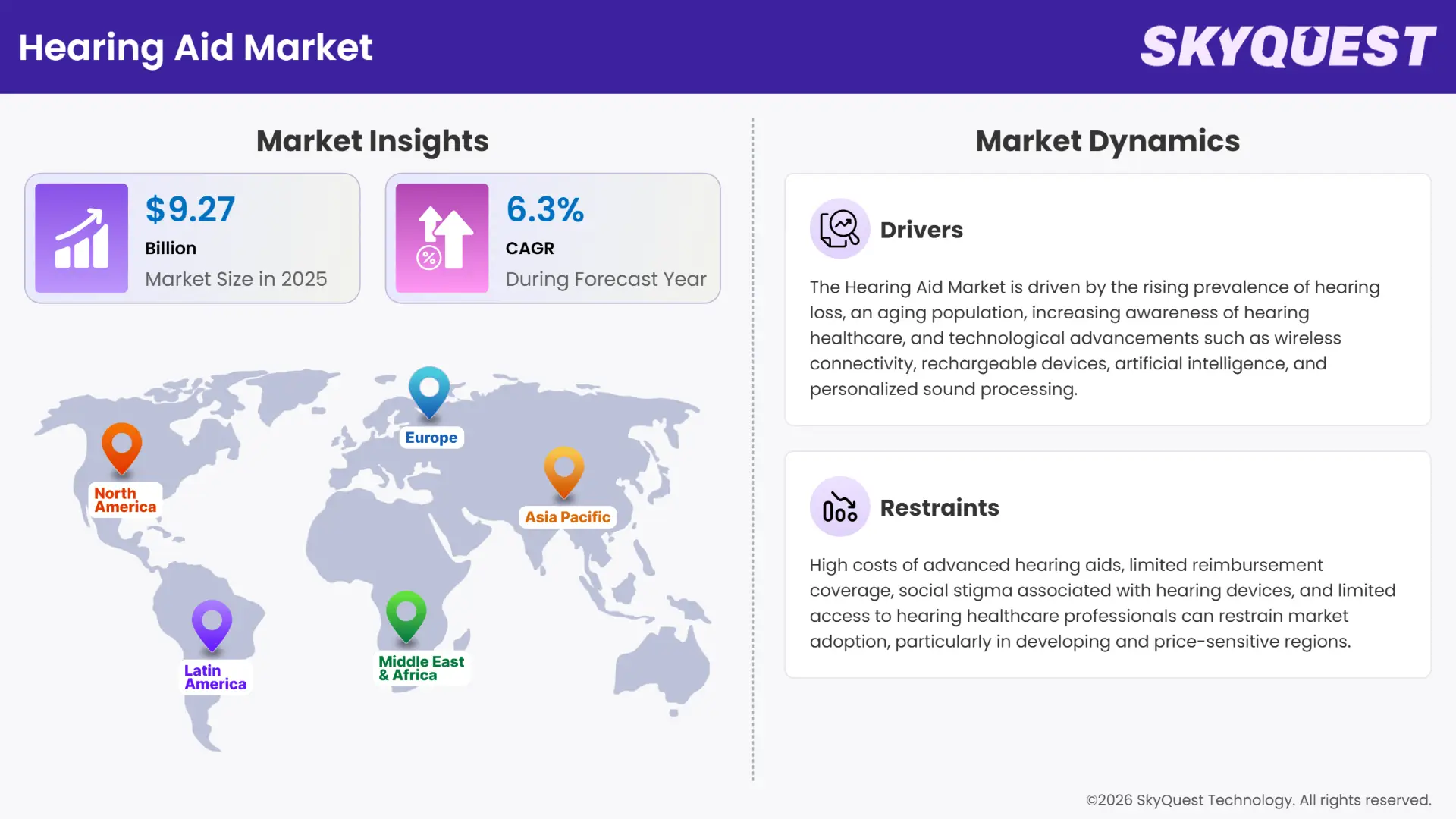
Global Hearing Aid Market size was valued at USD 8.72 Billion in 2024 and is poised to grow from USD 9.27 Billion in 2025 to USD 15.11 Billion by 2033, growing at a CAGR of 6.3% during the forecast period (2026–2033).
Key Takeaways: Market Trends & Insights
The global hearing aid market continues to benefit from steady growth due to the steadily increasing prevalence of hearing loss, especially in the aging population. This persistency is promoted by increasing life expectancy that brings with it an increasing incidence of age-related hearing disorders. Demand for hearing health assistance continues to sustain itself due to the increasing supply of options. Concurrent technology advancement, such as AI technology, Bluetooth functionality, and smaller, recharge- or disposable batteries make first-use incorporation, perceived value greater and therefore a better user experience.
In addition to this, growing recognition of the consequences of untreated hearing loss and cognitive health continues to provide channels for early diagnosis and intervention. As this is further supported by government utilities, third-party payment are typical in many developed markets, and the increasing use of e-commerce the prospects of the market a more favorable.
Despite this growth, numerous challenges face the market's full potential. A prominent challenge is the high cost of devices, which is still a significant barrier to use, especially in emerging markets where healthcare funding is limited and reimbursement structures for hearing aids are sometimes non-existent. Social stigma associated with the general use of hearing aids poses another continued challenge for uptake, particularly amongst younger users/societal groups.
Accessibility issues, such as having too few qualified audiologists and a lack of availability in rural regions, add to the complexity of the wider uptake of hearing aids. While outdated regulations restricting access to hearing aids through prescription were recently relaxed (OTC approvals took place in markets like the U.S.), allowing easier access to hearing aids and lowering non-prescription access barriers for companies, there are also resultant concerns over quality differences and standardization.
Despite obstacles on the horizon, the hearing aid industry is primed for sustained growth due to a focus on innovation and a greater global awareness of hearing health. The field will develop more accessible and inclusive solutions without eliminating concern for price and enhancing accessibility, through more digitized experiences for users.
How is AI enhancing speech clarity and real-time adaptation in hearing aids?
Artificial Intelligence is advancing hearing aids through real sound processing that automatically adjusts to different listening situations. Hearing aids that feature AI driven algorithms can identify speech from background noise so that conversation is clearer, even in challenging environments such as restaurants or busy streets. AI driven hearing aids also remember user preferences and identify the acoustic patterns that facilitate understanding. The clarity and comfort level is improved with automatic adjustment, which means less listening effort and better hearing without needing to think about manual adjustments.
A recent landmark moment in this space occurred in August 2024 when Sonova launched the Audéo Sphere Infinio: the first hearing aid that has a dedicated AI chip that was specifically designed for real-time speech-from-noise separation. This device embeds high-level AI processing into the hardware, so some processes can be carried out more quickly, with less latency, and do not depend on cloud services. By incorporating AI functionality on the device, manufacturers are increasing the expectations for smarter, more responsive hearing aids, and are more adaptable to the dynamic conditions of the real world.
How is IoT and Bluetooth Low Energy integration transforming connectivity in hearing aids?
The convergence of Internet of Things (IOT) technologies and Bluetooth Low Energy (BLE) has enabled hearing aids to be significantly more connected and user-friendly. Beyond the features of a traditional hearing aid, BLE can directly stream phone calls, music, and audio with minimal battery drain. The connectivity BLE provides indicates that hearing aids are smart devices that can connect with all smartphones and tablets as well as other digital devices. There are also new broadcast audio standards that allow hearing aids to connect house to public audio without interference while in public facilities like theaters and airports as one example, essentially improving access to important audio in everyday life.
A recent user-level milestone took place when Google rolled out native LE Audio support in Android devices, such as the Galaxy S25 and Pixel 9. With the rollout of LE Audio they included operating system-level hearing aid controls and low-latency binaural audio streaming for popular brands such as GN ReSound and Oticon Intent. All in all this is a massive leap closer to the ultimate goal of integrating hearing aids into the overall smart ecosystem with seamless connectivity and better overall usability for users through their mobile devices.
To get more insights on this market click here to Request a Free Sample Report
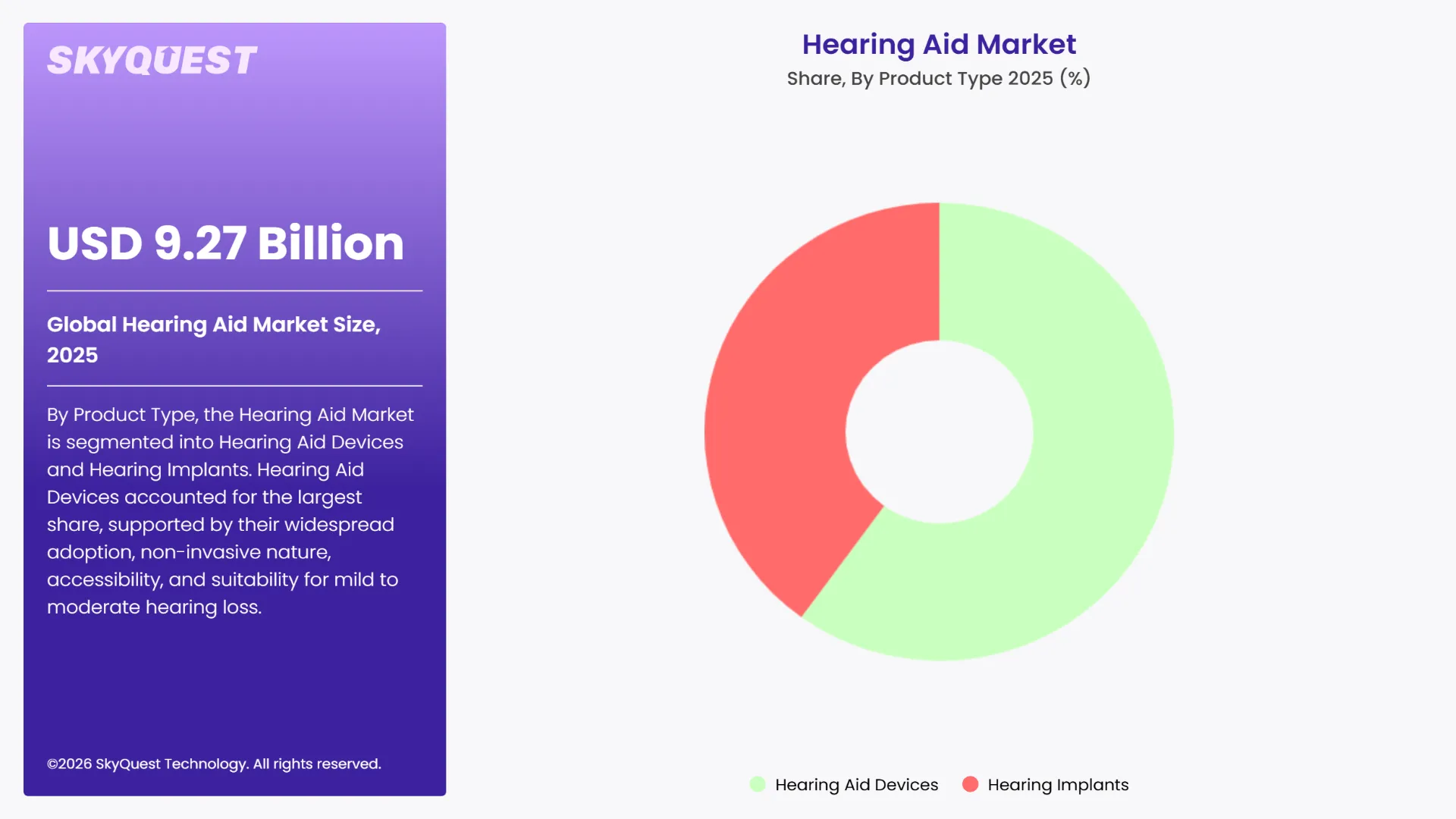
Global Hearing Aid Market is segmented by Product Type, Technology, Patient Type, Indication, Price Range, Distribution Channel and region. Based on Product Type, the market is segmented into Hearing Aid Devices and Hearing Implants. Based on Technology, the market is segmented into Analog Hearing Aids and Digital Hearing Aids. Based on Patient Type, the market is segmented into Pediatrics and Adults.
Based on Indication, the market is segmented into Sensorineural Hearing Loss, Conductive Hearing Loss, Mixed Hearing Loss and Others. Based on Price Range, the market is segmented into Economical, Medium and Premium. Based on Distribution Channel, the market is segmented into Online, Retail Stores and Others. Based on region, the market is segmented into North America, Europe, Asia Pacific, Latin America and Middle East & Africa.
In the hearing aids market, hearing aids predominate as a result of their wide and increasing adoption by mostly seniors with mild to moderate hearing loss. A combination of their non-invasiveness, ease of access, by-products of extensive market research on available models and price ranges, and rapidly advancing technology in size reductions have buoyed their demand. Additionally, a growing awareness of hearing loss, the involvement of supportive health policy initiatives, and expanding accessibility through both retail (i.e. audiologists) and e-commerce channels to purchase hearing aids contribute to their continued dominance in the market.
Hearing implants are growing in prominence at the most rapid pace due to increasing cases of profound hearing loss where a typical hearing aid is ineffective. Advancements in cochlear implants, bone-anchored implants and surgical procedures have made them a reality. Greater coverage by insurance companies, and knowledge of their suitability, especially with children and adults with considerable damage to the auditory nerve, are contributing to the increased number of implants.
Digital hearing aids are the leading segment of hearing aids, largely due to the development of superior sound processing modes that allow for improved speech comprehension and noise reduction. Digital has the advantage of having adjustable programs, Bluetooth connectivity, and smartphone connectivity that enhances the overall user experience. These features are attractive to technology-oriented users, particularly younger users who are new to the category. Extensive R&D with technology and AI-based product launches are drawing consumers from a diverse base of ages and disposable income years toward digital hearing aids, as this is the primary technology segment.
Analog hearing aids are experiencing rapid growth, especially in developing markets, due to their low-price and easy-to-use features. They are attractive to older adults, and first-time users, struggling with basic amplification and not needing diabetic blood pressure-type controls. The reliability of these devices and low-cost of maintenance also makes analog devices appealing in rural or low-resource situations. Coupled with other government and NGO programs to improve hearing health in under-serviced areas, there is a rise in analog products.
To get detailed segments analysis, Request a Free Sample Report
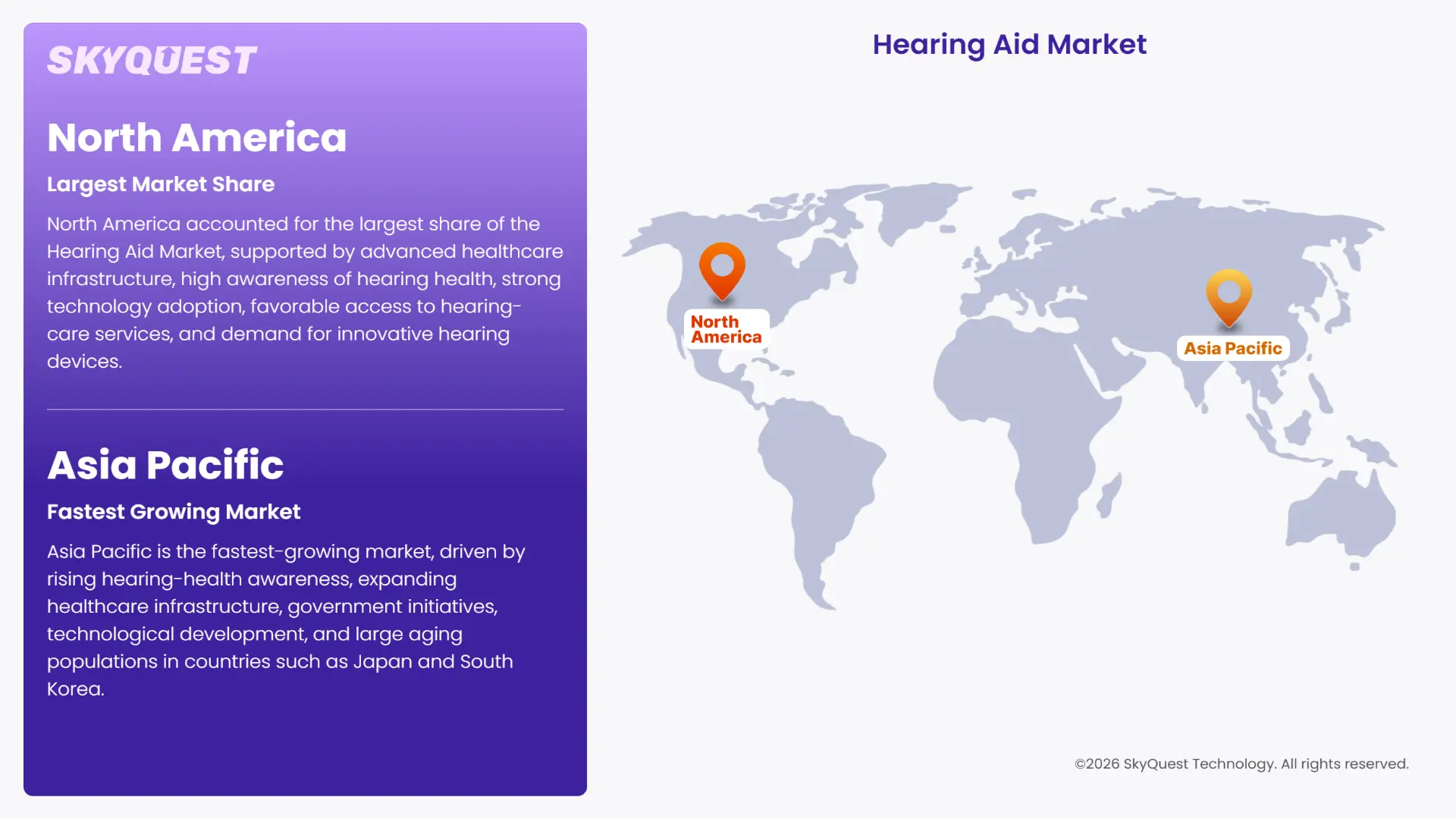
North America keeps dominating the hearing aids market through superior healthcare infrastructures, high awareness of hearing health, and high technology uptake. Governments in North America are advancing initiatives supporting the hearing impaired to get the latest technologies, and the region has high disposable income and access to premium hearing aids. The growing prevalence of hearing loss and an aging population significantly expand the market in both the United States and Canada through North America. Other factors further expanding the market are increased product innovation and the growing number of hearing aids with AI features and Bluetooth capabilities.
U.S. Hearing Aid Market
The U.S. remains the leading market in North America due to strong healthcare systems and investment in R&D. There are new developments with the FDA approving over-the-counter (OTC) hearing aids that allow consumers more access and, as a result, more affordability in the marketplace. Key market players are focusing on a direct-to-consumer model, plus, tele-audiology services have been expanded since the pandemic, allowing consumers to access remote hearing care.
Canada Hearing Aid Market
The government's reimbursement programs, such as coverage for hearing aids in Ontario, support the adoption of hearing aids in Canada and make hearing devices more accessible. The combination of an aging population and an increasing awareness of hearing health by the public is also contributing to the demand. Recently, the market has seen new products from global brands focused on light-weight, rechargeable behind-the-ear devices with improved connectivity options for those who consider themselves early adapters and require new hearing aids with the latest technology.
Growth in the hearing aid market is rapidly expanding in Europe due to an increase in the aging population, improved reimbursement protocols, and an increase in public health recognition. Both innovations in miniaturized hearing aids and smart hearing aids with greater digital penetration are accelerating market penetration through the area. Collaboration between health care providers and technology companies is further increasing availability throughout national governments' geographical reach associated with hearing health. With emphasis on early diagnosis and health care affordability through government subsidies to support hearing health, converging trends will further accelerate increased utilisation rates in rural areas.
Germany Hearing Aid Market
Germany has the largest share of the European hearing aid market based on wide-ranging reimbursement types through statutory health insurance that could lower their price. In recent years, Germany has embraced digital hearing aids with integrated AI features. Awareness campaigns from the government to increase awareness of hearing loss among seniors have also helped market growth.
France Hearing Aid Market
Public healthcare policies in France provide partial coverage of hearing aid costs, which supports the market growth. Recent initiatives like the 100% Santé plan, which offers fully reimbursed hearing aids to patients have greatly improved affordability in France, as a result the uptake of hearing aids has improved significantly. The focus on innovative and user-friendly devices will only assist in drawing more people into the market.
United Kingdom Hearing Aid Market
The UK market is advancing with NHS-funded hearing services and increasing customer demand for tailored hearing solutions. Services for tele-audiology have propagated across the country since the pandemic, improving accessibility. Recent market developments have included the launch of several new AI-based hearing devices, as well as a commitment to increase funding for hearing-related research.
Asia Pacific is becoming an important region of growth in the hearing aid market. You see the region is benefitting from rising awareness, growing healthcare infrastructure, and developing government initiatives Urbanization and development of technology, particularly in digital health, are important drivers of expansion in the market. At the same time, large older populations in countries like Japan and South Korea, are supporting demand for hearing aids. Furthermore, a growing willingness to pay for health technology is driving growth.
Japan Hearing Aid Market
Japan's rapidly aging population has created a high demand for competent hearing aids. Government policies and initiatives that encourage better care for hearing health also stimulate high demand in the market. Two significant trends have emerged regarding hearing aids in Japan: recent collaborations between various technology companies and various health care setups to develop new hearing aids with next-generation, enhanced connectivity. The Japanese government is also spending their efforts to create awareness campaigns to prevent hearing loss, and also encourage early access and diagnoses respectively.
South Korea Hearing Aid Market
Due to a well-developed technology ecosystem in South Korea and its advanced usage of smartphones, the hearing aid market is thriving. The introduction of smart hearing aids that integrate easily with mobile phones as a hybrid experience is evidence of the advancement in hearing aids. Better incentives through government subsidies, a healthy growth of audiology clinics, and the ongoing investment towards providing better accessibility and hearing care services in the country will also continue to improve adoption.
India Hearing Aid Market
The growth potential of India’s hearing aid market continues to gain momentum with greater awareness of healthcare and government initiatives to enhance rural access to health care. New initiatives point towards affordable hearing aids and increased tele-audiology services to reach underserved communities. The intention is to address the many individuals that suffer from untreated hearing loss and consequently expand early intervention and treatment opportunities.
To know more about the market opportunities by region and country, click here to
Buy The Complete Report
Aging Population and Rising Prevalence of Hearing Loss
Technological Advancements and Integration with Consumer Electronics
High Out‑of‑Pocket Expenses & Limited Public Coverage
Regulatory Complexity & IP Concentration
Request Free Customization of this report to help us to meet your business objectives.
To stay competitive in the hearing aid market, companies are prioritizing innovation in miniaturization, sound quality, and wireless connectivity to meet increasing consumer expectations. Integration of AI and machine learning enhances personalized hearing experiences, while rechargeable and water-resistant designs improve usability. Collaborations between hearing aid manufacturers, audiologists, and technology firms drive development of smart, app-enabled devices with seamless smartphone compatibility. Additionally, expanding direct-to-consumer models and tele-audiology services increase accessibility and convenience. Emphasis on affordability and customizable solutions helps companies address diverse demographic needs. These strategies enable market players to capitalize on growing demand and maintain a strong foothold in the evolving hearing aid industry.
Emerging Trends Shaping the Future of Hearing Aid
SkyQuest’s ABIRAW (Advanced Business Intelligence, Research & Analysis Wing) is our Business Information Services team that Collects, Collates, Correlates, and Analyses the Data collected using Primary Exploratory Research backed by robust Secondary Desk research.
As per SkyQuest analysis, growing geriatric population and rising awareness regarding hearing loss are projected to boost sales of hearing aids over the coming years. However, social stigma regarding hearing aid use and issues in maintenance are estimated to slow down the global hearing aid demand outlook. Rapidly increasing senescent population is projected to help Asia Pacific become the fastest expanding regional market for hearing aid companies. Development of smart and discreet hearing aids will pay off big time for all market players in the long run.
| Report Metric | Details |
|---|---|
| Market size value in 2024 | USD 8.72 Billion |
| Market size value in 2033 | USD 15.11 Billion |
| Growth Rate | 6.3% |
| Base year | 2024 |
| Forecast period | 2026–2033 |
| Forecast Unit (Value) | USD Billion |
| Segments covered |
|
| Regions covered | North America (US, Canada), Europe (Germany, France, United Kingdom, Italy, Spain, Rest of Europe), Asia Pacific (China, India, Japan, Rest of Asia-Pacific), Latin America (Brazil, Rest of Latin America), Middle East & Africa (South Africa, GCC Countries, Rest of MEA) |
| Companies covered |
|
| Customization scope | Free report customization with purchase. Customization includes:-
|
To get a free trial access to our platform which is a one stop solution for all your data requirements for quicker decision making. This platform allows you to compare markets, competitors who are prominent in the market, and mega trends that are influencing the dynamics in the market. Also, get access to detailed SkyQuest exclusive matrix.
Table Of Content
Executive Summary
Market overview
Parent Market Analysis
Market overview
Market size
KEY MARKET INSIGHTS
COVID IMPACT
MARKET DYNAMICS & OUTLOOK
Market Size by Region
KEY COMPANY PROFILES
Methodology
For the Hearing Aid Market, our research methodology involved a mixture of primary and secondary data sources. Key steps involved in the research process are listed below:
1. Information Procurement: This stage involved the procurement of Market data or related information via primary and secondary sources. The various secondary sources used included various company websites, annual reports, trade databases, and paid databases such as Hoover's, Bloomberg Business, Factiva, and Avention. Our team did 45 primary interactions Globally which included several stakeholders such as manufacturers, customers, key opinion leaders, etc. Overall, information procurement was one of the most extensive stages in our research process.
2. Information Analysis: This step involved triangulation of data through bottom-up and top-down approaches to estimate and validate the total size and future estimate of the Hearing Aid Market.
3. Report Formulation: The final step entailed the placement of data points in appropriate Market spaces in an attempt to deduce viable conclusions.
4. Validation & Publishing: Validation is the most important step in the process. Validation & re-validation via an intricately designed process helped us finalize data points to be used for final calculations. The final Market estimates and forecasts were then aligned and sent to our panel of industry experts for validation of data. Once the validation was done the report was sent to our Quality Assurance team to ensure adherence to style guides, consistency & design.
Analyst Support
Customization Options
With the given market data, our dedicated team of analysts can offer you the following customization options are available for the Hearing Aid Market:
Product Analysis: Product matrix, which offers a detailed comparison of the product portfolio of companies.
Regional Analysis: Further analysis of the Hearing Aid Market for additional countries.
Competitive Analysis: Detailed analysis and profiling of additional Market players & comparative analysis of competitive products.
Go to Market Strategy: Find the high-growth channels to invest your marketing efforts and increase your customer base.
Innovation Mapping: Identify racial solutions and innovation, connected to deep ecosystems of innovators, start-ups, academics, and strategic partners.
Category Intelligence: Customized intelligence that is relevant to their supply Markets will enable them to make smarter sourcing decisions and improve their category management.
Public Company Transcript Analysis: To improve the investment performance by generating new alpha and making better-informed decisions.
Social Media Listening: To analyze the conversations and trends happening not just around your brand, but around your industry as a whole, and use those insights to make better Marketing decisions.
REQUEST FOR SAMPLE
 REQUEST FREE CUSTOMIZATION
Global Hearing Aid Market size was valued at USD 8.72 Billion in 2024 and is poised to grow from USD 9.27 Billion in 2025 to USD 15.11 Billion by 2033, growing at a CAGR of 6.3% during the forecast period (2026–2033).
Key vendors in the Hearing Aid Market include Sonova, Demant A/S, GN Store Nord A/S, WS Audiology, Starkey Hearing Technologies, MED-EL, Cochlear Ltd., RION Co., Ltd., Eargo, Inc., and Amplifon.
The key driver of the Hearing Aid Market is the aging global population and rising prevalence of hearing loss, increasing demand for hearing solutions among older adults. Growing awareness of hearing health and technological advancements further support market expansion.
The key trend in the Hearing Aid Market is the increasing adoption of smart and technologically advanced hearing aids, featuring Bluetooth connectivity, smartphone integration, artificial intelligence, rechargeable batteries, and personalized sound processing for improved user experience.
North America accounted for the largest share of the Hearing Aid Market, supported by advanced healthcare infrastructure, high awareness of hearing health, strong technology adoption, increasing hearing-loss prevalence, and access to premium hearing aids.


Want to customize this report? This report can be personalized according to your needs. Our analysts and industry experts will work directly with you to understand your requirements and provide you with customized data in a short amount of time. We offer $1000 worth of FREE customization at the time of purchase.
Feedback From Our Clients


 USA (+1) 351-333-4748

