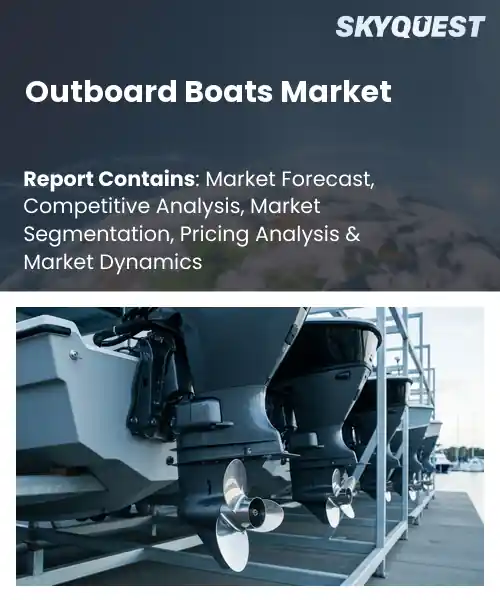
Outboard Boats Market
Report ID: SQMIG25J2201
Report ID: SQMIG25J2201
[email protected]
USA +1 351-333-4748
Report ID:
SQMIG25J2201 |
Region:
Global |
Published Date: June, 2026
Pages:
157
|Tables:
94
|Figures:
76


Global Outboard Boats Market size was valued at USD 36.5 Billion in 2024 and is poised to grow from USD 38.43 Billion in 2025 to USD 58.1 Billion by 2033, growing at a CAGR of 5.3% during the forecast period (2026-2033).
Outboard boats, vessels propelled by externally mounted engines, have become central to recreational and commercial marine activities worldwide driven primarily by the pursuit of accessible, efficient water transport. In addition, the outboard motorboat market has seen tremendous advancements in technology since the introduction of carbureted two-stroke engines; technology has evolved to include modern four-stroke and electronic fuel injection engines. Important to note, continued advancements in outboards have resulted in fewer repairs and less fuel consumption, thereby greatly reducing total expenses associated with ownership and expanding the number of uses for outboard motors.
The main driving factor behind the expansion of the outboard motorboat market has been the increasing regulatory requirements regarding emissions; as well as, the fact that growing numbers of consumers prefer to use outboards that produce lower emissions than traditional outboards. California and Europe have implemented increasingly strict emissions laws, and as a result, manufacturers are working to develop electric and hybrid outboards. Additionally, electric and hybrid outboard motors provide lower cost to run than previously, create less noise compared to traditional engines, and are now suitable for use in eco-tourism or municipal transportation projects.
How is AI enhancing performance and efficiency in the outboard boats market?
Increased performance and productivity in the sailing boat market is achieved through an integration of on-board sensors and telematics with real-time engine control enabling adaptive engine tuning, predictive maintenance, efficient battery management and low-speed maneuverability using electric engines. Manufacturers and tier one suppliers are using predictive models based upon machine learning in conjunction with connected displays and analytic cloud resources to achieve lower fuel consumption, reduce wear and tear on components, and improve operator and passenger experience. Industry demand has shifted in favour of software upgrades to supporting existing operating systems or supporting mobile diagnostic tools as well as facilitating the integration of prop to helm systems. Various enhancements such as adaptive throttle systems to ease acceleration, and artificial intelligence systems for diagnostic trouble codes have been developed.
Mercury Marine has announced the release of a suite of products in February, 2026, including a suite of Boost/Adaptive Engine Calibration based upon connection diagnostic capability and opportunity to facilitate enhancements with connected unit access. By using this type of data-driven calibration and connectivity to facilitate upgrade capabilities, allows for utilising many of the technologies described above such as AI-based predictive maintenance and tuning, thus influencing market adoption based upon enhanced efficiency.
Market snapshot - (2026-2033)
Global Market Size
USD 36.5 Billion
Largest Segment
Gasoline Outboard
Fastest Growth
Electric Outboard
Growth Rate
5.3% CAGR
To get more insights on this market click here to Request a Free Sample Report
Global outboard boats market is segmented by engine type, boat type, application and region. Based on engine type, the market is segmented into Gasoline Outboard, Diesel Outboard, Electric Outboard, Hybrid Outboard and Others. Based on boat type, the market is segmented into Rigid Inflatable Boats, Pontoon Boats, Center Console Boats and Others. Based on application, the market is segmented into Personal Boat, Commercial Boat, Government Enforcement Boat and Others. Based on region, the market is segmented into North America, Europe, Asia Pacific, Latin America and Middle East & Africa.
Gasoline outboard segment dominates with large global outboard boats market share because established fueling infrastructure, widespread manufacturer support, and proven performance create the default choice for most operators in the outboard boats market. Built supply chains and service networks lower perceived ownership risk, encouraging continued sales across recreational and commercial buyers. Deep aftermarket ecosystems and familiar maintenance practices further entrench gasoline power as the primary operational backbone for current fleets.
As per global outboard boats market regional forecast, electric outboard segment is the most rapidly expanding segment to advances in battery energy density, motor efficiency, and quieter operation that appeal to recreational and environmentally conscious buyers. Growing regulatory encouragement and investment in charging solutions broaden practical use cases, spurring OEM innovation and new product introductions that accelerate future adoption and opportunity creation across the market.
As per global outboard boats industry analysis, center console boats segment dominates because versatility, open-deck layouts, and proven compatibility with a wide range of outboard power options make them the preferred choice for anglers and multipurpose users. Manufacturer emphasis on customization and accessory ecosystems supports tailored performance needs, sustaining steady replacement and service demand. Frequent use across sport, leisure, and work applications ensures predictable purchasing cycles and continued prioritization by fleet and private buyers.
As per global outboard boats market regional outlook, rigid inflatable boats segment is emerging as the fastest growing category driven by rapid adoption among rescue, tourism, and high-performance recreational operators seeking lightweight platforms with strong stability. Material and hull innovations combined with compatibility for lighter, high-thrust outboards expand operational profiles, opening new commercial use cases and aftermarket service opportunities that are accelerating market expansion.
To get detailed segments analysis, Request a Free Sample Report
North America dominates the global outboard boats industry due to the confluence of strong demand dynamics, concentrated manufacturing capability, and well-established distribution ecosystems. A strong recreational boating culture in coastal and inland areas supports continued consumer demand for various types of boats as well as high performance propulsion systems. Product innovation Efficient, reliable engines with integrated electronics from established original equipment manufacturers and specialist suppliers. Confidence in ownership and lifecycle support is increased by extensive dealer and aftermarket service networks. Regulatory clarity and infrastructure for boating activities further lower barriers to adoption and market depth is reinforced by maritime finance and leisure tourism. Skilled marine engineering and testing facilities facilitate commercialization of improved propulsion.
As per global outboard boats market regional outlook, United States benefits from a mature recreational boating culture, extensive coastal and inland waterways, and a well developed dealer and service network. Consumer preferences favor performance, reliability, and advanced propulsion technologies supported by strong OEM presence. Aftermarket services, boating events, and marine financing options reinforce purchase confidence, while regulatory clarity and infrastructure investment sustain long term market stability and product innovation.
As per global outboard boats market regional forecast, Canada is shaped by a diverse coastline, extensive freshwater systems, and a culture of angling and leisure boating. Demand emphasizes durability, cold weather performance, and reliable aftersales support. A network of specialized dealers, marine service providers, and regional manufacturers supports adoption of modern outboard engines. Environmental regulations and emphasis on low emission propulsion are influencing product development and consumer choices toward cleaner, efficient powertrains.
As per global outboard boats industry analysis, Asia Pacific is expected to grow at a rapid pace in the market owing to increasing recreational interests, growing middle income groups and urban development along the coastline which raises the demand for leisure and commuter boats. Manufacturers globally and domestically are investing in a strategic focus on compact, efficient propulsion and electrification pursuing regional scale. Market penetration is facilitated by port and marina infrastructure expansion and by enhanced distribution and aftersales networks. Diverse application demand is aided by cultural affinity for fishing and short range marine transit. Further, the policy focus on cleaner engines and incentives for modern boating infrastructure are driving the adoption of contemporary outboard technologies and service ecosystems in major countries across the region.
Japan is characterized by demand for compact, high efficiency propulsion suited to limited harbor spaces and dense coastal use. Japanese manufacturers emphasize precision engineering, reliability, and integration of electronic controls to meet consumer expectations. A mature aftermarket and strong marine component supply chain support servicing and upgrades. Environmental considerations and local regulation encourage development of low emission and electrified outboard solutions tailored to domestic boating practices.
Growing recreational boating interest and expanding marina infrastructure are the key growth factors for the market in South Korea. Local manufacturers and importers are working on efficient and compact outboards, with connectivity to digital navigation and control systems. Maintenance and aftermarket growth is supported by strong service networks in coastal hubs. Government programs supporting cleaner propulsion and maritime recreation provide a favorable landscape to embrace new outboard technology customized to regional operating situations and consumer preferences.
Europe is increasing its footprint in the outboard boats market through technology development, regulation and more sophisticated consumer demand. Manufacturers are focusing on low emission engines, hybridization and better onboard electronics in major markets to meet severe environmental rules and demanding leisure users. Product aftercare and durability demands are supported by well established dealer networks and marine service providers. Testing, certification and supply chain optimization cross border collaboration drive efficiency. Increasing investment in marinas and coastal regeneration, and active boating communities, provide more market access and enable premiumization of products and services across the region. European suppliers are using design heritage to provide high quality hull and propulsion integrations that cater for lifestyle and commercial needs. A strong emphasis on safety, certification and skilled workforce development further solidifies the continent’s position as a leader in mature market solutions.
Germany is defined by emphasis on engineering excellence, durability, and compliance with stringent environmental standards. Demand focuses on advanced propulsion systems, hybrid options, and integrated control electronics suited to leisure and professional use. A robust supplier base and marine engineering resources support product development and manufacturing. Extensive dealer networks and service infrastructure underpin ownership experience, while regulatory and certification frameworks shape product innovation and market competitiveness.
United Kingdom is driven by an active boating culture and varied coastal geography that generate demand for versatile outboards. Manufacturers and dealers prioritize adaptability, ease of maintenance, and electronics integration for different operating conditions. A developed service network and aftermarket support ownership and upgrades. Policy focus on cleaner propulsion and marina investment encourages adoption of modern, efficient outboard technologies across recreational and commercial applications nationally.
France benefits from extensive coastal and inland waterways, a strong leisure boating tradition, and emphasis on lifestyle marine experiences. Manufacturers emphasize design, comfort, and integration of efficient propulsion systems suited to varied coastal conditions. Dealer and service networks in key regions facilitate maintenance and support. Environmental priorities and local regulations encourage development of low emission and hybrid outboard options, aligning the market with sustainable boating preferences.
To know more about the market opportunities by region and country, click here to
Buy The Complete Report
Rising Recreational Boating Popularity
Technological Advancements In Engines
High Ownership And Maintenance Costs
Regulatory And Environmental Constraints
Request Free Customization of this report to help us to meet your business objectives.
Competitive intensity in the global outboard boats industry is rising as incumbents and newcomers pursue M&A, strategic OEM partnerships and electric propulsion innovation. Examples include BRP and other incumbents acquiring EV drive expertise and Mercury unveiling its Avator electric concept. Startups are partnering with OEMs and cities to pilot batteries and fleet software, forcing faster product differentiation and commercialization.
SkyQuest’s ABIRAW (Advanced Business Intelligence, Research & Analysis Wing) is our Business Information Services team that Collects, Collates, Correlates, and Analyses the Data collected by means of Primary Exploratory Research backed by robust Secondary Desk research.
As per SkyQuest analysis, the global outboard boats market growth is being propelled by rising recreational boating popularity, supported by expanding leisure activities and fleet purchases, while technological advancements in engines further improve performance and electrification prospects. However, high ownership and maintenance costs constrain broader adoption by increasing total cost of ownership and discouraging price-sensitive buyers. North America remains the dominant region due to mature boating culture, extensive manufacturing and distribution networks, and strong aftermarket support, and gasoline outboards continue to dominate the market given established fueling infrastructure and service ecosystems. Ongoing electrification, connectivity and manufacturers' investments will shape near-term product mix and aftermarket opportunities. The global outboard boats market trend is driven by rising participation in recreational boating activities, increasing demand for fuel-efficient marine propulsion systems, and growing investments in tourism, fishing and water sports industries worldwide.
| Report Metric | Details |
|---|---|
| Market size value in 2024 | USD 36.5 Billion |
| Market size value in 2033 | USD 58.1 Billion |
| Growth Rate | 5.3% |
| Base year | 2024 |
| Forecast period | (2026-2033) |
| Forecast Unit (Value) | USD Billion |
| Segments covered |
|
| Regions covered | North America (US, Canada), Europe (Germany, France, United Kingdom, Italy, Spain, Rest of Europe), Asia Pacific (China, India, Japan, Rest of Asia-Pacific), Latin America (Brazil, Rest of Latin America), Middle East & Africa (South Africa, GCC Countries, Rest of MEA) |
| Companies covered |
|
| Customization scope | Free report customization with purchase. Customization includes:-
|
To get a free trial access to our platform which is a one stop solution for all your data requirements for quicker decision making. This platform allows you to compare markets, competitors who are prominent in the market, and mega trends that are influencing the dynamics in the market. Also, get access to detailed SkyQuest exclusive matrix.
Table Of Content
Executive Summary
Market overview
Parent Market Analysis
Market overview
Market size
KEY MARKET INSIGHTS
COVID IMPACT
MARKET DYNAMICS & OUTLOOK
Market Size by Region
KEY COMPANY PROFILES
Methodology
For the Outboard Boats Market, our research methodology involved a mixture of primary and secondary data sources. Key steps involved in the research process are listed below:
1. Information Procurement: This stage involved the procurement of Market data or related information via primary and secondary sources. The various secondary sources used included various company websites, annual reports, trade databases, and paid databases such as Hoover's, Bloomberg Business, Factiva, and Avention. Our team did 45 primary interactions Globally which included several stakeholders such as manufacturers, customers, key opinion leaders, etc. Overall, information procurement was one of the most extensive stages in our research process.
2. Information Analysis: This step involved triangulation of data through bottom-up and top-down approaches to estimate and validate the total size and future estimate of the Outboard Boats Market.
3. Report Formulation: The final step entailed the placement of data points in appropriate Market spaces in an attempt to deduce viable conclusions.
4. Validation & Publishing: Validation is the most important step in the process. Validation & re-validation via an intricately designed process helped us finalize data points to be used for final calculations. The final Market estimates and forecasts were then aligned and sent to our panel of industry experts for validation of data. Once the validation was done the report was sent to our Quality Assurance team to ensure adherence to style guides, consistency & design.
Analyst Support
Customization Options
With the given market data, our dedicated team of analysts can offer you the following customization options are available for the Outboard Boats Market:
Product Analysis: Product matrix, which offers a detailed comparison of the product portfolio of companies.
Regional Analysis: Further analysis of the Outboard Boats Market for additional countries.
Competitive Analysis: Detailed analysis and profiling of additional Market players & comparative analysis of competitive products.
Go to Market Strategy: Find the high-growth channels to invest your marketing efforts and increase your customer base.
Innovation Mapping: Identify racial solutions and innovation, connected to deep ecosystems of innovators, start-ups, academics, and strategic partners.
Category Intelligence: Customized intelligence that is relevant to their supply Markets will enable them to make smarter sourcing decisions and improve their category management.
Public Company Transcript Analysis: To improve the investment performance by generating new alpha and making better-informed decisions.
Social Media Listening: To analyze the conversations and trends happening not just around your brand, but around your industry as a whole, and use those insights to make better Marketing decisions.
REQUEST FOR SAMPLE
 REQUEST FREE CUSTOMIZATION
Global Outboard Boats Market size was valued at USD 36.5 Billion in 2024 and is poised to grow from USD 38.43 Billion in 2025 to USD 58.1 Billion by 2033, growing at a CAGR of 5.3% during the forecast period (2026-2033).
Competitive intensity in the global outboard boats market is rising as incumbents and newcomers pursue M&A, strategic OEM partnerships and electric propulsion innovation. Examples include BRP and other incumbents acquiring EV drive expertise and Mercury unveiling its Avator electric concept. Startups are partnering with OEMs and cities to pilot batteries and fleet software, forcing faster product differentiation and commercialization. 'Brunswick Corporation', 'Groupe Beneteau', 'Marine Products Corporation', 'White River Marine Group', 'Yamaha Motor', 'Polaris', 'Correct Craft', 'Malibu Boats', 'MasterCraft Boat Holdings', 'Smoker Craft', 'BRP', 'Suzuki Motor Corporation', 'Honda Motor', 'Mercury Marine', 'Cantieri Capelli', 'Zodiac Nautic', 'Highfield Boats', 'Grand Marine', 'Walker Bay', 'Stabicraft Marine'
Growing interest in leisure water activities has expanded consumer demand for small, versatile vessels, directly benefiting the outboard boats segment. Enthusiasts value portability, ease of maintenance, and fuel efficiency, which outboard motors and hull designs deliver, encouraging purchases for fishing, day cruising, and watersports. This popularity increases dealerships’ incentives to stock varied models and manufacturers’ motivation to innovate in performance and comfort, reinforcing product availability and appeal. Consequently, a strong recreational boating culture supports sustained market expansion through heightened consumer willingness to acquire outboard-equipped craft.
Electric Propulsion Adoption: The outboard market is shifting toward electric propulsion as manufacturers prioritize quiet, low-emission powertrains and maintenance. Growing consumer preference for sustainable recreation and urban waterfront restrictions are prompting OEMs to expand electric models and service networks. Investment in lighter batteries, modular motor platforms, and integrated charging solutions is increasing aftermarket and OEM collaboration and industry partnerships. Dealers and rental operators are adapting sales, financing, and training to support electric ownership models, creating new value chains across production, distribution, and support.
Why does North America Dominate the Global Outboard Boats Market? |@12


Want to customize this report? This report can be personalized according to your needs. Our analysts and industry experts will work directly with you to understand your requirements and provide you with customized data in a short amount of time. We offer $1000 worth of FREE customization at the time of purchase.
Feedback From Our Clients


 USA (+1) 351-333-4748

