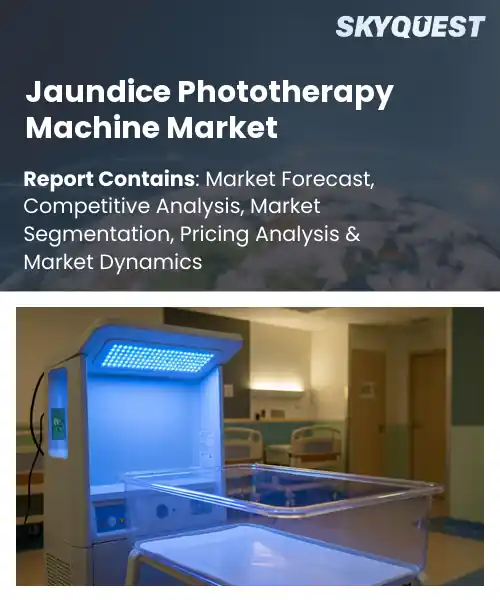
Jaundice Phototherapy Machine Market
Report ID: SQMIG35A3350
Report ID: SQMIG35A3350
[email protected]
USA +1 351-333-4748
Report ID:
SQMIG35A3350 |
Region:
Global |
Published Date: March, 2026
Pages:
157
|Tables:
117
|Figures:
77


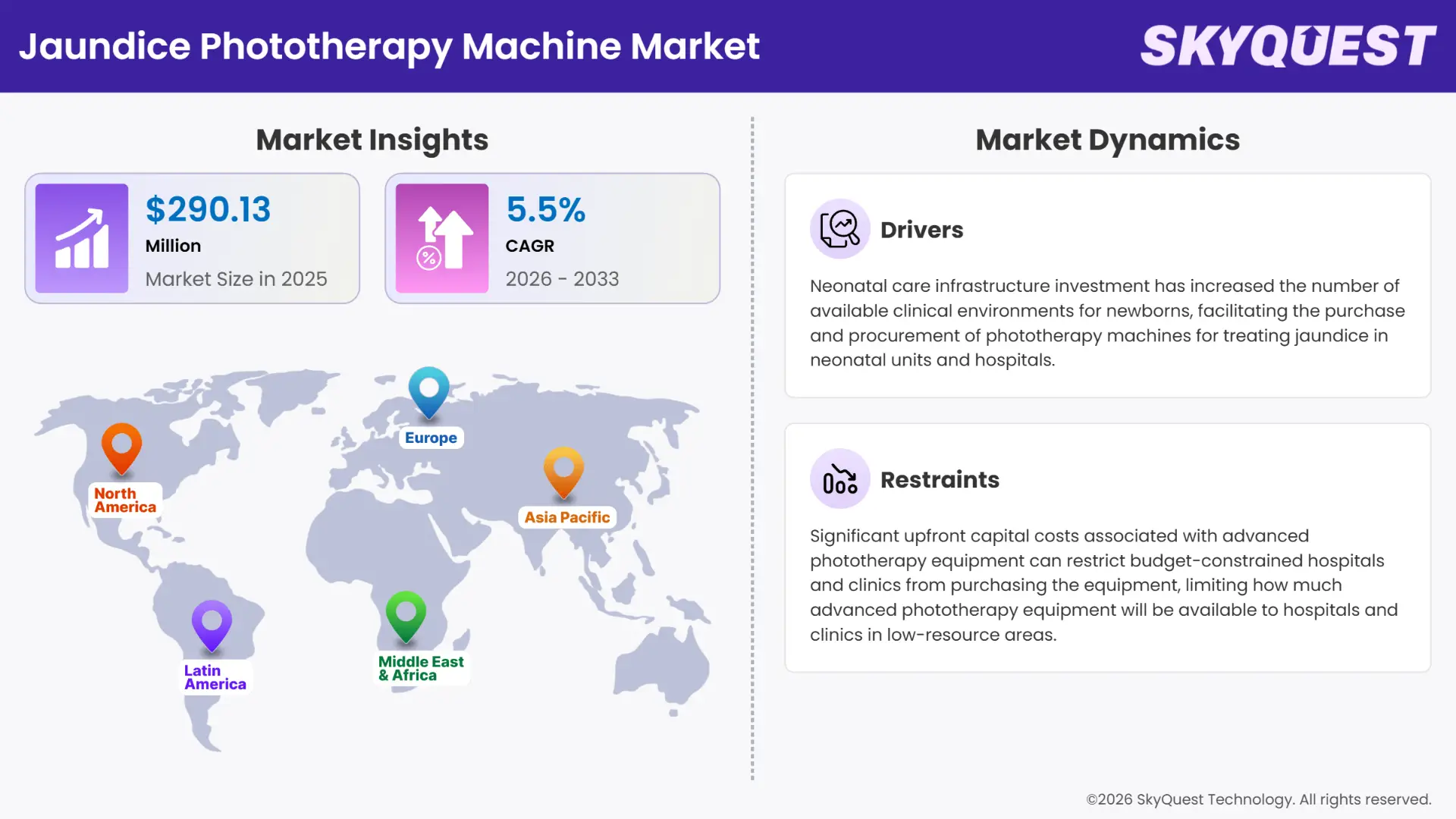
Global Jaundice Phototherapy Machine Market size was valued at USD 275.00 Million in 2024 and is poised to grow from USD 290.13 Million in 2025 to USD 445.25 Million by 2033, growing at a CAGR of 5.5% during the forecast period (2026-2033).
Key Takeaways: Market Trends & Insights
Primary driver of the jaundice phototherapy machine market is the rising global burden of neonatal hyperbilirubinemia, driven by higher survival of preterm infants and expanded newborn screening programs. The market includes items that emit phototherapy light to lower bilirubin and is therefore irreversible neurological developmental injuries, so advancements in care result in quantifiable reductions of morbidity. The market for this application has transitioned from general fluorescent lamps to energy-saving LED lights and from stationary fluorescent light sources to mobile fiber optic light delivery systems; resulting in more rapid and safer treatment of neonates in both the hospital setting and the home.
Building on the shift to LED and portable modalities, the key trend driving the global jaundice phototherapy machine sector is technological innovation that lowers operating costs and expands care settings, which directly increases adoption across emerging markets. When manufacturers optimize irradiance, spectral output and device ergonomics, hospitals treat infants more effectively and shorten length of stay, thereby reducing per patient cost and freeing capacity for births. Consequently, payers and health ministry's invest in neonatal equipment and subsidized programs. In practical terms home phototherapy units and portable overhead systems enable early discharge and rural outreach, creating market opportunities for bundled services, training partnerships and device financing models.
How is AI Enhancing Treatment Efficacy in the Jaundice Phototherapy Machine Market?
AI is enhancing treatment efficacy in the jaundice phototherapy machine market by combining predictive analytics sensor feedback and adaptive control to personalize therapy. Key aspects include machine learning that forecasts bilirubin trends real time monitoring via noninvasively sensors and automated adjustment of light intensity and treatment duration. The current state shows a move toward LED based phototherapy platforms that embed software avoid unnecessary interventions. Vendors are pairing decision support with targeted light delivery to make therapy more precise safer and easier to manage in both hospital and outpatient settings.
In March 2025, Dräger launched BiliPredics a predictive bilirubin management solution that links analytics with phototherapy devices and clinical workflows to guide timing and dosing of light treatment improving efficiency and supporting broader clinical adoption.
To get more insights on this market click here to Request a Free Sample Report
Global jaundice phototherapy machine market is segmented by light source technology, configuration/type, feature set, end-user and region. Based on light source technology, the market is segmented into LED-based phototherapy, fiber optic and fluorescent lamp systems. Based on configuration/type, the market is segmented into overhead/stand-alone units, under-infant and portable/wearable wraps. Based on feature set, the market is segmented into intensive/double phototherapy, integrated irradiance meters and tiltable/height adjustable units. Based on end-user, the market is segmented into neonatal intensive care units (NICU), pediatric & maternity wards and home healthcare services. Based on region, the market is segmented into North America, Europe, Asia Pacific, Latin America and Middle East & Africa.
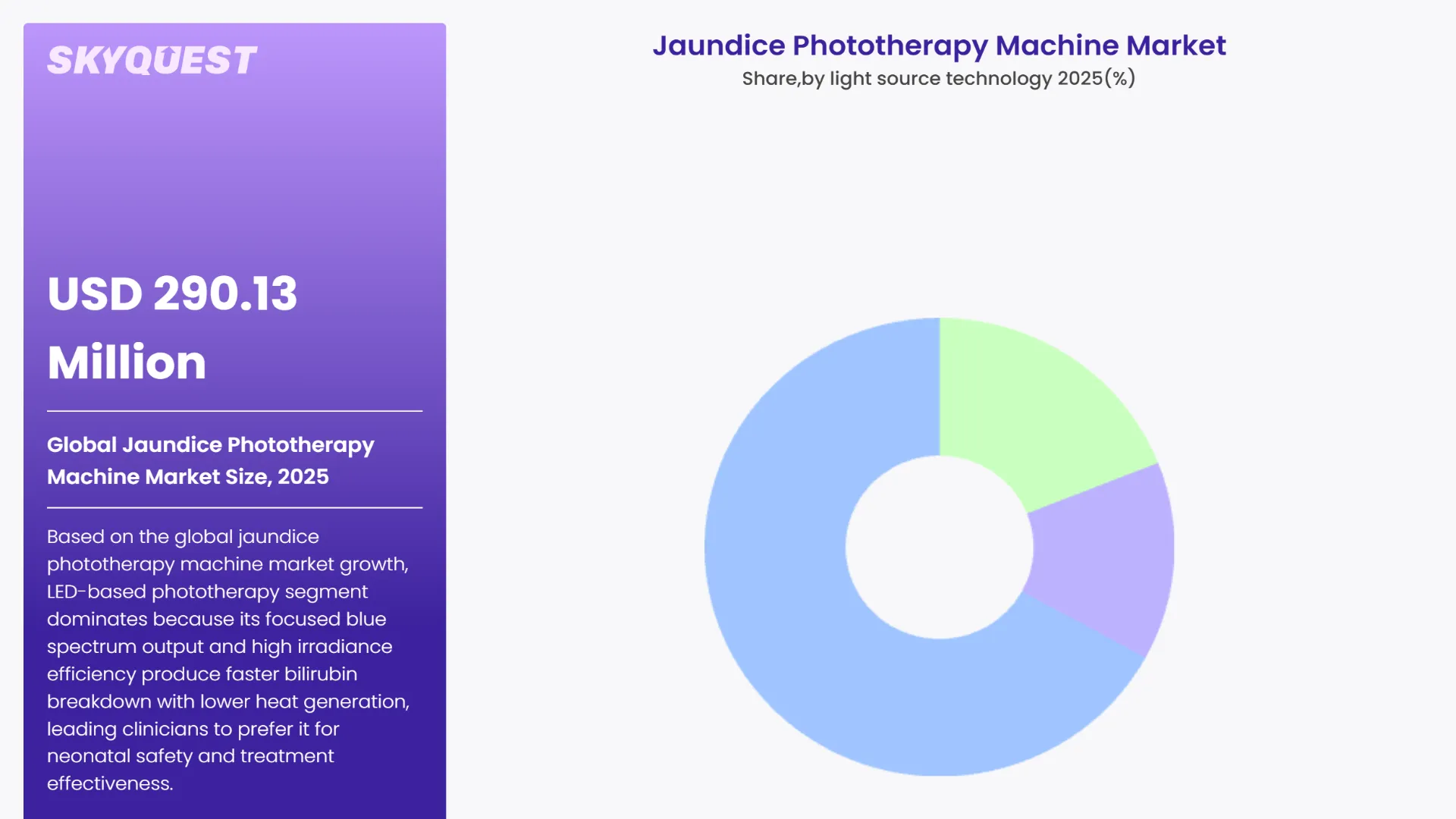
Based on the global jaundice phototherapy machine market growth, LED-based phototherapy segment dominates because its focused blue spectrum output and high irradiance efficiency produce faster bilirubin breakdown with lower heat generation, leading clinicians to prefer it for neonatal safety and treatment effectiveness. Procurement decisions relate to long lamp life and reduced maintenance as manufacturers optimize energy use and form factor in order to provide consistent clinical performance, simplify integration with care workflows, and allow for process-cost predictability that impacts how hospitals select devices and adopt protocols.
However, fiber optic systems are emerging as the most rapidly expanding sub-segment, driven by their ability to deliver localized phototherapy with minimal heat and improved neonatal comfort, enabling homecare and outpatient models. The advances in delivery, miniaturization, and usability (and usability for caregivers) towards the delivery of light will continue to drive increased popularity (use) and provide additional sources of service-based or monitoring-based revenues.
Overhead/stand-alone units segment dominates because these systems provide high uniform irradiance and flexible positioning that align with intensive neonatal care protocols, making them standard equipment in critical care settings. The robustness of these products along with their ability to integrate with other features (e.g., tiltable arms, irradiance meters) and ease of inclusion into clinical workflows inspire institutional purchasing and clinician confidence and thus support their continued role in established treatment pathways and long-term capital planning.
However, portable/wearable wraps are witnessing the strongest growth momentum as consumer-friendly designs, lightweight LEDs, and rechargeable power enable safe phototherapy beyond hospital walls, meeting demand for outpatient and home-based care. Home health care provider partnerships and regulatory authorizations are developing new avenues for product distribution, allowing for possibilities for subscription services, remote patient monitoring and wider early-release programs.
To get detailed segments analysis, Request a Free Sample Report
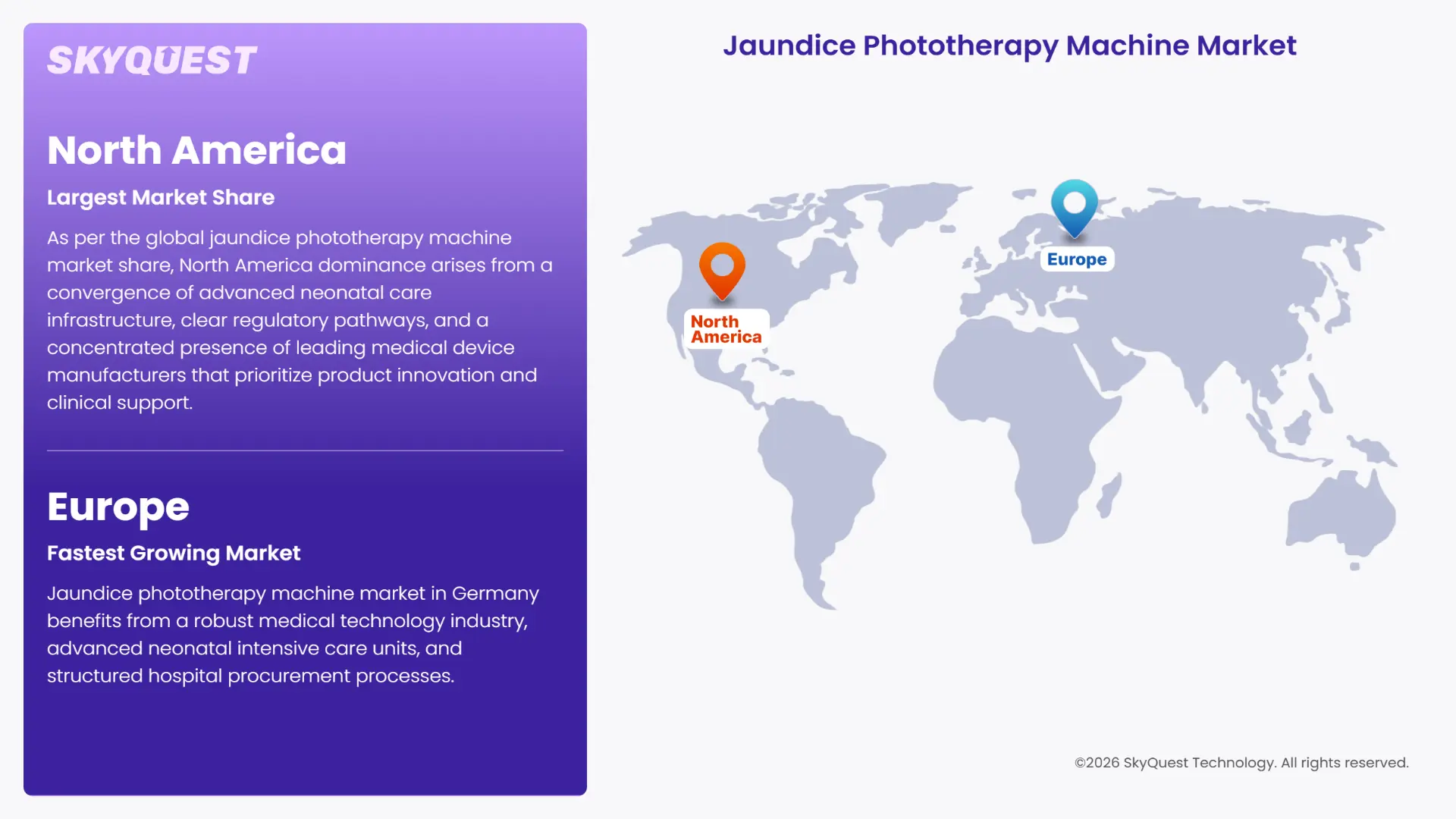
As per the global jaundice phototherapy machine market share, North America dominance arises from a convergence of advanced neonatal care infrastructure, clear regulatory pathways, and a concentrated presence of leading medical device manufacturers that prioritize product innovation and clinical support. Existing hospital systems/procurement channels, both at tertiary hospitals and lower order type facilities. Clinical standards of care and continuing research in new-born related fields, also through structured clinician networks, provide a basis for adoption. Effective procedures for delivery and post-sale service can increase time spent using devices and build clinician confidence, while partnerships between device suppliers/manufacturers and hospitals provide custom solutions designed to fit into many different clinical workflows with a focus on safety and improving new-born health outcomes.
Jaundice phototherapy machine market in United States benefits from a concentration of advanced neonatal care facilities, strong hospital procurement networks, and active participation by major medical device manufacturers. The extensive use of innovative phototherapy technologies is due to clinical practice standards and payer policies that support good outcomes for newborn babies. Through cooperative research and development efforts, companies have established strong distribution networks that facilitate fast product integration in the clinical setting and help manufacturers rapidly improve their phototherapy devices to meet the diverse needs of hospitals in all sizes.
Jaundice phototherapy machine market in Canada is shaped by coordinated procurement through provincial health authorities, emphasis on equitable access in urban and remote settings, and clinical guidelines that prioritize neonatal safety. Collaboration among hospitals, clinician networks, and device vendors to develop customized deployment strategies. Aligning policies and emphasising the need to provide continuous care will lead to widespread adoption by healthcare providers of phototherapy devices that provide consistent standards across all healthcare organisations, yet address the variability of facilities.
Based on global jaundice phototherapy machine regional forecast, the rapid expansion in Europe is driven by harmonized regulatory environments, increasing emphasis on standardized neonatal care, and active engagement from both multinational and regional device manufacturers. Recently, both public and private healthcare providers have focused on acquiring modern phototherapy systems and the necessary education to effectively use them, to do so they have provided preferential treatment to interventions that will improve newborn health outcomes. Through cross-border cooperation, creating clinical guidelines, and implementing small-scale clinic trials focused on the same goal of improving newborn health outcomes, clinical acceptance for phototherapy systems can be more rapidly attained. Competitive bidding and centralized purchasing methods in the various countries will create more opportunities for expanding phototherapy systems throughout the healthcare system.
Jaundice phototherapy machine market in Germany benefits from a robust medical technology industry, advanced neonatal intensive care units, and structured hospital procurement processes. Developments in clinical proof of concept for new phototherapy devices are underpinned by effective partnerships between research institutions and manufacturers. The provision of comprehensive service support, as well as adherence to acceptable quality standards, promotes the uptake of more sophisticated products/systems by hospitals.
Jaundice phototherapy machine market in United Kingdom is influenced by centralized healthcare procurement, strong focus on improving neonatal outcomes, and proactive clinical leadership that supports early adoption of advanced phototherapy solutions. Health system initiatives and pilot programs encourage deployment in acute and community settings, while partnerships emphasize service, training, and interoperability. Policy attention to neonatal safety and collaborative projects between hospitals and manufacturers support integration and scalability across care pathways.
Jaundice phototherapy machine market in France reflects a growing focus on standardizing neonatal care within public hospital networks, combined with selective procurement that emphasizes clinical effectiveness and device reliability. There is a major effort across regional initiatives, in addition to working together in hospital groups to create a climate which will encourage the use of modern phototherapy technologies; distributors and manufacturers are working together to provide the required support services and training. The growing number of engaged clinicians and increasing amounts of national guidelines have helped the gradual maturity of the market, allowing for much wider distribution among different types of hospitals.
As per global jaundice phototherapy machine regional outlook, Asia Pacific is strengthening its position through coordinated improvements in neonatal care infrastructure, rising clinical expertise, and growing involvement from local and regional device manufacturers. Accelerated access to high quality, innovative solutions will be made available through partnerships and technology transfer to national suppliers. The establishment of regional manufacturing and service networks will also promote affordability and capabilities for product maintenance and support. Regulatory advances and focused collaborations between industry and healthcare providers are enhancing market entry and scaling opportunities throughout the region.
Jaundice phototherapy machine market in Japan is characterized by high technological capability, strong domestic manufacturing, and close collaboration between clinicians and industry driving device innovation. Care priorities in hospitals include managing and integrating reliable equipment into care delivery through rigorous testing processes, service availability, and other safety features. Partnerships between equipment manufacturers and academic institutions help provide clinical evaluation, improve cooperatively, and enhance after-sale support.
Jaundice phototherapy machine market in South Korea is supported by a dynamic medical device industry, strong hospital adoption of technologies, and emphasis on device performance and service responsiveness. Health care providers work together with manufacturers to provide an integrated solution for both services and products. Having the same certification and/or standards for a manufacturer, by both government and industry, helps streamline the acquisition process and; through established distribution networks, helps ensure that products are available in a timely manner.
To know more about the market opportunities by region and country, click here to
Buy The Complete Report
Rising Neonatal Care Investments
Growing Clinical Awareness and Training
High Initial Procurement Costs
Regulatory Approval and Compliance Burden
Request Free Customization of this report to help us to meet your business objectives.
The competitive landscape for global jaundice phototherapy machines market outlook is defined by consolidation through targeted M&A, clinic and distribution partnerships, and rapid device innovation that shifts competition toward integrated care solutions. As part of recent developments in the industry, an existing neonatal OEM has made a strategic acquisition of a phototherapy company that specializes in wearables. Older companies have added sensor and LED upgrades via industry partnerships, while new companies are launching products that are both innovative and smart via wearable or intelligent LEDs to separate themselves both clinically and commercially.
SkyQuest’s ABIRAW (Advanced Business Intelligence, Research & Analysis Wing) is our Business Information Services team that Collects, Collates, Correlates, and Analyses the Data collected by means of Primary Exploratory Research backed by robust Secondary Desk research.
As per SkyQuest analysis, the primary driver behind the global jaundice phototherapy machine industry is the rising global burden of neonatal hyperbilirubinemia driven by higher preterm survival and expanded newborn screening, which is increasing demand for phototherapy devices. One significant barrier is the high first-time purchase costs create a slowdown of uptake in resource constrained settings. As of today, the North American market is the predominant user of these technologies due to excellent neonatal infrastructure and strong supply chain partnerships. Within the LED phototherapy segments, LEDs lead the way in usage because they have better performance levels and are the most energy efficient and require less maintenance than other technologies. A second important driver is rapid technological innovation including portable wearable devices, AI-enabled treatment optimization and connected platforms that expand home-based care and create new service and financing opportunities.
| Report Metric | Details |
|---|---|
| Market size value in 2024 | USD 275.00 Million |
| Market size value in 2033 | USD 445.25 Million |
| Growth Rate | 5.5% |
| Base year | 2024 |
| Forecast period | 2026-2033 |
| Forecast Unit (Value) | USD Million |
| Segments covered |
|
| Regions covered | North America (US, Canada), Europe (Germany, France, United Kingdom, Italy, Spain, Rest of Europe), Asia Pacific (China, India, Japan, Rest of Asia-Pacific), Latin America (Brazil, Rest of Latin America), Middle East & Africa (South Africa, GCC Countries, Rest of MEA) |
| Companies covered |
|
| Customization scope | Free report customization with purchase. Customization includes:-
|
To get a free trial access to our platform which is a one stop solution for all your data requirements for quicker decision making. This platform allows you to compare markets, competitors who are prominent in the market, and mega trends that are influencing the dynamics in the market. Also, get access to detailed SkyQuest exclusive matrix.
Table Of Content
Executive Summary
Market overview
Parent Market Analysis
Market overview
Market size
KEY MARKET INSIGHTS
COVID IMPACT
MARKET DYNAMICS & OUTLOOK
Market Size by Region
KEY COMPANY PROFILES
Methodology
For the Jaundice Phototherapy Machine Market, our research methodology involved a mixture of primary and secondary data sources. Key steps involved in the research process are listed below:
1. Information Procurement: This stage involved the procurement of Market data or related information via primary and secondary sources. The various secondary sources used included various company websites, annual reports, trade databases, and paid databases such as Hoover's, Bloomberg Business, Factiva, and Avention. Our team did 45 primary interactions Globally which included several stakeholders such as manufacturers, customers, key opinion leaders, etc. Overall, information procurement was one of the most extensive stages in our research process.
2. Information Analysis: This step involved triangulation of data through bottom-up and top-down approaches to estimate and validate the total size and future estimate of the Jaundice Phototherapy Machine Market.
3. Report Formulation: The final step entailed the placement of data points in appropriate Market spaces in an attempt to deduce viable conclusions.
4. Validation & Publishing: Validation is the most important step in the process. Validation & re-validation via an intricately designed process helped us finalize data points to be used for final calculations. The final Market estimates and forecasts were then aligned and sent to our panel of industry experts for validation of data. Once the validation was done the report was sent to our Quality Assurance team to ensure adherence to style guides, consistency & design.
Analyst Support
Customization Options
With the given market data, our dedicated team of analysts can offer you the following customization options are available for the Jaundice Phototherapy Machine Market:
Product Analysis: Product matrix, which offers a detailed comparison of the product portfolio of companies.
Regional Analysis: Further analysis of the Jaundice Phototherapy Machine Market for additional countries.
Competitive Analysis: Detailed analysis and profiling of additional Market players & comparative analysis of competitive products.
Go to Market Strategy: Find the high-growth channels to invest your marketing efforts and increase your customer base.
Innovation Mapping: Identify racial solutions and innovation, connected to deep ecosystems of innovators, start-ups, academics, and strategic partners.
Category Intelligence: Customized intelligence that is relevant to their supply Markets will enable them to make smarter sourcing decisions and improve their category management.
Public Company Transcript Analysis: To improve the investment performance by generating new alpha and making better-informed decisions.
Social Media Listening: To analyze the conversations and trends happening not just around your brand, but around your industry as a whole, and use those insights to make better Marketing decisions.
REQUEST FOR SAMPLE
 REQUEST FREE CUSTOMIZATION
Global Jaundice Phototherapy Machine Market size was valued at USD 275.0 Million in 2024 and is poised to grow from USD 290.13 Million in 2025 to USD 445.25 Million by 2033, growing at a CAGR of 5.5% during the forecast period (2026-2033).
The competitive landscape for global jaundice phototherapy machines is defined by consolidation through targeted M&A, clinic and distribution partnerships, and rapid device innovation that shifts competition toward integrated care solutions. Recent industry moves include a strategic acquisition of a wearable phototherapy developer by an established neonatal OEM, legacy vendors adding LED and sensor upgrades through partnerships, and startups commercializing wearable and intelligent LED systems to differentiate clinically and commercially. 'GE Healthcare', 'Philips Healthcare', 'Drägerwerk AG', 'Nishimoto Trading Co., Ltd.', 'Medela AG', 'Atom Medical Corporation', 'Natus Medical Incorporated', 'PANTHERx Rare Pharmacy', 'Chison Medical Technologies Co., Ltd.', 'Guangzhou MeCan Medical Limited', 'D-Rev', 'ALCOR Healthcare', 'Sunflower Medical, LLC', 'Bistos Co., Ltd.', 'ECE Medical Products', 'OXYCARE Medical GmbH', 'TMC Medical', '3M Health Care', 'Perry Baromedical Corporation', 'Biolight Meditech Co., Ltd.'
Expanded investments in neonatal care infrastructure have improved availability of clinical settings and encouraged procurement of jaundice phototherapy machines in hospitals and neonatal units. As health systems prioritize perinatal outcomes, administrators allocate funding for specialized devices, driving demand for reliable phototherapy solutions. Enhanced capital spending supports replacement cycles, technology upgrades, and adoption of advanced models with improved safety and efficiency. This creates a more predictable purchasing environment for manufacturers and motivates suppliers to expand distribution and service networks to meet increased institutional requirements.
Portable And Home-Based Care: Manufacturers are developing compact, user-friendly phototherapy devices intended for home and community use, enabling earlier discharge and continuity of care outside hospital settings. Emphasis on portability, simplified interfaces, safe safeguards and caregiver training is driving product differentiation. Providers and payers increasingly recognize potential cost and capacity benefits associated with decentralized treatment pathways, prompting partnerships between device makers and home health services. This trend fosters new service models including leasing, remote monitoring and bundled support that expand access and patient convenience.
North America Dominate the Global Jaundice Phototherapy Machine Market.
LED-based phototherapy systems dominate the market due to their superior energy efficiency, longer operational life, lower maintenance requirements, and improved treatment effectiveness compared to conventional technologies.
AI is improving treatment outcomes through predictive bilirubin monitoring, real-time sensor feedback, adaptive light intensity control, and clinical decision-support tools that help personalize phototherapy treatment for newborns.


Want to customize this report? This report can be personalized according to your needs. Our analysts and industry experts will work directly with you to understand your requirements and provide you with customized data in a short amount of time. We offer $1000 worth of FREE customization at the time of purchase.
Feedback From Our Clients


 USA (+1) 351-333-4748

