Neonatal Jaundice Meter Market
Report ID: SQMIG35A3368
Report ID: SQMIG35A3368
[email protected]
USA +1 351-333-4748
Report ID:
SQMIG35A3368 |
Region:
Global |
Published Date: March, 2026
Pages:
157
|Tables:
114
|Figures:
77


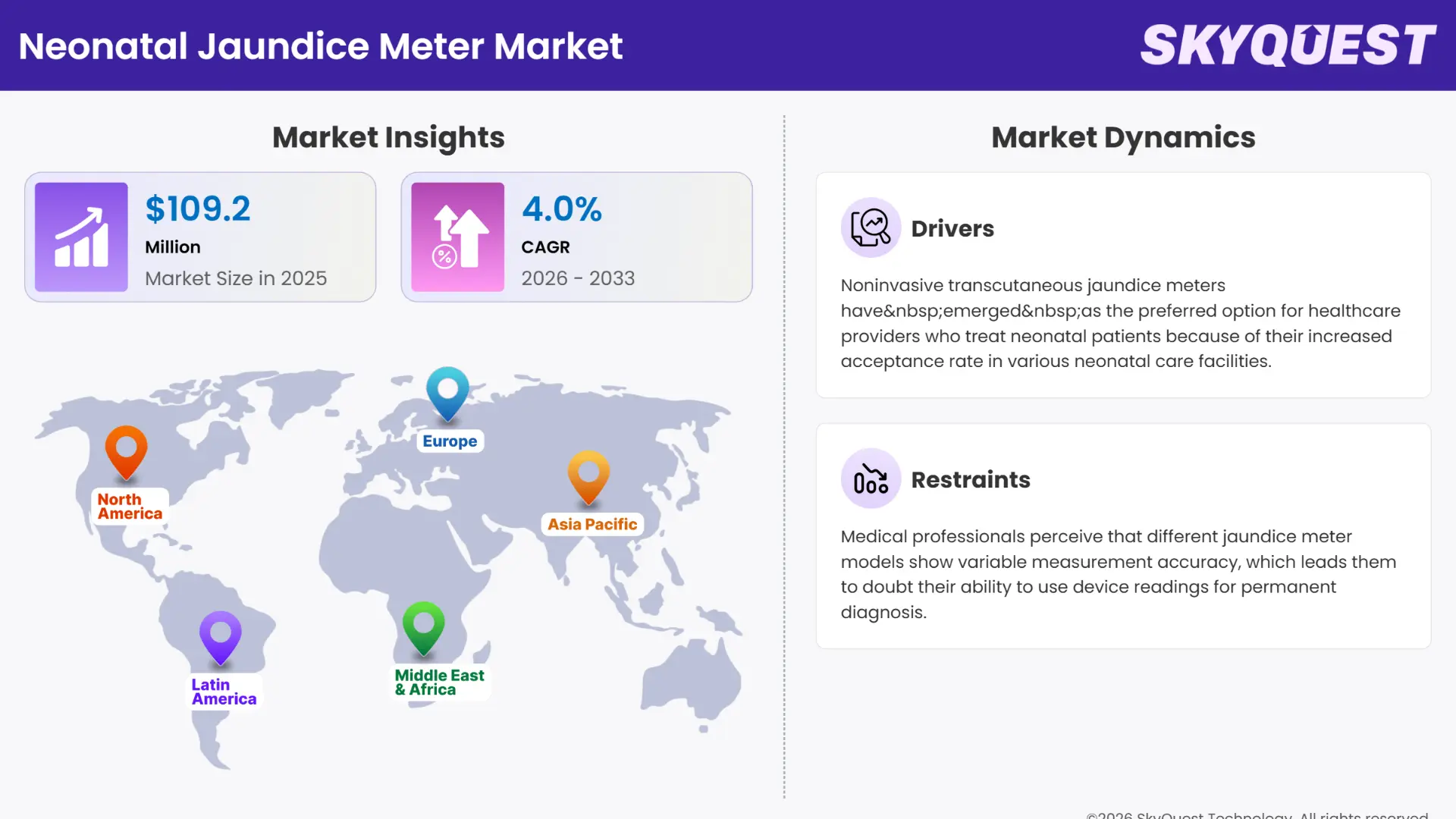
Global Neonatal Jaundice Meter Market size was valued at USD 105.0 Million in 2024 and is poised to grow from USD 109.2 Million in 2025 to USD 149.45 Million by 2033, growing at a CAGR of 4.0% during the forecast period (2026-2033).
Key Takeaways: Market Trends & Insights
• North America dominated the Neonatal Jaundice Meter market with the largest market share in 2025.
• The U.S. Neonatal Jaundice Meter market is expected to grow significantly over the forecast period.
• By Product Type, the Transcutaneous Bilirubin Meter segment held the largest market share in 2024.
• The Portable Neonatal Jaundice Meter segment is expected to be the fastest-growing segment over the forecast period.
• North America: Largest Market in 2025.
• Asia Pacific: Fastest Growing Market.
• 2025 Market Size: USD 109.20 Million.
• 2026 Projected Market Size: USD 113.57 Million.
• 2033 Projected Market Size: USD 149.45 Million.
• CAGR (2026-2033): 4.0%.
The global neonatal jaundice meter industry includes all devices which measure bilirubin levels in newborns for jaundice detection and monitoring. The market exists because untreated hyperbilirubinemia leads to permanent neurological damage which doctors and health systems need to treat through early detection and treatment. The past twenty years have seen technology move from invasive serum testing methods to noninvasive point-of-care instruments which allow faster clinical decisions while expanding screening capacity.
The global neonatal jaundice meter market growth is driven because people become more aware of neonatal screening programs which develop in low-resource areas. The global market expands through extended screening programs which create demand for portable noninvasive point-of-care devices that provide digital connectivity because their advanced accuracy together with real-time data transmission makes laboratory infrastructure unnecessary while enabling early patient assessment. Hospitals achieve shorter patient stays through community health workers who screen newborns at home while patients who need specialized treatment are sent to tertiary centers, which creates higher demand for cost-effective handheld meters. Low-cost designs together with telemedicine-enabled products and public health agency partnership programs create opportunities for manufacturers and investors who seek to establish screening programs in underserved areas.
How is AI Improving Diagnostic Accuracy in the Neonatal Jaundice Meter Market?
The AI system shows diagnostic progress for neonatal jaundice through its ability to detect tiny differences in skin and eye color through advanced image analysis and machine learning and optical signal processing. The current systems use clinical data and device measurement data to learn skin tone and lighting and device differences which enable them to produce consistent noninvasive results across different environments. The healthcare market is moving toward testing methods which enable both bedside and home detection to minimize patient discomfort through blood draw methods while improving treatment progress. The practical applications of deep learning include smartphone screening applications and transcutaneous devices which use deep learning to improve patent Bilirubin results from laboratory tests and assist doctors in making better clinical decisions.
To get more insights on this market click here to Request a Free Sample Report
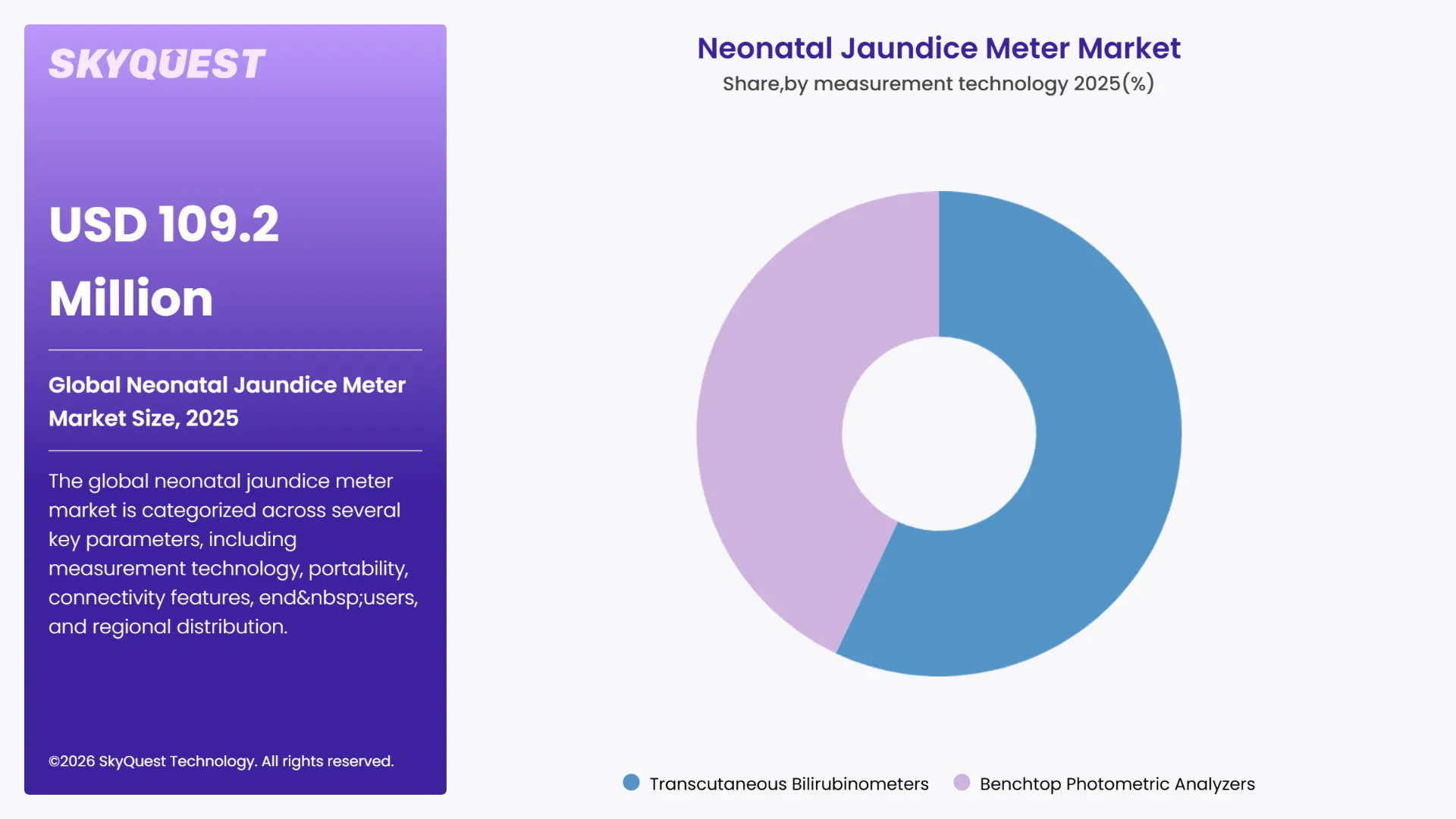
The global neonatal jaundice meter market is categorized across several key parameters, including measurement technology, portability, connectivity features, end users, and regional distribution. In terms of measurement technology, the market is divided into transcutaneous bilirubinometers and benchtop photometric analyzers. Based on portability, it is segmented into handheld portable devices and tabletop or clinical units. By connectivity features, the market includes Bluetooth/Wi-Fi enabled devices as well as standalone, non-connected units. Depending on end user, the market serves neonatal intensive care units (NICUs), pediatric clinics and maternity hospitals, along with home healthcare and midwifery services. Geographically, the market is analyzed across North America, Europe, Asia Pacific, Latin America, and the Middle East & Africa.
As per the global neonatal jaundice meter market analysis, the transcutaneous bilirubinometers segment holds the leading position because of its noninvasive devices which provide fast bedside bilirubin tests that prevent the need for painful blood tests and the time required for laboratory results. The system provides intuitive operation which enables nursing staff to conduct multiple monitoring sessions throughout their workday without disrupting their essential tasks, which results in improved early detection and timely medical response. Newborn care facilities implement the system because it delivers patient comfort together with operational efficiency, which matches their typical newborn care practices.
However, the Benchtop Photometric Analyzers category has become the fastest growing field because their analytical precision exceeds other methods while delivering definitive diagnostic confirmation for hospital laboratory tests. Hospital facilities which value consolidated testing workflows and high throughput operations, will now experience new procurement opportunities through increased instrument software and automation advancements which enable them to use their instruments in broader clinical testing applications.
According to the global neonatal jaundice meter market forecast, the handheld portable devices segment leads because compact point of care meters delivers immediate bilirubin assessment at the bedside or during community visits because they eliminate transport delays while enabling faster clinical responses. The system supports portable screening during both routine newborn assessment and home healthcare visits because of its ability to track newborns multiple times. The enhanced workflow efficiency together with better accessible workflow efficiency benefits, lead clinical teams first to choose handheld solutions, while outpatient providers make their first-choice handheld solutions.
Whereas the strongest expansion of Tabletop Clinical Units occurs because healthcare facilities need better equipment for neonatal units, which needs dependable analytic performance and continuous data exchange with hospital systems. The development of better benchtop engineering products together with improved user interface design, leads to increased product adoption in clinics which need more than central laboratory space, which drives purchasing by bigger maternity clinics and maternity centers while enabling companies to create complete bilirubin testing solutions.
To get detailed segments analysis, Request a Free Sample Report
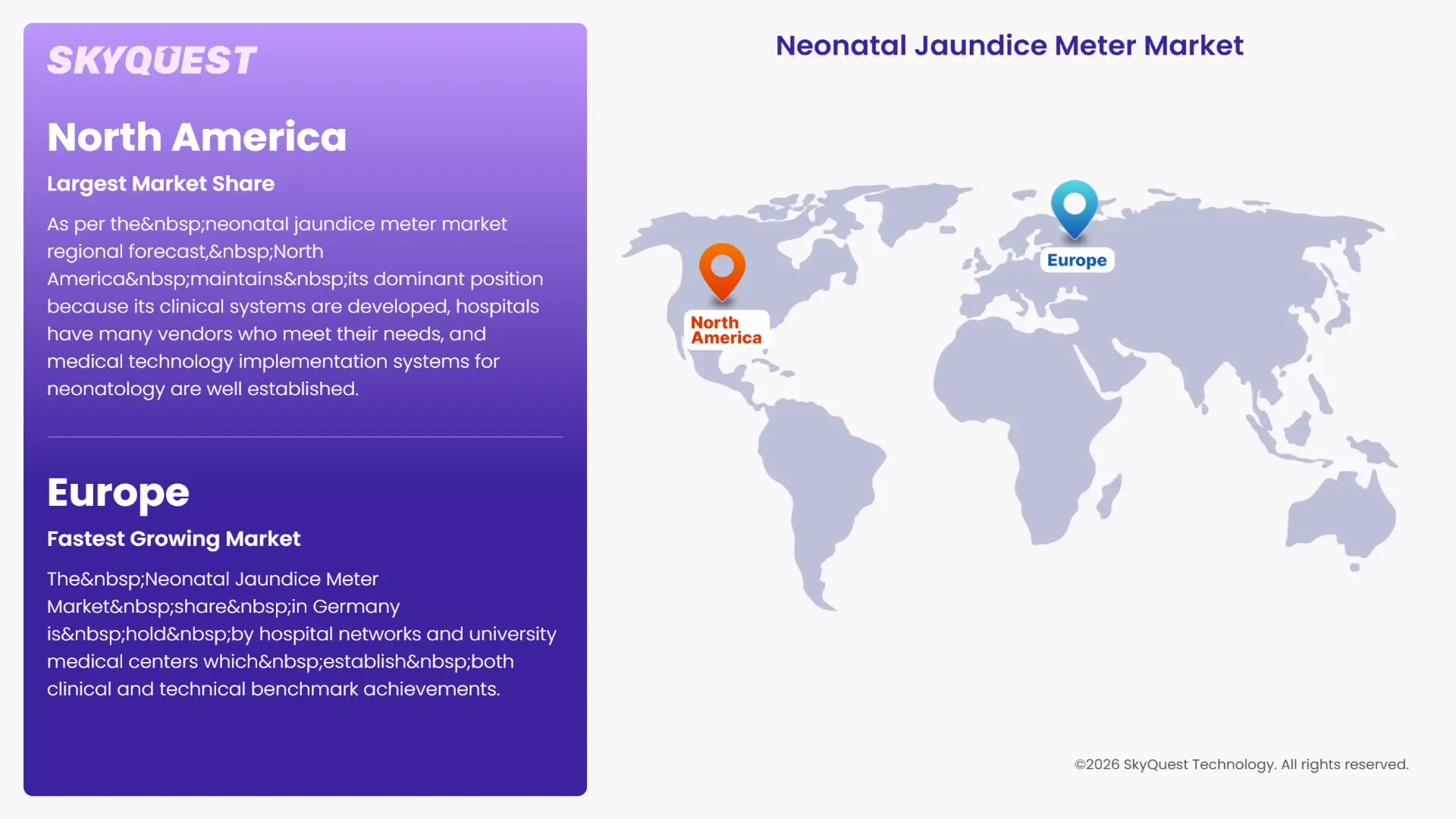
As per the neonatal jaundice meter market regional forecast, North America maintains its dominant position because its clinical systems are developed, hospitals have many vendors who meet their needs, and medical technology implementation systems for neonatology are well established. The medical adoption of jaundice meters for diagnosing jaundice occurs because hospitals invest heavily in neonatal intensive care facilities, and hospitals focus on early diagnosis procedures. Hospitals and outpatient clinics adopt verified medical equipment because of the strong funding which these systems provide for their operations. The collaborative research networks between healthcare professionals, academic institutions, and manufacturers develop new products and scientific evidence through their research. The regulatory process plus quality assurance system establishes buyer trust, while doctors who know about noninvasivescreening advantages promote its use in perinatal and pediatric medical facilities.
The United States Neonatal Jaundice Meter sector experiences high demand from tertiary hospitals and big perinatal networks who want to implement early bilirubin screening through their established treatment protocols. The clinical uptake of medical devices depends on the use of integrated care models together with cross disciplinary protocols and procurement systems which prioritize solutions from established medical device companies. The combination of strong funding for neonatal research and ongoing collaboration between manufacturers and clinical research centers enables product development through its iterative process. Outpatient and community facilities use our training programs to support patients who need continuous treatment from hospitals to their homes.
The Canadian neonatal jaundice meter industry operates through coordinated purchasing systems which give all territories and provinces equitable access to this medical technology. Health authorities and pediatric networks seekportable, easy to use devices that support screening in varied clinical environments. The partnership between academic hospitals and provincial agencies provides essential resources for both clinical validation processes and guideline development activities. The combination of telemedicine systems and regional training programs makes it possible to provide medical care in rural areas while organizations base their purchasing decisions according to their needs for cost effective and continuous service delivery.
The European neonatal jaundice meter market penetration depends on three main factors, including the governmental commitment to maternal and child health, the establishment of unified regulatory standards, and the participation of both large multinational companies and local medtech businesses. The healthcare systems consider early detection through noninvasive methods which match their clinical requirements and parents' desires for their children. The different procurement systems which national health services and private providers use create several pathways for businesses to enter the market and grow their operations. Hospitals and medical device makers work together to create innovation hubs which help them develop products that meet local needs. The rising adoption of digital health solutions together with point of care diagnostics across neonatal medical pathways improves system usability which leads to better hospital, community, and home care implementation.
The Neonatal Jaundice Meter Market share in Germany is hold by hospital networks and university medical centers which establish both clinical and technical benchmark achievements. The procurement process selects devices which prove their ability to function across various hospital systems while meeting all regulatory standards through their robust design. Clinical opinion leaders who maintain strong ties with manufacturers help their organizations create evidence which leads to the development of medical treatment guidelines. The combination of neonatal care paths with quality care practices generates ongoing requirements for proven screening equipment which hospitals and outpatient pediatric services need.
The United Kingdom Neonatal Jaundice Meter Market experiences rapid growth because community-based programs and family health services provide neonatal screening services which extend their operations beyond hospital environments. The medical system promotes early intervention through home-based follow-up which drives the need for portable, user-friendly, meter devices that health visitors and community midwives can use. The pilot programs together with local procurement pilots enable hospitals to quickly acquire new medical devices which doctors, and health professionals use throughout different areas of their operations. NHS stakeholders and innovators work together to create systems which enable organizations to implement their products on a scale.
The French neonatal jaundice meter market develops as hospitals and regional health authorities implement noninvasivescreening methods to enhance their neonatal medical services. The growing interest in new medical devices from both clinical and procurement professionals leads to their examination at maternity wards and pediatric clinics. The local distributors create partnerships with clinical networks to develop their training capacity through their established relationships with clinical networks. The ongoing development of the market occurs because organizations want dependable medical equipment which has been proven effective for standard screening procedures.
The market position of Asia Pacific is being enhanced through three main activities which include increasing neonatal care capacity, making medical technology investments, and developing local manufacturing capacity to meet regional cost and usability requirements. Early screening tool development is now receiving more attention from governments and private health organizations because they seek to improve perinatal health results. International suppliers and regional distributors establish strategic partnerships which help them enter new markets while businesses use device feature modifications to match local language requirements and training needs and infrastructural demands. The healthcare system now uses telemedicine and mobile health technology to reach remote regions, which helps distribute medical services throughout various areas instead of concentrating on urban tertiary medical facilities.
The Neonatal Jaundice Meter Market in Japan demands system designers to create equipment that meets their requirements for precise measurement and seamless operation and high-quality verification of results which supports advanced pediatric and neonatal healthcare delivery. Domestic manufacturers and international firms compete to meet stringent clinical validation requirements and to provide seamless compatibility with hospital information systems. Clinical stakeholders require demonstration of verified product performance together with positive user experience results for their medical needs which most commonly occur in tertiary centers and specialized clinics. Incremental innovation and attention to local regulatory and practice norms support careful, sustained adoption.
The Neonatal Jaundice Meter Market in South Korea grows because of its advanced medical technology industry and quick acceptance of digital health equipment in clinical environments. Companies develop portable medical devices which include multiple functions to meet the requirements of hospital and community medical staff, while companies maintain strong distribution networks and international export capacity for their products. The collaboration between hospitals and technology companies and government programs establishes pilot studies which demonstrate clinical validation. Community health services and neonatal care providers choose to adopt mobile health platform solutions because of their innovative features and user-friendly design that restrict technology access for medical practitioners and staff members.
To know more about the market opportunities by region and country, click here to
Buy The Complete Report
Increasing Adoption of Noninvasive Devices
Noninvasive transcutaneous jaundice meters have emerged as the preferred option for healthcare providers who treat neonatal patients because of their increased acceptance rate in various neonatal care facilities. The devices enable medical personnel to execute screening procedures which identify infants needing assessment while using fewerinvasive methods that eliminate the need for blood samples. The device's user-friendly design, together with its secure operation equipment, enables medical professionals and their patients to trust the device, which leads to hospitals and clinics making expenses for their routine neonatal screening activities. The demand for these meters strengthens market expansion because healthcare pathways now focus on early detection through non-invasive methods.
Growing Awareness Among Parents
The public now has increased awareness about untreated neonatal jaundice dangers, which leads to rising demand for screening tools that hospitals and community health centers can use effectively. Educational campaigns, prenatal counseling, and advocacy by maternal health groups highlight the importance of early detection, prompting caregivers to seek point-of-care solutions that offer reassurance and timely follow-up. The public health awareness campaign drives healthcare institutions to develop accessible screening tools which they will use for standard newborn assessments while making procurement decisions to enhance their screening capabilities across various clinical environments, which will strengthen market momentum.
Variability in Measurement Accuracy
Medical professionals perceive that different jaundice meter models show variable measurement accuracy, which leads them to doubt their ability to use device readings for permanent diagnosis. When professionals get inconsistent results, they usually return to laboratory-based bilirubin testing, which decreases device usage and decreases market interest in point-of-care instruments. The cautious clinical stance of healthcare organizations leads them to postpone their purchasing decisions, which causes delays with market entry until the product shows continued reliable performance with established industry standards.
High Cost of Advanced Devices
The adoption of neonatal jaundice meters which require advanced technology becomes difficult for smaller hospitals and clinics because of their high installation and operational costs. Decision-makers often weigh the upfront expenditure against perceived benefits and may defer procurement in favor of established, lower-cost screening approaches. The total ownership expenses increase because of the need to maintain equipment through routine calibration and staff training and the purchase of consumable materials. The budgetary pressures create two main effects which result in slower institutional buyer processes and limited market access to resource-limited areas and reduced overall market growth until pricing becomes more accessible.
Request Free Customization of this report to help us to meet your business objectives.
The neonatal jaundice meter market is facing increased global competition because established medtech companies use predictive analytics and connected monitoring systems while public private screening access programs expand their screening capabilities which forces companies to create distinct product features. Established companies create business relationships through direct partnership agreements and technology sharing platforms, which Dräger demonstrates by adding predictive bilirubin analytics to its platform through its partnership with Dräger. Regional programs implement screening and phototherapy through industry partnerships, which leads to product innovation and market segmentation.
Point of Care Expansion: Healthcare providers and maternity facilities are increasingly adopting bedside jaundice meters to accelerate diagnosis and reduce hospital stays. Community clinics and birthing centers can now use equipment which provides simple operation and quick results yet needs only basic training for their workers. Manufacturers design their products to create small devices which can operate according to standard neonatal testing procedures. The healthcare system exists to provide medical treatment outside of hospitals while the people who offer medical services can deliver care through multiple platforms which help maintain patient health through early diagnosis of problems.
AI-decision Support: Machine learning platforms, when combined with jaundice meters, deliver better interpretiveassistance to medical professionals who will become more certain about their screening results. Ambient data aggregation and visualization help practitioners contextualize bilirubin trajectories and determine follow-up needs. The vendors use their explainable algorithms together with their interoperability system to build trust with doctors while their regulatory requirements drive them to establish clear methods for validating their medical devices. The trend fosters collaboration among device manufacturers, software developers and care teams, enabling personalized monitoring strategies, smoother referral pathways and clinical handoffs across primary and specialist neonatal services.
SkyQuest’s ABIRAW (Advanced Business Intelligence, Research & Analysis Wing) is our Business Information Services team that Collects, Collates, Correlates, and Analyses the Data collected by means of Primary Exploratory Research backed by robust Secondary Desk research.
As per SkyQuest analysis, the global neonatal jaundice meter market experiences growth because more healthcare facilities now use noninvasive transcutaneous screening which lets them conduct point-of-care tests without needing blood samples and this technology also allows them to conduct less blood sample testing. The devices face a barrier because their measurement accuracy shows different results which decreases doctor trust and requires additionaltesting through laboratory confirmation. The North American market leads because it has established clinical systems, reimbursement processes and many medical equipment suppliers while the Transcutaneous Bilirubinometers segment provides quick bedside tests which match the requirements of new neonatal treatment procedures.
| Report Metric | Details |
|---|---|
| Market size value in 2024 | USD 105.0 Million |
| Market size value in 2033 | USD 149.45 Million |
| Growth Rate | 4.0% |
| Base year | 2024 |
| Forecast period | 2026-2033 |
| Forecast Unit (Value) | USD Million |
| Segments covered |
|
| Regions covered | North America (US, Canada), Europe (Germany, France, United Kingdom, Italy, Spain, Rest of Europe), Asia Pacific (China, India, Japan, Rest of Asia-Pacific), Latin America (Brazil, Rest of Latin America), Middle East & Africa (South Africa, GCC Countries, Rest of MEA) |
| Companies covered |
|
| Customization scope | Free report customization with purchase. Customization includes:-
|
To get a free trial access to our platform which is a one stop solution for all your data requirements for quicker decision making. This platform allows you to compare markets, competitors who are prominent in the market, and mega trends that are influencing the dynamics in the market. Also, get access to detailed SkyQuest exclusive matrix.
Table Of Content
Executive Summary
Market overview
Parent Market Analysis
Market overview
Market size
KEY MARKET INSIGHTS
COVID IMPACT
MARKET DYNAMICS & OUTLOOK
Market Size by Region
KEY COMPANY PROFILES
Methodology
For the Neonatal Jaundice Meter Market, our research methodology involved a mixture of primary and secondary data sources. Key steps involved in the research process are listed below:
1. Information Procurement: This stage involved the procurement of Market data or related information via primary and secondary sources. The various secondary sources used included various company websites, annual reports, trade databases, and paid databases such as Hoover's, Bloomberg Business, Factiva, and Avention. Our team did 45 primary interactions Globally which included several stakeholders such as manufacturers, customers, key opinion leaders, etc. Overall, information procurement was one of the most extensive stages in our research process.
2. Information Analysis: This step involved triangulation of data through bottom-up and top-down approaches to estimate and validate the total size and future estimate of the Neonatal Jaundice Meter Market.
3. Report Formulation: The final step entailed the placement of data points in appropriate Market spaces in an attempt to deduce viable conclusions.
4. Validation & Publishing: Validation is the most important step in the process. Validation & re-validation via an intricately designed process helped us finalize data points to be used for final calculations. The final Market estimates and forecasts were then aligned and sent to our panel of industry experts for validation of data. Once the validation was done the report was sent to our Quality Assurance team to ensure adherence to style guides, consistency & design.
Analyst Support
Customization Options
With the given market data, our dedicated team of analysts can offer you the following customization options are available for the Neonatal Jaundice Meter Market:
Product Analysis: Product matrix, which offers a detailed comparison of the product portfolio of companies.
Regional Analysis: Further analysis of the Neonatal Jaundice Meter Market for additional countries.
Competitive Analysis: Detailed analysis and profiling of additional Market players & comparative analysis of competitive products.
Go to Market Strategy: Find the high-growth channels to invest your marketing efforts and increase your customer base.
Innovation Mapping: Identify racial solutions and innovation, connected to deep ecosystems of innovators, start-ups, academics, and strategic partners.
Category Intelligence: Customized intelligence that is relevant to their supply Markets will enable them to make smarter sourcing decisions and improve their category management.
Public Company Transcript Analysis: To improve the investment performance by generating new alpha and making better-informed decisions.
Social Media Listening: To analyze the conversations and trends happening not just around your brand, but around your industry as a whole, and use those insights to make better Marketing decisions.
REQUEST FOR SAMPLE
 REQUEST FREE CUSTOMIZATION
Global Neonatal Jaundice Meter Market size was valued at USD 105.0 Million in 2024 and is poised to grow from USD 109.2 Million in 2025 to USD 149.45 Million by 2033, growing at a CAGR of 4.0% during the forecast period (2026-2033).
Competition in the global neonatal jaundice meter market is intensifying as established medtech firms integrate predictive analytics and connected monitoring, and as public private initiatives expand screening access, increasing competitive pressure on device differentiation. Incumbents pursue concrete partnerships and platform integrations, exemplified by Dräger’s collaboration to add predictive bilirubin analytics, while regional programs are deploying screening and phototherapy in industry partnerships, accelerating product innovation and market segmentation. 'BiliChek', 'Natus Medical Incorporated', 'Philips Healthcare', 'GE Healthcare', 'Medtronic', 'Sun Nuclear Corporation', 'Draeger Medical', 'Masimo Corporation', 'Newborn Screening Solutions', 'Ginevri', 'BiliMetry', 'HemaTrue', 'Aiden Technologies', 'Jaundice Meter Co.', 'Ecomed Services', 'Zydus Cadila', 'LogiCare Solutions', 'Ameda', 'Biolight Technologies', 'Medela'
Growing clinical preference for noninvasive, transcutaneous jaundice meters among healthcare providers supports wider use in neonatal care settings. These devices simplify screening workflows, reduce the need for painful blood draws, and allow rapid identification of at-risk infants at the point of care. The convenience and perceived safety foster increased acceptance by clinicians and caregivers, encouraging investment by hospitals and clinics to integrate such devices into routine neonatal screening pathways. As care pathways emphasize early detection and minimal invasion, demand for these meters strengthens market expansion.
Point Of Care Expansion: Healthcare providers and maternity facilities are increasingly adopting bedside jaundice meters to accelerate diagnosis and reduce hospital stays. Ease of use, rapid readings, and minimal training requirements encourage deployment across community clinics and birthing centers, improving access in underserved areas. Manufacturers focus on compact designs and integrated workflows to fit routine neonatal checks. This shift supports decentralized care models and strengthens early intervention pathways, fostering collaboration between primary care clinicians and neonatologists and promoting consistent screening practices beyond hospital settings.
North America Dominate the Global Neonatal Jaundice Meter Market?
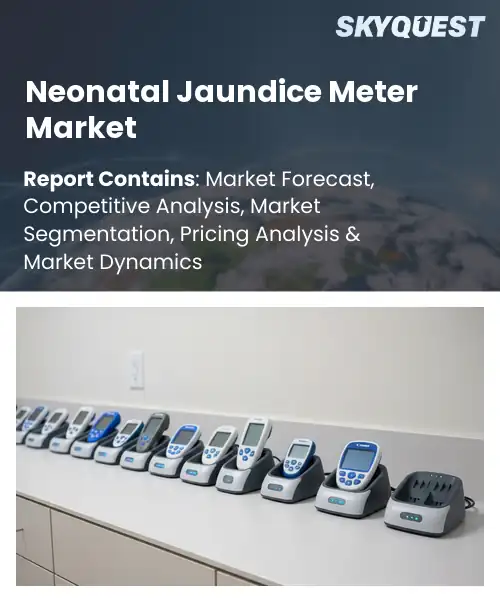
A neonatal jaundice meter is a medical device used to measure bilirubin levels in newborns, helping healthcare professionals detect and monitor jaundice efficiently.
These devices provide quick, non-invasive bilirubin assessments, reducing the need for repeated blood sampling and improving patient comfort.


Want to customize this report? This report can be personalized according to your needs. Our analysts and industry experts will work directly with you to understand your requirements and provide you with customized data in a short amount of time. We offer $1000 worth of FREE customization at the time of purchase.
Feedback From Our Clients


 USA (+1) 351-333-4748

