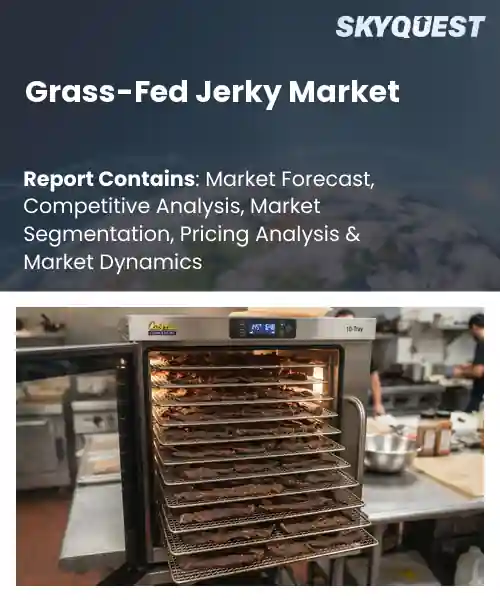
Grass-Fed Jerky Market
Report ID: SQMIG30I3294
Report ID: SQMIG30I3294
[email protected]
USA +1 351-333-4748
Report ID:
SQMIG30I3294 |
Region:
Global |
Published Date: November, 2026
Pages:
157
|Tables:
121
|Figures:
77


Global Grass-Fed Jerky Market size was valued at USD 820.0 Million in 2024 and is poised to grow from USD 882.32 Million in 2025 to USD 1585.35 Million by 2033, growing at a CAGR of 7.6% during the forecast period (2026-2033).
Grass‑fed jerky represents a niche segment of the broader meat snack industry, characterized by products made from cattle raised on pasture without grain supplementation. Consumer demand for cleaner protein sources has propelled this segment, as health‑conscious buyers prioritize higher omega‑3 levels, lower saturated fat, and a perceived ethical footprint. The market emerged in the early 2010s when artisanal producers such as Jack Link’s “Grass‑Fed” line introduced packs, signaling a shift from traditional beef jerky. Over the past decade, distribution expanded from specialty health stores to mainstream supermarkets, reflecting growing awareness of sustainable livestock practices and their impact on dietary choices. Dominant growth catalyst stems from the convergence of supply‑chain transparency and premium‑pricing strategies that reward farming. As certification programs such as USDA‑Organic and Animal Welfare Approved gain traction, retailers can trace each jerky batch to pasture‑based herds, allowing them to command price premiums of 20‑30 percent over conventional products. This incentive motivates more processors to convert existing feedlots to grass‑fed operations, as illustrated by Hormel’s 2023 acquisition of a Midwest pasture farm to secure its raw material pipeline. Consequently, shelf space dedicated to grass‑fed jerky has multiplied in chains, creating a loop that expands consumer exposure and fuels further demand.
How is AI influencing product personalization in the grass‑fed jerky market?
AI is reshaping how grass fed jerky brands tailor products to individual tastes. The technology gathers data from online orders, social media comments and loyalty programs to build flavor profiles for each shopper. Brands can then adjust spice blends, meat cuts and drying times to match those profiles. Real time analytics also guide inventory decisions, reducing waste and keeping shelves stocked with the most popular variants. Consumers appreciate the sense of a snack made just for them, which strengthens brand loyalty in a market that values natural ingredients and high protein content. The result is a more engaging shopping experience and faster product cycles.Earlier this year a major grass fed jerky producer rolled out an AI driven flavor recommendation platform that lets shoppers select preferred spice levels and meat textures through a simple questionnaire. The tool instantly generates a custom blend boosting engagement and streamlining production while showcasing the power of AI personalization.
Market snapshot - (2026-2033)
Global Market Size
USD 820.0 Million
Largest Segment
Beef Jerky
Fastest Growth
Other Meat Jerky
Growth Rate
7.6% CAGR
To get more insights on this market click here to Request a Free Sample Report
Global grass-fed jerky market is segmented by meat type, flavor, product form, distribution channel and region. Based on meat type, the market is segmented into Beef Jerky, Bison Jerky, Lamb Jerky and Other Meat Jerky. Based on flavor, the market is segmented into Original & Unflavored, Spicy, Sweet & Savory and Other Flavors. Based on product form, the market is segmented into Strips, Sticks and Bites & Pieces. Based on distribution channel, the market is segmented into Supermarkets & Hypermarkets, Convenience Stores, Specialty Food Stores, Online Retail and Other Channels. Based on region, the market is segmented into North America, Europe, Asia Pacific, Latin America and Middle East & Africa.
Beef jerky segment dominates because it aligns with the core perception of traditional jerky, offering a familiar taste and texture that consumers associate with high‑protein snack options. Its widespread recognition, combined with the availability of premium grass‑fed sourcing, reinforces brand trust and encourages repeat purchases, making it the anchor product that drives overall market momentum. The deep-rooted consumer comfort with beef, paired with clean‑label grass‑fed claims, creates a compelling value proposition that sustains its leadership.
Meanwhile, bison jerky segment emerges as the key high‑growth area in the grass‑fed jerky market. Enthusiasts increasingly seek novel, leaner protein experiences, and bison’s distinctive flavor profile satisfies that curiosity while maintaining grass‑fed credence. Innovations in seasoning and packaging are expanding its appeal, attracting health‑focused consumers and prompting new product launches, thereby accelerating market expansion and opening fresh avenues for premium positioning.
Spicy flavor segment leads because it taps into the rising consumer appetite for bold, adventurous taste experiences, leveraging the natural heat of peppers to enhance the perceived excitement of snack consumption. This category benefits from the synergy between spice and the clean, natural image of grass‑fed meat, encouraging brands to experiment with global heat profiles and attract younger, experience‑driven shoppers who prioritize flavor intensity.
On the other hand, sweet & savory flavor segment is witnessing the strongest growth momentum in the grass‑fed jerky market. The fusion of subtle sweetness with savory notes resonates with consumers seeking balanced indulgence without compromising health narratives. Emerging ingredient pairings, such as honey‑glazed or maple‑spiced blends, are driving trial and repeat purchase, fostering product line extensions that broaden the market’s appeal and fuel future expansion opportunities.
To get detailed segments analysis, Request a Free Sample Report
North America leads the grass‑fed jerky market through a combination of robust consumer awareness of clean‑label protein, extensive distribution networks, and deep sourcing capabilities for high‑quality pasture‑raised livestock. Retail partners and specialty food outlets have embraced the category, providing shelf space and promotional support that reinforce brand visibility. Innovation in flavor development and packaging aligns with the region’s demand for convenient, premium snacks. Furthermore, a strong cultural affinity for protein‑rich, portable foods fuels repeat purchase, while regulatory frameworks support transparent labeling, reinforcing consumer confidence in grass‑fed claims.
United States Grass-Fed Jerky Market
Grass‑Fed Jerky Market in the United States benefits from a mature snack culture that prizes natural ingredients and ethical sourcing, driving retail adoption across supermarkets, online platforms, and specialty stores. Consumer willingness to explore innovative flavor profiles encourages product differentiation, while a well‑established supply chain for pasture‑raised cattle ensures consistent ingredient quality.
Canada Grass-Fed Jerky Market
Grass‑Fed Jerky Market in Canada is shaped by a growing health‑conscious consumer base and a strong tradition of livestock farming on expansive pastures. Retail channels emphasize locally sourced, sustainable products, and the market responds to demand for clean labels and minimally processed snacks. Collaborative relationships between producers and specialty food distributors facilitate rapid market entry for new grass‑fed jerky offerings.
Europe’s rapid expansion is propelled by heightened consumer scrutiny of food origins, coupled with a cultural shift toward sustainable and high‑protein snack options. The region’s sophisticated retail environment, featuring both mass‑market and niche boutique outlets, accelerates product diffusion. Regulatory encouragement of transparent labeling and a focus on animal welfare resonate with environmentally aware shoppers, amplifying demand. Additionally, culinary experimentation across European kitchens fuels innovative flavor pairings that appeal to diverse palates, reinforcing the category’s appeal across demographically varied markets.
Germany Grass-Fed Jerky Market
Grass‑Fed Jerky Market in Germany is anchored by a strong tradition of quality food standards and a consumer base that values traceability and natural production methods. Retail shelves showcase grass‑fed jerky alongside other premium protein snacks, and the market benefits from close collaboration between organic farms and specialty food brands, ensuring authentic product narratives.
United Kingdom Grass-Fed Jerky Market
Grass‑Fed Jerky Market in the United Kingdom experiences swift growth as health‑focused consumers seek convenient, protein‑rich alternatives to traditional snacks. The market is buoyed by innovative flavor launches and a vibrant online retail sector that connects niche producers with a broad audience eager for sustainable snack choices.
France Grass-Fed Jerky Market
Grass‑Fed Jerky Market in France is emerging as consumers increasingly prioritize clean‑label products and artisanal quality. Boutique retailers and gourmet food shops introduce grass‑fed jerky as a refined snack, while culinary influences inspire creative seasoning blends that resonate with French taste preferences.
Asia Pacific is strengthening its position through rising awareness of protein nutrition and a growing appetite for premium, health‑oriented snack options. Emerging middle classes in key economies are adopting western‑style convenience foods while demanding higher ingredient transparency. Partnerships between local livestock producers and international jerky manufacturers are fostering supply chain integration, ensuring authenticity of grass‑fed claims. Moreover, the region’s dynamic e‑commerce platforms accelerate market penetration, allowing niche brands to reach tech‑savvy consumers quickly and efficiently.
Japan Grass-Fed Jerky Market
Grass‑Fed Jerky Market in Japan draws on a sophisticated snack culture that values quality, purity, and innovative textures. Consumers appreciate the natural provenance of grass‑fed ingredients, and premium retail channels highlight the product as a healthful, on‑the‑go protein source aligned with Japanese preferences for clean flavors.
South Korea Grass-Fed Jerky Market
Grass‑Fed Jerky Market in South Korea benefits from a youthful demographic eager for novel, protein‑rich snacks that complement active lifestyles. Retail distribution emphasizes modern convenience stores and online platforms, while marketing narratives focus on sustainability and clean‑label credentials that resonate with environmentally conscious consumers.
To know more about the market opportunities by region and country, click here to
Buy The Complete Report
Rising Consumer Preference for Clean Labels
Growth of High‑Protein Snack Trends
Higher Production Costs For Grass‑Fed
Regulatory Uncertainty Around Label Claims
Request Free Customization of this report to help us to meet your business objectives.
The grass‑fed jerky segment is intensifying as premium protein demand drives incumbents to differentiate through strategic M&A, supply‑chain partnerships with regenerative farms, and technology‑enabled low‑temperature smoking processes; Jack Link’s recent acquisition of a niche grass‑fed brand and Tyson’s joint venture with a pasture‑raised cattle cooperative illustrate how scale and sustainability are being leveraged to capture health‑conscious consumers.
Top Player’s Company Profile
Recent Developments
SkyQuest’s ABIRAW (Advanced Business Intelligence, Research & Analysis Wing) is our Business Information Services team that Collects, Collates, Correlates, and Analyses the Data collected by means of Primary Exploratory Research backed by robust Secondary Desk research. As per SkyQuest analysis the global grass‑fed jerky market is expanding at a 7.6 % CAGR, fueled primarily by rising consumer preference for clean‑label snacks that highlight pasture‑raised livestock, and secondarily by the broader high‑protein snack trend that encourages on‑the‑go nutrition. The beef jerky segment dominates the category because it aligns with traditional jerky expectations while delivering the grass‑fed story. North America remains the leading region, supported by strong retail networks and consumer awareness. Retailers are allocating premium shelf space and pricing to reinforce the product’s perceived value. However, higher production costs for grass‑fed cattle constrain price flexibility and can slow wider adoption, representing the main market restraint.
| Report Metric | Details |
|---|---|
| Market size value in 2024 | USD 820.0 Million |
| Market size value in 2033 | USD 1585.35 Million |
| Growth Rate | 7.6% |
| Base year | 2024 |
| Forecast period | (2026-2033) |
| Forecast Unit (Value) | USD Million |
| Segments covered |
|
| Regions covered | North America (US, Canada), Europe (Germany, France, United Kingdom, Italy, Spain, Rest of Europe), Asia Pacific (China, India, Japan, Rest of Asia-Pacific), Latin America (Brazil, Rest of Latin America), Middle East & Africa (South Africa, GCC Countries, Rest of MEA) |
| Companies covered |
|
| Customization scope | Free report customization with purchase. Customization includes:-
|
To get a free trial access to our platform which is a one stop solution for all your data requirements for quicker decision making. This platform allows you to compare markets, competitors who are prominent in the market, and mega trends that are influencing the dynamics in the market. Also, get access to detailed SkyQuest exclusive matrix.
Table Of Content
Executive Summary
Market overview
Parent Market Analysis
Market overview
Market size
KEY MARKET INSIGHTS
COVID IMPACT
MARKET DYNAMICS & OUTLOOK
Market Size by Region
KEY COMPANY PROFILES
Methodology
For the Grass-Fed Jerky Market, our research methodology involved a mixture of primary and secondary data sources. Key steps involved in the research process are listed below:
1. Information Procurement: This stage involved the procurement of Market data or related information via primary and secondary sources. The various secondary sources used included various company websites, annual reports, trade databases, and paid databases such as Hoover's, Bloomberg Business, Factiva, and Avention. Our team did 45 primary interactions Globally which included several stakeholders such as manufacturers, customers, key opinion leaders, etc. Overall, information procurement was one of the most extensive stages in our research process.
2. Information Analysis: This step involved triangulation of data through bottom-up and top-down approaches to estimate and validate the total size and future estimate of the Grass-Fed Jerky Market.
3. Report Formulation: The final step entailed the placement of data points in appropriate Market spaces in an attempt to deduce viable conclusions.
4. Validation & Publishing: Validation is the most important step in the process. Validation & re-validation via an intricately designed process helped us finalize data points to be used for final calculations. The final Market estimates and forecasts were then aligned and sent to our panel of industry experts for validation of data. Once the validation was done the report was sent to our Quality Assurance team to ensure adherence to style guides, consistency & design.
Analyst Support
Customization Options
With the given market data, our dedicated team of analysts can offer you the following customization options are available for the Grass-Fed Jerky Market:
Product Analysis: Product matrix, which offers a detailed comparison of the product portfolio of companies.
Regional Analysis: Further analysis of the Grass-Fed Jerky Market for additional countries.
Competitive Analysis: Detailed analysis and profiling of additional Market players & comparative analysis of competitive products.
Go to Market Strategy: Find the high-growth channels to invest your marketing efforts and increase your customer base.
Innovation Mapping: Identify racial solutions and innovation, connected to deep ecosystems of innovators, start-ups, academics, and strategic partners.
Category Intelligence: Customized intelligence that is relevant to their supply Markets will enable them to make smarter sourcing decisions and improve their category management.
Public Company Transcript Analysis: To improve the investment performance by generating new alpha and making better-informed decisions.
Social Media Listening: To analyze the conversations and trends happening not just around your brand, but around your industry as a whole, and use those insights to make better Marketing decisions.
REQUEST FOR SAMPLE
 REQUEST FREE CUSTOMIZATION


Want to customize this report? This report can be personalized according to your needs. Our analysts and industry experts will work directly with you to understand your requirements and provide you with customized data in a short amount of time. We offer $1000 worth of FREE customization at the time of purchase.
Feedback From Our Clients


 USA (+1) 351-333-4748

