Frozen Lamb Market
Report ID: SQMIG30I2841
Report ID: SQMIG30I2841
[email protected]
USA +1 351-333-4748
Report ID:
SQMIG30I2841 |
Region:
Global |
Published Date: February, 2026
Pages:
157
|Tables:
143
|Figures:
78


Global Frozen Lamb Market size was valued at USD 5.80 Billion in 2024 and is poised to grow from USD 6.15 Billion in 2025 to USD 9.80 Billion by 2033, growing at a CAGR of 6.0% during the forecast period (2026-2033).
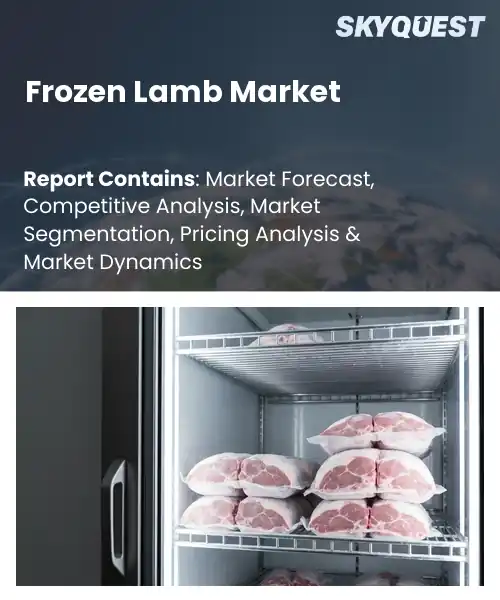
The frozen lamb market is driven primarily by global demand stability and supply chain efficiency, where cold chain investments and expanding retail distribution have converted a seasonal, locally traded commodity into a year-round international product. The frozen lamb industry includes product types such as carcasses, wholesale cuts, and processed items that are stored and transported below freezing. This is important to stabilize price fluctuations, increase product shelf life and allow access to more distant markets. In the past, this industry developed from local pastoral pathways into present-day refrigerated shipping lanes. Thus, the entire supply chain (from production to finished product) has been impacted and transformed (e.g., production planning and inventory management).
Building on improved logistics, rising urban incomes and diversified consumer tastes constitute a principal key trend driving the global frozen lamb sector because higher purchasing power prompts demand for premium lamb cuts year-round, which incentivizes producers to scale production and invest in value-added processing. Trade liberalization and sanitary harmonization reduce tariffs and regulatory barriers, enabling exporters from Oceania and South America to enter Middle Eastern and Chinese markets, and retailers respond by offering frozen lamb in convenient meal kits. Consequently, cold storage infrastructure expands, creating opportunities for private-public partnerships in developing countries that translate into job creation, better traceability, and increased export revenues and sustainable growth.
How is Blockchain Improving Traceability in the Frozen Lamb Market?
Blockchain improves traceability in the frozen lamb market by creating an immutable ledger of critical events from farm to freezer. Key aspects include unique digital identity for animals and batches, timestamped records of slaughter and freezing, and integration with cold chain sensors, so temperature and location data are verifiable. Today this reduces product fraud and speeds recalls while giving exporters and retailers clear provenance for high demand markets. In a context where export compliance and buyer trust matter more than ever blockchain links on farm records with processing and logistics information, helping small cooperatives and large processors meet strict standards and reach premium buyers.
Market snapshot - (2026-2033)
Global Market Size
USD 5.8 Billion
Largest Segment
Cuts
Fastest Growth
Other Products
Growth Rate
6.0% CAGR
To get more insights on this market click here to Request a Free Sample Report
Global frozen lamb market is segmented by product type, packaging, production method, quality grade, distribution channel and region. Based on product type, the market is segmented into cuts and other products. Based on packaging, the market is segmented into vacuum-packed, frozen blocks and individual wraps. Based on production method, the market is segmented into grass-fed and grain-fed. Based on quality grade, the market is segmented into prime, choice and select. Based on distribution channel, the market is segmented into supermarkets/hypermarkets, department stores, B2B and online sales. Based on region, the market is segmented into North America, Europe, Asia Pacific, Latin America and Middle East & Africa.
Based on the global frozen lamb market share, vacuum-packed segment dominates because its airtight design significantly limits freezer burn and oxidative changes, preserving the sensory qualities that consumers expect from frozen lamb. Retailers and processors prefer this style because of the decreased risk of spoilage, ease of inventory rotation, increased time between replenishment cycles (fewer deliveries), and decreased logistical complexity. This lead to a greater degree of confidence in the premium positioning of their products throughout retail and food service organizations.
However, individual wraps are emerging as the most rapidly expanding packaging category due to rising demand for single-portion convenience and flexible meal solutions. Online grocers and retailers use this format to target on-demand consumption for smaller households. Private-label and branded innovation (in portioning and labeling) creates new purchasing opportunities and extends market accessibility.
Supermarkets/hypermarkets segment dominates because these outlets combine extensive frozen merchandising space, established cold-chain infrastructure and large, consistent shopper traffic that aligns with frozen lamb supply requirements. They are able to offer a large variety of products in various cut sizes and grades due to their size and promotional power. This allows them to have stable purchasing agreements with their suppliers and develop their own brands, which minimizes the fragmentation of distribution channels and helps their vendors with predictable production cycles.
However, Online Sales are the fastest growing distribution channel as digital ordering and reliable home delivery expand consumer access to specialty and premium frozen lamb offerings. Suppliers can use improved last mile cold chain solutions, targeted digital marketing, and subscription models to connect with niche buyers, encourage value-added product trials, and create new and scalable sources of revenue that help expand the overall market faster.
To get detailed segments analysis, Request a Free Sample Report
As per the global frozen lamb market growth, Europe dominates the global frozen lamb market due to a convergence of production heritage, processing capacity, and mature supply chains that emphasize quality and safety. Traditions of sheep farming exist in both hot and cold climates to consistently produce an available supply of wool and meat. Advanced cold storage/freezing/ transportation systems maintain product integrity from slaughter to point of sale. The existence of well-established traceability and regulatory food systems enhances consumer trust in products sold domestically and exported. Retailers and food service companies in the major target markets (i.e., supermarket chains) have established their own unique assortments of frozen products by using both private label brands and curating product offerings. Trade association partners play a critical role in supporting international trade and distribution networks by having a wealth of knowledge in cross-border shipment of goods.
Frozen lamb market in Germany reflects strong retail infrastructure and consumer focus on quality and provenance. Retail chains create a frozen assortment of products for their stores; they work with processors to ensure that their (the processors) products have the same attributes. Processing facilities use technology to track the processing of these products for temperature control throughout the entire process (known as "cold chain"), and there is a regulatory system in place for the traceability of these products.
Frozen lamb market in United Kingdom is shaped by culinary traditions and a national retail landscape that emphasizes convenience and quality. Supermarkets and specialty retailers present curated frozen ranges and collaborate with processors on private label offerings. Logistics and processing contribute to constant availability, while consumer demand for origin or sustainability based sourcing drives procurement decisions. Many different foodservice channels create demand for flexible formats (versatile cuts) or prepared products, which encourages new product development within frozen product lines.
Frozen lamb market in France reflects culinary heritage and consumer preference for premium provenance and artisanal quality. This is done by cooperative processing and skilled butchery; maintaining uniformity in product format/texture. The use of the cold chain guarantees that quality remains intact through distribution. According to food service providers/chefs, they prefer to use prepared products (that are processed) with culinary standards, which assist in reinforcing France's position as a premium frozen lamb supplier in global lamb supply networks/trade.
Based on regional forecast, the rapid expansion of the frozen lamb market in Asia Pacific is propelled by shifting dietary preferences toward diversified protein sources, increasing urbanization and an expanding foodservice ecosystem that values convenience and product consistency. Retail supermarket chains of today as well as ecommerce websites have brought frozen categories into daily shopping routines for busy people. There have also been improvements in the cold chain infrastructure and logistics of the frozen category. Both of these have helped alleviate quality concerns regarding frozen products such that their distribution can occur well beyond the coastal hubs where they have historically been sold. Import partnerships and strategic sourcing (from various regions) will fill in the gaps left by US production of frozen products, and innovative products within the frozen ready meal space and value-added product formats will cater to consumers' changing tastes (culinary trends).
Frozen lamb market in Japan is shaped by consumer expectations for safety, quality and convenience. Retailers are using standards of processing and traceability to reassure customers about the quality of the products they are purchasing while also offering ready to eat meals and pre-seasoned meals that meet local demand. Additionally, the use of premium materials and culinary exploration by select restaurant operators has created a demand for unique and imported products that can complement those products produced internationally.
Frozen lamb market in South Korea reflects retail modernization and consumer appetite for convenient, restaurant quality proteins. The frozen food lines offered by supermarkets and online grocery stores, featuring a selection of different cuts of meat available through imports, conform to a variety of cooking methods such as grilling and stewing. Collaboration between importers and processors produces value added formats and seasonings tailored to local palates, supporting acceptance among cooks and foodservice operators.
As per regional outlook, North America is strengthening its role in the frozen lamb market through strategic enhancements across production, processing and distribution. Increasing investment in cold chain infrastructure and processing capabilities result in improved product consistency, allowing for a wider distribution of lamb throughout multiple areas of the U.S. Retailers and foodservice operators have broadened lamb offerings by creating value-added meal solutions and curated frozen assortments that attract both traditional consumers and consumers of diverse ethnicities. Import relationships complement domestic lamb supply, and breeders and processors work together to refine product attributes and develop standardization for cuts of lamb. As U.S. lamb has more traceability, better animal welfare and sustainability practices, consumer confidence increases; additionally, increased availability and convenience via digital channels is helping North America become a larger, more quality-oriented player in the global frozen lamb market. Together, collaborating with chefs and investing in R&D leads to the creation of differentiated frozen formats and flavor seasoning profiles.
Frozen lamb market in United States is driven by diverse consumer demand and expanding foodservice sector that values traditional and global culinary styles. Frozen product ranges and private label offerings by transaction-based retailers and online grocery stores enhance product access; cold storage improvements to processing facilities support the ongoing maintenance of product quality and consistency while being transported. A collaborative relationship between the producer and processor adds value through additional formats/sizes, seasonings, etc. Sustainability and traceability efforts improve consumer confidence and product attractiveness.
Frozen lamb market trends in Canada benefits from primary production regions and focus on quality processing that supports domestic and export channels. Retailers and wholesalers offer frozen assortments, while foodservice outlets incorporate lamb into diverse menus reflecting multicultural demand. Investment in cold chain logistics and processing compliance enhances product integrity during distribution. Produce, process and distribute to create innovative products, produce premium product offerings, and align with worldwide expectations in sustainability and traceability.
To know more about the market opportunities by region and country, click here to
Buy The Complete Report
Rising Consumer Preference For Lamb
Expansion Of Retail Cold Chains
High Production and Processing Costs
Stringent Animal Health Regulations
Request Free Customization of this report to help us to meet your business objectives.
The global frozen lamb market outlook is moderately fragmented, with key international players including JBS S.A., Silver Fern Farms, Alliance Group Limited, ANZCO Foods, and Thomas Foods International. Through premium positioning of products and strength of exports, companies compete with each other. Silver Fern Farms promotes sustainability while integrating farmers; JBS uses its global scale and acquisition activity. The Alliance Group uses cooperative sourcing. Companies of all types and sizes are increasing their distribution networks in order to develop a presence in the international market.
SkyQuest’s ABIRAW (Advanced Business Intelligence, Research & Analysis Wing) is our Business Information Services team that Collects, Collates, Correlates, and Analyses the Data collected by means of Primary Exploratory Research backed by robust Secondary Desk research.
As per SkyQuest analysis, the global frozen lamb industry is propelled by rising consumer preference for lamb, supported by a second driver in expanding retail cold chain infrastructure that enables year-round distribution and premium assortment growth. The main obstacle is high processing and production costs, which limit margins and discourage new smaller entrants. Europe is still the dominant region in the market, due to developing sheep farming, processing capacity, and stringent traceability of history requirements. The segment mix is mainly made up of vacuum-packed products, which preserves quality and gives the products a longer shelf life. These influences lead to increased premiumization, supply chain investments, and specific retailing strategies, and are supportive of traceability programs (including blockchain technology) that guarantee buyers what has been purchased.
| Report Metric | Details |
|---|---|
| Market size value in 2024 | USD 5.8 Billion |
| Market size value in 2033 | USD 9.8 Billion |
| Growth Rate | 6.0% |
| Base year | 2024 |
| Forecast period | (2026-2033) |
| Forecast Unit (Value) | USD Billion |
| Segments covered |
|
| Regions covered | North America (US, Canada), Europe (Germany, France, United Kingdom, Italy, Spain, Rest of Europe), Asia Pacific (China, India, Japan, Rest of Asia-Pacific), Latin America (Brazil, Rest of Latin America), Middle East & Africa (South Africa, GCC Countries, Rest of MEA) |
| Companies covered |
|
| Customization scope | Free report customization with purchase. Customization includes:-
|
To get a free trial access to our platform which is a one stop solution for all your data requirements for quicker decision making. This platform allows you to compare markets, competitors who are prominent in the market, and mega trends that are influencing the dynamics in the market. Also, get access to detailed SkyQuest exclusive matrix.
Table Of Content
Executive Summary
Market overview
Parent Market Analysis
Market overview
Market size
KEY MARKET INSIGHTS
COVID IMPACT
MARKET DYNAMICS & OUTLOOK
Market Size by Region
KEY COMPANY PROFILES
Methodology
For the Frozen Lamb Market, our research methodology involved a mixture of primary and secondary data sources. Key steps involved in the research process are listed below:
1. Information Procurement: This stage involved the procurement of Market data or related information via primary and secondary sources. The various secondary sources used included various company websites, annual reports, trade databases, and paid databases such as Hoover's, Bloomberg Business, Factiva, and Avention. Our team did 45 primary interactions Globally which included several stakeholders such as manufacturers, customers, key opinion leaders, etc. Overall, information procurement was one of the most extensive stages in our research process.
2. Information Analysis: This step involved triangulation of data through bottom-up and top-down approaches to estimate and validate the total size and future estimate of the Frozen Lamb Market.
3. Report Formulation: The final step entailed the placement of data points in appropriate Market spaces in an attempt to deduce viable conclusions.
4. Validation & Publishing: Validation is the most important step in the process. Validation & re-validation via an intricately designed process helped us finalize data points to be used for final calculations. The final Market estimates and forecasts were then aligned and sent to our panel of industry experts for validation of data. Once the validation was done the report was sent to our Quality Assurance team to ensure adherence to style guides, consistency & design.
Analyst Support
Customization Options
With the given market data, our dedicated team of analysts can offer you the following customization options are available for the Frozen Lamb Market:
Product Analysis: Product matrix, which offers a detailed comparison of the product portfolio of companies.
Regional Analysis: Further analysis of the Frozen Lamb Market for additional countries.
Competitive Analysis: Detailed analysis and profiling of additional Market players & comparative analysis of competitive products.
Go to Market Strategy: Find the high-growth channels to invest your marketing efforts and increase your customer base.
Innovation Mapping: Identify racial solutions and innovation, connected to deep ecosystems of innovators, start-ups, academics, and strategic partners.
Category Intelligence: Customized intelligence that is relevant to their supply Markets will enable them to make smarter sourcing decisions and improve their category management.
Public Company Transcript Analysis: To improve the investment performance by generating new alpha and making better-informed decisions.
Social Media Listening: To analyze the conversations and trends happening not just around your brand, but around your industry as a whole, and use those insights to make better Marketing decisions.
REQUEST FOR SAMPLE
 REQUEST FREE CUSTOMIZATION
Global Frozen Lamb Market size was valued at USD 5.8 Billion in 2024 and is poised to grow from USD 6.15 Billion in 2025 to USD 9.8 Billion by 2033, growing at a CAGR of 6.0% during the forecast period (2026-2033).
Competitive landscape in frozen lamb is tightening as traditional exporters and processors pursue consolidation, strategic retail partnerships and value chain tie ups to protect shelf space while alternative protein entrants pressure margins; examples include partnership deals between New Zealand exporters and Asian retailers and processors expanding cold chain capacity, alongside food tech entrants pursuing M&A, partnerships and cell based innovation such as Orbillion and Magic Valley. 'JBS S.A.', 'Danish Crown', 'Australian Lamb Company', 'Silver Fern Farms', 'Alliance Group Limited', 'Kühne + Heitz', 'Damaco Group', 'Lamb Weston Holdings, Inc.', 'El Moreno', 'CS Foods', 'Agri Beef Co.', 'Ovis 21', 'DC International', 'Delta Group', 'Selina Wamucii', 'Davmet', 'Sao-Salvadoralimentos', 'Meat and Livestock Australia', 'Miko Meats', 'Pitman Family Farms'
Rising consumer interest in lamb as a desirable protein, driven by culinary trends and greater exposure through foodservice and media, supports broader market demand for frozen lamb products. Shifts toward premium and specialty meats encourage retailers and processors to expand frozen assortments and develop value-added offerings, creating incentives for supply chain investment and standardized freezing practices. As consumers seek convenient, high-quality meat options, frozen lamb benefits from increased retail placement and category promotion, reinforcing sales channels and encouraging producers to scale production and processing capacity.
Premiumization Of Lamb Products: Consumers are trading up in frozen lamb, favoring premium cuts, value added preparations, and chef inspired ready to cook offerings that emphasize taste, texture and provenance. Retailers and specialty suppliers respond with curated assortments, upscale packaging and story driven branding that highlight origin and culinary heritage. This shift supports margin expansion for producers and encourages investment in quality assurance, product innovation and collaborations with foodservice partners seeking consistent higher grade ingredients aligned with evolving premium consumption.
As per the global frozen lamb market growth, Europe dominates the global frozen lamb market due to a convergence of production heritage, processing capacity, and mature supply chains that emphasize quality and safety.


Want to customize this report? This report can be personalized according to your needs. Our analysts and industry experts will work directly with you to understand your requirements and provide you with customized data in a short amount of time. We offer $1000 worth of FREE customization at the time of purchase.
Feedback From Our Clients


 USA (+1) 351-333-4748

