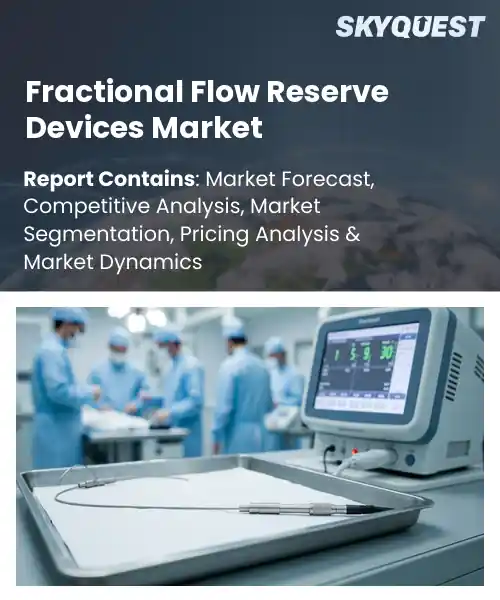
Fractional Flow Reserve Devices Market
Report ID: SQMIG35A3365
Report ID: SQMIG35A3365
[email protected]
USA +1 351-333-4748
Report ID:
SQMIG35A3365 |
Region:
Global |
Published Date: April, 2026
Pages:
157
|Tables:
139
|Figures:
78


Global Fractional Flow Reserve Devices Market size was valued at USD 1.3 Billion in 2024 and is poised to grow from USD 1.43 Billion in 2025 to USD 3.07 Billion by 2033, growing at a CAGR of 10.0% during the forecast period (2026-2033).
The primary driver of the fractional flow reserve devices market has been robust clinical evidence that FFR guided decision making improves outcomes and reduces unnecessary percutaneous coronary interventions. The market comprises pressure sensing guidewires used during coronary angiography to functionally assess lesion significance, it matters because functional assessment prevents overtreatment and avoidable complications while optimizing hospital costs. Adoption accelerated after pivotal FAME trials demonstrated fewer stents and better event free survival, prompting guideline endorsements and procurement. Over time wire design and sensor fidelity have evolved, and competing technologies like iFR and FFR CT have expanded clinical pathways globally across systems.A decisive growth factor for the global fractional flow reserve devices market is the alignment of reimbursement incentives with demonstrated cost effectiveness, which directly influences hospital procurement and clinician adoption. When payers recognize that FFR guided workflows reduce unnecessary stenting and downstream events, hospitals realize net savings and allocate capital to pressure wires, increasing device volumes and motivating manufacturers to lower prices and streamline workflows. This drives adoption in large health systems, as seen where FFR use shortened procedure times and lowered device and follow up costs, creating opportunities in emerging markets, hybrid imaging alliances and bundled payment models globally.
How is AI improving diagnostic accuracy in the fractional flow reserve devices market?
AI improves diagnostic accuracy in the fractional flow reserve devices market by converting routine imaging into physiology assessments that predict lesion significance and guide treatment. Key aspects include AI enabled image segmentation, physics informed flow modeling and angio derived FFR algorithms that reduce dependence on invasive pressure wires. The current state shows growing clinical validation and wider integration of AI into cath lab workflows, which improves consistency and shortens procedure complexity. Examples include angiography based tools that approximate wire based FFR and combined intravascular imaging plus AI physiology platforms that help clinicians make faster, more reliable decisions.Philips March 2026, the company launched IntraSight Plus to combine intravascular imaging and AI enabled FFR assessment in one system, supporting faster and more consistent lesion assessment and helping hospitals adopt physiology guided care with greater efficiency.
Market snapshot - (2026-2033)
Global Market Size
USD 1.3 Billion
Largest Segment
Invasive Devices
Fastest Growth
FFR Measurement Techniques
Growth Rate
10.0% CAGR
To get more insights on this market click here to Request a Free Sample Report
Global fractional flow reserve devices market is segmented by device type, end user, application, sales channel, material type and region. Based on device type, the market is segmented into Invasive Devices and FFR Measurement Techniques. Based on end user, the market is segmented into Hospitals and Ambulatory Surgical Centers. Based on application, the market is segmented into Coronary Artery Disease and Heart Valve Diseases. Based on sales channel, the market is segmented into Direct Sales and Online Sales. Based on material type, the market is segmented into Biocompatible Materials and Non-Biocompatible Materials. Based on region, the market is segmented into North America, Europe, Asia Pacific, Latin America and Middle East & Africa.
Invasive Devices segment dominates because invasive fractional flow reserve catheters and pressure wires are integral to routine clinical workflow, providing direct physiological assessment during coronary interventions. Their compatibility with established cath lab procedures, clinician familiarity, and immediate diagnostic feedback drive hospital adoption and justify investment in capital and training. This entrenched clinical utility creates high switching costs for alternatives and sustains demand across diagnostic and interventional cardiology practices.
However, FFR Measurement Techniques are emerging as the fastest growing area because advances in noninvasive computational FFR algorithms, pressure-sensor miniaturization, and software integration enable broader clinician adoption without extensive procedural changes. Improved modalities expand applicability to more lesion types and interventional pathways, unlocking clinical workflows and vendor opportunities that drive market growth.
Online Sales segment dominates because digital procurement platforms streamline ordering of fractional flow reserve devices, making product information, specifications, and postpurchase support readily accessible to a broad set of buyers. Ecommerce channels reduce distribution layers, shorten delivery cycles, and lower administrative burden for purchasing teams in clinical facilities, encouraging repeat procurement and enabling suppliers to scale catalog offerings, bundled services, and warranty management through centralized digital systems.
However, Direct Sales are emerging as the fastest growing channel because manufacturers form clinical partnerships supporting device demonstration, training, and bundled service contracts essential for adopting fractional flow reserve technologies. These hands-on ties foster clinician confidence, enable seamless cath lab integration, and secure long-term purchasing that drives recurring revenue and clinical uptake.
To get detailed segments analysis, Request a Free Sample Report
North America dominates the global Fractional Flow Reserve Devices market due to a confluence of structural and market advantages. High concentration of advanced cardiac care centers and experienced interventional cardiologists drives strong clinical adoption of physiological lesion assessment. A supportive payer environment and established reimbursement pathways reduce barriers to procedural uptake and device procurement. The region hosts major device manufacturers and innovation hubs that invest heavily in research, clinical evidence generation and strategic partnerships with hospitals. Regulatory frameworks, while rigorous, provide predictable pathways for product approval and market entry. Additionally, a culture of early adoption among clinicians, robust training infrastructure and concentrated capital for acquisitions and commercialization combine to sustain leadership in product availability, clinical integration and iterative technology improvement.
Fractional Flow Reserve Devices Market in the United States reflects deep clinical integration driven by extensive interventional cardiology infrastructure, concentrated centers of excellence and a strong culture of innovation. Manufacturer presence and locally conducted clinical studies support rapid device iteration and clinician confidence. Reimbursement frameworks and institutional purchasing models facilitate routine use in catheterization labs, while collaborative relationships among industry, academics and hospital networks accelerate diffusion and clinical procedural standardization.
Fractional Flow Reserve Devices Market in Canada is shaped by a funded healthcare environment, with adoption influenced by provincial procurement and health technology assessment processes. Leading academic hospitals and cardiology centers drive clinical evaluation and guideline adoption, while collaborative procurement initiatives influence access. Manufacturers engage with clinicians to demonstrate value and cost effectiveness, and regional pilot programs support broader uptake, resulting in measured integration into interventional cardiology practice across provinces.
Europe rapid expansion of the Fractional Flow Reserve Devices market is propelled by increasing emphasis on evidence based, physiology guided coronary care and progressive guideline adoption across national health systems. Strengthening clinical advocacy among interventional cardiologists and growing availability of operator training contribute to faster procedural adoption. European medtech companies and multinational firms are aligning product portfolios to address regional reimbursement and procurement models, while collaborative research networks generate local evidence that supports payer engagement. Diverse healthcare frameworks create pockets of accelerated uptake in countries with favorable evaluation pathways. Cross border referral centers and centralized procurement in several markets further enable scale. Overall, coordinated clinician education, industry engagement and evolving health technology assessment practices drive market momentum and diffusion of FFR use.
Fractional Flow Reserve Devices Market Germany benefits from strong medtech manufacturing and extensive hospital infrastructure that support clinical familiarity with physiological lesion assessment. Hospitals and specialized cardiology centers are equipped for routine device integration, and clinical societies promote guideline aligned practice. A competitive supplier landscape encourages innovation and value based engagement with payers, while regional procurement models and academic collaboration facilitate evidence generation and adoption across multiple care settings consistently.
Fractional Flow Reserve Devices Market United Kingdom has exhibited rapid uptake driven by guideline endorsement, centralized procurement through national health services and focused regional adoption programs. Clinical networks and training initiatives have empowered interventional teams to adopt physiology guided decision making. Procurement strategies emphasize cost effectiveness and standardized pathways, enabling wider roll out in catheterization centers. Active engagement between industry and NHS stakeholders supports evidence generation and implementation across trusts.
Fractional Flow Reserve Devices Market France is emerging through focused clinical evaluation and pilot programs at major cardiology centers. Hospitals and academic networks assess clinical utility and cost effectiveness while manufacturers adapt market entry strategies to national procurement and reimbursement processes. Emphasis on locally generated evidence and alignment with clinical guidelines supports gradual uptake, with collaboration between industry and academic centers central to further expanding adoption beyond early adopter institutions.
Asia Pacific is strengthening its position in the Fractional Flow Reserve Devices market through a combination of targeted investment in clinical infrastructure, local manufacturing and strategic collaborations between regional hospitals and global device companies. Japan and South Korea serve as technology leaders where advanced regulatory pathways and strong medtech sectors support early adoption and iterative product refinement. Elsewhere, increasing access to catheterization facilities, expanded clinician training programs and localized evidence generation are narrowing the adoption gap. Governments and industry partners are pursuing cost sensitive product adaptations and supply chain localization, improving affordability and availability. Cross border partnerships, focused commercialization strategies and growing clinical expertise are collectively elevating the region from the periphery to a more influential role in device development and clinical practice.
Fractional Flow Reserve Devices Market Japan features a mature medtech ecosystem and advanced hospital infrastructure that favor early adoption of physiological diagnostic devices. Domestic manufacturers and research institutions collaborate on product refinement and clinical studies, while regulatory pathways and reimbursement considerations support commercialization in specialist centers. High clinician engagement, structured training programs and strong industry hospital partnerships enable iterative innovation and routine integration of FFR techniques within interventional cardiology practice.
Fractional Flow Reserve Devices Market South Korea shows progress driven by an innovative medtech sector, hospital adoption and government support for medical technology. Local manufacturers work with global firms to develop adaptable solutions for regional markets, while clinical centers incorporate physiology based assessment into care pathways. Export orientation and collaboration between industry, hospitals and academic groups foster evidence generation and commercialization, enhancing competitiveness and broader clinical access to FFR technology.
To know more about the market opportunities by region and country, click here to
Buy The Complete Report
Rising Cardiovascular Disease Prevalence
Advances In Device Technology
High Procedural Costs And Reimbursement
Clinical Practice Variation Across Regions
Request Free Customization of this report to help us to meet your business objectives.
I will verify two real startups (founded 2019 or later) and use current sources to produce the Competitive Landscape section as specified. May I proceed to check the latest information?
Top Player’s Company Profile
Recent Developments
SkyQuest’s ABIRAW (Advanced Business Intelligence, Research & Analysis Wing) is our Business Information Services team that Collects, Collates, Correlates, and Analyses the Data collected by means of Primary Exploratory Research backed by robust Secondary Desk research. As per SkyQuest analysis, the global fractional flow reserve devices market is propelled primarily by robust clinical evidence showing FFR guided decision making improves outcomes and reduces unnecessary percutaneous coronary interventions, while adoption is tempered by high procedural costs and inconsistent reimbursement that constrain hospital uptake. North America remains the dominant region due to advanced cardiac care infrastructure and favorable payer frameworks, and invasive devices continue to lead the market given their entrenched role in cath lab workflows. Growing integration of AI and imaging platforms serves as a second major growth driver by improving diagnostic accuracy, streamlining workflows and expanding noninvasive assessment options.
| Report Metric | Details |
|---|---|
| Market size value in 2024 | USD 1.3 Billion |
| Market size value in 2033 | USD 3.07 Billion |
| Growth Rate | 10.0% |
| Base year | 2024 |
| Forecast period | (2026-2033) |
| Forecast Unit (Value) | USD Billion |
| Segments covered |
|
| Regions covered | North America (US, Canada), Europe (Germany, France, United Kingdom, Italy, Spain, Rest of Europe), Asia Pacific (China, India, Japan, Rest of Asia-Pacific), Latin America (Brazil, Rest of Latin America), Middle East & Africa (South Africa, GCC Countries, Rest of MEA) |
| Companies covered |
|
| Customization scope | Free report customization with purchase. Customization includes:-
|
To get a free trial access to our platform which is a one stop solution for all your data requirements for quicker decision making. This platform allows you to compare markets, competitors who are prominent in the market, and mega trends that are influencing the dynamics in the market. Also, get access to detailed SkyQuest exclusive matrix.
Table Of Content
Executive Summary
Market overview
Parent Market Analysis
Market overview
Market size
KEY MARKET INSIGHTS
COVID IMPACT
MARKET DYNAMICS & OUTLOOK
Market Size by Region
KEY COMPANY PROFILES
Methodology
For the Fractional Flow Reserve Devices Market, our research methodology involved a mixture of primary and secondary data sources. Key steps involved in the research process are listed below:
1. Information Procurement: This stage involved the procurement of Market data or related information via primary and secondary sources. The various secondary sources used included various company websites, annual reports, trade databases, and paid databases such as Hoover's, Bloomberg Business, Factiva, and Avention. Our team did 45 primary interactions Globally which included several stakeholders such as manufacturers, customers, key opinion leaders, etc. Overall, information procurement was one of the most extensive stages in our research process.
2. Information Analysis: This step involved triangulation of data through bottom-up and top-down approaches to estimate and validate the total size and future estimate of the Fractional Flow Reserve Devices Market.
3. Report Formulation: The final step entailed the placement of data points in appropriate Market spaces in an attempt to deduce viable conclusions.
4. Validation & Publishing: Validation is the most important step in the process. Validation & re-validation via an intricately designed process helped us finalize data points to be used for final calculations. The final Market estimates and forecasts were then aligned and sent to our panel of industry experts for validation of data. Once the validation was done the report was sent to our Quality Assurance team to ensure adherence to style guides, consistency & design.
Analyst Support
Customization Options
With the given market data, our dedicated team of analysts can offer you the following customization options are available for the Fractional Flow Reserve Devices Market:
Product Analysis: Product matrix, which offers a detailed comparison of the product portfolio of companies.
Regional Analysis: Further analysis of the Fractional Flow Reserve Devices Market for additional countries.
Competitive Analysis: Detailed analysis and profiling of additional Market players & comparative analysis of competitive products.
Go to Market Strategy: Find the high-growth channels to invest your marketing efforts and increase your customer base.
Innovation Mapping: Identify racial solutions and innovation, connected to deep ecosystems of innovators, start-ups, academics, and strategic partners.
Category Intelligence: Customized intelligence that is relevant to their supply Markets will enable them to make smarter sourcing decisions and improve their category management.
Public Company Transcript Analysis: To improve the investment performance by generating new alpha and making better-informed decisions.
Social Media Listening: To analyze the conversations and trends happening not just around your brand, but around your industry as a whole, and use those insights to make better Marketing decisions.
REQUEST FOR SAMPLE
 REQUEST FREE CUSTOMIZATION


Want to customize this report? This report can be personalized according to your needs. Our analysts and industry experts will work directly with you to understand your requirements and provide you with customized data in a short amount of time. We offer $1000 worth of FREE customization at the time of purchase.
Feedback From Our Clients


 USA (+1) 351-333-4748

