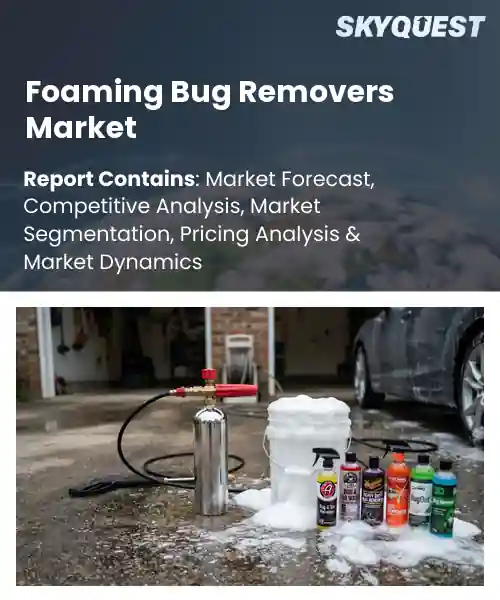
Foaming Bug Removers Market
Report ID: SQMIG30K2136
Report ID: SQMIG30K2136
[email protected]
USA +1 351-333-4748
Report ID:
SQMIG30K2136 |
Region:
Global |
Published Date: August, 2026
Pages:
157
|Tables:
144
|Figures:
78


Global Foaming Bug Removers Market size was valued at USD 382.7 Million in 2024 and is poised to grow from USD 407.19 Million in 2025 to USD 668.86 Million by 2033, growing at a CAGR of 6.4% during the forecast period (2026-2033).
The global foaming bug remover market has emerged as an expanding segment of the pest‑control industry. Its primary driver is increasing consumer preference for low‑residue products that can be applied around children and pets. Historically, liquid aerosols dominated the market, but the introduction of biodegradable foam formulas in 2010 shifted demand toward easier‑to‑apply surface‑active solutions. For example, a 2014 launch by a European manufacturer demonstrated superior knock‑down rates on ants and cockroaches while leaving no visible film. This evolution reflects heightened awareness of indoor air quality and regulatory pressure to reduce volatile organic compounds, positioning foam‑based removers as an alternative. Regulatory incentives aimed at cutting indoor pesticide residues are the catalyst for growth in the foaming bug remover market. When governments tighten limits on aerosolized chemicals, manufacturers reformulate products to meet lower VOC thresholds, which in turn drives retailer demand for compliant inventory. An example occurred in 2022 when a North American home‑improvement chain swapped conventional sprays for foam kits and saw a ten‑percent sales rise supported by consumer confidence in safer use. This dynamic creates opportunities for biotech firms to launch enzyme‑enhanced foams that target specific insects and degrade quickly, a feedback loop that expands market reach into hospitality and food‑service venues.
How is AI-driven automation influencing product efficacy in the foaming bug removers market?
AI driven automation is reshaping how foaming bug removers are formulated and produced. By analyzing sensor data from mixing vats, algorithms fine tuned surfactant blends to achieve optimal foam stability and insect lethality. Machine learning models predict how temperature and humidity affect foam expansion, allowing producers to adjust recipes on the fly. This results in products that deliver consistent coverage and faster knock down of pests. Production lines benefit from reduced trial and error, shorter development cycles and lower material waste. Consumers notice fewer re applications and a cleaner indoor environment, reinforcing demand for high efficacy solutions.Recent introductions of AI controlled mixing stations let manufacturers adjust surfactant ratios in real time, creating foam that remains stable longer and kills insects more effectively. This technology boosts confidence in product performance and fuels market expansion as brands seek smarter greener solutions.
Market snapshot - (2026-2033)
Global Market Size
USD 382.7 Million
Largest Segment
Ready-to-Use Foam
Fastest Growth
Concentrated Foam
Growth Rate
6.4% CAGR
To get more insights on this market click here to Request a Free Sample Report
Global foaming bug removers market is segmented by formulation, vehicle type, application, distribution channel, end user and region. Based on formulation, the market is segmented into Foam Spray, Concentrated Foam and Ready-to-Use Foam. Based on vehicle type, the market is segmented into Passenger Vehicles, Commercial Vehicles and Motorcycles. Based on application, the market is segmented into Windshields, Vehicle Body and Headlights. Based on distribution channel, the market is segmented into Automotive Retail Stores, Online Retail and Supermarkets & Hypermarkets. Based on end user, the market is segmented into Individual Consumers, Professional Car Washes and Automotive Detailing Centers. Based on region, the market is segmented into North America, Europe, Asia Pacific, Latin America and Middle East & Africa.
Foam spray segment leads because it offers immediate, on demand coverage that aligns with consumer expectations for quick bug removal. The ease of activation from a handheld nozzle eliminates preparation steps, encouraging spontaneous purchases. Its lightweight formulation reduces packaging weight, appealing to retailers seeking efficient shelf space. Moreover, the visual foam cue reinforces perceived efficacy, driving repeat usage and reinforcing brand loyalty across diverse vehicle owners throughout the year market.
However, concentrated foam emerges as the most rapidly expanding area because its higher active ingredient density delivers superior cleaning power with less material. This efficiency attracts eco conscious consumers and professional services seeking reduced runoff. Ongoing formulation innovations enable thinner layers while preserving performance, unlocking new application scenarios and propelling market expansion.
Passenger vehicles segment dominates because the majority of daily commuting occurs in cars, creating consistent demand for bug removing solutions that keep windshields clear. Manufacturers prioritize formulations that safely interact with automotive paint and glass, fostering brand partnerships with OEMs. High traffic volumes generate repeat purchase cycles, while safety regulations emphasizing driver visibility further cement the central role of these products in personal transportation upkeep throughout the vehicle's lifespan and maintenance.
Meanwhile, motorcycles represent the fastest growing segment as urban mobility shifts toward two wheelers, increasing exposure to insect splatter on windshields and headlights. Riders value lightweight portable foaming cans that can be applied while moving. Emerging compact designs and rapid dry formulas are driving adoption, widening market reach into this evolving transport niche.
To get detailed segments analysis, Request a Free Sample Report
North America retains a leading position in the foaming bug removers market due to a confluence of mature automotive ecosystems, proactive environmental policies, and sophisticated consumer preferences. The region benefits from extensive research and development capabilities that foster innovative formulation and delivery technologies. Robust distribution channels and a well‑established aftermarket network enable rapid product adoption across both passenger and commercial vehicle segments. High awareness of vehicle maintenance best practices drives consistent demand, while regulatory frameworks encourage the use of cleaner, foam‑based solutions that reduce emissions and improve engine efficiency. Collaboration between major manufacturers and specialized chemical suppliers accelerates the introduction of next‑generation foaming agents that meet stringent performance criteria. Consumer education campaigns highlight the long‑term cost savings associated with reduced engine wear, reinforcing market penetration. Additionally, the region’s emphasis on sustainability aligns foaming bug remover solutions with broader corporate environmental goals, further solidifying its dominance in this niche segment.
Foaming Bug Removers Market in United States benefits from a highly competitive landscape where leading automotive brands and aftermarket suppliers collaborate on advanced formulation techniques. Consumers demonstrate strong preference for products that promise extended engine life and reduced maintenance intervals. Distribution networks span a wide range of retail channels, from specialized service centers to large‑scale home improvement stores, ensuring accessibility. Ongoing emphasis on environmental compliance further drives adoption of foam‑based solutions.
Foaming Bug Removers Market in Canada is shaped by a strong focus on sustainability and regulatory alignment that encourages the shift toward low‑impact cleaning technologies. Automotive repair networks and dealership service departments prioritize foam‑based products for their efficiency and reduced chemical waste. Consumer awareness of the benefits of foam formulations, such as quicker drying times and less residue, supports steady demand. Partnerships with research institutions further refine product performance for cold‑climate applications.
Europe experiences a rapid expansion of the foaming bug removers market, propelled by stringent emissions regulations that demand cleaner engine maintenance solutions. The continent’s deep automotive engineering heritage fuels continuous innovation in formulation chemistry, while manufacturers prioritize products that align with broader sustainability goals. Collaborative research initiatives across leading universities and industry groups accelerate the development of high‑performance foams tailored to diverse vehicle architectures. Consumers exhibit heightened awareness of environmental impact and seek maintenance options that minimize waste and improve fuel efficiency. A well‑integrated distribution network spanning specialized service workshops and major retail chains enhances market accessibility, further reinforcing the upward trajectory of foaming bug remover adoption across the region.
Foaming Bug Removers Market in Germany benefits from a strong engineering culture and rigorous quality standards that drive adoption of advanced foam technologies. Automotive manufacturers and aftermarket suppliers collaborate to integrate foaming solutions meeting precise performance criteria. Regulatory emphasis on reduced emissions and waste encourages environmentally friendly cleaning agents. Distribution includes dedicated service centers and major retail outlets, providing broad availability. Continuous research investment refines foam formulations for diverse engine types.
Foaming Bug Removers Market in United Kingdom is experiencing accelerated growth as consumers increasingly favor eco‑friendly maintenance products. Decision‑makers within automotive service firms prioritize foaming agents that deliver rapid cleaning while minimizing chemical residues. Regulatory incentives reinforce the shift toward low‑impact solutions, and collaborative pilots between industry and research institutions expedite product innovation. Retail presence spans both specialized workshops and large home‑improvement chains, ensuring convenient access. The market’s momentum is further supported by heightened awareness of fuel efficiency benefits associated with foam‑based cleaners.
Foaming Bug Removers Market in France is emerging as manufacturers explore foam‑based alternatives to traditional cleaning chemicals. Environmental guidelines promote the adoption of low‑waste solutions, encouraging early‑stage integration within service centres. Collaborative projects between automotive firms and local research labs focus on adapting formulations to French vehicle fleets. Distribution channels are expanding from niche specialist outlets to broader retail networks, increasing product visibility. Consumer education campaigns highlight the long‑term engine protection benefits of foam cleaners, supporting gradual market uptake.
Asia Pacific is strengthening its position in the foaming bug removers market through rapid technological adoption, expanding automotive production, and increasing focus on environmental stewardship. Nations in the region invest heavily in research collaborations between manufacturers and chemical innovators, yielding high‑efficiency foam formulations suited for diverse climate conditions. Growing consumer awareness of maintenance efficiency and reduced emissions fuels demand across both new‑vehicle and aftermarket segments. Strong supply‑chain integration ensures timely distribution through extensive dealer networks and online platforms. Government incentives encouraging low‑impact cleaning solutions further accelerate market penetration, positioning the region as a key driver of global foaming bug remover adoption.
Foaming Bug Removers Market in Japan benefits from a culture of precision engineering and a strong emphasis on product reliability. Automotive manufacturers integrate foam‑based cleaners that align with stringent performance standards and environmental targets. Collaboration between leading chemical firms and research universities yields formulations optimized for high‑temperature engine environments characteristic of the region. Distribution networks encompass both specialized service outlets and major retail chains, facilitating widespread accessibility. Consumer preferences for efficient, low‑residue solutions reinforce steady demand for advanced foaming technologies.
Foaming Bug Removers Market in South Korea is propelled by aggressive adoption of innovative cleaning solutions within a rapidly expanding automotive sector. Manufacturers prioritize foaming agents that deliver swift engine protection while complying with stringent local environmental regulations. Partnerships between domestic chemical producers and technology institutes accelerate development of high‑performance foam blends tailored to diverse vehicle models. Retail presence spans dedicated service workshops and large‑scale electronic commerce platforms, ensuring convenient consumer access. Heightened awareness of fuel efficiency gains associated with foam‑based cleaners reinforces market momentum across both new and used vehicle maintenance segments.
To know more about the market opportunities by region and country, click here to
Buy The Complete Report
Increasing Adoption Of Eco‑Friendly Formulations
Rising Demand For Rapid Disinfection
Stringent Regulatory Compliance Requirements
Limited Consumer Awareness Of Benefits
Request Free Customization of this report to help us to meet your business objectives.
In the foaming bug remover market, competition is intensifying as traditional chemical pesticide manufacturers confront emerging biotech firms that offer insect‑based alternatives and as pest‑control companies pursue strategic alliances with technology startups to integrate foam‑dispersion platforms. Recent M&A activity includes a major agrochemical group acquiring a niche foam‑formulation startup to broaden its product line, while several Israeli insect‑targeting companies have entered partnership agreements with global distributors to accelerate market penetration. Companies are also investing in R&D collaborations to develop biodegradable foaming agents that enhance efficacy while meeting stricter environmental regulations.
Top Player’s Company Profile
Recent Developments
SkyQuest’s ABIRAW (Advanced Business Intelligence, Research & Analysis Wing) is our Business Information Services team that Collects, Collates, Correlates, and Analyses the Data collected by means of Primary Exploratory Research backed by robust Secondary Desk research. According to SkyQuest analysis the global foaming bug removers market is projected to reach $668.86 million by 2033, driven primarily by the rising adoption of eco‑friendly formulations that appeal to environmentally conscious buyers and supported by a second catalyst of growing demand for rapid disinfection that promises instant pest control. The market’s growth is tempered by stringent regulatory compliance requirements that extend development cycles and raise costs. North America dominates the market thanks to its mature automotive ecosystem and strong distribution networks, while the foam‑spray segment leads in sales because it offers on‑demand coverage and visible performance that resonates with consumers across vehicle types.
| Report Metric | Details |
|---|---|
| Market size value in 2024 | USD 382.7 Million |
| Market size value in 2033 | USD 668.86 Million |
| Growth Rate | 6.4% |
| Base year | 2024 |
| Forecast period | (2026-2033) |
| Forecast Unit (Value) | USD Million |
| Segments covered |
|
| Regions covered | North America (US, Canada), Europe (Germany, France, United Kingdom, Italy, Spain, Rest of Europe), Asia Pacific (China, India, Japan, Rest of Asia-Pacific), Latin America (Brazil, Rest of Latin America), Middle East & Africa (South Africa, GCC Countries, Rest of MEA) |
| Companies covered |
|
| Customization scope | Free report customization with purchase. Customization includes:-
|
To get a free trial access to our platform which is a one stop solution for all your data requirements for quicker decision making. This platform allows you to compare markets, competitors who are prominent in the market, and mega trends that are influencing the dynamics in the market. Also, get access to detailed SkyQuest exclusive matrix.
Table Of Content
Executive Summary
Market overview
Parent Market Analysis
Market overview
Market size
KEY MARKET INSIGHTS
COVID IMPACT
MARKET DYNAMICS & OUTLOOK
Market Size by Region
KEY COMPANY PROFILES
Methodology
For the Foaming Bug Removers Market, our research methodology involved a mixture of primary and secondary data sources. Key steps involved in the research process are listed below:
1. Information Procurement: This stage involved the procurement of Market data or related information via primary and secondary sources. The various secondary sources used included various company websites, annual reports, trade databases, and paid databases such as Hoover's, Bloomberg Business, Factiva, and Avention. Our team did 45 primary interactions Globally which included several stakeholders such as manufacturers, customers, key opinion leaders, etc. Overall, information procurement was one of the most extensive stages in our research process.
2. Information Analysis: This step involved triangulation of data through bottom-up and top-down approaches to estimate and validate the total size and future estimate of the Foaming Bug Removers Market.
3. Report Formulation: The final step entailed the placement of data points in appropriate Market spaces in an attempt to deduce viable conclusions.
4. Validation & Publishing: Validation is the most important step in the process. Validation & re-validation via an intricately designed process helped us finalize data points to be used for final calculations. The final Market estimates and forecasts were then aligned and sent to our panel of industry experts for validation of data. Once the validation was done the report was sent to our Quality Assurance team to ensure adherence to style guides, consistency & design.
Analyst Support
Customization Options
With the given market data, our dedicated team of analysts can offer you the following customization options are available for the Foaming Bug Removers Market:
Product Analysis: Product matrix, which offers a detailed comparison of the product portfolio of companies.
Regional Analysis: Further analysis of the Foaming Bug Removers Market for additional countries.
Competitive Analysis: Detailed analysis and profiling of additional Market players & comparative analysis of competitive products.
Go to Market Strategy: Find the high-growth channels to invest your marketing efforts and increase your customer base.
Innovation Mapping: Identify racial solutions and innovation, connected to deep ecosystems of innovators, start-ups, academics, and strategic partners.
Category Intelligence: Customized intelligence that is relevant to their supply Markets will enable them to make smarter sourcing decisions and improve their category management.
Public Company Transcript Analysis: To improve the investment performance by generating new alpha and making better-informed decisions.
Social Media Listening: To analyze the conversations and trends happening not just around your brand, but around your industry as a whole, and use those insights to make better Marketing decisions.
REQUEST FOR SAMPLE
 REQUEST FREE CUSTOMIZATION


Want to customize this report? This report can be personalized according to your needs. Our analysts and industry experts will work directly with you to understand your requirements and provide you with customized data in a short amount of time. We offer $1000 worth of FREE customization at the time of purchase.
Feedback From Our Clients


 USA (+1) 351-333-4748

