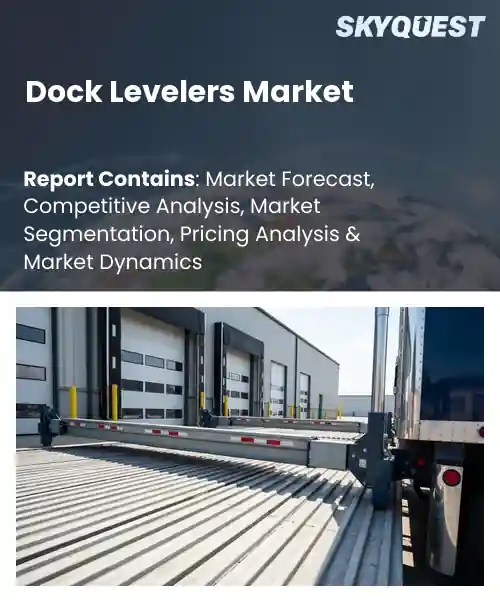
Dock Levelers Market
Report ID: SQMIG20I3162
Report ID: SQMIG20I3162
[email protected]
USA +1 351-333-4748
Report ID:
SQMIG20I3162 |
Region:
Global |
Published Date: June, 2026
Pages:
157
|Tables:
117
|Figures:
77


Global Dock Levelers Market size was valued at USD 2.44 Billion in 2024 and is poised to grow from USD 2.6 Billion in 2025 to USD 4.3 Billion by 2033, growing at a CAGR of 6.49% during the forecast period (2026-2033).
The primary driver of the dock levelers market is the rapid expansion and sophistication of supply chain logistics, driven by e-commerce and just-in-time distribution models. Dock levelers, which bridge vertical gaps between trailers and warehouse floors, reduce loading times and workplace injuries while enabling higher throughput, so they matter to operators seeking cost and safety gains. Historically, the market evolved from simple mechanical lip devices to hydraulic and air-powered models with integrated safety features, and now to smart systems with sensors and monitoring. Large retailers and cold chain operators exemplify this shift, retrofitting docks to handle faster, diversified freight flows.
A key growth factor for the global dock levelers market is the convergence of regulatory pressure for workplace safety and the operational imperative to integrate with warehouse automation, which creates both demand and opportunity. As regulators tighten standards and insurers raise premiums after incidents, companies invest in hydraulic levelers with lockout features and sensors, causing reductions in accidents and insurance costs. Simultaneously, integration with conveyors and automated guided vehicles compels specifications for leveler durability and communication protocols, enabling faster loading cycles in large e-commerce fulfillment centers and temperature-controlled food supply chains, opening aftermarket services and retrofit markets across emerging regions.
How is IoT enabling predictive maintenance for dock levelers?
IoT is transforming predictive maintenance for dock levelers by combining sensors connectivity and cloud analytics to surface early fault signals and actionable work orders. Key aspects include vibration and position sensing motor current monitoring and environmental condition tracking plus secure telematics that stream data for real time analysis. The current state shows both OEM integrated systems and retrofit sensor kits being adopted across modern warehouses where reducing unexpected downtime and simplifying service coordination matters.
This creates more efficient maintenance workflows through remote diagnostics usage based maintenance planning and automated technician dispatch when analytics identify genuine failure signatures.Rite Hite March 2026, announced a strategic move to consolidate regional service and scale deployment of connected dock solutions which accelerates roll out of IoT connected levelers and integrated maintenance services supporting greater uptime faster repairs and broader market adoption driven by measurable operational benefits.
Market snapshot - (2026-2033)
Global Market Size
USD 2.44 Billion
Largest Segment
Hydraulic Dock Levelers
Fastest Growth
Vertical Storing Dock Levelers
Growth Rate
6.49% CAGR
To get more insights on this market click here to Request a Free Sample Report
Global dock levelers market is segmented by operational actuation type, core material composition, end-use industry, distribution channel and region. Based on operational actuation type, the market is segmented into Hydraulic Dock Levelers, Mechanical Push-Button Levelers, Air-Powered Inflatable Levelers and Vertical Storing Dock Levelers. Based on core material composition, the market is segmented into High-Tensile Structural Steel and Heavy-Duty Aluminum. Based on end-use industry, the market is segmented into Logistics, Warehousing & Distribution Centers, Manufacturing & Heavy Industrial Plants and Retail & Commercial Supply Hubs. Based on distribution channel, the market is segmented into Direct and Indirect. Based on region, the market is segmented into North America, Europe, Asia Pacific, Latin America and Middle East & Africa.
Hydraulic Dock Levelers segment dominates because its powered actuation delivers smooth, controlled deck movement that accommodates wide load ranges and frequent cycles, reducing equipment strain and loading interruptions. Their robust construction and predictable performance lead facilities to prefer hydraulics for heavy duty and high throughput applications, driving specification by safety and operational planners who prioritize minimal downtime and integration with dock controls, which in turn sustains market preference and procurement.
However, Air-Powered Inflatable Levelers are witnessing the strongest growth momentum due to their simplified installation, lower maintenance exposure and gentle dock sealing that reduces energy loss and contamination. Growing interest from facilities prioritizing contamination control and rapid retrofits is accelerating adoption, creating new opportunities for manufacturers focusing on modular, low impact dock solutions.
High-Tensile Structural Steel segment dominates because its superior strength and fatigue resistance enable dock levelers to withstand heavy repetitive loads and abrasive industrial use, delivering predictable long term performance. Buyers in demanding operations specify steel to minimize replacement and repair cycles; this reliability informs design standards and safety approvals, driving procurement preferences toward steel platforms and reinforcing its central role in sustaining traditional dock infrastructure investments.
However, Heavy-Duty Aluminum is emerging as the key high growth area because its lighter weight and corrosion resistance simplify installation and reduce floor loading, making it attractive for retrofits and fast deployments. Advances in alloy finishing and preference for low maintenance docks are accelerating adoption and broadening application opportunities.
To get detailed segments analysis, Request a Free Sample Report
North America dominates the global dock levelers market due to a mature logistics and industrial ecosystem that emphasizes operational efficiency, safety, and reliability. High penetration of modern distribution centers and strong integration between manufacturers, third party logistics providers, and retail chains drives demand for advanced loading solutions. Regulatory frameworks and industry standards encourage adoption of safety enhancing equipment and routine maintenance practices. A well established supplier network and service infrastructure supports rapid deployment, customization, and aftermarket support, while continuous investment in facility upgrades and automation sustains steady replacement and retrofit cycles across commercial and industrial sectors. Strong emphasis on innovation and product development has produced a range of specialized configurations that meet diverse operational profiles. Collaboration between equipment manufacturers and facility operators accelerates technology transfer and tailored solutions that enhance throughput and worker safety.
Dock Levelers Market in United States is characterized by expansive distribution networks and a strong focus on operational efficiency and safety. Warehouse modernization initiatives and e commerce influence demand for flexible, automated loading solutions. A mature supplier and service ecosystem supports customization, maintenance, and rapid deployment, while facility managers and logistics providers prioritize integration with broader material handling systems and durable designs that reduce downtime and improve throughput and resilience.
Dock Levelers Market in Canada reflects a pragmatic blend of retrofit demand and new facility specifications driven by diverse climatic and transport needs. Emphasis on reliable performance and energy efficient operations shapes procurement preferences. Local distributors and service partners offer tailored maintenance and rapid support, enabling consistent uptime across urban and remote sites. Collaboration with integrators fosters compatibility with material handling fleets and adoption of automated loading solutions for operators.
Asia Pacific expansion is propelled by swift evolution of distribution infrastructure, increased freight flow, and the rise of modern retail and manufacturing hubs that demand efficient loading solutions. Port upgrades and logistics center modernization create strong pull for robust, adaptable dock equipment that handles varied vehicle types and cargo profiles. Regional producers and international suppliers collaborate to deliver localized designs and service capabilities, while increasing focus on worker safety and process automation accelerates uptake. Urban densification and expansion of cold chain and e commerce supply chains further stimulate demand for reliable loading systems and comprehensive maintenance networks that minimize operating interruptions. Supportive policy measures and targeted investments in logistics enable broader deployment of modern equipment. Emphasis on aftersales service, training programs, and digital integration with warehouse management systems strengthens value proposition and encourages long term adoption across diverse industry segments.
Dock Levelers Market in Japan is influenced by strong emphasis on precision engineering and seamless integration with automated material handling architectures. Manufacturers and facility operators favor high quality durable loading solutions that comply with stringent safety and industrial standards. Demand for customized configurations tailored to automotive, electronics, and warehousing operations supports uptake of advanced mechanisms and retrofit services. Local suppliers emphasize lifecycle support, preventive maintenance, and collaboration with systems integrators.
Dock Levelers Market in South Korea is shaped by strong manufacturing activity, intensive port and logistics modernization that demand robust, high throughput loading solutions. Facility operators emphasize compatibility with diverse vehicle fleets and rapid cycle operations, encouraging adoption of adaptable, automated equipment. Domestic suppliers and global vendors work with integrators to provide tailored installations, preventive maintenance, and retrofit services that support export oriented supply chains and complex industrial handling requirements.
Europe is strengthening its position in the dock levelers market through a combination of rigorous safety and performance standards, emphasis on sustainability, and a strong engineering base that supports product innovation and customization. Investment in modern logistics hubs and cross border distribution corridors promotes demand for interoperable and durable loading equipment. Suppliers focus on energy efficient designs and lifecycle service models that reduce total cost of ownership, while integrators ensure smooth interface with automated warehouse systems. Collaborative frameworks among manufacturers, logistics operators, and regulatory bodies foster harmonized specifications and wider adoption of advanced dock technologies across varied industrial sectors. Robust aftermarket networks and focus on retrofit solutions help operators modernize existing facilities without major disruption. Growing attention to digitalization, predictive maintenance, and operator training enhances performance and supports scaling across both large distribution centers and smaller industrial sites.
Dock Levelers Market in Germany benefits from a strong industrial backbone that prioritizes precision engineering, reliability, and integration with automated material handling systems. Demand is driven by sectors that require heavy duty, durable loading solutions and rigorous safety compliance. Local manufacturers and system integrators provide tailored designs, preventive maintenance programs, and retrofit services to modernize docks. Emphasis on quality, lifecycle management, and close collaboration with facility operators reinforces market maturity.
Dock Levelers Market in United Kingdom is shaped by a dynamic distribution landscape and strong demand from retail and e commerce logistics, driving requirements for versatile, safe, and energy efficient loading solutions. Operators seek equipment that integrates with warehouse control systems and supports rapid turnover. Broad availability of service providers enables effective maintenance and retrofit projects, while manufacturers emphasize modular designs and compliance with stringent safety and environmental expectations overall.
Dock Levelers Market in France reflects a focus on modernizing urban logistics and port related distribution hubs, with attention to versatile equipment that handles varied cargo types and vehicle profiles. Demand stems from retail, food logistics, and industrial segments that prioritize hygiene, safety, and energy efficient operations. Local and international suppliers provide tailored solutions, installation services, and preventive maintenance to support uninterrupted throughput and compliance with sectoral operational requirements globally.
To know more about the market opportunities by region and country, click here to
Buy The Complete Report
Expansion Of E Commerce Logistics
Infrastructure Modernization and Warehouse Upgrades
High Installation and Maintenance Costs
Regulatory Compliance and Safety Requirements
Request Free Customization of this report to help us to meet your business objectives.
Competition in the global dock levelers market is being reshaped as incumbents and new entrants contest integrated dock hardware, software, and automation at the bay. Competitive pressure is driven by platform partnerships, product upgrades, and targeted acquisitions. Examples include Loadsmart acquiring dock scheduling assets, Blue Giant introducing next generation levelers, and startups commercializing AI towers and autonomous trailer loading systems.
Top Player’s Company Profile
Recent Developments
SkyQuest’s ABIRAW (Advanced Business Intelligence, Research & Analysis Wing) is our Business Information Services team that Collects, Collates, Correlates, and Analyses the Data collected by means of Primary Exploratory Research backed by robust Secondary Desk research. As per SkyQuest analysis, the global dock levelers market is being driven primarily by the rapid expansion of e‑commerce and sophisticated supply chain logistics, and additionally supported by regulatory pressure for workplace safety and the need to integrate levelers with warehouse automation. However, high installation and maintenance costs remain a key restraint that can slow adoption among smaller or budget‑constrained operators. North America remains the dominating region due to mature distribution networks, strong safety standards and wide aftermarket support, while Hydraulic Dock Levelers are the dominating segment because of their reliability, smooth actuation and suitability for heavy, high‑throughput operations. Opportunities exist in IoT connectivity and retrofit services.
| Report Metric | Details |
|---|---|
| Market size value in 2024 | USD 2.44 Billion |
| Market size value in 2033 | USD 4.3 Billion |
| Growth Rate | 6.49% |
| Base year | 2024 |
| Forecast period | (2026-2033) |
| Forecast Unit (Value) | USD Billion |
| Segments covered |
|
| Regions covered | North America (US, Canada), Europe (Germany, France, United Kingdom, Italy, Spain, Rest of Europe), Asia Pacific (China, India, Japan, Rest of Asia-Pacific), Latin America (Brazil, Rest of Latin America), Middle East & Africa (South Africa, GCC Countries, Rest of MEA) |
| Companies covered |
|
| Customization scope | Free report customization with purchase. Customization includes:-
|
To get a free trial access to our platform which is a one stop solution for all your data requirements for quicker decision making. This platform allows you to compare markets, competitors who are prominent in the market, and mega trends that are influencing the dynamics in the market. Also, get access to detailed SkyQuest exclusive matrix.
Table Of Content
Executive Summary
Market overview
Parent Market Analysis
Market overview
Market size
KEY MARKET INSIGHTS
COVID IMPACT
MARKET DYNAMICS & OUTLOOK
Market Size by Region
KEY COMPANY PROFILES
Methodology
For the Dock Levelers Market, our research methodology involved a mixture of primary and secondary data sources. Key steps involved in the research process are listed below:
1. Information Procurement: This stage involved the procurement of Market data or related information via primary and secondary sources. The various secondary sources used included various company websites, annual reports, trade databases, and paid databases such as Hoover's, Bloomberg Business, Factiva, and Avention. Our team did 45 primary interactions Globally which included several stakeholders such as manufacturers, customers, key opinion leaders, etc. Overall, information procurement was one of the most extensive stages in our research process.
2. Information Analysis: This step involved triangulation of data through bottom-up and top-down approaches to estimate and validate the total size and future estimate of the Dock Levelers Market.
3. Report Formulation: The final step entailed the placement of data points in appropriate Market spaces in an attempt to deduce viable conclusions.
4. Validation & Publishing: Validation is the most important step in the process. Validation & re-validation via an intricately designed process helped us finalize data points to be used for final calculations. The final Market estimates and forecasts were then aligned and sent to our panel of industry experts for validation of data. Once the validation was done the report was sent to our Quality Assurance team to ensure adherence to style guides, consistency & design.
Analyst Support
Customization Options
With the given market data, our dedicated team of analysts can offer you the following customization options are available for the Dock Levelers Market:
Product Analysis: Product matrix, which offers a detailed comparison of the product portfolio of companies.
Regional Analysis: Further analysis of the Dock Levelers Market for additional countries.
Competitive Analysis: Detailed analysis and profiling of additional Market players & comparative analysis of competitive products.
Go to Market Strategy: Find the high-growth channels to invest your marketing efforts and increase your customer base.
Innovation Mapping: Identify racial solutions and innovation, connected to deep ecosystems of innovators, start-ups, academics, and strategic partners.
Category Intelligence: Customized intelligence that is relevant to their supply Markets will enable them to make smarter sourcing decisions and improve their category management.
Public Company Transcript Analysis: To improve the investment performance by generating new alpha and making better-informed decisions.
Social Media Listening: To analyze the conversations and trends happening not just around your brand, but around your industry as a whole, and use those insights to make better Marketing decisions.
REQUEST FOR SAMPLE
 REQUEST FREE CUSTOMIZATION
Global Dock Levelers Market size was valued at USD 2.44 Billion in 2024 and is poised to grow from USD 2.6 Billion in 2025 to USD 4.3 Billion by 2033, growing at a CAGR of 6.49% during the forecast period (2026-2033).
Competition in the global dock levelers market is being reshaped as incumbents and new entrants contest integrated dock hardware, software, and automation at the bay. Competitive pressure is driven by platform partnerships, product upgrades, and targeted acquisitions. Examples include Loadsmart acquiring dock scheduling assets, Blue Giant introducing next generation levelers, and startups commercializing AI towers and autonomous trailer loading systems. 'Assa Abloy', 'Ritchie Bros', 'Rite-Hite Holding Corporation', 'Hormann Group', 'Loading Systems', 'Blue Giant Equipment Corporation', 'Norddock', 'Pentalift Equipment Corporation', 'Poweramp', 'McGuire', 'Kelley', 'Serco', 'Nova Technology', 'Inka Systems', 'Stertil-Koni', 'Chalfant Sewing Fabricators', 'Beacon Industries', 'Vestil Manufacturing', 'Advance Lifts', 'Beacon Technology'
The rapid expansion of e commerce and third party logistics operations has increased the need for efficient loading and unloading processes, making dock levelers essential in distribution centers and fulfillment hubs. Companies prioritize equipment that improves turnaround times and protects goods during transfers, so investments in reliable levelers support continuous operations and reduce manual handling risks. As fulfillment networks scale and demand for faster delivery grows, adoption of standardized dock equipment becomes a strategic priority for logistics managers seeking to enhance throughput, safety, and operational consistency across sites.
Smart Warehouse Connectivity: Integration of dock levelers into warehouse management and IoT platforms is accelerating, enabling predictive maintenance, real-time load coordination and flow. Connectivity allows levelers to communicate with conveyors, forklifts and automated storage systems to reduce downtime and optimize throughput. Vendors are prioritizing interoperable interfaces and remote diagnostics, improving service response and lifecycle management. This trend shifts purchasing decisions toward solutions that support data visibility and systems integration, driving partnerships between equipment manufacturers, software providers and facility operators to create intralogistics ecosystems.
Why does North America Dominate the Global Dock Levelers Market? |@12


Want to customize this report? This report can be personalized according to your needs. Our analysts and industry experts will work directly with you to understand your requirements and provide you with customized data in a short amount of time. We offer $1000 worth of FREE customization at the time of purchase.
Feedback From Our Clients


 USA (+1) 351-333-4748

