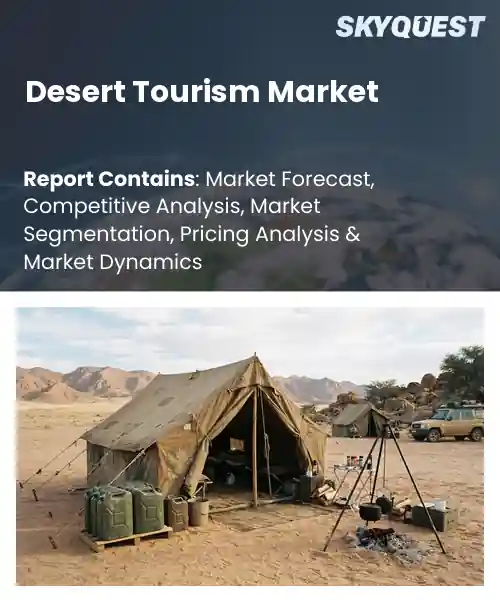
Desert Tourism Market
Report ID: SQMIG25O2067
Report ID: SQMIG25O2067
[email protected]
USA +1 351-333-4748
Report ID:
SQMIG25O2067 |
Region:
Global |
Published Date: August, 2026
Pages:
157
|Tables:
171
|Figures:
79


Global Desert Tourism Market size was valued at USD 10.87 Billion in 2024 and is poised to grow from USD 11.78 Billion in 2025 to USD 22.47 Billion by 2033, growing at a CAGR of 8.4% during the forecast period (2026-2033).
Environmental stewardship shapes the market’s expansion, because travelers increasingly reward operators that integrate solar‑powered camps, water‑conservation practices, and community‑led tours. This focus generates investment in renewable infrastructure, which lowers operating costs and enables longer seasonality in regions such as the Sahara and the Outback. As a result, eco‑certified desert lodges attract corporate retreat planners seeking carbon venues, while adventure brands launch desert‑marathon events that showcase logistics. The ripple effect includes job creation for indigenous guides, heightened awareness of fragile ecosystems, and a feedback loop that fuels further green innovation, positioning desert tourism as a considerable growth engine for travel industry.
How is AI-driven personalization influencing visitor experiences in the desert tourism market?
AI-driven personalization tailors every desert journey to individual preferences, turning a simple excursion into a curated adventure. Smart itineraries adapt to weather, cultural interests and activity levels, while predictive analytics suggest hidden oases, night‑sky tours or camel‑riding routes that match each guest’s profile. Real‑time language translation and voice‑activated guides enrich interactions with local communities, making remote sites feel accessible. Data from wearables informs comfort settings in desert lodges, adjusting cooling, lighting and entertainment without manual input. These technologies deepen engagement, boost satisfaction and encourage repeat visits, positioning desert tourism as a high‑touch, technology‑enabled niche within the broader travel landscape.In June 2024 a leading desert resort introduced an AI‑powered personalization platform, streamlining guest experiences and driving stronger occupancy across the season.
Market snapshot - (2026-2033)
Global Market Size
USD 10.87 Billion
Largest Segment
Adventure Tourism
Fastest Growth
Eco Tourism
Growth Rate
8.4% CAGR
To get more insights on this market click here to Request a Free Sample Report
Global desert tourism market is segmented by tourism type, traveler type, booking channel, accommodation type, end user, trip duration and region. Based on tourism type, the market is segmented into Adventure Tourism, Eco Tourism, Cultural Tourism and Others. Based on traveler type, the market is segmented into Domestic Tourists and International Tourists. Based on booking channel, the market is segmented into Online Booking and Offline Booking. Based on accommodation type, the market is segmented into Desert Camps, Hotels & Resorts, Eco Lodges and Others. Based on end user, the market is segmented into Solo Travelers, Families, Group Travelers and Others. Based on trip duration, the market is segmented into Day Trips and Overnight & Multi-Day Trips. Based on region, the market is segmented into North America, Europe, Asia Pacific, Latin America and Middle East & Africa.
Adventure tourism segment dominates because travelers seek the thrill of dune bashing, sandboarding, and camel treks that uniquely showcase the desert’s vastness. The immersive physical challenges create memorable experiences, prompting operators to develop specialized itineraries and safety protocols. This demand fuels investment in guided services, equipment rentals, and local expertise, reinforcing adventure tourism as the primary draw for desert visitors and encouraging repeat visits through word of mouth promotion and social media sharing.
However, eco tourism segment is witnessing the strongest growth momentum as environmentally conscious travelers prioritize low impact experiences that highlight desert flora and conservation projects. Innovative partnerships with NGOs and the introduction of guided wildlife walks attract a new audience, expanding market reach and creating fresh revenue streams for operators.
Desert camps segment dominates because they deliver authentic, immersive stays that connect travelers directly with the landscape. The simplicity of canvas shelters, communal fire circles, and traditional meals creates a sense of adventure and cultural immersion, prompting repeat bookings. Operators can scale with low infrastructure costs, while travelers value the unique storytelling and star filled night skies, reinforcing desert camps as the preferred lodging choice and fostering community among guests.
Meanwhile, eco lodges segment is emerging as the key high growth area as sustainability focused travelers seek comfortable environmentally responsible stays. Green building materials, solar power, and water conservation systems differentiate these lodges, attracting eco conscious guests and pricing. This trend expands market depth and encourages further investment in responsible desert hospitality.
To get detailed segments analysis, Request a Free Sample Report
Asia Pacific dominates because it combines a large pool of affluent travelers with a cultural appetite for exotic experiences. Premium travel agencies in the region package desert adventures with high‑end hospitality, creating seamless itineraries that appeal to discerning customers. Strong airline networks provide efficient connectivity to desert destinations across the Middle East and Central Asia, while digital platforms amplify awareness of desert wellness and adventure themes. Government tourism bodies actively promote outbound travel and support innovative desert‑focused products, reinforcing the region’s reputation as a hub for sophisticated desert tourism consumption. Collaborative marketing between Asian operators and desert‑region partners further deepens market penetration, ensuring a steady flow of visitors seeking authentic desert encounters.
Desert Tourism Market in Japan is shaped by a sophisticated traveler base seeking curated desert experiences abroad, particularly in nearby Middle Eastern and Central Asian deserts. Travel agencies integrate desert safaris with luxury hospitality, while Japanese media promote desert wellness retreats. Environmental consciousness drives demand for low‑impact tours, and government support for outbound tourism facilitates visa ease and promotional campaigns targeting desert destinations. Additionally, collaborations with local desert operators emphasize authentic cultural exchanges.
Desert Tourism Market in South Korea reflects a growing enthusiasm for adventure travel blended with cultural immersion. Korean tour operators design packages that combine desert trekking, camel riding, and stargazing with premium accommodation, appealing to affluent consumers. Media narratives highlight the therapeutic and spiritual aspects of desert landscapes, increasing demand for wellness‑focused desert retreats. Strong airline links and streamlined visa processes enhance accessibility, while partnerships with desert‑region authorities enable tailored experiences that respect local heritage. Sustainability considerations encourage low‑impact activities, reinforcing South Korea’s reputation for responsible desert tourism.
North America experiences rapid expansion due to a convergence of lifestyle trends, entrepreneurial innovation, and expansive natural curiosity. Travelers are increasingly seeking immersive desert experiences that combine adventure, wellness, and cultural learning, prompting tour operators to develop specialized desert itineraries. The region’s robust travel infrastructure, including extensive flight networks and premium ground transport, simplifies access to premier desert locales. Digital marketing amplifies the allure of desert landscapes, while sustainability concerns encourage low‑impact, eco‑friendly offerings. Collaborative initiatives between North American travel firms and desert‑region partners foster authentic engagements, and government tourism incentives support the promotion of desert destinations, collectively fueling market momentum.
Desert Tourism Market in the United States thrives on a culture of outdoor exploration and a strong appetite for novelty travel. Domestic operators craft desert safaris that blend rugged adventure with luxury amenities, appealing to affluent seekers of unique landscapes. Media storytelling emphasizes the spiritual and rejuvenating qualities of desert environments, stimulating interest in wellness retreats. Partnerships with desert‑region governments enable streamlined entry procedures and co‑branded experiences, while sustainability narratives attract environmentally conscious travelers. Innovation in desert‑based activities, such as desert yoga and night–sky observation, further differentiates the United States offering.
Desert Tourism Market in Canada is propelled by a growing segment of travelers eager to experience stark, open terrains beyond the familiar boreal settings. Canadian tour providers design curated desert journeys that highlight cultural heritage, indigenous connections, and ecological education, resonating with a socially aware clientele. Emphasis on low‑impact travel aligns with national sustainability values, encouraging the use of eco‑friendly transport and responsible camping practices. Collaborative marketing with desert destinations showcases the therapeutic benefits of vast, quiet spaces, drawing interest from wellness‑oriented tourists. Investment in experiential storytelling and high‑quality service standards reinforces Canada’s reputation as a gateway to authentic desert adventures.
Europe strengthens its position by leveraging its rich heritage of travel expertise, sophisticated marketing, and commitment to sustainable tourism. European travelers value curated desert experiences that blend adventure, cultural immersion, and environmental stewardship, prompting operators to develop premium itineraries with a focus on authenticity. Strong rail and air connectivity across European hubs facilitates easy onward travel to desert regions, while partnerships with desert‑destination authorities ensure seamless visa processes and joint promotional campaigns. Emphasis on responsible tourism practices, such as carbon offset initiatives and community‑benefit programs, enhances the appeal of desert trips for eco‑conscious Europeans. Collaborative research and innovation in desert‑focused hospitality further elevate Europe’s influence in shaping the global desert tourism narrative.
Desert Tourism Market in Germany benefits from a discerning traveler base that prioritizes high‑quality, culturally rich experiences. German tour operators integrate desert excursions with educational components, highlighting local traditions and ecological preservation. Strong partnerships with desert‑region stakeholders facilitate bespoke itineraries that blend adventure sports, culinary discovery, and heritage tours. Sustainability drives the adoption of low‑impact transport and accommodation options, aligning with German consumer values. Targeted marketing emphasizes the restorative aspects of desert landscapes, attracting wellness‑focused tourists.
Desert Tourism Market in the United Kingdom is anchored by a tradition of exploratory travel and a keen interest in authentic cultural encounters. British agencies craft desert packages that combine historic routes, artisanal crafts, and immersive storytelling, appealing to curiosity‑driven travelers. Emphasis on eco‑friendly practices resonates with a market increasingly conscious of environmental impact. Collaborative efforts with desert authorities streamline travel logistics and promote joint branding initiatives. Media coverage that highlights desert starlit skies and minimalistic luxury experiences fuels demand among UK tourists seeking both adventure and tranquility.
Desert Tourism Market in France reflects an appreciation for refined travel experiences that merge artistic inspiration with natural wonder. French operators design desert itineraries that incorporate photography workshops, culinary exploration, and encounters with local artisans, appealing to culturally sophisticated travelers. Commitment to sustainability is evident through the use of renewable transport options and support for community‑based projects in desert regions. Partnerships with desert destination agencies enable curated experiences that respect heritage and environment. Promotion of the desert as a canvas for creative expression enhances its allure for French tourists seeking enriching and responsible journeys.
To know more about the market opportunities by region and country, click here to
Buy The Complete Report
Adventure Travel is Inspiring Visitors
Cultural Heritage is Attracting Travelers
Water Scarcity is Limiting Development
Infrastructure Limitations are Hindering Access
Request Free Customization of this report to help us to meet your business objectives.
The competitive landscape of the global desert tourism market is shaped by intensified rivalry spurred by industry‑wide competitions and accelerator programmes. The UN Tourism Startup Competition fuels tech‑driven sustainability projects, while PhocusWire’s Hot 25 Travel Startups list spotlights emerging entrants targeting desert experiences. Leading investors identified in the 2026 travel‑tech report are channeling capital into niche desert‑focused platforms, prompting strategic partnerships and joint ventures among established operators and innovative startups.
Top Player’s Company Profile
Recent Developments
SkyQuest’s ABIRAW (Advanced Business Intelligence, Research & Analysis Wing) is our Business Information Services team that Collects, Collates, Correlates, and Analyses the Data collected by means of Primary Exploratory Research backed by robust Secondary Desk research. As per SkyQuest analysis the global desert tourism market is expanding at an 8.4 % CAGR, driven primarily by adventure travel that fuels demand for dune‑bashing, sandboarding and guided camel treks, while cultural heritage experiences act as a second catalyst by attracting visitors eager to explore ancient trade routes and local traditions. Water scarcity emerges as the chief restraint, forcing operators to invest heavily in desalination and recycling systems that raise costs and limit scale. Asia Pacific leads the market, benefitting from affluent travelers and strong outbound tourism infrastructure, and the adventure tourism segment remains the dominant force, accounting for the largest share of activity and revenue.
| Report Metric | Details |
|---|---|
| Market size value in 2024 | USD 10.87 Billion |
| Market size value in 2033 | USD 22.47 Billion |
| Growth Rate | 8.4% |
| Base year | 2024 |
| Forecast period | (2026-2033) |
| Forecast Unit (Value) | USD Billion |
| Segments covered |
|
| Regions covered | North America (US, Canada), Europe (Germany, France, United Kingdom, Italy, Spain, Rest of Europe), Asia Pacific (China, India, Japan, Rest of Asia-Pacific), Latin America (Brazil, Rest of Latin America), Middle East & Africa (South Africa, GCC Countries, Rest of MEA) |
| Companies covered |
|
| Customization scope | Free report customization with purchase. Customization includes:-
|
To get a free trial access to our platform which is a one stop solution for all your data requirements for quicker decision making. This platform allows you to compare markets, competitors who are prominent in the market, and mega trends that are influencing the dynamics in the market. Also, get access to detailed SkyQuest exclusive matrix.
Table Of Content
Executive Summary
Market overview
Parent Market Analysis
Market overview
Market size
KEY MARKET INSIGHTS
COVID IMPACT
MARKET DYNAMICS & OUTLOOK
Market Size by Region
KEY COMPANY PROFILES
Methodology
For the Desert Tourism Market, our research methodology involved a mixture of primary and secondary data sources. Key steps involved in the research process are listed below:
1. Information Procurement: This stage involved the procurement of Market data or related information via primary and secondary sources. The various secondary sources used included various company websites, annual reports, trade databases, and paid databases such as Hoover's, Bloomberg Business, Factiva, and Avention. Our team did 45 primary interactions Globally which included several stakeholders such as manufacturers, customers, key opinion leaders, etc. Overall, information procurement was one of the most extensive stages in our research process.
2. Information Analysis: This step involved triangulation of data through bottom-up and top-down approaches to estimate and validate the total size and future estimate of the Desert Tourism Market.
3. Report Formulation: The final step entailed the placement of data points in appropriate Market spaces in an attempt to deduce viable conclusions.
4. Validation & Publishing: Validation is the most important step in the process. Validation & re-validation via an intricately designed process helped us finalize data points to be used for final calculations. The final Market estimates and forecasts were then aligned and sent to our panel of industry experts for validation of data. Once the validation was done the report was sent to our Quality Assurance team to ensure adherence to style guides, consistency & design.
Analyst Support
Customization Options
With the given market data, our dedicated team of analysts can offer you the following customization options are available for the Desert Tourism Market:
Product Analysis: Product matrix, which offers a detailed comparison of the product portfolio of companies.
Regional Analysis: Further analysis of the Desert Tourism Market for additional countries.
Competitive Analysis: Detailed analysis and profiling of additional Market players & comparative analysis of competitive products.
Go to Market Strategy: Find the high-growth channels to invest your marketing efforts and increase your customer base.
Innovation Mapping: Identify racial solutions and innovation, connected to deep ecosystems of innovators, start-ups, academics, and strategic partners.
Category Intelligence: Customized intelligence that is relevant to their supply Markets will enable them to make smarter sourcing decisions and improve their category management.
Public Company Transcript Analysis: To improve the investment performance by generating new alpha and making better-informed decisions.
Social Media Listening: To analyze the conversations and trends happening not just around your brand, but around your industry as a whole, and use those insights to make better Marketing decisions.
REQUEST FOR SAMPLE
 REQUEST FREE CUSTOMIZATION


Want to customize this report? This report can be personalized according to your needs. Our analysts and industry experts will work directly with you to understand your requirements and provide you with customized data in a short amount of time. We offer $1000 worth of FREE customization at the time of purchase.
Feedback From Our Clients


 USA (+1) 351-333-4748

