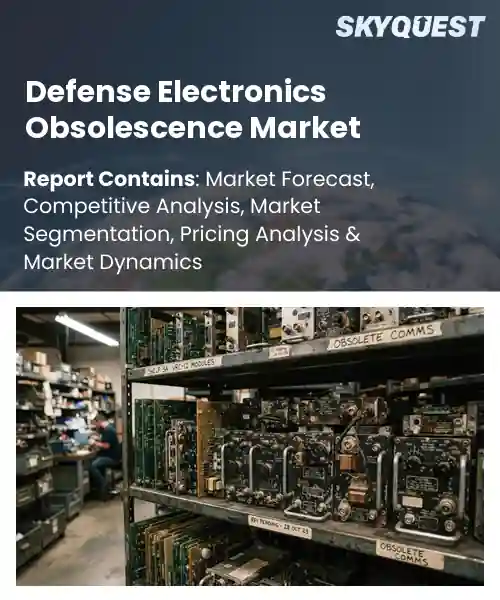
Defense Electronics Obsolescence Market
Report ID: SQMIG20A2899
Report ID: SQMIG20A2899
[email protected]
USA +1 351-333-4748
Report ID:
SQMIG20A2899 |
Region:
Global |
Published Date: September, 2026
Pages:
157
|Tables:
148
|Figures:
78


Global Defense Electronics Obsolescence Market size was valued at USD 2.97 Billion in 2024 and is poised to grow from USD 3.24 Billion in 2025 to USD 6.46 Billion by 2033, growing at a CAGR of 9.01% during the forecast period (2026-2033).
The defense electronics obsolescence market tracks when components in military systems become unavailable due to technology retirement, supplier consolidation, or regulatory shifts. It matters because a single obsolete chip can postpone deployment of a fighter jet, submarine, or missile, generating penalties. In the 1990s the market was fragmented, with each prime maintaining stockpiles; the 2000s brought miniaturization and the adoption of commercial off‑the‑shelf (COTS) parts, hastening turnover and raising obsolescence risk. Recent cases such as the phase‑out of legacy radar modules in the F‑35 program and the shortage of MEMS sensors for UAVs have spurred government investment in lifecycle‑management strategies. The expanding reliance on software‑defined, network‑centric architectures makes component compatibility a lifelong concern, because each firmware update must match hardware that may disappear years later. When a microcontroller used in a next‑generation air‑defense missile is retired, the resulting retrofit forces schedule delays and spikes lifecycle costs. This vulnerability fuels demand for predictive‑obsolescence analytics that use AI to forecast part phase‑outs and recommend early substitutions, as demonstrated by a NATO ally’s recent partnership with a data‑analytics firm to secure spare‑part pipelines for legacy radar arrays. Consequently, investment in modeling and on‑demand 3D‑printed replacements is accelerating, reducing downtime and preserving combat readiness.
How is AI-driven predictive maintenance addressing obsolescence in the defense electronics market?
AI driven predictive maintenance is reshaping how defense electronics cope with component obsolescence. The approach uses sensor data, machine learning models and cloud analytics to forecast failure before it occurs. Operators can plan replacements, schedule upgrades and avoid sudden loss of capability. By turning historical failure patterns into actionable insights, the technology reduces the need for large spare inventories. It also enables manufacturers to extend the service life of legacy systems through software updates rather than costly hardware swaps. Recent field trials on radar and communication units have shown smoother logistics and higher readiness, making the solution attractive to armed forces worldwide.Lockheed Martin June 2023, introduced an AI driven predictive maintenance platform for its F 35 avionics that predicts part wear and schedules refurbishments, cutting the need for obsolete spares and keeping the fleet operational longer. The system integrates time health monitoring with cloud based analytics, allowing engineers to anticipate failures and plan upgrades without interrupting missions.
Market snapshot - (2026-2033)
Global Market Size
USD 2.97 Billion
Largest Segment
Hardware Component Engineering
Fastest Growth
Obsolescence Monitoring & Software Predictive Analytics
Growth Rate
9.01% CAGR
To get more insights on this market click here to Request a Free Sample Report
Global defense electronics obsolescence market is segmented by solution type, core component class, platform domain, target electronic subsystem, end use industry and region. Based on solution type, the market is segmented into Hardware Component Engineering, Lifetime Buy (LTB) & Warehousing and Obsolescence Monitoring & Software Predictive Analytics. Based on core component class, the market is segmented into Semiconductors and Integrated Circuits (ICs), Passive Electronic Components, Interconnects and Electromechanical Devices and Power Supply Units and Modules. Based on platform domain, the market is segmented into Airborne Platforms, Land Platforms and Naval Platforms. Based on target electronic subsystem, the market is segmented into Military Navigation, Guidance & Flight Controls, Tactical Communication Systems & Encrypted Networks, Radar, Sonar & Electronic Warfare (EW) Suites, Sensors and Human Machine Interfaces (HMIs) and Others. Based on end use industry, the market is segmented into Defense & Military Force Organizations and Aerospace & Defense Prime Contractors (OEMs). Based on region, the market is segmented into North America, Europe, Asia Pacific, Latin America and Middle East & Africa.
Lifetime Buy (LTB) & Warehousing segment dominates because it offers a proactive buffer against component discontinuation, enabling defense programs to secure inventory before parts become scarce. This practice reduces redesign cycles, curtails lifecycle cost spikes, and meets stringent readiness mandates. By locking in long term stock, manufacturers mitigate risk and keep mission critical platforms operable throughout extended service lives, reinforcing overall supply chain resilience across multiple program generations and future.
However, Obsolescence Monitoring & Software Predictive Analytics segment emerges as the fastest growing because advanced analytics enable early detection of lifecycle risks and automate mitigation planning. Increased adoption of AI driven forecasting and integration with design tools accelerates proactive interventions, creating new service revenue streams and expanding market opportunities.
Semiconductors and Integrated Circuits segment dominates because they form the technological backbone of every defense electronic subsystem, dictating performance, power efficiency, and miniaturization. Their ubiquity forces OEMs to prioritize long term availability strategies, while rapid innovation cycles pressure manufacturers to secure last time buys and develop qualified replacements, sustaining system integrity. These parts underpin mission essential functions like navigation and weapons control, so their continuity is vital for readiness and drives aggressive forward stock programs.
Conversely, Passive Electronic Components segment experiences the fastest growth because emerging high frequency and ruggedized designs demand capacitors, resistors, and inductors with enhanced performance envelopes. Defense manufacturers are adopting advanced materials and miniaturized form factors, which fuels procurement volumes and spurs innovation, thereby broadening the market’s expansion trajectory.
To get detailed segments analysis, Request a Free Sample Report
North America maintains its leadership in the defense electronics obsolescence market through a combination of mature defense procurement frameworks, extensive supply chain networks, and a strong emphasis on lifecycle management. The United States and Canada benefit from deep integration between government agencies and original equipment manufacturers, which drives proactive identification of aging components and the development of remediation strategies. Advanced research institutions and a culture of continuous innovation support the creation of replacement solutions and upgrade pathways. Robust funding mechanisms and strategic partnerships with allied nations further reinforce the ability to sustain and modernize critical defense electronics. This ecosystem of collaboration, technical expertise, and regulatory support ensures that North American forces can effectively address component obsolescence and maintain operational readiness.
Defense Electronics Obsolescence Market in the United States is shaped by a highly coordinated defense acquisition process that prioritizes early detection of component aging. Close ties between the Department of Defense, prime contractors, and specialized logistics firms enable rapid response to obsolescence challenges. Investment in domestic research laboratories and a vibrant ecosystem of niche suppliers foster the development of both refurbished and newly engineered parts, ensuring continuity for legacy platforms while supporting next‑generation capabilities.
Defense Electronics Obsolescence Market in Canada leverages a collaborative approach between federal defense ministries, alliance partners, and a network of indigenous manufacturers. Emphasis on joint risk assessments and shared data repositories enables timely identification of at‑risk components. The country’s commitment to sustaining existing platforms through targeted refurbishment programs and technology transfer agreements enhances resilience against supply disruptions. This cooperative framework reinforces Canada’s capacity to manage lifecycle challenges without compromising mission effectiveness.
Europe’s defense electronics obsolescence market is expanding rapidly due to coordinated modernization initiatives, strong industrial base, and increasing emphasis on collaborative lifecycle solutions across member states. Joint procurement programs and standardization efforts streamline the identification of vulnerable components and promote shared remediation strategies. Leading defense manufacturers invest heavily in redesign and refurbishment capabilities, while academic and research institutions contribute innovative replacement technologies. Cross‑border partnerships and EU‑wide funding mechanisms facilitate the pooling of resources, reducing individual national burdens. Additionally, heightened security considerations and the need to integrate emerging digital technologies into legacy systems accelerate demand for comprehensive obsolescence management, positioning Europe as a dynamic hub for sustainable defense electronics.
Defense Electronics Obsolescence Market in Germany benefits from a robust engineering sector known for precision manufacturing and deep expertise in electronic miniaturization. Close collaboration between the Bundeswehr, leading OEMs, and specialized retro‑fit firms accelerates the development of substitute components for aging systems. National programs emphasize predictive maintenance and the integration of digital twins to forecast obsolescence risks. This proactive stance, combined with strong export capabilities, reinforces Germany’s role as a dominant contributor to the European landscape.
Defense Electronics Obsolescence Market in the United Kingdom is characterized by swift adoption of advanced lifecycle management practices driven by strategic defense reviews. Partnerships between the Ministry of Defence, aerospace clusters, and emerging technology firms foster rapid development of replacement parts and modular upgrades. Emphasis on agile supply chains and investment in digital analytics tools supports early detection of component fatigue. This fast‑moving environment positions the United Kingdom as a leading growth engine within Europe’s market.
Defense Electronics Obsolescence Market in France is emerging through a focused effort to bolster domestic capabilities and reduce reliance on external sources. Collaborative frameworks linking the armed forces, national research agencies, and mid‑size manufacturers encourage the redesign of critical components. Initiatives around sustainable refurbishment and the incorporation of novel materials aim to extend the service life of legacy equipment. This emerging stance enhances France’s contribution to the broader European obsolescence ecosystem.
Asia Pacific is strengthening its position in the defense electronics obsolescence market through a blend of strategic investment in indigenous technology, expanding maintenance, repair, and overhaul capabilities, and deepening regional cooperation. Nations such as Japan and South Korea prioritize self‑reliance by cultivating advanced semiconductor and sensor industries that can supply replacement parts for older platforms. Joint exercises and information‑sharing agreements among regional defense partners facilitate early identification of at‑risk components and coordinated mitigation approaches. Government incentives encourage private sector participation in refurbishing legacy systems and developing modular upgrades. This combination of technical proficiency, collaborative frameworks, and policy support enables the Asia Pacific region to address obsolescence challenges while enhancing overall defense readiness.
Defense Electronics Obsolescence Market in Japan is driven by an extensive network of high‑precision manufacturers and a national emphasis on long‑term sustainment of defense assets. Close coordination between the Self‑Defense Forces, major electronics firms, and specialized retrofitting companies accelerates the creation of replacement modules for aging equipment. Investment in cutting‑edge research on component longevity and the use of advanced diagnostics ensures proactive management of obsolescence risks, reinforcing Japan’s capacity to maintain operational effectiveness.
Defense Electronics Obsolescence Market in South Korea reflects a concerted push toward domestic sourcing and rapid response to component phase‑out. Integration of defense agencies with leading semiconductor and defense electronics producers enables swift development of alternative parts and upgrade kits. Emphasis on smart logistics platforms and real‑time monitoring supports early detection of inventory gaps. These practices, combined with strong governmental backing for technology transfer, position South Korea as an increasingly resilient participant in the regional obsolescence landscape.
To know more about the market opportunities by region and country, click here to
Buy The Complete Report
Increasing System Modernization Initiatives
Rising Demand for Interoperable Platforms
Complex Certification and Compliance Processes
Limited Availability of Legacy Parts
Request Free Customization of this report to help us to meet your business objectives.
Lockheed Martin’s acquisition of Aerojet Rocketdyne and Raytheon’s partnership with Microsoft Azure for cloud‑based lifecycle management illustrate how incumbents are consolidating capabilities and leveraging cloud analytics to mitigate component obsolescence, while BAE Systems’ investment in AI‑driven predictive maintenance platforms underscores a shift toward proactive replacement strategies driven by technology integration.
Top Player’s Company Profile
Recent Developments
SkyQuest’s ABIRAW (Advanced Business Intelligence, Research & Analysis Wing) is our Business Information Services team that Collects, Collates, Correlates, and Analyses the Data collected by means of Primary Exploratory Research backed by robust Secondary Desk research. As per SkyQuest analysis the market is propelled primarily by increasing system modernization initiatives that push defense agencies to secure long‑term component availability, while the rising demand for interoperable platforms adds a second boost by requiring proactive lifecycle planning across diverse subsystems. The dominant region remains North America, where mature procurement frameworks and strong OEM partnerships drive adoption. Lifetime Buy and warehousing emerges as the leading segment, offering a buffer against part discontinuation and reinforcing supply‑chain resilience. However, complex certification and compliance processes act as a restraint, lengthening approval cycles and slowing the uptake of new obsolescence solutions. Together these forces shape the market’s growth trajectory.
| Report Metric | Details |
|---|---|
| Market size value in 2024 | USD 2.97 Billion |
| Market size value in 2033 | USD 6.46 Billion |
| Growth Rate | 9.01% |
| Base year | 2024 |
| Forecast period | (2026-2033) |
| Forecast Unit (Value) | USD Billion |
| Segments covered |
|
| Regions covered | North America (US, Canada), Europe (Germany, France, United Kingdom, Italy, Spain, Rest of Europe), Asia Pacific (China, India, Japan, Rest of Asia-Pacific), Latin America (Brazil, Rest of Latin America), Middle East & Africa (South Africa, GCC Countries, Rest of MEA) |
| Companies covered |
|
| Customization scope | Free report customization with purchase. Customization includes:-
|
To get a free trial access to our platform which is a one stop solution for all your data requirements for quicker decision making. This platform allows you to compare markets, competitors who are prominent in the market, and mega trends that are influencing the dynamics in the market. Also, get access to detailed SkyQuest exclusive matrix.
Table Of Content
Executive Summary
Market overview
Parent Market Analysis
Market overview
Market size
KEY MARKET INSIGHTS
COVID IMPACT
MARKET DYNAMICS & OUTLOOK
Market Size by Region
KEY COMPANY PROFILES
Methodology
For the Defense Electronics Obsolescence Market, our research methodology involved a mixture of primary and secondary data sources. Key steps involved in the research process are listed below:
1. Information Procurement: This stage involved the procurement of Market data or related information via primary and secondary sources. The various secondary sources used included various company websites, annual reports, trade databases, and paid databases such as Hoover's, Bloomberg Business, Factiva, and Avention. Our team did 45 primary interactions Globally which included several stakeholders such as manufacturers, customers, key opinion leaders, etc. Overall, information procurement was one of the most extensive stages in our research process.
2. Information Analysis: This step involved triangulation of data through bottom-up and top-down approaches to estimate and validate the total size and future estimate of the Defense Electronics Obsolescence Market.
3. Report Formulation: The final step entailed the placement of data points in appropriate Market spaces in an attempt to deduce viable conclusions.
4. Validation & Publishing: Validation is the most important step in the process. Validation & re-validation via an intricately designed process helped us finalize data points to be used for final calculations. The final Market estimates and forecasts were then aligned and sent to our panel of industry experts for validation of data. Once the validation was done the report was sent to our Quality Assurance team to ensure adherence to style guides, consistency & design.
Analyst Support
Customization Options
With the given market data, our dedicated team of analysts can offer you the following customization options are available for the Defense Electronics Obsolescence Market:
Product Analysis: Product matrix, which offers a detailed comparison of the product portfolio of companies.
Regional Analysis: Further analysis of the Defense Electronics Obsolescence Market for additional countries.
Competitive Analysis: Detailed analysis and profiling of additional Market players & comparative analysis of competitive products.
Go to Market Strategy: Find the high-growth channels to invest your marketing efforts and increase your customer base.
Innovation Mapping: Identify racial solutions and innovation, connected to deep ecosystems of innovators, start-ups, academics, and strategic partners.
Category Intelligence: Customized intelligence that is relevant to their supply Markets will enable them to make smarter sourcing decisions and improve their category management.
Public Company Transcript Analysis: To improve the investment performance by generating new alpha and making better-informed decisions.
Social Media Listening: To analyze the conversations and trends happening not just around your brand, but around your industry as a whole, and use those insights to make better Marketing decisions.
REQUEST FOR SAMPLE
 REQUEST FREE CUSTOMIZATION


Want to customize this report? This report can be personalized according to your needs. Our analysts and industry experts will work directly with you to understand your requirements and provide you with customized data in a short amount of time. We offer $1000 worth of FREE customization at the time of purchase.
Feedback From Our Clients


 USA (+1) 351-333-4748

