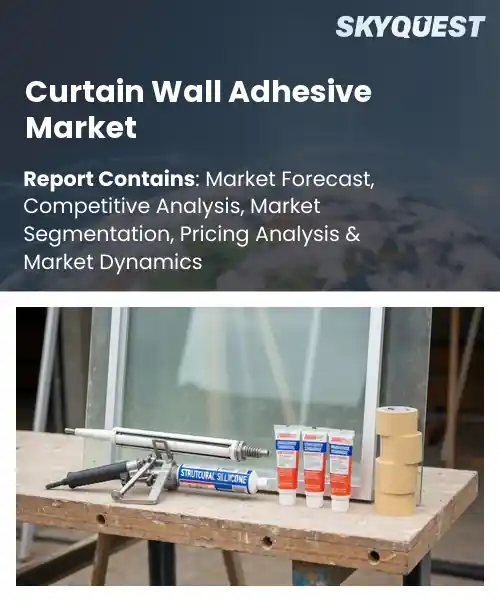
Curtain Wall Adhesive Market
Report ID: SQMIG15E4063
Report ID: SQMIG15E4063
[email protected]
USA +1 351-333-4748
Report ID:
SQMIG15E4063 |
Region:
Global |
Published Date: July, 2026
Pages:
157
|Tables:
146
|Figures:
78


Global Curtain Wall Adhesive Market size was valued at USD 5.28 Billion in 2024 and is poised to grow from USD 5.6 Billion in 2025 to USD 9.0 Billion by 2033, growing at a CAGR of 6.1% during the forecast period (2026-2033).
The global curtain‑wall adhesive market supplies polymer‑based bonding agents that attach glazing panels to structural frames in high‑rise and commercial constructions. Its significance stems from the need for airtight, weather‑tight envelopes that improve energy efficiency and reduce thermal bridging. Over the past decade the sector has expanded as architects favor frameless glass façades, prompting manufacturers to innovate low‑modulus, high‑strength adhesives that cure rapidly under varied temperatures. For example, the 2015 Chicago skyscraper renovation employed a silicone‑acrylate hybrid to replace sealants, demonstrating lower installation labor and longer service life. This shift from mechanical fasteners to chemical bonding now drives market momentum. Rising demand for sustainable construction drives the curtain‑wall adhesive market, because stricter codes now mandate lower U‑values and reduced carbon footprints. Adhesives that allow thinner glass panels cut material use, thereby lowering embodied energy and construction waste. Manufacturers respond by adding low‑VOC, high‑thermal‑resistance formulas, which attract developers of green‑certified towers such as the LEED‑Gold office block in Singapore. Availability of these eco‑friendly products opens export prospects for Asia‑Pacific producers, while European retrofit initiatives replace aging sealants with longer‑lasting adhesives, creating a parallel revenue stream. This regulatory‑technology alignment fuels robust growth across multiple regions and building typologies, reinforcing market resilience overall.
How is AI-driven automation influencing the Curtain wall adhesive market?
AI-driven automation is reshaping how adhesives are formulated, mixed and applied in curtain wall construction. Machine learning models now predict optimal resin blends based on climate and substrate, reducing trial‑and‑error cycles. Robotic dispensers equipped with vision systems lay down uniform bead lines, cutting waste and improving bond consistency. Real‑time sensors feed data to control platforms that adjust temperature and cure timing on the fly, ensuring reliable performance across large façade panels. These technologies are accelerating project timelines and lowering labor intensity, making adhesive supply chains more resilient as the curtain wall market expands.PRL Glass, May 2025, introduced an AI‑controlled adhesive dispensing line that synchronizes mixing ratios with robotic application, boosting production efficiency and supporting faster façade installation.
Market snapshot - (2026-2033)
Global Market Size
USD 5.28 Billion
Largest Segment
Silicone Adhesives
Fastest Growth
Polyurethane Adhesives
Growth Rate
6.1% CAGR
To get more insights on this market click here to Request a Free Sample Report
Global curtain wall adhesive market is segmented by adhesive type, application, substrate, end user, cure type and region. Based on adhesive type, the market is segmented into Silicone Adhesives, Polyurethane Adhesives, Acrylic Adhesives and Epoxy Adhesives. Based on application, the market is segmented into Structural Glazing, Panel Bonding, Weather Sealing and Curtain Wall Repairs. Based on substrate, the market is segmented into Glass, Aluminum, Composite Panels and Stone. Based on end user, the market is segmented into Commercial Construction, Residential Construction and Industrial Construction. Based on cure type, the market is segmented into One-Component and Two-Component. Based on region, the market is segmented into North America, Europe, Asia Pacific, Latin America and Middle East & Africa.
Silicone adhesives segment dominates because its exceptional weather resistance and flexibility meet the rigorous performance demands of high rise curtain wall systems. The material’s ability to maintain bond integrity under thermal cycling and moisture exposure makes it the preferred choice for architects seeking long term durability. Moreover, its compatibility with diverse substrates and ease of application streamline construction workflows, reinforcing its central position in the market and supporting energy efficiency goals.
However, polyurethane adhesives segment is witnessing the strongest growth momentum as manufacturers innovate low VOC formulations that address sustainability pressures. These adhesives provide superior structural strength for larger panel sizes, enabling architects to pursue expansive glazing designs. Their expanding use in modern construction projects is unlocking new opportunities and propelling market expansion.
Structural glazing segment leads because it integrates glass directly to building frames, demanding adhesives that deliver both high load bearing capacity and seamless aesthetic performance. The requirement for transparent, load transferring connections pushes manufacturers to formulate products with superior shear strength and minimal visual impact. This critical role in iconic architecture drives continuous investment, making structural glazing the cornerstone of adhesive development and market focus and influencing project timelines.
Meanwhile, weather sealing segment emerges as the fastest expanding area as building codes tighten around energy leakage and moisture intrusion. Advanced adhesive chemistries now provide superior vapor barriers while maintaining flexibility, allowing designers to create tighter envelopes. This growing emphasis on building envelope performance fuels rapid adoption and broadens market horizons.
To get detailed segments analysis, Request a Free Sample Report
Asia Pacific dominates due to a confluence of advanced manufacturing capabilities, rapid urbanization, and a strong emphasis on sustainable construction practices. The region benefits from a deep pool of technical expertise that fuels continuous innovation in adhesive formulations tailored for high‑performance façade systems. Robust supply chains enable efficient distribution of specialty products, while regional policy frameworks encourage energy‑saving building envelopes. High‑rise and mixed‑use developments across major metropolitan hubs drive consistent demand, reinforcing the market’s scale and resilience. Collaborative research initiatives between industry players and academic institutions further accelerate product development, cementing the region’s leadership in both volume and technological sophistication.
Curtain Wall Adhesive Market in Japan is shaped by a longstanding culture of precision engineering and stringent quality standards. Manufacturers prioritize high‑performance adhesives that meet demanding environmental and durability criteria, supporting the country’s extensive portfolio of commercial skyscrapers. Strong collaboration between construction firms and material suppliers fosters rapid adoption of next‑generation solutions, while regulatory focus on energy efficiency drives continuous refinement of adhesive technologies.
Curtain Wall Adhesive Market in South Korea benefits from a vibrant construction sector that emphasizes innovative design and rapid project execution. Domestic producers leverage cutting‑edge polymer science to create adhesives suited for the region’s dynamic architectural trends, particularly in dense urban corridors. Government initiatives promoting green building standards encourage the integration of high‑efficiency adhesives, reinforcing the market’s competitiveness and alignment with global sustainability goals.
Europe’s rapid expansion is propelled by rigorous environmental regulations, a strong commitment to retrofit existing building stocks, and a focus on high‑performance façade solutions that enhance energy efficiency. The region’s mature construction industry invests heavily in research collaborations that advance adhesive chemistry, enabling products that meet demanding fire safety and thermal performance criteria. Market confidence is reinforced by sophisticated supply networks and a culture of technical excellence, encouraging adoption across both new builds and extensive renovation projects. The convergence of policy incentives, sustainability targets, and a proactive approach to innovation positions Europe as a dynamic hub for growth in curtain wall adhesive applications.
Curtain Wall Adhesive Market in Germany is characterized by a rigorous engineering mindset and a strong emphasis on standards compliance. German manufacturers focus on developing adhesives that deliver exceptional durability and environmental performance, aligning with the country’s extensive portfolio of high‑rise commercial structures. Integrated supply chains and a collaborative ecosystem between research institutes and industry players accelerate the rollout of advanced adhesive solutions, reinforcing Germany’s dominant market position.
Curtain Wall Adhesive Market in United Kingdom exhibits rapid evolution driven by a surge in large‑scale development projects and a proactive approach to sustainability. The market embraces adhesives that support modular construction and faster installation cycles, catering to the United Kingdom’s dynamic construction landscape. Close engagement between architects, contractors, and adhesive suppliers accelerates the adoption of innovative products that meet stringent performance and environmental criteria.
Curtain Wall Adhesive Market in France is emerging through a blend of targeted governmental incentives and growing awareness of energy‑efficient building practices. French producers emphasize adhesives that complement contemporary aesthetic designs while delivering superior thermal performance. Partnerships with design firms and a focus on research and development help cultivate a market environment that encourages the gradual expansion of high‑quality adhesive offerings.
North America strengthens its position by leveraging a robust infrastructure, sophisticated construction technologies, and a forward‑looking regulatory environment that emphasizes building performance. The region’s emphasis on large‑scale commercial and institutional projects drives demand for adhesives that provide reliable bonding under diverse climatic conditions. Ongoing collaboration between material innovators and architectural firms fosters the introduction of products optimized for rapid installation and long‑term durability. Additionally, a strong culture of safety and compliance shapes product specifications, ensuring that adhesives meet rigorous standards. This integrated approach of technological advancement, regulatory support, and market demand consolidates North America’s evolving role in the global curtain wall adhesive landscape.
Curtain Wall Adhesive Market in United States thrives on a combination of extensive construction activity and a commitment to high‑performance building envelopes. Industry leaders focus on adhesive solutions that facilitate swift erection of towering façades while adhering to strict fire‑rating and environmental benchmarks. Strategic partnerships with research entities promote continuous improvement, aligning product offerings with evolving market expectations.
Curtain Wall Adhesive Market in Canada reflects a growing emphasis on energy‑efficient construction in a climate‑challenged environment. Canadian manufacturers develop adhesives that maintain strong bonds despite temperature fluctuations, supporting a surge in sustainable high‑rise developments. Collaborative initiatives between government bodies and industry stakeholders encourage the adoption of innovative adhesive technologies that meet the nation’s rigorous performance standards.
To know more about the market opportunities by region and country, click here to
Buy The Complete Report
Growing Preference for Lightweight Structures
Increasing Adoption of Sustainable Materials
High Cost of Advanced Adhesives
Stringent Environmental Regulations
Request Free Customization of this report to help us to meet your business objectives.
The global curtain wall adhesive market is shaped by intense competition among established manufacturers who are pursuing strategic M&A to broaden product portfolios, forming partnerships with glass façade firms to integrate adhesive solutions, and investing in advanced polymer technologies to improve performance and sustainability. Recent collaborations between adhesive producers and construction material suppliers aim to accelerate adoption of high‑efficiency bonding systems in large‑scale projects.
Top Player’s Company Profile
Recent Developments
SkyQuest’s ABIRAW (Advanced Business Intelligence, Research & Analysis Wing) is our Business Information Services team that Collects, Collates, Correlates, and Analyses the Data collected by means of Primary Exploratory Research backed by robust Secondary Desk research. As per SkyQuest analysis the curtain‑wall adhesive market is being propelled primarily by the growing preference for lightweight structures, which enables slimmer glazing and reduces building loads, while a second strong driver is the rising demand for sustainable materials that lower VOC emissions and support green‑building certifications. The main restraint comes from the high cost of advanced adhesive formulations, which can deter cost‑sensitive projects. Asia‑Pacific remains the dominating region thanks to rapid urbanisation, advanced manufacturing and supportive sustainability policies. Silicone adhesives dominate the segment landscape because of their superior weather resistance and flexibility, reinforcing their central role in high‑rise façades.
| Report Metric | Details |
|---|---|
| Market size value in 2024 | USD 5.28 Billion |
| Market size value in 2033 | USD 9.0 Billion |
| Growth Rate | 6.1% |
| Base year | 2024 |
| Forecast period | (2026-2033) |
| Forecast Unit (Value) | USD Billion |
| Segments covered |
|
| Regions covered | North America (US, Canada), Europe (Germany, France, United Kingdom, Italy, Spain, Rest of Europe), Asia Pacific (China, India, Japan, Rest of Asia-Pacific), Latin America (Brazil, Rest of Latin America), Middle East & Africa (South Africa, GCC Countries, Rest of MEA) |
| Companies covered |
|
| Customization scope | Free report customization with purchase. Customization includes:-
|
To get a free trial access to our platform which is a one stop solution for all your data requirements for quicker decision making. This platform allows you to compare markets, competitors who are prominent in the market, and mega trends that are influencing the dynamics in the market. Also, get access to detailed SkyQuest exclusive matrix.
Table Of Content
Executive Summary
Market overview
Parent Market Analysis
Market overview
Market size
KEY MARKET INSIGHTS
COVID IMPACT
MARKET DYNAMICS & OUTLOOK
Market Size by Region
KEY COMPANY PROFILES
Methodology
For the Curtain Wall Adhesive Market, our research methodology involved a mixture of primary and secondary data sources. Key steps involved in the research process are listed below:
1. Information Procurement: This stage involved the procurement of Market data or related information via primary and secondary sources. The various secondary sources used included various company websites, annual reports, trade databases, and paid databases such as Hoover's, Bloomberg Business, Factiva, and Avention. Our team did 45 primary interactions Globally which included several stakeholders such as manufacturers, customers, key opinion leaders, etc. Overall, information procurement was one of the most extensive stages in our research process.
2. Information Analysis: This step involved triangulation of data through bottom-up and top-down approaches to estimate and validate the total size and future estimate of the Curtain Wall Adhesive Market.
3. Report Formulation: The final step entailed the placement of data points in appropriate Market spaces in an attempt to deduce viable conclusions.
4. Validation & Publishing: Validation is the most important step in the process. Validation & re-validation via an intricately designed process helped us finalize data points to be used for final calculations. The final Market estimates and forecasts were then aligned and sent to our panel of industry experts for validation of data. Once the validation was done the report was sent to our Quality Assurance team to ensure adherence to style guides, consistency & design.
Analyst Support
Customization Options
With the given market data, our dedicated team of analysts can offer you the following customization options are available for the Curtain Wall Adhesive Market:
Product Analysis: Product matrix, which offers a detailed comparison of the product portfolio of companies.
Regional Analysis: Further analysis of the Curtain Wall Adhesive Market for additional countries.
Competitive Analysis: Detailed analysis and profiling of additional Market players & comparative analysis of competitive products.
Go to Market Strategy: Find the high-growth channels to invest your marketing efforts and increase your customer base.
Innovation Mapping: Identify racial solutions and innovation, connected to deep ecosystems of innovators, start-ups, academics, and strategic partners.
Category Intelligence: Customized intelligence that is relevant to their supply Markets will enable them to make smarter sourcing decisions and improve their category management.
Public Company Transcript Analysis: To improve the investment performance by generating new alpha and making better-informed decisions.
Social Media Listening: To analyze the conversations and trends happening not just around your brand, but around your industry as a whole, and use those insights to make better Marketing decisions.
REQUEST FOR SAMPLE
 REQUEST FREE CUSTOMIZATION


Want to customize this report? This report can be personalized according to your needs. Our analysts and industry experts will work directly with you to understand your requirements and provide you with customized data in a short amount of time. We offer $1000 worth of FREE customization at the time of purchase.
Feedback From Our Clients


 USA (+1) 351-333-4748

