
Baby Hamster Kidney (BHK) Cell Market
Report ID: SQMIG35J2247
Report ID: SQMIG35J2247
[email protected]
USA +1 351-333-4748
Report ID:
SQMIG35J2247 |
Region:
Global |
Published Date: March, 2026
Pages:
157
|Tables:
117
|Figures:
77


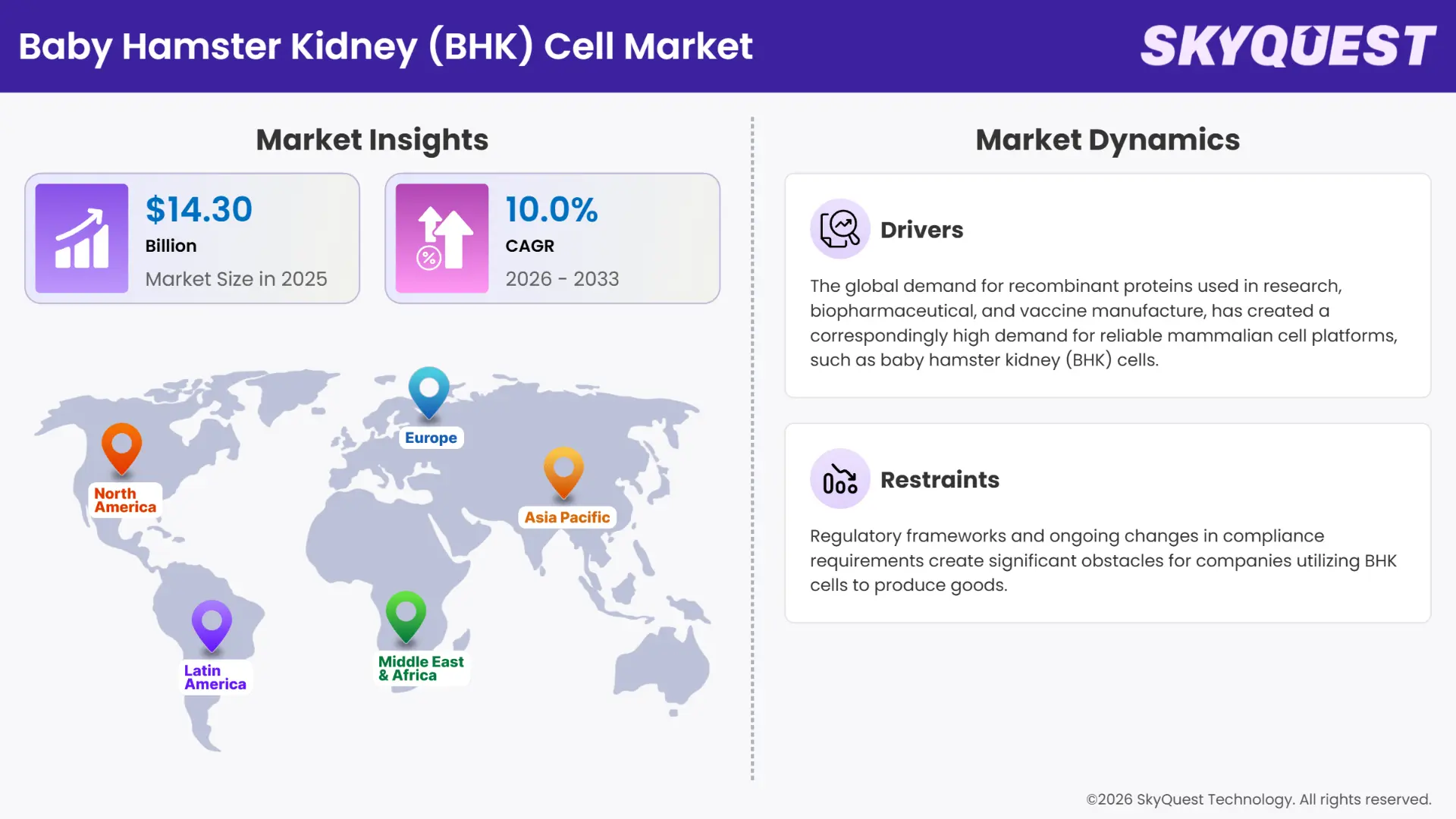
Global Baby Hamster Kidney (BHK) Cell Market size was valued at USD 13.00 Billion in 2024 and is poised to grow from USD 14.30 Billion in 2025 to USD 30.65 Billion by 2033, growing at a CAGR of 10.0% during the forecast period (2026-2033).
Key Takeaways: Market Trends & Insights
The continued growth of the biopharmaceutical and vaccine industry is the main factor driving the growth of the baby hamster kidney (BHK) cell market. Specifically, the market contains suppliers of BHK-21 and its derivatives, reagents, and vaccines (including Rabies and Foot and Mouth disease). BHK cells are important because they can be grown quickly and in a completely serum-free media, which supports regulatory compliance and reduces manufacturing costs.
The market has already been transitioning from selling pure academic reagents to industrial-scale GMP manufacturing. This global baby hamster kidney (BHK) cell market trends have already been observed by the significant increase in industrial-scale GMP production of rabies virus and foot-and-mouth virus vaccines and of viral vectors.
The increasing demand for vaccines and viral vectors will require BHK cell lines that can produce consistently at high densities, thereby necessitating the increased engineering and optimization of BHK cell lines and processes. This will lead to an increase in the use of single-use bioreactors, GMP grade media, and contractors capable of validating and producing large quantities of biopharmaceuticals.
How is AI Improving Efficiency in the Baby Hamster Kidney (BHK) Cell Market?
AI is enhancing the efficiency of baby hamster kidney (BHK) cells by increasing the predictability and automation of both cell line development and bioprocessing activities. Advancements in image analysis driven by AI provide an avenue for faster clone selection, predictive models assist in determining suitable media and feeding strategies, and real-time controls help stabilize bioreactor.
While variable manufacturing results affect development timelines, today there is a trend to implement AI tools to reduce variability and accelerate development timelines. The importance of BHK cells as an innovative platform to produce both human and veterinary vaccines as well as recombinant proteins makes improvements in clone selection and process control critical to a more reliable supply chain and thus lower development risk.
Cytiva, in April 2025, announced a partnership with Asimov to incorporate AI technology into cell line design and process development using AI models to accelerate the clone selection process.
To get more insights on this market click here to Request a Free Sample Report
Global baby hamster kidney (BHK) cell market is segmented into cell line variant, application domain, culture media requirement, end-user and region. Based on cell line variant, the market is segmented into BHK-21, suspension-adapted BHK cells and recombinant/engineered BHK cell lines. Based on application domain, the market is segmented into veterinary vaccine production, recombinant protein production and virology research & testing. Based on culture media requirement, the market is segmented into serum-free media (SFM), serum-containing media and chemically defined media. Based on end-user, the market is segmented into biopharmaceutical companies, contract development & manufacturing (CDMO) and animal health organizations. Based on region, the market is segmented into North America, Europe, Asia Pacific, Latin America and Middle East & Africa.
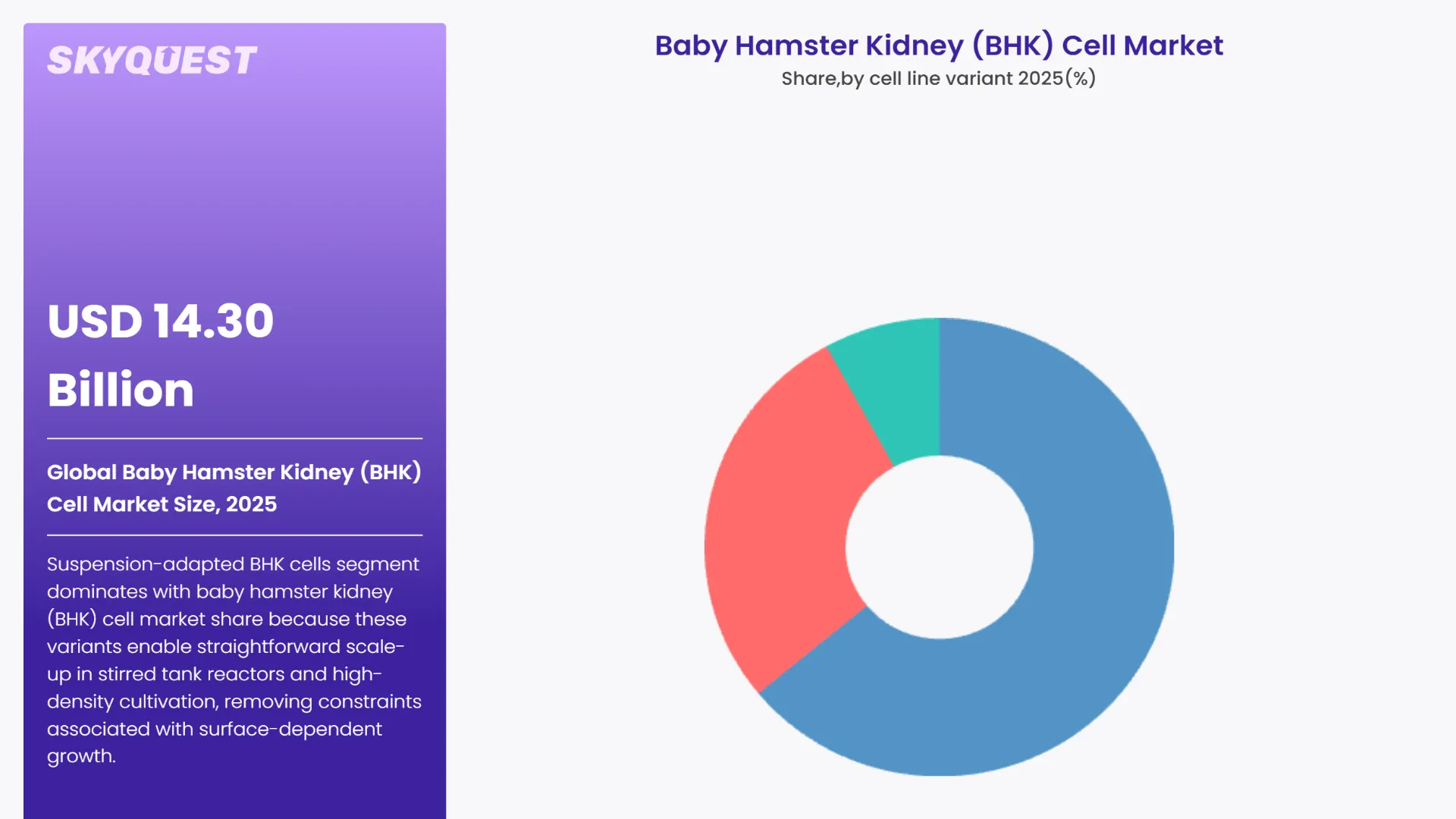
Suspension-adapted BHK cells segment dominates with baby hamster kidney (BHK) cell market share because these variants enable straightforward scale-up in stirred tank reactors and high-density cultivation, removing constraints associated with surface-dependent growth. This capability enables straightforward scale-up from laboratory to industrial volumes, significantly improving manufacturing efficiency and reducing production complexity.
As per global baby hamster kidney (BHK) cell market forecast, recombinant/engineered BHK cell lines have the highest level of growth potential due to the development of targeted genetic alterations to increase specific productivity. Innovative techniques in gene editing and/or gene expression control are recent developments that allow for shorter time frames in developing cells and provide new markets for therapeutics and research use at both topical and therapeutic levels.
As per baby hamster kidney (BHK) cell market outlook, serum-free media (SFM) segment has become more dominant than all other segments combined due to its ability to provide a secure, consistent environment that decreases variability and contamination associated with animal-derived materials. The preference for regulated defined input and a better ability to provide consistent, scalable processes in manufacturing drives manufacturers to create serum-free formulations. Creating these types of formulations yields significant advantages in downstream purification and allows for easier validation under good manufacturing practices, thereby making SFM the typical way to operate many bioprocesses using BHK.
As per baby hamster kidney (BHK) cell market analysis, the chemically defined media segment is proving to be the strongest growth area; composed entirely of defined material makes controlling critical quality attributes significantly more manageable and simplifies the regulatory approval process for complex biologics. New developments in developing synthetic basal components and developing specific supplements that correlate with BHK physiology are creating engineered cell lines that provide better performance. This is leading to new opportunities for the development of higher-value therapeutic agents and increased adoption of engineered cell lines.
To get detailed segments analysis, Request a Free Sample Report
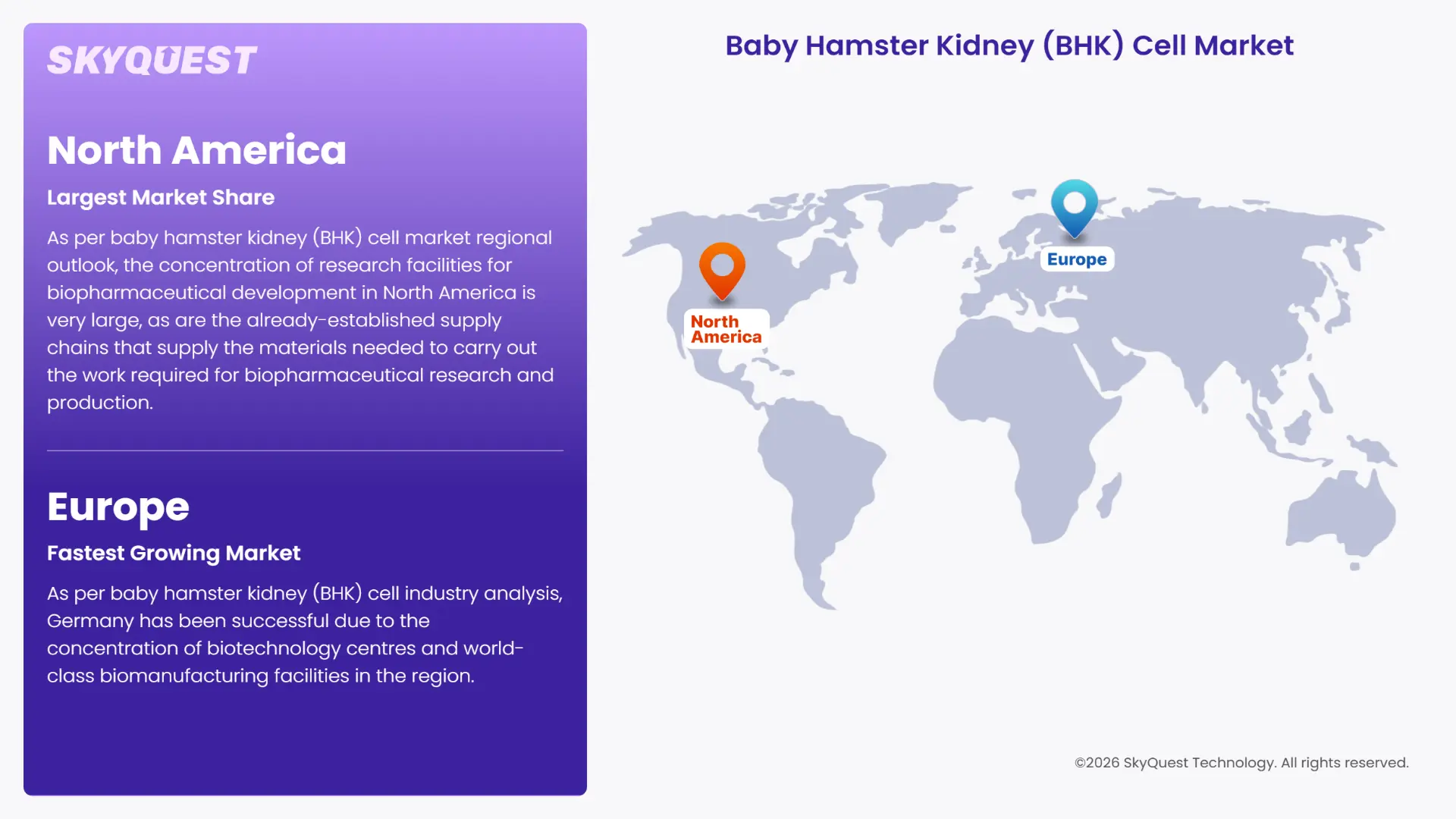
As per baby hamster kidney (BHK) cell market regional outlook, the concentration of research facilities for biopharmaceutical development in North America is very large, as are the already-established supply chains that supply the materials needed to carry out the work required for biopharmaceutical research and production. The combination of these elements, as well as close relationships between suppliers and manufacturers of materials. The use of BHK cells in biopharmaceutical production will continue to grow due to clear regulatory frameworks from both health authorities and procurement channels that provide for predictable purchasing by vaccine manufacturers and manufacturers of biologics.
The U.S. baby hamster kidney (BHK) cell market is well positioned due to an abundance of research labs and a solid biotech infrastructure, in addition to an extremely experienced supply chain with mature logistics for BHK cells. The abundance of BHK-specific services, along with strong technical knowledge in process development, will contribute to innovative BHK applications. These collaborative networks between academia and industry are a proven method of building expertise and providing a pool of skilled workers for therapeutic and vaccine production, as well as the development and commercialization of BHK-based products.
The Canada baby hamster kidney (BHK) cell market operates in a collaborative healthcare research environment with increasing biomanufacturing capabilities. The existence of regional funding programs and strong university partnerships for the development of BHK cell applications and advancement of BHK applications promote collaboration in the development of BHK cell applications. A focus on quality systems and a strong affiliation with service providers will ensure a consistent supply of BHK cells and associated reagents.
As per baby hamster kidney (BHK) cell market regional forecast, the rapid growth of Europe is due to successful partnerships among several areas, including strong biomedical research centers and effective regulatory and industrial systems for government and private companies that assist with developing translational approaches using BHK cells. Additionally, the production of BHK-based products has benefited from a rich manufacturing history, many contract development and manufacturing organizations can scale production and utilize BHK cells for multiple applications such as vaccine production, viral vector production, and other biologics. Investing in the infrastructure and technical training of BHK cell culture skill has produced a skilled BHK cell culture workforce with experience in process optimization. Cross-border collaboration through shared research platforms has contributed to the successful transfer of technologies and the harmonization of quality systems. The growth of the market in Europe reflects the development of an ecosystem that integrates academic innovators with industry partners supporting continued improvement to BHK cell application processes.
As per baby hamster kidney (BHK) cell industry analysis, Germany has been successful due to the concentration of biotechnology centres and world-class biomanufacturing facilities in the region. The establishment of strong alliances between the academic research community and the biomanufacturing sector has provided the foundation for the development of robust BHK cell process development capabilities. The use of quality management systems and technical expertise in quality engineering has resulted in strong, reproducible processes. In addition, Germany has a well-developed base of suppliers and contract service providers with the expertise to supply various types of reagents and related support services to the regional market.
The baby hamster kidney (BHK) cell market in the UK has the benefit of an innovation-driven environment as well as a proactive approach to government regulation. Incubators and entrepreneurship/investment start-ups foster novel applications and process refinement. The market has successful contract development organisations and a service sector that is very receptive to supporting the commercialisation of products and service from the market. University-industry partnerships foster skills transfer and technology transfer through collaborative programs. Market flexibility and willingness to adopt new approaches has enabled the expanded use of BHK cells in vaccines and biologics.
The baby hamster kidney (BHK) cell market in France is developing through focused translational research and collaborative networks. Academic research centres and CROs in France focus their development efforts on process adaptation and application development involving BHK cells. Stronger ties between public and private research through pilot manufacturing and application development are benefiting the market in France. Growing technical capability and increasingly productive relationships with suppliers are enabling France to increase its role in BHK activities on a regional basis.
The Asia Pacific region continues to enhance its role as a global biotechnology cluster by concentrating investments on specialized infrastructure for biotech, developing talent and promoting greater collaboration between research organizations and industry. Expanded capabilities in cell culture technologies, process engineering and quality systems are helping to accelerate the use of BHK cells for research and production of life sciences products.
The baby hamster kidney (BHK) cell market in Japan is organized around advanced research facilities and high precision manufacturing capabilities, providing support for all phases of process development. Collaboration between universities and industry facilitates the refinement of method/standard and analytical rigor. BHK Cell suppliers provide high quality reagents and technical services related to complex cell culture needs. Investment in specialized facilities and training ensures dependable performance and establishes Japan as a leader in the application of BHK Cells in vaccines and other biological products.
The baby hamster kidney (BHK) cell market in South Korea is making advances through strategic investment in biotechnology clusters and strong collaboration between government and the private sector. Collaborative arrangements between universities and contract research organizations (CROs) and industry are developing optimized cell culture processes and translating research activities into applied solutions. As the number of suppliers and service providers increases within the market, the availability of reagents and assistance in troubleshooting cell culture processes is on the rise.
To know more about the market opportunities by region and country, click here to
Buy The Complete Report
Increasing Demand for Recombinant Proteins
Expanded Vaccine and Therapeutics Research
Regulatory Complexity and Compliance
Production Costs and Scalability
Request Free Customization of this report to help us to meet your business objectives.
The competitive global baby hamster kidney (BHK) cell market is being driven by product differentiation (e.g. BHK derived products, assay ready cryopreserved BHK plates) and contract manufacture partnerships. Companies have adopted various strategies to create technology innovations (e.g. proprietary BHK based rAAV production lines, use of BHK cells in drug discovery) and position themselves through targeted product launches to capture or address niche demand (e.g. proprietary BHK derived products). Some of the most recent concrete movements in this arena include new product launches from medium and reagent suppliers and CDMO service offerings based on proprietary BHK derivatives.
SkyQuest’s ABIRAW (Advanced Business Intelligence, Research & Analysis Wing) is our Business Information Services team that Collects, Collates, Correlates, and Analyses the Data collected by means of Primary Exploratory Research backed by robust Secondary Desk research.
As per SkyQuest analysis, the global baby hamster kidney (BHK) cell industry is propelled primarily by sustained expansion in biopharmaceutical production and vaccine development while adoption of suspension-adapted BHK cells enabling scalable, high-density production serves as a second major growth driver. North America leads the market due to strong research hubs, mature supply chains and regulatory clarity, with suspension-adapted BHK cells identified as the dominating segment because they simplify scale-up and single-use bioreactor workflows. Regulatory complexity and evolving compliance requirements remain a meaningful restraint, raising validation burdens and slowing adoption for smaller developers. Overall, vendors and CDMOs focusing on scalable, serum-free processes and verified cell lines are best positioned to capture near-term opportunity.
| Report Metric | Details |
|---|---|
| Market size value in 2024 | USD 13.00 Billion |
| Market size value in Hams | USD 30.65 Billion |
| Growth Rate | 10.0% |
| Base year | 2024 |
| Forecast period | 2026-2033 |
| Forecast Unit (Value) | USD Billion |
| Segments covered |
|
| Regions covered | North America (US, Canada), Europe (Germany, France, United Kingdom, Italy, Spain, Rest of Europe), Asia Pacific (China, India, Japan, Rest of Asia-Pacific), Latin America (Brazil, Rest of Latin America), Middle East & Africa (South Africa, GCC Countries, Rest of MEA) |
| Companies covered |
|
| Customization scope | Free report customization with purchase. Customization includes:-
|
To get a free trial access to our platform which is a one stop solution for all your data requirements for quicker decision making. This platform allows you to compare markets, competitors who are prominent in the market, and mega trends that are influencing the dynamics in the market. Also, get access to detailed SkyQuest exclusive matrix.
Table Of Content
Executive Summary
Market overview
Parent Market Analysis
Market overview
Market size
KEY MARKET INSIGHTS
COVID IMPACT
MARKET DYNAMICS & OUTLOOK
Market Size by Region
KEY COMPANY PROFILES
Methodology
For the Baby Hamster Kidney (BHK) Cell Market, our research methodology involved a mixture of primary and secondary data sources. Key steps involved in the research process are listed below:
1. Information Procurement: This stage involved the procurement of Market data or related information via primary and secondary sources. The various secondary sources used included various company websites, annual reports, trade databases, and paid databases such as Hoover's, Bloomberg Business, Factiva, and Avention. Our team did 45 primary interactions Globally which included several stakeholders such as manufacturers, customers, key opinion leaders, etc. Overall, information procurement was one of the most extensive stages in our research process.
2. Information Analysis: This step involved triangulation of data through bottom-up and top-down approaches to estimate and validate the total size and future estimate of the Baby Hamster Kidney (BHK) Cell Market.
3. Report Formulation: The final step entailed the placement of data points in appropriate Market spaces in an attempt to deduce viable conclusions.
4. Validation & Publishing: Validation is the most important step in the process. Validation & re-validation via an intricately designed process helped us finalize data points to be used for final calculations. The final Market estimates and forecasts were then aligned and sent to our panel of industry experts for validation of data. Once the validation was done the report was sent to our Quality Assurance team to ensure adherence to style guides, consistency & design.
Analyst Support
Customization Options
With the given market data, our dedicated team of analysts can offer you the following customization options are available for the Baby Hamster Kidney (BHK) Cell Market:
Product Analysis: Product matrix, which offers a detailed comparison of the product portfolio of companies.
Regional Analysis: Further analysis of the Baby Hamster Kidney (BHK) Cell Market for additional countries.
Competitive Analysis: Detailed analysis and profiling of additional Market players & comparative analysis of competitive products.
Go to Market Strategy: Find the high-growth channels to invest your marketing efforts and increase your customer base.
Innovation Mapping: Identify racial solutions and innovation, connected to deep ecosystems of innovators, start-ups, academics, and strategic partners.
Category Intelligence: Customized intelligence that is relevant to their supply Markets will enable them to make smarter sourcing decisions and improve their category management.
Public Company Transcript Analysis: To improve the investment performance by generating new alpha and making better-informed decisions.
Social Media Listening: To analyze the conversations and trends happening not just around your brand, but around your industry as a whole, and use those insights to make better Marketing decisions.
REQUEST FOR SAMPLE
 REQUEST FREE CUSTOMIZATION
Global Baby Hamster Kidney (Bhk) Cell Market size was valued at USD 13.0 Billion in 2024 and is poised to grow from USD 14.3 Billion in 2025 to USD 30.65 Billion by 2033, growing at a CAGR of 10.0% during the forecast period (2026-2033).
The competitive landscape for global Baby Hamster Kidney cell supply is driven by product differentiation and contract manufacturing partnerships rather than price alone. Companies are pursuing technology innovation and targeted product launches to capture niche demand, for example proprietary BHK-based rAAV production lines and assay-ready cryopreserved BHK plates. Recent concrete moves include product launches by medium and reagent suppliers and CDMO service offers built on proprietary BHK derivatives. 'Creative Biolabs', 'ATCC', 'Merck KGaA', 'Thermo Fisher Scientific', 'Procell Life Science', 'Obio Technology', 'WheLab', 'Nanjing Cobioer', 'Boster Bio', 'Lonza Group', 'Sartorius AG', 'Danaher', 'Promega Corp', 'Takara Bio', 'Sigma-Aldrich', 'InvivoGen', 'Rockland Immunochemicals', 'Cell Bank Australia', 'ECACC', 'Coriell Institute'
The rising requirement for recombinant proteins in research, biopharmaceutical production, and vaccine development has elevated the need for reliable mammalian cell platforms such as BHK cells. BHK cultures offer adaptable expression systems that accommodate diverse protein products and post translational modifications, enabling developers to pursue complex biologics with reduced development uncertainty. This demand encourages investment in BHK based process optimization, expands manufacturing pipelines, and stimulates vendor support for culture media and cell line services, collectively reinforcing market expansion through sustained commercial and academic application uptake.
Bioprocess Integration Acceleration: Demand for streamlined production workflows is prompting adoption of integrated BHK cell platforms that combine optimized cell lines, automated culture systems and standardized downstream processing. Manufacturers and service providers prioritize modular solutions that reduce cycle time, improve reproducibility and enable smoother tech transfer between discovery and clinical development. This trend supports strategic partnerships across contract development networks, enhances supply chain responsiveness, and encourages investment in platform validation to accelerate biologics development timelines while maintaining product quality expectations.
North America Dominate the Global Baby Hamster Kidney (BHK) Cell Market.
The BHK-21 segment currently holds the largest market share due to its widespread use in vaccine production, virology research, and biopharmaceutical manufacturing.
BHK cells are widely used in veterinary vaccine production, recombinant protein production, and virology research and testing, making them an essential platform in biotechnology and pharmaceutical development.
AI is improving cell line development and bioprocessing by enabling faster clone selection, predictive media optimization, automated image analysis, and enhanced bioreactor control, resulting in improved productivity and reduced development timelines.


Want to customize this report? This report can be personalized according to your needs. Our analysts and industry experts will work directly with you to understand your requirements and provide you with customized data in a short amount of time. We offer $1000 worth of FREE customization at the time of purchase.
Feedback From Our Clients


 USA (+1) 351-333-4748

