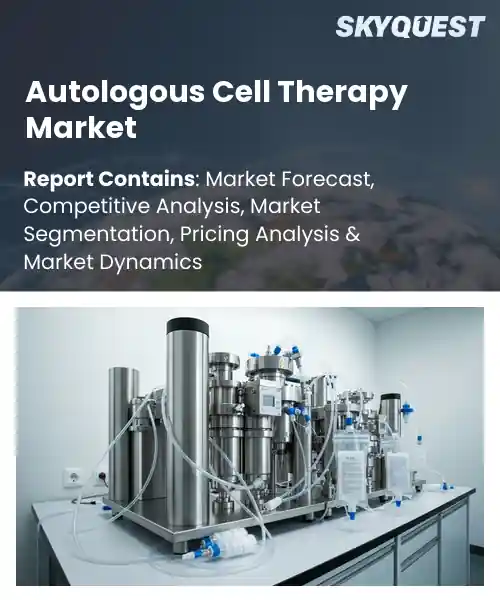
Autologous Cell Therapy Market
Report ID: SQMIG35H2568
Report ID: SQMIG35H2568
[email protected]
USA +1 351-333-4748
Report ID:
SQMIG35H2568 |
Region:
Global |
Published Date: June, 2026
Pages:
157
|Tables:
125
|Figures:
77


Global Autologous Cell Therapy Market size was valued at USD 8.15 Billion in 2024 and is poised to grow from USD 9.73 Billion in 2025 to USD 40.23 Billion by 2033, growing at a CAGR of 19.41% during the forecast period (2026-2033).
Autologous cell therapy market comprises treatments built from a patient’s own cells, used to repair tissue, modulate immunity, or deliver engineered functions; it matters because these interventions reduce rejection risk and enable personalized solutions for unmet medical needs. The primary driver is rapid technological innovation in cell isolation, expansion, gene editing and vector design, which transformed hematopoietic stem cell transplantation into sophisticated immunotherapies over decades. Early autologous approaches such as sipuleucel T and hematopoietic stem cell transplants paved the way for CAR T approvals like tisagenlecleucel and axicabtagene ciloleucel, and that regulatory validation catalyzed investment and pipelines worldwide and commercialization.
Manufacturing capacity and logistics innovations are a decisive market factor because when autologous processes become faster, standardized and less costly, hospitals expand adoption and commercial scale follows. Automation of cell isolation, closed system processing and improved cryopreservation reduce failures and turnaround times, which has accelerated CAR T programs reaching community centers and enabled autologous MSC and platelet rich plasma applications in orthopedics and wound care. As contract developers and point of care manufacturers scale, digital chain of identity and regulatory alignment reduce risk, causing sponsors to pursue new indications, form CMOs partnerships and secure reimbursement, thereby opening significant growth opportunities.
How is AI accelerating patient-specific manufacturing in the autologous cell therapy market?
AI is accelerating patient specific manufacturing in autologous cell therapy by turning handcrafted workflows into data driven, repeatable processes. Key aspects include reducing variability between individual donor starting material, shortening turnaround from collection to infusion, and improving quality control through predictive models. Today manufacturers are combining automation hardware with AI powered process control and digital twins to optimize cell culture conditions, detect deviations early, and prioritize testing. This approach shifts the market away from artisanal batch work toward connected production that supports wider patient access and more reliable product release. Evidence of this trend appears in recent integrated platform launches and CDMO investments that target closed system production.
Autolus June 2026, announced plans to evaluate automated manufacturing of AUCATZYL on an integrated cell shuttle platform which shows how AI enabled analytics and automated control can standardize patient specific batches, streamline release testing, and support scalable commercial supply.
Market snapshot - (2026-2033)
Global Market Size
USD 8.15 Billion
Largest Segment
Mesenchymal Stem Cells
Fastest Growth
Mesenchymal Stem Cells
Growth Rate
19.41% CAGR
To get more insights on this market click here to Request a Free Sample Report
Global autologous cell therapy market is segmented by source, application, therapy type, end-user and region. Based on source, the market is segmented into Bone Marrow, Epidermis, Mesenchymal Stem Cells, Haematopoietic Stem Cells, Chondrocytes and Others. Based on application, the market is segmented into Cancer, Neurodegenerative Disorders, Cardiovascular Disorders, Autoimmune Disorders, Orthopedics, Wound Healing and Others. Based on therapy type, the market is segmented into Autologous Cellular Immunotherapies, Autologous Stem Cell Therapy and Others. Based on end-user, the market is segmented into Hospitals & Clinics, Ambulatory Centers, Academics & Research and Others. Based on region, the market is segmented into North America, Europe, Asia Pacific, Latin America and Middle East & Africa.
Mesenchymal Stem Cells segment dominates because their multipotent biology and immunomodulatory properties enable broad therapeutic applicability across diverse indications. Ease of autologous harvest and adaptable ex vivo expansion protocols reduce development barriers and improve safety profiles, attracting clinical programs and investment. This combination of translational versatility and established manufacturing knowhow drives sustained pipeline growth and provider confidence, reinforcing leadership within the autologous cell therapy market and accelerating commercial translation.
However, Haematopoietic Stem Cells are emerging as the most rapidly expanding area due to advances in mobilization and harvesting and their central role in autologous transplantation and gene modified therapies. Improved conditioning approaches and clearer regulatory pathways boost clinical uptake, catalyzing investment and creating demand for specialized manufacturing and support services that broaden market opportunity.
Autologous Cellular Immunotherapies segment leads because personalized immune effector cells demonstrate transformative clinical responses in oncology, drawing concentrated research and commercial commitment. The direct linkage between patient derived products and targeted tumor clearance motivates investment in scalable manufacturing, robust quality systems, and specialized delivery pathways. Regulatory emphasis on breakthrough therapies amplifies translational momentum, prompting partnerships and reimbursement dialogues that accelerate adoption and entrench these therapies as a strategic focal point in autologous cell therapy.
However, Autologous Stem Cell Therapy is witnessing the strongest growth momentum as regenerative indications expand beyond traditional uses and manufacturing innovations lower production complexity. Growing clinical evidence in orthopedics and cardiovascular repair, combined with clearer reimbursement discussions, stimulates broader clinical adoption, attracting new developers and enabling platform technologies that unlock additional commercial and patient access opportunities.
To get detailed segments analysis, Request a Free Sample Report
North America leads due to a confluence of advanced research infrastructure, strong commercial investment, and a progressive regulatory environment that facilitates translational development and market access for autologous therapies. Established biopharma and specialized cell therapy manufacturers concentrate development, manufacturing scale up, and supply chain capabilities across clinical and commercial settings. Collaborative ecosystems linking academic centers, hospitals, and industry accelerate protocol refinement and real world adoption, while payer engagement and clinical adoption pathways support patient access. Robust venture and institutional funding mechanisms, combined with public private initiatives, sustain development pipelines, and established centers of excellence provide training and standardization of clinical protocols, creating an environment where autologous approaches move from research to clinical practice efficiently.
Autologous Cell Therapy Market in the United States is driven by concentrated centers of clinical excellence, significant venture and institutional capital, and a dense network of specialized contract manufacturers. Leading academic hospitals and commercial developers collaborate to refine protocols, streamline logistics, and optimize patient selection. Active payer engagement and established clinical adoption pathways support commercialization, while an experienced workforce and robust supply chain infrastructure enable scalable operations and patient access.
Autologous Cell Therapy Market in Canada benefits from collaborative translational networks linking universities, hospitals, and industry with a focus on equitable patient access. Regional centers support protocol standardization, manufacturing scale, and workforce training. Public funding and targeted programs foster commercialization while regulatory alignment with international standards facilitates multinational development. Clinician engagement and integrated care delivery models help integrate autologous therapies into practice in a measured, patient centric and sustainable manner.
Europe has seen rapid expansion driven by an integrated network of academic research centers, progressive regulatory initiatives, and growing manufacturing capabilities that support the translational pathway for autologous therapies. Cross border collaborations and public private partnerships enable resource sharing and harmonization of clinical protocols, while evolving health technology assessment and reimbursement dialogues create clearer adoption pathways. Specialized contract development and manufacturing providers and regional centers of excellence reduce logistical barriers. A focus on standardization, clinician training, and multi stakeholder engagement accelerates clinical uptake and positions Europe as a dynamic and collaborative environment for advancing autologous cell therapies.
Autologous Cell Therapy Market in Germany benefits from mature biotech and manufacturing base coupled with dense network of university hospitals and specialized clinical centers. Strong industrial capabilities support local production and development, while collaborative partnerships between academia and industry accelerate clinical translation. Established reimbursement mechanisms and institutional expertise in complex therapy delivery enhance patient access. Germany focus on quality standards and training underpins scalability and broad adoption of autologous approaches.
Autologous Cell Therapy Market in United Kingdom is characterized by dynamic translational hubs, active collaboration between academic institutions and industry, and an adaptable regulatory environment that supports clinical innovation. Strong investment in early stage development and a culture of rapid clinical translation encourage spinouts. Integration with national healthcare delivery systems through pilot programs supports real world evaluation, while skilled clinical teams and emerging manufacturing capacity foster timely adoption and commercialization.
Autologous Cell Therapy Market in France is emerging through coordinated public investment, growing biotech clusters, and strong hospital research that emphasizes translational medicine. National initiatives encourage technology transfer and development of localized manufacturing capabilities, while regional centers support clinical protocol harmonization and training. Engagement between payers, clinicians, and developers is evolving to enable access pathways. This environment fosters commercialization and positions France as a contributor to European autologous therapy innovation.
Asia Pacific is strengthening its position through strategic government support, targeted investment in biotechnology infrastructure, and a growing cohort of indigenous developers and manufacturing partners focused on autologous approaches. Regulatory modernization and the establishment of centers of excellence enable faster clinical translation and localized production. Cross border partnerships with established Western companies bring technical know how and quality standards, while expanding clinical networks foster real world experience. Workforce development, logistics optimization for cell handling, and policies that encourage commercialization contribute to a more competitive regional landscape.
Autologous Cell Therapy Market in Japan is governed by a regulatory framework that emphasizes safety and quality, supported by established pharmaceutical and medical technology industries. Academic hospitals and clinics lead translational research and clinical adoption, while local manufacturers focus on process control. Patient centric care models and collaboration between hospitals and industry enable careful integration of autologous therapies into practice. Public and private investment supports capability building and workforce development.
Autologous Cell Therapy Market in South Korea benefits from an agile regulatory approach, strong private sector investment, and a network of specialized biotech companies focused on clinical translation. Hospitals and industry collaborate on protocol development, clinical delivery models, and localized manufacturing capacity. Focused government initiatives and incentives support scaling of production and workforce training. This combination of commercial dynamism, technical expertise, and integrated clinical networks accelerates adoption and strengthens competitiveness.
To know more about the market opportunities by region and country, click here to
Buy The Complete Report
Advancements In Manufacturing Processes
Rising Demand For Personalized Therapies
High Manufacturing Complexity
Regulatory Approval Challenges
Request Free Customization of this report to help us to meet your business objectives.
Competition in the global autologous cell therapy market centers on manufacturing capacity and platform differentiation, with consolidation and targeted acquisitions reshaping the field. Capacity bottlenecks drive pharma to partner with or acquire automation and CDMO players, exemplified by AbbVie's acquisition of Capstan and collaborations between sponsors and automation specialists such as Cellares and BioCentriq.
Top Player’s Company Profile
Recent Developments
SkyQuest’s ABIRAW (Advanced Business Intelligence, Research & Analysis Wing) is our Business Information Services team that Collects, Collates, Correlates, and Analyses the Data collected by means of Primary Exploratory Research backed by robust Secondary Desk research. As per SkyQuest analysis, the autologous cell therapy market is propelled by rapid technological innovation in cell isolation, expansion and AI-enabled patient-specific manufacturing as the key driver, while high manufacturing complexity and stringent chain of identity controls act as a significant restraint. North America is the dominating region thanks to advanced research infrastructure and commercial scale, and mesenchymal stem cells represent the dominating segment due to their translational versatility and ease of harvest. A second driver is rising demand for personalized therapies that favor autologous approaches, and together these forces support growth while highlighting the need for scalable, standardized manufacturing and clearer regulatory alignment to broaden access.
| Report Metric | Details |
|---|---|
| Market size value in 2024 | USD 8.15 Billion |
| Market size value in 2033 | USD 40.23 Billion |
| Growth Rate | 19.41% |
| Base year | 2024 |
| Forecast period | (2026-2033) |
| Forecast Unit (Value) | USD Billion |
| Segments covered |
|
| Regions covered | North America (US, Canada), Europe (Germany, France, United Kingdom, Italy, Spain, Rest of Europe), Asia Pacific (China, India, Japan, Rest of Asia-Pacific), Latin America (Brazil, Rest of Latin America), Middle East & Africa (South Africa, GCC Countries, Rest of MEA) |
| Companies covered |
|
| Customization scope | Free report customization with purchase. Customization includes:-
|
To get a free trial access to our platform which is a one stop solution for all your data requirements for quicker decision making. This platform allows you to compare markets, competitors who are prominent in the market, and mega trends that are influencing the dynamics in the market. Also, get access to detailed SkyQuest exclusive matrix.
Table Of Content
Executive Summary
Market overview
Parent Market Analysis
Market overview
Market size
KEY MARKET INSIGHTS
COVID IMPACT
MARKET DYNAMICS & OUTLOOK
Market Size by Region
KEY COMPANY PROFILES
Methodology
For the Autologous Cell Therapy Market, our research methodology involved a mixture of primary and secondary data sources. Key steps involved in the research process are listed below:
1. Information Procurement: This stage involved the procurement of Market data or related information via primary and secondary sources. The various secondary sources used included various company websites, annual reports, trade databases, and paid databases such as Hoover's, Bloomberg Business, Factiva, and Avention. Our team did 45 primary interactions Globally which included several stakeholders such as manufacturers, customers, key opinion leaders, etc. Overall, information procurement was one of the most extensive stages in our research process.
2. Information Analysis: This step involved triangulation of data through bottom-up and top-down approaches to estimate and validate the total size and future estimate of the Autologous Cell Therapy Market.
3. Report Formulation: The final step entailed the placement of data points in appropriate Market spaces in an attempt to deduce viable conclusions.
4. Validation & Publishing: Validation is the most important step in the process. Validation & re-validation via an intricately designed process helped us finalize data points to be used for final calculations. The final Market estimates and forecasts were then aligned and sent to our panel of industry experts for validation of data. Once the validation was done the report was sent to our Quality Assurance team to ensure adherence to style guides, consistency & design.
Analyst Support
Customization Options
With the given market data, our dedicated team of analysts can offer you the following customization options are available for the Autologous Cell Therapy Market:
Product Analysis: Product matrix, which offers a detailed comparison of the product portfolio of companies.
Regional Analysis: Further analysis of the Autologous Cell Therapy Market for additional countries.
Competitive Analysis: Detailed analysis and profiling of additional Market players & comparative analysis of competitive products.
Go to Market Strategy: Find the high-growth channels to invest your marketing efforts and increase your customer base.
Innovation Mapping: Identify racial solutions and innovation, connected to deep ecosystems of innovators, start-ups, academics, and strategic partners.
Category Intelligence: Customized intelligence that is relevant to their supply Markets will enable them to make smarter sourcing decisions and improve their category management.
Public Company Transcript Analysis: To improve the investment performance by generating new alpha and making better-informed decisions.
Social Media Listening: To analyze the conversations and trends happening not just around your brand, but around your industry as a whole, and use those insights to make better Marketing decisions.
REQUEST FOR SAMPLE
 REQUEST FREE CUSTOMIZATION
Global Autologous Cell Therapy Market size was valued at USD 8.15 Billion in 2024 and is poised to grow from USD 9.73 Billion in 2025 to USD 40.23 Billion by 2033, growing at a CAGR of 19.41% during the forecast period (2026-2033).
Competition in the global autologous cell therapy market centers on manufacturing capacity and platform differentiation, with consolidation and targeted acquisitions reshaping the field. Capacity bottlenecks drive pharma to partner with or acquire automation and CDMO players, exemplified by AbbVie's acquisition of Capstan and collaborations between sponsors and automation specialists such as Cellares and BioCentriq. 'Gilead Sciences', 'Novartis', 'Bristol Myers Squibb', 'Johnson & Johnson', 'Vertex Pharmaceuticals', 'Krystal Biotech', 'Autolus Therapeutics', 'Cellares', 'Cellino', 'Lexeo Therapeutics', 'Nona Biosciences', 'Atara Biotherapeutics', 'BioNTech SE', 'Legend Biotech', 'Bluebird Bio', 'Adaptimmune', 'Dendreon', 'Mustang Bio', 'Lineage Cell Therapeutics', 'Takeda'
Continual advancements in manufacturing processes for autologous cell therapies, including automation, closed systems, and standardized workflows, have strengthened product consistency and reproducibility, reducing contamination risks and enabling more reliable clinical implementation. Improved process design and scalable platforms support broader adoption by treatment centers by simplifying handling and logistics, increasing operational efficiency, and fostering confidence among clinicians and payers. These refinements also encourage investment and infrastructure development, helping therapy providers deliver treatments with greater predictability and support expansion of access across diverse healthcare settings.
Decentralized Point-Of-Care Production: Autologous cell therapy providers are shifting toward localized manufacturing within clinical settings to reduce transit risks and accelerate treatment timelines. This trend emphasizes closed, modular platforms, on-site training for clinical staff, and partnerships between hospitals and technology vendors to enable consistent product quality. Stakeholders prioritize standardized operating procedures, supply chain simplification, and integrated biobanking practices to support therapy personalization. As institutions adopt point-of-care capabilities, commercial models evolve to support service agreements and regulatory readiness across production sites.
Why does North America Dominate the Global Autologous Cell Therapy Market? |@12


Want to customize this report? This report can be personalized according to your needs. Our analysts and industry experts will work directly with you to understand your requirements and provide you with customized data in a short amount of time. We offer $1000 worth of FREE customization at the time of purchase.
Feedback From Our Clients


 USA (+1) 351-333-4748

