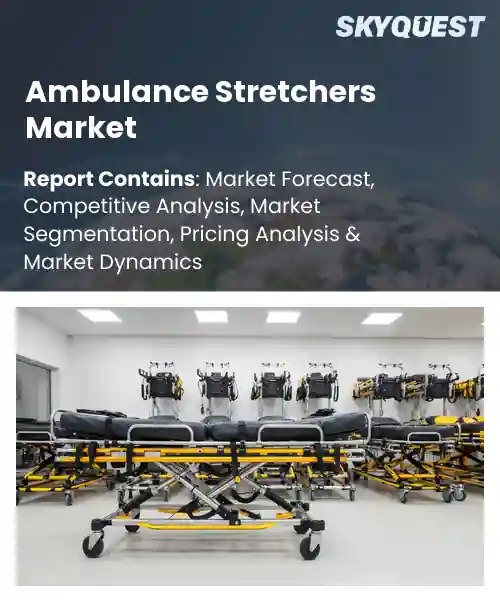
Ambulance Stretchers Market
Report ID: SQMIG35A3683
Report ID: SQMIG35A3683
[email protected]
USA +1 351-333-4748
Report ID:
SQMIG35A3683 |
Region:
Global |
Published Date: June, 2026
Pages:
157
|Tables:
151
|Figures:
78


Global Ambulance Stretchers Market size was valued at USD 2.4 Billion in 2024 and is poised to grow from USD 2.48 Billion in 2025 to USD 3.21 Billion by 2033, growing at a CAGR of 3.3% during the forecast period (2026-2033).
The ambulance stretchers market centers on the design, manufacture and supply of patient-transport systems used by emergency services and hospitals, and its primary driver is rising demand for rapid, safe patient transfer as populations age and emergency call volumes increase. This market matters because stretcher performance directly affects patient outcomes, crew safety and operating costs, prompting innovation from manual gurneys to hydraulic, power-assisted and lightweight carbon-fiber models. In recent decades vendors such as Stryker and Ferno introduced powered-lifting platforms and bariatric solutions, while regulatory emphasis on occupational safety and infection control has accelerated adoption of advanced materials and antimicrobial surfaces.
A dominant growth factor is rapid technological innovation that improves ergonomics and clinical capability, and because powered-lift mechanisms reduce manual handling, ambulance services experience fewer crew injuries and lower absenteeism, which justifies higher capital investment in advanced stretchers. As EMS agencies quantify cost savings from reduced worker compensation and faster patient loading, procurement shifts toward electrically actuated, bariatric and modular platforms equipped with integrated monitoring and infection-control features. Real-world use cases include urban ambulance fleets adopting battery-powered stretchers to shorten turnaround times and rural systems leasing multifunction units to support mass-casualty response, creating aftermarket service, software and training revenue opportunities.
How is IoT improving operational efficiency in the ambulance stretchers market?
IoT improves operational efficiency in the ambulance stretchers market by adding real time sensing, connectivity and data driven workflows. Key aspects include location tracking to shorten search time, telemetry for condition monitoring, predictive maintenance to reduce unexpected downtime, and integration with hospital systems to smooth handoffs. The current market favors devices that reduce manual tasks and speed patient transfers. Vendors are offering connected stretchers that report status, battery level and position, and that tie into dispatch and asset management systems. These capabilities lower staff workload, shorten turnaround in gateways such as emergency departments, and make fleet management more responsive and reliable.
Stryker March 2026, announced its SmartHospital Platform which extends device connectivity to transport equipment and stretchers, enabling remote status, location and workflow alerts that streamline transfers and support predictive service. This IoT driven linkage helps fleets stay available and supports market growth through demonstrable operational savings.
Market snapshot - (2026-2033)
Global Market Size
USD 2.4 Billion
Largest Segment
Manual Stretchers
Fastest Growth
Powered Stretchers
Growth Rate
3.3% CAGR
To get more insights on this market click here to Request a Free Sample Report
Global ambulance stretchers market is segmented by product type, technology, application, end user, load capacity and region. Based on product type, the market is segmented into Manual Stretchers, Powered Stretchers, Bariatric Stretchers, Chair Stretchers and Others. Based on technology, the market is segmented into Hydraulic Stretchers, Pneumatic Stretchers, Electric Stretchers and Others. Based on application, the market is segmented into Emergency Medical Services, Patient Transport, Trauma Care, Bariatric Care and Others. Based on end user, the market is segmented into Hospitals, Ambulance Service Providers, Emergency Care Centers, Military & Defense and Others. Based on load capacity, the market is segmented into Below 200 kg, 200–300 kg and Above 300 kg. Based on region, the market is segmented into North America, Europe, Asia Pacific, Latin America and Middle East & Africa.
Powered Stretchers segment dominates because their mechanized lifting and height adjustment capabilities significantly reduce caregiver strain and enable faster, safer patient loading and unloading in high pressure ambulance environments. This operational efficiency drives procurement preferences among ambulance operators and hospitals, while integrated locking and compatibility with vehicle mounts improve transport safety. The resulting improvements in workflow, reduced risk of staff injury and enhanced patient stability create a strong preference for powered models across emergency transport providers.
However, Bariatric Stretchers are emerging as the fastest growing area because ambulance operators seek higher capacity transport solutions. Advances in reinforced frames and wider platforms improve safety and handling for heavy patients, prompting adoption beyond specialized units. This design focus and growing operational demand create new procurement opportunities and push manufacturers to expand offerings.
Electric Stretchers segment dominates because onboard power and automated controls deliver seamless lift, tilt and locking functions, reducing manual handling and improving patient stability during transfers. Their integration with ambulance electrical systems and compatibility with vehicle mounting platforms streamline workflows and support additional features like powered positioning and monitoring attachments. These operational advantages lower staff fatigue, enhance safety and drive procurement preferences among ambulance providers prioritizing modern, feature rich transport equipment.
Conversely, Hydraulic Stretchers are gaining traction as operators seek reliable, low maintenance lifting systems requiring minimal power while providing smooth, controlled adjustments. Mechanical simplicity lowers lifecycle costs and suits rugged ambulance environments, encouraging adoption among fleets upgrading equipment. This practical appeal accelerates uptake and expands opportunities for manufacturers offering hydraulic solutions.
To get detailed segments analysis, Request a Free Sample Report
North America dominates due to a combination of advanced emergency medical services infrastructure, strong links between manufacturers and public procurement authorities, and a culture of rapid technology adoption in prehospital care. Established suppliers maintain extensive service networks and product portfolios that address a wide range of operational scenarios, from urban rapid response to rural patient transport. Regulatory frameworks emphasize safety and interoperability, encouraging adoption of higher specification stretchers and associated accessories. Training institutions and clinical practice guidelines in the region favor ergonomic and infection control innovations, reinforcing demand for modern solutions. Health systems and private ambulance operators prioritize long term reliability and total cost of ownership, which benefits vendors with proven quality, aftermarket support, and customization capabilities that align with diverse EMS models across the region.
Ambulance Stretchers Market in the United States is characterized by strong collaboration between original equipment manufacturers and large emergency medical services providers. Procurement decisions are influenced by clinical safety priorities, ergonomic design, and the availability of comprehensive maintenance and training programs. Product development often reflects feedback from frontline clinicians, driving features that support patient handling, infection control, and vehicle compatibility. The presence of multiple established suppliers and a mature service ecosystem supports rapid rollout of enhanced models across varied operational environments.
Ambulance Stretchers Market in Canada reflects a focus on durability and adaptability for diverse geographic conditions, including urban centers and remote communities. Procurement by provincial health authorities and regional ambulance services emphasizes reliability, ease of maintenance, and supplier responsiveness. Manufacturers that offer ruggedized designs, strong after sales support, and solutions tailored for long distance transfers find preference. Training initiatives and standards related to safe patient handling further reinforce demand for ergonomically engineered stretchers with robust warranties and local service arrangements.
The rapid expansion in Europe is driven by coordinated efforts to modernize emergency care fleets, heightened focus on patient safety, and demand for ergonomically advanced handling systems. Public health purchasers and private ambulance operators seek equipment that aligns with stringent safety standards and facilitates efficient patient transfers within integrated care pathways. Local manufacturers and international suppliers respond with modular designs that accommodate diverse ambulance layouts and regional clinical practices. Investment in prehospital care capability, coupled with emphasis on product lifecycle support and interoperability with monitoring systems, accelerates replacement cycles. Cross border collaborations and knowledge exchange among emergency services encourage adoption of best practices, supporting a dynamic market where innovation in materials, automation, and infection control features is highly valued.
Ambulance Stretchers Market in Germany benefits from a strong industrial base and a reputation for engineering quality. Procurement tends to favor robust, highly serviceable solutions that integrate with standardized ambulance configurations and clinical protocols. Domestic manufacturers collaborate closely with emergency services to refine ergonomics and durability, while aftermarket networks ensure timely maintenance. The market emphasizes compliance with rigorous safety and performance expectations, making Germany a center for technically sophisticated stretcher designs and production excellence.
Ambulance Stretchers Market in the United Kingdom is characterized by active fleet renewal initiatives and focus on operational efficiency across regional ambulance trusts. Decision makers prioritize equipment that improves crew safety, reduces manual handling injuries, and enhances patient comfort during transfers. Partnerships between suppliers and trusts foster pilot programs and product validation in real world settings, accelerating adoption of advanced features. Emphasis on value driven procurement and long term service arrangements supports widespread uptake of modern stretcher systems.
Ambulance Stretchers Market in France is emerging with growing attention to regional emergency network optimization and specialized prehospital care. Procurement patterns reflect an increasing interest in customizable stretcher platforms that address varied mission profiles, including urban emergency response and interfacility transfers. Local suppliers and international firms compete by demonstrating adaptability to French clinical workflows and providing comprehensive training and maintenance services, aiding gradual market maturation and broader use of contemporary stretcher solutions.
Asia Pacific is strengthening its market position through combination of infrastructure investment, rising domestic manufacturing capability, and closer alignment with international product standards. Urbanization and expanding emergency medical services create demand for both cost effective and high performance stretchers tailored to local ambulance designs. Regional manufacturers increasingly collaborate with global technology partners to localize features and accelerate product validation under varying clinical conditions. Emphasis on lightweight materials, compact mechanisms suited to space constrained vehicles, and integration with monitoring equipment caters to diverse operator needs. Strengthening after sales service, establishing training programs, and leveraging export oriented production further reinforce the region as an important growth area for innovative and competitively priced ambulance stretcher solutions.
Ambulance Stretchers Market in Japan emphasizes precision engineering, compact operational footprints, and seamless integration with medical monitoring systems. Procurement priorities include high quality manufacturing, refined ergonomics for safe patient handling, and solutions suited to dense urban ambulance environments. Domestic manufacturers focus on reliability, user centric design, and long term service relationships with hospitals and emergency services, supporting incremental adoption of advanced stretcher models across multiple care settings.
Ambulance Stretchers Market in South Korea is driven by rapid technology adoption, strong electronics integration, and collaboration between local manufacturers and international suppliers. Demand centers on feature rich, adaptable stretcher designs that support efficient prehospital workflows and interoperability with emergency care equipment. Suppliers that offer fast product iteration, effective training, and responsive maintenance services find favor, reinforcing South Korea role as a dynamic market for innovative stretcher solutions.
To know more about the market opportunities by region and country, click here to
Buy The Complete Report
Rising Demand For Emergency Services
Technological Advancements In Design
High Equipment Acquisition Costs
Regulatory and Compliance Challenges
Request Free Customization of this report to help us to meet your business objectives.
Competition in the global ambulance stretchers market is driven by product innovation, hospital and EMS procurement partnerships, and tactical deals among incumbents. Established OEMs are defending share with connected electric cots and load systems. Examples include Stryker product launches and long term vehicle partnerships from stretcher specialists, while new entrants deploy robotics and aerial evacuation concepts that reshape competitive positioning.
Top Player’s Company Profile
Recent Developments
SkyQuest’s ABIRAW (Advanced Business Intelligence, Research & Analysis Wing) is our Business Information Services team that Collects, Collates, Correlates, and Analyses the Data collected by means of Primary Exploratory Research backed by robust Secondary Desk research. As per SkyQuest analysis, the global ambulance stretchers market is propelled by rising demand for rapid, safe patient transfer as a key driver, while high equipment acquisition costs act as a primary restraint. The dominating region is North America, supported by advanced EMS infrastructure and strong OEM-service networks, and the dominating segment is Powered Stretchers, which reduce caregiver strain and speed patient handling. A second driver is technological innovation, including IoT connectivity and integrated monitoring that improve operational efficiency and predictive maintenance. Overall, vendors focusing on ergonomic electric and bariatric solutions, aftermarket service and interoperable systems are best positioned to capture growth as agencies balance cost and clinical outcomes.
| Report Metric | Details |
|---|---|
| Market size value in 2024 | USD 2.4 Billion |
| Market size value in 2033 | USD 3.21 Billion |
| Growth Rate | 3.3% |
| Base year | 2024 |
| Forecast period | (2026-2033) |
| Forecast Unit (Value) | USD Billion |
| Segments covered |
|
| Regions covered | North America (US, Canada), Europe (Germany, France, United Kingdom, Italy, Spain, Rest of Europe), Asia Pacific (China, India, Japan, Rest of Asia-Pacific), Latin America (Brazil, Rest of Latin America), Middle East & Africa (South Africa, GCC Countries, Rest of MEA) |
| Companies covered |
|
| Customization scope | Free report customization with purchase. Customization includes:-
|
To get a free trial access to our platform which is a one stop solution for all your data requirements for quicker decision making. This platform allows you to compare markets, competitors who are prominent in the market, and mega trends that are influencing the dynamics in the market. Also, get access to detailed SkyQuest exclusive matrix.
Table Of Content
Executive Summary
Market overview
Parent Market Analysis
Market overview
Market size
KEY MARKET INSIGHTS
COVID IMPACT
MARKET DYNAMICS & OUTLOOK
Market Size by Region
KEY COMPANY PROFILES
Methodology
For the Ambulance Stretchers Market, our research methodology involved a mixture of primary and secondary data sources. Key steps involved in the research process are listed below:
1. Information Procurement: This stage involved the procurement of Market data or related information via primary and secondary sources. The various secondary sources used included various company websites, annual reports, trade databases, and paid databases such as Hoover's, Bloomberg Business, Factiva, and Avention. Our team did 45 primary interactions Globally which included several stakeholders such as manufacturers, customers, key opinion leaders, etc. Overall, information procurement was one of the most extensive stages in our research process.
2. Information Analysis: This step involved triangulation of data through bottom-up and top-down approaches to estimate and validate the total size and future estimate of the Ambulance Stretchers Market.
3. Report Formulation: The final step entailed the placement of data points in appropriate Market spaces in an attempt to deduce viable conclusions.
4. Validation & Publishing: Validation is the most important step in the process. Validation & re-validation via an intricately designed process helped us finalize data points to be used for final calculations. The final Market estimates and forecasts were then aligned and sent to our panel of industry experts for validation of data. Once the validation was done the report was sent to our Quality Assurance team to ensure adherence to style guides, consistency & design.
Analyst Support
Customization Options
With the given market data, our dedicated team of analysts can offer you the following customization options are available for the Ambulance Stretchers Market:
Product Analysis: Product matrix, which offers a detailed comparison of the product portfolio of companies.
Regional Analysis: Further analysis of the Ambulance Stretchers Market for additional countries.
Competitive Analysis: Detailed analysis and profiling of additional Market players & comparative analysis of competitive products.
Go to Market Strategy: Find the high-growth channels to invest your marketing efforts and increase your customer base.
Innovation Mapping: Identify racial solutions and innovation, connected to deep ecosystems of innovators, start-ups, academics, and strategic partners.
Category Intelligence: Customized intelligence that is relevant to their supply Markets will enable them to make smarter sourcing decisions and improve their category management.
Public Company Transcript Analysis: To improve the investment performance by generating new alpha and making better-informed decisions.
Social Media Listening: To analyze the conversations and trends happening not just around your brand, but around your industry as a whole, and use those insights to make better Marketing decisions.
REQUEST FOR SAMPLE
 REQUEST FREE CUSTOMIZATION
Global Ambulance Stretchers Market size was valued at USD 2.4 Billion in 2024 and is poised to grow from USD 2.48 Billion in 2025 to USD 3.21 Billion by 2033, growing at a CAGR of 3.3% during the forecast period (2026-2033).
Competition in the global ambulance stretchers market is driven by product innovation, hospital and EMS procurement partnerships, and tactical deals among incumbents. Established OEMs are defending share with connected electric cots and load systems. Examples include Stryker product launches and long term vehicle partnerships from stretcher specialists, while new entrants deploy robotics and aerial evacuation concepts that reshape competitive positioning. 'Stryker Corporation', 'Ferno-Washington, Inc.', 'Baxter International Inc.', 'Spencer Italia S.r.l.', 'ME.BER. S.r.l.', 'ZOLL Medical Corporation', 'Zhangjiagang Xiehe Medical Apparatus & Instruments Co., Ltd.', 'Junkin Safety Appliance Company', 'Narang Medical Limited', 'Hebei Pukang Medical Instruments Co., Ltd.', 'OrientMEd International FZE', 'Givas S.r.l.', 'Medirol Oy', 'Mobimedical', 'Jiangsu Saikang Medical Equipment Co., Ltd.', 'Anetic Aid Ltd.', 'RUD.OLF Riester GmbH', 'Zhenjiang Kangrui Rehabilitation Equipment Co., Ltd.', 'Favero Health Projects S.p.A.', 'Kartsana Medical GmbH'
Rising emergency service demand compels ambulance operators to prioritize reliable patient transfer solutions, prompting procurement and specification of advanced stretchers that enhance safety, stability, and handling. As call volumes and expectations for rapid, high quality prehospital care increase, agencies emphasize equipment that supports efficient loading, secure patient immobilization, and caregiver ergonomics. This drives investments in modern stretcher designs, aftermarket accessories, and refurbishment, encouraging manufacturers to expand offerings and tailor products to operational needs, thereby fostering market expansion through heightened replacement and acquisition activity.
Smart Patient Monitoring Integration: Ambulance stretchers are evolving to incorporate integrated patient monitoring and connectivity features that enable continuous vital sign tracking during transport. These capabilities support seamless data handover to receiving clinicians, facilitate remote consultation, and reduce manual monitoring burden for emergency teams. Emphasis on interoperable interfaces, secure wireless communication, and resilient designs improves clinical decision workflows. Manufacturers prioritize ergonomics and modular sensor options to ensure ease of use, infection control compatibility, and reliable performance in varied field conditions.
Why does North America Dominate the Global Ambulance Stretchers Market? |@12


Want to customize this report? This report can be personalized according to your needs. Our analysts and industry experts will work directly with you to understand your requirements and provide you with customized data in a short amount of time. We offer $1000 worth of FREE customization at the time of purchase.
Feedback From Our Clients


 USA (+1) 351-333-4748

