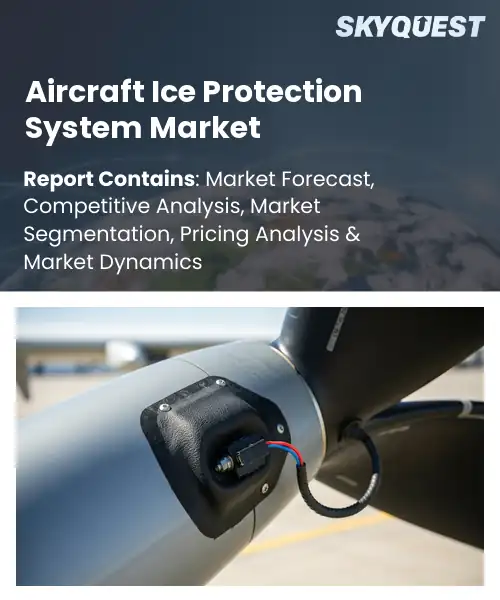
Aircraft Ice Protection System Market
Report ID: SQMIG45J2519
Report ID: SQMIG45J2519
[email protected]
USA +1 351-333-4748
Report ID:
SQMIG45J2519 |
Region:
Global |
Published Date: June, 2026
Pages:
157
|Tables:
179
|Figures:
74


Global Aircraft Ice Protection System Market size was valued at USD 5.68 Billion in 2024 and is poised to grow from USD 6.08 Billion in 2025 to USD 10.53 Billion by 2033, growing at a CAGR of 7.1% during the forecast period (2026-2033).
There is growing emphasis on fuel efficiency, that’s becoming a key factor for the aircraft ice protection system market growth. Airlines and aircraft builders are increasingly turning toward lightweight electro-thermal and even hybrid ice protection approaches, rather than sticking with the old pneumatic style, which in turn helps cut down aircraft weight, and improves the total fuel economy in general. Lower fuel consumption doesn’t just lower day to day costs, it also helps with environmental obligations and emission-reduction programs like ICAO’s CORSIA framework.
On top of that, newer de-icing systems are being paired with advanced sensors and flight-management software, so operations can run in a more automated way depending on current weather conditions in real time, and that boosts efficiency as well as safety overall. Meanwhile, the rising need for retrofit upgrades across the existing fleets is opening fresh revenue channels for OEMs and aftermarket service providers, so the market keeps moving forward, along with ongoing technical innovation.
AI-driven automation is basically reshaping the global aircraft ice protection system market outlook by putting intelligent sensors, predictive algorithms and closed-loop control into what used to be mostly conventional de-icing hardware. Today’s systems can gather temperature, humidity, and airflow info, and then AI models use that data to anticipate ice buildup. After that, protection kicks in only when it truly makes sense, not “just in case”. That smarter triggering trims unnecessary spray, conserves fuel, and can reduce maintenance cycles too. Manufacturers are also embedding machine-learning modules that keep adjusting performance based on past flight history, and that helps reliability across different climates. There’s more, because remote monitoring is now more common, it gives operators instant visibility and faster decision-making, which then increases the pull for smarter, lighter solutions, and it also supports regulatory compliance right now.
Market snapshot - (2026-2033)
Global Market Size
USD 5.68 Billion
Largest Segment
Anti-Icing Systems
Fastest Growth
Ice Detection & Monitoring Systems
Growth Rate
7.1% CAGR
To get more insights on this market click here to Request a Free Sample Report
The global aircraft ice protection system market is segmented based on function type, technology, aircraft type, application, fit type, end user, and region. By function type, the market is categorized into anti-icing systems, de-icing systems, ice detection & monitoring systems, and others. Based on technology, the market is segmented into pneumatic systems, bleed air thermal systems, electro-thermal systems, electro-mechanical systems, and other technologies. Based on aircraft type, the market is divided into commercial aircraft, business jets, military aircraft, general aviation aircraft, and helicopters. By application, the market comprises wing ice protection, engine ice protection, windshield ice protection, propeller & rotor ice protection, and others. Based on fit type, the market is segmented into line fit and retrofit installations. By end user, the market is classified into commercial aviation operators, military organizations, business aviation operators, general aviation operators, and others. Geographically, the market is analyzed across North America, Europe, Asia Pacific, Latin America, and the Middle East & Africa.
As per the aircraft ice protection system market analysis, the Electro Thermal Systems segment dominates, in practice it delivers fast and even heat spread over the key surfaces without leaning on bleed air, so it can simplify the airframe design, and also shave off some weight. Operators seem to like it because the maintenance load is lower and the reliability stays steadier across different weather patterns in diverse climatic conditions. Also, the way it plugs into newer avionics and digital controls is a big plus, it just makes the whole ice mitigation pitch feel stronger for new aircraft programs that want efficient solutions.
On the other hand, Electro Mechanical Systems are picking up the most noticeable growth energy. Manufacturers are leaning into their lightweight actuators plus the fairly exact ice shedding performance, so it feels more responsive. New smart sensor approaches and adaptive control algorithms are widening where these systems can be used, and that’s pushing interest across newer aircraft platforms, which then opens up more paths for market expansion in ice protection solutions.
According to the aircraft ice protection system market forecast, the Wing Ice Protection segment stands out directly, it protects the lift producing surfaces head on, so performance doesn’t drop, and avoid safety hazards when the aircraft is in freezing conditions. Airlines tend to prioritize that function because it supports schedule reliability and keeps passenger trust up, which basically keeps demand consistent for solid solutions. It also aligns with aerodynamic design choices and it works with both legacy aircraft and the next generation models, so it stays relevant for multiple operator types. Plus, regulatory guidance basically reinforces that it has an essential safety compliance role.
Conversely, the Engine Ice Protection category is predicted to have the largest aircraft ice protection system market share, since improvements around thermal bleed integration and electro thermal coil designs allow effective ice control on modern turbofan engine cores. There’s also the increasing worry about performance drag, and stricter certification expectations, which are encouraging wider adoption and stretching market chances across new aircraft development projects.
To get detailed segments analysis, Request a Free Sample Report
As per the aircraft ice protection system market regional forecast, North America commands the lead in the market, mostly because there’s this deep technological knowledge, a packed concentration of original equipment manufacturers , and a regulatory mood that pushes strict safety standards. Also the region has a big commercial and business aviation fleet that basically flies through all climatic zones , so the need for high performance de icing solutions stays steady. There are robust R&D ecosystems too, supported by major universities and dedicated aerospace research centres, which helps innovation move faster , like the cycles are shorter. And then the supply chain picture is strong, meaning components can be delivered quickly, plus aftermarket support is there when operators need it. On top of that, airlines, manufacturers, and government agencies keep working together in collaborative frameworks, which encourages continuous improvement and the uptake of next gen ice protection technologies, so it all locks in the region’s dominant spot.
United States Aircraft Ice Protection System Market
The Aircraft Ice Protection System sector in the United States benefits from a mature aerospace environment, extensive test facilities, and key manufacturers that invest heavily in technology innovation. The regulatory framework , in practice, nudges companies to adopt advanced de icing solutions, and major airlines keep focusing on safety and operational efficiency, not just cost. Plus collaborative research programs between academia and industry help product development speed up, and that keeps the market up at the front of performance and reliability requirements.
Canada Aircraft Ice Protection System Market
The Aircraft Ice Protection System industry in Canada is reinforced by a strong emphasis on cold weather operational know how, along with a supportive governmental posture on aviation safety. Being close to major North American OEM hubs allows faster integration of newer technologies, while regional airlines operating in harsh weather conditions keep pulling demand for dependable ice protection solutions. Ongoing collaborations between research institutes and industry help with constant improvement, and they also support the idea of staying competitive.
The rapid aircraft ice protection system market penetration across Europe is pushed by this combination of strict safety mandates, rising environmental expectations , and a busy network of aerospace manufacturers rooted in the big aviation hubs on the continent. European regulatory bodies expect even higher performance levels from ice protection equipment , so manufacturers keep working on lightweight, energy efficient solutions that fit with broader carbon reduction goals. Significant investment in digital twin and predictive maintenance technologies improves system reliability, and collaborative research efforts among universities , research institutes, and industry help speed up the rollout of next generation de icing concepts. In short, the ecosystem is basically full of high standards, sustainability thinking, and strong innovation capacity, and that fuels continued growth across the region.
Germany Aircraft Ice Protection System Market
The Aircraft Ice Protection System Market in Germany benefits from a world-renowned engineering pedigree and a cluster of leading aerospace manufacturers that drive high performance product development. The country’s strict certification processes , plus tight cooperation with European regulatory agencies, means solutions need to pass the most demanding safety criteria. Strong connections between research universities and industry keep innovation going , and there’s also a robust export orientation, which positions German technology as a benchmark for reliability across global airline operators.
United Kingdom Aircraft Ice Protection System Market
The Aircraft Ice Protection System Market in the United Kingdom has a varied mix of legacy manufacturers and agile start ups that help speed up the adoption of modern de icing technologies. The nation has a strong focus on research collaboration, backed by government supported innovation funds, so rapid prototyping and testing of novel ice protection concepts can happen faster. Strategic proximity to major European airports, plus a growing need for sustainable aviation solutions, also intensifies market activity and strengthens the UK’s reputation as a quick moving hub.
France Aircraft Ice Protection System Market
The Aircraft Ice Protection System Market in France is getting momentum through a blend of strong governmental support for aerospace initiatives and a growing network of specialised suppliers focused on eco efficient de icing solutions. Collaborative platforms that link aircraft operators, research centres, and component manufacturers encourage the development of lightweight, low energy ice protection systems. And since French airlines prioritize operational resilience in different weather patterns, demand for advanced yet cost effective technologies keeps rising , which is starting to position France as a more influential player.
In the Asia Pacific region, it seems like the Aircraft Ice Protection System market is slowly, but surely, solidifying itself , right alongside rapid air traffic growth , and at the same time a lot of governmental moves are pushing the indigenous aerospace capabilities thing. Countries in the area are putting resources into advanced materials study, sensor integration and smart control architectures , which they claim will lead to lighter, more efficient de‑icing solutions. And then, strategic partnerships between local builders and major OEMs, they help speed up technology transfer, while civil aviation networks keep expanding across different weather environments, so the need for trustworthy ice‑protection equipment doesn’t calm down. Altogether this blend of market growth, innovation spend, and shared ecosystems is making Asia Pacific a crucial contributor to how aircraft safety technologies evolve.
Japan Aircraft Ice Protection System Market
The Aircraft Ice Protection System Market in Japan leans on the country’s reputation for precision engineering, and also on a long, established commitment to aviation safety. Big manufacturers are combining advanced sensor groupings with AI based control logic, for better de‑icing results. Meanwhile close relationships with domestic airlines create quick feedback loops, which helps. On top of that, government incentives for research into extreme‑environment technologies are speeding up the creation of dependable ice‑protection equipment. This is designed for both commercial users and regional operators, and it’s not a small thing.
South Korea Aircraft Ice Protection System Market
The Aircraft Ice Protection System Market in South Korea is powered by a vigorous industrial policy, with a focus on high‑tech aerospace knowhow and strong cooperation between major conglomerates and research universities. Manufacturers there are concentrating on compact, energy‑saving de‑icing modules that fit next‑generation regional jets. They also participate actively in international standards committees, which boosts global credibility over time. Plus, domestic carrier fleets keep growing and they run in different climatic zones, so demand stays steady. That steady exposure, well it encourages ongoing tuning of system dependability and overall performance.
To know more about the market opportunities by region and country, click here to
Buy The Complete Report
Increasing Commercial Flight Operations
Regulatory Pressure for Ice Safety
High Manufacturing Costs for Advanced Materials
Limited Certification Pathways for New Technologies
Request Free Customization of this report to help us to meet your business objectives.
The Aircraft Ice Protection System market feels like it’s always in a rivalry mode ,where incumbents and newer players keep pushing sensor based ideas and coating upgrades, back and forth. On one side, SiFive’s $400 million custom‑chip financing seems to help speed up how real time ice detection electronics get built into the system, and then on the other side, GridAero’s $20 million Series A supports autonomous cargo platforms that also pack next-gen de‑icing modules in them. And, with recent M&A moves plus joint development deals among OEMs, it all just turns up the pressure more.
Top Player’s Company Profile
Recent Developments in the Aircraft Ice Protection System Market
SkyQuest’s ABIRAW (Advanced Business Intelligence, Research & Analysis Wing) is our Business Information Services team that Collects, Collates, Correlates, and Analyses the Data collected by means of Primary Exploratory Research backed by robust Secondary Desk research.
As per SkyQuest analysis, the market is being pushed mainly by the climb in commercial flight activity, which pressures airlines to choose lighter, more efficient ice‑protection approaches. On the side, stricter regulatory expectations around ice safety are acting as a second trigger, encouraging retrofits and also certification for the newer system types. Within that, the electro‑thermal technology slice seems to lead, since it can spread heat fast without relying on bleed‑air dependence. Regionally, North America is still the top area, partly because it has a deep OEM presence, a strong R&D network, and tough safety requirements. That said, the high manufacturing costs for specialized alloys, and thermal‑conductive composites too, can slow things down for budget‑focused carriers. So the rollout of the newest technology doesn’t move as quickly.
| Report Metric | Details |
|---|---|
| Market size value in 2024 | USD 5.68 Billion |
| Market size value in 2033 | USD 10.53 Billion |
| Growth Rate | 7.1% |
| Base year | 2024 |
| Forecast period | (2026-2033) |
| Forecast Unit (Value) | USD Billion |
| Segments covered |
|
| Regions covered | North America (US, Canada), Europe (Germany, France, United Kingdom, Italy, Spain, Rest of Europe), Asia Pacific (China, India, Japan, Rest of Asia-Pacific), Latin America (Brazil, Rest of Latin America), Middle East & Africa (South Africa, GCC Countries, Rest of MEA) |
| Companies covered |
|
| Customization scope | Free report customization with purchase. Customization includes:-
|
To get a free trial access to our platform which is a one stop solution for all your data requirements for quicker decision making. This platform allows you to compare markets, competitors who are prominent in the market, and mega trends that are influencing the dynamics in the market. Also, get access to detailed SkyQuest exclusive matrix.
Table Of Content
Executive Summary
Market overview
Parent Market Analysis
Market overview
Market size
KEY MARKET INSIGHTS
COVID IMPACT
MARKET DYNAMICS & OUTLOOK
Market Size by Region
KEY COMPANY PROFILES
Methodology
For the Aircraft Ice Protection System Market, our research methodology involved a mixture of primary and secondary data sources. Key steps involved in the research process are listed below:
1. Information Procurement: This stage involved the procurement of Market data or related information via primary and secondary sources. The various secondary sources used included various company websites, annual reports, trade databases, and paid databases such as Hoover's, Bloomberg Business, Factiva, and Avention. Our team did 45 primary interactions Globally which included several stakeholders such as manufacturers, customers, key opinion leaders, etc. Overall, information procurement was one of the most extensive stages in our research process.
2. Information Analysis: This step involved triangulation of data through bottom-up and top-down approaches to estimate and validate the total size and future estimate of the Aircraft Ice Protection System Market.
3. Report Formulation: The final step entailed the placement of data points in appropriate Market spaces in an attempt to deduce viable conclusions.
4. Validation & Publishing: Validation is the most important step in the process. Validation & re-validation via an intricately designed process helped us finalize data points to be used for final calculations. The final Market estimates and forecasts were then aligned and sent to our panel of industry experts for validation of data. Once the validation was done the report was sent to our Quality Assurance team to ensure adherence to style guides, consistency & design.
Analyst Support
Customization Options
With the given market data, our dedicated team of analysts can offer you the following customization options are available for the Aircraft Ice Protection System Market:
Product Analysis: Product matrix, which offers a detailed comparison of the product portfolio of companies.
Regional Analysis: Further analysis of the Aircraft Ice Protection System Market for additional countries.
Competitive Analysis: Detailed analysis and profiling of additional Market players & comparative analysis of competitive products.
Go to Market Strategy: Find the high-growth channels to invest your marketing efforts and increase your customer base.
Innovation Mapping: Identify racial solutions and innovation, connected to deep ecosystems of innovators, start-ups, academics, and strategic partners.
Category Intelligence: Customized intelligence that is relevant to their supply Markets will enable them to make smarter sourcing decisions and improve their category management.
Public Company Transcript Analysis: To improve the investment performance by generating new alpha and making better-informed decisions.
Social Media Listening: To analyze the conversations and trends happening not just around your brand, but around your industry as a whole, and use those insights to make better Marketing decisions.
REQUEST FOR SAMPLE
 REQUEST FREE CUSTOMIZATION
Global Aircraft Ice Protection System Market size was valued at USD 5.68 Billion in 2024 and is poised to grow from USD 6.08 Billion in 2025 to USD 10.53 Billion by 2033, growing at a CAGR of 7.1% during the forecast period (2026-2033).
The Aircraft Ice Protection System market is shaped by intense rivalry as incumbents and new entrants vie for sensor‑driven and coating innovations. SiFive’s $400 million custom‑chip financing accelerates integration of real‑time ice‑detection electronics, while GridAero’s $20 million Series A backs autonomous cargo platforms that embed next‑gen de‑icing modules. Recent M&A activity and joint‑development pacts among OEMs further intensify competitive pressure. 'Collins Aerospace', 'Honeywell International Inc.', 'Safran S.A.', 'Parker Hannifin Corporation', 'Meggitt PLC', 'Cav Ice Protection Ltd.', 'Cox & Company, Inc.', 'Liebherr-Aerospace', 'ITT Inc.', 'Curtiss-Wright Corporation', 'ESCO Technologies Inc.', 'Ontic Engineering and Manufacturing, Inc.', 'Astronics Corporation', 'Ultra Electronics Holdings plc', 'Mecaer Aviation Group'
Ai‑Driven Predictive De‑Icing: Airlines are deploying machine‑learning algorithms that ingest real‑time meteorological data, aircraft sensor feeds, and historical icing incidents to forecast ice accumulation with high precision. Predictive outputs guide crews on optimal timing for de‑icing activation, minimizing unnecessary system usage while preserving safety margins. The technology also supports dynamic maintenance scheduling, identifying component wear before failure. By integrating these insights into flight‑deck displays and ground‑operations platforms, operators achieve operational efficiency, reduce turnaround delays, and enhance passenger confidence in adverse weather conditions globally.
Why does North America Dominate the Global Aircraft Ice Protection System Market? |@12


Want to customize this report? This report can be personalized according to your needs. Our analysts and industry experts will work directly with you to understand your requirements and provide you with customized data in a short amount of time. We offer $1000 worth of FREE customization at the time of purchase.
Feedback From Our Clients


 USA (+1) 351-333-4748

