
Wood Vinegar Market
Report ID: SQMIG30D2042
Report ID: SQMIG30D2042
[email protected]
USA +1 351-333-4748
Report ID:
SQMIG30D2042 |
Region:
Global |
Published Date: May, 2025
Pages:
189
|Tables:
63
|Figures:
67


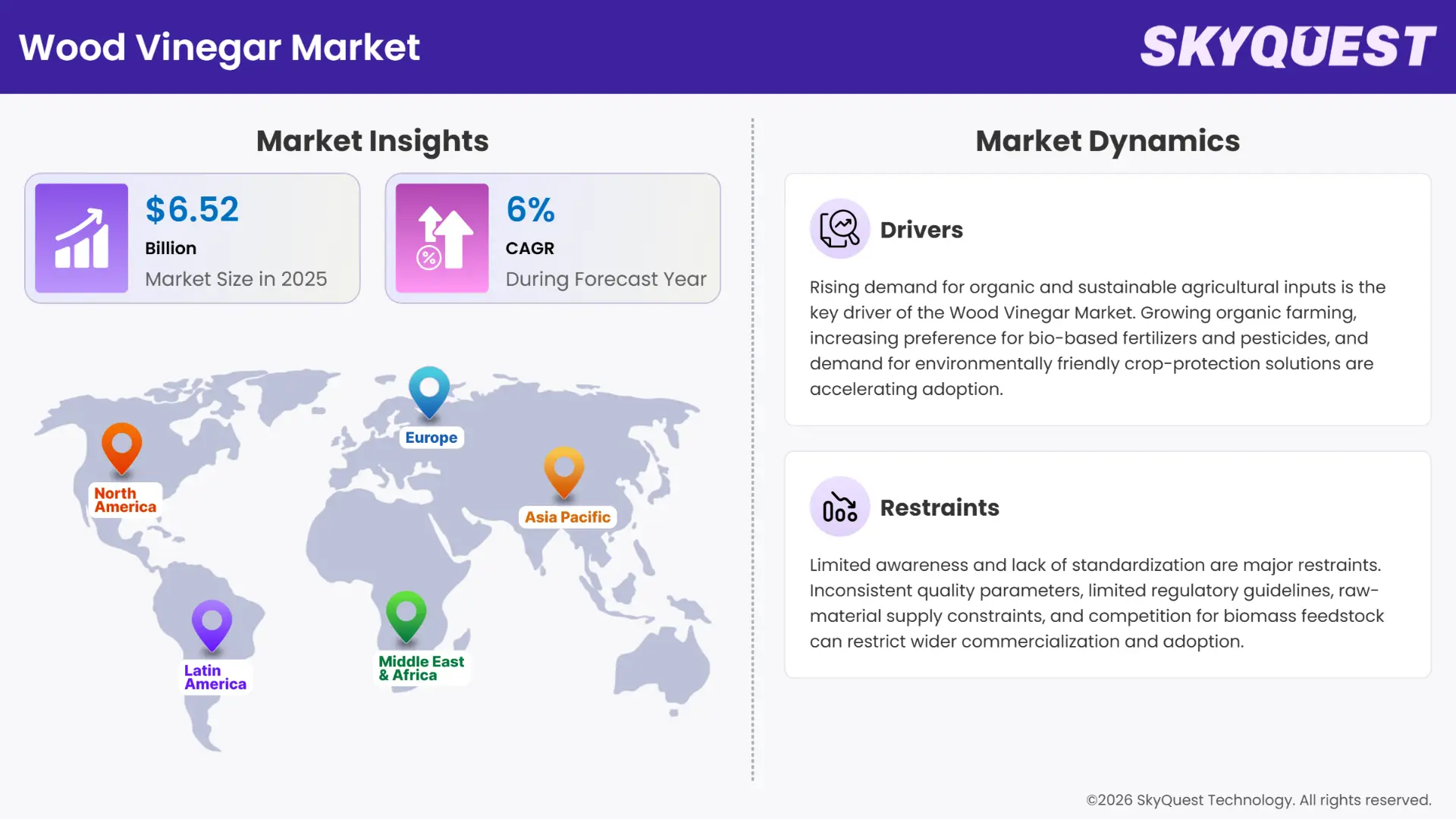
Global Wood Vinegar Market size was valued at USD 6.15 Billion in 2024 and is poised to grow from USD 6.52 Billion in 2025 to USD 10.39 Billion by 2033, growing at a CAGR of 6% during the forecast period (2026–2033).
Key Takeaways: Market Trends & Insights
The increase in demand for organic and sustainable agricultural practices has mainly propelled wood vinegar to be used as an environmentally friendly alternative to synthetic pesticides and fertilizers to operate on their global market. In addition, the ability to increase the environmental impact with increasing trends of wood vinegar, improve crop yield and increase trends against organic farming, to create a favorable wooden vinegar market approach. In addition, increasing awareness of the harmful effects of chemically based products on human health and the environment has promoted the discovery of safe alternatives, which further improved the popularity of wood vinegar.
In addition, the ongoing research and development (R&D) extends the scope of wood vinegar applications, which contributes to the increase in the market. One of the primary drivers of the global wood vinegar industry is the increasing demand for sustainable agricultural practices. With escalating concerns about the environmental impact of conventional farming methods and the need to reduce the use of synthetic chemicals, wood vinegar has emerged as a promising solution. Additionally, wood vinegar, with its organic and eco-friendly properties, is being embraced by farmers worldwide, strengthening the market growth. The increased practice of organic farming is increasing the demand for organic fertilizers and pesticides like wood vinegar in the market.
Wood vinegar is used for both crop nutrition and crop protection, thereby proving to be a natural and organic product for farming-related problems. The emphasis on sustainable agriculture and government support to the manufacturers are the other factors that augment the development of the market. With the increased acceptance of global cuisines, the market for wood vinegar has expanded globally since it has an acrid smoky odor, typical to food products such as barbeque sauce, which is gaining global acceptance. Further, it is being increasingly used in canned food products as a preservative, owing to its anti-microbial and antioxidant properties.
How is AI Transforming the Wood Vinegar Market?
AI is revolutionizing the wood vinegar market by enhancing production efficiency, optimizing resource utilization, and improving quality control. Through AI-driven automation and machine learning algorithms, manufacturers can monitor and regulate pyrolysis conditions in real time, ensuring consistent product quality and maximizing yield. Additionally, AI-powered predictive analytics helps producers forecast demand, optimize supply chain logistics, and reduce waste. AI is also playing a crucial role in precision agriculture, where wood vinegar is used as a natural pesticide and soil enhancer. By analyzing soil health and crop needs, AI-driven models can determine the optimal application rates, improving agricultural productivity and sustainability.
Which Startups Are Driving Innovation in Wood Vinegar Market?
What Emerging Technologies Will Drive Wood Vinegar Market in Next Few Years?
To get more insights on this market click here to Request a Free Sample Report
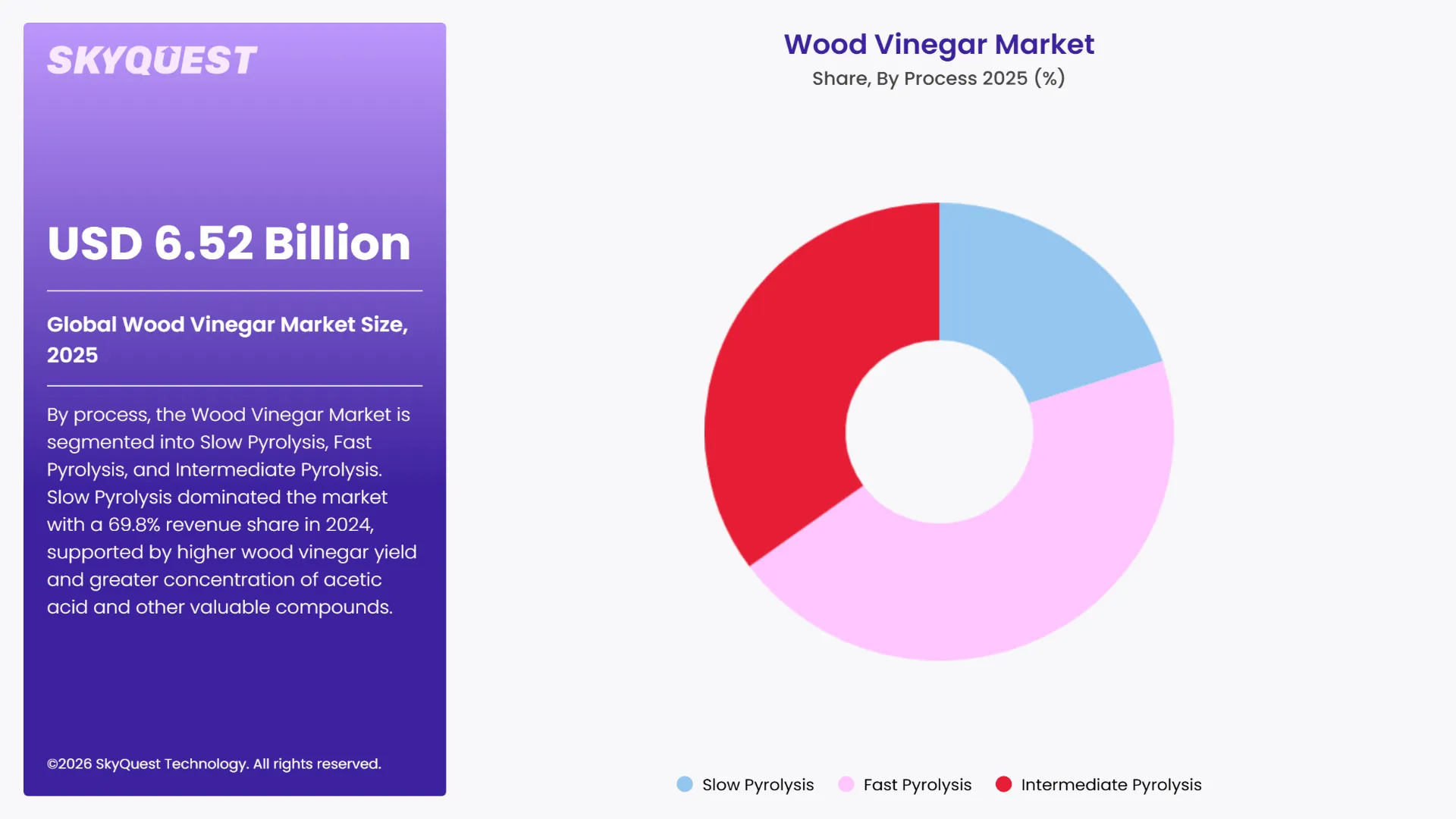
Global Wood Vinegar Market is segmented by Pyrolysis Method, Distribution Channel, Application and region.
To get detailed segments analysis, Request a Free Sample Report
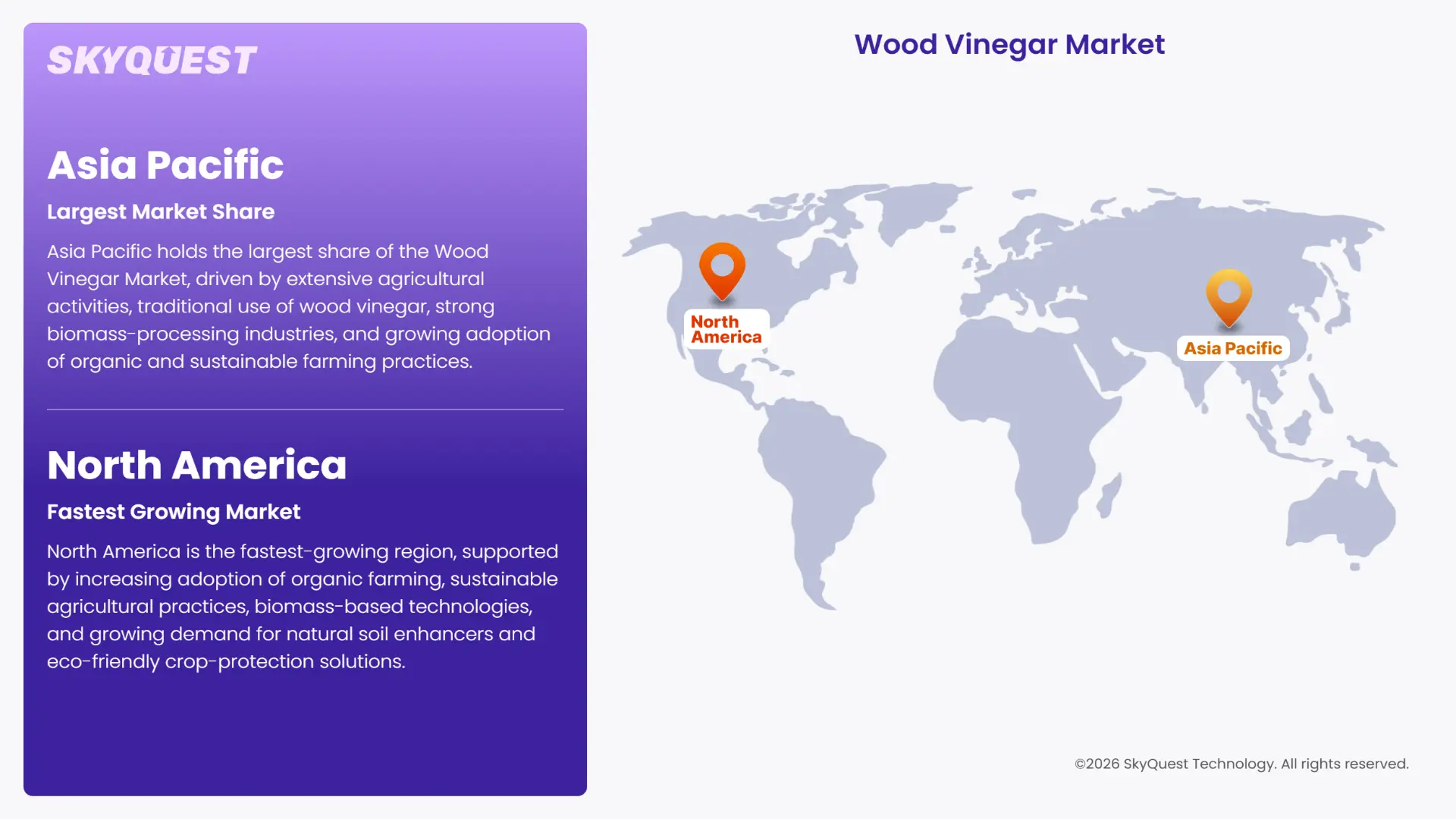
As per global wood vinegar market forecast, Asia Pacific dominated the wood vinegar market due to its traditional usage in agriculture, particularly in countries like Japan, South Korea, and Indonesia. The region has a strong presence of biomass processing industries, which contribute to large-scale wood vinegar production. Technological advancements in pyrolysis techniques and government-backed sustainable farming initiatives are fueling market growth. Additionally, the integration of wood vinegar into food processing, wellness products, and cosmetics is expanding its applications beyond agriculture.
The wood vinegar market in North America is driven by the increasing adoption of organic farming and sustainable agricultural practices. The United States and Canada are investing in biomass-based technologies that enhance wood vinegar production. The region is also witnessing growing research efforts to explore its applications in soil enhancement, pest control, and food preservation. The demand for natural and eco-friendly agricultural inputs is propelling market expansion, with government initiatives supporting bio-based alternatives to chemical fertilizers and pesticides.
Europe is witnessing significant growth in the wood vinegar market, driven by stringent environmental regulations and the push for sustainable farming practices. Countries like Germany, France, and Italy are focusing on organic farming, where wood vinegar is increasingly used as a bio-based soil enhancer and pest control agent. European research institutions are investing in advanced extraction and purification technologies to improve wood vinegar quality and expand its applications in industrial and food sectors. The region’s strong emphasis on reducing chemical inputs in agriculture is creating a favorable market environment for wood vinegar.
To know more about the market opportunities by region and country, click here to
Buy The Complete Report
Rising Demand for Organic and Sustainable Agricultural Inputs
Advancements in Pyrolysis Technology
Limited Awareness and Lack of Standardization
Supply Chain and Raw Material Constraints
Request Free Customization of this report to help us to meet your business objectives.
The global wood vinegar industry is becoming increasingly competitive, with both established companies and emerging startups investing in innovative production techniques and expanding their market reach. Key players such as Tagrow Co. Ltd (China), Nara Tanka Industries Co., Ltd. (Japan), and Nettenergy B.V. (Netherlands) are leading the market through advanced pyrolysis technologies and sustainable production methods. Companies are focusing on expanding their agricultural applications by integrating wood vinegar into organic farming and pest control solutions.
Why is Slow Pyrolysis Dominating Wood Vinegar Market?
As per the global wood vinegar market outlook, slow pyrolysis dominated the market with 69.8% of revenue share in 2024. This process results in a higher yield of wood vinegar with a higher concentration of acetic acid and other valuable compounds. The increasing demand for high-quality wood vinegar, particularly for industrial and pharmaceutical applications, has driven the adoption of slow pyrolysis techniques. In addition, advancements in slow pyrolysis technology, such as improved reactor designs and energy efficiency measures, have made this process more economically viable and environmentally sustainable. Moreover, the rising focus on sustainable production methods and waste valorization is further fueling the growth of slow pyrolysis in the wood vinegar market.
Why is Food Segment Growing at Fastest Rate in Wood Vinegar Market?
As per global wood vinegar market analysis, the food segment is projected to grow at the fastest CAGR of 6.0% during the forecast period. In the food industry, it is used as a natural preservative, flavor enhancer, and smoke flavoring agent. Its antimicrobial properties help to extend the shelf life of food products, while its unique flavor profile enhances the taste of various dishes. Wood vinegar has been traditionally used for its therapeutic properties, such as its ability to treat skin conditions, promote wound healing, and alleviate pain. Additionally, its growing adoption in organic food production and clean-label ingredients is further driving its demand in the food industry.
SkyQuest’s ABIRAW (Advanced Business Intelligence, Research & Analysis Wing) is our Business Information Services team that Collects, Collates, Correlates, and Analyses the Data collected using Primary Exploratory Research backed by robust Secondary Desk research.
As per SkyQuest analysis, the global wood vinegar market is witnessing steady growth, driven by its increasing adoption in organic farming, animal feed, and industrial applications. As a natural byproduct of pyrolysis, wood vinegar is gaining popularity due to its biodegradable, eco-friendly, and antimicrobial properties, making it an attractive alternative to synthetic chemicals. Key drivers include the rising demand for sustainable agricultural inputs, the shift toward organic farming practices, and the increasing recognition of wood vinegar’s soil-enhancing and pest-repelling capabilities. Additionally, advancements in pyrolysis technology and bio-based product innovation are enhancing production efficiency. However, market restraints such as limited awareness, high production costs, and regulatory uncertainties pose challenges to widespread adoption. Asia-Pacific leads the market, driven by high agricultural demand in countries like China, Japan, and India, while Europe and North America are witnessing growing adoption in sustainable agriculture and industrial applications.
| Report Metric | Details |
|---|---|
| Market size value in 2024 | USD 6.15 Billion |
| Market size value in 2033 | USD 10.39 Billion |
| Growth Rate | 6% |
| Base year | 2024 |
| Forecast period | 2026–2033 |
| Forecast Unit (Value) | USD Billion |
| Segments covered |
|
| Regions covered | North America (US, Canada), Europe (Germany, France, United Kingdom, Italy, Spain, Rest of Europe), Asia Pacific (China, India, Japan, Rest of Asia-Pacific), Latin America (Brazil, Rest of Latin America), Middle East & Africa (South Africa, GCC Countries, Rest of MEA) |
| Companies covered |
|
| Customization scope | Free report customization with purchase. Customization includes:-
|
To get a free trial access to our platform which is a one stop solution for all your data requirements for quicker decision making. This platform allows you to compare markets, competitors who are prominent in the market, and mega trends that are influencing the dynamics in the market. Also, get access to detailed SkyQuest exclusive matrix.
Table Of Content
Executive Summary
Market overview
Parent Market Analysis
Market overview
Market size
KEY MARKET INSIGHTS
COVID IMPACT
MARKET DYNAMICS & OUTLOOK
Market Size by Region
KEY COMPANY PROFILES
Methodology
For the Wood Vinegar Market, our research methodology involved a mixture of primary and secondary data sources. Key steps involved in the research process are listed below:
1. Information Procurement: This stage involved the procurement of Market data or related information via primary and secondary sources. The various secondary sources used included various company websites, annual reports, trade databases, and paid databases such as Hoover's, Bloomberg Business, Factiva, and Avention. Our team did 45 primary interactions Globally which included several stakeholders such as manufacturers, customers, key opinion leaders, etc. Overall, information procurement was one of the most extensive stages in our research process.
2. Information Analysis: This step involved triangulation of data through bottom-up and top-down approaches to estimate and validate the total size and future estimate of the Wood Vinegar Market.
3. Report Formulation: The final step entailed the placement of data points in appropriate Market spaces in an attempt to deduce viable conclusions.
4. Validation & Publishing: Validation is the most important step in the process. Validation & re-validation via an intricately designed process helped us finalize data points to be used for final calculations. The final Market estimates and forecasts were then aligned and sent to our panel of industry experts for validation of data. Once the validation was done the report was sent to our Quality Assurance team to ensure adherence to style guides, consistency & design.
Analyst Support
Customization Options
With the given market data, our dedicated team of analysts can offer you the following customization options are available for the Wood Vinegar Market:
Product Analysis: Product matrix, which offers a detailed comparison of the product portfolio of companies.
Regional Analysis: Further analysis of the Wood Vinegar Market for additional countries.
Competitive Analysis: Detailed analysis and profiling of additional Market players & comparative analysis of competitive products.
Go to Market Strategy: Find the high-growth channels to invest your marketing efforts and increase your customer base.
Innovation Mapping: Identify racial solutions and innovation, connected to deep ecosystems of innovators, start-ups, academics, and strategic partners.
Category Intelligence: Customized intelligence that is relevant to their supply Markets will enable them to make smarter sourcing decisions and improve their category management.
Public Company Transcript Analysis: To improve the investment performance by generating new alpha and making better-informed decisions.
Social Media Listening: To analyze the conversations and trends happening not just around your brand, but around your industry as a whole, and use those insights to make better Marketing decisions.
REQUEST FOR SAMPLE
 REQUEST FREE CUSTOMIZATION
Global Wood Vinegar Market size was valued at USD 6.15 Billion in 2024 and is poised to grow from USD 6.52 Billion in 2025 to USD 10.39 Billion by 2033, growing at a CAGR of 6% during the forecast period (2026–2033).
Key vendors include Tagrow Co. Ltd., NETtenergy B.V., Ace (Singapore) Pte Ltd., PyroAg Wood Vinegar, Merck KGaA, Byron Biochar, Nara Tanka Industries Co., Ltd., Canada Renewable Bioenergy Corp., New Life Agro, and Applied Gaia Corporation.
The key driver is rising demand for organic and sustainable agricultural inputs. Farmers are increasingly adopting wood vinegar as an eco-friendly alternative to synthetic fertilizers and pesticides because it can improve soil health, stimulate plant growth, and enhance crop yields.
A key trend is the growing adoption of wood vinegar in organic farming and sustainable agriculture. Increasing use as a natural soil conditioner, plant-growth enhancer, and biopesticide is supporting demand as farmers seek environmentally friendly alternatives to synthetic agricultural inputs.
Asia Pacific accounted for the largest share of the Wood Vinegar Market, driven by extensive agricultural activities, strong demand for organic farming inputs, and widespread use of wood vinegar as a natural pesticide and soil enhancer in countries such as China, Japan, and South Korea.


Want to customize this report? This report can be personalized according to your needs. Our analysts and industry experts will work directly with you to understand your requirements and provide you with customized data in a short amount of time. We offer $1000 worth of FREE customization at the time of purchase.
Feedback From Our Clients


 USA (+1) 351-333-4748

