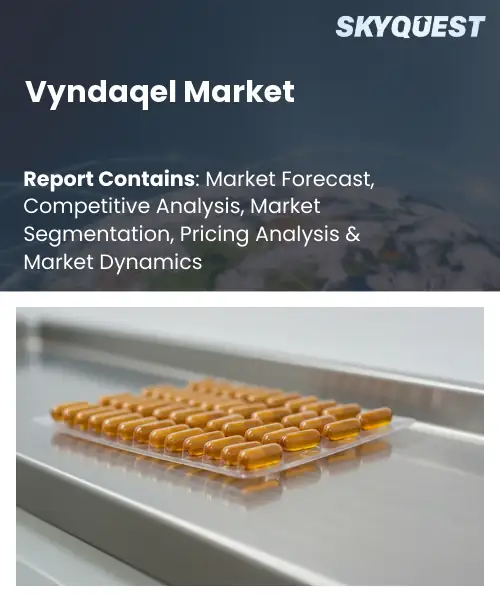
Vyndaqel Market
Report ID: SQMIG35I2592
Report ID: SQMIG35I2592
[email protected]
USA +1 351-333-4748
Report ID:
SQMIG35I2592 |
Region:
Global |
Published Date: March, 2026
Pages:
157
|Tables:
141
|Figures:
78


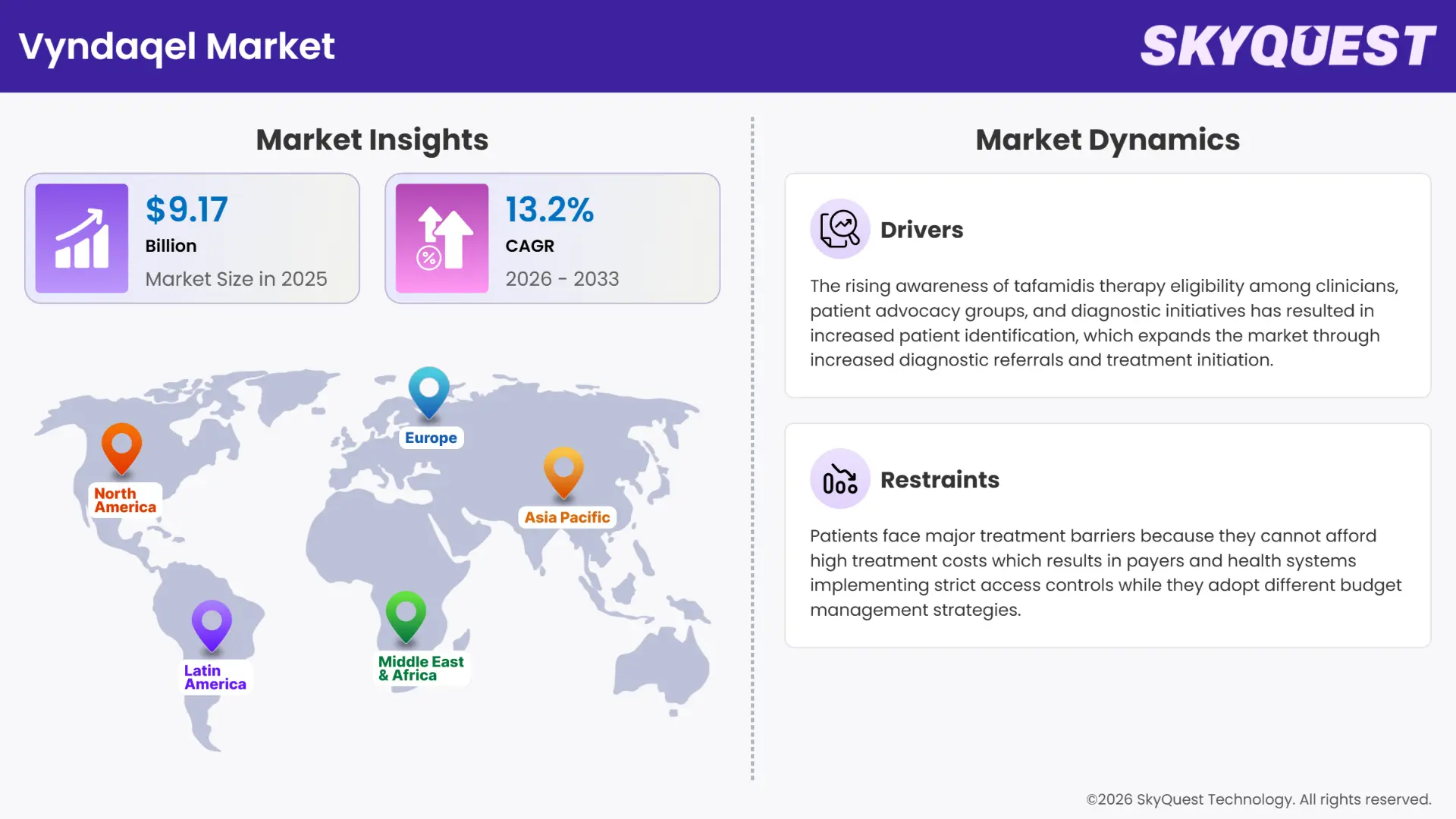
Global Vyndaqel Market size was valued at USD 8.1 Billion in 2024 and is poised to grow from USD 9.17 Billion in 2025 to USD 24.72 Billion by 2033, growing at a CAGR of 13.2% during the forecast period (2026-2033).
Key Takeaways: Market Trends & Insights
The global Vyndaqel market growth depends on increased awareness of transthyretin amyloid cardiomyopathy, which leads to higher diagnostic rates of this progressive protein-misfolding disease that mainly affects older adults. The oral tafamidis formulation, which obtained regulatory approval after the ATTR-ACT trial, shifted treatment from basic supportive care to specific stabilization methods which resulted in longer survival times and fewer hospital admissions. The last ten years have seen expanded patient eligibility in developed markets through better diagnostic imaging and genetic screening while orphan designation together with premium pricing rights has driven US market growth in North America European countries and Japanese territory.
Moreover, the global Vyndaqel market penetration is driven because diagnostic facilities grow as cardiology centers implement nuclear scintigraphy. The market research shows that doctors will prescribe more medical treatment as they develop better detection methods for this disease which will create additional market opportunities and business growth through patient support program investments. The hospitals now use real-world results which show actual results for clinical trials to lower hospitalization rates. The hospitals now use real-world results which show actual results for clinical trials to lower hospitalization rates. The regulatory authorities open new markets through their approval of related product claims while companies create business advantages through partnerships with diagnostic service providers. The growing competition from gene-silencing drugs will determine how pricing structures operate.
How is AI Enhancing Market Access and Pricing Strategies For The Vyndaqel Market?
Artificial intelligence technology transforms the global Vyndaqel market outlook through its ability to combine patient insights with evidence creation and payer strategic planning. The system uses electronic record analysis and imaging pattern examination to discover patients who have ATTR but remain undiagnosed. Companies raise market access possibilities through their ability to create customized value communications which integrate trial results with real-world evidence for both payers and clinicians. The system enables organizations to develop dynamic pricing models through predictive analytics which assess negotiation results while identifying the most effective patient support programs. The AI-driven capabilities provide manufacturers with tools to direct their activities toward building patient-centered value propositions which create more appealing market approaches in a business environment that faces new rivals and increased payer examination.
Pfizer, in August 2025, announced plans to discontinue the low dose Vyndaqel in the U.S. and AI enables the transition process through its ability to direct patient outreach activities while predicting payer effects and finding the best net pricing methods which maintain access to products while maximizing commercial success.
To get more insights on this market click here to Request a Free Sample Report
The global Vyndaqel market is segmented by product type, disease type, patient setting, payer type, distribution channel, and region. Based on product type, the market is divided into Vyndaqel (tafamidis 20 mg) and Vyndamax (tafamidis 61 mg). In terms of disease type, it is focused on transthyretin-mediated amyloidosis. By patient settings, the market is categorized into inpatient and outpatient use. Based on payer type, the segmentation includes public insurance, private insurance, and self-pay. In terms of distribution channels, the market comprises hospital pharmacies, retail pharmacies, online pharmacies, and other channels. Geographically, the market is segmented into North America, Europe, Asia Pacific, Latin America, and the Middle East & Africa.
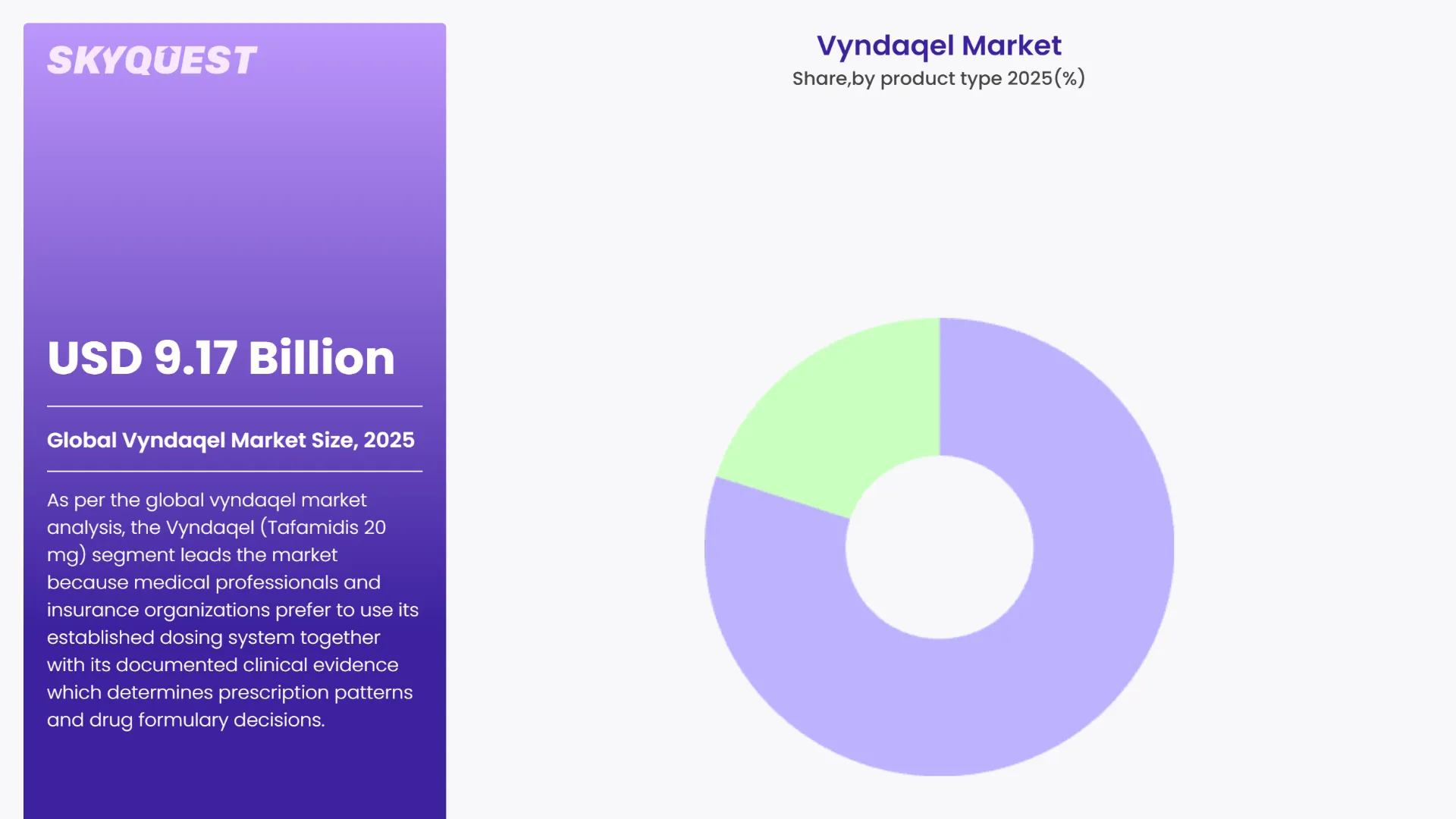
As per the global vyndaqel market analysis, the Vyndaqel (Tafamidis 20 mg) segment leads the market because medical professionals and insurance organizations prefer to use its established dosing system together with its documented clinical evidence which determines prescription patterns and drug formulary decisions. The prescribers become more willing to start and continue therapy treatments because they become familiar with the medication. The strong post-approval evidence together with clear patient management pathways drives sustained product demand while procurement teams select the product for their purchasing needs and different clinical environments maintain high product demand which helps to enhance supply chain negotiation power.
However, the highest growth rate now belongs to Vyndamax (Tafamidis 61 mg) because its higher strength makes dosing easier and matches current clinical practices which has led to faster product adoption. Product adoption benefits from positive product labeling together with focused commercialization because these two factors help customers transition their treatment process through new market opportunities.
According to the global vyndaqel market forecast, the Hospital Pharmacies segment dominates because they centralize procurement and treatment initiation for high-cost specialty therapies which enable hospitals to create organized treatment paths. The clinical pharmacists who work at their facility help to formulate medicine lists while their purchasing power enables them to secure their medicines, which makes access to medicines easier. The medical team members who work together with multiple teams will monitor patient progress and therapy adherence while hospitals will become the main centers for supplying medicine to treat complex transthyretin mediated amyloidosis cases and for providing patient education programs.
However, consumers prefer online pharmacies because they simplify medication access through their digital ordering system, which delivers medicines directly to consumers. The patient support system which telehealth links creates an enhanced system for patients to start their treatment while they refill their medication, which makes it attractive to prescribers and payers. The system creates new care pathways which enable health services to reach patients who need care beyond traditional health service delivery methods.
To get detailed segments analysis, Request a Free Sample Report
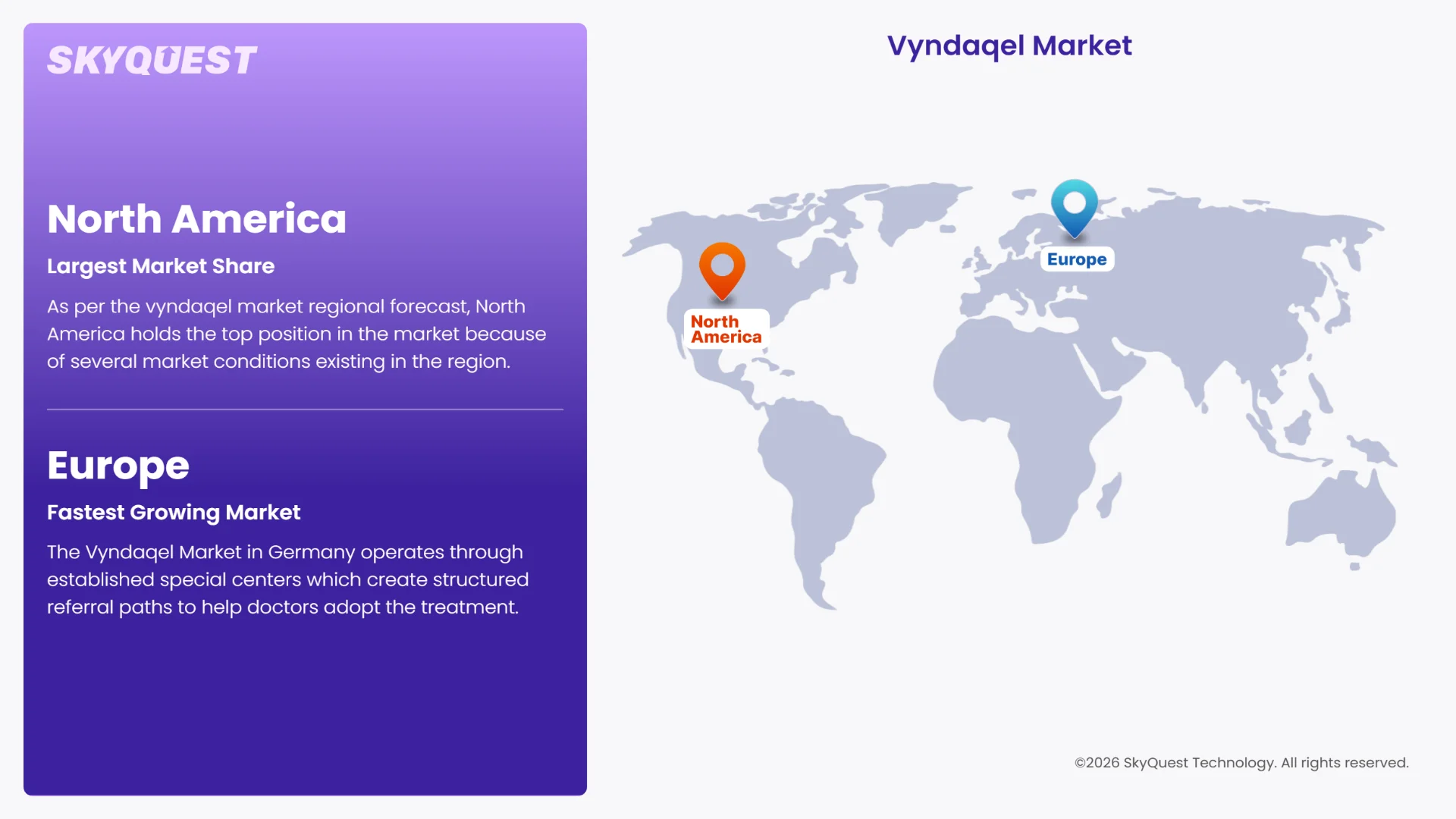
As per the vyndaqel market regional forecast, North America holds the top position in the market because of several market conditions existing in the region. The combination of strong clinical infrastructure together with active payer collaboration and established regulatory pathways enables immediate access to the treatment. The early diagnosis and correct treatment procedures receive guidance from specialized networks and cardiomyopathy centers, while patient groups and clinicians create demand for the treatment system. The access barriers in the market are addressed through educational programs and patient support initiatives which manufacturers develop to meet specific needs. The prescriber confidence increases through the joint research operations and the collection of evidence from real world situations. The market operates in an environment where Vyndaqel adoption occurs because medical facilities have high diagnostic capabilities, commercial development capabilities, and they deliver healthcare through integrated systems.
The United States Vyndaqel industry depends on specialist networks who operate advanced diagnostic pathways to help clinicians who already know the system. The combination of payer systems and patient support programs establishes a system to help patients begin their treatment journey. The clinical centers which manufacturers partner with enable them to deliver specific education programs which help with access to their services. The commercial environment demonstrates that clinical evidence and specialist backing together with continuous therapy provision for patient management lead to product adoption in the market.
The Vyndaqel Market in Canada relies on centralized referral pathways combined with expanding specialist networks and public payer systems which create specific access conditions. Clinical awareness efforts together with patient advocacy activities improve both identification and initiation of treatment procedures. The manufacturer supported services to aid patients through their navigation of reimbursement processes, while they bolster healthcare delivery operations. The market maintains a balance between clinical operations and payer requirements because it requires medical teams to coordinate their activities and educate patients who need to stay committed to their treatment.
The Vyndaqel sector in Europe experiences rapid growth because hospitals gain better diagnostic tools, and doctors receive more education about treatment and payers recognize clinical advantages. The identification process for patients who need treatment now starts earlier because specialized centers conduct systemic screening programs which unite cardiology and neurology clinics for better collaboration. The major markets now have lower access barriers because reimbursement systems and clinical guidelines, which have expanded their coverage, enable more people to access essential services. The manufacturers now enhance educational outreach programs through their partnerships with local entities to develop access initiatives for each distinct national framework. The research networks together with registry operations produce evidence which affects prescriber confidence. The market in Europe shows growth through improved clinical pathways, which pharmaceutical companies adapt, and payers create better systems, while different markets grow at varying speeds.
The Vyndaqel Market in Germany operates through established special centers which create structured referral paths to help doctors adopt the treatment. The system connects hospital and outpatient services to enable doctors to identify patients and start their treatment without delay. The reimbursement system creates transparent access routes which doctors can follow because it links medical evidence to clinical data. The academic institutions which manufacturers partner with enhance local research capabilities while advancing educational programs. The market space operates through clinical leadership and system readiness, which enables Vyndaqel to become part of treatment paths which healthcare providers use as standard procedure for ongoing patient assessment.
The United Kingdom Vyndaqel Market grows through wider specialist networks who perform targeted screening based on the newest guidelines which doctors must follow. The NHS pathways together with commissioning methods create structured methods for patients to access treatment, while academic centers and industry partners build local evidence through their joint research activities. The patient's advocacy and education programs increase public understanding of the condition. The market environment enables quick adoption of new procedures because of its efficient system and coordinated healthcare system.
The Vyndaqel Market in France grows because more doctors discover diagnostic pathways and specialists learn about the treatment. The regional centers work with their networks to find suitable patients who need treatment to start their medical procedures. The reimbursement process has developed together with the clinical guidance process to create new access pathways for patients. The manufacturer programs together with patient advocacy initiatives, establish educational programs which help patients navigate the system processes. The market indicates a rise in clinical practice alignment with payer requirements, which suggests that the market is reaching its mature stage.
The Vyndaqel market in Asia Pacific is developing through strategic investments which improve diagnostic capabilities and increase training for specialists and produce more scientific studies in the region. Academic centers and industry partners work together to create clinical trials and registries which study regional populations through their global research. The market access strategies of the organization need to be modified according to different national reimbursement systems which require them to provide patient support services together with customized educational programs for doctors. The latest referral networks and expert centers are advancing both the identification process and ongoing patient treatment. The sponsors now receive more active regulatory authority contact to obtain detailed information about their approval process. The activities enable Vyndaqel to be gradually included in treatment paths across different markets which focus on providing sustainable access and implementing local clinical practices.
The Vyndaqel Market in Japan develops through improved diagnostic networks which produce specialist training programs and generate local evidence to strengthen clinician trust. The access programs which have been designed for our clients together with our regulatory work help us establish more effective pathways to begin our projects. Academic centers work with industry partners to create registries and studies which help develop medical practices. Patient support services together with multidisciplinary care models create a system which allows patients to receive continuous care. The market aims to achieve a balance between clinical practices and payer requirements which establish conditions for extended patient care.
The Vyndaqel Market in South Korea develops through specialized training programs which enhance referral systems and teach clinicians to diagnose and begin treatment. The combination of regulatory clarity with enhanced access strategies creates stronger grounds for reimbursement negotiations. The data collection process and program awareness in the community receive support from manufacturer programs and academic partnerships. Organizations use patient navigation services to help patients access clinical treatment. The market shows combined efforts to include Vyndaqel into cardiology networks and multidisciplinary care models which include monitoring processes.
To know more about the market opportunities by region and country, click here to
Buy The Complete Report
Rising Awareness and Diagnosis
The rising awareness of tafamidis therapy eligibility among clinicians, patient advocacy groups, and diagnostic initiatives has resulted in increased patient identification, which expands the market through increased diagnostic referrals and treatment initiation. The combination of educational efforts and improved screening protocols and wider disease manifestation recognition leads to earlier treatment decisions and physician confidence, which together establish treatment pathways as routine practice in cardiology and neurology while health systems adopt these pathways for continuous prescription support.
Guideline Inclusion and Adoption
The inclusion of tafamidis in clinical practice guidelines and consensus statements has established prescriber confidence in its use for managing transthyretin amyloid cardiomyopathy, which has led to its adoption by multiple medical specialties. The endorsement of guidelines for payers and institutions establishes coverage policies, determines clinical pathways, and guides clinicians on therapy prioritization, which together lead to increased prescribing rates while helping manufacturers to develop awareness programs and expand supply to meet rising therapeutic demand.
High Treatment Cost and Affordability
Patients face major treatment barriers because they cannot afford high treatment costs which results in payers and health systems implementing strict access controls while they adopt different budget management strategies. Financial limitations decrease the rate of prescription initiation and continuation which affects physician prescribing patterns and results in the need for extensive payer negotiations and support initiatives. The existing conditions prevent market growth because they cause delays in adoption due to out-of-pocket expense difficulties and budgetary constraints which leads to diminished overall market growth despite ongoing clinical requirements and access disparities.
Regulatory and Reimbursement Challenges
The different regulatory frameworks and reimbursement systems across various regions create market entry delays because they result in distinct approval processes and health technology assessment criteria, which in turn lead to variable payer coverage decisions. The need for evidence from manufacturers and providers requires them to adapt to different standards, which affects their ability to negotiate prices and obtain product approvals, thus impacting their ability to launch new products. The existence of fragmented policy environments limits uniform treatment adoption, which requires market access organizations to invest substantial resources and results in slower therapy establishment in various regions, while increasing administrative work.
Request Free Customization of this report to help us to meet your business objectives.
The Vyndaqel competitive environment contains established TTR stabilizers and new treatment approaches that force the company to undertake definite strategic moves through acquisitions and licensing and technology partnerships. Pfizer acquired FoldRx to obtain tafamidis, and BridgeBio bought Eidos to obtain acoramidis. Ionis and AstraZeneca work together on eplontersen, while Alnylam implements RNAi technology for its approvals to create business collaboration systems that compete based on technological advancements.
SkyQuest’s ABIRAW (Advanced Business Intelligence, Research & Analysis Wing) is our Business Information Services team that Collects, Collates, Correlates, and Analyses the Data collected by means of Primary Exploratory Research backed by robust Secondary Desk research.
As per SkyQuest analysis, the global Vyndaqel market is set for sustained growth with a key driver being rising recognition and diagnosis of transthyretin amyloid cardiomyopathy and a second driver coming from expanding diagnostic capacity and screening programs that enlarge the treated population. The high cost of treatment creates a major barrier to access which puts financial strain on payers. North America maintains its status as the leading region because of its advanced diagnostic systems and strong payer relationships, while Vyndaqel (Tafamidis 20 mg) represents the leading segment due to established clinician familiarity and real world evidence. The dual elements of guideline inclusion and patient support ecosystems will drive both implementation and competitive market standing.
| Report Metric | Details |
|---|---|
| Market size value in 2024 | USD 8.1 Billion |
| Market size value in 2033 | USD 24.72 Billion |
| Growth Rate | 13.2% |
| Base year | 2024 |
| Forecast period | 2026-2033 |
| Forecast Unit (Value) | USD Billion |
| Segments covered |
|
| Regions covered | North America (US, Canada), Europe (Germany, France, United Kingdom, Italy, Spain, Rest of Europe), Asia Pacific (China, India, Japan, Rest of Asia-Pacific), Latin America (Brazil, Rest of Latin America), Middle East & Africa (South Africa, GCC Countries, Rest of MEA) |
| Companies covered |
|
| Customization scope | Free report customization with purchase. Customization includes:-
|
To get a free trial access to our platform which is a one stop solution for all your data requirements for quicker decision making. This platform allows you to compare markets, competitors who are prominent in the market, and mega trends that are influencing the dynamics in the market. Also, get access to detailed SkyQuest exclusive matrix.
Table Of Content
Executive Summary
Market overview
Parent Market Analysis
Market overview
Market size
KEY MARKET INSIGHTS
COVID IMPACT
MARKET DYNAMICS & OUTLOOK
Market Size by Region
KEY COMPANY PROFILES
Methodology
For the Vyndaqel Market, our research methodology involved a mixture of primary and secondary data sources. Key steps involved in the research process are listed below:
1. Information Procurement: This stage involved the procurement of Market data or related information via primary and secondary sources. The various secondary sources used included various company websites, annual reports, trade databases, and paid databases such as Hoover's, Bloomberg Business, Factiva, and Avention. Our team did 45 primary interactions Globally which included several stakeholders such as manufacturers, customers, key opinion leaders, etc. Overall, information procurement was one of the most extensive stages in our research process.
2. Information Analysis: This step involved triangulation of data through bottom-up and top-down approaches to estimate and validate the total size and future estimate of the Vyndaqel Market.
3. Report Formulation: The final step entailed the placement of data points in appropriate Market spaces in an attempt to deduce viable conclusions.
4. Validation & Publishing: Validation is the most important step in the process. Validation & re-validation via an intricately designed process helped us finalize data points to be used for final calculations. The final Market estimates and forecasts were then aligned and sent to our panel of industry experts for validation of data. Once the validation was done the report was sent to our Quality Assurance team to ensure adherence to style guides, consistency & design.
Analyst Support
Customization Options
With the given market data, our dedicated team of analysts can offer you the following customization options are available for the Vyndaqel Market:
Product Analysis: Product matrix, which offers a detailed comparison of the product portfolio of companies.
Regional Analysis: Further analysis of the Vyndaqel Market for additional countries.
Competitive Analysis: Detailed analysis and profiling of additional Market players & comparative analysis of competitive products.
Go to Market Strategy: Find the high-growth channels to invest your marketing efforts and increase your customer base.
Innovation Mapping: Identify racial solutions and innovation, connected to deep ecosystems of innovators, start-ups, academics, and strategic partners.
Category Intelligence: Customized intelligence that is relevant to their supply Markets will enable them to make smarter sourcing decisions and improve their category management.
Public Company Transcript Analysis: To improve the investment performance by generating new alpha and making better-informed decisions.
Social Media Listening: To analyze the conversations and trends happening not just around your brand, but around your industry as a whole, and use those insights to make better Marketing decisions.
REQUEST FOR SAMPLE
 REQUEST FREE CUSTOMIZATION
Global Vyndaqel Market size was valued at USD 8.1 Billion in 2024 and is poised to grow from USD 9.17 Billion in 2025 to USD 24.72 Billion by 2033, growing at a CAGR of 13.2% during the forecast period (2026-2033).
The competitive landscape for Vyndaqel features established TTR stabilizers facing modality challengers, prompting concrete strategic responses such as acquisitions, licensing and technology partnerships. Examples include Pfizer’s origin of tafamidis via acquisition of FoldRx and BridgeBio’s acquisition of Eidos to secure acoramidis. Collaborations like Ionis and AstraZeneca on eplontersen and Alnylam’s RNAi approvals illustrate technology-driven competition and commercial alliances. 'Alnylam Pharmaceuticals', 'CSL Behring', 'Regeneron Pharmaceuticals', 'Pfizer Inc.', 'Intellia Therapeutics', 'Ionis Pharmaceuticals', 'Arrowhead Pharmaceuticals', 'Aurobindo Pharma', 'Bridgebio Pharma', 'Novo Nordisk', 'Sangamo Therapeutics', 'Silence Therapeutics', 'Sun Pharma', 'Teva Pharmaceuticals', 'Eli Lilly and Company', 'Amgen Inc.', 'Gilead Sciences', 'Biogen Inc.', 'Vertex Pharmaceuticals', 'Merck & Co.'
Rising awareness among clinicians, patient advocacy groups, and diagnostic initiatives has increased identification of eligible patients for tafamidis therapy, which supports market expansion by translating into higher diagnostic referrals and treatment initiation. Educational efforts, improved screening protocols, and broader recognition of disease manifestations encourage earlier treatment consideration and stronger physician confidence, together fostering routine use within cardiology and neurology practices and prompting health systems to integrate therapy pathways that facilitate sustained prescription uptake.
Expanded Indication Research: Pharmaceutical companies and research institutions are increasingly exploring additional therapeutic indications for Vyndaqel to extend its clinical utility and value. Emphasis on translational research, targeted patient stratification, and real world evidence generation fosters collaborations across industry, academic centers, and specialty clinics. Regulatory engagement and adaptive trial designs support efficient hypothesis testing while post approval studies help characterize long term benefits and safety in diverse patient populations, enabling formulary inclusion, clinician confidence, and broader patient access through evidence driven practice change.
North America Dominate the Global Vyndaqel Market.
Vyndaqel (tafamidis) is primarily used for the treatment of transthyretin-mediated amyloidosis (ATTR), a progressive disease caused by the accumulation of abnormal transthyretin protein deposits in organs such as the heart and nerves.
Transthyretin-Mediated Amyloidosis remains the dominant disease segment, supported by growing diagnosis rates and increasing adoption of tafamidis-based therapies worldwide.
The market faces challenges such as high treatment costs, reimbursement limitations in some countries, and competition from emerging gene-silencing, RNA-interference, and gene-editing therapies targeting ATTR.


Want to customize this report? This report can be personalized according to your needs. Our analysts and industry experts will work directly with you to understand your requirements and provide you with customized data in a short amount of time. We offer $1000 worth of FREE customization at the time of purchase.
Feedback From Our Clients


 USA (+1) 351-333-4748

