
Diagnostic Imaging Market
Report ID: SQMIG35A2164
Report ID: SQMIG35A2164
[email protected]
USA +1 351-333-4748
Report ID:
SQMIG35A2164 |
Region:
Global |
Published Date: June, 2025
Pages:
196
|Tables:
128
|Figures:
77


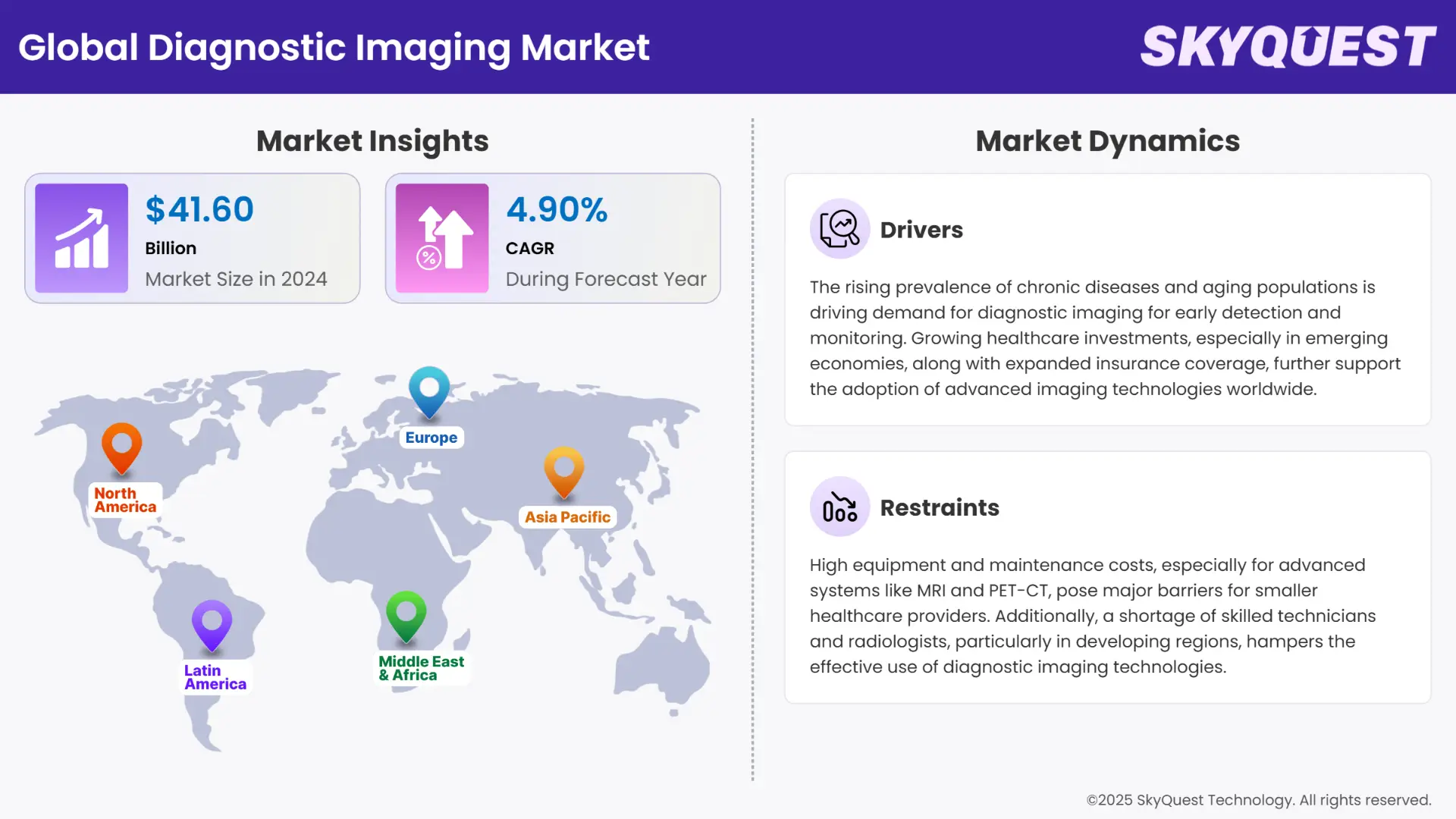
Global Diagnostic Imaging market size was valued at USD 41.6 Billion in 2024 and is poised to grow from USD 43.53 Billion in 2025 to USD 63.83 Billion by 2033, growing at a CAGR of 4.9% in the forecast period (2026–2033).
Growing rates of chronic illnesses, aging population, and rising awareness among patients about the advantages of early diagnosis are the main factors driving the diagnostic imaging market growth. Advances in AI and 3D and 4D imaging technologies are also improving outcomes. Increasing investments in healthcare infrastructure from the public and private sectors are additional factors driving market expansion.
The increase in strategic alliances and consolidations observed due to acquisitions of companies has also resulted in increasing market competitiveness. However, the high upfront costs associated with such devices and lack of skill technicians and radiologists for handling diagnostic imaging systems act as huge roadblocks for the diagnostic imaging market growth. This can only be overcome by increased spending on research and development to reduce costs and implementation of training programs by key players. By overcoming these challenges, the diagnostic imaging market has a steagy growth ahead in upcoming years.
How is AI bringing Transformation to the Market?
Artificial Intelligence (AI) is transforming market dynamics. AI helps in improving the accuracy of interpretation of images. It also reduces diagnostic time, automates workflows, and helps in early detection of diseases for complex scans like MRI, CT, and mammography. Philips’ launch of the AI-enabled CT 5300 at AOCR 2025 validates the huge transformation that AI is bringing to this market. This 128-slice CT system has features such as AI-driven reconstruction, cardiac motion correction, and smart workflows. This will enhance the precision and speed of diagnostic. Many startups are also taking advantage of the emerging application of AI in diagnostic imaging and launching their flagship products in the market that utilize AI to provide better precision and speed in diagnostic imaging.
To get more insights on this market click here to Request a Free Sample Report
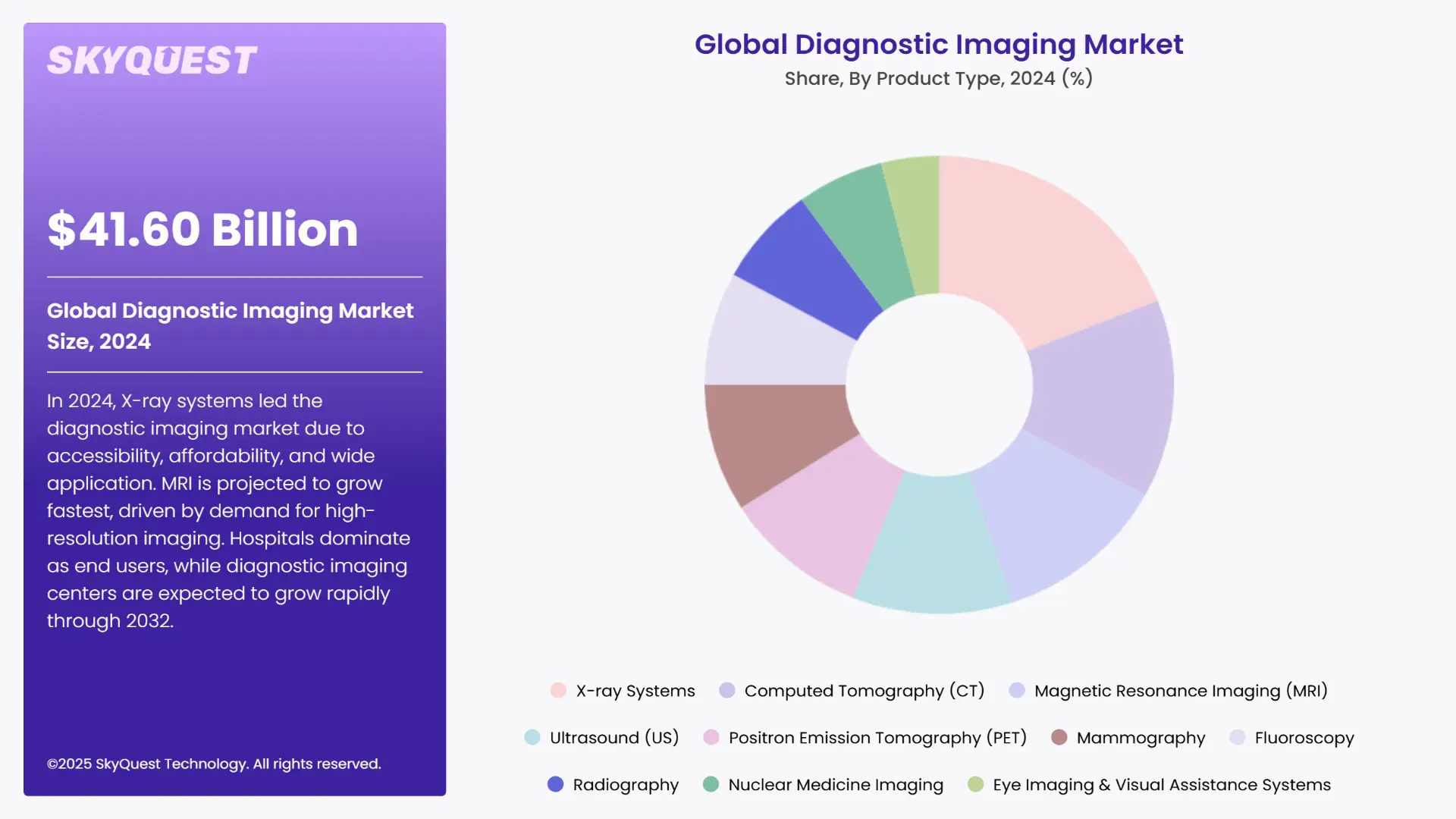
The global diagnostic imaging market is segmented into product type, potability, application, end user and region. By product type, the market is classified into X-ray Systems (Digital, Analog), Computed Tomography (CT) (Conventional CT Scanners (High-Slice CT Scanners, Mid-Slice CT Scanners, Low-Slice CT Scanners), Cone-Beam CT Scanners, Dental Cone-Beam CT), Magnetic Resonance Imaging (MRI) (Closed, Wide bore, Open, Open upright), Ultrasound (US) (2D, 3D/4D, Doppler, Contrast-Enhanced Ultrasound (CEUS), POC (Point-of-Care)), Positron Emission Tomography (PET) (Standalone, Hybrid), Mammography (Film Screen, 3D, Others), Fluoroscopy, Radiography, Nuclear Medicine Imaging, and Eye Imaging & Visual Assistance Systems.
Depending on potability, it is divided into stationary devices, and portable devices. Depending on application, it is divided into X-Ray Imaging Systems (General Radiography, Dentistry, Fluoroscopy), MRI Systems (Brain and Neurological MRI, Spine and Musculoskeletal MRI, Vascular MRI, Pelvic and Abdominal MRI, Breast MRI, Cardiac MRI), Ultrasound Systems (Radiology/General Imaging, Obstetrics/Gynecology, Cardiology, Vascular, Urology, Others), CT Scanners (Cardiology, Oncology, Neurology, Others), Nuclear Imaging Systems (Oncology, Cardiology, Neurology, Others), and others. According to end user, the market is categorized into hospitals, diagnostic imaging centers, Ambulatory Surgical Centers (ASCs), specialty clinics, and academic & research institutes. Regionally, the diagnostic imaging market is analyzed across North America, Europe, Asia-Pacific, Middle East & Africa, and Latin America.
As per the 2024 global diagnostic imaging market analysis, the X-ray systems sub-segment held the largest share of revenue and controlled the market. X-ray systems are widely accessible and cost-effective. They act as a critical device in primary diagnostics, especially in emergency and outpatient settings. These systems find extensive uses in orthopedics, dental imaging, and chest examinations. Technological upgrades in X-ray systems also continue to push the market in an upward trajectory.
The magnetic resonance imaging product category is expected to experience the highest compound annual growth rate (CAGR) throughout the forecasted period. The demand for high-resolution, radiation-free imaging for neurological, musculoskeletal, and cardiovascular conditions has been on the rise. MRI systems are perfectly positioned to take advantage of this demand. Advancements in imaging speed and 3T and 7T technology play critical roles in improving diagnostic precision of MRIs. MRIs especially find application in tertiary care and specialty diagnostic centers.
Based on the 2024 global diagnostic imaging market forecast, the hospital category in the end user segment dominated the market. Hospitals provide comprehensive diagnostic capabilities. They have the ability to handle high volumes of patients, perform complex procedures, and offer round-the-clock services. This makes them central to diagnostic services. Government funding and institutional budgets also allow most hospitals to upgrade and expand their imaging infrastructure constantly across all modalities.
The diagnostic imaging centres category is expected to have the highest growth rate during the forecast period of 2025-2032. The rise in demand for cost-effective, accessible, and specialized outpatient diagnostic services has never been more obvious. Diagnostic imaging centers are perfectly positioned to respond to this trend by offering faster turnaround times and lower operational costs in comparison to hospitals. Referrals from primary care and insurance providers also help them grow.
To get detailed segments analysis, Request a Free Sample Report
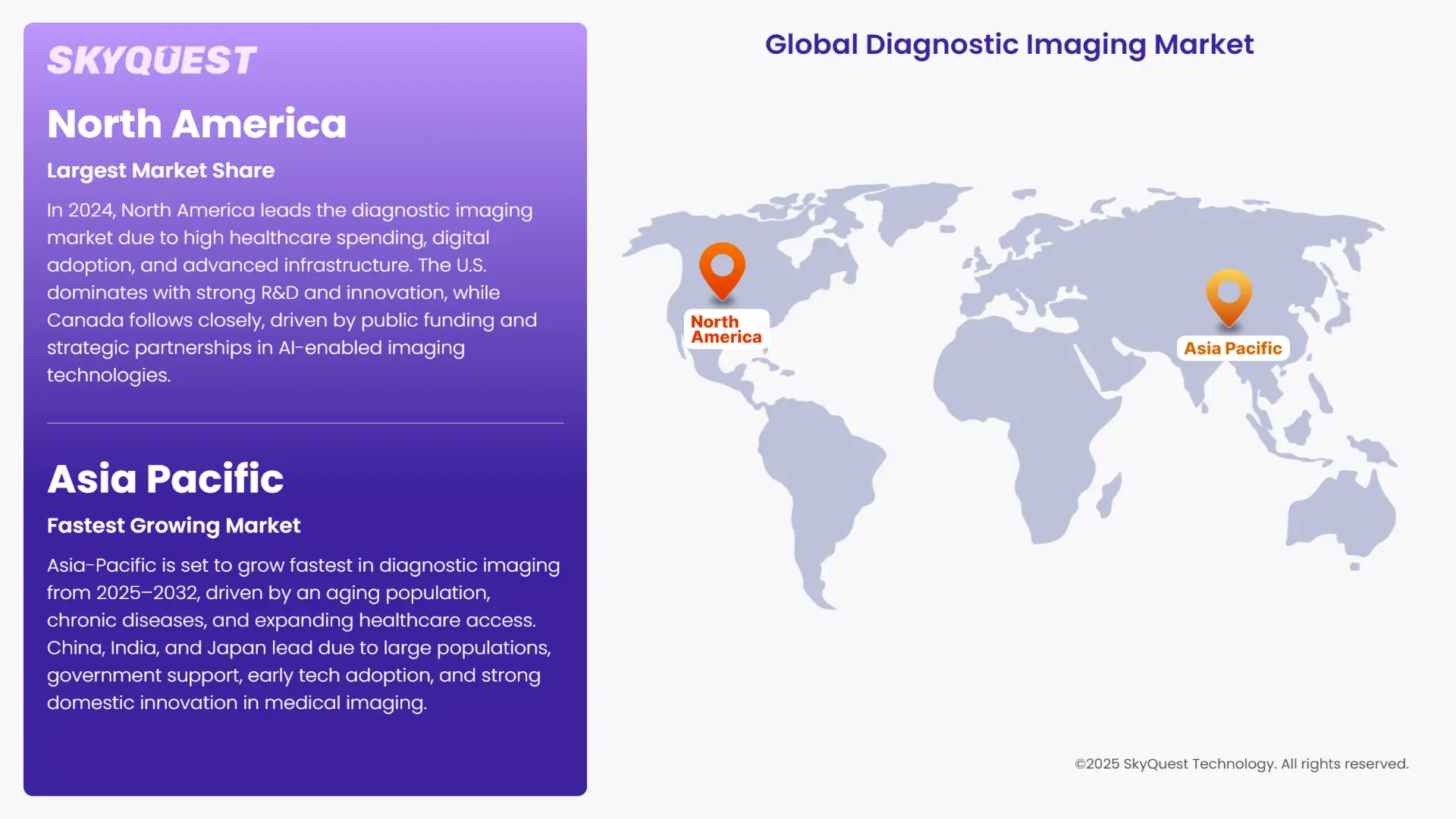
As per the 2024, the North American diagnostic imaging market share is predicted to hold the largest share among all regions in 2024. The high spending the region observes on healthcare along with factors such as rapid adoption of digital technologies in healthcare by people in the region and advanced medical infrastructure all contribute to its growth. The rising prevalence of chronic diseases and demand for early diagnosis also continue to spur adoption in the region. The US emerges as the hub for diagnostic imaging manufacture and sales in the region.
U.S. Diagnostic Imaging Market
In North America, U.S. leads the diagnostic imaging market share especially due to its advanced healthcare infrastructure, strong demand among public for early diagnosis, and high adoption of modern technologies. Many key players in the market such as GE Healthcare, Hologic Inc., etc. are headquartered here. The presence of these major industry players and increased R&D funding creates an environment for innovation in various diagnostic imaging products.
Canada Diagnostic Imaging Market
Canada in North America is just behind the U.S. The country’s diagnostic imaging market’s growth can be credited to public healthcare funding, national imaging guidelines, and growing investments in digital health infrastructure. Collaborations between the provincial government and key companies are also encouraging market growth.
Asia-Pacific is predicted to grow at the highest rate in the diagnostic imaging market growth over the projection period of 2025-2032. The growth in the region is led by the rising aging population and prevalence of chronic diseases among people in this region. Other factors such as expanding healthcare access, and investments in medical technology also support greater growth of diagnostic imaging. China, India, and Japan serve as major hubs. All of these factors contribute to the fast rate at which the diagnostic imaging market of Asia Pacific is growing.
China Diagnostic Imaging Market
The China diagnostic imaging market expansion can be credited to various reasons. This expansion can be because of its vast population, growing middle class, and rising prevalence of chronic diseases. Government support in the form of regulatory approvals is also a huge reason behind the market’s progress.
Japan Diagnostic Imaging Market
Japan’s diagnostic imaging market growth is spurred by its well-established healthcare system, aging population, high standards in healthcare, and adoption of medical technology at an early stage. Strong regulatory support, local innovation from companies like Fujifilm Corporation, Canon Inc., etc. have also played huge roles in positioning Japan as an influential market for diagnostic imaging.
Europe held a significant diagnostic imaging market share in 2024 and is likely to continue so during the forecast period of 2025-2032. This can be due to strong regulatory standards, an increase in adoption of digital imaging, and emphasis on early disease detection in the region. Countries in Europe are focusing on upgrading their diagnostic infrastructure and expanding access to modern imaging technologies. Collaborations between research institutes and companies create room for innovation in modalities like MRI, CT, and PET imaging.
Germany Diagnostic Imaging Market
Germany has the one of the largest European markets for diagnostic imaging. Its growth is supported by its strong healthcare infrastructure and digital transformation initiatives. The country’s focus on research and precision medicine has also encouraged adoption. It witnesses high demand for MRI and CT scans. Integration of AI and teleradiology is improving diagnostic efficiency, while government support ensures accessibility and continuous modernization of diagnostic imaging infrastructure. Major medical device manufacturers such as Siemens Healthineers, SternMed GmbH, etc. are located here.
France Diagnostic Imaging Market
The France diagnostic imaging market share is also experiencing steady growth. The market benefits from its national focus on preventive care, aging demographics, and public investments in digital health infrastructure. Increasing use of advanced modalities such as PET-CT and digital radiography has been witnessed in the country. This makes the French diagnostic imaging market a highly opportune market in upcoming years.
UK Diagnostic Imaging Market
The UK diagnostic imaging market also emerges as a prominent market in the European region. Demand for imaging services is rising in the UK due to chronic disease prevalence and an aging population. Investment in AI technology, mobile diagnostic imaging, and teleradiology is helping to address radiologist shortages. Initiatives to streamline diagnostic pathways in the country are also playing critical roles in the market’s steady growth.
To know more about the market opportunities by region and country, click here to
Buy The Complete Report
Prevalence of Chronic Illness and Increase in Geriatric Population
Growing Expenditures of Healthcare
High Cost of Equipment and Maintenance
Lack of Skilled Technicians
Request Free Customization of this report to help us to meet your business objectives.
The competition in the diagnostic imaging market is high. Regional firms such as Shimadzu and Mindray and Shimadzu are focussing on the development of specialized imaging technologies to level up their game in the market competition. On the other side, budding competitors such as Hologic and Fujifilm are making significant investments in quality improvement of their already existing products, thereby gaining a notable market share.
The integration of artificial intelligence, portable imaging, telemedicine, and developments in 3D/4D imaging are key topics that have substantial growth potential in emerging countries. Leading companies in the diagnostic imaging industry worldwide provide a variety of imaging services, including MRI, CT, and ultrasound. Meanwhile, emerging startups are focusing on integrating newer technologies such as AI to standout in the market.
Advanced Visualization and 3D Imaging
POC and Portable Imaging
SkyQuest’s ABIRAW (Advanced Business Intelligence, Research & Analysis Wing) is our Business Information Services team that Collects, Collates, Correlates, and Analyses the Data collected using Primary Exploratory Research backed by robust Secondary Desk research.
As per SkyQuest analysis, the diagnostic imaging market is progressing due to the expanding applications of diagnostic imaging, supportive reimbursement policies, and growing partnerships and alliances. However, the market is hampered by technological obsolescence, pricing and competition pressure, and concerns associated with radiation exposure. North America is anticipated to lead the market owing to the growing elderly population that demands advanced diagnostic imaging, focus on research and development, and technological improvements. Nonetheless, a few opportunities for the growth of the diagnostic imaging market include the growing number of value-based healthcare models, modernized imaging modalities, and sustainability initiatives.
| Report Metric | Details |
|---|---|
| Market size value in 2024 | USD 41.6 Billion |
| Market size value in 2033 | USD 63.83 Billion |
| Growth Rate | 4.9% |
| Base year | 2024 |
| Forecast period | 2026–2033 |
| Forecast Unit (Value) | USD Billion |
| Segments covered |
|
| Regions covered | North America (US, Canada), Europe (Germany, France, United Kingdom, Italy, Spain, Rest of Europe), Asia Pacific (China, India, Japan, Rest of Asia-Pacific), Latin America (Brazil, Rest of Latin America), Middle East & Africa (South Africa, GCC Countries, Rest of MEA) |
| Companies covered |
|
| Customization scope | Free report customization with purchase. Customization includes:-
|
To get a free trial access to our platform which is a one stop solution for all your data requirements for quicker decision making. This platform allows you to compare markets, competitors who are prominent in the market, and mega trends that are influencing the dynamics in the market. Also, get access to detailed SkyQuest exclusive matrix.
Table Of Content
Executive Summary
Market overview
Parent Market Analysis
Market overview
Market size
KEY MARKET INSIGHTS
COVID IMPACT
MARKET DYNAMICS & OUTLOOK
Market Size by Region
KEY COMPANY PROFILES
Methodology
For the Diagnostic Imaging Market, our research methodology involved a mixture of primary and secondary data sources. Key steps involved in the research process are listed below:
1. Information Procurement: This stage involved the procurement of Market data or related information via primary and secondary sources. The various secondary sources used included various company websites, annual reports, trade databases, and paid databases such as Hoover's, Bloomberg Business, Factiva, and Avention. Our team did 45 primary interactions Globally which included several stakeholders such as manufacturers, customers, key opinion leaders, etc. Overall, information procurement was one of the most extensive stages in our research process.
2. Information Analysis: This step involved triangulation of data through bottom-up and top-down approaches to estimate and validate the total size and future estimate of the Diagnostic Imaging Market.
3. Report Formulation: The final step entailed the placement of data points in appropriate Market spaces in an attempt to deduce viable conclusions.
4. Validation & Publishing: Validation is the most important step in the process. Validation & re-validation via an intricately designed process helped us finalize data points to be used for final calculations. The final Market estimates and forecasts were then aligned and sent to our panel of industry experts for validation of data. Once the validation was done the report was sent to our Quality Assurance team to ensure adherence to style guides, consistency & design.
Analyst Support
Customization Options
With the given market data, our dedicated team of analysts can offer you the following customization options are available for the Diagnostic Imaging Market:
Product Analysis: Product matrix, which offers a detailed comparison of the product portfolio of companies.
Regional Analysis: Further analysis of the Diagnostic Imaging Market for additional countries.
Competitive Analysis: Detailed analysis and profiling of additional Market players & comparative analysis of competitive products.
Go to Market Strategy: Find the high-growth channels to invest your marketing efforts and increase your customer base.
Innovation Mapping: Identify racial solutions and innovation, connected to deep ecosystems of innovators, start-ups, academics, and strategic partners.
Category Intelligence: Customized intelligence that is relevant to their supply Markets will enable them to make smarter sourcing decisions and improve their category management.
Public Company Transcript Analysis: To improve the investment performance by generating new alpha and making better-informed decisions.
Social Media Listening: To analyze the conversations and trends happening not just around your brand, but around your industry as a whole, and use those insights to make better Marketing decisions.
REQUEST FOR SAMPLE
 REQUEST FREE CUSTOMIZATION
Global Diagnostic Imaging market size was valued at USD 41.6 Billion in 2024 and is poised to grow from USD 43.53 Billion in 2025 to USD 63.83 Billion by 2033, growing at a CAGR of 4.9% in the forecast period (2026–2033).
Siemens Healthineers (Germany), GE Healthcare (United States), Koninklijke Philips N.V. (Netherlands), Fujifilm Corporation (Japan), Canon Inc. (Japan), Mindray Medical International Limited (China), Esaote S.p.A (Italy), Samsung Electronics Co., Ltd. (South Korea), Shimadzu Corporation (Japan), Onex Corporation (Carestream Health) (Canada), Planmeca (Finland), Hologic, Inc. (United States), Agfa-Gevaert Group (Belgium), Curvebeam AI, Ltd. (United States), SternMed GmbH (Germany), Konica Minolta, Inc. (Japan), Allengers Medical Systems Ltd. (India), NP JSC Amico (Russia), Neusoft (China), Trivitron Healthcare (India)
The key driver of the diagnostic imaging market is the increasing demand for early and accurate disease detection, driven by rising prevalence of chronic and lifestyle diseases, technological advancements in imaging modalities, and growing adoption of imaging procedures in hospitals and diagnostic centers.
A key market trend in the diagnostic imaging market is the growing adoption of advanced imaging technologies, such as AI-assisted imaging, 3D and 4D imaging, and portable imaging devices, which enhance diagnostic accuracy, efficiency, and patient convenience.
North America accounted for the largest share in the diagnostic imaging market, driven by advanced healthcare infrastructure, high adoption of innovative imaging technologies, strong R&D investments, and the presence of leading medical imaging equipment manufacturers.


Want to customize this report? This report can be personalized according to your needs. Our analysts and industry experts will work directly with you to understand your requirements and provide you with customized data in a short amount of time. We offer $1000 worth of FREE customization at the time of purchase.
Feedback From Our Clients


 USA (+1) 351-333-4748

