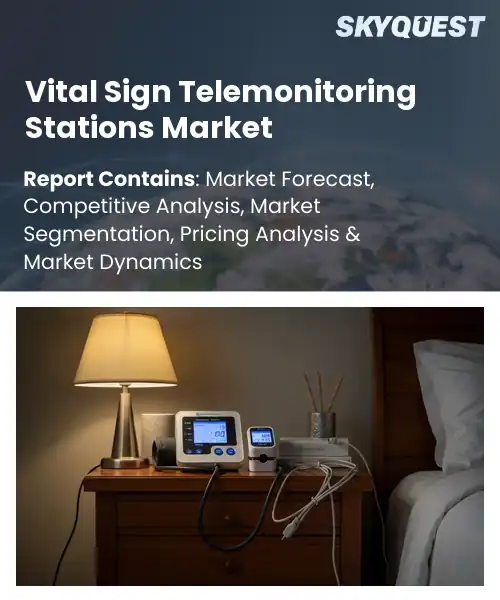
Vital Sign Telemonitoring Stations Market
Report ID: SQMIG35A3352
Report ID: SQMIG35A3352
[email protected]
USA +1 351-333-4748
Report ID:
SQMIG35A3352 |
Region:
Global |
Published Date: March, 2026
Pages:
157
|Tables:
116
|Figures:
77


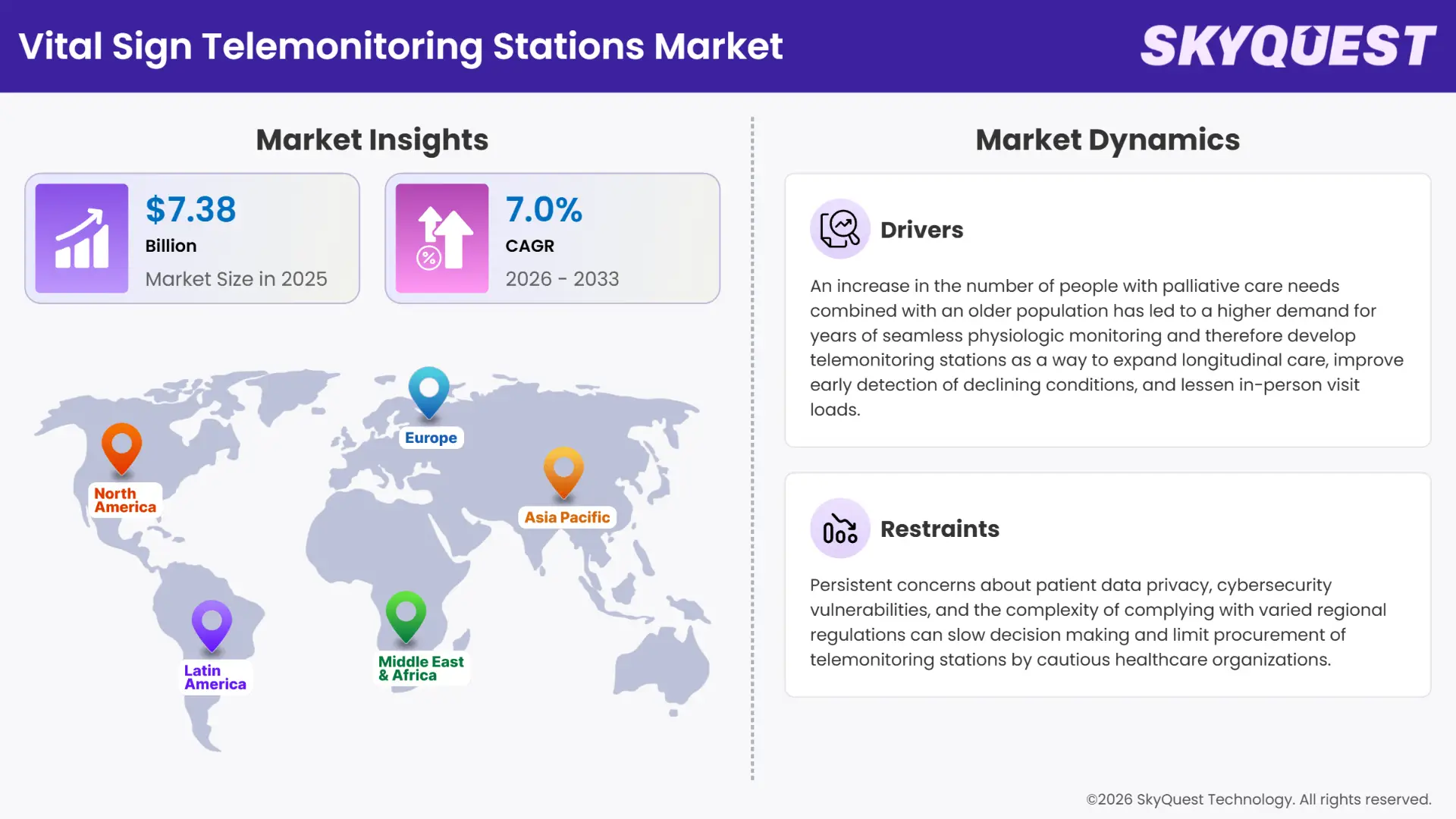
Global Vital Sign Telemonitoring Stations Market size was valued at USD 6.90 Billion in 2024 and is poised to grow from USD 7.38 Billion in 2025 to USD 12.69 Billion by 2033, growing at a CAGR of 7.0% during the forecast period (2026-2033).
Key Takeaways: Market Trends & Insights
The global vital sign telemonitoring stations market centers on integrated hardware and software systems that continuously capture physiological data, and it matters because these systems enable early detection, and extend care beyond institutional walls. Initially limited to hospitals and telehealth units, the market has developed to include miniaturized sensor devices, broadband network capabilities, and cloud platforms that provide for the remote monitoring of many different types of health conditions. The increase in remote infection and chronic disease management, because of the COVID-19 pandemic, has resulted in hospital grade multi-parameter monitoring stations supporting the integration of consumer wearable devices with the same station.
Interoperability and reimbursement structure act as key trend driving the global vital sign telemonitoring stations sector because seamless data exchange with EHRs and predictable payment models convert technology potential into scalable practice. When telemonitoring stations feed standardized, actionable data into clinician workflows, increasing clinician trust and enrolment of chronic patients into remote programs. Likewise, emergence of reimbursement codes and value-based contracting makes investment financially defensible, prompting hospitals and home-health providers to deploy stations for heart-failure management, post-operative surveillance, and rural outreach. These deployments generate effects, including reduced readmissions, shorter stays, and cost-per-patient savings that further spur market growth with measurable ROI.
How is AI Improving Accuracy in the Vital Sign Telemonitoring Stations Market?
Vital sign telemonitoring stations collect continuous physiological signals such as blood pressure in clinical and home environments. AI improves accuracy by filtering noise fusing inputs from multiple sensors and learning to separate true clinical changes from artifacts. Current systems combine edge analytics with cloud models to flag meaningful trends reduce false alarms and help clinicians focus on high value alerts. Examples include automated signal quality scoring that discards motion corrupted readings and trend detection algorithms that surface subtle declines before symptoms prompt intervention. These advances make remote monitoring more reliable and easier to integrate into care workflows.
In March 2026, Philips highlighted AI enabled platform advances at HIMSS showcasing integrated monitoring and diagnostics that improve vital sign accuracy and interoperability which supports wider adoption and greater operational efficiency.
To get more insights on this market click here to Request a Free Sample Report
Global vital sign telemonitoring stations market is segmented by station configuration, parameters monitored, connectivity & software, end-user and region. Based on station configuration, the market is segmented into integrated kiosks, portable/desktop telemonitoring units and mobile cart-based stations. Based on parameters monitored, the market is segmented into multi-parameter and specialized. Based on connectivity & software, the market is segmented into cellular/LTE enabled, Wi-Fi/ethernet integration and EHR/EMR sync capabilities. Based on end-user, the market is segmented into home healthcare agencies, nursing homes & assisted living and community clinics & pharmacies. Based on region, the market is segmented into North America, Europe, Asia Pacific, Latin America, and Middle East & Africa.
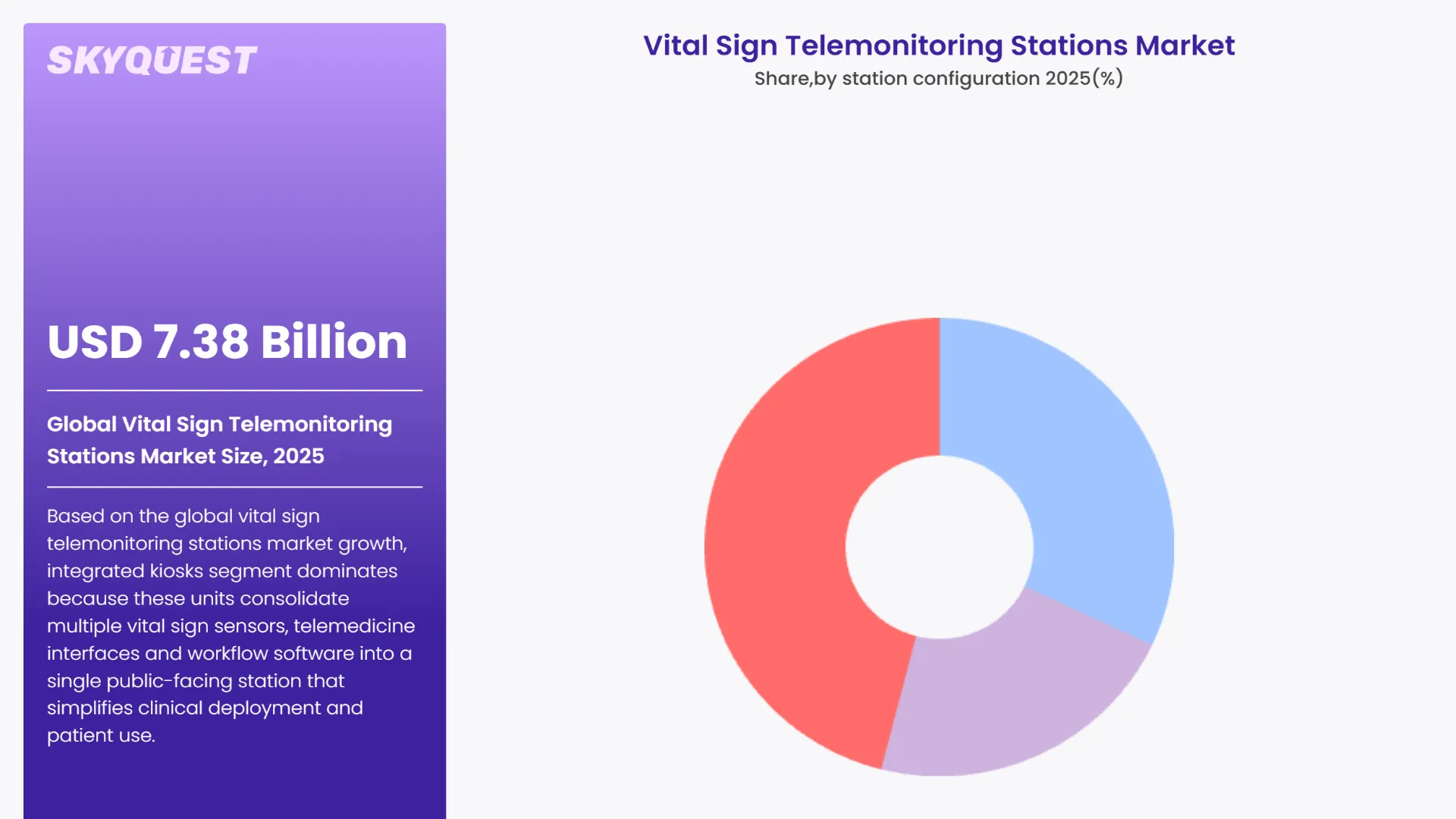
Based on the global vital sign telemonitoring stations market growth, integrated kiosks segment dominates because these units consolidate multiple vital sign sensors, telemedicine interfaces and workflow software into a single public-facing station that simplifies clinical deployment and patient use. Their self-contained design reduces installation complexity and lowers operational friction for providers, causing procurement preference. Strong vendor support, customizable hardware options and visible performance in high-traffic settings drive institutional adoption and make kiosks the default choice for centralized monitoring programs.
However, portable/desktop telemonitoring units are the most rapidly expanding area because compact, lower-cost designs enable broad adoption in home care and small clinics. Advances in sensor miniaturization, battery life and user-friendly interfaces, combined with rising demand for individualized remote monitoring, accelerate deployments and open ongoing service and revenue opportunities for providers and manufacturers.
EHR/EMR sync capabilities segment leads because seamless integration of telemonitoring data into clinical records transforms raw vital signs into actionable clinical workflows, enabling clinicians to triage and manage patients efficiently. With fewer administrative burdens, there will be a smoother transition from one service provider to another, creating continuous care. This will impact purchasing decisions. As expectations for integrating data increase, so do vendor relationships and certified interfaces. As a result, the ability to synchronize with other systems is a keyway to differentiate between potential service providers for your initial selection as well as provide scalability over time with respect to your program.
Conversely, cellular/LTE enabled offerings are the most rapidly expanding because mobile networks simplify deployment outside facility networks. Their mobility and reliability support remote monitoring, reduce dependence on local IT infrastructure, and enable fast patient onboarding. Rising preference for always-connected, portable devices accelerates adoption and creates new home-based and mobile care opportunities.
To get detailed segments analysis, Request a Free Sample Report
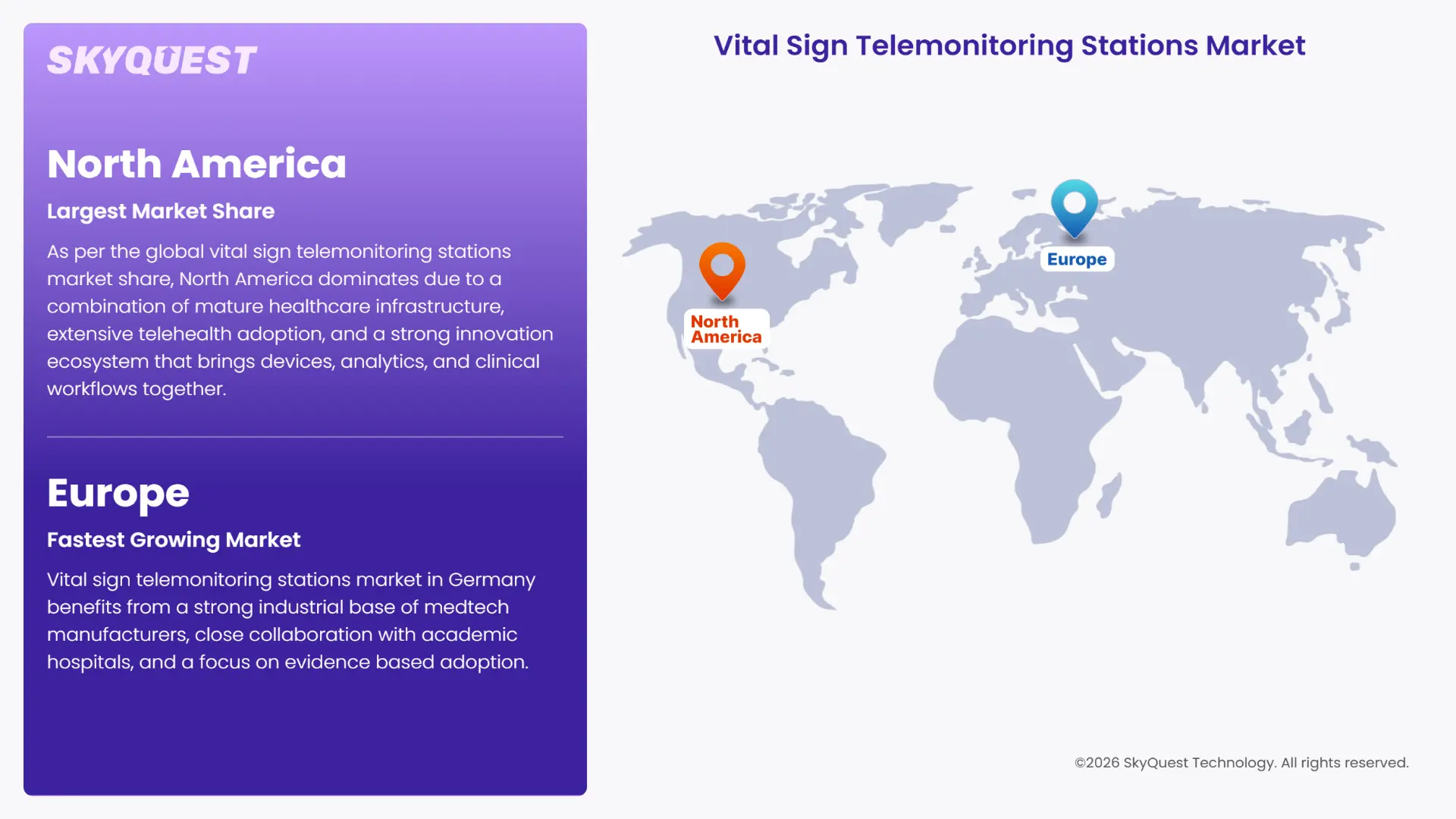
As per the global vital sign telemonitoring stations market share, North America dominates due to a combination of mature healthcare infrastructure, extensive telehealth adoption, and a strong innovation ecosystem that brings devices, analytics, and clinical workflows together. The implementation of remote monitoring solutions to offer hospital and primary care is widespread throughout all types of healthcare facilities, with hospital systems, reimbursement policies, and pilot projects to justify the use of telemetry driving implementation into inpatient and outpatient settings as well as home care settings. Leading medical device companies and technology providers are located in the region, allowing for rapid product development, adherence to interoperability standards, and rigorous validation of clinical outcomes. Providers and patients are widely digitally literate, and the existing supply chain and ongoing data safety initiatives demonstrate resiliency of this market. Collaboration between stakeholders (e.g., universities, payers, health systems) encourages the use of outcomes as drivers of implementation to help maintain a leading position in the market.
Vital sign telemonitoring stations market in United States is characterized by a concentration of medical device innovators, integrated health systems, and adoption across acute and outpatient settings. Strong collaboration among technology firms, academic medical centers, and payers enables rapid clinical validation and deployment of robust telemonitoring solutions. Focus on user experience, interoperability, and cybersecurity will improve acceptance from clinicians along with use of private investment to help the successful implementation of these solutions across the United States and internationally through managing the distribution of products by the vendors.
Vital sign telemonitoring stations market in Canada is defined by public healthcare structures prioritizing equitable access and remote care solutions. There will be collaboration among clinicians, technology vendors and health authorities to ensure ease of use, clinician training and compliance with privacy regulations. Understanding that the usability of technology is critical for widespread adoption of technology in all areas of care, technology must be scaleable and give networked devices the ability to work together so that clinicians can successfully work together across jurisdictions and care settings.
Based on global vital sign telemonitoring stations regional forecast, Europe shows rapid market expansion driven by coordinated policy emphasis on healthcare digitalization, integrated care pathways, and the need to optimize constrained healthcare resources. Regional initiatives encourage interoperability and cross border collaboration, while national health systems pursue telemonitoring to reduce hospital strain and support chronic disease management. There are several factors that have influenced the rapid growth of telemonitoring in the last ten years. First, there is now a strong ecosystem of medical technology (medtech) companies, systems integrators, and clinical research organizations that develop new devices and adapt existing ones for many types of care settings. Also, policy changes related to reimbursement as well as pilot programs for telemonitoring in both primary care and community-support services provide opportunities for expanding the use of the technology. Additionally, significant progress in establishing data security standards and the development of evidence-generating clinical trials have increased provider confidence in telemonitoring.
Vital sign telemonitoring stations market in Germany benefits from a strong industrial base of medtech manufacturers, close collaboration with academic hospitals, and a focus on evidence based adoption. Insurance companies and public health departments partner with providers to create experimental integrated telemonitoring pathways, all in accordance with the clinical guidelines. Emphasis on interoperability, serious clinical validation, and compliance with European regulatory standards help establish these models in hospitals and ambulatory care systems and help facilitate future growth/scaling of the hospitals via their telemonitoring partnerships.
Vital sign telemonitoring stations market in United Kingdom is driven by national health service innovation programs, emphasis on primary care integration, and a dynamic start up ecosystem. Partnerships among NHS trusts, technology companies, and research organizations facilitate quick testing and improvement of telemonitoring devices. A focus on clinician work, patient involvement and changing purchasing processes will support larger deployments of telemonitoring devices. Strong emphasis on digital standards and measuring outcomes will speed up the acceptance of telemonitoring by providers across health care pathways.
Vital sign telemonitoring stations market in France is emerging through targeted health reforms, regional innovation funds and interest from hospital networks. To evaluate telemonitoring systems, the emphasis on chronic illness management and integrated community care has also encouraged the evaluation of tele-monitoring systems. Collaborative efforts between research hospitals, start-ups, and governmental agencies support pilot projects that value clinical validation and patient safety. Increased alignment between procurement channels and national digital health strategies will promote broader telemonitoring adoption across health care systems.
As per global vital sign telemonitoring stations regional outlook, Asia Pacific is strengthening its position through strategic investments in digital health infrastructure, growing policy support for telemedicine, and targeted initiatives addressing aging populations and chronic disease burdens. Government agencies and health authorities are creating pilot/testing programs to determine and validate clinical utility and to ensure that the solutions are adaptable to both rural and urban workflows. The emphasis is being placed on designing scalable technologies that require low-bandwidth, are multi-lingual in their user interface, and interface with / are built on an existing electronic health record. This will ensure continuity in patient care as barriers to access are reduced Increasing clinical research collaborations and attention to regulatory harmonization support wider adoption across varied healthcare systems. A combination of manufacturing capability, ecosystem partnerships, and pragmatic implementation approaches is advancing regional competitiveness.
Vital sign telemonitoring stations market in Japan leverages strong medical device manufacturing, advanced electronics expertise, and a healthcare focus on aging care. Integration with home care services and providers promotes practical deployment of telemonitoring systems. Emphasis on reliability, device quality, and regulatory compliance encourages provider trust. Collaborative efforts between hospitals, technology firms, and care agencies enable solutions tailored to patient needs and existing clinical workflows across care settings more broadly.
Vital sign telemonitoring stations market trends in South Korea is propelled by advanced electronics, high digital penetration and healthcare providers integrating telemonitoring across hospital and community care. The implementation of government-sponsored healthcare initiatives and clinical validation has made it easier for new devices to be adopted. The development of user-friendly devices and solutions continues to be promoted through the focus on interoperability and mobile integration within urban and regional healthcare systems with a solid commitment from providers.
To know more about the market opportunities by region and country, click here to
Buy The Complete Report
Rising Chronic Disease Prevalence
Advances In Remote Monitoring Technology
Data Privacy And Security Concerns
High Upfront Implementation Costs
Request Free Customization of this report to help us to meet your business objectives.
Competitive pressure in the global vital sign telemonitoring stations market outlook is accelerating consolidation and feature bundling as vendors pursue software plus device ecosystems to win hospital and virtual ward contracts. Strategic activity is visible through acquisitions and platform tie ups that add ambulatory monitoring, AI ECG analytics and virtual ward orchestration, for example Omron Healthcare acquiring Luscii and Philips integrating BioTelemetry and Cardiologs into its monitoring portfolio.
SkyQuest’s ABIRAW (Advanced Business Intelligence, Research & Analysis Wing) is our Business Information Services team that Collects, Collates, Correlates, and Analyses the Data collected by means of Primary Exploratory Research backed by robust Secondary Desk research.
As per SkyQuest analysis, the global vital sign telemonitoring stations industry is being propelled by rising chronic disease prevalence while advances in remote monitoring technology and AI-driven analytics further accelerate adoption. North America remains the dominant region thanks to mature infrastructure and supportive reimbursement pathways, and integrated kiosks lead the market because they consolidate sensors and workflows into easy-to-deploy units. Data privacy and security concerns constitute a key restraint, slowing procurement and necessitating stronger vendor assurances. In general, market momentum reflects the need for the services being provided under clinical and technological innovation, but how fast (or if) the industry will expand is predicated on overcoming security barriers and being able to demonstrate operationally and financially-based advantages to the care provider.
| Report Metric | Details |
|---|---|
| Market size value in 2024 | USD 6.90 Billion |
| Market size value in 2033 | USD 12.69 Billion |
| Growth Rate | 7.0% |
| Base year | 2024 |
| Forecast period | 2026-2033 |
| Forecast Unit (Value) | USD Billion |
| Segments covered |
|
| Regions covered | North America (US, Canada), Europe (Germany, France, United Kingdom, Italy, Spain, Rest of Europe), Asia Pacific (China, India, Japan, Rest of Asia-Pacific), Latin America (Brazil, Rest of Latin America), Middle East & Africa (South Africa, GCC Countries, Rest of MEA) |
| Companies covered |
|
| Customization scope | Free report customization with purchase. Customization includes:-
|
To get a free trial access to our platform which is a one stop solution for all your data requirements for quicker decision making. This platform allows you to compare markets, competitors who are prominent in the market, and mega trends that are influencing the dynamics in the market. Also, get access to detailed SkyQuest exclusive matrix.
Table Of Content
Executive Summary
Market overview
Parent Market Analysis
Market overview
Market size
KEY MARKET INSIGHTS
COVID IMPACT
MARKET DYNAMICS & OUTLOOK
Market Size by Region
KEY COMPANY PROFILES
Methodology
For the Vital Sign Telemonitoring Stations Market, our research methodology involved a mixture of primary and secondary data sources. Key steps involved in the research process are listed below:
1. Information Procurement: This stage involved the procurement of Market data or related information via primary and secondary sources. The various secondary sources used included various company websites, annual reports, trade databases, and paid databases such as Hoover's, Bloomberg Business, Factiva, and Avention. Our team did 45 primary interactions Globally which included several stakeholders such as manufacturers, customers, key opinion leaders, etc. Overall, information procurement was one of the most extensive stages in our research process.
2. Information Analysis: This step involved triangulation of data through bottom-up and top-down approaches to estimate and validate the total size and future estimate of the Vital Sign Telemonitoring Stations Market.
3. Report Formulation: The final step entailed the placement of data points in appropriate Market spaces in an attempt to deduce viable conclusions.
4. Validation & Publishing: Validation is the most important step in the process. Validation & re-validation via an intricately designed process helped us finalize data points to be used for final calculations. The final Market estimates and forecasts were then aligned and sent to our panel of industry experts for validation of data. Once the validation was done the report was sent to our Quality Assurance team to ensure adherence to style guides, consistency & design.
Analyst Support
Customization Options
With the given market data, our dedicated team of analysts can offer you the following customization options are available for the Vital Sign Telemonitoring Stations Market:
Product Analysis: Product matrix, which offers a detailed comparison of the product portfolio of companies.
Regional Analysis: Further analysis of the Vital Sign Telemonitoring Stations Market for additional countries.
Competitive Analysis: Detailed analysis and profiling of additional Market players & comparative analysis of competitive products.
Go to Market Strategy: Find the high-growth channels to invest your marketing efforts and increase your customer base.
Innovation Mapping: Identify racial solutions and innovation, connected to deep ecosystems of innovators, start-ups, academics, and strategic partners.
Category Intelligence: Customized intelligence that is relevant to their supply Markets will enable them to make smarter sourcing decisions and improve their category management.
Public Company Transcript Analysis: To improve the investment performance by generating new alpha and making better-informed decisions.
Social Media Listening: To analyze the conversations and trends happening not just around your brand, but around your industry as a whole, and use those insights to make better Marketing decisions.
REQUEST FOR SAMPLE
 REQUEST FREE CUSTOMIZATION
Global Vital Sign Telemonitoring Stations Market size was valued at USD 6.9 Billion in 2024 and is poised to grow from USD 7.38 Billion in 2025 to USD 12.69 Billion by 2033, growing at a CAGR of 7.0% during the forecast period (2026-2033).
Competitive pressure in the global vital sign telemonitoring stations market is accelerating consolidation and feature bundling as vendors pursue software plus device ecosystems to win hospital and virtual ward contracts. Strategic activity is visible through acquisitions and platform tie ups that add ambulatory monitoring, AI ECG analytics and virtual ward orchestration, for example Omron Healthcare acquiring Luscii and Philips integrating BioTelemetry and Cardiologs into its monitoring portfolio. 'Masimo Corporation', 'OMRON Healthcare', 'Medtronic', 'Koninklijke Philips N.V.', 'GE HealthCare', 'Mindray Medical', 'Nihon Kohden', 'A&D Company', 'Contec Medical Systems', 'SunTech Medical', 'Nonin Medical', 'Welch Allyn', 'Schiller AG', 'Spacelabs Healthcare', 'Rossmax International', 'Beurer GmbH', 'Microlife Corp', 'Viatom Technology', 'Lunit Inc.', 'Bio-Beat'
The increasing prevalence of chronic conditions and aging populations has heightened demand for continuous physiologic monitoring, prompting healthcare providers to adopt telemonitoring stations as a means to enhance longitudinal care, improve early detection of deterioration, and reduce the burden of in person visits. Providers view station based monitoring as an extension of care pathways that supports coordinated interventions and patient engagement. This sustained clinical need encourages investment in infrastructure and service models that integrate telemonitoring into routine management, thereby expanding market uptake and vendor offerings.
Ai Enabled Predictive Monitoring: Adoption of artificial intelligence and machine learning enhances the capability of telemonitoring stations to detect subtle physiological changes, prioritize clinically significant events, and reduce false alarms. Intelligent algorithms enable personalized baselines, contextualize vital sign trends, and deliver actionable insights to care teams, supporting proactive interventions and workflow efficiencies. This trend drives vendor differentiation through advanced analytics, fosters collaboration with clinical stakeholders, and accelerates acceptance by demonstrating more meaningful information output that supports decision making and care planning and operational integration.
North America Dominate the Global Vital Sign Telemonitoring Stations Market.
Portable/Desktop Telemonitoring Units currently hold the largest market share due to their flexibility, cost-effectiveness, ease of deployment, and suitability for both clinical and home healthcare environments.
Portable/Desktop Telemonitoring Units are also expected to be the fastest-growing segment, driven by increasing demand for remote patient monitoring and home-based healthcare solutions.
AI enhances monitoring accuracy by filtering signal noise, reducing false alarms, analyzing trends across multiple sensors, and identifying early signs of patient deterioration, thereby improving clinical decision-making and patient outcomes.


Want to customize this report? This report can be personalized according to your needs. Our analysts and industry experts will work directly with you to understand your requirements and provide you with customized data in a short amount of time. We offer $1000 worth of FREE customization at the time of purchase.
Feedback From Our Clients


 USA (+1) 351-333-4748

