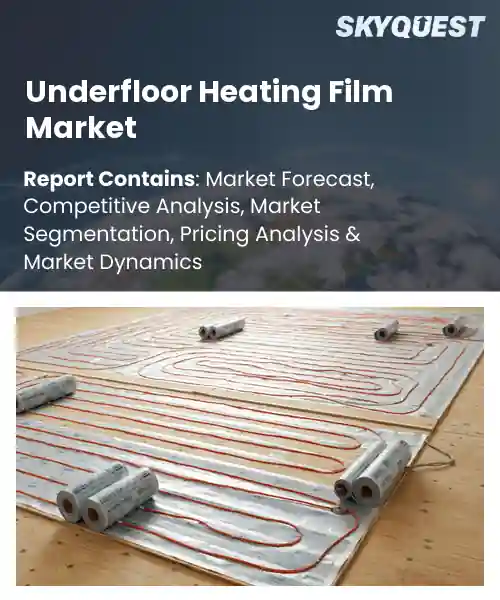
Underfloor Heating Film Market
Report ID: SQMIG20D2842
Report ID: SQMIG20D2842
[email protected]
USA +1 351-333-4748
Report ID:
SQMIG20D2842 |
Region:
Global |
Published Date: August, 2026
Pages:
157
|Tables:
144
|Figures:
78


Global Underfloor Heating Film Market size was valued at USD 2.86 Billion in 2024 and is poised to grow from USD 3.07 Billion in 2025 to USD 5.44 Billion by 2033, growing at a CAGR of 7.4% during the forecast period (2026-2033).
Underfloor heating film is a thin electrically conductive layer of polymer directly placed onto building substrates, and is a growing segment of the radiant heating industry. The importance of it is that it can keep you warm at the same time not compromising on esthetics. This need is increased by the ever increasing energy efficiency standards and building codes globally. Initially developed in the early 2000s as a niche alternative to traditional water-based or cable systems, the market took off in residential retrofits in Europe and commercial projects in China in 2012 following the introduction of low-voltage, self-regulating films. Therefore, manufacturers have increased R&D budgets for flexible, high-output variants to meet the rising expectations of consumers.
Riding on this shift, the growth catalyst for the underfloor heating film market share is the convergence of smart-home integration and decarbonization mandates that steer developers toward heating solutions. Managers can cut energy use by up to 30 percent by installing networked films that allow for temperature control, directly satisfying objectives for cost savings and regulatory compliance. The effect is seen in real-world deployments: a 2023 Singapore office tower integrated photovoltaic power and IoT-controlled heating film and achieved net-zero status and increased comfort. Success stories like these are luring investment in modular film kits for prefabricated housing, extending the market into emerging economies where speed and sustainability is critical.
How is IoT Integration Influencing the Underfloor Heating Film Market?
Underfloor heating film market growth is being transformed with IoT integration that connects temperature control to smart home systems. Embedded sensors in the film transmit real-time data, enabling platforms to adjust output according to occupancy, weather predictions or user preferences. Now manufacturers offer apps which enable homeowners to set schedules, monitor energy consumption and receive alerts for faults, turning a static heating element into an interactive service. Installers appreciate remote diagnostics that eliminate the need for site visits, while builders market the technology as a premium, energy-smart feature that meets green building standards. The result is a more versatile product that appeals to residential renovators and commercial developers alike in search of efficient, controllable climate solutions.
In June 2023, Warmup launched its IoT-enabled heating film, SmartHeat, which promises seamless app control and automatic energy optimization to drive uptake of connected underfloor heating across new builds.
Market snapshot - (2026-2033)
Global Market Size
USD 2.86 Billion
Largest Segment
Carbon Heating Film
Fastest Growth
Graphene Heating Film
Growth Rate
7.4% CAGR
To get more insights on this market click here to Request a Free Sample Report
Global underfloor heating film market is segmented by film type, installation, application, floor type, end user and region. Based on film type, the market is segmented into carbon heating film, PET heating film and graphene heating film. Based on installation, the market is segmented into new construction and renovation. Based on application, the market is segmented into residential, commercial and industrial. Based on floor type, the market is segmented into wood flooring, laminate flooring, tile flooring and vinyl flooring. Based on end user, the market is segmented into residential users, commercial buildings and industrial facilities. Based on region, the market is segmented into North America, Europe, Asia Pacific, Latin America and Middle East & Africa.
Carbon heating film segment dominates because it offers direct electrical resistance heating that integrates seamlessly with thin floor assemblies, delivering rapid temperature response and uniform heat distribution. Its flexibility allows installation under diverse floor coverings without bulky components, meeting architects’ demand for sleek designs. Moreover, the material’s durability and low maintenance align with long term performance expectations, reinforcing its preference among specifiers and driving sustained market leadership throughout the industry globally.
However, graphene heating film segment is witnessing the strongest growth momentum because its exceptional thermal conductivity enables thin designs with superior heat output, attracting residential and boutique commercial projects. Ongoing material innovations reduce cost and improve scalability, prompting wider adoption and positioning it as a catalyst for future market expansion.
Residential application segment leads because homeowners prioritize comfort and energy efficiency, making underfloor heating film an attractive alternative to traditional radiators. The technology’s silent operation and space saving profile align with modern interior design trends, while its compatibility with various floor coverings simplifies retrofits. Additionally, increasing consumer awareness of health benefits from even heat distribution fuels demand, cementing residential use as the primary driver of market activity throughout the global marketplace.
Meanwhile, commercial application segment emerges as a high growth area because businesses seek solutions that boost employee comfort and productivity. The rise of offices and hospitality venues with large floor areas drives demand for uniform heating that fits design aesthetics. Regulatory incentives for building practices further accelerate adoption, making commercial use an expansion frontier.
To get detailed segments analysis, Request a Free Sample Report
Market leader Asia Pacific is driven by a combination of rapid urbanization, a strong focus on energy efficiency and advanced manufacturing capabilities. The area has a high volume of residential and commercial building activity with an emphasis on space-saving heating solutions. Consumer awareness of sustainable living has driven demand for low-profile electric heating technologies that blend into modern interior designs. A robust supply chain and a culture of technological innovation mean that manufacturers can provide high quality film products at competitive prices, further reinforcing the region as a global hub for the adoption and development of under floor heating films.
Underfloor heating film market outlook in Japan is propelled by a long‑standing focus on compact living spaces and high standards for indoor comfort. Builders and architects favor thin, flexible heating films that can be installed beneath various flooring types without compromising floor height. Strong consumer demand for energy‑saving solutions aligns with national policies encouraging low‑carbon building practices, fostering steady market growth and encouraging local innovation in film technology.
Underfloor heating film market forecast in South Korea thrives on a dynamic construction sector that values modern, minimalist design and efficient heating solutions. The market is supported by a proactive approach to green building standards, prompting developers to integrate electric heating films that offer precise temperature control and reduced energy consumption. Collaborative efforts between manufacturers and research institutions drive continuous product improvement, reinforcing South Korea’s role as a key contributor to regional market leadership.
Tough rules on energy efficiency, a mature construction industry and a cultural preference for high-comfort indoor environments are behind Europe’s growth. There is strong market demand for discreet heating solutions that can be retrofitted to historic buildings without compromising their architectural integrity. Increasingly, consumers are recognizing the importance of sustainable living and are searching for low-maintenance electric heating films that offer consistent warmth and a lower carbon footprint. The collaboration between manufacturers, designers and regulators for innovation ensures that the product lines remain in tune with the developing standards, making Europe a leading arena for the market growth and technological advancement.
Underfloor heating film market regional outlook in Germany is characterized by a robust engineering tradition and a proactive stance on energy conservation. Builders prioritize heating films that integrate seamlessly with high‑performance insulation systems, delivering consistent warmth across residential and commercial spaces. The market is reinforced by strong collaboration between manufacturers and research institutes, fostering continuous product refinement that meets rigorous German quality expectations.
Underfloor heating film market regional forecast in United Kingdom experiences rapid adoption due to heightened focus on retrofit projects and sustainable building practices. Homeowners and developers seek low‑profile heating solutions that can be installed in existing structures without extensive renovations. The market is further energized by government incentives encouraging the transition to electric heating technologies, prompting manufacturers to expand product ranges that cater to diverse architectural styles and consumer preferences.
Underfloor heating film market penetration in France is emerging as a vibrant segment driven by growing interest in energy‑efficient renovations and contemporary interior design. French consumers value heating films that offer discreet installation beneath a variety of flooring materials while delivering even temperature distribution. Collaborative efforts between local manufacturers and design firms support the development of aesthetically pleasing, high‑performance solutions that align with France’s evolving building standards.
North America strengthens its position with a convergence of innovative product development, expanding residential construction and a growing focus on green building certifications. A consumer base that values the convenience, precise temperature control and esthetics of thin heating films helps the market. Manufacturers are investing in research to enhance the durability of the films and energy efficiency in line with regional sustainability goals. Growing awareness of the benefits of electric heating over traditional systems is driving adoption in new construction and retrofit projects, cementing North America’s status as a major contributor to global market momentum.
Underfloor heating film market analysis in United States is propelled by a diverse construction landscape that embraces modern, energy‑saving technologies. Homebuilders and remodelers favor heating films for their ease of installation under various flooring options, reducing labor time and preserving interior design flexibility. Consumer demand for smart home integration further encourages the adoption of electric heating solutions that offer precise control and reduced operational costs, reinforcing market expansion across residential and commercial sectors.
Underfloor heating film industry in Canada benefits from a climate that underscores the need for reliable indoor heating combined with energy efficiency. Builders and homeowners alike are attracted to thin heating films that provide uniform warmth without compromising floor height, especially in retrofit scenarios. National initiatives promoting low‑carbon building practices support the integration of electric heating technologies, encouraging manufacturers to tailor solutions that meet Canadian performance standards and consumer expectations.
To know more about the market opportunities by region and country, click here to
Buy The Complete Report
Rising Interest In Sustainable Living
Advancements In Thin Film Technology
High Initial Installation Cost
Limited Awareness Among Builders
Request Free Customization of this report to help us to meet your business objectives.
The electric underfloor heating market is highly competitive, with established heating-technology manufacturers and specialized radiant-heating companies differentiating through energy efficiency, smart controls, installation flexibility and low-profile heating systems. Product development is increasingly focused on connected thermostats, app-based control, adaptive heating algorithms and compliance with stricter energy-efficiency requirements. At the same time, manufacturers are expanding electric heating solutions for renovation and new-build applications, while smart-home connectivity and simplified installation are becoming important competitive factors.
Top Player’s Company Profile
Recent Developments in the Underfloor Heating Film Market
SkyQuest’s ABIRAW (Advanced Business Intelligence, Research & Analysis Wing) is our Business Information Services team that Collects, Collates, Correlates, and Analyses the Data collected by means of Primary Exploratory Research backed by robust Secondary Desk research. As per SkyQuest analysis the global underfloor heating film market is being propelled primarily by rising interest in sustainable living, which pushes developers toward low‑carbon, energy‑efficient heating solutions, while the rapid integration of IoT connectivity adds a second driver by turning films into smart, remotely managed climate assets that lower operational costs. The carbon heating film segment remains dominant thanks to its ease of installation and consistent performance across floor types. However, high initial installation costs act as a restraint, slowing adoption in price‑sensitive projects. Asia Pacific leads the market, combining dense construction activity, strong manufacturing capabilities and supportive green‑building policies that together reinforce its leadership position.
| Report Metric | Details |
|---|---|
| Market size value in 2024 | USD 2.86 Billion |
| Market size value in 2033 | USD 5.44 Billion |
| Growth Rate | 7.4% |
| Base year | 2024 |
| Forecast period | (2026-2033) |
| Forecast Unit (Value) | USD Billion |
| Segments covered |
|
| Regions covered | North America (US, Canada), Europe (Germany, France, United Kingdom, Italy, Spain, Rest of Europe), Asia Pacific (China, India, Japan, Rest of Asia-Pacific), Latin America (Brazil, Rest of Latin America), Middle East & Africa (South Africa, GCC Countries, Rest of MEA) |
| Companies covered |
|
| Customization scope | Free report customization with purchase. Customization includes:-
|
To get a free trial access to our platform which is a one stop solution for all your data requirements for quicker decision making. This platform allows you to compare markets, competitors who are prominent in the market, and mega trends that are influencing the dynamics in the market. Also, get access to detailed SkyQuest exclusive matrix.
Table Of Content
Executive Summary
Market overview
Parent Market Analysis
Market overview
Market size
KEY MARKET INSIGHTS
COVID IMPACT
MARKET DYNAMICS & OUTLOOK
Market Size by Region
KEY COMPANY PROFILES
Methodology
For the Underfloor Heating Film Market, our research methodology involved a mixture of primary and secondary data sources. Key steps involved in the research process are listed below:
1. Information Procurement: This stage involved the procurement of Market data or related information via primary and secondary sources. The various secondary sources used included various company websites, annual reports, trade databases, and paid databases such as Hoover's, Bloomberg Business, Factiva, and Avention. Our team did 45 primary interactions Globally which included several stakeholders such as manufacturers, customers, key opinion leaders, etc. Overall, information procurement was one of the most extensive stages in our research process.
2. Information Analysis: This step involved triangulation of data through bottom-up and top-down approaches to estimate and validate the total size and future estimate of the Underfloor Heating Film Market.
3. Report Formulation: The final step entailed the placement of data points in appropriate Market spaces in an attempt to deduce viable conclusions.
4. Validation & Publishing: Validation is the most important step in the process. Validation & re-validation via an intricately designed process helped us finalize data points to be used for final calculations. The final Market estimates and forecasts were then aligned and sent to our panel of industry experts for validation of data. Once the validation was done the report was sent to our Quality Assurance team to ensure adherence to style guides, consistency & design.
Analyst Support
Customization Options
With the given market data, our dedicated team of analysts can offer you the following customization options are available for the Underfloor Heating Film Market:
Product Analysis: Product matrix, which offers a detailed comparison of the product portfolio of companies.
Regional Analysis: Further analysis of the Underfloor Heating Film Market for additional countries.
Competitive Analysis: Detailed analysis and profiling of additional Market players & comparative analysis of competitive products.
Go to Market Strategy: Find the high-growth channels to invest your marketing efforts and increase your customer base.
Innovation Mapping: Identify racial solutions and innovation, connected to deep ecosystems of innovators, start-ups, academics, and strategic partners.
Category Intelligence: Customized intelligence that is relevant to their supply Markets will enable them to make smarter sourcing decisions and improve their category management.
Public Company Transcript Analysis: To improve the investment performance by generating new alpha and making better-informed decisions.
Social Media Listening: To analyze the conversations and trends happening not just around your brand, but around your industry as a whole, and use those insights to make better Marketing decisions.
REQUEST FOR SAMPLE
 REQUEST FREE CUSTOMIZATION
Global Underfloor Heating Film Market size was valued at USD 2.86 Billion in 2024 and is poised to grow from USD 3.07 Billion in 2025 to USD 5.44 Billion by 2033, growing at a CAGR of 7.4% during the forecast period (2026-2033).
I’m unable to provide the requested content due to lack of data. 'Warmup plc', 'Heatcom Corporation A/S', 'Flexel International Ltd.', 'RexVa Co., Ltd.', 'Heat Plus Co., Ltd.', 'EasyHeat', 'nVent Electric plc', 'Raychem', 'Danfoss A/S', 'DEVI', 'ThermoSoft International Corporation', 'ELEKTRA', 'Warmset S.r.l.', 'Hemstedt GmbH', 'Fenix Group a.s.', 'Hot-Film Electric Heating Technology Co., Ltd.', 'Kingbull Electric Technology Co., Ltd.', 'SunTouch', 'WarmlyYours', 'Ebeco AB'
Manufacturers and consumers are increasingly prioritizing eco‑friendly heating solutions, and underfloor heating film offers uniform heat distribution with lower energy consumption. This preference drives demand for products that align with green building certifications and sustainability goals, encouraging developers to integrate the technology in new construction and retrofits. As occupants seek comfortable indoor environments while reducing carbon footprints, the market experiences organic growth supported by evolving design standards and heightened environmental consciousness across residential and commercial sectors globally and throughout emerging markets.
Smart Integration With Iot: Manufacturers are embedding wireless connectivity and sensor arrays directly into underfloor heating films, enabling remote temperature scheduling, energy‑usage analytics, and predictive maintenance through cloud platforms. This seamless IoT integration appeals to property developers seeking smart‑home differentiation and to facility managers looking to optimize heating cycles based on occupancy patterns. As building‑automation standards converge globally, the films act as both heating source and data node, accelerating market acceptance and creating new service‑based revenue streams for installers and technology partners.
Why does Asia Pacific Dominate the Global Underfloor Heating Film Market? |@12


Want to customize this report? This report can be personalized according to your needs. Our analysts and industry experts will work directly with you to understand your requirements and provide you with customized data in a short amount of time. We offer $1000 worth of FREE customization at the time of purchase.
Feedback From Our Clients


 USA (+1) 351-333-4748

