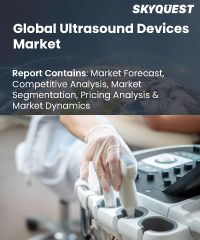
Ultrasound Devices Market
Report ID: SQMIG55E2091
Report ID: SQMIG55E2091
[email protected]
USA +1 351-333-4748
Report ID:
SQMIG55E2091 |
Region:
Global |
Published Date: July, 2025
Pages:
175
|Tables:
149
|Figures:
71


Global Ultrasound Devices Market size was valued at USD 10.97 Billion in 2024 and is poised to grow from USD 11.47 Billion in 2025 to USD 16.31 Billion by 2033, growing at a CAGR of 4.5% during the forecast period (2026–2033).
The ultrasound devices sector is experiencing enormous growth because of higher levels of demand for minimal access diagnostic capabilities and the continuing development of healthcare infrastructure globally. Continued adoption of technology developments (e.g., 3D/4D imaging, AI assistance) is improving imaging responsiveness for decision-making with accuracy and efficiency in diagnostics. The proliferation of chronic diseases and aging demographic worldwide are also contributing to sector growth in ultrasound devices. There is also increased demand for portable and point-of-care ultrasound systems, that seem to be taking off, mainly in aspects of emergency care and supportive care in remote locations.
Major drivers in this sector include continuing evolution of the incidence and prevalence of many lifestyle-oriented and chronic diseases that have significantly affected global economies, including cardiovascular diseases; cancers; liver diseases and so on. Continuing recognition and uptake of diagnostic imaging tech of ultrasound for early methods for disease detection are paving the way for further rise in the demand for the diagnostic ultrasound systems. Emerging economies often experience greater than normal growth of cytology which further stimulates investments by governments into healthcare generally and to ultrasound in particular. Lastly, use of portable and hand-held ultrasound devices are being marketed and utilized more in emergent health care and rural health office settings which support continued growth by the sector.
While continuing growth as a from level viewpoint generally seen in ultrasound devices, they also face challenges including expensing of high price for initial equipment and limited reimbursement for providers in certain sanctuaries. Cumulatively, the shortage of skilled sonographers and radiologists to avoid efficient usage of advanced ultrasound systems becomes diminished. Additionally, competition from alternative imaging modalities like MRI and CT scans in certain diagnostic applications restricts market share. Technical limitations in imaging obese patients or deep tissues may also impact diagnostic accuracy and device preference.
How is Artificial Intelligence Reshaping the Landscape of Ultrasound Devices?
AI-ultrasound improves workflow, accuracy, and access. By automating measurements, view identification, and image quality control, AI minimizes reliance on operator skill and accelerates scans. Embedding AI modules allows for stable diagnostic performance in diverse clinicians, standardizing study protocols and minimizing inter‑user variation. This fuels adoption in point‑of‑care environments, rural clinics, and mid‑level provider workflows. Also, AI integration enhances device value, encourages cloud‑based diagnostics, and enables quicker updates through networked infrastructure, driving market growth and confidence in ultrasound devices.
For instance, in early 2025, the U.S. Food and Drug Administration approved Sonio Suspect, an artificial intelligence‑based prenatal ultrasound module that boosts fetal anomaly detection from 69% to 91% AUC in a large, multicenter trial at 47 facilities.
Market snapshot - 2026-2033
Global Market Size
USD 10.5 billion
Largest Segment
Stationary ultrasound devices
Fastest Growth
Stationary ultrasound devices
Growth Rate
4.5% CAGR
To get more insights on this market click here to Request a Free Sample Report
Global Ultrasound Devices Market is segmented by Type, Product, Portability, Application, End-use and region. Based on Type, the market is segmented into Stationery Ultrasound and Portable Ultrasound. Based on Product, the market is segmented into Diagnostic Ultrasound Devices and Therapeutic Ultrasound Devices. Based on Portability, the market is segmented into Handheld, Compact and Cart/Trolley. Based on Application, the market is segmented into Cardiology, Obstetrics/Gynaecology, Radiology, Orthopaedic, Anaesthesia, Emergency Medicine, Primary Care, Critical Care and Others. Based on End-use, the market is segmented into Hospitals, Imaging Centres, Research Centres and Others. Based on region, the market is segmented into North America, Europe, Asia Pacific, Latin America and Middle East & Africa.
How the Stationery Ultrasound segment is dominating the market?
Stationary ultrasound devices are large, fixed systems typically installed in hospitals, diagnostic centers, and specialty clinics. These devices offer high-resolution imaging and advanced functionalities such as 3D/4D imaging, Doppler ultrasound, and elastography. Their powerful processing capabilities and wide range of transducer options make them ideal for complex diagnostic applications in cardiology, obstetrics, gynecology, and oncology. They are preferred for their accuracy, comprehensive diagnostic ability, and suitability for high patient volumes. However, their lack of portability and higher cost restrict them to well-equipped medical settings with dedicated imaging departments.
How the Portable Ultrasound segment is fastest growing segment of the market?
Portable ultrasound devices are compact, lightweight systems designed for mobility and point-of-care diagnostics. They are ideal for emergency care, remote locations, ambulatory settings, and bedside assessments. These devices come in laptop-based, handheld, or cart-based formats, offering flexibility and quick diagnostic capabilities. Advancements in wireless connectivity, battery life, and image quality have significantly enhanced their utility. Portable ultrasounds are increasingly used in general practice, military healthcare, sports medicine, and rural outreach programs. While they may not match the image quality of stationary systems, their affordability and convenience make them essential in improving access to medical imaging globally.
To get detailed segments analysis, Request a Free Sample Report
What makes North America the top market for Ultrasound Devices in 2024?
North America—led by the U.S. and Canada—remains the dominant ultrasound devices market, accounting for roughly 35–38% of global revenue. Growth is fueled by advanced healthcare infrastructure, favorable reimbursement policies, high chronic‑disease burden, and sustained R&D investments.
The United States Ultrasound Devices Market
The U.S. leads due to rapid adoption of point‑of‑care systems, AI-embedded devices, and strong regulatory clarity. Major companies regularly launch new products—for instance, in April 2024 Butterfly’s FDA‑approved iQ3 handheld device improved image resolution and workflow efficiency. In November 2024, Nanosonics launched the first automated high-level disinfection solution for wireless ultrasound probes—enhancing hygiene and traceability in clinical workflows.
Canada Ultrasound Devices Market
Canada’s ultrasound market benefits from growing awareness of non‑invasive diagnostics and government investment in imaging infrastructure. Provincial and federal funding supports broader uptake in rural and urban clinics. In 2024, Canada allocated CAD 50 million to advance adoption of imaging technologies, while GE Healthcare began establishing an R&D center in Canada to drive local innovation in ultrasound systems.
How are Government Policies in the Asia-Pacific Driving the Growth of the Ultrasound Devices Market?
Asia-Pacific is the fastest-growing region, with projected CAGR around 4.9–6.5% from 2024/25 to 2030/32. Growth is supported by rising chronic disease incidence, expanding healthcare access, government procurement policies favoring domestically-produced cost-effective equipment, and demand for portable POCUS devices in primary care centers.
Japan Ultrasound Devices Market
Japan benefits from advanced healthcare infrastructure and government emphasis on precision diagnostics. Local firms like Canon and Fujifilm continue to roll out high-end ultrasound systems with AI and robotics. In mid‑2023 Fujifilm SonoSite launched the Sonosite ST with automated needle profiling and a large touchscreen interface—streamlining workflows in surgical and emergency use cases.
South Korea Ultrasound Devices Market
South Korea’s vibrant medical device manufacturing ecosystem—anchored by Samsung Medison—drives adoption of high-spec ultrasound systems. Samsung’s focus on explainable AI and user‑friendly imaging suites enhances competitiveness in oncology and obstetrics. Recently, Samsung completed the acquisition of Sonio (obstetrics‑AI firm), embedding explainable anomaly detection into its platform and strengthening its foothold in maternal healthcare imaging.
China Ultrasound Devices Market
China dominates regional volume via domestic manufacturers like Mindray, SIUI, and Haifu offering affordable consoles. Government reimbursement and procurement programs favor these local vendors. In 2021 CHISON reported USD 50 million in export revenue, making up nearly 87% of total sales—reflecting aggressive global expansion of Chinese ultrasound technology.
How is Europe Maintaining Its Position in Ultrasound Devices Market?
Europe holds a substantial share, benefiting from well‑established healthcare systems, chronic disease prevalence, and strong focus on early diagnosis and interoperability with EHRs. Innovation is driven by reimbursement frameworks, structured training, and demonstration of clinical efficacy.
Germany Ultrasound Devices Market
Germany’s growth is supported by advanced reimbursement policies (e.g. NUB status), particularly for focused‑ultrasound therapies. Recently, Insightec’s MRgFUS system gained NUB level 1 reimbursement in Germany to treat essential tremor—underscoring Europe’s appetite for therapeutic ultrasound expansion alongside diagnostic.
France Ultrasound Devices Market
France maintains steady ultrasound adoption through strong public healthcare and early disease screening. Recent expansions in tele‑diagnosis regulations and structured ultrasound training for general practitioners under WONCA Europe are broadening primary‑care access to imaging—facilitating ultrasound use outside traditional hospital settings.
UK Ultrasound Devices Market
The UK is pioneering therapeutic ultrasound: in June 2025, the NHS introduced histotripsy at Addenbrooke’s Hospital to non‑invasively treat liver tumors using focused ultrasound waves, without surgery or radiation—an MHRA‑fast‑tracked innovation under its Devices Access Pathway.
To know more about the market opportunities by region and country, click here to
Buy The Complete Report
Ultrasound Devices Market Drivers
Rising Demand for Non-Invasive and Real-Time Diagnostics.
Technological Advancements and AI Integration
Ultrasound Devices Market Restraints
High Equipment and Maintenance Costs
Limited Skilled Workforce and Operator Dependency
Request Free Customization of this report to help us to meet your business objectives.
The ultrasound devices market is shaped by a competitive landscape where leading multinationals deploy strategic AI integrations, cost-efficient acquisitions, and domain-specific technologies. For example, Samsung Medison’s acquisition of French startup Sonio (May 2024) for ~$92M brought cloud-based obstetric AI into its suite, enhancing workflow and patient care. Meanwhile, mid-tier players like Siemens Healthineers launched the AI-enabled Acuson Maple system in late 2023—targeting emerging markets with portable design and affordable pricing. GE HealthCare continues patenting AI-driven auto‑segmentation models (SonoSAMTrack) and expanding enterprise-level workflow integration via tele‑consult software developed with Philips (Reacts) and Siemens (Syngo Dynamics).
Top Player’s Company Profiles
Recent Developments in Ultrasound Devices Market
SkyQuest’s ABIRAW (Advanced Business Intelligence, Research & Analysis Wing) is our Business Information Services team that Collects, Collates, Correlates, and Analyses the Data collected using Primary Exploratory Research backed by robust Secondary Desk research.
SkyQuest’s study suggests that the ultrasound devices market is advancing rapidly, driven by the rising demand for non-invasive, real-time diagnostics across emergency, prenatal, and chronic care applications. However, high equipment and maintenance costs remain a key restraint, limiting adoption in low-resource settings. North America dominates the global market, led by the U.S. due to advanced infrastructure and consistent technology innovation. Among product types, handheld and point-of-care ultrasound devices are emerging as the dominant segment, favored for their portability and versatility. A second major driver is the integration of artificial intelligence, which enhances imaging accuracy, automates workflows, and reduces operator dependency. This is encouraging broader clinical use and improving diagnostic consistency across diverse healthcare environments.
| Report Metric | Details |
|---|---|
| Market size value in 2024 | USD 10.97 Billion |
| Market size value in 2033 | USD 16.31 Billion |
| Growth Rate | 4.5% |
| Base year | 2024 |
| Forecast period | 2026-2033 |
| Forecast Unit (Value) | USD Billion |
| Segments covered |
|
| Regions covered | North America (US, Canada), Europe (Germany, France, United Kingdom, Italy, Spain, Rest of Europe), Asia Pacific (China, India, Japan, Rest of Asia-Pacific), Latin America (Brazil, Rest of Latin America), Middle East & Africa (South Africa, GCC Countries, Rest of MEA) |
| Companies covered |
|
| Customization scope | Free report customization with purchase. Customization includes:-
|
To get a free trial access to our platform which is a one stop solution for all your data requirements for quicker decision making. This platform allows you to compare markets, competitors who are prominent in the market, and mega trends that are influencing the dynamics in the market. Also, get access to detailed SkyQuest exclusive matrix.
Table Of Content
Executive Summary
Market overview
Parent Market Analysis
Market overview
Market size
KEY MARKET INSIGHTS
COVID IMPACT
MARKET DYNAMICS & OUTLOOK
Market Size by Region
KEY COMPANY PROFILES
Methodology
For the Ultrasound Devices Market, our research methodology involved a mixture of primary and secondary data sources. Key steps involved in the research process are listed below:
1. Information Procurement: This stage involved the procurement of Market data or related information via primary and secondary sources. The various secondary sources used included various company websites, annual reports, trade databases, and paid databases such as Hoover's, Bloomberg Business, Factiva, and Avention. Our team did 45 primary interactions Globally which included several stakeholders such as manufacturers, customers, key opinion leaders, etc. Overall, information procurement was one of the most extensive stages in our research process.
2. Information Analysis: This step involved triangulation of data through bottom-up and top-down approaches to estimate and validate the total size and future estimate of the Ultrasound Devices Market.
3. Report Formulation: The final step entailed the placement of data points in appropriate Market spaces in an attempt to deduce viable conclusions.
4. Validation & Publishing: Validation is the most important step in the process. Validation & re-validation via an intricately designed process helped us finalize data points to be used for final calculations. The final Market estimates and forecasts were then aligned and sent to our panel of industry experts for validation of data. Once the validation was done the report was sent to our Quality Assurance team to ensure adherence to style guides, consistency & design.
Analyst Support
Customization Options
With the given market data, our dedicated team of analysts can offer you the following customization options are available for the Ultrasound Devices Market:
Product Analysis: Product matrix, which offers a detailed comparison of the product portfolio of companies.
Regional Analysis: Further analysis of the Ultrasound Devices Market for additional countries.
Competitive Analysis: Detailed analysis and profiling of additional Market players & comparative analysis of competitive products.
Go to Market Strategy: Find the high-growth channels to invest your marketing efforts and increase your customer base.
Innovation Mapping: Identify racial solutions and innovation, connected to deep ecosystems of innovators, start-ups, academics, and strategic partners.
Category Intelligence: Customized intelligence that is relevant to their supply Markets will enable them to make smarter sourcing decisions and improve their category management.
Public Company Transcript Analysis: To improve the investment performance by generating new alpha and making better-informed decisions.
Social Media Listening: To analyze the conversations and trends happening not just around your brand, but around your industry as a whole, and use those insights to make better Marketing decisions.
REQUEST FOR SAMPLE
 REQUEST FREE CUSTOMIZATION


Want to customize this report? This report can be personalized according to your needs. Our analysts and industry experts will work directly with you to understand your requirements and provide you with customized data in a short amount of time. We offer $1000 worth of FREE customization at the time of purchase.
Feedback From Our Clients


 USA (+1) 351-333-4748

