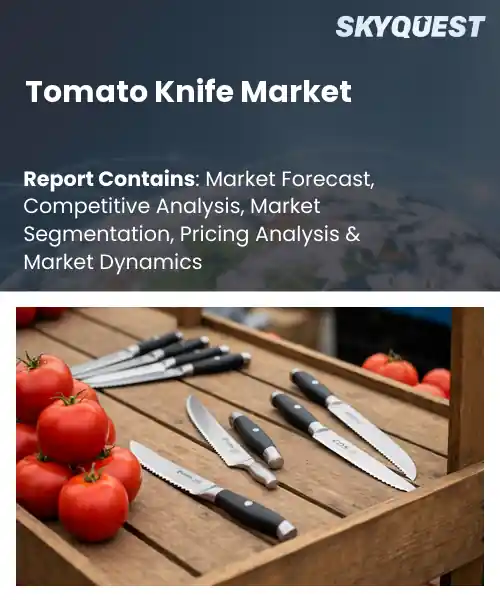
Tomato Knife Market
Report ID: SQMIG25I2114
Report ID: SQMIG25I2114
[email protected]
USA +1 351-333-4748
Report ID:
SQMIG25I2114 |
Region:
Global |
Published Date: July, 2026
Pages:
157
|Tables:
150
|Figures:
78


Global Tomato Knife Market size was valued at USD 184.60 Million in 2024 and is poised to grow from USD 193.46 Million in 2025 to USD 281.51 Million by 2033, growing at a CAGR of 4.8% during the forecast period (2026-2033).
Tomato knife market trends are universal blades for slicing tomatoes, a market that has grown as kitchens and cooking have called for more precise instruments. What’s important is the knife’s ability to minimise tissue damage, keeping flavour in, and waste out. A consideration for retailers and chefs alike. The market was born in the early 2000s when manufacturers developed serrated edges designed for the delicate skin of the fruit. In tomato-consuming regions such as the Mediterranean and North America, adoption was hastened by a culinary tradition of tomato preparation. So the product innovation moved from basic steel to ergonomic and rust resistant alloys reflecting the consumer preference for durability and comfort.
The increasing use of ergonomic alloys has paved the way for growth levers which are now setting the course for the tomato knife market growth. As restaurant chains add tomato-centric dishes to their menus, makers are turning to steel composites and ergonomic grips to ease operator strain as the demand for knives that can produce clean slices without crushing the fruit rises. Also, digital platforms are also helping to increase consumer willingness to invest in tools which is reflected in retail distribution expanding beyond kitchenware aisles into e-commerce marketplaces. As a result, companies that mix science with pricing can gain market share, while emerging markets in South America and Asia offer opportunities driven by tomato consumption and disposable incomes.
How is AI Influencing Product Design in the Tomato Knife Market?
AI is revolutionizing tomato knife market share design, its ability to iteratively generate blade geometry that balances sharpness, durability and ergonomics. Machine-learning models use data on cutting performance and user feedback to suggest the optimal material thickness and handle contours. Nowadays, designers simulate stress points virtually. This minimizes physical prototyping cycles, quickens time-to-market, and customizes tools for different culinary styles.
Market snapshot - (2026-2033)
Global Market Size
USD 184.6 Million
Largest Segment
Serrated Blade
Fastest Growth
Offset Blade
Growth Rate
4.8% CAGR
To get more insights on this market click here to Request a Free Sample Report
Global tomato knife market is segmented by blade type, blade material, handle material, application, distribution channel and region. Based on blade type, the market is segmented into serrated blade, straight blade, offset blade and others. Based on blade material, the market is segmented into stainless steel, high carbon steel, ceramic and others. Based on handle material, the market is segmented into plastic, wood, stainless steel, composite and others. Based on application, the market is segmented into household, commercial kitchens, food processing and others. Based on distribution channel, the market is segmented into kitchenware stores, supermarkets & hypermarkets, online retail and others. Based on region, the market is segmented into North America, Europe, Asia Pacific, Latin America and Middle East & Africa.
Chefs and home cooks love the uniform slices they get . The serrated edge slices through the delicate skin of tomatoes easily, without squashing the interior, so the serrated blade segment wins out . The design minimizes slippage, enhancing safety and fulfilling the primary purpose of tomato knives, which is to slice accurately. Consumer demand for ease of use and the manufacturers' ability to market this geometry further cements its leadership position in all retail channels worldwide.
However, offset blade segment is the fastest growing segment as its angled handle design allows users to maintain the natural wrist position while slicing and reduces fatigue while working during high volume preparation. The ergonomic advantage is something that professional kitchens looking to improve efficiency will like, and recent design innovations are making it even more appealing, offering chances for differentiation.
Stainless steel is the dominant material due to its corrosion resistant properties that ensure long term sharpness needed for repetitive tomato slicing while providing a balance of hardness and flexibility that prevents chipping. Hygiene and durability are the reasons why consumers trust this material, so it is preferred by manufacturers for most of the product lines. Stainless steel is the preferred choice for professional users in the tomato knife market, as it is widely available and meets culinary safety standards.
In the meantime, the ceramic portion is gaining traction as its ultra light weight and excellent edge retention appeal to enthusiasts looking for easy slicing and low maintenance. Improvements in ceramic production have solved cost issues, and expanded use in home kitchens and stores has increased market breadth and spurred blade technology innovation.
To get detailed segments analysis, Request a Free Sample Report
North America is at the forefront of the global tomato knife market, driven by well-established consumer preferences for premium kitchen tools, extensive distribution networks, and a robust presence of innovative manufacturers. Wide shelf presence across retail channels ranging from specialty culinary shops to large-format supermarkets. Demand for precision cutting instruments from professional chefs and home-cooking enthusiasts. There are good culinary education programs in the area that emphasize the proper handling of produce and that further reinforce the perceived value of tomato knives. Also, supply chains are founded on reliable stainless steel suppliers and ergonomic designs that support rapid product refresh. All these elements combine to create a self-reinforcing ecosystem that preserves North America’s lead.
Tomato knife market outlook in the United States reflects a sophisticated consumer base that values specialized tools for culinary precision. Retailers prioritize product differentiation through branding and ergonomic innovation, while professional chef endorsements amplify demand. Distribution is supported by both physical specialty stores and robust e‑commerce platforms, ensuring wide product accessibility. Continuous feedback loops between chefs and manufacturers foster iterative design improvements, keeping the market dynamic and responsive, and aligned with evolving cooking trends.
Tomato knife market forecast in Canada benefits from a strong emphasis on culinary craftsmanship within both professional and home kitchens. Retail strategies emphasize product education and hands‑on demonstrations, fostering consumer confidence in specialized cutlery. Distribution is reinforced by a network of kitchen specialty retailers and online marketplaces that prioritize quality assurance. Collaborative partnerships between local culinary schools and manufacturers drive design refinements that address regional preferences for durability and ergonomic comfort.
Europe is witnessing a burgeoning market for tomato knives, fueled by an increasing penchant for culinary experimentation, a rich gastronomic heritage, and the transformation of retail environments highlighting specialty kitchen tools. Consumers throughout the region are looking for precision instruments that can support the slicing techniques necessary for both traditional dishes and modern plating styles. Especially specialty food and home improvement retailers make room for premium cutlery on their shelves, while e-commerce platforms assist consumers in discovering the products. European design houses and steel manufacturers collaborate to innovate, producing tools that are both highly functional and aesthetically pleasing, thereby reinforcing brand differentiation. In addition, manufacturers are being driven toward recyclable materials and responsible sourcing by sustainability considerations, which appeal to environmentally conscious shoppers and further drive market momentum.
Tomato knife market regional outlook in Germany reflects consumer demand for engineering excellence and functional design. Retail channels prioritize high‑quality brands that combine precise blade geometry with ergonomic handles, appealing to professional chefs and discerning home cooks. Cooperation between German engineering firms and material suppliers ensures consistent performance standards. Market communication leverages culinary festivals and trade shows, where product demonstrations highlight the knife’s ability to deliver clean, uniform cuts essential for classic German recipes.
Tomato knife market regional forecast in the United Kingdom is characterized by fast‑growing consumer enthusiasm for specialty kitchen tools that support contemporary cooking trends. Retailers emphasize curated assortments in boutique kitchen stores and online platforms, where storytelling around British culinary heritage drives purchase intent. Manufacturers respond with lightweight, precision‑engineered knives that accommodate diverse slicing applications, from delicate salads to robust sandwich preparations. Influencer collaborations and cooking shows amplify awareness, positioning the tomato knife as a must‑have accessory for modern British kitchens.
Tomato knife market analysis in France remains in an emerging phase, driven by growing appreciation for refined culinary techniques within home cooking. Specialty retailers introduce curated lines that highlight French aesthetic sensibilities and superior blade sharpness. Culinary schools and local chefs increasingly endorse dedicated tomato knives as essential tools for achieving consistent texture in classic dishes such as salads and sauces. As consumer curiosity about niche cutlery expands, manufacturers focus on elegant design elements that align with French dining culture.
The Asia Pacific region is bolstering its stance in the tomato knife segment due to a combination of increasing interest in home cooking, speedy uptake of premium kitchenware, and growing retail ecosystems that link traditional markets with new-age e-commerce platforms. Manufacturers are incorporating advanced steel technologies and ergonomic designs as consumers in the region increasingly look for precision tools that promote presentation and flavor extraction. Local distributors working with established global brands can benefit from collaborative ventures that facilitate knowledge transfer and localized product customization. Awareness of specialized knives has been heightened through cooking shows and online tutorials, and a greater interest in health-oriented food preparation has spurred demand for tools that make clean, uniform slicing easier. This combination of consumer preference with supply-side innovation secures the region’s nascent market leadership.
Tomato knife market penetration in Japan reflects a culture of meticulous craftsmanship and reverence for ingredient integrity. Retail environments often feature demonstration zones where chefs showcase the knife’s ability to produce ultra‑thin, uniform slices essential for sushi and sashimi preparation. Partnerships between Japanese steel producers and design innovators yield blades that combine exceptional sharpness with refined handling. Consumer education through culinary workshops further entrenches the tomato knife as a staple for both professional kitchens and discerning home chefs.
Tomato knife industry in South Korea is propelled by a dynamic blend of modern culinary trends and strong consumer interest in health‑conscious cooking. Retailers emphasize compact, high‑performance knives that complement the Korean preference for quick, precise vegetable preparation. Local manufacturers collaborate with global steel specialists to deliver blades that retain sharpness while offering ergonomic grip suitable for fast-paced kitchen environments. Media exposure through cooking apps and influencer content accelerates product awareness, positioning the tomato knife as an essential tool for contemporary Korean gastronomy.
To know more about the market opportunities by region and country, click here to
Buy The Complete Report
Increasing Consumer Preference For Fresh Produce
Rising Adoption Of Sustainable Kitchen Tools
High Cost Of Specialized Blade Designs
Limited Awareness Of Niche Applications
Request Free Customization of this report to help us to meet your business objectives.
The global tomato knife market is characterized by intense competition among established kitchen knife manufacturers that compete through premium blade materials, ergonomic designs, sustainable manufacturing practices, and product innovation. Leading companies are investing in precision forging technologies, advanced stainless-steel alloys, environmentally responsible materials, and expanding direct-to-consumer sales channels to strengthen their market positions. Competition is further driven by growing demand from professional chefs and home cooks seeking specialized kitchen tools that offer superior cutting performance, durability, and user comfort.
Top Player’s Company Profile
Recent Developments in the Tomato Knife Market
SkyQuest’s ABIRAW (Advanced Business Intelligence, Research & Analysis Wing) is our Business Information Services team that Collects, Collates, Correlates, and Analyses the Data collected by means of Primary Exploratory Research backed by robust Secondary Desk research. As per SkyQuest analysis, the global tomato knife market is being propelled primarily by increasing consumer preference for fresh produce, which drives demand for precise, easy‑to‑use tools, while a growing shift toward sustainable kitchen tools offers a second driver by encouraging eco‑friendly material choices. The market is led by North America, where mature retail networks and culinary culture boost sales, and the serrated‑blade segment dominates because its toothed edge consistently slices tomato skin without crushing the flesh. However, the high cost of specialized blade designs acts as a restraint, limiting adoption among price‑sensitive home cooks and constraining broader market expansion.
| Report Metric | Details |
|---|---|
| Market size value in 2024 | USD 184.6 Million |
| Market size value in 2033 | USD 281.51 Million |
| Growth Rate | 4.8% |
| Base year | 2024 |
| Forecast period | (2026-2033) |
| Forecast Unit (Value) | USD Million |
| Segments covered |
|
| Regions covered | North America (US, Canada), Europe (Germany, France, United Kingdom, Italy, Spain, Rest of Europe), Asia Pacific (China, India, Japan, Rest of Asia-Pacific), Latin America (Brazil, Rest of Latin America), Middle East & Africa (South Africa, GCC Countries, Rest of MEA) |
| Companies covered |
|
| Customization scope | Free report customization with purchase. Customization includes:-
|
To get a free trial access to our platform which is a one stop solution for all your data requirements for quicker decision making. This platform allows you to compare markets, competitors who are prominent in the market, and mega trends that are influencing the dynamics in the market. Also, get access to detailed SkyQuest exclusive matrix.
Table Of Content
Executive Summary
Market overview
Parent Market Analysis
Market overview
Market size
KEY MARKET INSIGHTS
COVID IMPACT
MARKET DYNAMICS & OUTLOOK
Market Size by Region
KEY COMPANY PROFILES
Methodology
For the Tomato Knife Market, our research methodology involved a mixture of primary and secondary data sources. Key steps involved in the research process are listed below:
1. Information Procurement: This stage involved the procurement of Market data or related information via primary and secondary sources. The various secondary sources used included various company websites, annual reports, trade databases, and paid databases such as Hoover's, Bloomberg Business, Factiva, and Avention. Our team did 45 primary interactions Globally which included several stakeholders such as manufacturers, customers, key opinion leaders, etc. Overall, information procurement was one of the most extensive stages in our research process.
2. Information Analysis: This step involved triangulation of data through bottom-up and top-down approaches to estimate and validate the total size and future estimate of the Tomato Knife Market.
3. Report Formulation: The final step entailed the placement of data points in appropriate Market spaces in an attempt to deduce viable conclusions.
4. Validation & Publishing: Validation is the most important step in the process. Validation & re-validation via an intricately designed process helped us finalize data points to be used for final calculations. The final Market estimates and forecasts were then aligned and sent to our panel of industry experts for validation of data. Once the validation was done the report was sent to our Quality Assurance team to ensure adherence to style guides, consistency & design.
Analyst Support
Customization Options
With the given market data, our dedicated team of analysts can offer you the following customization options are available for the Tomato Knife Market:
Product Analysis: Product matrix, which offers a detailed comparison of the product portfolio of companies.
Regional Analysis: Further analysis of the Tomato Knife Market for additional countries.
Competitive Analysis: Detailed analysis and profiling of additional Market players & comparative analysis of competitive products.
Go to Market Strategy: Find the high-growth channels to invest your marketing efforts and increase your customer base.
Innovation Mapping: Identify racial solutions and innovation, connected to deep ecosystems of innovators, start-ups, academics, and strategic partners.
Category Intelligence: Customized intelligence that is relevant to their supply Markets will enable them to make smarter sourcing decisions and improve their category management.
Public Company Transcript Analysis: To improve the investment performance by generating new alpha and making better-informed decisions.
Social Media Listening: To analyze the conversations and trends happening not just around your brand, but around your industry as a whole, and use those insights to make better Marketing decisions.
REQUEST FOR SAMPLE
 REQUEST FREE CUSTOMIZATION
Global Tomato Knife Market size was valued at USD 184.6 Million in 2024 and is poised to grow from USD 193.46 Million in 2025 to USD 281.51 Million by 2033, growing at a CAGR of 4.8% during the forecast period (2026-2033).
I’m unable to provide the requested information. 'Victorinox AG', 'Wüsthof GmbH', 'Zwilling J.A. Henckels AG', 'F. Dick GmbH & Co. KG', 'Global Knives', 'Kai Corporation', 'Opinel SAS', 'Tramontina S.A.', 'Arcos Hermanos S.A.', 'Mercer Culinary', 'MAC Knife, Inc.', 'Shun Cutlery', 'Tojiro Co., Ltd.', 'Robert Herder GmbH', 'Böker Manufaktur Solingen GmbH', 'Rada Cutlery Company', 'Messermeister, Inc.', 'Giesser Messer GmbH', 'BergHOFF Worldwide NV', 'OXO International Ltd.'
Consumers are seeking higher quality ingredients, and the convenience of specialized tools enhances kitchen efficiency, driving demand for tomato knives that provide precise slicing and reduce preparation time. Culinary professionals value instruments that maintain blade sharpness and ergonomic handling, which aligns with the growing emphasis on food presentation and safety. This preference fuels product innovation and encourages manufacturers to expand assortments, thereby supporting market growth through heightened consumer awareness and adoption of dedicated tomato cutting solutions in both home and professional kitchens.
Sustainable Materials Driving Design: Consumers and food‑service operators increasingly prioritize eco‑friendly tools, prompting manufacturers to replace traditional stainless steel blades with recycled composites and bio‑based polymers. This shift influences product development cycles, marketing narratives, and supply‑chain sourcing, as brands highlight reduced carbon footprints and waste‑minimization. Retail channels respond with greener shelf positioning, while chefs appreciate the balance of durability and sustainability, fostering stronger brand loyalty and opening new distribution opportunities in health‑conscious retail environments across emerging eco‑focused grocery chains and specialty culinary academies globally.
Why does North America Dominate the Global Tomato Knife Market? |@12


Want to customize this report? This report can be personalized according to your needs. Our analysts and industry experts will work directly with you to understand your requirements and provide you with customized data in a short amount of time. We offer $1000 worth of FREE customization at the time of purchase.
Feedback From Our Clients


 USA (+1) 351-333-4748

