
Tahini Market
Report ID: SQMIG30H2187
Report ID: SQMIG30H2187
[email protected]
USA +1 351-333-4748
Report ID:
SQMIG30H2187 |
Region:
Global |
Published Date: March, 2025
Pages:
199
|Tables:
86
|Figures:
71


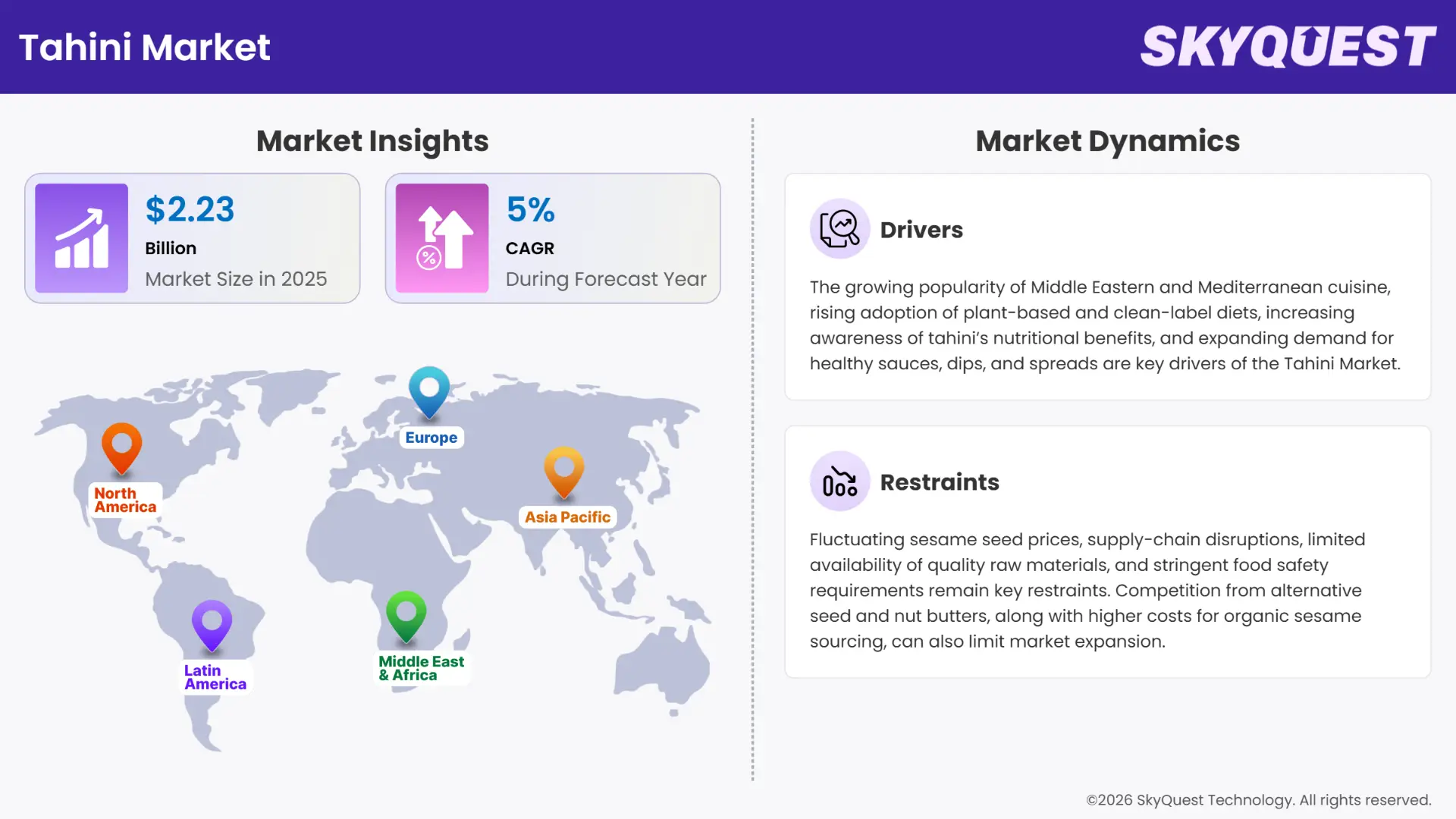
Global Tahini Market size was valued at USD 2.12 Billion in 2024 and is poised to grow from USD 2.23 Billion in 2025 to USD 3.29 Billion by 2033, growing at a CAGR of 5% during the forecast period (2026–2033).
Key Takeaways: Market Trends & Insights
The growing use of tahini, one of the major ingredients used in the preparation of various Mediterranean and Middle Eastern food servings such as baba ghanoush, halva, hummus, and others, is the major driver for the global tahini market growth. The presence of vegan-based, gluten-free, and kosher-certified products also fuels the growth of this market.
An increase in the global availability of Mediterranean foods resulted from the high number of participants in the dining industry that offers a range of foods and drinks originating in various cuisines. The heterogenous population living and working in different regions generates the demand for many cuisines and preparations, which drives commercial and residential level use of ingredients like tahini. Tahini is also heavily utilized as an important ingredient in different food preparations like salad dressing, tahini sauce, halvah, ice creams, side dips, and baked products like bread, babkas, tarator sauce, etc.
The expansion process of the food service and dining experience sectors has pushed the demand for tahini over the last few years. The growing demand for healthy food items such as salads, grain bowl servings, falafel, and others has made a strong impact on the utilization of tahini sauce and dips. It is also accompanied by food items like roast vegetables, nut squash, baked potatoes, noodles, and others. More people are making a transition towards vegetarian diets, and awareness is rising about how the consumption of food contributes to the well-being of human beings. Trends like food tourism or experimenting with numerous regional cuisines have also pushed the market for health foods up.
Key Market Attributes
To get more insights on this market click here to Request a Free Sample Report
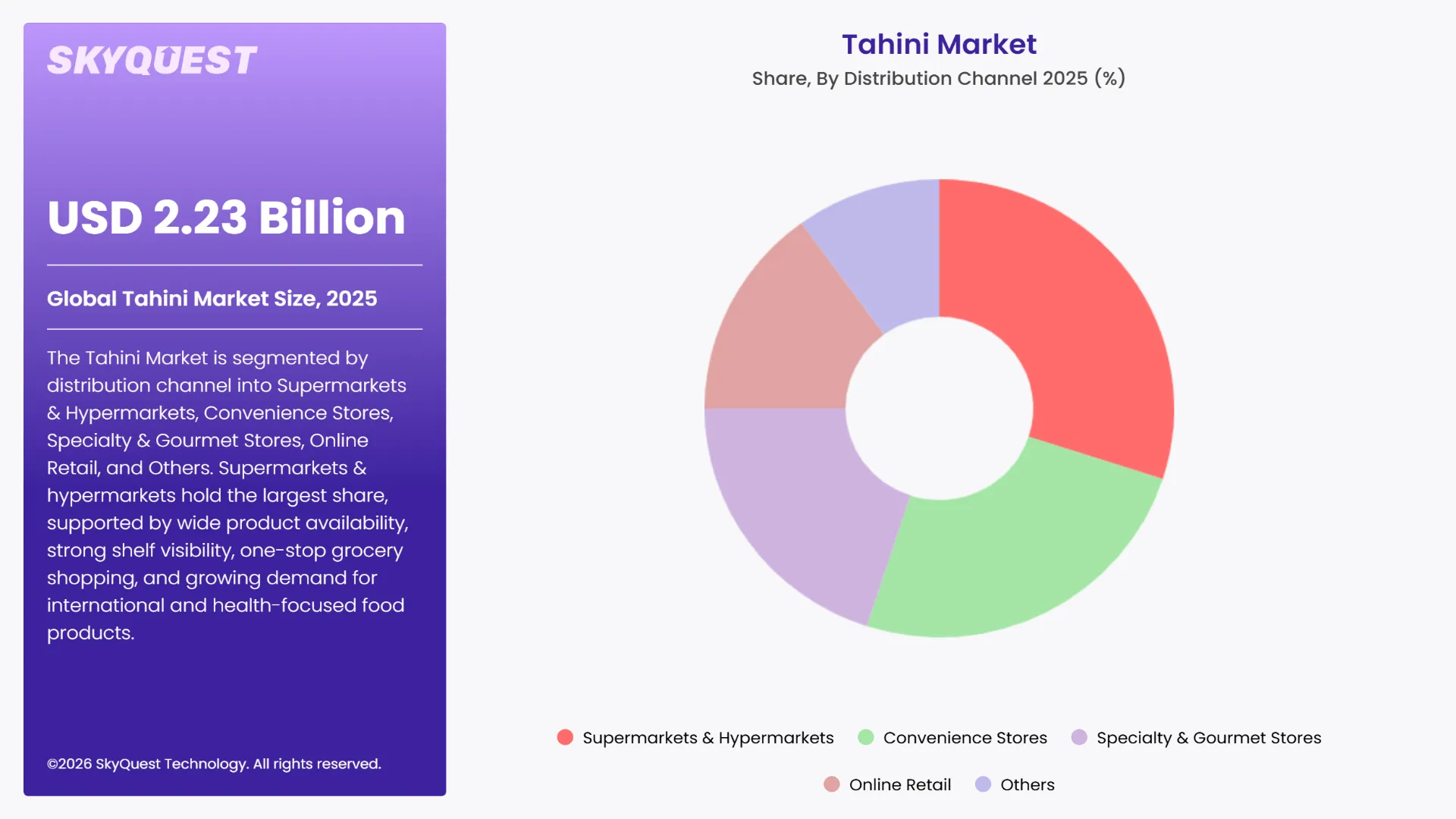
Global Tahini Market is segmented by Product, Category, Packaging Type, Distribution Channel and region. Based on Product, the market is segmented into Paste & Spreads, Halva & Other Sweets and Sauces & Dips. Based on Category, the market is segmented into Conventional and Organic. Based on Packaging Type, the market is segmented into Bottles & Jars, Tubs and Others. Based on Distribution Channel, the market is segmented into Store-Based and Non-Store-Based. Based on region, the market is segmented into North America, Europe, Asia Pacific, Latin America and Middle East & Africa.
As per the 2024 global tahini market analysis, the paste & spreads category dominated the with a revenue share of 55.7%. Tahini paste is a major requirement for hummus preparation, while the spreads find conventional uses along with bread, pastries, and other Middle Eastern and Asian food. The nutty taste of sesame finds universal preference among customers worldwide, which has helped make the segment popular. In addition, increasing global availability of Middle Eastern cuisine and the increasing use of hummus and Mediterranean foods as part of everyday meals are driving segment growth. Increased product innovations, such as flavored tahini spreads, and the increasing base of health-conscious consumers further drive market growth.
The sauces & dips segment is expected to expand with the highest CAGR between 2025 and 2032. Tahini-based sauces and dips are largely used in the industrial and domestic settings to enhance flavor, taste, and general food experience. The demand for plant-based, multi-use condiments has assisted in driving segment growth. Moreover, the widespread availability of tahini-based dips and sauces from various food industry players has encouraged household consumption. Greater consumer knowledge of healthy consumption and the increasing popularity of Mediterranean and Middle Eastern foods globally are expected to further encourage segment growth in the future.
Based on the 2024 global tahini market forecast, the+ offline distribution had the highest share of revenue in the market. This is due to successful distribution methods followed by major companies and convenience of availability through supermarkets, grocery stores, convenience stores, food floors of department stores, and others. Successful market coverage through offline distribution has contributed to improving brand exposure for companies. Consumers like offline shopping for various products in several countries, notably food ingredients and other items used in the kitchen. Wholesale buyers like purchasing tahini sauces, dips, pastes, spreads, or other items from companies in bulk orders. These features are expected to lead to the expansion of this segment in the next few years.
The online segment is expected to witness the highest CAGR in the forecast period. Most e-commerce companies successfully promote their services and products using innovative media and technological tools, which have created important impacts on web distribution. The convenience of online purchasing experience provides, and simplicity also contribute to the increased demand. In addition, image or video-based product displays, text-based detailed descriptions posted on the platform, reviews shown along with the timeline, and value-added services will be expected to further increase opportunities for growth for this segment. Moreover, the growing trend toward online shopping, for even little needs, due to busy schedule is anticipated to help online segment to grow even faster.
To get detailed segments analysis, Request a Free Sample Report
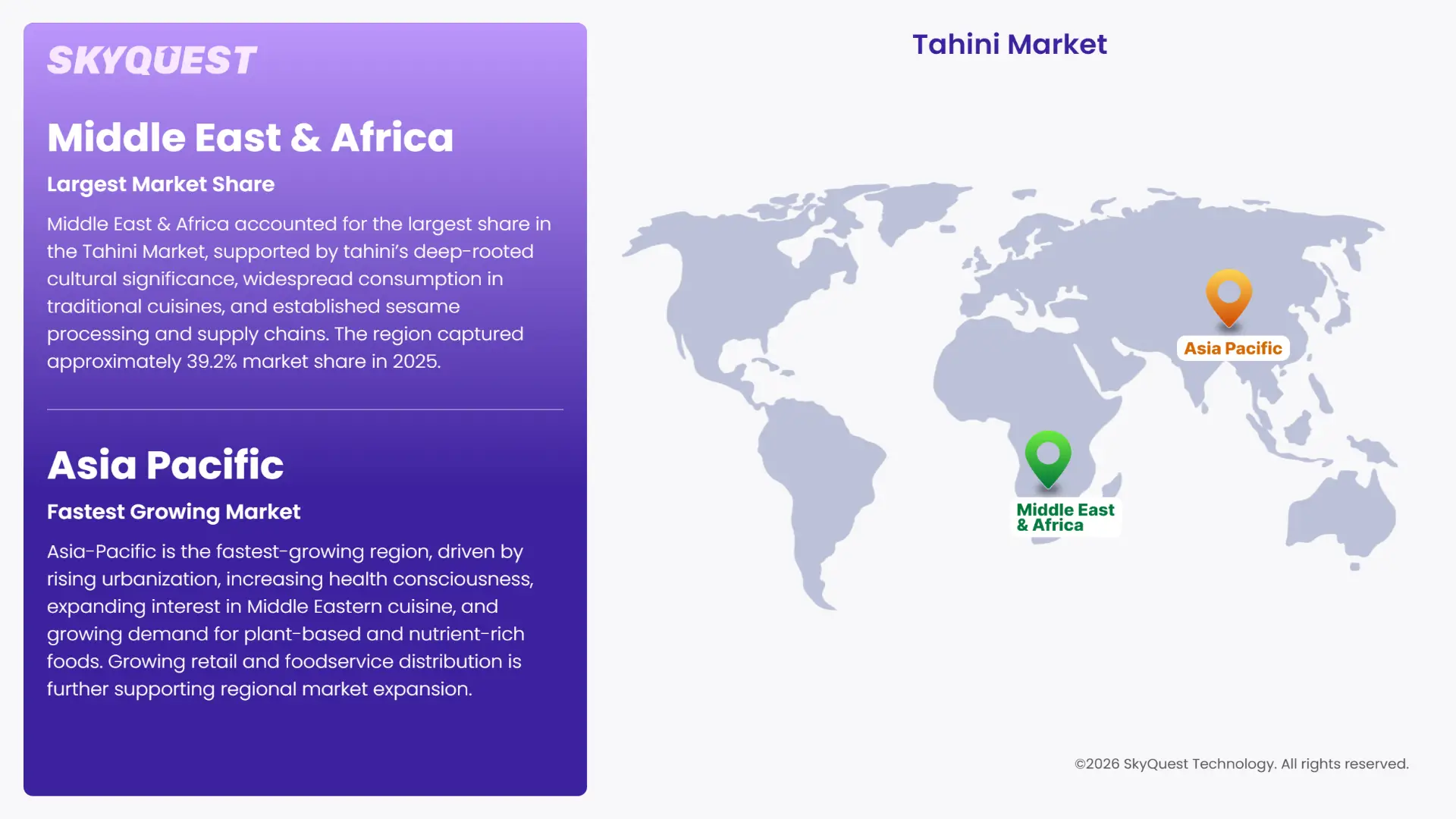
In 2024, the Middle Eastern & African tahini industry represented 63.3% of the total sales. Tahini's long history of culinary and cultural significance in Mediterranean and Middle Eastern cuisine is beneficial to this market. Tahini is a staple item that is often a part of both commercial and household kitchens as a salad dressing, side dish, flavor enhancer, and addition. Demand is additionally driven by its inclusion in popular traditional dishes such as hummus and baba ghanoush. Additionally, the strong production of sesame seeds in the region and increasing popularity of tahini cuisine in modern-day restaurants drive market expansion in this segment.
Mass sales of the Middle Eastern tahini market were achieved in Israel in 2024. Market growth is driven by the widespread use of tahini in Israeli fare made in the country. Demand is being driven by both the commercial foodservice and home-prepared markets due to the fact that tahini is a fundamental ingredient in Israeli food. Locally available sesame seeds are readily available, making it possible to ensure freshness and authenticity of the product. In addition, it is expected that the increasing availability of packaged tahini products in supermarkets and consumption of tahini on various meals, including breakfast and traditional foods, would continue to propel market growth.
As Mediterranean cuisine and the general retail availability of tahini products during 2024 pour into the European tahini market within a significant revenue share, the demand for global flavors, especially Middle Eastern and Mediterranean ones, will prove beneficial for the company in satisfying its consumers. To meet different consumer preferences, tahini products are easily available in various forms of packaging, including jars, tubes, and bottles. These include pure tahini, organic tahini, flavored tahini, and paste & spreads. The region's growing vegan and health-conscious population is also fueling growing demand, as tahini is known to be a healthy plant-based food.
Between 2025 and 2032, North America will experience the highest growth among all other regions. The multicultural population, a growing food service industry, and better access to ingredients of international cuisine like tahini are the primary drivers of the market. Availability of overseas restaurant chains and specialist food traders, along with increased consumer curiosity about Mediterranean and Middle Eastern flavors, all support industry growth. Regional growth is expected to be further driven by product innovations, including flavored tahini and convenient pack formats.
With increasing consumer demand for Middle Eastern flavors and increasing applications of tahini in fusion foods, Asia-Pacific is expected to lead the tahini market. Demand is growing due to the increasing urbanization of the region, increased disposable income, and emerging food retail sector. In addition, tahini's increasing popularity in household kitchens as well as in business dining areas is aided by the trend for plant-based and wholesome food. Local consumers are predicted to integrate tahini into their daily consumption as the need for global culinary awareness continues to rise, further reinforcing the country's market leadership. Demand for tahini products is also boosted by the growth of global players and regional manufacturing efforts.
To know more about the market opportunities by region and country, click here to
Buy The Complete Report
Increased Demand for Middle Eastern and Mediterranean Food
Rising Demand for Plant-Based and Nutrient-Rich Foods
Price Volatility of Sesame Seeds and Supply Chain Problems
Low Consumer Awareness in Developing Markets
Request Free Customization of this report to help us to meet your business objectives.
Leading firms operating in the intensely competitive global tahini market are focusing on innovative product development, offering organic goods, and expanding their networks of distributors. Large companies offering an extensive range of products with high regional reach, like Prince Tahina, Dipasa USA Inc., and Al Wadi Al Akhdar, dominate the market. The competition is still augmented by joint ventures, takeovers, and investments in innovative processing techniques. The proliferation of online shopping and the expansion of private-label products also contribute to the increasing competition in the sector.
Expansion of Flavored and Organic Tahini Varieties
Increasing Presence in Grocery and E-Commerce
SkyQuest’s ABIRAW (Advanced Business Intelligence, Research & Analysis Wing) is our Business Information Services team that Collects, Collates, Correlates, and Analyses the Data collected using Primary Exploratory Research backed by robust Secondary Desk research.
As per SkyQuest analysis, due to more demand for Mediterranean and Middle Eastern food, altering global palate tastes, and heightening health-conscious awareness, business value for tahini is predicted to expand constantly across the globe. The goodness of tahini due to it being plant-based as well as in various foods offers immense backing in the market. Market potential for organic, flavored, and ready-to-use tahini products keeps growing despite challenges such as supply chain limitations and fluctuating prices of sesame seeds. Strong demand exists in the regional markets like the Middle East, Europe, and North America, with the Asia-Pacific region set to dominate future growth. The future of the industry will be shaped by ongoing product innovation and market development.
| Report Metric | Details |
|---|---|
| Market size value in 2024 | USD 2.12 Billion |
| Market size value in 2033 | USD 3.29 Billion |
| Growth Rate | 5% |
| Base year | 2024 |
| Forecast period | 2026–2033 |
| Forecast Unit (Value) | USD Billion |
| Segments covered |
|
| Regions covered | North America (US, Canada), Europe (Germany, France, United Kingdom, Italy, Spain, Rest of Europe), Asia Pacific (China, India, Japan, Rest of Asia-Pacific), Latin America (Brazil, Rest of Latin America), Middle East & Africa (South Africa, GCC Countries, Rest of MEA) |
| Companies covered |
|
| Customization scope | Free report customization with purchase. Customization includes:-
|
To get a free trial access to our platform which is a one stop solution for all your data requirements for quicker decision making. This platform allows you to compare markets, competitors who are prominent in the market, and mega trends that are influencing the dynamics in the market. Also, get access to detailed SkyQuest exclusive matrix.
Table Of Content
Executive Summary
Market overview
Parent Market Analysis
Market overview
Market size
KEY MARKET INSIGHTS
COVID IMPACT
MARKET DYNAMICS & OUTLOOK
Market Size by Region
KEY COMPANY PROFILES
Methodology
For the Tahini Market, our research methodology involved a mixture of primary and secondary data sources. Key steps involved in the research process are listed below:
1. Information Procurement: This stage involved the procurement of Market data or related information via primary and secondary sources. The various secondary sources used included various company websites, annual reports, trade databases, and paid databases such as Hoover's, Bloomberg Business, Factiva, and Avention. Our team did 45 primary interactions Globally which included several stakeholders such as manufacturers, customers, key opinion leaders, etc. Overall, information procurement was one of the most extensive stages in our research process.
2. Information Analysis: This step involved triangulation of data through bottom-up and top-down approaches to estimate and validate the total size and future estimate of the Tahini Market.
3. Report Formulation: The final step entailed the placement of data points in appropriate Market spaces in an attempt to deduce viable conclusions.
4. Validation & Publishing: Validation is the most important step in the process. Validation & re-validation via an intricately designed process helped us finalize data points to be used for final calculations. The final Market estimates and forecasts were then aligned and sent to our panel of industry experts for validation of data. Once the validation was done the report was sent to our Quality Assurance team to ensure adherence to style guides, consistency & design.
Analyst Support
Customization Options
With the given market data, our dedicated team of analysts can offer you the following customization options are available for the Tahini Market:
Product Analysis: Product matrix, which offers a detailed comparison of the product portfolio of companies.
Regional Analysis: Further analysis of the Tahini Market for additional countries.
Competitive Analysis: Detailed analysis and profiling of additional Market players & comparative analysis of competitive products.
Go to Market Strategy: Find the high-growth channels to invest your marketing efforts and increase your customer base.
Innovation Mapping: Identify racial solutions and innovation, connected to deep ecosystems of innovators, start-ups, academics, and strategic partners.
Category Intelligence: Customized intelligence that is relevant to their supply Markets will enable them to make smarter sourcing decisions and improve their category management.
Public Company Transcript Analysis: To improve the investment performance by generating new alpha and making better-informed decisions.
Social Media Listening: To analyze the conversations and trends happening not just around your brand, but around your industry as a whole, and use those insights to make better Marketing decisions.
REQUEST FOR SAMPLE
 REQUEST FREE CUSTOMIZATION
Tahini Market size was valued at USD 2.12 Billion in 2024 and is poised to grow from USD 2.23 Billion in 2025 to USD 3.29 Billion by 2033, growing at a CAGR of 5% during the forecast period (2026–2033).
Key vendors in the Tahini Market include Al Wadi Al Akhdar, Halwani Bros. Co., Kevala, SESAJAL S.A. de C.V., Prince Tahina Ltd., Dipasa USA Inc., El Rashidi El Mizan, Carwari International Pty Ltd., Mounir Bissat Factories, Haitoglou Family Foods, Sunshine Foods, Ghandour Sons S.A.L., Seed + Mill, Soom Foods, and Arrowhead Mills.
The key driver of the Tahini Market is the growing global popularity of Middle Eastern and Mediterranean cuisine. Increasing consumption of hummus, baba ghanoush, falafel, salads, sauces, and other sesame-based foods, along with rising demand for plant-based and nutrient-rich ingredients, is further supporting market growth.
The key market trend in the Tahini Market is the increasing demand for clean-label, organic, and plant-based tahini products. Manufacturers are also introducing flavored and infused varieties, convenient squeeze packaging, and premium formulations to meet growing consumer interest in healthy, convenient, and globally inspired foods.
Middle East & Africa accounted for the largest share in the Tahini Market, driven by tahini’s deep-rooted cultural significance, widespread use in traditional dishes such as hummus and baba ghanoush, strong sesame supply chains, and established regional production.


Want to customize this report? This report can be personalized according to your needs. Our analysts and industry experts will work directly with you to understand your requirements and provide you with customized data in a short amount of time. We offer $1000 worth of FREE customization at the time of purchase.
Feedback From Our Clients


 USA (+1) 351-333-4748

