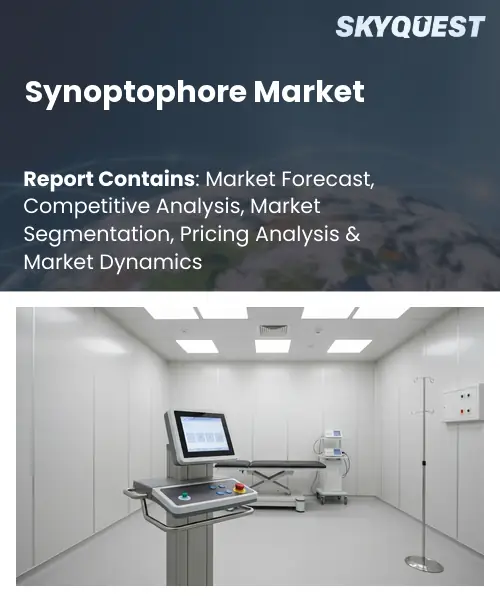
Synoptophore Market
Report ID: SQMIG35A3552
Report ID: SQMIG35A3552
[email protected]
USA +1 351-333-4748
Report ID:
SQMIG35A3552 |
Region:
Global |
Published Date: May, 2026
Pages:
157
|Tables:
142
|Figures:
78


Global Synoptophore Market size was valued at USD 82.50 Million in 2024 and is poised to grow from USD 87.38 Million in 2025 to USD 138.40 Million by 2033, growing at a CAGR of 5.9% during the forecast period (2026-2033).
The synoptophore market is mainly driven by the increasing number of people with binocular vision disorders and the enhanced screening of these disorders, which has increased the demand for both diagnostic and treatment devices to correct ocular misalignment. Synoptophores function as clinical devices to measure deviation, retrain binocular fusion and produce an effective amblyopia treatment; therefore, their use in clinical practice is important because their use allows for timely and effective intervention that improves visual prognosis, and reduces downstream care cost as compared to patients who delay treatment. In the past, the synoptophore market growth has transitioned from large mechanical devices in specialist offices to portable and digital enhanced devices, such as portable electronic synoptophores that were used in community vision screenings and for the care of patients in primary care practices.
Continuing this trend, the key factor affecting growth of the synoptophore marketplace is technology innovation that improves the accessibility and effectiveness of providing treatment to patients, subsequently creating a "virtuous cycle" of increased investment and expanded use of synoptophores in clinical care. With the introduction of digital interfaces, remote management capabilities and portable hardware, clinics and hospitals that use synoptophores as part of their patient care plans will be able to treat more patients with lower costs per case; therefore, leading to payers and public health programs expanding their reimbursement policies for this type of care, as well as additional screening and reimbursement initiatives. Consequently, there will be a significant increase in the number of schools, primary care van programs and community hospitals using synoptophores in their clinical care programs; thus creating a number of new opportunities for partners to work together to develop software solutions, training programs and/or bundled therapy and diagnostic services.
How is AI Enhancing Diagnostic Accuracy in the Synoptophore Market?
The use of AI is enhancing the precision of diagnosis within the synoptophore market trends through the combination of automated eye tracking analysis, adaptive testing, and clinical decision support. The three major purposes of a synoptophore (measuring fusion; identifying suppression; and measuring ocular deviation) are now being supported by machine learning to automatically detect gaze traces and dichoptic responses. The result is less examiner variability in measurements, resulting in measurements that are more repeatable. Also, virtual reality (VR) and cloud analytics integration is providing the means for standardized protocols and remote screenings at the clinics; assisting clinics and vision programs to provide a more consistent evaluation. Some examples of practical work include development of prototype VR synoptophores; reviewing the literature of the automated evaluation of strabismus for improved clinical readouts.
In June 2025, Technavio published an industry report indicating that AI led Synoptophores have driven product innovations by offering automated analyses and workflow solutions to increase diagnostic accuracy and improve clinic efficiency. This innovation will enhance growth in this market by increasing product standardization and productivity.
Market snapshot - (2026-2033)
Global Market Size
USD 82.5 Million
Largest Segment
Manual Synoptophores
Fastest Growth
Digital/Computerized Synoptophores
Growth Rate
5.92% CAGR
To get more insights on this market click here to Request a Free Sample Report
Global synoptophore market is segmented by type, application, end-user, distribution and region. Based on type, the market is segmented into manual synoptophores and digital/computerized synoptophores. Based on application, the market is segmented into strabismus assessment, binocular vision testing and amblyopia treatment. Based on end-user, the market is segmented into ophthalmology clinics, hospitals and research institutes. Based on distribution, the market is segmented into direct sales and distributors. Based on region, the market is segmented into North America, Europe, Asia Pacific, Latin America and Middle East & Africa.
The digital/computerized synoptophores segment will lead in the synoptophore market share owing to its provision of programmable testing protocols, accurate stimulus control with fully integrated patient data management leading to enhanced diagnostic conformity and clinician efficiency. The software-driven adaptability allows tailored assessments with easy documentation and thus drives the use of all forms of practitioners in this industry level. The ability to change algorithms and interface with electronic records fosters a positive feedback loop of clinical preference, procurement, and incremental innovation in the market.
However, manual synoptophores is emerging as the most rapidly expanding area due to demand for cost effective, robust devices suited to low resource settings and hands on clinical training. Simpler mechanics and familiar user interfaces encourage continued use where budget constraints and practical bedside flexibility prioritize proven technology, opening consistent procurement channels and service requirements that support sustained growth.
The main focus of the strabismus assessment segment is due to synoptophores' historical usage as a means of measuring ocular alignment and fusion range; thus, they represent the primary justification for clinical acquisition of synoptophore devices in the market today. The clinician uses established testing paradigms to develop both surgical and therapeutic strategies that have made the synoptophore a standard diagnostic tool. Because of this key clinical position, there is consistent demand for these devices, which drives product development features as well as ensures that enhancements to products prioritise precision in their measurements of alignment.
However, amblyopia treatment is witnessing the strongest growth momentum as synoptophores are repurposed for structured binocular therapies and home based training protocols enabled by software. Growing clinical interest in neuroplastic rehabilitation and device driven therapy pathways fuels demand for adaptive treatment modules, spurring manufacturers to expand features and create new care pathways that broaden market opportunities.
To get detailed segments analysis, Request a Free Sample Report
The sophisticated healthcare infrastructure in North America, there is an early acceptance of diagnostic and therapeutic ophthalmic technologies through the use of a Synoptophore. The clinical structure is extensive and there are many Established Eye Care Centers. In addition, there are numerous established procurement channels that allow for a wide variety of Synoptophore products' distribution. In North America, the vast majority of manufacturer/distributors have product availability and can offer custom, as well as, individualized service support. Collaboration between clinicians, academia, and industry has contributed to the continued development of device functionality and clinical protocols. The regulatory and reimbursement landscape, along with easy access to capital for hospitals and private practices, enables a reduction of the barrier to the acquisition of a Synoptophore. Specific focus on training programs and very high levels of clinician awareness continue to sustain the utilization of Synoptophore technology; whereas, integrated supply chains (e.g., delivery of supplies, etc.) help to ensure that Synoptophore products receive appropriate maintenance and after-market service, which contributes to the regional dominance in this market segment. In addition, the growing patient demand for complete visuomotor evaluations is driving ongoing investments in clinical assessments of the performance of these devices.
Synoptophore market outlook in the United States is shaped by a dense network of specialized ophthalmology centers and clinical research activity that fosters technology adoption. Manufacturers and distributors maintain close partnerships with major hospital systems and clinics, enabling comprehensive service and training offerings. Emphasis on advanced diagnostic protocols and clinician education drives routine use in amblyopia and binocular vision management. Market dynamics are reinforced by robust capital and established maintenance ecosystems.
Synoptophore market regional forecast in Canada has a unified public health system with regional eye care centres, which allow clinicians to access binocular vision/visualisation devices. The focus on value and service-based partnerships between suppliers and clinicians leads suppliers to supply high-quality durable equipment and provide technical support for their products. Professional education programs and regional collaborations help foster consistency in clinical pathways. Adoption of devices is facilitated through research collaborations and partnerships that support improving the customisation of the devices, as well as through stronger support for the sale of devices across the various national healthcare systems.
Europe is experiencing rapid expansion in the Synoptophore market driven by increasing clinical recognition of binocular vision disorders and coordinated efforts among healthcare providers, specialty societies, and manufacturers. Centralized reimbursement frameworks and evolving procurement practices encourage adoption of clinically validated technologies within both hospital ophthalmology departments and community eye care services. A strong manufacturing and distribution presence supports localized service and device customization, while academic centers and multicenter clinical collaborations generate evidence that informs guideline development. Growing training programs for orthoptists and ophthalmologists increase clinician comfort with device use. Market receptivity is further enhanced by targeted product strategies from vendors that align device features with European clinical pathways and by an interconnected supply chain that facilitates maintenance and aftermarket support.
Synoptophore market regional outlook in Germany its strong presence in the medical device manufacturing industry and a large number of specialized ophthalmic clinics, both of which facilitate and encourage the clinical usage of synoptophore devices. Eye care centers and hospitals work closely with manufacturers regarding the device evaluation process and customization, which allows for the integration of additional advanced features. There are specific reimbursement systems and procurement practices directing the purchase of durable equipment with the added benefit of local technical service/support. Finally, professional training and university based research programs contribute to building confidence for clinicians and facilitate incorporation of the synoptophore into treating patients with binocular vision problems.
Synoptophore market penetration in United Kingdom shows growing clinical adoption supported by collaboration between clinicians and device innovators. Health commissioning bodies and private providers favor technologies that enhance diagnostic precision and patient outcomes, leading to targeted procurement and service agreements. Professional networks and continuing education build clinician confidence in device use. Pilot initiatives and academic partnerships help generate clinical evidence and encourage wider integration across community and specialist eye care settings.
Synoptophore market analysis in France is transitioning from a specialty clinical application to an increasingly popular option as more clinicians become familiar with binocular vision treatments. In addition, recent distribution changes and procurement activities are making it easier for clinics to get the necessary equipment and technical support to conduct clinical studies/testing/validation, creating new opportunities for clinicians to assess the advantages of each device. There is also increasing collaboration between professional societies and training programs to support the development of new clinical guidelines and protocols. As academic institutions are actively involved in building data and experience through pilot programs, researchers will continue to support the use of this technology within their respective settings, which will ultimately lead to broad adoption in multiple locations across the country.
Asia Pacific is strengthening its position in the Synoptophore market through a combination of domestic technology development, expanding clinical capacity, and closer ties between manufacturers and healthcare institutions. Growing numbers of specialized eye care centers and rehabilitation programs increase demand for diagnostic and therapeutic binocular vision devices, while local manufacturing and electronics expertise enable cost effective device adaptation for regional needs. Cross border collaborations, academic partnerships, and pilot clinical initiatives support evidence generation and clinician training. Improved distribution networks and emerging service ecosystems reduce barriers to maintenance and aftermarket support. Strategic vendor investments in localization, clinician education, and product variants suited to diverse clinical settings are key factors advancing regional market presence. Integration with telehealth services and focus on pediatric amblyopia care further broaden clinical use.
Synoptophore industry in Japan is well-supported by innovative technology that allows for the simultaneous development of both diagnostic and therapeutic components of a medical device ecosystem. Research efforts at ophthalmic clinics and rehabilitation centres are developing device specifications based on traditional/local practice, and partnerships with manufacturers ensure that devices meet local clinical needs. Local clinicians are familiar with advanced technologies and receive ongoing training in how to use them in an integrated fashion between disciplines; thus, they will incorporate these tools into their practice. Distribution networks and supporting services are also instrumental in ensuring that there is no downtime for devices and that patients can receive care across urban health jurisdictions.
Synoptophore market in South Korea is supported by a dynamic technology sector and close collaboration between device developers and clinical specialists. Electronics and precision manufacturing capabilities enable adaptation of synoptophore hardware and software, while clinics adopt instruments for rehabilitation and pediatric vision care. Professional networks and continuing education promote clinician proficiency. Efficient distribution channels and responsive after sale service contribute to sustained device utilization across metropolitan and regional healthcare providers.
To know more about the market opportunities by region and country, click here to
Buy The Complete Report
Rising Prevalence Of Amblyopia
Technological Improvements In Devices
High Equipment Acquisition Costs
Limited Clinician Training Availability
Request Free Customization of this report to help us to meet your business objectives.
The competition in the global market of synoptophore is becoming more competitive as standard manufacturers are modernising existing analogue devices by replacing these devices with digital integrated systems and new entrants are offering virtual reality (VR) and software-based therapies to clinics are causing organisations to procure products based on being interoperable and have remote capabilities for treatment during clinic visits. Strategic activities, such as the acquisition of a vision health organisation by EssilorLuxottica in early 2023 and the recent launch of new devices by existing suppliers such as Nidek, demonstrate the impact M&A activity, partnerships and product innovation is having on redefining how clinical practitioners adopt new products.
Top Player’s Company Profile
Recent Developments in the Synoptophore Market
SkyQuest’s ABIRAW (Advanced Business Intelligence, Research & Analysis Wing) is our Business Information Services team that Collects, Collates, Correlates, and Analyses the Data collected by means of Primary Exploratory Research backed by robust Secondary Desk research. As per SkyQuest analysis, the global synoptophore market is propelled primarily by a rising prevalence of amblyopia and related binocular vision disorders coupled with expanded screening efforts that boost demand for diagnostic and therapeutic devices. The key restraint is high equipment acquisition costs that limit purchases by smaller clinics and low-resource settings. North America remains the dominating region thanks to advanced clinical infrastructure and strong manufacturer presence, while the dominating segment is digital and computerized synoptophores offering programmable protocols and integrated data workflows. A secondary driver is rapid technological innovation including AI, telehealth integration and portable solutions that improve accessibility and clinical efficiency.
| Report Metric | Details |
|---|---|
| Market size value in 2024 | USD 82.5 Million |
| Market size value in 2033 | USD 138.4 Million |
| Growth Rate | 5.92% |
| Base year | 2024 |
| Forecast period | (2026-2033) |
| Forecast Unit (Value) | USD Million |
| Segments covered |
|
| Regions covered | North America (US, Canada), Europe (Germany, France, United Kingdom, Italy, Spain, Rest of Europe), Asia Pacific (China, India, Japan, Rest of Asia-Pacific), Latin America (Brazil, Rest of Latin America), Middle East & Africa (South Africa, GCC Countries, Rest of MEA) |
| Companies covered |
|
| Customization scope | Free report customization with purchase. Customization includes:-
|
To get a free trial access to our platform which is a one stop solution for all your data requirements for quicker decision making. This platform allows you to compare markets, competitors who are prominent in the market, and mega trends that are influencing the dynamics in the market. Also, get access to detailed SkyQuest exclusive matrix.
Table Of Content
Executive Summary
Market overview
Parent Market Analysis
Market overview
Market size
KEY MARKET INSIGHTS
COVID IMPACT
MARKET DYNAMICS & OUTLOOK
Market Size by Region
KEY COMPANY PROFILES
Methodology
For the Synoptophore Market, our research methodology involved a mixture of primary and secondary data sources. Key steps involved in the research process are listed below:
1. Information Procurement: This stage involved the procurement of Market data or related information via primary and secondary sources. The various secondary sources used included various company websites, annual reports, trade databases, and paid databases such as Hoover's, Bloomberg Business, Factiva, and Avention. Our team did 45 primary interactions Globally which included several stakeholders such as manufacturers, customers, key opinion leaders, etc. Overall, information procurement was one of the most extensive stages in our research process.
2. Information Analysis: This step involved triangulation of data through bottom-up and top-down approaches to estimate and validate the total size and future estimate of the Synoptophore Market.
3. Report Formulation: The final step entailed the placement of data points in appropriate Market spaces in an attempt to deduce viable conclusions.
4. Validation & Publishing: Validation is the most important step in the process. Validation & re-validation via an intricately designed process helped us finalize data points to be used for final calculations. The final Market estimates and forecasts were then aligned and sent to our panel of industry experts for validation of data. Once the validation was done the report was sent to our Quality Assurance team to ensure adherence to style guides, consistency & design.
Analyst Support
Customization Options
With the given market data, our dedicated team of analysts can offer you the following customization options are available for the Synoptophore Market:
Product Analysis: Product matrix, which offers a detailed comparison of the product portfolio of companies.
Regional Analysis: Further analysis of the Synoptophore Market for additional countries.
Competitive Analysis: Detailed analysis and profiling of additional Market players & comparative analysis of competitive products.
Go to Market Strategy: Find the high-growth channels to invest your marketing efforts and increase your customer base.
Innovation Mapping: Identify racial solutions and innovation, connected to deep ecosystems of innovators, start-ups, academics, and strategic partners.
Category Intelligence: Customized intelligence that is relevant to their supply Markets will enable them to make smarter sourcing decisions and improve their category management.
Public Company Transcript Analysis: To improve the investment performance by generating new alpha and making better-informed decisions.
Social Media Listening: To analyze the conversations and trends happening not just around your brand, but around your industry as a whole, and use those insights to make better Marketing decisions.
REQUEST FOR SAMPLE
 REQUEST FREE CUSTOMIZATION
Global Synoptophore Market size was valued at USD 82.5 Million in 2024 and is poised to grow from USD 87.38 Million in 2025 to USD 138.4 Million by 2033, growing at a CAGR of 5.92% during the forecast period (2026-2033).
Competition in the global synoptophore market is intensifying as traditional manufacturers upgrade analog instruments with integrated digital platforms while new entrants bring VR and software first therapies to clinics, shifting procurement toward interoperability and remote-capable workflows. Strategic moves such as EssilorLuxottica’s 2023 acquisition of a vision health startup and recent device launches from established suppliers like Nidek demonstrate M&A, partnerships, and product innovation redefining clinical adoption. 'Clement Clarke International', 'Haag-Streit International', 'Topcon Corporation', 'Carl Zeiss Meditec', 'Oculus GmbH', 'Keeler Instruments (Halma)', 'Nidek Co. Ltd.', 'Luneau Technology', 'Vision Specialties', 'Bernell Corporation', 'Gulden Ophthalmics', 'Good-Lite Company', 'Stereo Optical Company', 'Innova Systems', 'Marco Optics', 'Hillson Opthalmic', 'Precision Vision', 'Grafton Optical', 'Richmond Products', 'Kawa Company'
Increasing prevalence of amblyopia and related binocular vision disorders has led clinicians to seek validated diagnostic and therapeutic devices such as synoptophores. As awareness among healthcare professionals grows, demand for tools that enable controlled ocular suppression testing and orthoptic training rises. This motivates investment in procurement by hospitals and eye clinics, supports manufacturer innovation, and encourages training programs that include synoptophore use, thereby creating a favorable environment for market expansion through broader clinical adoption and integration into standard care pathways.
Telehealth Access Expansion: Remote consultation models and home based care are expanding demand for synoptophores as clinicians seek tools that integrate with virtual eye clinics. Manufacturers are adapting devices for easier patient setup, enhanced remote monitoring, and asynchronous data sharing. This trend increases collaboration between primary care and ophthalmology, promotes decentralized pathways, and broadens screening reach into underserved communities. It also encourages development of simplified interfaces and mobile compatible software, enabling binocular vision assessment outside clinics and supporting continuity of care in practice.
Why does North America Dominate the Global Synoptophore Market? |@12


Want to customize this report? This report can be personalized according to your needs. Our analysts and industry experts will work directly with you to understand your requirements and provide you with customized data in a short amount of time. We offer $1000 worth of FREE customization at the time of purchase.
Feedback From Our Clients


 USA (+1) 351-333-4748

