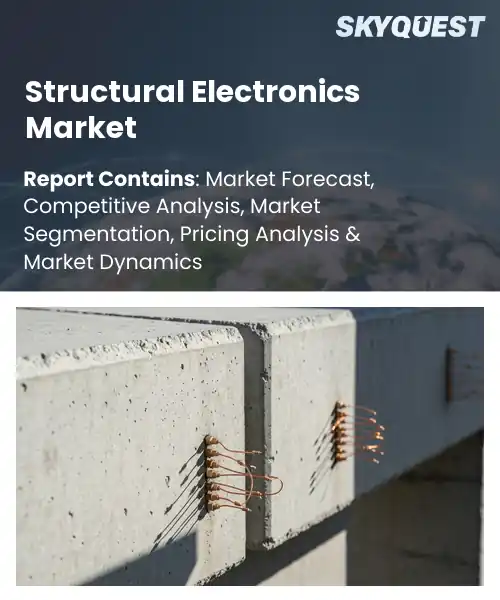
Structural Electronics Market
Report ID: SQMIG45K2314
Report ID: SQMIG45K2314
[email protected]
USA +1 351-333-4748
Report ID:
SQMIG45K2314 |
Region:
Global |
Published Date: June, 2026
Pages:
157
|Tables:
121
|Figures:
77


Global Structural Electronics Market size was valued at USD 2.1 Billion in 2024 and is poised to grow from USD 2.42 Billion in 2025 to USD 7.56 Billion by 2033, growing at a CAGR of 15.3% during the forecast period (2026-2033).
Structural electronics combines electronic capabilities onto load bearing components (panels; frames; chassis) creating smart surfaces that provide data. This is significant because it will reduce wiring; reduce weight; and allow for the remote monitoring of critical asset health. The key driver for this trend is aerospace’s requirement for weight savings and the need to monitor structures in place to prevent catastrophic failures. The first prototypes were developed in the 1990’s on satellite dish antennas but have moved into various commercial applications over the last decade, including aircraft wing skins; EV battery packs; and offshore wind turbine blades, illustrating the transition from laboratory proof of concept to producing at scale.
The second influential factor on the structural electronics industry is the expansion of the Internet of Things, which requires embedded sensors capable of withstanding large mechanical loads and connecting them to cloud infrastructure. As manufacturers want to incorporate intelligence without compromising the structure, investment is being made in conductive inks and additive processes that allow for printed circuit boards (PCBs) to be applied to laminated surfaces. This will lead to many new applications within infrastructure; for example, bridges with strain sensing skins may alert authorities to possible overloads prior to structural failure, thus reducing maintenance costs and extending the serviceability of the bridge. Consequently, funding for resilient transportation networks and automotive OEMs targeting predictive‑maintenance capabilities are accelerating market adoption worldwide.
How is AI-driven Automation Influencing Design And Cost Efficiency In The Structural Electronics Market?
Structural electronics are being transformed through an AI-based automation process that adds intelligence into the design cycle. The use of generative algorithms allows designers to develop layout patterns for circuits they will use to function as load bearing surfaces, as well as permitting them to calculate how much mechanical stress and how well the circuit performs from an electrical perspective simultaneously (using physics-based modelling tools). This will lead to a significant reduction in the number of physical prototypes, a reduction in development cycles and a reduction in the amount of material used. Designers now have the ability to generate thousands of variations on their designs overnight, enabling them to identify optimal configurations and geometries before tooling is developed.
Furthermore, this design approach will help reduce material costs, as the substrate (a composite material) used to make most electronic components will be standardised, eliminating custom-made housings for each component, and resulting in measurable savings across the entire supply chain. Manufacturers are reporting shorter timeframes for bringing products to market and a reduction in engineering resource requirements as a result of using AI in their product development processes.
In March of 2026, Flex unveiled their innovative polymer formulation platform that incorporates AI into the process of automating the development of composite resin properties to support unique structural functions in electronic circuits, massively reducing design iterations and material costs while enhancing load bearing capabilities. The system uses real-time simulation data to allow engineers to finalise product designs prior to performing expensive physical testing thereby speeding up product launches, particularly in the automotive and aerospace marketplaces.
Market snapshot - (2026-2033)
Global Market Size
USD 2.1 Billion
Largest Segment
Conductors and Interconnects
Fastest Growth
Optoelectronic Displays
Growth Rate
15.3% CAGR
To get more insights on this market click here to Request a Free Sample Report
Global structural electronics market is segmented by integrant type component, manufacturing processing technology, material chemistry type, system application vertical and region. Based on integrant type component, the market is segmented into Sensors and Antennas, Photovoltaics Layer, Energy Storage Devices, Optoelectronic Displays and Conductors and Interconnects. Based on manufacturing processing technology, the market is segmented into In-Mold Electronics, Additive Manufacturing and 3D Printing and Printing Methods. Based on material chemistry type, the market is segmented into Conductive Functional Inks, Base Structural Substrates and Encapsulation Protective Adhesives. Based on system application vertical, the market is segmented into Automotive Trim and Dashboards, Aerospace Airframe Smart Skins, Consumer Electronics Hardware, Healthcare Wearable Tech and Industrial Smart Automation. Based on region, the market is segmented into North America, Europe, Asia Pacific, Latin America and Middle East & Africa.
As the sensors and antennas segment of the structural electronics market continues to grow, it will continue to dominate due to its ability to both enable real-time data capture and allow for wireless communication directly within the structure. By integrating sensors and antennas into the structural component of a product there is no longer a need for separate wiring harnesses which simplifies the product architecture, reduces weight, and increases reliability. These characteristics are key for modern vehicles and aircraft. The focus of developers on miniaturizing and multi-functionality is further supporting their central position and driving widespread adoption across all applications for structural electronics. In addition to this broad functionality enabling new smart skin concepts and interactive consumer devices to emerge; the sensors and antennas also continue to hold strong leadership.
The photovoltaics layer is the next most rapidly expanding area of the structural electronics market. The ability to integrate renewable energy into structural parts will reduce the amount of external power required by the structure. The development of flexible solar films and the ability to print solar panels directly onto composite materials will allow for solar panels to generate energy wherever they are located. This will unlock significant new autonomous applications for solar panels on automotive exteriors and aerospace skins, helping to drive further momentum into the photovoltaics layer.
Mold electronics is the market segment leading the way in electronics because it combines electronic functionality directly into the polymer molding process and creates fully integrated parts with no need for secondary assembly operations. This allows for the elimination of connectors, increases durability and shortens supply chains. It also allows for lighter weight and more robust parts for the automotive interior and aerospace interior industries. The seamless combination of circuitry and structural material enables designers to create new solutions across the structural electronics ecosystem.
Another market segment that is growing most rapidly is additive manufacturing and 3D printing, which allows for building components using a layer by layer process with conductive inks and functional materials on a variety of complex geometries. This process creates custom fit smart components and accelerates prototyping cycles as well as allows for low volume production of differentiated products. Thus, these processes will continue to grow the market and create new opportunities for innovation in multiple verticals.
To get detailed segments analysis, Request a Free Sample Report
There's quite an impressive amount of innovative development regarding advanced materials and integrated design being carried out by the region due to the combination of strength in engineering through thousands of years of skilled engineering, an extensive base of manufacturing and support from local government in supporting these advances. Collaboration between semiconductor manufacturers, automotive manufacturers and consumer electronics develops and accelerates product development time while the large number of skilled engineers continue to develop the products. Additionally, the high focus on sustainability and lightweight manufacturing are allowing the adoption of structural electronic products in many areas such as transportation, aerospace and wearable technologies. Furthermore, the existence of major research institutions and a culture of rapid prototyping allow this region to develop global standards within this industry and capture early stage market opportunities, therefore reinforcing its global leadership position.
The Structural Electronics Market in Japan is primarily based on a long history of precision manufacturing technology and an extensive industrial base that provides high-value components. The collaborative networks formed between manufacturers of electronic and automotive original equipment manufacturers drive the incorporation of structural functionalities into new product development. The government policies and support for advanced manufacturing and technology transfer further enhance the collaborative networks, while the skilled engineering workforce promotes rapid development of new designs due to the high demands of the customers. This combination of resources maintains Japan’s global reputation for innovative structural electronic product solutions.
The structural electronics industry will be driven by significant investments in R&D and a vibrant semiconductor industry, both supporting new application development. Strong relationships between vendors of components and leading manufacturers of consumer devices facilitate the use of structural designs in portable electronic devices and smart devices. The increased emphasis on sustainability and the lightweight construction of consumer electronics also parallels global trends, leading to an increased use of multifunctional materials. South Korea’s superior industrial capability and forward-looking policy framework continue to support its competitiveness in the structural electronics market.
North America will benefit from a combination of innovative research projects, solid intellectual property protection, and a robust ecosystem of technology startups that are creating new uses for structural electronics in the defense, automotive, and consumer sectors. Public-private partnerships in funding prototype development encourage timely manufacturing, and the focus on using high-performance materials creates expanded functionality for structural components. The growing emphasis on sustainability and energy efficiency will create opportunities for the use in electric vehicles and renewable energy infrastructure. Additionally, North America possesses a well-established supply chain and commercialization culture, accelerating the rate of innovation into marketable products and enhancing the growth trajectory for the structural electronics market.
Structural Electronics Market in United States benefits from a vibrant R&D landscape and a dense concentration of technology firms that push the boundaries of material integration. Partnerships between defense contractors and academic institutions foster advanced prototypes for aerospace and automotive sectors. A supportive regulatory environment and access to venture capital accelerate commercialization, while a skilled labor pool drives efficient production. This combination sustains the United States’ leadership in pioneering structural electronic solutions.
Structural Electronics Market in Canada leverages strong research collaborations and a focus on sustainable engineering to advance multifunctional product development. Close cooperation between universities, government labs, and industry partners facilitates the adoption of lightweight, high‑strength materials in transportation and renewable energy projects. Emphasis on environmental responsibility guides design priorities, while a supportive innovation ecosystem encourages the scaling of emerging technologies. These factors collectively nurture Canada’s growing role in the structural electronics arena.
Europe reinforces its position through strategic investments in collaborative research programs, a commitment to high‑quality standards, and a diversified industrial base that spans automotive, aerospace, and consumer electronics. The region’s emphasis on circular economy principles drives the development of recyclable structural components, while robust policy frameworks incentivize sustainable design practices. Cross‑border partnerships among leading manufacturers and academic centers accelerate knowledge transfer and facilitate the creation of integrated solutions. Additionally, a focus on safety and regulatory compliance ensures that European products meet stringent performance criteria, enhancing global competitiveness.
Structural Electronics Market in Germany is anchored by a strong engineering tradition and a dense network of manufacturers that specialize in high‑precision components. Collaborative initiatives between automotive leaders and material scientists advance the integration of structural functionalities into vehicle designs. Emphasis on durability and performance aligns with industry expectations, while a commitment to sustainability promotes the use of innovative composites. This ecosystem supports Germany’s reputation as a leader in functional material technology.
Structural Electronics Market in United Kingdom benefits from a vibrant innovation hub that connects academic research with commercial application. Strong partnerships between technology parks and aerospace firms drive the development of lightweight structural solutions. Government incentives encourage investment in advanced manufacturing, while a focus on digital integration enhances product capabilities. This collaborative environment sustains the United Kingdom’s contribution to the evolving structural electronics landscape.
Structural Electronics Market in France draws on a blend of artistic design sensibility and technical expertise to create aesthetically and functionally advanced products. Close collaboration between luxury goods manufacturers and high‑tech suppliers fosters the use of structural components in unique applications. Emphasis on research excellence and sustainable practices drives material innovation, while supportive policies nurture start‑up growth. This combination positions France as an influential player in the market.
To know more about the market opportunities by region and country, click here to
Buy The Complete Report
Rising Demand For Compact Electronics
Adoption Of Advanced Packaging Technologies
High Cost Of Specialized Materials
Stringent Regulatory Compliance Requirements
Request Free Customization of this report to help us to meet your business objectives.
The structural electronics market is shaped by aggressive capital deployment and collaborative innovation, with firms leveraging large‑scale Series A rounds and university‑linked incubators to outpace rivals. Eridu’s $200 million Series A illustrates a funding‑driven push for advanced semiconductor platforms, while START.nano’s partnership with MIT.nano accelerates hard‑tech prototypes, both strategies intensifying competition and expanding application breadth across aerospace, automotive and construction sectors.
SkyQuest’s ABIRAW (Advanced Business Intelligence, Research & Analysis Wing) is our Business Information Services team that Collects, Collates, Correlates, and Analyses the Data collected by means of Primary Exploratory Research backed by robust Secondary Desk research.
As per SkyQuest analysis the global structural electronics market is accelerated by the rising demand for compact electronics that push OEMs to embed circuitry directly into load‑bearing parts, while the adoption of advanced packaging technologies such as system‑in‑package further fuels growth by increasing component density and simplifying assembly. The sensors and antennas segment leads the market because it provides real‑time data capture and wireless communication without extra wiring, and Asia Pacific dominates due to its strong engineering base and supportive policies. However, the high cost of specialized materials remains a restraint, limiting adoption in price‑sensitive segments despite the overall upbeat outlook.
| Report Metric | Details |
|---|---|
| Market size value in 2024 | USD 2.1 Billion |
| Market size value in 2033 | USD 7.56 Billion |
| Growth Rate | 15.3% |
| Base year | 2024 |
| Forecast period | (2026-2033) |
| Forecast Unit (Value) | USD Billion |
| Segments covered |
|
| Regions covered | North America (US, Canada), Europe (Germany, France, United Kingdom, Italy, Spain, Rest of Europe), Asia Pacific (China, India, Japan, Rest of Asia-Pacific), Latin America (Brazil, Rest of Latin America), Middle East & Africa (South Africa, GCC Countries, Rest of MEA) |
| Companies covered |
|
| Customization scope | Free report customization with purchase. Customization includes:-
|
To get a free trial access to our platform which is a one stop solution for all your data requirements for quicker decision making. This platform allows you to compare markets, competitors who are prominent in the market, and mega trends that are influencing the dynamics in the market. Also, get access to detailed SkyQuest exclusive matrix.
Table Of Content
Executive Summary
Market overview
Parent Market Analysis
Market overview
Market size
KEY MARKET INSIGHTS
COVID IMPACT
MARKET DYNAMICS & OUTLOOK
Market Size by Region
KEY COMPANY PROFILES
Methodology
For the Structural Electronics Market, our research methodology involved a mixture of primary and secondary data sources. Key steps involved in the research process are listed below:
1. Information Procurement: This stage involved the procurement of Market data or related information via primary and secondary sources. The various secondary sources used included various company websites, annual reports, trade databases, and paid databases such as Hoover's, Bloomberg Business, Factiva, and Avention. Our team did 45 primary interactions Globally which included several stakeholders such as manufacturers, customers, key opinion leaders, etc. Overall, information procurement was one of the most extensive stages in our research process.
2. Information Analysis: This step involved triangulation of data through bottom-up and top-down approaches to estimate and validate the total size and future estimate of the Structural Electronics Market.
3. Report Formulation: The final step entailed the placement of data points in appropriate Market spaces in an attempt to deduce viable conclusions.
4. Validation & Publishing: Validation is the most important step in the process. Validation & re-validation via an intricately designed process helped us finalize data points to be used for final calculations. The final Market estimates and forecasts were then aligned and sent to our panel of industry experts for validation of data. Once the validation was done the report was sent to our Quality Assurance team to ensure adherence to style guides, consistency & design.
Analyst Support
Customization Options
With the given market data, our dedicated team of analysts can offer you the following customization options are available for the Structural Electronics Market:
Product Analysis: Product matrix, which offers a detailed comparison of the product portfolio of companies.
Regional Analysis: Further analysis of the Structural Electronics Market for additional countries.
Competitive Analysis: Detailed analysis and profiling of additional Market players & comparative analysis of competitive products.
Go to Market Strategy: Find the high-growth channels to invest your marketing efforts and increase your customer base.
Innovation Mapping: Identify racial solutions and innovation, connected to deep ecosystems of innovators, start-ups, academics, and strategic partners.
Category Intelligence: Customized intelligence that is relevant to their supply Markets will enable them to make smarter sourcing decisions and improve their category management.
Public Company Transcript Analysis: To improve the investment performance by generating new alpha and making better-informed decisions.
Social Media Listening: To analyze the conversations and trends happening not just around your brand, but around your industry as a whole, and use those insights to make better Marketing decisions.
REQUEST FOR SAMPLE
 REQUEST FREE CUSTOMIZATION
Global Structural Electronics Market size was valued at USD 2.1 Billion in 2024 and is poised to grow from USD 2.42 Billion in 2025 to USD 7.56 Billion by 2033, growing at a CAGR of 15.3% during the forecast period (2026-2033).
The structural electronics market is shaped by aggressive capital deployment and collaborative innovation, with firms leveraging large‑scale Series A rounds and university‑linked incubators to outpace rivals. Eridu’s $200 million Series A illustrates a funding‑driven push for advanced semiconductor platforms, while START.nano’s partnership with MIT.nano accelerates hard‑tech prototypes, both strategies intensifying competition and expanding application breadth across aerospace, automotive and construction sectors. 'DuPont de Nemours Inc.', 'TactoTek Oy', 'Neotech AMC GmbH', 'Panasonic Corporation', 'Molex LLC', 'Toyochem Co. Ltd.', 'Henkel AG & Co. KGaA', 'Brewer Science Inc.', 'Pulse Electronics', 'Quad Industries', 'Jabil Inc.', 'Celanese Corporation', 'TTM Technologies Inc.', 'Canatu Oy', 'Agfa Gevaert NV', 'Sekisui Chemical Co. Ltd.', 'Yazaki Corporation', 'Tekscan Inc.', 'NASCENTechnology Inc.', 'Voxel8'
Manufacturers are responding to consumer preference for portable gadgets that integrate multiple functions while maintaining minimal size, prompting designers to incorporate structural electronics that replace traditional wiring. This shift reduces assembly complexity and enhances product reliability, encouraging OEMs to adopt integrated circuit solutions across a broader range of devices. Consequently, the market experiences expanded adoption as product developers seek to meet performance expectations without compromising form factor, fostering sustained revenue growth for component suppliers and design service providers globally continuously.
Advanced Materials Integration: The adoption of next‑generation materials such as graphene‑reinforced polymers, high‑performance alloys, and flexible conductive inks is reshaping structural electronics design. Manufacturers are embedding these substrates directly into chassis, enclosures, and load‑bearing components, enabling simultaneous mechanical strength and electronic functionality. This convergence reduces part counts, streamlines assembly, and opens new form‑factor possibilities for aerospace, automotive, and industrial equipment, driving a shift toward fully integrated, lighter, and more durable products. The trend also encourages collaborative R&D across material suppliers and electronics integrators, fostering standards that accelerate market adoption.
Why does Asia Pacific Dominate the Global Structural Electronics Market? |@12


Want to customize this report? This report can be personalized according to your needs. Our analysts and industry experts will work directly with you to understand your requirements and provide you with customized data in a short amount of time. We offer $1000 worth of FREE customization at the time of purchase.
Feedback From Our Clients


 USA (+1) 351-333-4748

