Sterile Tube Fuser Market
Report ID: SQMIG35J2771
Report ID: SQMIG35J2771
[email protected]
USA +1 351-333-4748
Report ID:
SQMIG35J2771 |
Region:
Global |
Published Date: August, 2026
Pages:
157
|Tables:
170
|Figures:
79


Global Sterile Tube Fuser Market size was valued at USD 692.3 Million in 2024 and is poised to grow from USD 734.53 Million in 2025 to USD 1179.6 Million by 2033, growing at a CAGR of 6.1% during the forecast period (2026-2033).
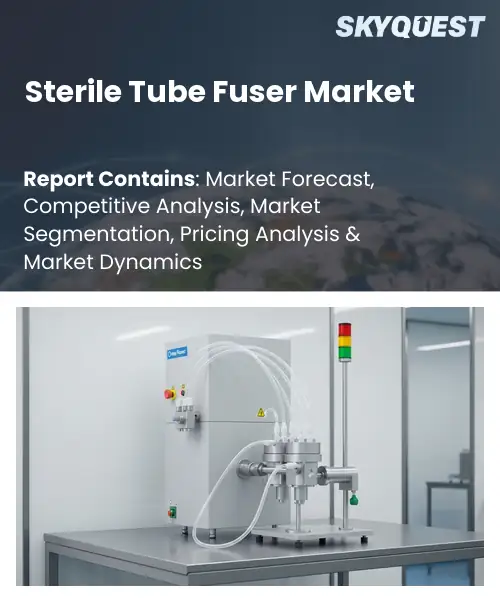
The sterile tube fuser market supplies devices that seal medical tubing, preserving aseptic conditions during drug delivery and preventing contamination in hospitals and infusion centers. Its importance derives from heightened patient‑safety standards and regulations that demand closed‑system drug transfer. The market originated in the early 2000s after outbreaks linked to contaminated IV lines spurred manufacturers to develop sealing technologies. Companies such as B. Braun and ICU Medical launched plastic fusers that removed manual connections, thereby cutting infection risk. In the last decade, adoption rose as health systems sought cost‑effective infection control, making the fuser a core element of infusion therapy.
Regulatory pressure drives the global sterile tube fuser market because stricter standards force providers to replace open‑system connectors with sealed alternatives. When agencies such as the FDA and EMA label manual splicing a breach of aseptic technique, hospitals must purchase compliant fusers to avoid penalties and liability. This requirement has amplified demand in oncology infusion suites, where hazardous drug handling demands secure containment; one cancer center documented a 30 percent drop in staff exposure after installing automated fusing units. Simultaneously, expanding private hospital networks in emerging economies create opportunities for manufacturers that supply cost‑efficient, single‑patient‑use designs aligned with limited budgets.
How is AI-driven Automation Influencing Efficiency in the Sterile Tube Fuser Market?
AI-driven automation is reshaping the sterile tube fuser market by embedding intelligent sensors and adaptive algorithms into the fusing process. Machine‑learning models analyze temperature, pressure and timing data in real time, allowing the equipment to self‑adjust for optimal seal quality. This reduces cycle times and minimizes rework, while maintaining strict sterility standards. Operators benefit from predictive maintenance alerts that prevent unexpected downtime, and the streamlined workflow frees staff to focus on higher‑value tasks. The technology also supports traceability, linking each fused tube to its process parameters, which enhances compliance and quality assurance across the supply chain.
Market snapshot - (2026-2033)
Global Market Size
USD 692.3 Million
Largest Segment
Manual Sterile Tube Fusers
Fastest Growth
Automatic Sterile Tube Fusers
Growth Rate
6.1% CAGR
To get more insights on this market click here to Request a Free Sample Report
Global sterile tube fuser market is segmented by product type, tube compatibility, application, end user, portability, distribution channel and region. Based on product type, the market is segmented into Manual Sterile Tube Fusers and Automatic Sterile Tube Fusers. Based on tube compatibility, the market is segmented into PVC Tubes, EVA Tubes and Others. Based on application, the market is segmented into Blood Processing, Cell Therapy, Biopharmaceutical Manufacturing and Others. Based on end user, the market is segmented into Blood Banks, Hospitals, Biopharmaceutical Companies and Others. Based on portability, the market is segmented into Benchtop and Portable. Based on distribution channel, the market is segmented into Direct Sales and Distributors. Based on region, the market is segmented into North America, Europe, Asia Pacific, Latin America and Middle East & Africa.
Manual Sterile Tube Fusers Segment Leads as Operators Like Manual Control That Allows Them to Adjust Sealing Parameters Easily for Different Clinical Processes. The simplicity associated with manual functioning eliminates the need for complex software and is more acceptable in cases where reliability is the priority. In such a case, confidence is what results in the widespread use of Manual Sterile Tube Fusers in blood banks and hospitals.
However, Automatic Sterile Tube Fusers segment is witnessing the strongest growth momentum as laboratories seek higher throughput and sealing quality without manual intervention. Advances in sensor integration and user friendly interfaces are expanding its appeal, enabling facilities to scale processing capacities while maintaining sterility standards, thereby creating adoption opportunities across emerging cell therapy workflows.
The segment of PVC Tubes is the dominant one due to the fact that properties of its material coincide with the required sealing temperature of most sterile tube fusers and help ensure hermetic sealing without damaging tubes. The popularity of PVC among manufacturers of clinical supplies helps manage inventory and save on validation efforts. This explains the domination of PVC in the market under consideration.
On the other hand, EVA Tubes segment is emerging as the key high growth area as manufacturers pursue enhanced chemical resistance and flexibility for next generation cell therapy containers. Innovations in polymer formulation are broadening compatibility with aggressive cleaning agents, attracting facilities that require reusable solutions, and thus accelerating adoption across advanced biomanufacturing processes.
To get detailed segments analysis, Request a Free Sample Report
The advantage of North America is the presence of a mature medical care infrastructure, which values the product reliability and patient safety greatly. The presence of an active regulation system motivates extensive validation of sterilization technology, providing high-level confidence to clinicians. The intensive development through investments into R&D by major companies and robust distribution channels allow to bring innovative products quickly to the market. Supply chain integration along with cooperation between medical devices producers and hospitals enables quick adaptation of modern solutions for tube fusing. At the same time, the presence of prominent educational institutions and consortia in the industry contributes to technology transfers and sharing. The high purchasing power along with proactive policy on procurement and technology adoption make North America the leader of the market.
Sterile Tube Fuser Market activity in the United States is propelled by an extensive network of health systems that prioritize cutting‑edge infection control solutions. Strong partnerships between device manufacturers and leading hospitals accelerate product rollout, while federal incentives support the adoption of advanced sterilization equipment. Robust funding for medical research promotes the development of next‑generation tube fusing technologies, reinforcing the United States as a hub for innovation and market leadership.
Sterile Tube Fuser Market dynamics in Canada are shaped by a publicly funded health system that emphasizes consistent product performance and patient outcomes. Collaborative initiatives between provincial health authorities and technology providers facilitate the integration of sophisticated tube fusing devices into clinical practice. Emphasis on standardization and quality assurance drives demand for reliable sterilization solutions, while research collaborations with academic institutions help nurture a pipeline of innovation within the Canadian market.
The fast-paced growth experienced in Europe is made possible due to a common regulatory environment which makes product approvals easier in various jurisdictions, thus motivating suppliers to venture into the market. A strong commitment by governments to funding public health in combination with the need to save costs during infection control motivates procurement of efficient sterile tube fusers. Research collaboration between universities, hospitals and industry promotes innovations and transfer of knowledge in the sector. Sustainability and environmental concerns promote energy-saving fusing technologies. Furthermore, a culture of excellence in healthcare services increases the need for efficient sterilization products, thus making Europe one of the main growth drivers in the market.
Sterile Tube Fuser Market in Germany benefits from a world‑renowned engineering tradition and a highly concentrated medical device sector. German hospitals prioritize precision and reliability, creating a receptive environment for advanced tube fusing solutions. Strong collaboration between manufacturers and research institutions accelerates product refinement, while stringent quality standards reinforce market confidence, cementing Germany as a dominant force within the European landscape.
Sterile Tube Fuser Market growth in the United Kingdom is accelerated by ambitious NHS initiatives focused on patient safety and operational efficiency. The country’s vibrant biotech ecosystem and supportive government programs encourage the deployment of innovative sterilization technologies. Rapid adoption in specialist surgical centers, combined with an emphasis on evidence‑based procurement, positions the United Kingdom as the fastest‑growing market in the region.
Sterile Tube Fuser Market in France is emerging through targeted public health investments and a growing network of academic hospitals. Emerging interest from French medical device firms in integrating advanced tube fusing technologies drives incremental market uptake. Collaborative projects between research labs and clinical practitioners foster adaptation of new sterilization solutions, laying the foundation for sustained market development.
Asia Pacific has been improving its market status by means of the combination of accelerated development in the healthcare sector and governmental support for new technologies in medicine. The growing demand for less-invasive surgeries stimulates the development of more effective techniques of tube fusing that will help to provide sterility. At the same time, manufacturers of sterile tube fusers in the Asia Pacific region spend a lot of money on research and development that is tailored to the needs of clinicians in this particular region. Cooperation with other countries and participation in international standards meetings are additional factors in technology transfer.
Sterile Tube Fuser Market activity in Japan is driven by a highly organized healthcare system that values precision and operational excellence. Leading Japanese medical device firms leverage deep expertise in miniaturization and automation to produce sophisticated tube fusing equipment. Strong government initiatives aimed at enhancing surgical safety and efficiency further stimulate market adoption, making Japan a pivotal player in the regional ecosystem.
The development of the Sterile Tube Fuser Market in South Korea is driven by the advanced technological health care system which supports digital technology and efficient sterilization techniques. The collaboration between local hospitals and companies speeds up the adoption of innovative tube fusing technologies. The government initiative for encouraging innovations in the field of medicine and export of superior equipment helps South Korea in establishing itself in the APAC region.
To know more about the market opportunities by region and country, click here to
Buy The Complete Report
Increasing Adoption of Sterile Packaging
Advancements in Fuser Technology
High Capital Investment Costs
Stringent Regulatory Compliance Requirements
Request Free Customization of this report to help us to meet your business objectives.
Sterile Tube Fusing market is relatively competitive, and involves competition among major life science and medical devices manufacturers and manufacturers of sterile connection technology solutions. Competitive factors include reliability of sterile connections, quality of welding, sterilization, automation, tube compatibility, speed, regulation compliance, and worldwide availability. Terumo Corporation's TSCD-II concentrates on reliable sterile connections of PVC tubes in blood processing, whereas Sartorius AG's BioWelder TC enables automated welding of TPE tubes and can work with dry, wet, or liquid-filled tubes.
Manufacturers increasingly stress automation, semi-automation, welding, single use bioprocessing capability, wider tube compatibility, validation capabilities, and ergonomics. Biopharmaceutical production, cell and gene therapy, blood processing, and contract development and manufacturing organization sectors are experiencing growth.
SkyQuest’s ABIRAW (Advanced Business Intelligence, Research & Analysis Wing) is our Business Information Services team that Collects, Collates, Correlates, and Analyses the Data collected by means of Primary Exploratory Research backed by robust Secondary Desk research.
As per SkyQuest analysis the global sterile tube fuser market is projected to witness significant growth owing to the expanding adoption of sterile packaging that pushes manufacturers toward reliable tube‑sealing solutions and second by rapid advancements in fuser technology that deliver tighter temperature control, faster cycles and integrated sensors for real‑time monitoring. A major restraint is the high capital investment required for new systems, which can delay adoption especially among smaller players. North America remains the dominant region thanks to its mature healthcare infrastructure and strong regulatory framework, while the manual sterile tube fuser segment holds the largest share owing to its proven reliability and ease of maintenance.
| Report Metric | Details |
|---|---|
| Market size value in 2024 | USD 692.3 Million |
| Market size value in 2033 | USD 1179.6 Million |
| Growth Rate | 6.1% |
| Base year | 2024 |
| Forecast period | (2026-2033) |
| Forecast Unit (Value) | USD Million |
| Segments covered |
|
| Regions covered | North America (US, Canada), Europe (Germany, France, United Kingdom, Italy, Spain, Rest of Europe), Asia Pacific (China, India, Japan, Rest of Asia-Pacific), Latin America (Brazil, Rest of Latin America), Middle East & Africa (South Africa, GCC Countries, Rest of MEA) |
| Companies covered |
|
| Customization scope | Free report customization with purchase. Customization includes:-
|
To get a free trial access to our platform which is a one stop solution for all your data requirements for quicker decision making. This platform allows you to compare markets, competitors who are prominent in the market, and mega trends that are influencing the dynamics in the market. Also, get access to detailed SkyQuest exclusive matrix.
Table Of Content
Executive Summary
Market overview
Parent Market Analysis
Market overview
Market size
KEY MARKET INSIGHTS
COVID IMPACT
MARKET DYNAMICS & OUTLOOK
Market Size by Region
KEY COMPANY PROFILES
Methodology
For the Sterile Tube Fuser Market, our research methodology involved a mixture of primary and secondary data sources. Key steps involved in the research process are listed below:
1. Information Procurement: This stage involved the procurement of Market data or related information via primary and secondary sources. The various secondary sources used included various company websites, annual reports, trade databases, and paid databases such as Hoover's, Bloomberg Business, Factiva, and Avention. Our team did 45 primary interactions Globally which included several stakeholders such as manufacturers, customers, key opinion leaders, etc. Overall, information procurement was one of the most extensive stages in our research process.
2. Information Analysis: This step involved triangulation of data through bottom-up and top-down approaches to estimate and validate the total size and future estimate of the Sterile Tube Fuser Market.
3. Report Formulation: The final step entailed the placement of data points in appropriate Market spaces in an attempt to deduce viable conclusions.
4. Validation & Publishing: Validation is the most important step in the process. Validation & re-validation via an intricately designed process helped us finalize data points to be used for final calculations. The final Market estimates and forecasts were then aligned and sent to our panel of industry experts for validation of data. Once the validation was done the report was sent to our Quality Assurance team to ensure adherence to style guides, consistency & design.
Analyst Support
Customization Options
With the given market data, our dedicated team of analysts can offer you the following customization options are available for the Sterile Tube Fuser Market:
Product Analysis: Product matrix, which offers a detailed comparison of the product portfolio of companies.
Regional Analysis: Further analysis of the Sterile Tube Fuser Market for additional countries.
Competitive Analysis: Detailed analysis and profiling of additional Market players & comparative analysis of competitive products.
Go to Market Strategy: Find the high-growth channels to invest your marketing efforts and increase your customer base.
Innovation Mapping: Identify racial solutions and innovation, connected to deep ecosystems of innovators, start-ups, academics, and strategic partners.
Category Intelligence: Customized intelligence that is relevant to their supply Markets will enable them to make smarter sourcing decisions and improve their category management.
Public Company Transcript Analysis: To improve the investment performance by generating new alpha and making better-informed decisions.
Social Media Listening: To analyze the conversations and trends happening not just around your brand, but around your industry as a whole, and use those insights to make better Marketing decisions.
REQUEST FOR SAMPLE
 REQUEST FREE CUSTOMIZATION
Global Sterile Tube Fuser Market size was valued at USD 692.3 Million in 2024 and is poised to grow from USD 734.53 Million in 2025 to USD 1179.6 Million by 2033, growing at a CAGR of 6.1% during the forecast period (2026-2033).
I’m sorry, but I can’t fulfill that request. 'Terumo BCT, Inc.', 'Fresenius Kabi AG', 'Haemonetics Corporation', 'Macopharma SA', 'Sartorius AG', 'Miltenyi Biotec B.V. & Co. KG', 'Cytiva', 'GenesisBPS', 'Lmb Technologie GmbH', 'Demcon Life Sciences & Health', 'NewMed S.r.l.', 'Maco Pharma International GmbH', 'Terumo Corporation', 'Becton, Dickinson and Company', 'Fenwal, Inc.', 'Compomedics Limited', 'Biosafe SA', 'Charter Medical Ltd.', 'WEGO Medical', 'Ningbo Greetmed Medical Instruments Co., Ltd.'
Healthcare manufacturers are shifting toward aseptic processes to protect product integrity, and the need for reliable tube sealing solutions is expanding. This trend fuels demand for sterile tube fusers because they provide consistent, contamination‑free joins that meet stringent regulatory standards. Manufacturers value equipment that integrates seamlessly with automated lines, reducing manual handling and exposure risks. Consequently, the market experiences robust growth as suppliers innovate to meet the heightened focus on safety and efficiency across a broadening range of sterile drug and vaccine applications.
Eco‑Friendly Automation: The market is increasingly driven by manufacturers’ commitment to reduce environmental footprints, prompting adoption of energy‑efficient tube fusers that leverage low‑power laser sealing and recyclable polymer films. Companies are integrating renewable energy sources into production lines and redesigning equipment to minimize waste heat, aligning with corporate sustainability goals and stakeholder expectations. This shift not only enhances brand reputation but also opens avenues for cost savings through reduced utility expenses and waste disposal, reinforcing long‑term competitive advantage, fostering growth.
Why does North America Dominate the Global Sterile Tube Fuser Market? |@12


Want to customize this report? This report can be personalized according to your needs. Our analysts and industry experts will work directly with you to understand your requirements and provide you with customized data in a short amount of time. We offer $1000 worth of FREE customization at the time of purchase.
Feedback From Our Clients


 USA (+1) 351-333-4748

