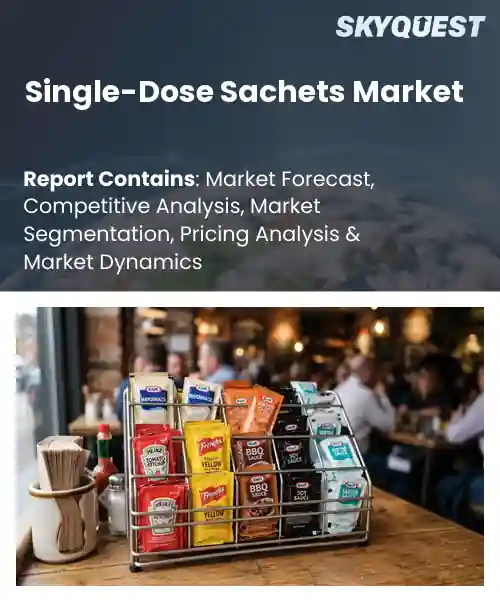
Single-Dose Sachets Market
Report ID: SQMIG15H2369
Report ID: SQMIG15H2369
[email protected]
USA +1 351-333-4748
Report ID:
SQMIG15H2369 |
Region:
Global |
Published Date: November, 2026
Pages:
157
|Tables:
122
|Figures:
77


Global Single-Dose Sachets Market size was valued at USD 8.2 Billion in 2024 and is poised to grow from USD 8.68 Billion in 2025 to USD 13.63 Billion by 2033, growing at a CAGR of 5.8% during the forecast period (2026-2033).
The global single‑dose sachet market comprises pre‑measured packaging solutions for liquids, powders and semi‑solids used in food, personal care and pharmaceuticals. Its significance stems from the ability to deliver precise servings while minimizing waste, a feature that appeals to consumers and sustainability‑driven brands alike. Historically, the market emerged in the late 1990s as producers of powdered drink mixes adopted sachets to extend shelf life and reduce transportation volume. Over the past two decades, adoption accelerated in emerging economies where urbanization and limited refrigeration drive demand for single‑use formats, exemplified by instant coffee sachets in India and sachet‑packed shampoo in Nigeria. Building on this foundation, the principal growth engine for the global single‑dose sachet market is the convergence of convenience culture with stringent hygiene expectations, especially in populated regions. As consumers gravitate toward on‑the‑go consumption, manufacturers respond by expanding sachet lines for nutritional supplements, cleaning agents, and therapeutic drugs, thereby widening the addressable base. For instance, a multinational nutrition company introduced vitamin‑C sachets tailored to school‑lunch programs in Brazil, which boosted product penetration while reducing dosage errors. This cause‑and‑effect loop triggers investment in advanced barrier films and automated filling equipment, creating opportunities for packaging innovators and reinforcing the market’s upward trajectory.
How is AI-driven automation reshaping the single-dose sachets market?
AI driven automation is transforming the single dose sachet segment by linking predictive analytics with high speed filling equipment. Manufacturers now use machine vision to detect product consistency, adjust dosing in real time and reduce waste. The technology also streamlines line changeovers, allowing multiple formulas to run on the same line without manual recalibration. As consumer demand for convenient, portion controlled nutrition grows, producers rely on AI to maintain quality while scaling output. Real world examples include smart dosing modules that learn from each batch and robotic palletizers that coordinate with inventory systems, creating a seamless end to end flow.Amcor March 2024, launched an AI driven sachet filling line that automatically calibrates dosage and monitors seal integrity, cutting changeover time and boosting throughput. This innovation illustrates how intelligent automation accelerates production efficiency and supports market expansion. It also enables quality feedback that reduces scrap and meets consumer expectations for safety and consistency.
Market snapshot - (2026-2033)
Global Market Size
USD 8.2 Billion
Largest Segment
Plastic Films
Fastest Growth
Paper-Based Laminates
Growth Rate
5.8% CAGR
To get more insights on this market click here to Request a Free Sample Report
Global single-dose sachets market is segmented by material type, product type, application, end user and region. Based on material type, the market is segmented into Plastic Films, Paper-Based Laminates, Aluminum Foil Laminates and Other Packaging Materials. Based on product type, the market is segmented into Liquid Sachets, Powder Sachets, Granule Sachets and Gel & Paste Sachets. Based on application, the market is segmented into Food & Beverages, Pharmaceuticals, Cosmetics & Personal Care, Household & Cleaning Products and Other Applications. Based on end user, the market is segmented into Food & Beverage Manufacturers, Pharmaceutical Companies, Personal Care Manufacturers and Household Product Manufacturers. Based on region, the market is segmented into North America, Europe, Asia Pacific, Latin America and Middle East & Africa.
Plastic films segment dominates because its lightweight nature and excellent barrier properties meet the core demand for convenience and product integrity in single dose sachets. Manufacturers favor plastic films for easy sealing, high speed processing, and cost efficiency, which collectively streamline production and reduce waste. These attributes align with consumer expectations for portable, tamper evident packaging, reinforcing plastic films as the preferred material across diverse applications and supply chain scenarios.
However, aluminum foil laminates segment is the most rapidly expanding because rising demand for premium protection and shelf life extension drives its adoption in high value products. Its superior oxygen and moisture barrier fosters trust for sensitive formulations, encouraging innovators to explore new sachet formats and unlocking growth opportunities for manufacturers today.
Liquid sachets segment dominates because it aligns seamlessly with consumer preference for ready to drink convenience and enables rapid filling processes that boost manufacturing efficiency. The fluid nature allows precise dosage, easy consumption, and compatibility with a range of beverages and nutraceuticals. These advantages reduce handling complexity, enhance product appeal, and support distribution networks, cementing liquid sachets as the cornerstone of single dose packaging across multiple market categories and consumer segments.
On the other hand, gel & paste sachets segment is the most rapidly expanding because demand for cosmetics and medical topicals fuels its growth. Its viscous texture permits innovative delivery of active ingredients, enhancing user experience and therapeutic efficacy. This creates new product avenues and drives manufacturers to invest in specialized filling technologies.
To get detailed segments analysis, Request a Free Sample Report
Asia Pacific leads the market thanks to a blend of high consumer acceptance of convenient dosing formats and advanced manufacturing ecosystems. The region’s extensive supply chains enable rapid scaling of sachet production, while local consumer habits favor trial sizes and travel‑friendly packaging. Strong emphasis on sustainable packaging drives innovation in recyclable and biodegradable materials, supported by regulatory encouragement. Major consumer‑goods companies invest heavily in research and development, creating differentiated sachet solutions that meet diverse lifestyle needs. Together these factors create a virtuous cycle of demand and supply excellence that underpins the region’s leadership.
Single-Dose Sachets Market in Japan benefits from a sophisticated consumer base that values precision dosing and premium packaging. Local manufacturers excel in high‑quality material engineering, ensuring product integrity. Retail channels ranging from convenience stores to online platforms provide extensive distribution. Health‑focused trends and an aging population create demand for easy‑to‑use formats, while strong environmental standards drive innovation in recyclable sachet designs. Manufacturers also collaborate with consumer‑goods firms to tailor sachet sizes that match lifestyle needs, reinforcing market resilience.
Single-Dose Sachets Market in South Korea thrives on a tech‑savvy consumer segment that embraces convenience and rapid product adoption. Domestic packaging firms lead in advanced barrier technologies, supporting product stability. Strong distribution through hypermarkets and digital platforms accelerates reach. Growing interest in personal care and nutrition supplements fuels sachet usage, while government initiatives encouraging eco‑friendly packaging stimulate development of biodegradable solutions. Collaborative efforts between multinational brands and local innovators create tailored offerings that resonate with lifestyle trends.
Europe’s expansion is propelled by stringent regulations that prioritize consumer safety and sustainable packaging, prompting firms to adopt single‑dose formats. High awareness of dosage precision in health and beauty fuels preference for sachet solutions. Leading economies invest in research that merges convenience with environmental stewardship, yielding biodegradable and recyclable sachets. Robust retail networks, including specialty stores and e‑commerce platforms, ensure widespread availability. Collaborative industry clusters across the continent foster shared standards and innovation pipelines, reinforcing Europe’s reputation as a hub for premium, responsibly packaged products.
Single-Dose Sachets Market in Germany is anchored by a strong engineering base that delivers high‑performance packaging materials. Consumer demand for precise dosing in pharmaceuticals and personal care drives growth. Retail environments ranging from drugstores to online marketplaces ensure broad distribution. Environmental regulations motivate manufacturers to pursue recyclable and compostable sachet options, positioning Germany as a benchmark for sustainable single‑dose solutions. Partnerships between research institutions and industry accelerate technology adoption.
Single-Dose Sachets Market in United Kingdom experiences rapid uptake due to a dynamic consumer culture that values convenience and trialability. Growth is amplified by aggressive e‑commerce expansion, enabling quick access to new product formats. Health‑oriented trends and on‑the‑go lifestyles boost demand for portable sachet offerings. Regulatory emphasis on waste reduction drives innovation in minimal‑plastic and reusable sachet designs. Collaborative initiatives between startups and established brands foster agile product development.
Single-Dose Sachets Market in France is emerging as environmentally conscious consumers seek reduced‑waste packaging alternatives. Local manufacturers focus on developing biodegradable film technologies that align with national sustainability goals. Gourmet and beauty sectors adopt sachet formats to provide sample experiences, supporting brand discovery. Retail channels such as boutique stores and online platforms facilitate niche product placement. Government incentives for circular economy practices encourage investment in recyclable sachet infrastructure, nurturing market momentum.
North America strengthens its position through a convergence of consumer demand for personalized, on‑the‑go solutions and robust innovation ecosystems that refine sachet technology. Market participants leverage advanced material science to enhance barrier performance, extending product shelf life. Widespread retail presence, from mass‑market chains to specialty outlets, ensures deep penetration. Health‑focused consumer segments, including sports nutrition and skincare, prioritize single‑dose convenience. Strategic sustainability commitments drive the adoption of recyclable and compostable sachet options, reinforcing the region’s competitive advantage in delivering convenient, eco‑responsible packaging.
Single-Dose Sachets Market in United States benefits from a culture of convenience and strong brand experimentation, leading to diverse product portfolios. Major retailers and digital marketplaces provide extensive shelf space, accelerating consumer exposure. Innovation hubs concentrate on lightweight, high‑barrier films that meet strict quality expectations. Growing health and wellness trends increase demand for portion‑controlled formats in nutrition and personal care. Environmental initiatives motivate companies to shift toward recyclable or bio‑based sachet solutions, supporting market resilience.
Single-Dose Sachets Market in Canada is shaped by a consumer base that values practicality and environmental stewardship. Retail networks spanning grocery chains to specialty boutiques enable convenient access. Local producers emphasize sustainable material sourcing, aligning with national waste‑reduction policies. Growing interest in travel‑friendly nutrition and skin‑care products fuels adoption of portable sachet formats. Collaborative research programs with academic institutions drive advancements in biodegradable sachet technologies, reinforcing Canada’s role in responsible single‑dose packaging.
To know more about the market opportunities by region and country, click here to
Buy The Complete Report
Convenient Packaging Drives Adoption
Single‑dose sachets provide a ready‑to‑use format that eliminates the need for measuring or mixing, which simplifies product handling for both consumers and manufacturers. This convenience reduces preparation time and minimizes waste, encouraging repeat purchases and broader market penetration. The ease of transport and storage further supports distribution in diverse retail environments, from urban supermarkets to remote outlets, enhancing product accessibility and fostering consumer preference for hassle‑free solutions across multiple categories.
Sustainability Trends Boost Market Appeal
Increasing consumer awareness of environmental impact encourages brands to seek packaging that reduces material usage and improves recyclability. Single‑dose sachets often utilize lightweight films and can be designed for biodegradable or recyclable options, aligning with corporate sustainability goals and regulatory expectations. This alignment strengthens brand image, fosters customer loyalty, and motivates retailers to prioritize such products, thereby expanding market reach and supporting growth of the single‑dose sachet segment.
Regulatory Compliance Increases Costs
Strict regulations governing material safety, labeling requirements, and waste management impose additional compliance burdens on manufacturers of single‑dose sachets. Meeting these standards often necessitates investment in advanced testing, certification processes, and higher‑grade materials, which can elevate production costs. These added expenses may be passed to consumers or reduce profit margins, potentially limiting price competitiveness and slowing adoption in price‑sensitive markets.
Limited Shelf‑Life Affects Product Viability
The compact nature of sachet packaging can expose contents to moisture, oxygen, and temperature fluctuations, potentially shortening product shelf‑life compared to bulk formats. This vulnerability necessitates careful formulation and protective barrier technologies, which can complicate manufacturing and increase costs. Shorter shelf‑life may lead to higher inventory turnover pressures for retailers and limit the suitability of sachets for certain product categories, thereby constraining market expansion.
Request Free Customization of this report to help us to meet your business objectives.
The Global Single‑Dose Sachets market is shaped by intense rivalry among multinational FMCG groups and emerging packaging innovators. Competitive pressure is driven by consumer demand for sustainable, convenient dosing and by cost‑efficiency targets. Players pursue M&A to acquire biodegradable technologies, form partnerships with recycling firms, and invest in high‑speed printing and barrier film R&D to differentiate offerings.
Top Player’s Company Profile
Recent Developments
SkyQuest’s ABIRAW (Advanced Business Intelligence, Research & Analysis Wing) is our Business Information Services team that Collects, Collates, Correlates, and Analyses the Data collected by means of Primary Exploratory Research backed by robust Secondary Desk research. As per SkyQuest analysis, the global single‑dose sachet market is being propelled primarily by the convenience of ready‑to‑use packaging, which simplifies handling for consumers and reduces waste, while a second strong catalyst is the growing demand for sustainable solutions that push manufacturers toward lightweight, recyclable or biodegradable films. The market is currently led by the plastic‑film segment, whose light weight and barrier performance meet the core needs of most applications. Asia Pacific dominates the landscape thanks to high consumer acceptance of convenient formats and a mature manufacturing ecosystem. However, tighter regulatory compliance on material safety and waste management raises production costs, representing the main restraint on faster expansion.
| Report Metric | Details |
|---|---|
| Market size value in 2024 | USD 8.2 Billion |
| Market size value in 2033 | USD 13.63 Billion |
| Growth Rate | 5.8% |
| Base year | 2024 |
| Forecast period | (2026-2033) |
| Forecast Unit (Value) | USD Billion |
| Segments covered |
|
| Regions covered | North America (US, Canada), Europe (Germany, France, United Kingdom, Italy, Spain, Rest of Europe), Asia Pacific (China, India, Japan, Rest of Asia-Pacific), Latin America (Brazil, Rest of Latin America), Middle East & Africa (South Africa, GCC Countries, Rest of MEA) |
| Companies covered |
|
| Customization scope | Free report customization with purchase. Customization includes:-
|
To get a free trial access to our platform which is a one stop solution for all your data requirements for quicker decision making. This platform allows you to compare markets, competitors who are prominent in the market, and mega trends that are influencing the dynamics in the market. Also, get access to detailed SkyQuest exclusive matrix.
Table Of Content
Executive Summary
Market overview
Parent Market Analysis
Market overview
Market size
KEY MARKET INSIGHTS
COVID IMPACT
MARKET DYNAMICS & OUTLOOK
Market Size by Region
KEY COMPANY PROFILES
Methodology
For the Single-Dose Sachets Market, our research methodology involved a mixture of primary and secondary data sources. Key steps involved in the research process are listed below:
1. Information Procurement: This stage involved the procurement of Market data or related information via primary and secondary sources. The various secondary sources used included various company websites, annual reports, trade databases, and paid databases such as Hoover's, Bloomberg Business, Factiva, and Avention. Our team did 45 primary interactions Globally which included several stakeholders such as manufacturers, customers, key opinion leaders, etc. Overall, information procurement was one of the most extensive stages in our research process.
2. Information Analysis: This step involved triangulation of data through bottom-up and top-down approaches to estimate and validate the total size and future estimate of the Single-Dose Sachets Market.
3. Report Formulation: The final step entailed the placement of data points in appropriate Market spaces in an attempt to deduce viable conclusions.
4. Validation & Publishing: Validation is the most important step in the process. Validation & re-validation via an intricately designed process helped us finalize data points to be used for final calculations. The final Market estimates and forecasts were then aligned and sent to our panel of industry experts for validation of data. Once the validation was done the report was sent to our Quality Assurance team to ensure adherence to style guides, consistency & design.
Analyst Support
Customization Options
With the given market data, our dedicated team of analysts can offer you the following customization options are available for the Single-Dose Sachets Market:
Product Analysis: Product matrix, which offers a detailed comparison of the product portfolio of companies.
Regional Analysis: Further analysis of the Single-Dose Sachets Market for additional countries.
Competitive Analysis: Detailed analysis and profiling of additional Market players & comparative analysis of competitive products.
Go to Market Strategy: Find the high-growth channels to invest your marketing efforts and increase your customer base.
Innovation Mapping: Identify racial solutions and innovation, connected to deep ecosystems of innovators, start-ups, academics, and strategic partners.
Category Intelligence: Customized intelligence that is relevant to their supply Markets will enable them to make smarter sourcing decisions and improve their category management.
Public Company Transcript Analysis: To improve the investment performance by generating new alpha and making better-informed decisions.
Social Media Listening: To analyze the conversations and trends happening not just around your brand, but around your industry as a whole, and use those insights to make better Marketing decisions.
REQUEST FOR SAMPLE
 REQUEST FREE CUSTOMIZATION


Want to customize this report? This report can be personalized according to your needs. Our analysts and industry experts will work directly with you to understand your requirements and provide you with customized data in a short amount of time. We offer $1000 worth of FREE customization at the time of purchase.
Feedback From Our Clients


 USA (+1) 351-333-4748

