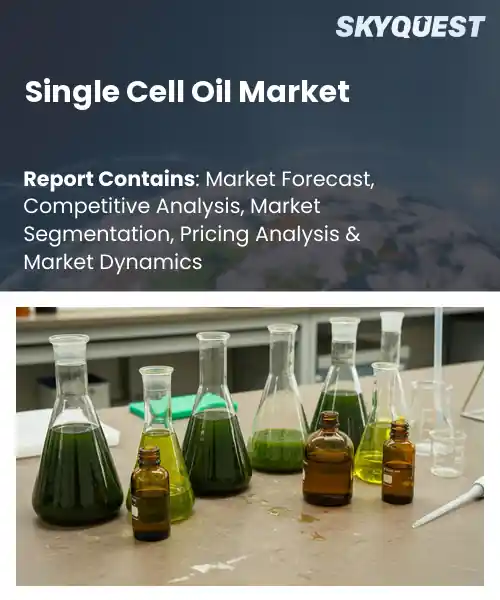
Single Cell Oil Market
Report ID: SQMIG15E3837
Report ID: SQMIG15E3837
[email protected]
USA +1 351-333-4748
Report ID:
SQMIG15E3837 |
Region:
Global |
Published Date: June, 2026
Pages:
157
|Tables:
121
|Figures:
77


Global Single Cell Oil Market size was valued at USD 1.19 Billion in 2024 and is poised to grow from USD 1.34 Billion in 2025 to USD 3.43 Billion by 2033, growing at a CAGR of 12.5% during the forecast period (2026-2033).
Single-cell oil (SCO) is a lipid synthesized by microbial cells (yeasts, algae or bacteria), which can be used as a replacement for conventional vegetable oils in food, cosmetics and bio-fuels. The growing concern for deforestation and commodity prices are driving the increasing demand for sustainable oil, which is a major factor driving the market. Strain engineering and feedstocks like lignocellulosic hydrolysates have advanced so much in the last 10 years that SCO has moved from niche research to commercial pilots. In 2022 Corbion collaborated with the University of Wageningen to develop oleic rich oil from engineered Yarrowia lipolytica. This evolution is driven by the industries’ desire to have scalable and cost effective processes to meet expectations.
The demand and investment in the SCO market is also being driven by the use of microbial oil in applications such as nutraceuticals and renewable diesel. Manufacturers are moving towards SCO due to its improved fatty acid profile and carbon-neutral footprint and the government is tightening regulations on trans-fat and greenhouse gas emissions. DSM launched a high-DHA oil from Schizochytrium in 2024 that reduces the need for fish oil and is available for EU health claims. Biotech firms are facing increasing regulatory pressure to partner with oil processors to get the cash they need to build scale-up facilities. This will create a virtuous cycle of higher volumes, lower production costs and faster market adoption.
How is AI enhancing production efficiency in the single cell oil market?
Automation of strain selection, fermentation parameter optimization and lipid yield prediction can accelerate single cell oil production. Machine learning models analyzing genomic data to find microbes that can digest oil cut down the number of trial-and-error rounds . The sensors offer real-time data on temperature, pH and nutrient feeds. These process variables are controlled by predictive algorithms that keep the cultures in their optimum growth range. Digitally, the oversight cuts batch times and energy at scale. Integrated AI dashboards provide operators with a clear view of key performance indicators so they can act quickly and take corrective action to continue to improve. As the market grows these smart tools are playing a more important part in the delivery of high quality, low cost output.
The market growth is due to the launch of a pilot facility to be introduced in June 2026. The pilot facility will include an AI-based fermentation platform to optimize oil extraction efficiency and feed schedules.
Market snapshot - (2026-2033)
Global Market Size
USD 1.19 Billion
Largest Segment
Fuel Grade
Fastest Growth
Food Grade
Growth Rate
12.5% CAGR
To get more insights on this market click here to Request a Free Sample Report
Global single cell oil market is segmented by product grade, microorganism sourcing type, raw material substrate, functional application area and region. Based on product grade, the market is segmented into Fuel Grade, Feed Grade and Food Grade. Based on microorganism sourcing type, the market is segmented into Bacteria, Yeast Strains, Microalgae and Fungi. Based on raw material substrate, the market is segmented into Sugarcane Mill Feedstock and Agro-Industrial Waste Products. Based on functional application area, the market is segmented into Biofuel Feedstock, Fish Oil Substitutes, Functional Oils, Animal Feed, Infant Formulae, Pharmaceutical Products and Aquaculture. Based on region, the market is segmented into North America, Europe, Asia Pacific, Latin America and Middle East & Africa.
The fuel grade is the largest segment as it directly caters to the growing demand for renewable diesel and aviation fuels, making single cell oil a viable alternative to fossil-based derivatives. Its adoption is supported by policy incentives that promote low carbon energy sources and the scalability of microbial fermentation processes that convert inexpensive substrates into high energy lipids efficiently. So that’s where investor and producer attention is…in building fuel grade production capacity.
However, the food grade segment is experiencing the highest growth momentum due to increasing consumer awareness of plant based nutrition driving demand for clean non animal lipid sources. Innovative formulation techniques allow incorporation into functional foods, which is attractive to food manufacturers and expands market opportunities for single cell oil in health focused product lines.
This dominance is due to the fast growth kinetics and genetic tractability of the yeast segment which enables high lipid accumulation at relatively low feedstock costs. Large-scale production can be achieved using existing industrial fermentation infrastructure and advances in metabolic engineering make possible production of tailored fatty acid profiles for a broad range of applications. These benefits attract strategic partnerships and capital inflows, establishing yeast as the microbial platform of choice for single cell oil synthesis in multiple market sectors and regulatory environments.
The microalgae segment is expected to be the important high growth segment in the industry as production costs are dramatically brought down and specialty lipids rich in omega 3 fatty acids are delivered through breakthroughs in photobioreactor design and strain optimization. This piques the interest of the nutraceutical and aquaculture producers and opens new revenue streams while expanding the overall market horizon for single cell oil.
To get detailed segments analysis, Request a Free Sample Report
The Asia Pacific region is leading the global Single Cell Oil market, driven by a combination of a strong research ecosystem, favorable policies and integrated supply chains to accelerate commercialization. In Japan and South Korea they invest a lot in biotech and fermentation technology. This allows for rapid innovation cycles and robust, high-value product pipelines. Low carbon feedstocks and renewable fuels are a good investment with government incentives. The region is abundant in low-cost agricultural residues and marine biomass as substrates for microbial lipid production. Strong academic institutions, multinational corporations and specialty oil processors collaborate to support scale-up and market entry. Furthermore, increasing awareness among consumers regarding sustainable nutrition and strict environmental regulations leading to the demand for alternatives to traditional vegetable oils also validates the dominance of Asia Pacific.
Japan’s single cell oil market is being driven by a mature biotechnology industry, substantial government R&D grants and a strong consumer demand for cooking oils that promote good health. Domestic companies are partnering with agricultural processors to leverage advanced fermentation platforms to transform low-cost feedstock streams into high-purity lipids for food and cosmetics. The regulatory environment allows for fast product approvals, and Japanese companies can export the technology, making it a hotbed for microbial oil innovation.
South Korea’s Single Cell Oil market is being propelled by robust government incentives, a vibrant start-up ecosystem and strategic partnerships with international oil companies. Korea’s research institutes are world leaders in strain engineering to maximize yields of lipids from a variety of feedstocks, including food waste and algae. The downstream processing is enabled by integrated petrochemical complexes. The rise in consumer trends towards sustainable nutrition is fueling the demand for functional oil blends. Such a combination of policy support and technological know-how is a competitive edge for South Korea.
North America Single Cell Oil market to witness rapid growth driven by collaborative innovation landscape, strong infusion of venture capital and well-entrenched focus on renewable fuels and sustainable food ingredients. In the US and Canada, biotech clusters are taking the lead in integrating genetic engineering, process optimization and large scale fermentation to accelerate time-to-market for microbial lipids. Policy frameworks that incentivize the use of bio-based ingredients and reward low-carbon intensity fuels stimulate more investment. The trend is driven by the availability of large amounts of agricultural residues and forestry by-products as cost-effective substrates, and by the search for diversification away from the volatility of traditional vegetable oils by large oil processors. The North American market is still a growth driver in the industry and consumer demand for clean-label and functional oils continues to drive new product development.
The United States Single Cell Oil Market is a deep pool of biotech talent, extensive federal research grants and a dynamic venture ecosystem that fuels scaling of microbial oil platforms. Specialty oil processors and agribusinesses are teaming up to supply low-cost feedstocks like waste oils and corn stover. Big fuel refiners are adding microbial lipids to renewable diesel. This combination of capital, technology and supply chain integration accelerates market penetration for food, feed and fuel applications.
Canada has vast forestry residue and a positive federal agenda for low-carbon bioproducts for Single Cell Oil Market. Strain development for cold climate substrates is strong in research institutions. Government incentives are driving development of pilot scale facilities near pulp and paper mills. Demand is spreading and sustainable sourcing trends are being driven by partnerships between renewable energy and food ingredient companies in domestic and export markets, securing Canada’s position in the microbial oil value chain.
Europe is consolidating its position in the Single Cell Oil market, jointly focusing on sustainability, circular bio-economy principles and high-tech research cooperation. Leading universities and industry consortia in Germany, the UK and France are leading breakthroughs in strain engineering and low energy fermentation to achieve higher lipid yields from agricultural residues and marine biomass. The European regulatory framework generates a significant market pull, with incentives for low-carbon feedstocks and mandates for renewable content in fuels and foods. Government grant programs have helped de-risk the expansion and maturation of petrochemical hubs with downstream processing built in. The market for microbial oils is driven by consumer demand for clean label, plant based ingredients. Europe is a hub for innovative and environmentally friendly oils solutions.
The German Single Cell Oil Market is driven by a strong chemical industry base, high public funding for R&D and a strategic focus on the integration of microbial lipids in renewable diesel and value-added food ingredients. Good German research labs are strong in precise metabolic engineering . Efficient downstream processing is available in established oil refineries . Rigorous environmental standards drive up demand for low-carbon oil alternatives in various sectors, while collaborative platforms bringing together universities, biotech start-ups and automotive fuel specialists accelerate technology transfer.
The UK has world class academic research, a thriving biotech incubator ecosystem and government initiatives to promote low carbon fuels and sustainable food systems. Research institutions in the UK are pioneering the use of synthetic biology approaches to improve lipid accumulation from waste streams. Partnerships with the maritime industry are investigating algae oils as aviation and marine fuel. The focus on green labelling continues and major consumer goods companies are entering so microbial oils are entering nutraceuticals and functional foods.
France Single Cell Oil Market has a strong culture of agri-food innovation, government support for bio-economy projects and close ties between biotech companies and luxury ingredient manufacturers. French research centers are experts in the adaptation of microbial lipids for culinary and cosmetic applications with wheat straw and dairy by-product streams as sustainable substrates. Policy incentives to blend renewable fuels and the country’s reputation for high quality natural products drive market acceptance. France is a niche leader in premium microbial oil.
To know more about the market opportunities by region and country, click here to
Buy The Complete Report
Rising Demand For Sustainable Fuels
Advancements In Metabolic Engineering
High Capital Expenditure Requirements
Regulatory Uncertainty Across Regions
Request Free Customization of this report to help us to meet your business objectives.
The competitive landscape is shaped by intense rivalry among established producers and emerging biotech firms, each vying for market share in high‑growth applications such as bio‑fuels, infant nutrition, and aquaculture. Companies are accelerating M&A activity to acquire proprietary lipid‑synthesis pathways, forming joint ventures with feed‑stock suppliers, and investing in CRISPR‑based strain engineering to boost oil yields and reduce production costs.
SkyQuest’s ABIRAW (Advanced Business Intelligence, Research & Analysis Wing) is our Business Information Services team that Collects, Collates, Correlates, and Analyses the Data collected by means of Primary Exploratory Research backed by robust Secondary Desk research. As per SkyQuest analysis the global single cell oil market is set to climb from $1.34 billion in 2025 to $3.43 billion by 2033 propelled primarily by rising demand for sustainable fuels that push companies toward renewable bio‑based oils while the fuel‑grade segment leads growth by meeting renewable diesel and aviation fuel needs a second driver comes from rapid advances in metabolic engineering that boost lipid yields and broaden feedstock options making production more cost‑effective the market’s momentum is strongest in Asia Pacific where supportive policies, abundant biomass residues and strong biotech ecosystems fuel expansion however high capital expenditure requirements pose a notable restraint limiting entry for smaller players
| Report Metric | Details |
|---|---|
| Market size value in 2024 | USD 1.19 Billion |
| Market size value in 2033 | USD 3.43 Billion |
| Growth Rate | 12.5% |
| Base year | 2024 |
| Forecast period | (2026-2033) |
| Forecast Unit (Value) | USD Billion |
| Segments covered |
|
| Regions covered | North America (US, Canada), Europe (Germany, France, United Kingdom, Italy, Spain, Rest of Europe), Asia Pacific (China, India, Japan, Rest of Asia-Pacific), Latin America (Brazil, Rest of Latin America), Middle East & Africa (South Africa, GCC Countries, Rest of MEA) |
| Companies covered |
|
| Customization scope | Free report customization with purchase. Customization includes:-
|
To get a free trial access to our platform which is a one stop solution for all your data requirements for quicker decision making. This platform allows you to compare markets, competitors who are prominent in the market, and mega trends that are influencing the dynamics in the market. Also, get access to detailed SkyQuest exclusive matrix.
Table Of Content
Executive Summary
Market overview
Parent Market Analysis
Market overview
Market size
KEY MARKET INSIGHTS
COVID IMPACT
MARKET DYNAMICS & OUTLOOK
Market Size by Region
KEY COMPANY PROFILES
Methodology
For the Single Cell Oil Market, our research methodology involved a mixture of primary and secondary data sources. Key steps involved in the research process are listed below:
1. Information Procurement: This stage involved the procurement of Market data or related information via primary and secondary sources. The various secondary sources used included various company websites, annual reports, trade databases, and paid databases such as Hoover's, Bloomberg Business, Factiva, and Avention. Our team did 45 primary interactions Globally which included several stakeholders such as manufacturers, customers, key opinion leaders, etc. Overall, information procurement was one of the most extensive stages in our research process.
2. Information Analysis: This step involved triangulation of data through bottom-up and top-down approaches to estimate and validate the total size and future estimate of the Single Cell Oil Market.
3. Report Formulation: The final step entailed the placement of data points in appropriate Market spaces in an attempt to deduce viable conclusions.
4. Validation & Publishing: Validation is the most important step in the process. Validation & re-validation via an intricately designed process helped us finalize data points to be used for final calculations. The final Market estimates and forecasts were then aligned and sent to our panel of industry experts for validation of data. Once the validation was done the report was sent to our Quality Assurance team to ensure adherence to style guides, consistency & design.
Analyst Support
Customization Options
With the given market data, our dedicated team of analysts can offer you the following customization options are available for the Single Cell Oil Market:
Product Analysis: Product matrix, which offers a detailed comparison of the product portfolio of companies.
Regional Analysis: Further analysis of the Single Cell Oil Market for additional countries.
Competitive Analysis: Detailed analysis and profiling of additional Market players & comparative analysis of competitive products.
Go to Market Strategy: Find the high-growth channels to invest your marketing efforts and increase your customer base.
Innovation Mapping: Identify racial solutions and innovation, connected to deep ecosystems of innovators, start-ups, academics, and strategic partners.
Category Intelligence: Customized intelligence that is relevant to their supply Markets will enable them to make smarter sourcing decisions and improve their category management.
Public Company Transcript Analysis: To improve the investment performance by generating new alpha and making better-informed decisions.
Social Media Listening: To analyze the conversations and trends happening not just around your brand, but around your industry as a whole, and use those insights to make better Marketing decisions.
REQUEST FOR SAMPLE
 REQUEST FREE CUSTOMIZATION
Global Single Cell Oil Market size was valued at USD 1.19 Billion in 2024 and is poised to grow from USD 1.34 Billion in 2025 to USD 3.43 Billion by 2033, growing at a CAGR of 12.5% during the forecast period (2026-2033).
The competitive landscape is shaped by intense rivalry among established producers and emerging biotech firms, each vying for market share in high‑growth applications such as bio‑fuels, infant nutrition, and aquaculture. Companies are accelerating M&A activity to acquire proprietary lipid‑synthesis pathways, forming joint ventures with feed‑stock suppliers, and investing in CRISPR‑based strain engineering to boost oil yields and reduce production costs. 'DSM-Firmenich', 'Corbion', 'Alltech Inc', 'DIC Corporation', 'BASF SE', 'Cellana Inc', 'Cargill Incorporated', 'Archer-Daniels-Midland Company', 'Bunge Global SA', 'EID Parry India Limited', 'Xiamen Huison Biotech Co Ltd', 'Polaris SA', 'Mara Renewables Corporation', 'Progress Algae', 'Solarvest BioEnergy Inc', 'Euglena Co Ltd', 'Fermentalg SA', 'AlgaPrime', 'Veramaris', 'Qualitas Health Inc'
The increasing consumer awareness of environmental impact drives preference for renewable energy sources, positioning single cell oil as a viable alternative to conventional petroleum-derived oils. Companies are integrating these bio‑based oils into fuel formulations to meet corporate sustainability commitments, encouraging broader adoption across transportation and industrial sectors. This shift not only supports regulatory compliance but also enhances brand reputation, creating a virtuous cycle of investment and innovation that propels market expansion. Stakeholders view the technology as a strategic pathway to reduce carbon footprints, further reinforcing demand.
Sustainable Feedstock Innovation: Growing demand for renewable and low‑impact feedstocks is driving biotech firms to explore algae‑derived lipids and waste‑derived carbon sources. Companies are partnering with agritech providers to cultivate high‑yield microalgae strains that produce premium oil profiles suitable for cosmetics, nutraceuticals, and specialty chemicals. This shift reduces reliance on traditional petroleum inputs, enhances supply chain resilience, and aligns with corporate sustainability commitments, positioning single‑cell oil as a strategic alternative in a carbon‑constrained market for emerging bio‑based packaging solutions worldwide and circular economies.
Why does Asia Pacific Dominate the Global Single Cell Oil Market? |@12


Want to customize this report? This report can be personalized according to your needs. Our analysts and industry experts will work directly with you to understand your requirements and provide you with customized data in a short amount of time. We offer $1000 worth of FREE customization at the time of purchase.
Feedback From Our Clients


 USA (+1) 351-333-4748

