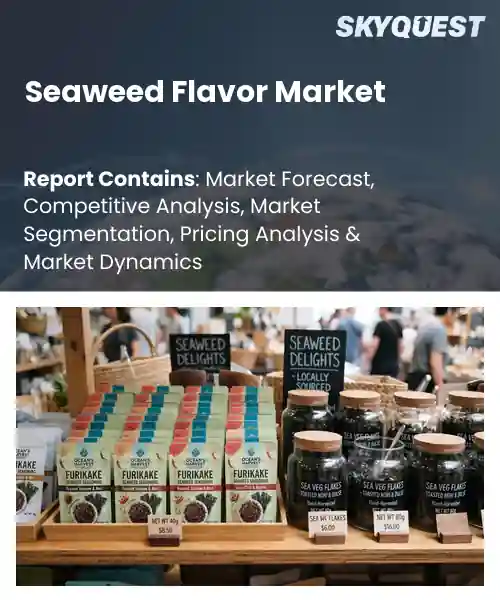
Seaweed Flavor Market
Report ID: SQMIG30I3174
Report ID: SQMIG30I3174
[email protected]
USA +1 351-333-4748
Report ID:
SQMIG30I3174 |
Region:
Global |
Published Date: August, 2026
Pages:
157
|Tables:
170
|Figures:
79


Global Seaweed Flavor Market size was valued at USD 1.96 Billion in 2024 and is poised to grow from USD 2.1 Billion in 2025 to USD 3.64 Billion by 2033, growing at a CAGR of 7.1% during the forecast period (2026-2033).
The global seaweed flavor market revolves around natural umami compounds extracted from marine algae, which are increasingly prized for their clean label appeal and nutritional profile. Historically, seaweed seasoning was confined to East Asian kitchens, where kelp broth and nori sheets defined traditional dishes. Over the past decade, food manufacturers have begun to substitute synthetic enhancers with seaweed extracts, citing consumer pressure for healthier, plant‑based ingredients. Notable examples include a leading snack producer that launched seaweed‑infused potato chips in 2018 and a beverage company that introduced kelp‑derived flavor drops for low‑calorie drinks. This shift underscores the market’s relevance to sustainability goals and flavor innovation. Building on that consumer momentum, the growth driver for the seaweed flavor market is the regulatory push that compels manufacturers to replace synthetic enhancers with alternatives. When governments tighten labeling rules, companies adopting seaweed‑derived extracts gain market share by meeting compliance and taste expectations. This pressure has spurred investment in algae‑processing technology, lowering the cost of extracting glutamic acid and aromatics. A dairy brand reduced sodium by 30 % in flavored yogurts using seaweed umami, while a pet‑food line improved protein digestibility with seaweed‑based flavor masks. Export volumes rise, especially from coastal nations with abundant biomass, positioning seaweed flavor as a commodity in supply chains.
How is AI-driven automation influencing product development in the seaweed flavor market?
AI-driven automation is reshaping seaweed flavor development by enabling rapid taste profiling and ingredient optimization. Machine learning models analyze vast sensory datasets, allowing developers to predict consumer preferences and fine‑tune formulations without lengthy trial batches. Automated fermentation and extraction systems reduce cycle times, while real‑time analytics guide ingredient sourcing and blend adjustments. This digital workflow accelerates product launches, lowers R&D costs, and supports the creation of novel, health‑focused flavor experiences that align with growing consumer interest in sustainable seafood alternatives.In March 2026, UNCTAD released a comprehensive analysis of global seaweed production, highlighting how AI‑enabled processing technologies are improving efficiency and supporting market expansion. This insight underscores the role of automation in driving faster, more consistent flavor innovation across the sector.
Market snapshot - (2026-2033)
Global Market Size
USD 1.96 Billion
Largest Segment
Seaweed Flavor Extracts
Fastest Growth
Seaweed Flavor Blends
Growth Rate
7.1% CAGR
To get more insights on this market click here to Request a Free Sample Report
Global seaweed flavor market is segmented by product type, seaweed source, application, end-use industry, form, flavor profile and region. Based on product type, the market is segmented into Seaweed Flavor Extracts, Seaweed Flavor Powders and Seaweed Flavor Blends. Based on seaweed source, the market is segmented into Brown Seaweed, Red Seaweed and Green Seaweed. Based on application, the market is segmented into Snacks, Soups & Sauces, Seasonings and Meat & Seafood Products. Based on end-use industry, the market is segmented into Food & Beverage and Foodservice. Based on form, the market is segmented into Liquid and Powder. Based on flavor profile, the market is segmented into Umami, Salty and Savory. Based on region, the market is segmented into North America, Europe, Asia Pacific, Latin America and Middle East & Africa.
Seaweed Flavor Extracts segment dominates because manufacturers prioritize liquid and powder extracts for their purity, consistency, and ease of integration into diverse formulations. Extracts provide concentrated umami and salty notes that can be precisely dosed, meeting the rising demand for clean‑label products. Their stability under processing conditions and compatibility with both food‑service and packaged goods reinforce their central role, driving sustained investment and product development across the market.
However, Seaweed Flavor Powders segment is witnessing the strongest growth momentum because its dry form aligns with clean‑label trends and enables seamless incorporation into snack blends, seasonings, and ready‑to‑eat meals. Innovative processing techniques are expanding flavor complexity, attracting manufacturers seeking cost‑effective, shelf‑stable solutions that accelerate market expansion in the industry.
Seaweed Flavor Blends segment leads because they combine multiple algae varieties to create nuanced umami, salty, and savory profiles that resonate with modern consumer palates. Blends offer formulation flexibility, allowing food manufacturers to tailor taste intensity across snack categories while maintaining natural ingredient claims, fostering broader acceptance and reinforcing their strategic importance in product innovation. They also streamline sourcing by reducing reliance on single extracts and reinforce clean‑label claims, boosting brand trust.
Meanwhile, Soups & Sauces application segment emerges as the area because chefs and manufacturers are exploring seaweed flavors to enrich broth depth without artificial additives. The growing appetite for savory, mineral‑rich taste experiences fuels product launches, and compatibility of seaweed extracts with simmering accelerates adoption, creating revenue streams and expanding market horizons.
To get detailed segments analysis, Request a Free Sample Report
The region benefits from deep cultural ties to marine ingredients, which foster longstanding culinary traditions that integrate seaweed as a core flavor component. Consumers exhibit a sophisticated palate for umami profiles, encouraging continuous product innovation in snacks, beverages, and processed foods. Strong research institutions collaborate closely with food manufacturers to develop natural extracts and sustainable sourcing practices. Robust distribution networks across urban and rural markets ensure wide accessibility, while government initiatives support sustainable marine agriculture, reinforcing supply stability. Together these factors create a virtuous cycle of demand and supply that positions Asia Pacific as the leading hub for seaweed flavor development and adoption.
Seaweed Flavor Market in Japan thrives on a heritage of sea-based cuisine, where consumers value authentic taste and health benefits. Food manufacturers leverage local seaweed harvests to craft nuanced seasoning blends, driving continuous product diversification. Consumer openness to novel applications, such as plant‑based alternatives and functional beverages, fuels ongoing experimentation. Collaborative efforts between research labs and culinary innovators sustain a pipeline of refined flavor profiles that resonate with both traditional and modern palates.
Seaweed Flavor Market in South Korea reflects a strong affinity for marine gastronomy, with seaweed incorporated into everyday dishes and premium snack formats. Industry players prioritize clean label solutions, emphasizing natural extraction methods that align with consumer expectations for transparency. Investment in aquaculture technology enhances the reliability of raw material supply, supporting scale‑up of flavor production. The convergence of health‑focused consumer trends and innovative culinary applications sustains momentum for seaweed flavor integration across diverse food categories.
Consumer curiosity about global taste experiences combined with a growing appetite for natural and functional ingredients propels market growth. Food manufacturers are integrating seaweed extracts to meet demand for umami depth without reliance on synthetic additives. Health‑conscious shoppers appreciate the nutritional profile of seaweed, encouraging its inclusion in snack reformulations and beverage innovations. Collaborative research between academic institutions and industry accelerates the development of stable, versatile flavor solutions suitable for a wide range of processed products. Retail channels increasingly showcase seaweed‑infused options, reinforcing consumer exposure and adoption across the continent.
Seaweed Flavor Market in the United States is buoyed by a vibrant craft food scene that embraces experimental taste combinations. Major food companies explore seaweed as a natural enhancer in protein‑focused products, aligning with plant‑based dietary trends. Consumer education campaigns highlight the sustainability advantages of marine‑derived flavors, fostering positive brand perception. Ongoing partnerships with coastal growers ensure a steady influx of high‑quality raw material, supporting product launches that emphasize clean label credentials and novel sensory experiences.
Seaweed Flavor Market in Canada benefits from a strong emphasis on clean eating and environmental stewardship. Food producers integrate seaweed extracts to achieve depth of flavor while adhering to clean label standards. Collaborative initiatives between coastal communities and research institutes promote responsible harvesting practices, reinforcing supply chain resilience. Canadian consumers’ growing interest in functional foods drives demand for seaweed‑based ingredients that convey both taste and health benefits across snack and ready‑to‑eat categories.
European markets are leveraging sustainability narratives and culinary creativity to reinforce their role in seaweed flavor adoption. Regulators support innovative food applications, encouraging manufacturers to experiment with marine‑derived extracts in a variety of product lines. Culinary institutions champion seaweed as a versatile ingredient, fostering consumer acceptance through gastronomic showcases. Investment in marine biotechnology enhances extraction efficiency, delivering high‑quality flavor concentrates that meet stringent quality standards. The convergence of eco‑conscious consumer behavior and avant‑garde food development positions Europe as a forward‑looking contributor to the global seaweed flavor ecosystem.
Seaweed Flavor Market in Germany is shaped by a robust focus on functional food development and a commitment to sustainability. Food manufacturers integrate seaweed extracts to enrich protein‑rich offerings, aligning with consumer desires for nutrient‑dense snack options. Collaborative research between universities and industry accelerates the refinement of flavor profiles that complement traditional German cuisines and emerging plant‑based concepts. Supply chain initiatives prioritize responsibly sourced seaweed, reinforcing confidence in product integrity.
Seaweed Flavor Market in the United Kingdom reflects a dynamic culinary landscape where chefs and manufacturers experiment with marine flavors to differentiate products. Consumer appetite for novel taste experiences drives the incorporation of seaweed extracts in savory snacks and beverage innovations. Industry partnerships with coastal harvesters ensure traceable sourcing, supporting sustainability claims. Educational outreach emphasizes the health advantages of seaweed, fostering broader market acceptance across mainstream food categories.
Seaweed Flavor Market in France benefits from a heritage of fine dining that values nuanced umami sensations. Food artisans and large‑scale producers alike explore seaweed as a natural flavor enhancer in sauces, pâtés, and artisanal breads. Emphasis on terroir and authentic ingredient stories resonates with consumers seeking premium experiences. Research collaborations focus on optimizing extraction techniques that preserve delicate aroma profiles, positioning seaweed as a refined addition to the French culinary repertoire.
To know more about the market opportunities by region and country, click here to
Buy The Complete Report
Consumer Preference Shifting Toward Natural
Food Manufacturers leveraging Seaweed Benefits
Regulatory Uncertainty Around Novel Ingredients
Supply Chain Constraints Limiting Consistent Availability
Request Free Customization of this report to help us to meet your business objectives.
The competitive landscape of the Global Seaweed Flavor Market is shaped by a handful of innovative firms leveraging sustainable extraction technologies to meet rising demand for natural umami enhancers, while larger ingredient companies pursue strategic acquisitions and collaborations to broaden their flavor portfolios and secure supply chains. Recent tech‑driven initiatives, such as advanced alginate purification processes, are differentiating players and intensifying competition for premium food‑service contracts.
Top Player’s Company Profile
Recent Developments
SkyQuest’s ABIRAW (Advanced Business Intelligence, Research & Analysis Wing) is our Business Information Services team that Collects, Collates, Correlates, and Analyses the Data collected by means of Primary Exploratory Research backed by robust Secondary Desk research. As per SkyQuest analysis, the key driver is the growing consumer preference for natural, clean‑label ingredients, prompting manufacturers to replace synthetic enhancers with seaweed extracts. A second driver is regulatory pressure that encourages adoption of natural alternatives, accelerating investment in algae‑processing technology. The dominating region remains Asia‑Pacific, where cultural familiarity with marine flavors and strong supply chains sustain demand. The dominating segment is seaweed flavor extracts, valued for purity and easy integration across product lines. However, regulatory uncertainty around novel seaweed compounds acts as a restraint, slowing broader adoption and creating hurdles for global roll‑outs.
| Report Metric | Details |
|---|---|
| Market size value in 2024 | USD 1.96 Billion |
| Market size value in 2033 | USD 3.64 Billion |
| Growth Rate | 7.1% |
| Base year | 2024 |
| Forecast period | (2026-2033) |
| Forecast Unit (Value) | USD Billion |
| Segments covered |
|
| Regions covered | North America (US, Canada), Europe (Germany, France, United Kingdom, Italy, Spain, Rest of Europe), Asia Pacific (China, India, Japan, Rest of Asia-Pacific), Latin America (Brazil, Rest of Latin America), Middle East & Africa (South Africa, GCC Countries, Rest of MEA) |
| Companies covered |
|
| Customization scope | Free report customization with purchase. Customization includes:-
|
To get a free trial access to our platform which is a one stop solution for all your data requirements for quicker decision making. This platform allows you to compare markets, competitors who are prominent in the market, and mega trends that are influencing the dynamics in the market. Also, get access to detailed SkyQuest exclusive matrix.
Table Of Content
Executive Summary
Market overview
Parent Market Analysis
Market overview
Market size
KEY MARKET INSIGHTS
COVID IMPACT
MARKET DYNAMICS & OUTLOOK
Market Size by Region
KEY COMPANY PROFILES
Methodology
For the Seaweed Flavor Market, our research methodology involved a mixture of primary and secondary data sources. Key steps involved in the research process are listed below:
1. Information Procurement: This stage involved the procurement of Market data or related information via primary and secondary sources. The various secondary sources used included various company websites, annual reports, trade databases, and paid databases such as Hoover's, Bloomberg Business, Factiva, and Avention. Our team did 45 primary interactions Globally which included several stakeholders such as manufacturers, customers, key opinion leaders, etc. Overall, information procurement was one of the most extensive stages in our research process.
2. Information Analysis: This step involved triangulation of data through bottom-up and top-down approaches to estimate and validate the total size and future estimate of the Seaweed Flavor Market.
3. Report Formulation: The final step entailed the placement of data points in appropriate Market spaces in an attempt to deduce viable conclusions.
4. Validation & Publishing: Validation is the most important step in the process. Validation & re-validation via an intricately designed process helped us finalize data points to be used for final calculations. The final Market estimates and forecasts were then aligned and sent to our panel of industry experts for validation of data. Once the validation was done the report was sent to our Quality Assurance team to ensure adherence to style guides, consistency & design.
Analyst Support
Customization Options
With the given market data, our dedicated team of analysts can offer you the following customization options are available for the Seaweed Flavor Market:
Product Analysis: Product matrix, which offers a detailed comparison of the product portfolio of companies.
Regional Analysis: Further analysis of the Seaweed Flavor Market for additional countries.
Competitive Analysis: Detailed analysis and profiling of additional Market players & comparative analysis of competitive products.
Go to Market Strategy: Find the high-growth channels to invest your marketing efforts and increase your customer base.
Innovation Mapping: Identify racial solutions and innovation, connected to deep ecosystems of innovators, start-ups, academics, and strategic partners.
Category Intelligence: Customized intelligence that is relevant to their supply Markets will enable them to make smarter sourcing decisions and improve their category management.
Public Company Transcript Analysis: To improve the investment performance by generating new alpha and making better-informed decisions.
Social Media Listening: To analyze the conversations and trends happening not just around your brand, but around your industry as a whole, and use those insights to make better Marketing decisions.
REQUEST FOR SAMPLE
 REQUEST FREE CUSTOMIZATION


Want to customize this report? This report can be personalized according to your needs. Our analysts and industry experts will work directly with you to understand your requirements and provide you with customized data in a short amount of time. We offer $1000 worth of FREE customization at the time of purchase.
Feedback From Our Clients


 USA (+1) 351-333-4748

