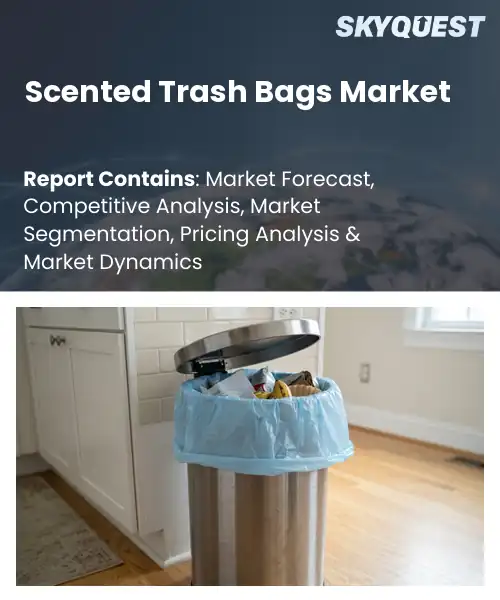
Scented Trash Bags Market
Report ID: SQMIG15H2319
Report ID: SQMIG15H2319
[email protected]
USA +1 351-333-4748
Report ID:
SQMIG15H2319 |
Region:
Global |
Published Date: September, 2026
Pages:
157
|Tables:
146
|Figures:
78


Global Scented Trash Bags Market size was valued at USD 1.95 Billion in 2024 and is poised to grow from USD 2.02 Billion in 2025 to USD 2.66 Billion by 2033, growing at a CAGR of 3.5% during the forecast period (2026-2033).
The scented trash bag market consists of liners infused with fragrances that neutralize household odors, turning a chore into a pleasant task. Its importance arises from increasing consumer concern for indoor air quality and the desire for a hygienic environment in spaces. The primary driver of market emergence is heightened awareness of odor control, which began in the early 2000s when niche brands launched lavender‑scented liners for residential use. As cities expanded, companies such as SC Johnson and Procter & Gamble broadened lines, using shelves and channels. Consequently, scented bags moved from novelty to supplies, mirroring a trend toward comfort. Another decisive factor shaping the scented trash‑bag market is the merger of odor control with sustainability, as buyers now favor biodegradable products that retain fragrance. This demand pushes manufacturers to blend plant‑based polymers with micro‑encapsulated scents, creating liners that decompose after use while emitting a fresh aroma. Consequently, retailers stock compostable scented options alongside ones and subscription services deliver them directly to homes, increasing purchase frequency. Real‑world examples include hotel chains using biodegradable lavender liners to improve guest experience and pet‑care brands offering scented waste bags that simplify apartment cleanup. These trends generate premium pricing and branding, accelerating market growth.
How is AI-driven automation influencing consumer preferences in the scented trash bags market?
AI driven automation is reshaping how consumers choose scented trash bags by linking scent profiles to household habits. Machine learning algorithms analyze disposal patterns and predict preferred fragrances, allowing manufacturers to tailor product lines without costly trial runs. Brands now offer dynamic packaging that updates scent options based on real time feedback, creating a sense of personalization. This technology reduces waste from unsold inventory and shortens time to market, making the category more responsive to evolving tastes. Shoppers appreciate the convenience of bags that match their kitchen aromas, reinforcing loyalty and encouraging repeat purchases.Glad announced an AI optimized scent matching line in April 2024, using automated formulation tools to blend fragrances that align with consumer disposal data. The rollout has streamlined production and deepened shopper engagement, illustrating how AI driven automation fuels growth in the scented trash bag market.
Market snapshot - (2026-2033)
Global Market Size
USD 1.95 Billion
Largest Segment
Polyethylene
Fastest Growth
Biodegradable Materials
Growth Rate
3.5% CAGR
To get more insights on this market click here to Request a Free Sample Report
Global scented trash bags market is segmented by material, bag type, capacity, fragrance type, end user and region. Based on material, the market is segmented into Polyethylene, Recycled Plastic and Biodegradable Materials. Based on bag type, the market is segmented into Drawstring Bags, Tie-Handle Bags and Flat-Top Bags. Based on capacity, the market is segmented into Up to 10 Gallons, 11–30 Gallons, 31–50 Gallons and Above 50 Gallons. Based on fragrance type, the market is segmented into Floral, Citrus, Fresh & Clean and Other Fragrances. Based on end user, the market is segmented into Residential, Commercial and Institutional. Based on region, the market is segmented into North America, Europe, Asia Pacific, Latin America and Middle East & Africa.
Biodegradable Materials segment dominates because growing consumer awareness of plastic waste drives strong preference for eco‑friendly disposal solutions. Brands highlight compostable claims, aligning with household sustainability goals, which elevates purchase intent. Retailers respond by allocating prime shelf space to these options, reinforcing visibility. The convergence of regulatory encouragement for reduced landfill contributions and the emotional appeal of responsible living further entrenches biodegradable bags as the market’s core offering.
Meanwhile, Recycled Plastic sub‑category emerges as the key high‑growth area in the scented trash bags market. Innovation in processing reclaimed resin yields stronger, odor‑resistant films, attracting cost‑conscious retailers seeking greener alternatives. Expanding partnerships with waste‑collection programs accelerate feedstock availability, fueling rapid adoption and creating new avenues for market expansion.
Fresh & Clean segment stands out because it delivers a neutral, universally appealing aroma that instantly masks typical waste odors without clashing with household scents. Consumers associate this scent with hygiene, reinforcing perceived cleanliness of the disposal area. Manufacturers prioritize it for its broad acceptance, ensuring consistent repeat purchases. Retail environments favor Fresh & Clean as a default offering, reinforcing its position as the market’s most trusted fragrance choice.
Conversely, Citrus fragrance is witnessing the strongest growth momentum in the scented trash bags market. Urban consumers favor vibrant, energizing aromas that differentiate products on crowded shelves. Brands blend citrus notes to boost perceived freshness and align with active‑lifestyle narratives, prompting trial purchases and expanding premium opportunities.
To get detailed segments analysis, Request a Free Sample Report
North America leads the scented trash bags market due to a mature consumer base that values convenience coupled with household freshness. Retail giants and specialty stores provide extensive shelf presence, enabling rapid product rollout and continuous innovation in fragrance blends. Consumers demonstrate heightened awareness of indoor odor management, driving preference for premium scented solutions. Robust supply chains and advanced manufacturing capabilities support consistent quality and cost efficiencies, reinforcing retailer confidence. Additionally, strong environmental stewardship initiatives encourage the development of biodegradable scented options, aligning product appeal with sustainability expectations. The combination of high purchasing power, sophisticated distribution networks, and a culture that embraces scented home products consolidates North America’s dominant position globally. Market participants also benefit from collaborative research with fragrance experts, fostering unique scent profiles that resonate with regional preferences.
Scented Trash Bags Market in the United States enjoys widespread acceptance across both suburban and urban households, driven by a cultural emphasis on cleanliness and odor control. Retail chains emphasize shelf placement near cleaning aisles, while online platforms expand reach to younger consumers. Manufacturers respond with a variety of fragrance options, including floral and citrus notes, and increasingly integrate eco‑friendly materials to align with greener consumer expectations through targeted marketing campaigns.
Scented Trash Bags Market in Canada benefits from a strong inclination toward household freshness, particularly in regions with colder climates where indoor air quality is a priority. Major retailers allocate prominent aisle space, while specialty stores highlight locally sourced fragrance blends. Producers are emphasizing biodegradable polymers and subtle scent profiles that complement the Canadian preference for understated aromas, reinforcing the market’s appeal among environmentally conscious shoppers through consistent product education efforts.
Europe is witnessing a rapid expansion of the scented trash bags market, propelled by a convergence of elevated consumer consciousness and supportive regulatory frameworks. European shoppers place high value on indoor comfort and are increasingly willing to invest in scented solutions that mitigate unpleasant odors. Stringent environmental directives encourage manufacturers to develop biodegradable and low‑impact fragrance technologies, aligning product offerings with sustainability mandates. Retail ecosystems across the continent integrate scent‑enhanced waste bags into both mass‑market and premium categories, fostering broad accessibility. Collaborative research between fragrance houses and packaging firms yields region‑specific scent profiles that resonate with local preferences. The United Kingdom’s dynamic retail landscape accelerates adoption, while Germany’s established supply chain infrastructure consolidates its leadership, and France’s growing interest in eco‑friendly home products signals an emerging market momentum.
Scented Trash Bags Market in Germany is characterized by a mature distribution network and a strong tradition of product quality. Consumers favor robust odor‑neutralizing solutions that incorporate subtle, natural fragrance notes, reflecting a preference for understated elegance. Leading retailers prioritize shelf visibility, and manufacturers invest in recyclable packaging to meet strict environmental standards. The market’s stability is reinforced by consistent demand from both residential and commercial sectors, encouraging continuous innovation in scent formulation.
Scented Trash Bags Market in the United Kingdom is experiencing fast‑paced growth, driven by consumer enthusiasm for home fragrance enhancements. Retail chains emphasize cross‑promotions with cleaning products, increasing visibility among routine shoppers. Manufacturers are expanding scent ranges to include both classic and contemporary aromas, catering to diverse taste profiles. Sustainability considerations are prompting the introduction of compostable materials, aligning with a strong environmental agenda in the United Kingdom. This dynamic environment fuels rapid product turnover and heightened brand competition.
Scented Trash Bags Market in France is emerging as consumers demonstrate increasing interest in odor‑control solutions that complement indoor décor. French retailers position scented waste bags alongside lifestyle accessories, highlighting aesthetic appeal. Product developers are focusing on light, fresh fragrance compositions that align with French sensibilities for subtlety. Eco‑conscious packaging, such as plant‑based films, is gaining traction in response to national sustainability goals. These trends collectively nurture a growing foothold for scented trash bags within the French household segment.
Asia Pacific is strengthening its position in the scented trash bags market through a combination of rapid urbanization and evolving consumer lifestyles that prioritize household ambience. Rising middle‑income households in Japan and South Korea exhibit growing willingness to incorporate scented solutions into everyday waste management. Local manufacturers leverage advanced polymer technologies to create high‑performance, fragrance‑infused bags that meet stringent quality expectations. Cultural appreciation for subtle scents influences product design, leading to refined fragrance palettes that complement traditional interior aesthetics. Retail platforms, both brick‑and‑mortar and e‑commerce, actively promote these products alongside cleaning essentials, expanding consumer exposure. Collaborative efforts with fragrance specialists further enhance scent authenticity, positioning the region as an innovative hub for scented waste‑bag solutions.
Scented Trash Bags Market in Japan reflects a sophisticated consumer base that values both functionality and subtle olfactory experiences. Retailers integrate scented waste bags within premium household sections, emphasizing quality and refined fragrance notes such as green tea and subtle floral aromas. Manufacturers are adopting biodegradable materials to align with the strong environmental consciousness prevalent in Japan. Continuous research with local scent experts ensures product relevance, while packaging designs echo minimalist aesthetics, reinforcing the market’s appeal among discerning Japanese shoppers.
Scented Trash Bags Market in South Korea is driven by a dynamic blend of modern living standards and a cultural affinity for pleasant home environments. Retail chains feature scented options prominently near cleaning supplies, encouraging trial among tech‑savvy consumers. Producers focus on innovative scent combinations that balance freshness with understated elegance, often incorporating traditional Korean botanical notes. Sustainable packaging initiatives resonate with national eco‑friendly policies, enhancing product acceptance. These factors collectively accelerate market penetration and brand differentiation within the South Korean household sector.
To know more about the market opportunities by region and country, click here to
Buy The Complete Report
Increasing Consumer Focus on Hygiene
Growth of Premium Home Fragrance
Higher Production Costs Compared
Limited Recycling Infrastructure Available
Request Free Customization of this report to help us to meet your business objectives.
The market is shaped by major brands expanding premium scented lines and by new entrants forging niche eco‑friendly fragrances. Recent consolidation, such as a leading multinational acquiring a boutique fragrance bag maker, underscores the drive to own both scent technology and distribution. Partnerships between packaging innovators and scent specialists have accelerated the rollout of long‑lasting, washable fragrances, positioning scent differentiation as a key competitive lever.
Top Player’s Company Profile
Recent Developments
SkyQuest’s ABIRAW (Advanced Business Intelligence, Research & Analysis Wing) is our Business Information Services team that Collects, Collates, Correlates, and Analyses the Data collected by means of Primary Exploratory Research backed by robust Secondary Desk research. As per SkyQuest analysis the scented trash bags market is expanding at a 3.5 % CAGR driven primarily by rising consumer focus on hygiene which pushes retailers to stock fragrance‑infused liners, while a second catalyst is the surge in premium home‑fragrance trends that connect waste management to interior scent schemes. The biodegradable materials segment leads the market because eco‑conscious shoppers favor compostable options, and North America remains the dominant region thanks to strong purchasing power and sophisticated distribution. A notable restraint is the higher production cost of scent‑locked packaging, which can deter price‑sensitive buyers and slow adoption in value‑driven segments overall.
| Report Metric | Details |
|---|---|
| Market size value in 2024 | USD 1.95 Billion |
| Market size value in 2033 | USD 2.66 Billion |
| Growth Rate | 3.5% |
| Base year | 2024 |
| Forecast period | (2026-2033) |
| Forecast Unit (Value) | USD Billion |
| Segments covered |
|
| Regions covered | North America (US, Canada), Europe (Germany, France, United Kingdom, Italy, Spain, Rest of Europe), Asia Pacific (China, India, Japan, Rest of Asia-Pacific), Latin America (Brazil, Rest of Latin America), Middle East & Africa (South Africa, GCC Countries, Rest of MEA) |
| Companies covered |
|
| Customization scope | Free report customization with purchase. Customization includes:-
|
To get a free trial access to our platform which is a one stop solution for all your data requirements for quicker decision making. This platform allows you to compare markets, competitors who are prominent in the market, and mega trends that are influencing the dynamics in the market. Also, get access to detailed SkyQuest exclusive matrix.
Table Of Content
Executive Summary
Market overview
Parent Market Analysis
Market overview
Market size
KEY MARKET INSIGHTS
COVID IMPACT
MARKET DYNAMICS & OUTLOOK
Market Size by Region
KEY COMPANY PROFILES
Methodology
For the Scented Trash Bags Market, our research methodology involved a mixture of primary and secondary data sources. Key steps involved in the research process are listed below:
1. Information Procurement: This stage involved the procurement of Market data or related information via primary and secondary sources. The various secondary sources used included various company websites, annual reports, trade databases, and paid databases such as Hoover's, Bloomberg Business, Factiva, and Avention. Our team did 45 primary interactions Globally which included several stakeholders such as manufacturers, customers, key opinion leaders, etc. Overall, information procurement was one of the most extensive stages in our research process.
2. Information Analysis: This step involved triangulation of data through bottom-up and top-down approaches to estimate and validate the total size and future estimate of the Scented Trash Bags Market.
3. Report Formulation: The final step entailed the placement of data points in appropriate Market spaces in an attempt to deduce viable conclusions.
4. Validation & Publishing: Validation is the most important step in the process. Validation & re-validation via an intricately designed process helped us finalize data points to be used for final calculations. The final Market estimates and forecasts were then aligned and sent to our panel of industry experts for validation of data. Once the validation was done the report was sent to our Quality Assurance team to ensure adherence to style guides, consistency & design.
Analyst Support
Customization Options
With the given market data, our dedicated team of analysts can offer you the following customization options are available for the Scented Trash Bags Market:
Product Analysis: Product matrix, which offers a detailed comparison of the product portfolio of companies.
Regional Analysis: Further analysis of the Scented Trash Bags Market for additional countries.
Competitive Analysis: Detailed analysis and profiling of additional Market players & comparative analysis of competitive products.
Go to Market Strategy: Find the high-growth channels to invest your marketing efforts and increase your customer base.
Innovation Mapping: Identify racial solutions and innovation, connected to deep ecosystems of innovators, start-ups, academics, and strategic partners.
Category Intelligence: Customized intelligence that is relevant to their supply Markets will enable them to make smarter sourcing decisions and improve their category management.
Public Company Transcript Analysis: To improve the investment performance by generating new alpha and making better-informed decisions.
Social Media Listening: To analyze the conversations and trends happening not just around your brand, but around your industry as a whole, and use those insights to make better Marketing decisions.
REQUEST FOR SAMPLE
 REQUEST FREE CUSTOMIZATION


Want to customize this report? This report can be personalized according to your needs. Our analysts and industry experts will work directly with you to understand your requirements and provide you with customized data in a short amount of time. We offer $1000 worth of FREE customization at the time of purchase.
Feedback From Our Clients


 USA (+1) 351-333-4748

